Showing posts with label hunger strike. Show all posts

Sunday, February 23, 2025

Fact Sheet on Orlando Zapata Tamayo

 "Long live human rights, with my blood I wrote to you so that this be saved as evidence of the savagery we are subjected to that are victims of the Pedro Luis Boitel political prisoners [movement]" - Orlando Zapata Tamayo, letter smuggled out April of 2004*

 On Feb 23, 2010, prison officials tortured Orlando Zapata to death.
 

Fact #1 Orlando Zapata Tamayo was murdered by Cuban government officials on February 23, 2010.

Both Abel Lopez Perez and Reina Luisa Tamayo charge that Cuban prison officials denied Orlando Zapata Tamayo water in an effort to break his spirit. Reina Luisa Tamayo in an interview with Yoani Sanchez, hours after her son’s death denounced that officials had denied him water.[1] 

Abel Lopez corroborates the charge stating: “Before Zapata was checked into the hospital, he was regularly taking some vitamins. He was in a weak state of health. A military chief known as ‘Gordo’, who was the one responsible for ordering all of Zapata’s things to be taken out of the cell and to stop giving him water, also took his bottle of vitamins and poured all the pills down a drain. He told him, ‘Those who are in protest here don’t drink vitamins. I think those are pills sent to you by the Yankees so you can continue your hunger strike.’ Those were the exact words said to him, I verified them. His vitamins were taken away, as were any other medications. And they stopped giving him water for a while.”[2] 

This type of practice was also documented in the 1966 death of another Cuban hunger striker, Roberto López Chávez.[3], [4] Denying water to a man on water only hunger strike is cruel and inhuman treatment that contributed to his death.


Fact #2 Orlando Zapata Tamayo was an Amnesty International prisoner of conscience

Orlando Zapata Tamayo was recognized as an Amnesty International (AI) prisoner of conscience on January 29, 2004 a designation given only to nonviolent activists after careful examination.[5] On January 29, 2004 Amnesty International outlined Orlando Zapata Tamayo’s past arrests:

“He has been arrested several times in the past. For example he was temporarily detained on 3 July 2002 and 28 October 2002. In November 2002 after taking part in a workshop on human rights in the central Havana park, José Martí, he and eight other government opponents were reportedly arrested and later released. He was also arrested on 6 December 2002 along with Oscar Elías Biscet[6], but was released on 8 March 2003. Most recently, he was arrested on the morning of 20 March 2003 whilst taking part in a hunger strike at the Fundación Jesús Yánez Pelletier, Jesús Yánez Pelletier Foundation, in Havana, to demand the release of Oscar Biscet and other political prisoners.”[7]

Orlando Zapata Tamayo appeared photographed in the Cuban government’s own publication Los Disidentes, in photos prior to his 2003 arrest and was then recognized by Cuban officials as a dissident. The Spanish newspaper El Mundo carried a photo the day after the Cuban regime announced the death of Orlando Zapata Tamayo with prominent Cuban dissidents.[8]


Fact #3 Orlando Zapata Tamayo’s hunger strike was an act of non-violent self-defense

Orlando Zapata Tamayo had been beaten and tortured on more than one occasion by prison guards and state security along with other prisoners. His body was scarred and his health in decline. For example Amnesty International reported that, on "October 20, 2003 [Orlando Zapata] was dragged along the floor of Combinado del Este Prison by prison officials after requesting medical attention, leaving his back full of lacerations."[9] 

Cuban political prisoner Abel Lopez Perez transferred to the same prison in Camaguey as Orlando Zapata Tamayo on December 3, 2009 briefly saw him and heard from other prisoners “that a few days before being taken away, Zapata stood up and shouted, ‘People, don’t let yourselves be lied to. Don’t believe anything that they tell you. I’m not demanding a kitchen or any of the things they took away from me. I’m demanding an improvement of treatment for all prisoners, and so you all know, I am going to die for it.’”[10] 

The case of Ariel Sigler Amaya, another Cuban prisoner of conscience, is instructive. He had to threaten a hunger strike, although already emaciated and crippled, to obtain medical treatment to save his life.[11] 

The hunger strike was not an act of suicide but rather a tactic of self defense within the arsenal of nonviolent options.

Fact #4 Between 1966 and 2010 at least six Cuban political prisoners died while on hunger strike: Roberto López Chávez , Carmelo Cuadra Hernández , Pedro Luis Boitel, Olegario Charlot Pileta, Enrique García Cuevas and Orlando Zapata Tamayo.

Roberto López Chávez, 25 years old, died on December 11, 1966 in Isla de Pinos prison on hunger strike without medical assistance.[12] Armando Valladares, in his prison memoir, Against All Hope described the circumstances surrounding his death: “When Roberto López Chávez, went on a hunger strike to protest the abuses in the prison, the guards withheld water from him until he became delirious, twisting on the floor and begging for something to drink. The guards then urinated in his mouth. He died the next day.”[13], [14]

Carmelo Cuadra Hernández, died in La Cabaña prison in April of 1969 on hunger strike, after suffering mistreatment and torture over eight and a half months, without receiving medical care and was the third political prisoner that has died on a hunger strike.[15], [16]

Pedro Luis Boitel died on hunger strike on May 25, 1972.[17],[18]

Olegario Charlot Pileta, died in the famous "Escaleras" (staircase) of the Boniato prison, in of January 1973 during a hunger strike, without medical assistance and is described in documents as a “black youth.” [19],[20]

Enrique García Cuevas died on a hunger strike, without receiving medical care, in cell No. 4 of the new Provincial Jail of Santa Clara, on June 24, 1973.[21]

Two of the four outlined above died on hunger strikes after Pedro Luis Boitel and there are partial estimates that place the number identified to have died while on hunger strike at twelve including both Boitel and Zapata. Since the death of Pedro Luis Boitel there are partial lists identifying six political prisoners dead on hunger strikes between May 25, 1972 and February 23, 2010.[22]


Sources:

1. Sanchez, Yoani “Orlando Zapata Tamayo's Mother Speaks After Her Son's Death” The Huffington Post February 24, 2010 http://www.huffingtonpost.com/yoani-sanchez/orlando-zapata-tamayos-mo_b_475006.html

2. Felipe Rojas, Luis “Abel Remembers the Last Days of Zapata in a Prison of Camaguey” Crossing the Barbed Wire November 24, 2010 http://cruzarlasalambradaseng.wordpress.com/2010/11/24/abel-remembers-the-last-days-of-zapata-in-a-prison-of-camaguey/

3. Valladares, Armando Against All Hope: The Prison Memoirs of Armando Valladares (1st edition Knopf April 12, 1986) quote taken from (1st Edition Encounter Books April 1, 2001) pg. 379

4. Glazov, Jamie United in Hate: The Left's Romance with Tyranny and Terror WND Books, 2009 Pg 48

5. Amnesty International “CUBA Newly declared prisoners of conscience” January 29, 2004  
    https://www.amnesty.org/en/documents/AMR25/002/2004/en/

6. Quintero, Tania “CUBA | Llorando a un amigo ¡Así te voy a recordar, Orlando!” El Mundo February 24, 2010 http://www.elmundo.es/america/2010/02/24/cuba/1267020583.html

7. Amnesty International “CUBA Newly declared prisoners of conscience” January 29, 2004 https://www.amnesty.org/en/documents/AMR25/002/2004/en/

8. Felipe Rojas, Luis “Abel Remembers the Last Days of Zapata in a Prison of Camaguey” Crossing the Barbed Wire November 24, 2010 http://cruzarlasalambradaseng.wordpress.com/2010/11/24/abel-remembers-the-last-days-of-zapata-in-a-prison-of-camaguey/

9. Rodriguez, Eliott “Paralyzed Former Cuban Prisoner Arrives In Miami” CBS4 July 28, 2010

10. Inter-American Commission on Human Rights “Annual Report 1975: 1805 Cuba” http://www.cidh.org/annualrep/75eng/Cuba1805.htm

11. Valladares, Armando Against All Hope: The Prison Memoirs of Armando Valladares (1st edition Knopf April 12, 1986) quote taken from (1st Edition Encounter Books April 1, 2001) pg. 379

12. Glazov, Jamie United in Hate: The Left's Romance with Tyranny and Terror WND Books, 2009 Pg 48

13. Inter-American Commission on Human Rights SITUATION OF POLITICAL PRISONERS IN CUBA (1976) http://www.cidh.org/countryrep/cuba76eng/chap.1.htm

14. Inter-American Commission on Human Rights SEGUNDO INFORME SOBRE LA SITUACIÓN DE LOS PRESOS POLÍTICOS Y SUS FAMILIAS EN CUBA May 7, 1970 http://www.cidh.org/countryrep/Cuba70sp/cap.1b.htm

15. Amnesty International “CUBA Newly declared prisoners of conscience” January 29, 2004 https://www.amnesty.org/en/documents/AMR25/002/2004/en/

16. Inter-American Commission on Human Rights “Annual Report 1975: 1805 Cubahttp://www.cidh.org/annualrep/75eng/Cuba1805.htm

17. Tamayo, Juan O. “Jailed Cuban activist Orlando Zapata Tamayo dies on hunger strike” The Miami Herald February 23, 2010 https://newcentrist.wordpress.com/2010/02/23/jailed-cuban-activist-orlando-zapata-tamayo-dies-on-hunger-strike/

18. Inter-American Commission on Human Rights 6TH REPORT ON THE SITUATION OF POLITICAL PRISONERS IN CUBA: CHAPTER III: AN ANALYSIS OF CERTAIN INDIVIDUAL CASES SUBMITTED TO THE IACHR 14 December 1979 http://www.cidh.org/countryrep/cuba79eng/chap.3.htm

19. Inter-American Commission on Human Rights CHAPTER I SITUATION OF POLITICAL PRISONERS IN CUBA (1976) http://www.cidh.org/countryrep/cuba76eng/chap.1.htm

20. Inter-American Commission on Human Rights “Annual Report 1975: 1805 Cuba” http://www.cidh.org/annualrep/75eng/Cuba1805.htm

21. Inter-American Commission on Human Rights CHAPTER I SITUATION OF POLITICAL PRISONERS IN CUBA (1976) http://www.cidh.org/countryrep/cuba76eng/chap.1.htm

22. Corzo, Pedro “El calvario de las prisiones cubanas” El Nuevo Herald March 13, 2010 https://democraciaparticipativa.net/foro/iberoamerica-y-espana-latin-america-spain/3038-el-calvario-de-las-prisiones-cubanas

Sunday, February 18, 2024

Fact Sheet on Orlando Zapata Tamayo

"Long live human rights, with my blood I wrote to you so that this be saved as evidence of the savagery we are subjected to that are victims of the Pedro Luis Boitel political prisoners [movement]" - Orlando Zapata Tamayo, letter smuggled out April of 2004*

 Orlando Zapata Tamayo tortured and killed by prison officials on February 23, 2010

Fact #1 Orlando Zapata Tamayo was murdered by Cuban government officials 

Both Abel Lopez Perez and Reina Luisa Tamayo charge that Cuban prison officials denied Orlando Zapata Tamayo water in an effort to break his spirit. Reina Luisa Tamayo in an interview with Yoani Sanchez, hours after her son’s death denounced that officials had denied him water.[1] Abel Lopez corroborates the charge stating: “Before Zapata was checked into the hospital, he was regularly taking some vitamins. He was in a weak state of health. 

A military chief known as ‘Gordo’, who was the one responsible for ordering all of Zapata’s things to be taken out of the cell and to stop giving him water, also took his bottle of vitamins and poured all the pills down a drain. He told him, ‘Those who are in protest here don’t drink vitamins. I think those are pills sent to you by the Yankees so you can continue your hunger strike.’ Those were the exact words said to him, I verified them. His vitamins were taken away, as were any other medications. And they stopped giving him water for a while.”[2] This type of practice was also documented in the 1966 death of another Cuban hunger striker, Roberto López Chávez.[3], [4] Denying water to a man on water only hunger strike is cruel and inhuman treatment that contributed to his death.


Fact #2 Orlando Zapata Tamayo was an Amnesty International prisoner of conscience

Orlando Zapata Tamayo was recognized as an Amnesty International (AI) prisoner of conscience on January 29, 2004 a designation given only to nonviolent activists after careful examination.[5] On January 29, 2004 Amnesty International outlined Orlando Zapata Tamayo’s past arrests:

“He has been arrested several times in the past. For example he was temporarily detained on 3 July 2002 and 28 October 2002. In November 2002 after taking part in a workshop on human rights in the central Havana park, José Martí, he and eight other government opponents were reportedly arrested and later released. He was also arrested on 6 December 2002 along with Oscar Elías Biscet[6], but was released on 8 March 2003. Most recently, he was arrested on the morning of 20 March 2003 whilst taking part in a hunger strike at the Fundación Jesús Yánez Pelletier, Jesús Yánez Pelletier Foundation, in Havana, to demand the release of Oscar Biscet and other political prisoners.”[7]

Orlando Zapata Tamayo appeared photographed in the Cuban government’s own publication Los Disidentes, in photos prior to his 2003 arrest and was then recognized by Cuban officials as a dissident. The Spanish newspaper El Mundo carried a photo the day after the Cuban regime announced the death of Orlando Zapata Tamayo with prominent Cuban dissidents.[8]


Fact #3 Orlando Zapata Tamayo’s hunger strike was an act of non-violent self-defense

Orlando Zapata Tamayo waz beaten and tortured on more than one occasion by prison guards and state security along with other prisoners. His body was scarred and his health in decline. For example Amnesty International reported that, on "October 20, 2003 [Orlando Zapata] was dragged along the floor of Combinado del Este Prison by prison officials after requesting medical attention, leaving his back full of lacerations."[9] Cuban political prisoner Abel Lopez Perez transferred to the same prison in Camaguey as Orlando Zapata Tamayo on December 3, 2009 briefly saw him and heard from other prisoners “that a few days before being taken away, Zapata stood up and shouted, ‘People, don’t let yourselves be lied to. Don’t believe anything that they tell you. I’m not demanding a kitchen or any of the things they took away from me. I’m demanding an improvement of treatment for all prisoners, and so you all know, I am going to die for it.’”[10] The case of Ariel Sigler Amaya, another Cuban prisoner of conscience, is instructive. He had to threaten a hunger strike, although already emaciated and crippled, to obtain medical treatment to save his life.[11] The hunger strike was not an act of suicide but rather a tactic of self defense within the arsenal of nonviolent options.

Fact #4 Between 1966 and 2021 at least nine Cuban political prisoners died while on hunger strike: Roberto López Chávez , Carmelo Cuadra Hernández , Pedro Luis Boitel, Olegario Charlot Pileta, Enrique García Cuevas, Orlando Zapata Tamayo, Wilman Villar Mendoza, and Yosvany Arostegui Armenteros.

Roberto López Chávez, 25 years old, died on December 11, 1966 in Isla de Pinos prison on hunger strike without medical assistance.[12] Armando Valladares, in his prison memoir, Against All Hope described the circumstances surrounding his death: “When Roberto López Chávez, went on a hunger strike to protest the abuses in the prison, the guards withheld water from him until he became delirious, twisting on the floor and begging for something to drink. The guards then urinated in his mouth. He died the next day.”[13], [14]

Carmelo Cuadra Hernández, died in La Cabaña prison in April of 1969 on hunger strike, after suffering mistreatment and torture over eight and a half months, without receiving medical care and was the third political prisoner that has died on a hunger strike.[15], [16]

Pedro Luis Boitel died on hunger strike on May 25, 1972.[17],[18]

Olegario Charlot Pileta, died in the famous "Escaleras" (staircase) of the Boniato prison, in of January 1973 during a hunger strike, without medical assistance and is described in documents as a “black youth.” [19],[20]

Enrique García Cuevas died on a hunger strike, without receiving medical care, in cell No. 4 of the new Provincial Jail of Santa Clara, on June 24, 1973.[21]

Two of the four outlined above died on hunger strikes after Pedro Luis Boitel and there are partial estimates that place the number identified to have died while on hunger strike at twelve including both Boitel and Zapata. Since the death of Pedro Luis Boitel there are partial lists identifying six political prisoners dead on hunger strikes between May 25, 1972 and February 23, 2010.[22]

Wilman Villar Mendoza, a Cuban prisoner of conscience died on January 19, 2012 from complications of pneumonia after a 50-day hunger strike. [ 23],[24] 

Cuban dissident Yosvany Arostegui Armenteros died on August 7, 2020 in Cuba while in police custody following a 40 day hunger strike. He had been jailed on false charges in the Kilo 8 prison of Camagüey. His body was quickly cremated by the dictatorship. [25]


Sources:

1. Sanchez, Yoani “Orlando Zapata Tamayo's Mother Speaks After Her Son's Death” The Huffington Post February 24, 2010 http://www.huffingtonpost.com/yoani-sanchez/orlando-zapata-tamayos-mo_b_475006.html

2. Felipe Rojas, Luis “Abel Remembers the Last Days of Zapata in a Prison of Camaguey” Crossing the Barbed Wire November 24, 2010 http://cruzarlasalambradaseng.wordpress.com/2010/11/24/abel-remembers-the-last-days-of-zapata-in-a-prison-of-camaguey/

3. Valladares, Armando Against All Hope: The Prison Memoirs of Armando Valladares (1st edition Knopf April 12, 1986) quote taken from (1st Edition Encounter Books April 1, 2001) pg. 379

4. Glazov, Jamie United in Hate: The Left's Romance with Tyranny and Terror WND Books, 2009 Pg 48

5. Amnesty International “CUBA Newly declared prisoners of conscience” January 29, 2004  
    https://www.amnesty.org/en/documents/AMR25/002/2004/en/

6. Quintero, Tania “CUBA | Llorando a un amigo ¡Así te voy a recordar, Orlando!” El Mundo February 24, 2010 http://www.elmundo.es/america/2010/02/24/cuba/1267020583.html

7. Amnesty International “CUBA Newly declared prisoners of conscience” January 29, 2004 https://www.amnesty.org/en/documents/AMR25/002/2004/en/

8. Felipe Rojas, Luis “Abel Remembers the Last Days of Zapata in a Prison of Camaguey” Crossing the Barbed Wire November 24, 2010 http://cruzarlasalambradaseng.wordpress.com/2010/11/24/abel-remembers-the-last-days-of-zapata-in-a-prison-of-camaguey/

9. Rodriguez, Eliott “Paralyzed Former Cuban Prisoner Arrives In Miami” CBS4 July 28, 2010

10. Inter-American Commission on Human Rights “Annual Report 1975: 1805 Cuba” http://www.cidh.org/annualrep/75eng/Cuba1805.htm

11. Valladares, Armando Against All Hope: The Prison Memoirs of Armando Valladares (1st edition Knopf April 12, 1986) quote taken from (1st Edition Encounter Books April 1, 2001) pg. 379

12. Glazov, Jamie United in Hate: The Left's Romance with Tyranny and Terror WND Books, 2009 Pg 48

13. Inter-American Commission on Human Rights SITUATION OF POLITICAL PRISONERS IN CUBA (1976) http://www.cidh.org/countryrep/cuba76eng/chap.1.htm

14. Inter-American Commission on Human Rights SEGUNDO INFORME SOBRE LA SITUACIÓN DE LOS PRESOS POLÍTICOS Y SUS FAMILIAS EN CUBA May 7, 1970 http://www.cidh.org/countryrep/Cuba70sp/cap.1b.htm

15. Amnesty International “CUBA Newly declared prisoners of conscience” January 29, 2004 https://www.amnesty.org/en/documents/AMR25/002/2004/en/

16. Inter-American Commission on Human Rights “Annual Report 1975: 1805 Cubahttp://www.cidh.org/annualrep/75eng/Cuba1805.htm

17. Tamayo, Juan O. “Jailed Cuban activist Orlando Zapata Tamayo dies on hunger strike” The Miami Herald February 23, 2010 https://newcentrist.wordpress.com/2010/02/23/jailed-cuban-activist-orlando-zapata-tamayo-dies-on-hunger-strike/

18. Inter-American Commission on Human Rights 6TH REPORT ON THE SITUATION OF POLITICAL PRISONERS IN CUBA: CHAPTER III: AN ANALYSIS OF CERTAIN INDIVIDUAL CASES SUBMITTED TO THE IACHR 14 December 1979 http://www.cidh.org/countryrep/cuba79eng/chap.3.htm

19. Inter-American Commission on Human Rights CHAPTER I SITUATION OF POLITICAL PRISONERS IN CUBA (1976) http://www.cidh.org/countryrep/cuba76eng/chap.1.htm

20. Inter-American Commission on Human Rights “Annual Report 1975: 1805 Cuba” http://www.cidh.org/annualrep/75eng/Cuba1805.htm

21. Inter-American Commission on Human Rights CHAPTER I SITUATION OF POLITICAL PRISONERS IN CUBA (1976) http://www.cidh.org/countryrep/cuba76eng/chap.1.htm

22. Corzo, Pedro “El calvario de las prisiones cubanas” El Nuevo Herald March 13, 2010 https://democraciaparticipativa.net/foro/iberoamerica-y-espana-latin-america-spain/3038-el-calvario-de-las-prisiones-cubanas

23. Amnesty International "Cuban authorities 'responsible' for activist's death on hunger strike" January 20, 2012 https://www.amnesty.org/en/latest/news/2012/01/cuban-authorities-responsible-activists-death-hunger-strike/ 

24. CBC Radio Canada "Cuban dissident dies after hunger strike: Prisoner of conscience, Amnesty International says" January 20, 2012 https://www.cbc.ca/news/world/cuban-dissident-dies-after-hunger-strike-1.1293336

25. Center for a Free Cuba. "CubaBrief: Yosvany Arostegui Armenteros and the continuing six decade tragedy of political prisoners in Cuba "  August 12, 2020. https://www.cubacenter.org/archives/2020/8/12/cubabrief-yosvany-arostegui-armenteros-and-the-continuing-six-decade-tragedy-of-political-prisoners-in-cuba

Thursday, February 16, 2023

Fact Sheet on Orlando Zapata Tamayo

"Long live human rights, with my blood I wrote to you so that this be saved as evidence of the savagery we are subjected to that are victims of the Pedro Luis Boitel political prisoners [movement]" - Orlando Zapata Tamayo, letter smuggled out April of 2004*

 Orlando Zapata Tamayo tortured and killed by prison officials on February 23, 2010

Fact #1 Orlando Zapata Tamayo was murdered by Cuban government officials 

Both Abel Lopez Perez and Reina Luisa Tamayo charge that Cuban prison officials denied Orlando Zapata Tamayo water in an effort to break his spirit. Reina Luisa Tamayo in an interview with Yoani Sanchez, hours after her son’s death denounced that officials had denied him water.[1] Abel Lopez corroborates the charge stating: “Before Zapata was checked into the hospital, he was regularly taking some vitamins. He was in a weak state of health. A military chief known as ‘Gordo’, who was the one responsible for ordering all of Zapata’s things to be taken out of the cell and to stop giving him water, also took his bottle of vitamins and poured all the pills down a drain. He told him, ‘Those who are in protest here don’t drink vitamins. I think those are pills sent to you by the Yankees so you can continue your hunger strike.’ Those were the exact words said to him, I verified them. His vitamins were taken away, as were any other medications. And they stopped giving him water for a while.”[2] This type of practice was also documented in the 1966 death of another Cuban hunger striker, Roberto López Chávez.[3], [4] Denying water to a man on water only hunger strike is cruel and inhuman treatment that contributed to his death.


Fact #2 Orlando Zapata Tamayo was an Amnesty International prisoner of conscience

Orlando Zapata Tamayo #6 with other prominent dissidents in regime publication.

 
Orlando Zapata Tamayo was recognized as an Amnesty International (AI) prisoner of conscience on January 29, 2004 a designation given only to nonviolent activists after careful examination.[5] On January 29, 2004 Amnesty International outlined Orlando Zapata Tamayo’s past arrests:

“He has been arrested several times in the past. For example he was temporarily detained on 3 July 2002 and 28 October 2002. In November 2002 after taking part in a workshop on human rights in the central Havana park, José Martí, he and eight other government opponents were reportedly arrested and later released. He was also arrested on 6 December 2002 along with Oscar Elías Biscet[6], but was released on 8 March 2003. Most recently, he was arrested on the morning of 20 March 2003 whilst taking part in a hunger strike at the Fundación Jesús Yánez Pelletier, Jesús Yánez Pelletier Foundation, in Havana, to demand the release of Oscar Biscet and other political prisoners.”[7]

Orlando Zapata Tamayo appeared photographed in the Cuban government’s own publication Los Disidentes, in photos prior to his 2003 arrest and was then recognized by Cuban officials as a dissident. The Spanish newspaper El Mundo carried a photo the day after the Cuban regime announced the death of Orlando Zapata Tamayo with prominent Cuban dissidents.[8]

Orlando Zapata Tamayo with other dissidents in El Mundo.


Fact #3 Orlando Zapata Tamayo’s hunger strike was an act of non-violent self-defense

Orlando Zapata Tamayo had been beaten and tortured on more than one occasion by prison guards, state security officials, along with other prisoners. His body was scarred and his health in decline. For example, Amnesty International reported that, on "October 20, 2003 [Orlando Zapata] was dragged along the floor of Combinado del Este Prison by prison officials after requesting medical attention, leaving his back full of lacerations."[9] Cuban political prisoner Abel Lopez Perez transferred to the same prison in Camaguey as Orlando Zapata Tamayo on December 3, 2009 briefly saw him and heard from other prisoners “that a few days before being taken away, Zapata stood up and shouted, ‘People, don’t let yourselves be lied to. Don’t believe anything that they tell you. I’m not demanding a kitchen or any of the things they took away from me. I’m demanding an improvement of treatment for all prisoners, and so you all know, I am going to die for it.’”[10] The case of Ariel Sigler Amaya, another Cuban prisoner of conscience, is instructive. He had to threaten a hunger strike, although already emaciated and crippled, to obtain medical treatment to save his life.[11] The hunger strike was not an act of suicide but rather a tactic of self defense within the arsenal of nonviolent options.

Fact #4 Between 1966 and 2010 at least six Cuban political prisoners died while on hunger strike: Roberto López Chávez , Carmelo Cuadra Hernández , Pedro Luis Boitel, Olegario Charlot Pileta, Enrique García Cuevas and Orlando Zapata Tamayo.

Roberto López Chávez, 25 years old, died on December 11, 1966 in Isla de Pinos prison on hunger strike without medical assistance.[12] Armando Valladares, in his prison memoir, Against All Hope described the circumstances surrounding his death: “When Roberto López Chávez, went on a hunger strike to protest the abuses in the prison, the guards withheld water from him until he became delirious, twisting on the floor and begging for something to drink. The guards then urinated in his mouth. He died the next day.”[13], [14]

Carmelo Cuadra Hernández, died in La Cabaña prison in April of 1969 on hunger strike, after suffering mistreatment and torture over eight and a half months, without receiving medical care and was the third political prisoner that has died on a hunger strike.[15], [16]

Pedro Luis Boitel died on hunger strike on May 25, 1972.[17],[18]

Olegario Charlot Pileta, died in the famous "Escaleras" (staircase) of the Boniato prison, in of January 1973 during a hunger strike, without medical assistance and is described in documents as a “black youth.” [19],[20]

Enrique García Cuevas died on a hunger strike, without receiving medical care, in cell No. 4 of the new Provincial Jail of Santa Clara, on June 24, 1973.[21]

Two of the four outlined above died on hunger strikes after Pedro Luis Boitel and there are partial estimates that place the number identified to have died while on hunger strike at twelve including both Boitel and Zapata. Since the death of Pedro Luis Boitel there are partial lists identifying six political prisoners dead on hunger strikes between May 25, 1972 and February 23, 2010.[22]


Sources:

1. Sanchez, Yoani “Orlando Zapata Tamayo's Mother Speaks After Her Son's Death” The Huffington Post February 24, 2010 http://www.huffingtonpost.com/yoani-sanchez/orlando-zapata-tamayos-mo_b_475006.html

2. Felipe Rojas, Luis “Abel Remembers the Last Days of Zapata in a Prison of Camaguey” Crossing the Barbed Wire November 24, 2010 http://cruzarlasalambradaseng.wordpress.com/2010/11/24/abel-remembers-the-last-days-of-zapata-in-a-prison-of-camaguey/

3. Valladares, Armando Against All Hope: The Prison Memoirs of Armando Valladares (1st edition Knopf April 12, 1986) quote taken from (1st Edition Encounter Books April 1, 2001) pg. 379

4. Glazov, Jamie United in Hate: The Left's Romance with Tyranny and Terror WND Books, 2009 Pg 48

5. Amnesty International “CUBA Newly declared prisoners of conscience” January 29, 2004  
    https://www.amnesty.org/en/documents/AMR25/002/2004/en/

6. Quintero, Tania “CUBA | Llorando a un amigo ¡Así te voy a recordar, Orlando!” El Mundo February 24, 2010 http://www.elmundo.es/america/2010/02/24/cuba/1267020583.html

7. Amnesty International “CUBA Newly declared prisoners of conscience” January 29, 2004 https://www.amnesty.org/en/documents/AMR25/002/2004/en/

8. Felipe Rojas, Luis “Abel Remembers the Last Days of Zapata in a Prison of Camaguey” Crossing the Barbed Wire November 24, 2010 http://cruzarlasalambradaseng.wordpress.com/2010/11/24/abel-remembers-the-last-days-of-zapata-in-a-prison-of-camaguey/

9. Rodriguez, Eliott “Paralyzed Former Cuban Prisoner Arrives In Miami” CBS4 July 28, 2010

10. Inter-American Commission on Human Rights “Annual Report 1975: 1805 Cuba” http://www.cidh.org/annualrep/75eng/Cuba1805.htm

11. Valladares, Armando Against All Hope: The Prison Memoirs of Armando Valladares (1st edition Knopf April 12, 1986) quote taken from (1st Edition Encounter Books April 1, 2001) pg. 379

12. Glazov, Jamie United in Hate: The Left's Romance with Tyranny and Terror WND Books, 2009 Pg 48

13. Inter-American Commission on Human Rights SITUATION OF POLITICAL PRISONERS IN CUBA (1976) http://www.cidh.org/countryrep/cuba76eng/chap.1.htm

14. Inter-American Commission on Human Rights SEGUNDO INFORME SOBRE LA SITUACIÓN DE LOS PRESOS POLÍTICOS Y SUS FAMILIAS EN CUBA May 7, 1970 http://www.cidh.org/countryrep/Cuba70sp/cap.1b.htm

15. Amnesty International “CUBA Newly declared prisoners of conscience” January 29, 2004 https://www.amnesty.org/en/documents/AMR25/002/2004/en/

16. Inter-American Commission on Human Rights “Annual Report 1975: 1805 Cubahttp://www.cidh.org/annualrep/75eng/Cuba1805.htm

17. Tamayo, Juan O. “Jailed Cuban activist Orlando Zapata Tamayo dies on hunger strike” The Miami Herald February 23, 2010 https://newcentrist.wordpress.com/2010/02/23/jailed-cuban-activist-orlando-zapata-tamayo-dies-on-hunger-strike/

18. Inter-American Commission on Human Rights 6TH REPORT ON THE SITUATION OF POLITICAL PRISONERS IN CUBA: CHAPTER III: AN ANALYSIS OF CERTAIN INDIVIDUAL CASES SUBMITTED TO THE IACHR 14 December 1979 http://www.cidh.org/countryrep/cuba79eng/chap.3.htm

19. Inter-American Commission on Human Rights CHAPTER I SITUATION OF POLITICAL PRISONERS IN CUBA (1976) https://www.cidh.oas.org/countryrep/Cuba76eng/toc.htm

20. Inter-American Commission on Human Rights “Annual Report 1975: 1805 Cuba” http://www.cidh.org/annualrep/75eng/Cuba1805.htm

21. Inter-American Commission on Human Rights CHAPTER I SITUATION OF POLITICAL PRISONERS IN CUBA (1976) https://www.cidh.oas.org/countryrep/Cuba76eng/toc.htm

22. Corzo, Pedro “El calvario de las prisiones cubanas” El Nuevo Herald March 13, 2010 https://democraciaparticipativa.net/foro/iberoamerica-y-espana-latin-america-spain/3038-el-calvario-de-las-prisiones-cubanas

Wednesday, May 25, 2022

#OTD: 50 years ago today student leader Pedro Luis Boitel who fought against the Batista and Castro dictatorships died on hunger strike


Martyred student leader Pedro Luis Boitel fought by Fidel Castro's side to bring an end to the Batista dictatorship and restore Cuban democracy. However, as Castro came to impose a communist regime, the student leader became a liability.
 
Pedro Luis Boitel was born in Cuba to a family of modest means of French origin. He studied at the University of Havana while working as a radio technician. He was also a poet. Opposing the dictatorship of Fulgencio Batista, he joined the July 26 movement led by Fidel Castro. The majority of the movement's members, like Pedro Luis, were anti-communists.

Once Batista left for exile and Fidel Castro took control, the anti-communist members of the July 26 movement became an obstacle to absolute power. Following the revolution, Boitel returned to University, where his fellow students nominated him to run for the presidency of the Federation of University Students in 1960.  Fidel Castro personally intervened to remove him from the presidency. Pedro Luis Boitel refused to betray the Federation of University Students. He sought to maintain academic freedom and autonomy. This made Pedro Luis an obstacle
to the emerging communist regime. 

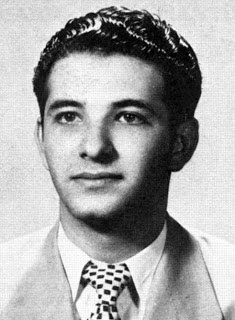
Pedro Luis Boitel at CMQ Radio Station

As time went on and the dictatorial nature of the Castro regime became more apparent, the student leader became an opponent of Fidel Castro. Condemned to a decade in prison in 1961, he served the cruel and unjust sentence, but as the date of his release came and went, prison officials refused to release him. 


While imprisoned, Boitel continued to challenge the repression and the impunity of regime prison officials.  He left a powerful impression on his fellow political prisoners. In 2009, Gregorio Asorio in an interview discussed how he first met Boitel while in prison for his opposition to the Castro dictatorship in the 1960s. Prison officials condemned black Cuban political prisoners for opposing Castro, thinking that they should be grateful to the dictator, and this thin man challenged the guards, declaring that Cuban blacks were part of the Cuban nation, and had helped found the Cuban nation in the struggle for independence. This man then cited Jose Marti's quote that anything that divides humanity is a sin against humanity. Gregorio introduced himself and asked his name, and learned that he was Pedro Luis Boitel.

In response to the years of cruelty, torture, and now denial of his freedom, he went on hunger strike on April 3, 1972. Pedro Luis Boitel died fifty years ago on May 25, 1972, after 53 days on hunger strike in Havana at the Castillo del Principe prison. Academic freedom and autonomy ended in 1960 and were replaced with fear, repression, and ideological litmus tests to attend university. It has still not been restored today. He was buried in an unmarked grave.

Fifteen years later, in the documentary Nobody Listened, Boitel's mother spoke on camera about her son's imprisonment and death.  

Fifty years later, the Castro dictatorship's cruelty continues unabated, as does the courage of Cubans who oppose it. 

Below is a poem by Pedro Luis written during his long years of imprisonment.


The Exile 
by Pedro Luis Boitel 
 
Distant melody that invades my room 
shadows that travel the corners of my mind 
my hands, destiny with experiences chained 
that, that is the law of the exile. 
 
Crosses of experiences etched on my skin 
hurting me like the deadly disdain of a woman 
covered with ephemeral times my heart subsists
nostalgic dependence on a child who forgot to grow up. 
 
Memories turned into ghosts 
those who besiege me while I rest 
omnipresent shadows that disturb my dreams 
while I evoke my country in my own way. 
 
Island that disappears on the horizon 
roaring station I once occupied 
today only this withered exodus picks up the wind 
petals scattered in a stream away from the sea. 
 
Exile links me to the past 
I am a slave to a concept, to an idea 
I search among the memories for the beginning of everything 
but I only find ashes, partially buried during my journey. 
 
Exile has sentenced me to live imprisoned in nostalgia, sharing his cell 
but as the years have passed I have learned to wake up, 
and now in my reality I seek my emancipation, my path.

Original Spanish text below

El destierro

por Pedro Luis Boitel

Melodía distante que invade mi habitación
sombras que transitan los rincones de mi mente
mis manos, el destino con vivencias ha encadenado
esa, esa es la ley del desterrado.

Cruces de experiencias grabadas en mi piel
lastimándome cual el mortífero desdeño de una mujer
recubierto de épocas efímeras subsiste mi corazón
dependencia nostálgica de un niño que se olvido de crecer.

Memorias transformadas en fantasmas
aquellos que me asedian mientras reposo
omnipresentes sombras que perturban mis sueños
mientras yo evoco mi país a mi modo.

Isla que desaparece en el horizonte
crepitante estación que alguna vez ocupé
hoy sólo este éxodo marchito recoge el viento
pétalos esparcidos en una corriente ausente de mar.

El destierro me vincula al pasado
soy esclavo de un concepto, de una idea
busco entre los recuerdos el principio de todo
más sólo hallo cenizas, parcialmente sepultadas durante mi trayectoria.

El destierro me ha sentenciado a vivir encarcelado a la nostalgia, compartiendo su celda
pero al transcurrir los años he aprendido a despertar,
y ahora en mi realidad busco mi emancipación, mi senda.

Friday, May 13, 2022

Pedro Luis Boitel: Cuba's martyr for academic freedom and human rights born 91 years ago today

 "Men do not abandon the fight when the cause is just." - Pedro Luis Boitel

Pedro Luis Boitel born May 13, 1931 - May 25, 1972

Pedro Luis Boitel was born in Cuba on May 13, 1931. He studied at the University of Havana while working as a radio technician. Opposing the dictatorship of Fulgencio Batista he joined the July 26 movement led by the Castro brothers. The majority of the movement's members, like Pedro, were anti-communists.

Once Batista left for exile and Fidel Castro took control, the anti-communist members of the July 26 movement became an impediment to the new regime's absolute power.  

Pedro Luis was a popular student leader, and was nominated to head the Federation of University Students.  The Argentine NGO,CADAL (Centro para la Apertura y el Desarrollo de América Latina), describes what happened to the young leader.

In 1960, Boitel ran for president of the University Students' Federation (Federación Estudiantil Universitaria - FEU) at the University of Havana and was backed by the 26 de Julio Movement. Even though Castro headed this movement during Batista's dictatorship, Fidel Castro and the other revolutionary leaders removed their support for Boitel precisely due to his independence of thought and democratic convictions. Castro himself personally intervened in the student elections at the University of Havana to remove Boitel from the FEU presidency. This event and other repressive measures that were carried out by Castro against Boitel led him to begin to conspire against the recently-established totalitarian regime in Cuba.
He was arrested and sentenced to 10 years in prison in 1961 for his opposition to the new dictatorship. Today marks what would have been Pedro Luis's 91st birthday, but he died in 1972 at age 41 on a hunger strike in one of Castro's dungeons, the Castillo de Principe prison in Havana.

May 25, 2022 will mark 50 years since he died after completing his unjust prison sentence, and prison officials refused to free him. This led to his final hunger strike. 

Pedro Luis Boitel's ideals and example live on in the Cuban opposition both inside and outside of Cuba. 

The world knows about Pedro Luis Boitel because his mother, Clara Abrahante Boitel, fought to save her son and make known the atrocities committed against him, despite the threats visited upon her.

The first time I heard about Pedro Luis was in the 1987 documentary Nobody Listened. The image and testimony of Clara Abrahante who looked forward to death to be reunited with her son is heart breaking. 

Please consider organizing nonviolent vigils outside of Cuban Embassies and consulates around the world on Wednesday, May 25, 2022 in remembrance of this student leader and upload photos, and videos over your social media documenting your action.

 
Original Spanish quotes by Pedro Luis Boitel and English translations:

“Los hombres no abandonan la lucha cuando la causa es justa.”

"Men do not abandon the fight when the cause is just." 

“Podrán matar y acabar con mi cuerpo, pero nunca con mi espíritu, ese no lo podrán doblegar jamás.”

"They can kill and destroy my body, but never my spirit, that they will never be able to break." 

Wednesday, February 16, 2022

Fact Sheet on Orlando Zapata Tamayo

"Long live human rights, with my blood I wrote to you so that this be saved as evidence of the savagery we are subjected to that are victims of the Pedro Luis Boitel political prisoners [movement]" - Orlando Zapata Tamayo, letter smuggled out April of 2004*


 Orlando Zapata Tamayo tortured and killed by prison officials on February 23, 2010

Fact #1 Orlando Zapata Tamayo was murdered by Cuban government officials 

Both Abel Lopez Perez and Reina Luisa Tamayo charge that Cuban prison officials denied Orlando Zapata Tamayo water in an effort to break his spirit. Reina Luisa Tamayo in an interview with Yoani Sanchez, hours after her son’s death denounced that officials had denied him water.[1] Abel Lopez corroborates the charge stating: “Before Zapata was checked into the hospital, he was regularly taking some vitamins. He was in a weak state of health. A military chief known as ‘Gordo’, who was the one responsible for ordering all of Zapata’s things to be taken out of the cell and to stop giving him water, also took his bottle of vitamins and poured all the pills down a drain. He told him, ‘Those who are in protest here don’t drink vitamins. I think those are pills sent to you by the Yankees so you can continue your hunger strike.’ Those were the exact words said to him, I verified them. His vitamins were taken away, as were any other medications. And they stopped giving him water for a while.”[2] This type of practice was also documented in the 1966 death of another Cuban hunger striker, Roberto López Chávez.[3], [4] Denying water to a man on water only hunger strike is cruel and inhuman treatment that contributed to his death.


Fact #2 Orlando Zapata Tamayo was an Amnesty International prisoner of conscience

Orlando Zapata Tamayo was recognized as an Amnesty International (AI) prisoner of conscience on January 29, 2004 a designation given only to nonviolent activists after careful examination.[5] On January 29, 2004 Amnesty International outlined Orlando Zapata Tamayo’s past arrests:

“He has been arrested several times in the past. For example he was temporarily detained on 3 July 2002 and 28 October 2002. In November 2002 after taking part in a workshop on human rights in the central Havana park, José Martí, he and eight other government opponents were reportedly arrested and later released. He was also arrested on 6 December 2002 along with Oscar Elías Biscet[6], but was released on 8 March 2003. Most recently, he was arrested on the morning of 20 March 2003 whilst taking part in a hunger strike at the Fundación Jesús Yánez Pelletier, Jesús Yánez Pelletier Foundation, in Havana, to demand the release of Oscar Biscet and other political prisoners.”[7]

Orlando Zapata Tamayo appeared photographed in the Cuban government’s own publication Los Disidentes, in photos prior to his 2003 arrest and was then recognized by Cuban officials as a dissident. The Spanish newspaper El Mundo carried a photo the day after the Cuban regime announced the death of Orlando Zapata Tamayo with prominent Cuban dissidents.[8]


Fact #3 Orlando Zapata Tamayo’s hunger strike was an act of non-violent self-defense

Orlando Zapata Tamayo had been beaten and tortured on more than one occasion by prison guards and state security along with other prisoners. His body was scarred and his health in decline. For example Amnesty International reported that, on "October 20, 2003 [Orlando Zapata] was dragged along the floor of Combinado del Este Prison by prison officials after requesting medical attention, leaving his back full of lacerations."[9] Cuban political prisoner Abel Lopez Perez transferred to the same prison in Camaguey as Orlando Zapata Tamayo on December 3, 2009 briefly saw him and heard from other prisoners “that a few days before being taken away, Zapata stood up and shouted, ‘People, don’t let yourselves be lied to. Don’t believe anything that they tell you. I’m not demanding a kitchen or any of the things they took away from me. I’m demanding an improvement of treatment for all prisoners, and so you all know, I am going to die for it.’”[10] The case of Ariel Sigler Amaya, another Cuban prisoner of conscience, is instructive. He had to threaten a hunger strike, although already emaciated and crippled, to obtain medical treatment to save his life.[11] The hunger strike was not an act of suicide but rather a tactic of self defense within the arsenal of nonviolent options.

Fact #4 Between 1966 and 2010 at least six Cuban political prisoners died while on hunger strike: Roberto López Chávez , Carmelo Cuadra Hernández , Pedro Luis Boitel, Olegario Charlot Pileta, Enrique García Cuevas and Orlando Zapata Tamayo.

Roberto López Chávez, 25 years old, died on December 11, 1966 in Isla de Pinos prison on hunger strike without medical assistance.[12] Armando Valladares, in his prison memoir, Against All Hope described the circumstances surrounding his death: “When Roberto López Chávez, went on a hunger strike to protest the abuses in the prison, the guards withheld water from him until he became delirious, twisting on the floor and begging for something to drink. The guards then urinated in his mouth. He died the next day.”[13], [14]

Carmelo Cuadra Hernández, died in La Cabaña prison in April of 1969 on hunger strike, after suffering mistreatment and torture over eight and a half months, without receiving medical care and was the third political prisoner that has died on a hunger strike.[15], [16]

Pedro Luis Boitel died on hunger strike on May 25, 1972.[17],[18]

Olegario Charlot Pileta, died in the famous "Escaleras" (staircase) of the Boniato prison, in of January 1973 during a hunger strike, without medical assistance and is described in documents as a “black youth.” [19],[20]

Enrique García Cuevas died on a hunger strike, without receiving medical care, in cell No. 4 of the new Provincial Jail of Santa Clara, on June 24, 1973.[21]

Two of the four outlined above died on hunger strikes after Pedro Luis Boitel and there are partial estimates that place the number identified to have died while on hunger strike at twelve including both Boitel and Zapata. Since the death of Pedro Luis Boitel there are partial lists identifying six political prisoners dead on hunger strikes between May 25, 1972 and February 23, 2010.[22]


Sources:

1. Sanchez, Yoani “Orlando Zapata Tamayo's Mother Speaks After Her Son's Death” The Huffington Post February 24, 2010 http://www.huffingtonpost.com/yoani-sanchez/orlando-zapata-tamayos-mo_b_475006.html

2. Felipe Rojas, Luis “Abel Remembers the Last Days of Zapata in a Prison of Camaguey” Crossing the Barbed Wire November 24, 2010 http://cruzarlasalambradaseng.wordpress.com/2010/11/24/abel-remembers-the-last-days-of-zapata-in-a-prison-of-camaguey/

3. Valladares, Armando Against All Hope: The Prison Memoirs of Armando Valladares (1st edition Knopf April 12, 1986) quote taken from (1st Edition Encounter Books April 1, 2001) pg. 379

4. Glazov, Jamie United in Hate: The Left's Romance with Tyranny and Terror WND Books, 2009 Pg 48

5. Amnesty International “CUBA Newly declared prisoners of conscience” January 29, 2004  
    https://www.amnesty.org/en/documents/AMR25/002/2004/en/

6. Quintero, Tania “CUBA | Llorando a un amigo ¡Así te voy a recordar, Orlando!” El Mundo February 24, 2010 http://www.elmundo.es/america/2010/02/24/cuba/1267020583.html

7. Amnesty International “CUBA Newly declared prisoners of conscience” January 29, 2004 https://www.amnesty.org/en/documents/AMR25/002/2004/en/

8. Felipe Rojas, Luis “Abel Remembers the Last Days of Zapata in a Prison of Camaguey” Crossing the Barbed Wire November 24, 2010 http://cruzarlasalambradaseng.wordpress.com/2010/11/24/abel-remembers-the-last-days-of-zapata-in-a-prison-of-camaguey/

9. Rodriguez, Eliott “Paralyzed Former Cuban Prisoner Arrives In Miami” CBS4 July 28, 2010

10. Inter-American Commission on Human Rights “Annual Report 1975: 1805 Cuba” http://www.cidh.org/annualrep/75eng/Cuba1805.htm

11. Valladares, Armando Against All Hope: The Prison Memoirs of Armando Valladares (1st edition Knopf April 12, 1986) quote taken from (1st Edition Encounter Books April 1, 2001) pg. 379

12. Glazov, Jamie United in Hate: The Left's Romance with Tyranny and Terror WND Books, 2009 Pg 48

13. Inter-American Commission on Human Rights SITUATION OF POLITICAL PRISONERS IN CUBA (1976) http://www.cidh.org/countryrep/cuba76eng/chap.1.htm

14. Inter-American Commission on Human Rights SEGUNDO INFORME SOBRE LA SITUACIÓN DE LOS PRESOS POLÍTICOS Y SUS FAMILIAS EN CUBA May 7, 1970 http://www.cidh.org/countryrep/Cuba70sp/cap.1b.htm

15. Amnesty International “CUBA Newly declared prisoners of conscience” January 29, 2004 https://www.amnesty.org/en/documents/AMR25/002/2004/en/

16. Inter-American Commission on Human Rights “Annual Report 1975: 1805 Cubahttp://www.cidh.org/annualrep/75eng/Cuba1805.htm

17. Tamayo, Juan O. “Jailed Cuban activist Orlando Zapata Tamayo dies on hunger strike” The Miami Herald February 23, 2010 https://newcentrist.wordpress.com/2010/02/23/jailed-cuban-activist-orlando-zapata-tamayo-dies-on-hunger-strike/

18. Inter-American Commission on Human Rights 6TH REPORT ON THE SITUATION OF POLITICAL PRISONERS IN CUBA: CHAPTER III: AN ANALYSIS OF CERTAIN INDIVIDUAL CASES SUBMITTED TO THE IACHR 14 December 1979 http://www.cidh.org/countryrep/cuba79eng/chap.3.htm

19. Inter-American Commission on Human Rights CHAPTER I SITUATION OF POLITICAL PRISONERS IN CUBA (1976) http://www.cidh.org/countryrep/cuba76eng/chap.1.htm

20. Inter-American Commission on Human Rights “Annual Report 1975: 1805 Cuba” http://www.cidh.org/annualrep/75eng/Cuba1805.htm

21. Inter-American Commission on Human Rights CHAPTER I SITUATION OF POLITICAL PRISONERS IN CUBA (1976) http://www.cidh.org/countryrep/cuba76eng/chap.1.htm

22. Corzo, Pedro “El calvario de las prisiones cubanas” El Nuevo Herald March 13, 2010 https://democraciaparticipativa.net/foro/iberoamerica-y-espana-latin-america-spain/3038-el-calvario-de-las-prisiones-cubanas