Showing posts with label Nobody Listened. Show all posts

Friday, May 13, 2022

Pedro Luis Boitel: Cuba's martyr for academic freedom and human rights born 91 years ago today

 "Men do not abandon the fight when the cause is just." - Pedro Luis Boitel
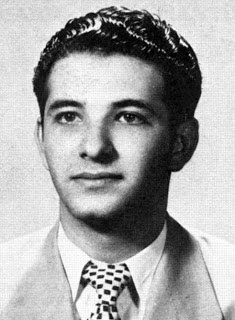
Pedro Luis Boitel born May 13, 1931 - May 25, 1972

Pedro Luis Boitel was born in Cuba on May 13, 1931. He studied at the University of Havana while working as a radio technician. Opposing the dictatorship of Fulgencio Batista he joined the July 26 movement led by the Castro brothers. The majority of the movement's members, like Pedro, were anti-communists.

Once Batista left for exile and Fidel Castro took control, the anti-communist members of the July 26 movement became an impediment to the new regime's absolute power.  

Pedro Luis was a popular student leader, and was nominated to head the Federation of University Students.  The Argentine NGO,CADAL (Centro para la Apertura y el Desarrollo de América Latina), describes what happened to the young leader.

In 1960, Boitel ran for president of the University Students' Federation (Federación Estudiantil Universitaria - FEU) at the University of Havana and was backed by the 26 de Julio Movement. Even though Castro headed this movement during Batista's dictatorship, Fidel Castro and the other revolutionary leaders removed their support for Boitel precisely due to his independence of thought and democratic convictions. Castro himself personally intervened in the student elections at the University of Havana to remove Boitel from the FEU presidency. This event and other repressive measures that were carried out by Castro against Boitel led him to begin to conspire against the recently-established totalitarian regime in Cuba.
He was arrested and sentenced to 10 years in prison in 1961 for his opposition to the new dictatorship. Today marks what would have been Pedro Luis's 91st birthday, but he died in 1972 at age 41 on a hunger strike in one of Castro's dungeons, the Castillo de Principe prison in Havana.

May 25, 2022 will mark 50 years since he died after completing his unjust prison sentence, and prison officials refused to free him. This led to his final hunger strike. 

Pedro Luis Boitel's ideals and example live on in the Cuban opposition both inside and outside of Cuba. 

The world knows about Pedro Luis Boitel because his mother, Clara Abrahante Boitel, fought to save her son and make known the atrocities committed against him, despite the threats visited upon her.

The first time I heard about Pedro Luis was in the 1987 documentary Nobody Listened. The image and testimony of Clara Abrahante who looked forward to death to be reunited with her son is heart breaking. 

Please consider organizing nonviolent vigils outside of Cuban Embassies and consulates around the world on Wednesday, May 25, 2022 in remembrance of this student leader and upload photos, and videos over your social media documenting your action.

 
Original Spanish quotes by Pedro Luis Boitel and English translations:

“Los hombres no abandonan la lucha cuando la causa es justa.”

"Men do not abandon the fight when the cause is just." 

“Podrán matar y acabar con mi cuerpo, pero nunca con mi espíritu, ese no lo podrán doblegar jamás.”

"They can kill and destroy my body, but never my spirit, that they will never be able to break." 

Thursday, May 13, 2021

Pedro Luis Boitel: Cuba's martyr for academic freedom and human rights born 90 years ago today

"They can kill and destroy my body, but never my spirit, that they will never be able to break." * - Pedro Luis Boitel  (1931 - 1972)

Pedro Luis Boitel born May 13, 1931 - May 25, 1972

Pedro Luis Boitel was born in Cuba on May 13, 1931 to a family of modest means of French origin. He studied at the University of Havana while working as a radio technician. Opposing the dictatorship of Fulgencio Batista he joined the July 26 movement led by Fidel Castro. The majority of the movement's members like Pedro were anti-communists.

Once Batista left for exile and Fidel Castro took control the anti-communist members of the July 26 movement became an obstacle to absolute power. Following the revolution, Boitel returned to University were his fellow students nominated to run for the presidency of the Federation of University Students in 1960.  Fidel Castro personally intervened to remove him from the presidency. Pedro Luis Boitel's threat to the emerging communist regime was that he refused to betray the Federation of University Students and sought to maintain academic freedom and autonomy.


As time went on and the dictatorial nature of the Castro regime became more apparent, the student leader became an opponent to Fidel Castro. Condemned to a decade in prison in 1961 he served the cruel and unjust sentence but as the date of his release came and went prison officials refused to free him. In response to the years of cruelty, torture and now denial of his freedom he went on hunger strike on April 3, 1972. Pedro Luis Boitel died forty nine years ago on May 25, 1972 after 53 days on hunger strike in Havana in the Castillo del Principe. Academic freedom and autonomy ended in 1960 replaced with fear, repression, and ideological litmus tests to attend university. It has still not been restored in Cuba today.  

The first time I heard about Pedro Luis Boitel was in the 1987 documentary Nobody Listened. The image and testimony of his mother who looked forward to death to be reunited with her son is heart breaking.  

The world knows about Pedro Luis Boitel because his mother, Clara Abrahante Boitel, fought to save her son and make known the atrocities committed against Pedro Luis regardless of the threats visited upon her.   

Pedro Luis Boitel at the CMQ radio station

Today marks what would have been Pedro Luis Boitel's 90th birthday, but he died in 1972 at age 41 on a hunger strike in Castro's prisons, but his ideals and example lived on in the Cuban opposition both inside and outside of Cuba.

 
Original Spanish quotes by Pedro Luis Boitel and English translations:

“Los hombres no abandonan la lucha cuando la causa es justa.”

"Men do not abandon the fight when the cause is just." 

“Podrán matar y acabar con mi cuerpo, pero nunca con mi espíritu, ese no lo podrán doblegar jamás.”

"They can kill and destroy my body, but never my spirit, that they will never be able to break." 

Saturday, December 14, 2019

Resisting tyranny and the liberator becoming a tyrant

"He who fights with monsters should look to it that he himself does not become a monster. And if you gaze long into an abyss, the abyss also gazes into you." - Friedrich Wilhelm Nietzsche, Beyond Good and Evil, Aphorism 146


My first encounter with Jorge Valls was in the 1987 documentary Nobody Listened. Janet Maslin of The New York Times in 1988 reviewed this film and highlighted the formerly imprisoned poet:
Jorge Valls, a writer, on the other hand, points out that at least ''free thinking dwelt behind prison walls; it was truly the free territory of Cuba.'' As for public free expression at the time of the revolution, Mr. Valls says: ''None of that in 1959! Just extraordinary exaltation, fanatical idolatry of the victorious warrior, and rampant folly that made everything acceptable.'' 
Jorge in this documentary on the human rights situation in Cuba in the first three decades of the Castro dictatorship gave a powerful testimony in defense of freedom of expression and human dignity that remains relevant today.

Nobody Listened was the work of two filmmakers with strong ties to Cuba. Jorge Ulla, who was born in Cuba and had also made Guaguasi in 1983 and following the above mentioned documentary made Navidades en familia in 1993.
Jorge Ulla (left) and Nestor Almendros (right)
Nestor Almendros was born in Barcelona, Spain on October 30, 1930 into what would become an anti-Franco family. 18 years later they moved to Cuba. During the years of his stay in the Cuban Republic and the 1952 coup by Batista Almendros travels to study film making in Rome and New York City.

When Fidel Castro takes power in 1959 promising the restoration of democracy, Nestor Almendros returns to Cuba. However when the revolutionary government censors two of his film shorts: Gente en la Playa and La Tumba Francesa, he goes into exile in Paris. While in France he begins to collaborate with filmmakers Erich Rohmer and Francois Truffaut.

In 1970 he does the cinematography for Truffaut's 1970 film, The Wild Child.  American filmmaker Terrence Malick impressed by his work on The Wild Child hires him as cinematographer in the 1978 film Days of Heaven Almendros continues his career in Hollywood as a cinematographer in important films such as: Kramer vs Kramer (1979), The Blue Lagoon (1980), and Sophie's Choice (1982). In 1979, Almendros won the Academy Award for Best Cinematography for Days of Heaven.

Towards the end of his life he directs two documentaries on human rights in Cuba. In 1984 he directs Improper Conduct that explores the discrimination and repression of homosexuals in Cuba under Castro. In 1987 he also directs Nobody Listened that interviews former comrades of Fidel Castro and other anti-Batista revolutionaries who were arrested, tortured and imprisoned after Castro took power in Cuba. 
Poet, former prisoner of conscience Jorge Valls
Former Cuban prisoner of conscience Jorge Valls presents a powerful testimony in Nobody Listened.  He also wrote an OpEd published in The New York Times on April 7, 2000 that remains important today for those resisting tyranny.
One day in 1952, there was a coup in my country against the legitimate government, and I thought -- and still believe -- that it was a real catastrophe for Cuba.
I went to fight against the Batista regime. That evening I was put in jail and badly beaten. After seven years of revolutionary struggle, in 1959, that spurious government was substituted amid a civil war by a new one, led by Fidel Castro, which from the very beginning didn't offer any guarantee that the fundamentals of law would be enforced.
Like Mr. Castro, I wanted a radical change in Cuban society, but I also knew that authority would never become legitimate unless the pure power of violence was submitted to reason, and strict respect for individual rights was guaranteed.
Without civil rights, the best intentions turn into a trap, and societies become prisons and asylums. There is a danger that we become as alienated and as fierce as the evil we think we are fighting.
That is what happened in Cuba under the Castro regime. In 1964, I was convicted of "conspiracy against the state," because I testified against the Castro government in a political trial, and I spent 20 years and 40 days in jail. I don't regret my time there, because I was defending this essential respectability of the human person.
 Below is the video Nobody Listened that is available on YouTube and in Amazon. It is highly recommended for those who want to know about the real Cuba.
