Showing posts with label Stalin. Show all posts

Sunday, August 17, 2025

Black Ribbon Day 2025: The Hitler-Stalin Pact that started WW2 which communists want to erase.

 "The struggle of man against power is the struggle of memory against forgetting." - Milan Kundera

Eighty six years ago on August 23, 1939 the world learned that Communist Russia and Nazi Germany had signed a non-aggression pact, the Molotov-Ribbentrop pact. It was named after their respective foreign ministers, Vyacheslav Molotov and Joachim von Ribbentrop. 

Observers would have been even more horrified had they known of the secret protocols that divided Eastern Europe between the two totalitarian regimes. What they called a "peace treaty" in reality was a war treaty.

Nine days later on September 1, 1939 at 4:45 am Nazi Germany invaded Poland and World War II started. 

Rolling Soviet tanks and Nazi motorcyclists in Poland (September 1939).

Sixteen days later the Soviet Union exercising its secret agreement with the Nazis invaded Poland from the East and met their German allies in the middle of Poland.

Nazi and Soviet soldiers greet one another in Poland (1939)

On September 22, 1939 the German Nazi army joined with the Soviet Communist army in a military parade in Brest-Litovsk and the two sides celebrated together.

Soviet Foreign Minister Vyacheslav Molotov in a October 31, 1939  speech spoke candidly about the Nazi-Communist alliance, and ridiculed its victims.

"The ruling circles of Poland boasted quite a lot about the ‘stability’ of their state and the ‘might’ of their army. However, one swift blow to Poland, first by the German Army and then by the Red Army, and nothing was left of this ugly offspring of the Versailles Treaty which had existed by oppressing non-Polish nationalities."

Approximately 230,000 Polish soldiers and officers and thousands of military service representatives were taken captive by the Russians. The Soviet precursor to the KGB was the NKVD. "From October 1939, the delegated NKVD officials from Moscow heard the prisoners, encouraged them to cooperate and collected data. Only a few of the prisoners agreed to collaborate. The commanding officers’ reports included opinions about hostile attitudes of the Poles and a minimal chance of them being useful to the USSR authorities."

The decision to shoot the prisoners was signed on March 5, 1940 by seven members of the All- Union Communist Party (Bolsheviks) authorities: Joseph Stalin, Lavrentiy Beria (proposer), Kliment Voroshilov, Vyacheslav Molotov, Anastas Mikoyan, Mikhail Kalinin and Lazar Kaganovich.

Thousands of Polish Army officers and intellectual leaders were taken into the Katyn Forest near Smolensk in the Soviet Union, shot in the back of the head or in the neck and buried in mass graves.

Secret protocols of the Hitler-Stalin Pact not only partitioned Poland but also divided up Lithuania, Latvia, Estonia, Finland and Romania into Nazi and Soviet "spheres of influence." The Soviet Union invaded and annexed the Baltic States in June 1940.  

Soviet Foreign Minister Vyacheslav Molotov meets with Adolf Hitler (1940)

Soviet Foreign Minister Vyacheslav Molotov in a speech delivered on August 1, 1940 while the Soviet Union was then still allied with Nazi Germany continued to describe their military alliance as a "non-aggression pact."   

 "A radical change for the better in the relations between the Soviet Union and Germany found its expression in the non-aggression pact signed last August. These new, good relations between the USSR and Germany have been tested in practice in connection with events in former Poland, and their strength has been sufficiently proved."

Another sign of Nazi-Soviet cooperation was the Soviet Union’s deportation of hundreds of refugees to Nazi authorities. Most of them were German anti-fascists, communists, and Jews who had sought asylum in the Soviet Union.

Soviet and Nazi soldiers fraternize in Poland. Their alliance ended in 1941.

This alliance ended on June 22, 1941 when Adolf Hitler launched Operation Barbarossa, the invasion of the Soviet Union, betraying his ally Josef Stalin.


"Stalin was shocked; he had received a plethora of warnings of an imminent invasion – notably from Winston Churchill, informed by British intelligence briefings. The communist dictator had refused to believe them," reported Agence France Press. Stalin preferred to rely on Hitler's assurances.


Nazi Foreign Minister Ribbentrop, Joseph Stalin, and Soviet foreign minister, Molotov

Communist apologists continue to defend Stalin and attempt to cover up this history of collaboration between the Soviet Union and Nazi Germany. It may also explain the real reason behind attacks on the legacy of Winston Churchill. His observation on the relationship between the Communists and the Nazis in his book The Second World War, Volume 1, The Gathering Storm (1948) is damning and accurate.

"Fascism was the shadow or ugly child of communism… As Fascism sprang from Communism, so Nazism developed from Fascism. Thus were set on foot those kindred movements which were destined soon to plunge the world into more hideous strife, which none can say has ended with their destruction." 

The Molotov-Ribbentrop Pact and the reckless strategy pursued by Stalin and the Communist International cost 22 to 28 million Russian lives alone in World War Two, and nearly led to the Nazi conquest and occupation of the Soviet Union.

Saturday, November 23, 2024

Holodomor Remembrance Day: Memory and witness for the victims of Stalin's 1932-33 Ukrainian Famine 91 years ago, and calling out Putin's genocide today

"There are pages in our history that are too painful to remember; but cannot be forgotten. The crimes that prove: the cruelty and cynicism of tyrants know no bounds. No words have yet been invented to fully describe the pain that Ukrainians have endured. In 1921, 1922, 1923. In 1946 and 1947. And in the darkest years of the Holodomor genocide of 1932–1933." - Volodymyr Zelenskyy, November 23, 2024 

#HolodomorRemembranceDay 


Holodomor Victims Remembrance Day is held on the fourth Saturday of November, at 4:00pm, the memory of more than 10,5 million Ukrainians killed during Stalin's genocide is commemorated with a moment of silence and lighting of candles.

The genocide in Ukraine is known as the Holodomor and took place ninety one years ago between 1932 -1933. Millions of children died in he artificial famine. This crime was ignored by the United States as it formally recognized the Soviet Union in 1933The Economist in 2012 reported on the 80th anniversary of this man-made famine:

Holodomor literally means death by hunger. In 1932 and 1933, a vast famine in Soviet Ukraine killed three to seven million people, according to estimates. While people starved, the grain was shut away in barns for export.

The deadliest famines in the 20th century were not in Africa but in Europe (Ukraine) and China.

Social science research has demonstrated that famines "happen only with some degree of human complicity."  Human decisions "determine whether a crisis deteriorates into a full-blown famine."


According to Felix Wemheuer, professor of Modern China Studies at the University of Cologne, in his book Famine Politics in Maoist China and the Soviet Union," during the twentieth century, 80 percent of all famine victims worldwide died in China and the Soviet Union." 

Millions starved to death under brutal famine imposed by Joseph Stalin

However, to understand the nature of famine politics in communist regimes the monograph of Andrea Graziosi and Frank E. Sysyn in the East/West: Journal of Ukranian Studies titled "Communism and Hunger" is required reading. Consider the following:

"In fact, with the exception of the 1943 Bengal famine with its approximately two million victims, all of the other major famines of the twentieth century are directly connected to socialist "experiments": in 1921 and 1922 in Russia and Ukraine ( 1million - 1.5 million deaths); in 1931, 1932, and 1933 in the USSR (6.5 million - 7.5 million deaths, of which 4 million were in Ukraine and 1.3 million - 1.5 million in Kazakhstan); in 1946 and 1947 in the USSR (1 million - 1.5 million deaths); from 1958 to 1962 in China (30 million - 45 million deaths); from 1983 to 1985 in Ethiopia (0.5 million - 1.0 million deaths); and from 1994 to 1998 in North Korea ( estimates vary from a few hundred thousand to more than 2 million deaths)."

This was not due to poor central planning and socialist inefficiencies, but a deliberate policy of genocide against targeted population to consolidate political control by eliminating those who do not support their regime. The percentage of victims in the USSR and China relative to their respective overall populations were the same (5%). In the case of the USSR that meant around 7 million deaths out of a population of 160 million and in the case of China  estimates between 30 million and 45 million deaths out of a population of 600 million. 

The Ukrainian Research and Documentary Center on the 50th anniversary of the Holodomor released the documentary Harvest of Despair.


 We must also remember those who bore witness and spoke truth, and those who covered it up. Gareth Jones, a Welsh journalist broke the story on the Ukranian famine on March 29, 1933 despite official denials. Walter Duranty of The New York Times wrote an article a day later rebutting Jones's claims that was published in the paper of record on March 31, 1933. Duranty knew that what Jones published was true, but he sought to appease his Soviet hosts, and remain in the country.

The Russians, under the dictatorship of Vladimir Putin, are engaging in genocide again. People of goodwill cannot remain silent, or worse try to minimize what is taking place. 

It also saddens me that the dictatorship in Cuba is not siding with the small country attacked by a superpower, but is backing the aggressor, and doubled down repeatedly in support of Vladimir Putin's criminal war on Ukraine on the diplomatic and misinformation fronts, and with thousands of Cuban soldiers fighting for Putin in Russian uniforms.

I stand in solidarity with Ukraine, and against Russian aggression.


Friday, August 23, 2024

Black Ribbon Day 2024: The Hitler-Stalin Pact that started WW2 which communists want to erase.

 "The struggle of man against power is the struggle of memory against forgetting." - Milan Kundera


On August 23, 1939, the world learnt that Communist Russia and Nazi Germany had signed the Molotov-Ribbentrop Pact, a "non-aggression" agreement that was in reality an alliance to wage war on Poland, and divide up the spoils. It was named after Vyacheslav Molotov and Joachim von Ribbentrop, the respective foreign ministers eighty five years ago today.

However it went far beyond Poland. 

Observers would have been even more horrified had they known of the secret protocols that divided Eastern Europe between the two totalitarian regimes. In actuality, what they dubbed a "peace treaty" was the treaty that plunged the planet into a general war for six years.

Nine days later on September 1, 1939 at 4:45am Nazi Germany invaded Poland, launching World War II.

Sixteen days later the Soviet Union exercising its secret agreement with the Nazis invaded Poland from the East and met their German allies in the middle of Poland. 

Rolling Soviet tanks and Nazi motorcyclists in Poland (September 1939).

On September 22, 1939 the German Nazi army joined with the Soviet Communist army in a military parade in Brest-Litovsk where the two sides celebrated together.

Nazi and Soviet soldiers greet one another in Poland (1939)

 Soviet Foreign Minister Vyacheslav Molotov in a October 31, 1939  speech spoke candidly about the Nazi-Communist alliance, and ridiculed its victims.

"The ruling circles of Poland boasted quite a lot about the ‘stability’ of their state and the ‘might’ of their army. However, one swift blow to Poland, first by the German Army and then by the Red Army, and nothing was left of this ugly offspring of the Versailles Treaty which had existed by oppressing non-Polish nationalities."

Approximately 230,000 Polish soldiers and officers and thousands of military service representatives were taken captive by the Russians. 


The Soviet precursor to the KGB was the NKVD. "From October 1939, the delegated NKVD officials from Moscow heard the prisoners, encouraged them to cooperate and collected data. Only a few of the prisoners agreed to collaborate. The commanding officers’ reports included opinions about hostile attitudes of the Poles and a minimal chance of them being useful to the USSR authorities."

On March 5, 1940, seven members of the All-Union Communist Party (Bolshevik) authorities signed a resolution to shoot the prisoners: Joseph Stalin, Lavrentiy Beria (proposer), Kliment Voroshilov, Vyacheslav Molotov, Anastas Mikoyan, Mikhail Kalinin, and Lazar Kaganovich.


Thousands of Polish Army officers and intellectual leaders were taken into the Katyn Forest near Smolensk in the Soviet Union, shot in the back of the head or in the neck and buried in mass graves.

Secret protocols of the Hitler-Stalin Pact not only partitioned Poland but also divided up Lithuania, Latvia, Estonia, Finland and Romania into Nazi and Soviet "spheres of influence." The Soviet Union invaded and annexed the Baltic States in June 1940.  

Soviet Foreign Minister Vyacheslav Molotov meets with Adolf Hitler (1940)

Soviet Foreign Minister Vyacheslav Molotov in a speech delivered on August 1, 1940 while the Soviet Union was then still allied with Nazi Germany continued to describe their military alliance as a "non-aggression pact."   

 "A radical change for the better in the relations between the Soviet Union and Germany found its expression in the non-aggression pact signed last August. These new, good relations between the USSR and Germany have been tested in practice in connection with events in former Poland, and their strength has been sufficiently proved."

Another sign of Nazi-Soviet cooperation was the Soviet Union’s deportation of hundreds of refugees to Nazi authorities. Most of them were German anti-fascists, communists, and Jews who had sought asylum in the Soviet Union

Soviet and Nazi soldiers fraternize in Poland. Their alliance began 85 years ago today

This alliance ended on June 22, 1941 when Adolf Hitler launched Operation Barbarossa, the invasion of the Soviet Union, betraying his ally Josef Stalin.

"Stalin was shocked; he had received a plethora of warnings of an imminent invasion – notably from Winston Churchill, informed by British intelligence briefings. The communist dictator had refused to believe them," reported Agence France Press. Stalin preferred to rely on Hitler's assurances.  

Nazi Foreign Minister Ribbentrop, Joseph Stalin, and Soviet foreign minister, Molotov

Today, communist apologists will defend Stalin and try to hide the Soviet Union's complicity with Nazi Germany. It may also explain why there have been attacks on Winston Churchill's legacy. His book The Second World War, Volume 1, The Gathering Storm (1948) has a devastating and realistic assessment of the link between the Communists and the Nazis. 

"Fascism was the shadow or ugly child of communism… As Fascism sprang from Communism, so Nazism developed from Fascism. Thus were set on foot those kindred movements which were destined soon to plunge the world into more hideous strife, which none can say has ended with their destruction." 

The Molotov-Ribbentrop Pact and the reckless strategy pursued by Stalin and the Communist International cost 22 to 28 million Russian lives alone in World War Two, and nearly led to the Nazi conquest and occupation of the Soviet Union.

We owe it both to the dead and the living not to forget, and also to share this memory with others to ensure it is not repeated.

The pledge is to remember, and share this memory with others.


Sunday, January 21, 2024

Vladimir Lenin died 100 years ago today and Communist Cuba's hand picked president is celebrating his legacy

 #Lenin100
 
Today, 100 years ago, Vladimir Lenin died. His bloody revolutionary career claimed millions of lives through politically orchestrated famines or outright murders, and he sentenced the peoples of the Soviet Union to seven decades of despotism

Communist Cuba's president pays homage to Lenin.

Raul Castro's handpicked president, Miguel Díaz-Canel Bermúdez, today over Twitter observed the death of Vladimir Ilyich Ulyanov, better known as Vladimir Lenin and honored the late mass murderer, and despot. Below is the text translated to English, and a screen grab of what the Cuban president posted.

"#Lenin100 is trending on this platform today, a century after the physical disappearance of the leader of the October Socialist Revolution and the world proletariat. #Cuba honors his memory."

Responded to his X post pointing out that it was the dictatorship in Cuba honoring Lenin's memory, not the Cuban people, and added that "Lenin was truly one of the bloodiest mass murderers in history as well as a dictator and psychopath. You should be ashamed honoring this monster."
 
Soviet leader: Lenin worse than Stalin

Who was this man, whom the Castro regime honored today on the 100th anniversary of his death?

The Russian communist revolutionary had several hundred aliases, but Lenin was the one he was best known for, and that he used politically. All the Bolshevik leaders used aliases.  

Molotov, a contemporary who held a leadership position in the Soviet Union, was quoted in David Remnick's 2014 book, Lenin's Tomb: The Last Days of the Soviet Empire

"'You know its a pity that Lenin died so early. If he had lived longer, everything would have been normal.' But Molotov said, 'Why do you say that?' My friend said, 'Because Stalin was a bloodsucker and Lenin was a noble person.' Molotov smiled, and then he said, ' Compared to Lenin, Stalin was a mere lamb."

Molotov was born Vyacheslav Mikhailovich Skryabin and took the revolutionary name Vyacheslav Molotov. Molotov was one of the few Bolsheviks in Moscow, and he was part of the group that successfully carried out a coup against the social democrats in October 2017, and he was in the leadership group with both Lenin and Stalin throughout. He held leadership positions in the Soviet Union from the 1920s until 1961, when he was expelled from the Communist Party for opposing Khrushchev's de-Stalinization policy. Molotov could assess both Lenin and Stalin's ruthlessness. 

The Library of Congress has communications between Lenin and Molotov. For example in a letter dated March 19, 1922, from Lenin via Molotov to members of the Politburo, he outlined "a brutal plan of action against the 'Black Hundreds' clergy and their followers, who were defying the government decree to remove church valuables (purported by the government to be used to fund famine relief). Lenin proposed the arrest and quick trial of the insurrectionists in Shuia, followed by a ruthless campaign to shoot a large number of the reactionary clergy and bourgeoisie and urged that removal of valuables from the richest churches and monasteries be finished quickly."

Lenin and the Bolsheviks did not depose the Czar.  They overthrew the social democrats who had forced the Czar to abdicate and placed him under house arrest, and were navigating power through democratic processes that were unprepared for the terror and conspiracies of the Bolsheviks.

Lenin's body count

From November 1917 until his death in January 1924, the publication Counting Stars provided a summary of the victims of Leninism which is reproduced below.

The figures of victims of Leninism, from November 1917 to January 1924

  • More than a million people murdered for political or religious reasons.
  • Between 300,000 and 500,000 Cossacks killed.
  • Hundreds of thousands of workers and peasants killed for striking.
  • 240,000 killed in the suppression of the Tambov rebellion.
  • More than 50,000 white prisoners of war executed.
  • Between 3.9 million and 7.75 million deaths from famines among Russians, Kazakhs and Tatars." 

 A communist coup d'etat that aborted democracy in Russia

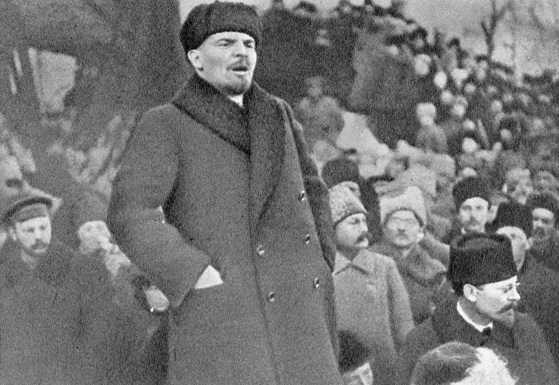
Lenin at a rally on March 18, 1918.

To demystify Lenin one must first break other myths. The most basic is that when the Bolshevik coup d'etat broke out on November 7, 1917, the communists did not overthrow the Tsar - which no longer reigned - but aborted the incipient democracy in Russia, taking advantage of the crisis that arose between conservatives and socialists. After the violent assault on power by the communists, a civil war broke out that lasted five years, and in which - already in power - the Bolsheviks - who were victorious - faced all their rivals. It was the beginning of a bloody dictatorship that would last more than 70 years, until the disappearance of the USSR in 1991."

Ideas have consequences 

The body count amassed by Vladimir Lenin and his fellow Bolsheviks was not an accident, but the result of the ideas that animated them, and continue to animate the Cuban communists today.

On October 2, 1920, the first leader of the Soviet Union, Vladimir Lenin, stated in a speech to Russian communist youth: 

 "The class struggle is continuing and it is our task to subordinate all interests to that struggle. Our communist morality is also subordinated to that task. We say: morality is what serves to destroy the old exploiting society and to unite all the working people around the proletariat, which is building up a new, communist society." 

This is at the heart of communist morality, the ends justify the means, a profound immorality and a pillar of international communism. It also leads to the doctrine of the "big lie." According to Lenin, "To speak the truth is a petit-bourgeois habit. To lie, on the contrary, is often justified by the lie's aim." 

The Third International was founded by Lenin in 1915 and held its first of seven world congresses on March 2, 1919 and was also known as the Communist International, and was known by its abbreviated form the Comintern. It was an international communist organization that advocated world communism. The International intended to fight "by all available means, including armed force, for the overthrow of the international bourgeoisie and for the creation of an international Soviet republic as a transition stage to the complete abolition of the State".  

The Soviet State was never abolished, but a new class created, "the nomenklatura" that spent decades ruling over the proletariat with a ruthlessness that led workers in communist regimes, to prefer a return to market systems and democracy. It is a historical irony that Communism in Eastern Europe and the Soviet Union was brought to an end by the rise of an independent trade union movement in Poland. 

Castroism's Leninist continuity 

The Castro regime took a country with one of the largest middle classes in Latin America, in part due to a strong labor movement that had existed and grown more powerful for over 50 years. The Batista dictatorship was unable to crush it, but Castro's communist dictatorship over a couple of years crushed this workers movement, and 64 years later the nomenklatura lives with great wealth and privileges while the rest of the Cuban populace is immiserated. 

Fidel Castro, and the rest of the Cuban communists embraced Lenin's "communist morality" and "the big lie." Consider the late dictator's own words on the subject.

Fidel Castro on December 2, 1961 in a moment of frankness confessed: "If we had paused to tell the people that we were Marxist-Leninists while we were on Pico Turquino and not yet strong, it is possible that we would never have been able to descend to the plains."  He was able to "confess" that he had always been a communist because he had consolidated power and killed or imprisoned all his enemies, and shut down all independent media. He had imposed a totalitarian dictatorship on Cubans.

Years later on March 26, 1964, Fidel Castro explained: "I conceive the truth in terms of a just and noble end, and that is when the truth is truly true. If it does not serve a just, noble and positive end, truth, as an abstract entity, philosophical category, in my opinion, does not exist."  

Mr. Castro's philosophy is not original, but Leninism with tropical flair, and the speaking style of Benito Mussolini.

Cuban scholar and Christian Democrat Jose Ignacio Rasco, who knew Fidel Castro from primary school and onward, concluded that the Cuban revolutionary had been a committed communist by 1950.

Terrorism and Communism

Author and Journalist Claire Sterling in her March 1, 1981 article in The New York Times,  TERRORISM  TRACING THE INTERNATIONAL NETWORK touched on terrorism's links to international communism beginning with Lenin, but moved on to the pivotal role played by the Castro regime in Cuba.

"Lenin's definition -- 'the purpose of terror is to terrorize' -- is a useful beginning. The terrorist uses violence not to punish the victim but to intimidate the audience, to impose his political will by force when he cannot achieve it by democratic means".

The Castro regime fully embraced terrorism as a global strategy and built an international terrorist network.

..."Fidel Castro had been operating his own schools for guerrillas since 1961, starting with recruits from Latin America and Africa. By 1964, Palestinians and Europeans had joined the ranks." ..."The roots of the terrorist network can be traced directly to the Tricontinental Congress held in Havana in January 1966. More than 500 delegates passed resolutions emphasizing the need for close collaboration between 'Socialist countries' --i.e., the Soviet Union and its satellites -- and national liberation movements." ...  "It was, unmistakably, a call for a Guerrilla International. And the call was heeded. Ten months later, a new cluster of more than a dozen training camps for guerilla fighters from all over the world was opened in Cuba." 

Bombing campaigns were carried out in the United States, and innocents were murdered.  Some of these terrorists were captured, placed on trial, but then broke out of prison and ended up being harbored by the Castro regime. They continue to advocate terrorism, and justify their violence. Worse yet, communist networks claim these killers are "political prisoners."

Lenin died 100 years ago today. The tragedy is that he was able to cause so much harm in his 53 years of life. He is the intellectual author of the Soviet Union,  a system correctly described as anti-human by British conservative Peter Hitchens.

Diaz- Canel is part of a regime that is a continuity of the system created by Lenin.

The Cuban communist channeled Lenin on July 11, 2021 when tens of thousands of Cubans took to the streets nonviolently across Cuba demanding freedom: 

"The order to fight has been given — into the street, revolutionaries! ...They will have to walk right over our corpses. We are ready to do anything if they want to confront the revolution."

Díaz-Canel's call to violence had deadly consequences for Cubans. Regime agents went out into residential neighborhoods firing on protesters. Cuban protester Diubis Laurencio Tejeda, (age 36) was shot in the back and killed on July 12, 2021 by police.

The Cuban president's honoring of Lenin, a mass murdering psychopath, conforms to the actions he has taken since being handpicked for the post by Raul Castro in 2018. Dr. Maya Angelou once said, “When people show you who they are, believe them the first time,” and Cuba watchers should believe Diaz-Canel is a Leninist.

Saturday, November 25, 2023

Holodomor Remembrance Day: Memory and witness for the victims of Stalin's 1932-33 Ukrainian Famine 90 years ago, and calling out Putin's genocide today

 "In the future, there will be fewer but better Russians." - Greta Garbo, Ninotchka, 1939

#HolodomorRemembranceDay

Holodomor Victims Remembrance Day is held on the fourth Saturday of November, at 4:00pm, the memory of more than 10,5 million Ukrainians killed during Stalin's genocide is commemorated with a moment of silence and lighting of candles.

The genocide in Ukraine is known as the Holodomor and took place ninety years ago between 1932 -1933. Millions of children died in an artificial famine. This crime was ignored by the United States as it formally recognized the Soviet Union in 1933The Economist in 2012 reported on the 80th anniversary of this man-made famine:

Holodomor literally means death by hunger. In 1932 and 1933, a vast famine in Soviet Ukraine killed three to seven million people, according to estimates. While people starved, the grain was shut away in barns for export.

The deadliest famines in the 20th century were not in Africa but in Europe (Ukraine) and China.
Social science research has demonstrated that famines "happen only with some degree of human complicity."  Human decisions "determine whether a crisis deteriorates into a full-blown famine."


 According to Felix Wemheuer, professor of Modern China Studies at the University of Cologne, in his book Famine Politics in Maoist China and the Soviet Union," during the twentieth century, 80 percent of all famine victims worldwide died in China and the Soviet Union." 

Millions starved to death under brutal famine imposed by Joseph Stalin

However, to understand the nature of famine politics in communist regimes the monograph of Andrea Graziosi and Frank E. Sysyn in the East/West: Journal of Ukranian Studies titled "Communism and Hunger" is required reading. Consider the following:

"In fact, with the exception of the 1943 Bengal famine with its approximately two million victims, all of the other major famines of the twentieth century are directly connected to socialist "experiments": in 1921 and 1922 in Russia and Ukraine ( 1million - 1.5 million deaths); in 1931, 1932, and 1933 in the USSR (6.5 million - 7.5 million deaths, of which 4 million were in Ukraine and 1.3 million - 1.5 million in Kazakhstan); in 1946 and 1947 in the USSR (1 million - 1.5 million deaths); from 1958 to 1962 in China (30 million - 45 million deaths); from 1983 to 1985 in Ethiopia (0.5 million - 1.0 million deaths); and from 1994 to 1998 in North Korea ( estimates vary from a few hundred thousand to more than 2 million deaths)."

This was not due to poor central planning and socialist inefficiencies, but a deliberate policy of genocide against targeted population to consolidate political control by eliminating those who do not support their regime. The percentage of victims in the USSR and China relative to their respective overall populations were the same (5%). In the case of the USSR that meant around 7 million deaths out of a population of 160 million and in the case of China  estimates between 30 million and 45 million deaths out of a population of 600 million. The Ukrainian Research and Documentary Center on the 50th anniversary of the Holodomor released the documentary Harvest of Despair.


 We must also remember those who bore witness and spoke truth, and those who covered it up. Gareth Jones, a Welsh journalist broke the story on the Ukranian famine on March 29, 1933 despite official denials. Walter Duranty of The New York Times wrote an article a day later rebutting Jones's claims that was published in the paper of record on March 31, 1933. Duranty knew that what Jones published was true, but he sought to appease his Soviet hosts, and remain in the country.


 The Russians, under the dictatorship of Vladimir Putin, are engaging in genocide again. People of goodwill cannot remain silent, or worse try to minimize what is taking place.

It also saddens me that the Castro regime in Cuba is not siding with the little country being invaded by a superpower, but is instead siding with the aggressor, sending Cuban soldiers to fight for war criminal Vladimir Putin in Ukraine.

If you are in the Washington DC area today then please consider joining in a nonviolent act of remembrance marking 90 years since this Russian act of genocide.


Wednesday, August 23, 2023

Black Ribbon Day 2023: The Hitler-Stalin Pact that started WW2 which communists want to erase.

 "The struggle of man against power is the struggle of memory against forgetting." - Milan Kundera


Eighty four years ago on August 23, 1939, the world learned that Communist Russia and Nazi Germany had signed the Molotov-Ribbentrop pact, a non-aggression pact. It was named after Vyacheslav Molotov and Joachim von Ribbentrop, their respective foreign ministers.

Observers would have been even more horrified had they known of the secret protocols that divided Eastern Europe between the two totalitarian regimes. In actuality, what they dubbed a "peace treaty" was a war treaty.

Nine days later on September 1, 1939 at 4:45am Nazi Germany invaded Poland, launching World War II.

Rolling Soviet tanks and Nazi motorcyclists in Poland (September 1939).

Sixteen days later the Soviet Union exercising its secret agreement with the Nazis invaded Poland from the East and met their German allies in the middle of Poland. 

Nazi and Soviet soldiers greet one another in Poland (1939)

On September 22, 1939 the German Nazi army joined with the Soviet Communist army in a military parade in Brest-Litovsk and the two sides celebrated together.


Soviet Foreign Minister Vyacheslav Molotov in a October 31, 1939  speech spoke candidly about the Nazi-Communist alliance, and ridiculed its victims.

"The ruling circles of Poland boasted quite a lot about the ‘stability’ of their state and the ‘might’ of their army. However, one swift blow to Poland, first by the German Army and then by the Red Army, and nothing was left of this ugly offspring of the Versailles Treaty which had existed by oppressing non-Polish nationalities."

Approximately 230,000 Polish soldiers and officers and thousands of military service representatives were taken captive by the Russians. The Soviet precursor to the KGB was the NKVD. "From October 1939, the delegated NKVD officials from Moscow heard the prisoners, encouraged them to cooperate and collected data. Only a few of the prisoners agreed to collaborate. The commanding officers’ reports included opinions about hostile attitudes of the Poles and a minimal chance of them being useful to the USSR authorities."

The decision to shoot the prisoners was signed on March 5, 1940 by seven members of the All- Union Communist Party (Bolsheviks) authorities: Joseph Stalin, Lavrentiy Beria (proposer), Kliment Voroshilov, Vyacheslav Molotov, Anastas Mikoyan, Mikhail Kalinin and Lazar Kaganovich.  

Thousands of Polish Army officers and intellectual leaders were taken into the Katyn Forest near Smolensk in the Soviet Union, shot in the back of the head or in the neck and buried in mass graves.

Secret protocols of the Hitler-Stalin Pact not only partitioned Poland but also divided up Lithuania, Latvia, Estonia, Finland and Romania into Nazi and Soviet "spheres of influence." The Soviet Union invaded and annexed the Baltic States in June 1940.  

Soviet Foreign Minister Vyacheslav Molotov meets with Adolf Hitler (1940)

Soviet Foreign Minister Vyacheslav Molotov in a speech delivered on August 1, 1940 while the Soviet Union was then still allied with Nazi Germany continued to describe their military alliance as a "non-aggression pact."   

 "A radical change for the better in the relations between the Soviet Union and Germany found its expression in the non-aggression pact signed last August. These new, good relations between the USSR and Germany have been tested in practice in connection with events in former Poland, and their strength has been sufficiently proved."

Another sign of Nazi-Soviet cooperation was the Soviet Union’s deportation of hundreds of refugees to Nazi authorities. Most of them were German anti-fascists, communists, and Jews who had sought asylum in the Soviet Union

Soviet and Nazi soldiers fraternize in Poland. Their alliance began 84 years ago today

This alliance ended on June 22, 1941 when Adolf Hitler launched Operation Barbarossa, the invasion of the Soviet Union, betraying his ally Josef Stalin.

"Stalin was shocked; he had received a plethora of warnings of an imminent invasion – notably from Winston Churchill, informed by British intelligence briefings. The communist dictator had refused to believe them," reported Agence France Press. Stalin preferred to rely on Hitler's assurances. 

Nazi Foreign Minister Ribbentrop, Joseph Stalin, and Soviet foreign minister, Molotov

Today, communist apologists will continue to defend Stalin and attempt to cover up this history of collaboration between the Soviet Union and Nazi Germany. It may also explain the real reason behind attacks on the legacy of Winston Churchill. His observation on the relationship between the Communists and the Nazis in his book The Second World War, Volume 1, The Gathering Storm (1948) is damning and accurate.

"Fascism was the shadow or ugly child of communism… As Fascism sprang from Communism, so Nazism developed from Fascism. Thus were set on foot those kindred movements which were destined soon to plunge the world into more hideous strife, which none can say has ended with their destruction." 

The Molotov-Ribbentrop Pact and the reckless strategy pursued by Stalin and the Communist International cost 22 to 28 million Russian lives alone in World War Two, and nearly led to the Nazi conquest and occupation of the Soviet Union.