Sunday, January 30, 2011

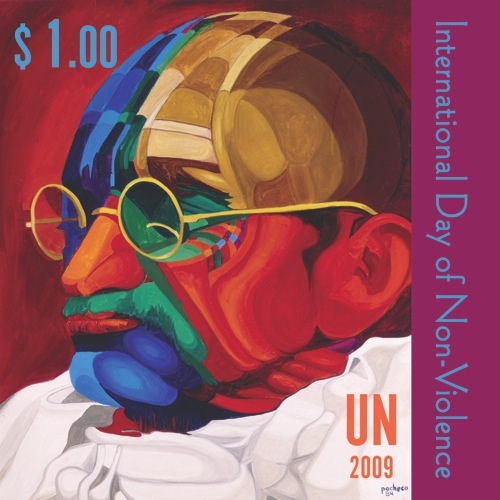
63 years ago today Mohandas Gandhi was assassinated

"We are ruthless and ask no quarter from you. When our turn comes we shall not disguise our terrorism." - Karl Marx, Marx-Engels Gesamt-Ausgabe, vol. vi pp 503-5 (The final issue of Neue Rheinische Zeitung, 18 May 1849)

"Terrorism and deception are weapons not of the strong but of the weak." - Mohandas K. Gandhi

Covered with flower petals, the body of Indian leader Mahatma Gandhi lies in state at Birla House in New Delhi.

The Soviet press published an article written by S.M. Vakar in 1948 following Gandhi's assassination on January 30, 1948 titled "The Class Nature of the Gandhi Doctrine" subtitled "Gandhi as a Reactionary Utopian" in the Soviet philosophy journal Voprosy filosofii (Questions of Philosophy). The Marxist Leninist argument was outlined as follows:
Although Gandhi regarded the union and independence of the Indian peoples as his goal, his reactionary-Utopian social theory and the reformist methods of struggle connected with it caused his activity to fail in facilitating overthrow of the colonial yoke [...] The social essence of the Gandhi doctrine and its fundamentally reactionary role in the history of India's national liberation movement has hardly been treated in Marxist literature. Yet this doctrine still retards the development of class awareness among the Indian masses.
What was this social essence of Gandhian thought that so troubled the Marxist Leninists in the Soviet Union? First, the reformist methods of struggle referred to in the above quote was nonviolent resistance and secondly his social theory rejected class struggle as another manifestation of destructive violence. On September 11, 1906 a new word came into existence that would give a better understanding of Gandhi's social theory and method of struggle which he described as:
'Satyagraha.' Truth (Satya) implies love, and firmness (agraha) engenders and therefore serves as a synonym for force. I thus began to call the Indian movement 'Satyagraha,' that is to say, the Force which is born of Truth and Love or non-violence, and gave up the use of the phrase 'passive resistance,' in connection with it, so much so that even in English writing we often avoided it and used instead the word 'Satyagraha' itself or some other equivalent English phrase.
The Marxist-Leninists embraced revolutionary violence and a movement led by a small vanguard of intellectuals and professional revolutionaries that would carry out the changes necessary by whatever means necessary and rejected nonviolence as naive. They followed the doctrine of Lenin as presented in his 1902 revolutionary tract What is to be done.

Over a century has passed since both sets of ideas have been set out and applied around the world. An analysis done by Maria J. Stephen and Erica Chenoweth systematically explores the strategic effectiveness of both violent and nonviolent campaigns using data on 323 campaigns carried out between 1900 and 2006.[1] There findings demonstrate that major non-violent campaigns were successful 53% of the time versus only 26% for major violent campaigns and terrorist campaigns had a dismal 7% success rate.

Today, India with all its flaws is the world's largest democracy with a growing economy that presents new competitive challenges to the developed world and Marxist-Leninism has amassed a body count of 100 million dead and counting. It would appear that Gandhi's criticisms of the communists were prescient:

"The socialists and communists say, they can do nothing to bring about economic equality today. They will just carry on propaganda in its favor and to that end they believe in generating and accentuating hatred. They say, when they get control over the State, they will enforce equality. Under my plan the State will be there to carry out the will of the people, not to dictate to them or force them to do its will." - Mohandas Gandhi

"It is my firm conviction that if the State suppressed capitalism by violence, it will be caught in the coils of violence itself, and will fail to develop non-violence at any time. The State represents violence in a concentrated and organized form. The individual has a soul, but as the State is a soulless machine, it can never be weaned from violence to which it owes its very existence." - Mohandas Gandhi

It is Satyagraha that is relevant today in 2011 and offers an alternative to the conflagrations suffered in the 20th century and the wars that plague the world now. Gandhi's Satyagraha is a call to principled non-violence but even pragmatists and realists looking over the historical record cannot fail to be influenced by the fact that non-violent civic resistance works and in the aggregate offers a better chance of a better life for more people.

[1]Stephan, Maria J. and Chenoweth, Erica Why Civil Resistance Works: The Strategic Logic of Nonviolent Conflict. International Security, Vol. 33, No.1 (Summer 2008), pp. 7-44

[2] Gandhi, Mohandas (author) Dalton, Dennis (editor) Mahatma Gandhi: Selected Political Writings September 1996 Hackett Publishing Company

Friday, January 28, 2011

158 years after the birth of José Martí a Cuban Woman is on hunger strike demanding her husband's freedom

It is terrible to speak of you, Liberty, for one who lives without you. - José Martí

On hunger strike, Alejandrina García de la Riva

José Julián Martí Pérez was born on January 28, 1853 and will be honored by a dictatorship that is the antithesis of everything he represented and advocated. Today, on the the 158th anniversary of his birth Alejandrina García de la Riva, wife of Cuban prisoner of conscience Diosdado González Marrero and thus a Cuban Lady in White, wrote to Yoani Sanchez: "I declare myself on hunger strike for the freedom of my husband Diosdado." Shortly after midnight on January 28, 2011 the Cuban Democratic Directorate released a statement from Alejandrina.

Alejandrina has a twitter account with one entry from June 11, 2010 that reads: "To the Cuban government I say: Do not be afraid to open the gates and free the prisoners of conscience."


Alejandrina García de la Riva speaks out on February 1, 2011, the 5th day of her hunger strike (video by Yoani Sanchez)

A month later on July 7, 2010, according to Cardinal Jaime Ortega, an agreement was reached where all prisoners of conscience imprisoned during the 2003 Cuban Black Spring would be freed by November 2010 with those wanting to remain in Cuba being released last. With the exception of one prisoner of conscience, Arnaldo Ramos Lauzurique, age 68, the only one's released have been driven to the airport and placed on a plane out of the country into exile. Eleven prisoners of conscience from 2003 remain in prison today. One of them is Alejandrina's husband, Diosdado González Marrero.

He was arrested on March 18, 2003. According to the Inter American Commission on Human Rights (IACHR)he was "[s]entenced to 20 years imprisonment on April 7, 2003." The IACHR also informed that he was a "[m]ember of the Peace, Democracy, and Freedom Party (Partido Paz, Democracia y Libertad) in Perico Matanzas," and that he was born on August 10, 1962.

In 2004, Amnesty International described Diosdado as having "been an activist for several years" who "has been detained on several occasions" and had been "recognised by Amnesty International as a prisoner of conscience in the past." According to reports presented to Amnesty International, "he suffers from high blood pressure and apparently has not received adequate medical attention for his complaint."

Below you can listen to Alejandrina García de la Riva interviewed by the Argentine journalist Débora Plager on July 10, 2010 where she talks about the circumstances surrounding her husband's arrest and their family:


In the recording below you can listen to Alejandrina as she describes an activity carried out by the Ladies in White on September 26, 2010:


"The struggles waged by nations are weak only when they lack support in the hearts of their women. But when women are moved and lend help, when women, who are by nature calm and controlled, give encouragement and applause, when virtuous and knowledgeable women grace the endeavor with their sweet love, then it is invincible." - José Martí

Cuban Ladies in White silently marching through Havana demanding their loved one's freedom. Perhaps the dictatorship is afraid to free non-violent prisoners of conscience and would prefer to confront the powerful mobilization of Cuban women because they fear 11 courageous men. They who have organized acts of repudiation; sought to sow hatred and distrust into Cuban society in order to divide it; murdered innocent men, women and children in massacres like the "13 de Marzo" tugboat massacre and the Brothers to the Rescue shoot down; and falsely imprisoned, tortured and murdered prisoners of conscience like Orlando Zapata Tamayo then slandered them in death and harassed their families lack all decorum.

They also know as José Martí long ago observed that "[w]hen there are many men without decorum, there are always others who themselves possess the decorum of many men. These are the ones who rebel with terrible strength against those who rob nations of their liberty, which is to rob men of their decorum. Embodied in those men are thousands of men, a whole people, human dignity." That kind of moral strength when faced with a morally bankrupt regime can bring it down quickly.

Update: On Tuesday, February 1, 2011 Cuban prisoner of conscience Diosdado González Marrero initiated a water only hunger strike in solidarity with his wife demanding freedom of 11 prisoners of conscience imprisoned in 2003 and was joined by fellow prisoner of conscience Pedro Argüelles. Associated Press reported on Tuesday that Alejandrina had already lost 5 pounds.

Monday, January 24, 2011

2011 Human Rights Watch World Report: Cuba

Cuba
Events of 2010

Cuba remains the only country in Latin America that represses virtually all forms of political dissent. In 2010 the government continued to enforce political conformity using criminal prosecutions, beatings, harassment, denial of employment, and travel restrictions.

Since inheriting control of the government from his brother Fidel Castro in 2006, Raul Castro has kept Cuba's repressive legal and institutional structures firmly in place. While Cuban law includes broad statements affirming fundamental rights, it also grants officials extraordinary authority to penalize individuals who try to exercise them.

Following the death of a political prisoner on hunger strike in February 2010 and the subsequent hunger strike of a prominent dissident, Cuba’s government has released more than 40 political prisoners, forcing most into exile. Many more journalists, human rights defenders, and dissidents remain behind bars, while the government increasingly relies on short-term, arbitrary detentions to punish its critics.

Political Prisoners, Arbitrary Detentions, and "Dangerousness"
Cubans who dare to criticize the government are subject to criminal and "pre-criminal" charges. They are exempt from due process guarantees, such as the right to a defense, and denied meaningful judicial protection because courts are "subordinated" to the executive and legislative branches.

In February 2010 political prisoner Orlando Zapata Tamayo died following an 85-day hunger strike. Zapata—who was jailed during a 2003 crackdown on more than 75 human rights defenders, journalists, and dissidents—initiated his hunger strike to protest the inhumane conditions in which he was being held and to demand medical treatment. Following Zapata’s death, dissident Guillermo Fariñas initiated a hunger strike to demand medical attention for political prisoners with serious health problems. In July Fariñas ended his hunger strike after 135 days when the Catholic Church announced it had reached an agreement with the Cuban government to release the 52 political prisoners still behind bars from the 2003 crackdown. By mid-November, 39 of the 52 prisoners had been released on the condition that they accept forced exile to Spain, while 12 prisoners, who refused to leave Cuba, remained in prison. One prisoner had been granted provisional freedom and allowed to stay on the island.

Scores of political prisoners remain in Cuban prisons. In October 2010 the Women in White—a respected human rights group comprised of wives, mothers, and daughters of political prisoners—issued a list of 113 prisoners whom it said were incarcerated for political reasons. According to the Damas, there are likely many more prisoners whose cases they cannot document because Cuba’s government does not allow international monitors or national groups to access its prisons.

The government continued to rely on arbitrary detention to harass and intimidate individuals exercising their fundamental rights. The Cuban Commission for Human Rights and National Reconciliation documented 325 arbitrary detentions by security forces in 2007; from January to September of 2010, it registered more than 1,220. The detentions are often used to prevent individuals participating in meetings or events viewed as critical of the government. Security officers often offer no charge to justify the detentions—a clear violation of due process rights—but warn detainees of longer arrests if they continue participating in activities deemed critical of the government. For example, from February 23 to 25, more than 100 people were arbitrarily detained across Cuba or placed under house arrest to prevent them participating in memorial services for Orlando Zapata Tamayo.

Raul Castro's government has increasingly relied on a "dangerousness" (estado peligroso) provision of the criminal code that allows the state to imprison individuals before they have committed a crime, on the suspicion that they might commit an offense in the future. Scores of individuals have been sentenced to between one and four years for "dangerous" activities including handing out copies of the Universal Declaration of Human Rights, staging peaceful marches, writing critical news articles, and trying to organize independent unions.

Freedom of Expression
The government maintains a media monopoly on the island, ensuring that freedom of expression is virtually nonexistent. Although a small number of independent journalists manage to write articles for foreign websites or maintain independent blogs, they must publish their work through back channels—writing from home computers, saving information on memory sticks, and uploading articles and posts through illegal internet connections. Others dictate articles to contacts abroad. The risks associated with these activities are considerable. For example, blogger Luis Felipe Rojas of Holguin has repeatedly been arbitrarily detained, interrogated, and threatened by authorities for his work. In May 2010, soldiers and police surrounded his house for six days. He was arrested in September along with five human rights defenders when he traveled to attend a pro-democracy meeting, and again in October.

The government controls all media outlets in Cuba and access to outside information is highly restricted. Only a tiny fraction of Cubans have the chance to read independently published articles and blogs because of the high cost of, and limited access to, the internet: an hour of internet use costs one-third of Cubans' monthly wages and is only available in a few government-run centers.

Human Rights Defenders
Refusing to recognize human rights monitoring as a legitimate activity, the Cuban government denies legal status to local human rights groups. The government also employs harassment, beatings, and imprisonment to punish human rights defenders who attempt to document abuses. For example, in October 2010 two members of the Women in White were detained as they marched in Havana holding a banner that read: “Down with racism and long live human rights.” Police transferred them to a police station and beat them, fracturing one woman’s nose and the other’s wrist, and held them without access to communications for seven hours.

Travel Restrictions and Family Separation
The Cuban government forbids the country's citizens from leaving or returning to Cuba without first obtaining official permission, which is often denied. For example, internationally acclaimed blogger Yoani Sanchez has been denied the right to leave the island to accept awards and participate in conferences eight times in the past three years.

Widespread fear of forced family separation gives the Cuban government a powerful tool for punishing defectors and silencing critics. The government frequently bars citizens engaged in authorized travel from taking their children with them overseas, essentially holding children hostage to guarantee their parents' return.

The government restricts the movement of citizens within Cuba by enforcing a 1997 law known as Decree 217. Designed to limit migration to Havana, the decree requires Cubans to obtain government permission before moving to the country's capital. It is often used to prevent dissidents traveling to Havana to attend meetings, and to harass dissidents from other parts of Cuba who live in the capital. For example, in January 2010 authorities repeatedly threatened to remove human rights defenders Juan Carlos González and Tania Maceda Guerra from Havana. Security officers visited their home, called them "counterrevolutionaries," and warned they would be forcibly returned to their native province under Decree 217 if they did not leave Havana voluntarily.

Prison Conditions
Conditions for prisoners are overcrowded, unhygienic, and unhealthy, leading to extensive malnutrition and illness. Political prisoners who criticize the government, refuse to participate in ideological "reeducation," or engage in hunger strikes and other forms of protest are routinely subjected to extended solitary confinement, beatings, visit restrictions, and denial of medical care. Prisoners have no effective complaint mechanism to seek redress, giving prison authorities total impunity.

Key International Actors
In October 2010 the European Union renewed its "Common Position" on Cuba, adopted in 1996, which conditions full economic cooperation with Cuba on the country's transition to a pluralist democracy and respect for human rights. At the same time the EU dispatched its top foreign police official, Catherine Ashton, to initiate a dialogue with Cuba’s government on how to improve relations.

The United States' economic embargo on Cuba, in place for more than half a century, continues to impose indiscriminate hardship on the Cuban people, and has done nothing to improve human rights in Cuba. At the United Nations General Assembly in October, 187 of the 192 member countries voted for a resolution condemning the US embargo; only the United States and Israel voted against it. In April 2009 the US government eliminated all limits on travel and remittances by Cuban Americans to Cuba. Legislation introduced in the US House of Representatives in February 2010 would restore the right travel to Cuba for all Americans and remove obstacles to sales of US agricultural commodities to Cuba. It has not yet been brought to a vote.

As of October 2010 Cuba’s government had yet to ratify the core international human rights treaties—the International Covenant on Civil and Political Rights and the International Covenant on Economic, Social and Cultural Rights—which it signed in February 2008. Cuba is currently serving a three-year term on the UN Human Rights Council, having been reelected in May 2009.

Badfellas

Wikileaks Reveals: The Cuban Mafia Splinters

CUBA IS A STATE ON THE TAKE


The Cuban mafia was run for decades by the capo known as Fidel Castro, but as the old mafioso has lost his edge and his brother Raul Castro has failed to keep control of the family business one sees that other hands are dipping into the racket known as the Cuban regime.

In a dictatorship where the rule of law is non-existent and subjected to the whims of a small ruling elite corruption is endemic part of that system.

These are bad fellas. In the picture above from (left to right) you've got three of the old mafia guard Ramiro Valdez (a.k.a Blood Bath) , Raul Castro (a.k.a. Fredo) and Fidel Castro (a.k.a. the Horse). The cable below leaked by Wikileaks speaks volumes:

06HAVANA8986 2006-04-26 18:06 2011-01-22 21:09

CONFIDENTIAL US Interests Section Havana

[...]

C O N F I D E N T I A L SECTION 01 OF 03 HAVANA 008986

SIPDIS

SIPDIS

E.O. 12958: DECL: 04/24/2016
TAGS: PGOV SOCI ECON CU
SUBJECT: (CUBA IS) A STATE ON THE TAKE

REF: HAVANA 8769

HAVANA 00008986 001.2 OF 003


Classified By: MICHAEL E. PARMLY FOR REASONS 1.4 b/d

¶1. (C) Summary: Castro has spent the past five months battling corruption in a country where trickery has become a way of life. Because most Cubans work for the state, the entire system - from petty officials to Castro's closest advisors - is rife with corrupt practices. Given state control over all resources, corruption and thievery have become one and the same. Corrupt practices also include bribery, misuse of state resources and accounting shenanigans. In its post-Soviet incarnation, Cuba has become a state on the take. End Summary.

From Petty to Grande
--------------------

¶2. (U) In October 2005, Castro embarked on a crusade against corruption that shows no signs of letting up (ref A). The concerted campaign has disrupted the lives of many Cubans living off their abilities to "resolver" (a word that implies everything from simply finding a creative solution to outright stealing). Fifteen years after the collapse of the Soviet bloc, "resolver" has become a way of life in Cuba. Economic desperation combined with totalitarian control has resulted in a state system riddled by corruption from top to bottom.

Bribes
------

¶3. (U) Bribes are a common means of getting around suffocating controls. For example, Cubans are only allowed to swap housing ("permutar") if both residences are of equal value. Money is not allowed to exchange hands in the transaction, but often does. If a Cuban mother swaps a small apartment for a large one in a trade that obviously involved compensation, she must also be prepared to pay a GOC housing official several hundred dollars to look the other way. An additional fee may be required to push the deal through in a timely fashion. As always, Cubans must tread carefully; accidentally propositioning a clean official - or worse, a strident revolutionary - could result in disaster.

¶4. (U) Block organizations (CDRs) have declined in prominence over the years (to the point where few Cubans have any interest in becoming CDR President), but still maintain control over the distribution of goods. On rare occasions, these goods are valuable. When televisions or refrigerators become available through the state system, CDR Officers are famous for giving preferential access to two groups: Those that maintain good revolutionary credentials... and those that can afford it.

¶5. (U) Bribes are also key to getting good jobs (good jobs being those with opportunities to "resolver"). For example, a job with access to a fuel tank (gas station or other outlet) reportedly costs thousands of dollars, while a job in tourism (with access to tips) might cost in the hundreds. An unemployed Cuban told P/E Officer that a job with elite state firm CIMEX (The Import-Export Corporation) would cost him up to 500 USD.

¶6. (U) Cuban police officers are famous for taking bribes. They pull drivers over for myriad transgressions, then describe their "sick child." An Italian tourist told P/E Officer that every time a police officer pulled him over, it was always the officer's "birthday." The police are so corrupt that the GOC regularly fills their ranks with unsullied recruits from the East. As time passes, the new crop becomes as corrupt as the old, and a fresh batch is brought in to replace them.

Misuse of State Resources
-------------------------

¶7. (U) Cash is not abundant in Cuba, such that bribes sometimes take a back seat to bartering, exchanging favors, and "tit for tat" deals. A Cuban might not enjoy control over anything easily stolen or sold on the black market, but putting resources to other uses can be lucrative. Transportation is a prime example. As every Cuban knows, anyone behind the wheel of a state vehicle (whether truck, bus, car or train) earns two incomes: a
HAVANA 00008986 002.2 OF 003
pittance from the state, plus additional income transporting people or goods on the side. In another example, a Cuban woman told P/E officer how she finally managed to get her tooth capped successfully by paying hard currency at an underground dental clinic, staffed by health ministry dentists and outfitted with equipment stolen from the state.

¶8. (U) Certain sectors, including shipping, tourism, construction and food are notorious for generalized theft and corruption. For example, there is a thriving black market in cement, paint and wood. Or as one Cuban commented (in response to Vice President Carlos Lage's 2005 promise to build 10,000 new housing units), "the GOC can't build anything because it is simply impossible to collect enough supplies in one place." The ration system, which leaves bulk foods under the supervision of bodega employees, is also notorious for theft and corruption. As mentioned above, the housing office, or "Vivienda," is also famous for corruption.

¶9. (U) In Cuba's so-called "productive" sectors, much wheeling and dealing goes on behind the scenes as state managers swap goods, concoct inventories, fabricate receipts, and deal in imaginary resources. They are aided by an accounting system that equates the Cuban Peso (CP) with the Cuban Convertible Peso (CUC) on paper, though the real exchange rate is 26 to 1. (For example, some official state purchases are made in CUCs while others are made in CPs.) To aid in the confusion, Cuban managers and accountants still track their accounts with paper and pencils. The resulting morass of numbers is so incomprehensible that even "clean" managers are forced to play accounting tricks in order to do their jobs.

¶10. (U) Some state installations are run by de facto "mafias." One Cuban told P/E officer about the manager of a bread distribution center who put his friends in key jobs. He eventually came to control an entire chain of state bakeries.

Power and Position
------------------

¶11. (C) The GOC stopped giving licenses to new paladars (home-based restaurants) several years ago, raising questions as to what the remaining operations had done to stay open. An American specialist on the topic posited that all upscale paladars were in some way "connected." For example, a USINT officer outside the XXXXXXXXXXXX paladar XXXXXXXXXXXX spotted the supposedly "self-employed" owner drive up in a car with Ministry of the Interior (MININT) plates. A one-table paladar in the Santa Fe neighborhood (known as the "fish paladar") reportedly enjoys an elite clientele - Raul Castro. In these days of heightened state control, merely bribing inspectors is not enough to stay open.

¶12. (U) The benefits of holding a position of power within the GOC can be lucrative. A Swiss businessman told P/E officer that Cuban managers take kickbacks for awarding large contracts to foreign companies and then deposit those kickbacks in banks abroad. "Just like everywhere in the world, a million dollar contract gets you 100,000 in the bank," he commented. These state managers are not so much members of the revolutionary elite, but rather pragmatists who have carved out a space for themselves within an otherwise rigid system. The former head of the Tourism Ministry might serve as an example - he was dismissed in 2004 due to "serious mistakes relating to control" and replaced with a military general.

¶13. (C) Separate from this elite crowd of entrepreneurs stand Castro's cadres of regime faithfuls, some of whom are widely rumored to be corrupt (such as Castro clan insider General Julio Casas Regueiro). Last year, Battle of Ideas Head Otto Rivero (a Castro protege) almost lost his job due to a corruption scandal. Battle of Ideas personnel were rumored to be dipping into the pie at all levels, from accounting shenanigans to making off with food and television sets destined for the "Free the Five" campaign.

Comment
-------

¶14. (C) Because the state controls - or tries to control -
HAVANA 00008986 003.2 OF 003
all aspects of life in Cuba, theft and corruption have become one and the same. The hotel manager who appropriates foodstuffs is both corrupt (he uses his state job for personal gain) and a thief (he steals). The more corruption grows, the more Castro tightens control, and the more Cubans turn to corruption to get what they want. The GOC leadership is well aware of the problem, but Castro can't seem to make peace with it. As one local diplomat ruminated, "Castro leads a saintly life, but saints are special because they are rare." And so the Comandante continues his struggle to wipe out corruption, seemingly oblivious to its irreversibility as long as profitable activity is illegal, individual success is cause for suspicion, and old-fashioned hard work gets you nowhere.

PARMLY

Sunday, January 23, 2011

11 months after the death of Orlando Zapata

Repression continues and a call to action

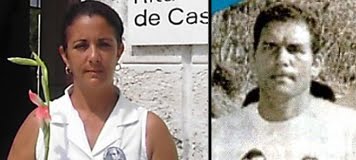
Orlando Zapata Tamayo, before and after the Cuban regime's prison industrial complex.


The news from Cuba is predictable, the repression continues against the family of Orlando Zapata Tamayo and those who want to demonstrate their solidarity. Twitter confirmed early today with tweets from Yoani Sanchez:

TR @yoanisanchez #Cuba #GY RT @alambradas Dissidents in San German, Holguin, now under total persecution by G2 #ozt (G2 = State Security)

TR @yoanisanchez #Cuba #GY Police and security block entrance to Embarcadero, Banes to impede solidarity with family of #OZT 11 months after his death.


At the same the Free Cuba Foundation issued a worldwide call to action today for the one year anniversay of the death of Orlando Zapata Tamayo and the 15th anniversary of the extrajudicial executions of Carlos Costa, Pablo Morales, Mario De La Peña and Armando Alejandre Jr. on February 24, 1996 in the Brothers to the Rescue shoot down.

11 months following his extrajudicial death it is important to remember who is Orlando Zapata Tamayo because as long as we remember him and his sacrifice he will live on. Zapata Vive!