"The first victory we can claim is that our hearts are free of hatred. Hence we say to those who persecute us and who try to dominate us: ‘You are my brother. I do not hate you, but you are not going to dominate me by fear. I do not wish to impose my truth, nor do I wish you to impose yours on me. We are going to seek the truth together’. THIS IS THE LIBERATION WHICH WE ARE PROCLAIMING."
Oswaldo José Payá Sardiñas (2002)
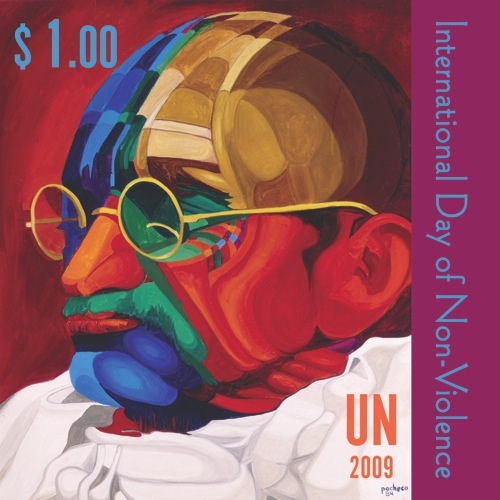
Mohandas Gandhi, the middle class British educated Indian lawyer was transformed into a principled strategic non-violent activist in South Africa at the end of the 19th century struggling against racist laws and policies of the colonial authorities. The most important theoretical result of the South African campaign was the development of Satyagraha. Gandhi announced on September 11, 1906 in his newspaper Indian Opinion a contest to submit names to describe this movement. The final name was the fusion of two words as explained by Gandhi: “Truth (Satya) implies love, and firmness (agraha) engenders and therefore serves as a synonym for force…the Force which is born of Truth and love or nonviolence.”
Although Gandhi described himself as a socialist he rejected Marx’s theory of the class struggle as inherently violent and offered a profound critique stating: “The socialists and communists say, they can do nothing to bring about economic equality today. They will just carry on propaganda in its favor and to that end they believe in generating and accentuating hatred. They say, when they get control over the state, they will enforce equality. Under my plan the state will be there to carry out the will of the people, not to dictate to them or force them to do its will.”
Gandhi despite his successful revolution and the establishment of the largest democracy on the planet was felled, after repeated assassination attempts they gunned the old man down as he went to worship. They murdered him because they did not believe that India could survive with Gandhi promoting Satyagraha. Gopal Godse, a co-conspirator and brother of the assassinNathuram Godse, argued as late as February 2000 in a Time magazine interview that: “In politics you cannot follow nonviolence. You cannot follow honesty. Every moment you have to give a lie. Every moment you have to take a bullet in hand and kill someone.”
The choice is clear on one side the force which is born of truth and love or on the other the force that is born of lies and hatred. Satyagraha saved India and Pakistan from a genocidal civil war, and Gandhi’s death at the hands of Hindu radicals led to Indians rejecting the assassins toxic approach to exercising force. The ends justifying the means which was espoused by Niccolo Machiavelli in the 15th Century in his political treatise The Prince dealt with using amoral means to achieve "moral" ends such as destroying your adversary utilizing violence and lies. Gandhi took the opposite approach, his autobiography was subtitled "my experiments with truth" and he sought to convert the enemy into a friend using truth and nonviolence to reject injustice and oppression stating that, “real non-cooperation is non-cooperation with evil and not with the evil doer.”
I think they kill my child every time they deprive a person of their right to think. - José Martí
It is terrible to speak of you, Liberty, for one who lives without you. - José Martí
José Martí was born today on January 28, 1853 and in addition to being a journalist, poet, independence leader he was a fervent defender of freedom of expression and conscience. The regime operating in Cuba today is an affront to the values he defended his entire life. It is in remembrance of both him and of Celia Cruz who passed away in July of 2003 in Exile whereas Martí, who would spend most of his life in Exile, would return to Cuba by way of Haiti and perish in one of the early skirmishes in Cuba's second war of independence on May 19, 1895.
Celia Cruz banned and censored in Cuba for refusing to support the dictatorship is one of the great Cuban musicians who has been erased from the "official" Cuban history, but is remembered and loved by Cubans everywhere and in Cuba is remembered and listened to thanks to an underground black market. --> According to the book Shoot the singer!: music censorship today edited by Marie Korpe "musicians who left Cuba permanently after the Cuban revolution, whether for political reasons or simply to try to explore a possible career somewhere else in the world, are heavily censored by the government-backed broadcasting centre, the Cuban Insitute for Radio and Television (ICRT). How did this happen? When where the arts politicized and subjected to the dictatorship's veto? It began in 1961 and the website of Free Muse, an organization focuses on the freedom of musical expression, describes how it happened in its Cuba country profile:
Fidel Castro in June 1961 met on three consecutive Sundays in Havana with hundreds of artists and intellectuals. As a conclusion he gave a speech where he stated that "the Revolution defends freedom; the Revolution has brought to the country a big sum of liberties; that the Revolution can essentially not be an enemy of the liberties; that if somebody's preoccupation is that the Revolution will asphyxiate his creative spirit, that preoccupation is unnecessary, as this preoccupation has no raison d'être".
Gradually the grip on culture was tightened. Music performed by those musicians who chose to go into exile criticizing the new regime, such as the extremely popular Celia Cruz and her orchestra, Sonora Matancera. The new music which was developed in North America and Western Europe at that time by groups and musicians like The Beatles, Rolling Stones, Grateful Dead, Frank Zappa, Janis Joplin, Earth, Wind and Fire, was labeled decadent and counterrevolutionary.
The banning was so consequent that for years it was even forbidden to mention some of those names. The banning of Celia Cruzwas specially tough because she was so popular before the revolution. [...] Her name and Sonora Matancera were among those omitted in the Cuban musicologist Helio Orovio's 'Diccionario de la música cubana' (Dictionary of Cuban Music, Havana 1981). In a later edition these omissions were corrected.
Eric Silva Brenneman observes that “[b]etween the 1960s and 1970s, the island performed a cultural genocide the consequences of which are still difficult to calculate today.” After fifty years of totalitarianism it is important to analyze and document the damage done and where possible seek the means to heal and restore that which has been lost where possible. In the area of music and culture much can be done.
I am an honest man
From where the palm tree grows
And before dying I want
To share the verses of my soul.
Guantanamera, guajira, Guantanamera
My verse is a clear green
And it is flaming crimson
My verse is a wounded deer
Who seeks refuge in the woods.
Guantanamera, guajira, Guantanamera
I cultivate a white rose
In July as in January
For the sincere friend
Who gives me his honest hand.
Guantanamera, guajira, Guantanamera
And for the cruel one
who would tear out this heart with which I live
I do not cultivate nettles nor thistles
I cultivate a white rose
Guantanamera, guajira, Guantanamera
With the poor people of the earth
I want to share my fate
The brook of the mountains
Gives me more pleasure than the sea
Guantanamera, guajira Guantanamera
The Cuban dictatorship has harassed and continues to harass human rights activists in a systematic pattern. The pattern seems to be the more effective the activist the worse the repression. Juan Carlos González Leiva has been extremely effective over the years and with the Council of Human Rights Rapporteurs' 2009 human rights report being examined and summarized by the Office of the High Commissioner for Human Rights of the United Nations and included in the summary prepared for the working group for Cuba's Universal Periodic Review in 2009 the regime's apparatus of repression has been applied against this human rights activist.
Below is today's Human Rights Watch press release denouncing the harassment against Juan Carlos
Cuba: Stop Harassing Human Rights Defender and Family
Authorities Threaten Enforced Relocation Under Draconian Law
Juan Carlos González Leiva
WASHINGTON - January 27 - The Cuban government should immediately cease its harassment of the blind human rights defender Juan Carlos González Leiva, a leader of the Council of Human Rights Rapporteurs, and his family, Human Rights Watch said today.
In recent weeks, Cuban authorities have repeatedly threatened to force González Leiva and his wife and fellow rights defender Tania Maceda Guerra to leave Havana and move elsewhere on the island. The authorities have pressed for the move under a draconian law that restricts freedom of movement.
"The harassment of González Leiva offers further proof that the Raul Castro government is willing to do everything within its power to prevent human rights monitoring, including forcibly displacing the monitors themselves," said José Miguel Vivanco, Americas director at Human Rights Watch.
González Leiva and Maceda Guerra have lived in Havana since May 2007, when they were granted permission to live with and care for a blind friend. Under a law known as Decree 217, all Cuban citizens from outside of Havana must obtain government permission before moving to the capital.
In November 2009, the government denied the couple's application to renew their temporary residence status in Havana, where they are still living with their blind friend. González Leiva said housing authorities told him the refusal came at the orders of state security officers.
Since that time, security officers have repeatedly visited their home, calling them "counterrevolutionaries" and "traitors," and warning that they will be forcibly sent back to their native province, Ciego de Avila, if they do not leave Havana voluntarily. As a result, they have not left their apartment in a week.
González Leiva and Maceda Guerra have also been the victims of death threats and public acts of repudiation. Over the past several months, the email account of their organization has been hacked into and terminated, their movements monitored, and their family members threatened, González Leiva told Human Rights Watch.
"The international community needs to send a clear message to the Cuban government that such attacks on human rights defenders are completely unacceptable," Vivanco said.
A recent report by Human Rights Watch - "New Castro, Same Cuba: Political Prisoners in the Post-Fidel Era" - found that Raul Castro has kept Cuba's repressive machinery fully active, quashing virtually all forms of political dissent. The report documents the government's continued use of Decree 217 to restrict the freedom of movement of journalists, human rights defenders, and other members of civil society who criticize the government.
###
Human Rights Watch is one of the world's leading independent organizations dedicated to defending and protecting human rights. By focusing international attention where human rights are violated, we give voice to the oppressed and hold oppressors accountable for their crimes. Our rigorous, objective investigations and strategic, targeted advocacy build intense pressure for action and raise the cost of human rights abuse. For 30 years, Human Rights Watch has worked tenaciously to lay the legal and moral groundwork for deep-rooted change and has fought to bring greater justice and security to people around the world.
"Pure, selfless, persecuted, tormented, poetic and simple, the religion of the Nazarene enthralled all honourable men.... Every people needs to be religious. Not only as part of its essence, but for its own practical benefit it needs to be religious.... An irreligious people will die, because nothing in it encourages virtue. Human injustices offend virtue; it is necessary that heavenly justice guarantee it". -José Martí
I think they kill my child every time they deprive a person of their right to think. -José Martí
Approaching the end of the first month of the second decade of the new millennium offers an opportunity to look back over a decade ago as Pope John Paul II visited Cuba and spoke before the José Martí Plaza in Havana and outlined what Cubans need to do to be free, and reflect on his message eleven years later with the culture of fear and the lie under-girding the totalitarian superstructure weakened but still maintaining the system :
On the threshold of the Year 2000, the teachings of Jesus maintain their full force. They are valid for all of you, dear brothers and sisters. In seeking the justice of the kingdom we cannot hesitate in the face of difficulties and misunderstandings. If the Master's call to justice, to service and to love is accepted as good news, then the heart is expanded, criteria are transformed and a culture of love and life is born. This is the great change which society needs and expects; and it can only come about if there is first a conversion of each individual heart, as a condition for the necessary changes in the structures of society.
6. "The Spirit of the Lord has sent me to proclaim release to the captives ... to set at liberty those who are oppressed" (Lk 4:18). The Good News of Jesus must be accompanied by a proclamation of freedom based on the solid foundation of truth: "If you continue in my word, you are truly my disciples, and you will know the truth and the truth will make you free" (Jn 8:31-32). The truth of which Jesus speaks is not only the intellectual grasp of reality, but also the truth about man and his transcendent condition, his rights and duties, his greatness and his limitations. It is the same truth which Jesus proclaimed with his life, reaffirmed before Pilate and, by his silence, before Herod; it is the same truth that led him to his saving Cross and his glorious Resurrection.
A freedom which is not based on truth conditions man in such a way that he sometimes becomes the object and not the subject of his social, cultural, economic and political surroundings; this leaves him almost no initiative for his personal development. At other times that freedom takes on an individualistic cast and, with no regard for the freedom of others, imprisons man in his own egoism. The attainment of freedom in responsibility is a duty which no one can shirk. For Christians, the freedom of the children of God is not only a gift and a task, but its attainment also involves an invaluable witness and a genuine contribution to the journey towards the liberation of the whole human race. This liberation cannot be reduced to its social and political aspects, but rather reaches its fullness in the exercise of freedom of conscience, the basis and foundation of all other human rights.
To the crowds who were shouting: "The Pope is free and wants us all to be free", the Holy Father replied:
Yes, he lives with that freedom for which Christ has set you free.
José Martí understood this, but after the terror imposed amnesia initiated in 1959 it is important to repeat it, internalize it and let others know of this profound truth that the process of liberation begins with the exercise of freedom of conscience and that is precisely what Pope John Paul II did on that Sunday afternoon reminding Cubans:
The teaching of José Martí on love between all people had profoundly evangelical roots, and thus overcame the false conflict between faith in God and love and service to one's country. This great leader wrote: "Pure, selfless, persecuted, tormented, poetic and simple, the religion of the Nazarene enthralled all honourable men.... Every people needs to be religious. Not only as part of its essence, but for its own practical benefit it needs to be religious.... An irreligious people will die, because nothing in it encourages virtue. Human injustices offend virtue; it is necessary that heavenly justice guarantee it".
"In this way each person, enjoying freedom of expression, ... and enjoying appropriate freedom of association, will be able to cooperate effectively in the pursuit of the common good." -Pope John Paul II
1. "Blessed is the nation whose God is the Lord" (Ps 32:12). With the psalmist we have sung that blessings accompany the people which has God as its Lord. More than 500 years ago, when the cross of Christ arrived on this island and with it his saving message, there began a process which, nourished by Christian faith, has continued to forge the characteristic traits of this nation.
The series of this nation’s illustrious figures include: that soldier who was the first catechist and missionary of Macaca; the first Cuban teacher, Fr Miguel de Velázquez; the priest Esteban Salas, the father of Cuban music; the renowned man of Bayamo, Carlos Manuel de Céspedes, father of his country, who, prostrate at the feet of the Our Lady of Charity, began the fight for Cuba's freedom and independence; Antonio de la Caridad Maceo y Grajales, whose statue stands in the plaza where our celebration is taking place today, and whose mother prayed before the crucifix asking that he commit himself wholly and completely to the freedom of Cuba. In addition to these, there are many other illustrious men and women who, motivated by their unshakeable faith in God, chose the way of freedom and justice as the foundation of their people's dignity.
2. I am pleased to be here today in this distinguished Archdiocese, which counts St Anthony Mary Claret among its Pastors. First of all, I offer cordial greetings to ArchbishopPedro Meurice Estíu of Santiago de Cuba and Primate of the nation. I greet as well the other Cardinals, Bishops, priests and deacons who are committed to furthering the kingdom of God in this land. I likewise greet the men and women religious and all the faithful present here.
I wish to extend my respectful greetings to the Vice-President of the Council of State, to Minister Raúl Castro and to the other civil authorities taking part in this Holy Mass, and I thank them for their help in organizing this event.
3. During this celebration we will crown the image of Our Lady of Charity of El Cobre. From her shrine, not far from here, the Queen and Mother of all Cubans — regardless of race, political allegiance or ideology — guides and sustains, as in times past, the steps of her sons and daughters towards our heavenly homeland, and she encourages them to live in such a way that in society those authentic moral values may reign which constitute the rich spiritual heritage received from your forebears.
With gratitude, we turn to her, as did her cousin Elizabeth, and say: "Blessed is she who believed that there would be a fulfillment of what was spoken to her by the Lord" (Lk 1:45). In these words lies the secret of the true happiness of individuals and peoples: to believe and proclaim that the Lord has done marvelous things for us and that his mercy is from generation to generation on those who are faithful to him. This conviction is the force which inspires men and women to commit themselves selflessly, even at the cost of sacrifice, to the service of others.
Mary's example of readiness to serve shows us the path to take. With her, the Church fulfils her own vocation and mission, proclaiming Jesus Christ and exhorting us to do what he says, building a universal brotherhood in which every person can call God "Father".
4. Like the Virgin Mary, the Church is Mother and Teacher in the following of Christ, who is light for the nations and the dispenser of divine mercy. As the community of all the baptized, the Church is likewise the place of forgiveness, peace and reconciliation, opening her arms to all people so that she might proclaim to them the true God. By serving the faith of the men and women of this beloved people, the Church helps them to advance on the path of goodness.
The evangelizing efforts being carried out in different places, for example, the missions in districts and towns which have no churches, must be sustained and promoted so that they may increase and serve not only Catholics but the whole Cuban people, so that everyone may come to know and love Jesus Christ. History teaches that without faith virtue disappears, moral values are dulled, truth no longer shines forth, life loses its transcendent meaning and even service of the nation can cease to be inspired by solid motivations. In this respect, Antonio Maceo, the great patriot of the East, said: "He who loves not God loves not his country".
The Church calls everyone to make faith a reality in their lives, as the best path to the integral development of the human being, created in the image and likeness of God, and for attaining true freedom, which includes the recognition of human rights and social justice. In this regard, lay Catholics — holding to their specific role as lay persons so that they may be "salt and leaven" in the midst of the society of which they are part — have the duty and the right to participate in public debate on the basis of equality and in an attitude of dialogue and reconciliation.
Likewise, the good of a nation must be promoted and achieved by its citizens themselves through peaceful and gradual means. In this way each person, enjoying freedom of expression, being free to undertake initiatives and make proposals within civil society, and enjoying appropriate freedom of association, will be able to co-operate effectively in the pursuit of the common good.
The Church, immersed in civil society, does not seek any type of political power in order to carry out her mission; she wishes only to be the fruitful seed of everyone's good by her presence in the structures of society. Her first concern is the human person and the community in which the individual lives; she is well aware that actual people with all their needs and aspirations constitute her primary path. All that she claims for herself she places at the service of people and society.
For this reason Christ charged her to bring his message to all peoples, and for this she needs sufficient freedom and adequate means. Defending her own freedom, the Church defends the freedom of each individual, of families, of different social units, which are living realities with a right to their own sphere of autonomy and sovereignty (cf. Centesimus annus, n. 45).
In this sense, "Christians and Christian communities are very much a part of the life of their respective nations and can be a sign of the Gospel in their fidelity to their native land, people and national culture, while always preserving the freedom brought by Christ.... The Church is called to bear witness to Christ by taking courageous and prophetic stands in the face of the corruption of political or economic power; by not seeking her own glory and material wealth; by using her resources to serve the poorest of the poor and by imitating Christ's own simplicity of life" (Redemptoris missio, n. 43). This is a constant, permanent teaching of the social Magisterium, what is called the Church's social doctrine.
5. In recalling these aspects of the Church's mission, we give thanks to God who has called us to be part of his Church. In the Church, the Virgin Mary has a unique place. An expression of this is the new crowning of the venerated image of Our Lady of Charity of El Cobre. Cuban history is marked by wonderful displays of love for the patroness of Cuba, at whose feet the figures of humble natives, two Indians and a Black, symbolize the rich plurality of this people. El Cobre, where the shrine is located, was the first place in Cuba where freedom was won for slaves.
Beloved brothers and sisters in the faith, never forget the great events connected with your Queen and Mother. With the canopy of his family altar, Céspedes put together the Cuban flag and went to prostrate himself at the feet of Our Lady before beginning the battle for freedom. The brave Cuban soldiers, the "Mambises", bore on their breast the medal and "medida" of her holy image.
The first act of liberated Cuba in 1898 was when the troops of General Calixto García knelt during a solemn Mass at the feet of Our Lady of Charity for the "Mambisa Declaration of Independence of the Cuban People". The various pilgrimages of the image through the towns of the island, heeding the desires and hopes, the joys and sufferings of all her children, have always involved great displays of faith and love.
From this place I wish to send my greetings also to all of Cuba's children who, in whatever part of the world, venerate Our Lady of Charity; together with all your brothers and sisters who live in this fair land, I place you under her maternal protection, asking her, loving Mother of all, to unite her children once more through reconciliation and brotherhood.
6. Today, following the glorious tradition of love for the our common Mother, before proceeding with her crowning, I turn to her and together with all of you I call upon her:
Our Lady of Charity of El Cobre,
Patroness of Cuba!
Hail Mary, full of grace!
You are the beloved Daughter of the Father,
the Mother of Christ, our God,
the living Temple of the Holy Spirit.
Your name, O Virgin of Charity,
evokes thoughts of the God who is
Love,
recalls the new commandment given
by Jesus,
invokes the Holy Spirit:
love poured into our hearts,
fire of charity sent on Pentecost over
the Church,
gift of the total freedom of the sons
and daughters of God.
Blessed are you among women
and blessed is the fruit of your
womb, Jesus!
You came to visit our people
and wished to remain with us
as Mother and Lady of Cuba,
throughout its pilgrimage
along the paths of history.
Your name and image are sculpted
in the mind and heart of every Cuban,
both within and outside the country,
as a sign of hope and a focus
of fraternal communion.
Holy Mary, Mother of God and
Mother of us all!
Pray for us before your Son Jesus Christ,
intercede for us with your maternal heart,
filled with the Spirit's charity.
Increase our faith, enliven our hope,
augment and strengthen love in us.
Shelter our families,
protect young people and
little children,
comfort the suffering.
Be the Mother of the faithful and of
the Shepherds of the Church,
the model and star of the new
evangelization.
Mother of reconciliation!
Gather together your people
scattered throughout the world.
Make the Cuban nation a home
of brothers and sisters
so that this people will open wide
its mind, its heart and its life
to Christ,
the sole Saviour and Redeemer,
who lives and reigns with the Father
and the Holy Spirit,
for ever and ever.
Amen.
At the end of Mass the Holy Father announced the creation of the new Diocese of Guantánamo-Baracoa:
I have had the joy of celebrating Holy Mass with you all in this plaza dedicated to Antonio Maceo. By your presence here you too have given visible proof of the Church's perseverance and growth in this beautiful land, an expression of her rich vitality. In this regard, I have the joy of informing you that, to further the Church's activity in Cuba, I have decided to establish the Diocese of Guantánamo-Baracoa and to appoint Bishop Carlos Jesús Patricio Baladrón Valdés, until now Auxiliary of Havana, as its first Bishop.
I would like to encourage the priests and faithful of this new ecclesiastical jurisdiction to commit themselves, like living stones around their Shepherd, to building this particular Church which is born today.
Dear Bishop Baladrón, consider the great importance of the mission that is now entrusted to you, and with all your might proclaim the Good News of Jesus Christ to your diocesans, calling them to the Eucharist and the other sacraments, so that they may grow in holiness and justice in the Lord's presence.
Before imparting the final blessing, the Holy Father spoke extemporaneously:
I want to thank you for this warmth, the warm weather but also the human warmth, the warmth of your hearts. I would like to offer the final blessing of the Mass to this people, to this Church which is so warm.



 Posts

