Showing posts with label Carlos Prio. Show all posts

Wednesday, March 9, 2022

70 Years without Democracy in Cuba: 7 Years of authoritarianism with Batista and 63+ Years of totalitarianism with the Castros

 From bad (authoritarian dictatorship) to worse (totalitarian dictatorship)
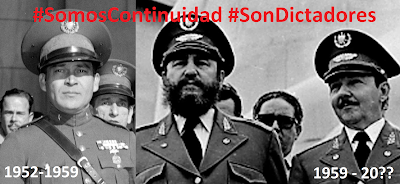
#TheyAreContinuity #TheyAreDictators ( #SomosContinuidad #SonDictadores)

Democracy ended in Cuba seventy years ago on March 10, 1952. It was ended by General Fulgencio Batista who carried out a military coup against the legitimately elected democratic government. The last democratically elected president, Carlos Prio, and his first lady went into exile, and over the next seven years, an authoritarian dictatorship ruled Cuba, becoming increasingly unpopular.  

The refusal of Batista to give up power through a process of dialogue opened the path for Fidel and Raul Castro to violently seize it, but they did not do it alone.


They had the help of the Communist InternationalThe New York Times, an arms embargo placed on Batista in March 1958 by the United States, and pressure from the U.S. Ambassador to Cuba in December 1958, the authoritarian dictator fled Cuba in the early morning hours of January 1, 1959.
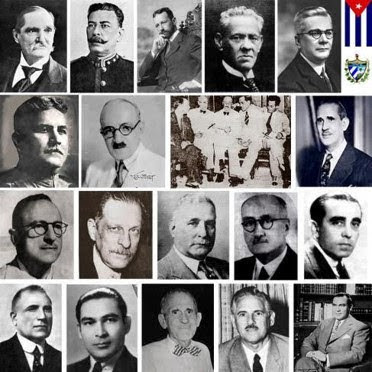

Presidents of Cuba from 1902 to 1952 and dictator Batista


This put an end to a half century of democratic Cuban governments, and within nine years the Castro regime seized Cuban's private sector and centralized economic control under Havana's totalitarian communist dictatorship. Cuba's official motto was changed from Homeland and Liberty (Patria y Libertad) by the new communist regime to Homeland or Death, We Shall Triumph (¡Patria o Muerte, Venceremos!).

Since the beginning of their struggle in 1953, the Castro brothers pledged a democratic restoration in Cuba, but all along planned a Marxist-Leninist takeover and the imposition of a totalitarian communist dictatorship, killing tens of thousands of Cubans. They systematically denied human rights to all Cubans while exporting their repressive model to Africa and Latin America, creating misery for millions.
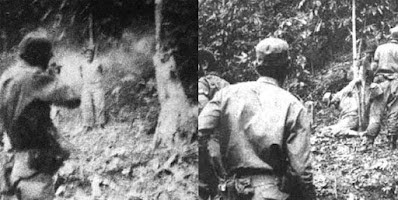
Firing squads in Cuba ordered by the Castro brothers

The Communist regime rewrote Cuban history, creating myths to justify its tyrannical rule. The reality was that between 1902 and 1952, there existed in Cuba a system that had overseen rising living standards for five decades and had been on the cutting edge of human rights. The Marxist-Leninist dictatorship would declare war on human rights at home and abroad. 

Generations of Cubans resisted this communist dictatorship from 1959 to the present. 

Tens of thousands of Cubans risked everything in July 2021, taking to the streets in peaceful protests demanding an end to the dictatorship. The Castro regime responded by firing on unarmed protesters, imprisoning hundreds, and condemning many of them to 20 and 30 year prison sentences over the Christmas holidays for exercising their right to peaceful assembly.
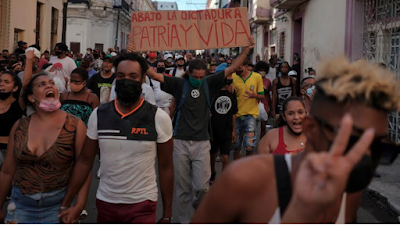
On the streets of Cuba on July 11, 2021

On this March 10th, as Cubans observe 70 years without democracy and pledge to redouble their efforts to achieve a democratic restoration in Cuba it is a good moment to condemn the Castro dictatorship for its 63-year betrayal of the democratic aspirations of the Cuban people.  It is a good day to remember President Carlos Prio Socarrás and his wife Mary Tarrero de Prio.
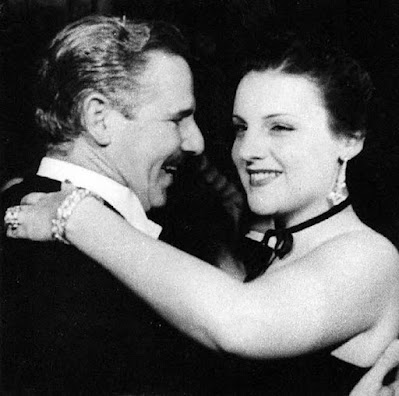
President Carlos Prio Socarrás and his wife Mary Tarrero de Prio

Peaceful protests outside of Cuban embassies that recognize the reality that the Castro brothers overthrew an authoritarian dictatorship that had been in power for seven years to impose a totalitarian one that has marked 63 years in power and continues to silence and jail non-violent dissidents, and when they are too effective in their activism, kill them.

If you can't make it to the Embassy, then at least take action signing this appeal for an end to repression in Cuba and release of all Cuban political prisoners addressed to the international community.

Saturday, April 17, 2021

Brigade 2506, the Bay of Pigs at sixty and some historical context.

"It doesn't take a hero to order men into battle. It takes a hero to be one of those men who goes into battle." - Norman Schwarzkopf 


Sixty years ago Brigade 2506 members invaded Cuba seeking to end the communist dictatorship then being consolidated by Fidel Castro. Before the world knew what was going on in Cuba, these Cubans tried to prevent these 62 years and counting of horror under the communist dictatorship of the Castro brothers. Outnumbered and outgunned they fought between April 17-19, 1961 and one hundred and four Brigade 2506 members died fighting to liberate Cuba, and eight were executed by firing squad. Most Brigade members were captured and spent 22 months in prison before a ransom was paid for their release.

Cuba's last legitimately elected president, Carlos Prio Socarras, was voted in by Cubans in free and fair elections on July 1, 1948 and assumed office on October 10, 1948. He was a democrat, who respected civil liberties, and presided over years of prosperity and freedom for Cubans. President Prio Socarras belonged to the Autentico Party and succeeded Ramon Grau San Martin, another member of the same political party in the Cuban presidency. On his watch Cuban diplomats played an important role in the drafting of the Universal Declaration of Human Rights. President Carlos Prío Socarras and his wife Mary Tarrero de Prío went into exile in Miami, but his struggle for a democratic Cuba did not end there. He would be arrested on more than one occasion accused of smuggling arms to rebels in Cuba seeking to overthrow Fulgencio Batista.

Cuba's last constitutional president announced his plan to return to the island as early as 1955 and did so during a brief "amnesty" in 1956 only to be expelled at gunpoint a short time later. Prío Socarras would return again in January 1959 when Fulgencio Batista fled power. The Castro brothers and their guerillas promised to restore democracy obtaining the support of the United States. Behind the scenes, despite their public claims, the revolutionaries began immediately consolidating power and marginalizing or disappearing anti-communists from their ranks such as Huber Matos. Publicly, beginning in January 1959 they began broadcasting the public execution of regime opponents by firing squads.


In March 1960 radio stations were seized by the revolutionary government in Cuba, this was followed by the taking of newspapers in May 1960. In July 1960 all U.S. businesses and commercial property in Cuba were nationalized at the direction of the Cuban government. In September 1960 the Committees for the Defense of the Revolution (CDRs) were established throughout Cuba and the close surveillance of all Cubans began. In October 1960 Cuban-owned large and middle sized private enterprises nationalized and all rental properties seized, along with commercial bank accounts. What remained were small and micro enterprises.

President Carlos Prío Socarras departed for exile again in December 1960 as the Castro government turned into a communist military dictatorship. Cuba in the span of two years had transitioned from an authoritarian regime to a totalitarian communist one. It was in this context that Cuban exiles joined Brigade 2506 to overthrow the communist dictatorship in Havana.

Barbara Gutierrez of UNEWS at the University of Miami interviewed Eduardo Zayas Bazán and on April 14th published the article "Cuban exile reminisces about the Bay of Pigs invasion" that described the stakes confronted by these young Cuban exiles in 1961: "When he was 25 years old, Cuban exile Eduardo Zayas Bazán, fearful that his homeland would forever remain under communist rule, made a fateful decision. Leaving behind his young wife and 2-month-old son, he enlisted in a CIA-led mission to secretly invade Cuba and defeat the Castro regime."

They risked life and limb to liberate their homeland, and over a hundred died in the venture, and hundreds more suffered imprisonment as prisoners of war between April 1961 and December 1962.

In the short term the failure of the Bay of Pigs invasion led to Soviets, perceiving American weakness, deploying dozens of medium-range nuclear missiles within striking range of the entire United States, and the subsequent Cuban Missile Crisis that brought the world to the brink of nuclear holocaust egged on by Fidel Castro in October 1962. 


On December 24, 1962, captured prisoners of war of the Brigade 2506 were released from Castro’s prison and flew to Miami. Five days later on December 29, 1962, President John Kennedy and First Lady Jacqueline Kennedy met with the Bay of Pigs veterans, and over 40,000 Cuban exiles at the Orange Bowl. On that day the returning soldiers gave President Kennedy the flag of the Brigade and the President pledged that the Brigade flag was to “fly again in a free Havana.” Less than a year later on November 22, 1963 President John F. Kennedy was assassinated in Dallas, Texas by pro-Castro activist Lee Harvey Oswald

Over the long term the Castro dictatorship has been in power for 62 years and has successfully exported its "model" to Nicaragua and Venezuela spreading misery and terror to millions more while sponsoring revolutionary terror around the globe.

Sixty years after the Bay of Pigs, and the courageous sacrifice of the Brigade 2506 members, and the haunting question remains: "How much better would Cuba and the wider region be today if Castro had been overthrown in 1961?"
