Tuesday, March 15, 2011

World-Renowned Tiananmen Square Dissident to Address Geneva Rights Summit Today


Source: Geneva Summit for Human Rights and Democracy (http://www.genevasummit.org)
Date: 14 March 2011

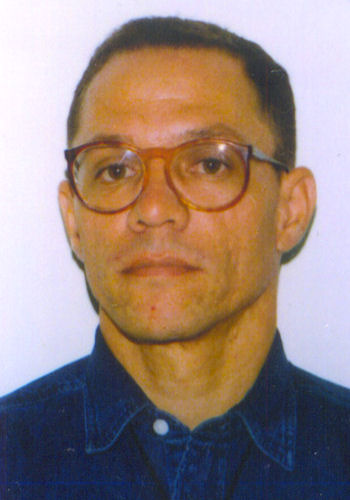
Yang Jianli, the world-renowned Chinese dissident and survivor of the 1989 Tiananmen Square massacre, will join other former prisoners of conscience tomorrow for the third annual Geneva Summit for Human Rights and Democracy. Dr. Yang, who served a five-year jail term in China for his social activism, will speak about the situation of jailed writer Liu Xiaobo, whom he represented at the Oslo Nobel Peace Prize ceremony in December.

The Geneva Summit is organized by a cross-regional coalition of 20 NGOs, including UN Watch, Freedom House and Ibuka, with the aim of providing a voice for the voiceless and advocating action on urgent human rights situations. The conference will feature victim testimonies from renowned human rights defenders, dissidents and experts, and produce draft resolutions for the UN Human Rights Council to adopt. For more on the conference, speakers and program, click here.

The Chinese government has been criticized by human rights groups and the U.S. State Department for gross and systematic violations of basic rights such as freedom of speech, freedom of assembly and freedom of religion, and for oppressing minority groups.

Liu Xiaobo, a Chinese literary critic, writer, professor, and human rights activist was sentenced to 11 years in prison last year for “inciting subversion of state power.” His receipt of the 2010 Nobel Peace Prize turned a global spotlight on the human rights situation in China, which is currently witnessing a brutal crackdown by authorities fearful of the freedom revolutions that have spread in the Middle East.

With Liu in jail, and his wife and supporters placed under house arrest by the Chinese government, Yang Jianli, as a friend of the couple and fellow activist living in exile in the U.S., was appointed by Liu’s wife, Liu Xia, to be the peace award winner's representative and spokesman at the Nobel Peace Prize ceremony. Yang played a key role in preparations for the ceremony, organizing a delegation of exiled dissidents to be present and publishing an open letter imploring the Chinese government to let Liu Xia come to Oslo to accept her husband’s award.

Like Liu, Yang was a participant in the Tiananmen democracy movement in 1989, and considers the June 4 crackdown to be a turning point in his life. "I saw tanks rolling over students," he says. "I felt China had no choice but to change." While in the United States doing pro-democracy work, his passport expired and the Chinese government refused to issue him a new one. When he tried to return to China in 2002 to observe labor unrest he was arrested and jailed for five years. He now lives in exile in the U.S., where he heads the Foundation for China in the 21st Century, which advocates political transition and supports rights activities on the mainland.

Despite his personal experiences, Yang remains hopeful about the future of democracy in China. "I am always optimistic," he says. "On the surface you can only see the hardening of China's attitude, but the real change is in people's hearts. You can feel the change already in China." At the Geneva Summit tomorrow he will offer his take on the human rights situation in China in the aftermath of Liu Xiaobo’s Nobel Prize.

Other participants in the panel include:

  • Dechem Pemba, a UK-born Tibetan and editor of the website High Peaks Pure Earth, on which Tibetan blogs written in Tibetan and Chinese are translated into English.
  • Bahtiyar Ömer, a Uyghur human rights activist whose wife, Gulmire Imin, received life in prison for her role as an “illegal organizer” during the 2009 demonstrations.
  • Ti-Anna Wang, the daughter of Bingzhang Wang, a Chinese dissident serving a life sentence in solitary confinement, and one of the founding members of the overseas Chinese Democracy Movement.

Admission to tomorrow’s Geneva Summit is free, and the public and media are invited to attend. For accreditation, program and schedule information, please visit http://www.genevasummit.org.

Global Civil Society Coalition: Collectif Urgence Darfour; Darfur Peace and Development Center; Directorio Democratico Cubano; Freedom House; Freedom Now; Human Rights Without Frontiers Int’l; IBUKA; Ingénieurs du monde; Initiatives for China; Inter-African Committee on Traditional Practices Affecting the Health of Women and Children; International Federation of Liberal Youth (IFLRY); Ligue International Contre le Racisme; LINK; Respect Institut; Stop Child Executions; Tibetan Women's Association; Ticino Tibet; Uighur American Congress; UN Watch; Viet Tan.


Friday, March 11, 2011

Dr. Oscar Elias Biscet Gonzalez back home after more than 8 years of unjust imprisonment

"To love one's neighbor is also to love one's enemy. Although in reality that qualifier-'enemy' does not exist in my vocabulary. I recognize that I only have adversaries and I have acquired the capacity to love them because in this way we do away with violence, wrath, vengeance, hatred and substitute them with justice and forgiveness." - Dr. Oscar Elias Biscet Gonzalez (1999)

“I’ve never stopped fighting since I took this road. I’ve followed the teachings of Gandhi and Martin Luther King and applied them in prison too.” - Dr. Oscar Elias Biscet Gonzalez (2011)


In the midst of such a heart braking day in which untold numbers have perished in the worse earthquake in Japanese history and Tsunamis threaten lives throughout the Pacific rim there is a precious sliver of good news. Dr. Oscar Elias Biscet Gonzalez back home after more than 8 years of unjust imprisonment.


In the new millennium, Wilfredo Cancio observed that Dr. Oscar Elias Biscet has only known 37 days outside of prison. Neverthless he has always been a free man. Burmese democracy leader Aung San Suu Kyi and also a former prisoner of conscience unjustly imprisoned for many years explained this truth stating "It is ironic, I say, that in an authoritarian state it is only the prisoner of conscience who is genuinely free. Yes, we have given up our right to a normal life. But we have stayed true to that most precious part of our humanity--our conscience."

This sentiment can offer some context to the statement's made by Dr. Biscet after being released from prison:
Reached by telephone, Biscet told AFP, "I am fine, very happy to be reunited with the family."

"It goes without saying that I will continue in the opposition because even in jail I did not give up my questioning attitude toward this government and the abuses it commits," he said.

An excerpt from the BBC report and EFE on Biscet:

“I’ve always lived in Cuba and I’m from Cuba. I haven’t done anything bad to anyone. I’ve always given love, a lot of love, and for giving love they came down hard on me, especially the government,” he said.

He told reporters gathered at his home that he had never stopped fighting and that he had never strayed from the path of non-violent resistance, not even in prison.


Then there were 3

Three remain imprisoned from the group of 75 that should have never been imprisoned in the first place and that supposedly after the July statement made by the Cuban regime they should have all been released by November 6, 2010. Also we cannot forget that scores of other political prisoners remain behind bars and deserve to be free.

José Daniel Ferrer García


Librado Linares García


Félix Navarro Rodríguez

Amnesty International: Cuba must release prisoner of conscience on hunger strike


11 March 2011

Amnesty International has called on the Cuban authorities to release an activist on hunger strike who was detained for his human rights work three months ago and is set to face trial at the end of March.

Néstor Rodríguez Lobaina, the president and co-founder of the Cuban Youth Movement for Democracy, was arrested last December in relation to a meeting he organized at his home in August 2010 and anti-government banners he displayed outside his home.

Néstor, his brother Rolando Rodríguez Lobaina and three other members of the Cuban Youth Movement for Democracy - Enyor Díaz Allen, Roberto González Pelegrín and Francisco Manzanet - have been charged with public order offences relating to an attack on his home by a mob opposed to the meeting.

https://blogger.googleusercontent.com/img/b/R29vZ2xl/AVvXsEicCelUAPcaqpMzM4w7-gDEiniGT7KfYE_26QEn84zz_rI4BvvC191GQpCv0xlG8N0v_w9JJBIgaDBv-JwVjvtIRyd32TNzVbCJakg0cnyF6Tz65Iw68YnRoPERFHRuJj5fRpgWGBAGoJYB/s1600/nestor-rodriguez-lobaina_350.jpg
Néstor Rodríguez Lobaina

The five men were arrested in August 2010 but released the following month. Only Nestor Rodriguez Lobaina was rearrested.

"Néstor Rodríguez Lobaina has spent more than three months in prison for expressing his opinions, defending democracy and promoting human rights in Cuba," said Gerardo Ducos, Cuba reearcher at Amnesty International.

"Amnesty International considers him a prisoner of conscience jailed solely for exercising his right to freedom of expression and is calling on the Cuban authorities to release him immediately and unconditionally, or bear the responsibility of the impact of the hunger strike on Néstor’s physical integrity.

"Néstor's imprisonment is yet another example of the suppression of the rights to freedom of expression and association in Cuba."

Held at Combinado de Guantánamo prison, Nestor started his hunger strike on 15 February. The next day he was transferred to an isolation cell and denied water for eight days.

Nestor's health deteriorated during his hunger strike and on 28 February he was transferred to a health post in the prison. He was then transferred to Augustino Neto Provincial Hospital on 1 March.

Néstor Rodríguez Lobaina was arrested by state security agents in Guantanamo on 9 December 2010. He was pepper sprayed and manhandled into a police car in front of his 10-year-old daughter who was left alone in the street as her father was taken into custody.

While in detention Néstor says he has suffered beatings and threats from other inmates.

Read More

Cuba urged to release jailed activists (News, 7 February 2011)

http://www.amnesty.org/en/news-and-updates/cuba-must-release-prisoner-conscience-hunger-strike-2011-03-11

Thursday, March 10, 2011

Embrace Symbols that Celebrate Nonviolence & Reject Violence

"Anger is the enemy of ahimsa (nonviolence) and pride is a monster that swallows it up." - Mohandas K. Gandhi

"The first victory we can claim is that our hearts are free of hatred. Hence we say to those who persecute us and who try to dominate us: ‘You are my brother. I do not hate you, but you are not going to dominate me by fear. I do not wish to impose my truth, nor do I wish you to impose yours on me. We are going to seek the truth together’." - Oswaldo Payá Sardiñas


Events in Libya over the past few weeks have underlined the importance of nonviolent civic resistance and its moral and strategic advantage over violent resistance especially when confronting extremely brutal regimes.

Gene Sharp of The Albert Einstein Institution in an interview with the BBC on February 21, 2011 offered concrete steps on the path to a nonviolent revolution against a dictatorship:
* Develop a strategy for winning freedom and a vision of the society you want
* Overcome fear by small acts of resistance
* Use colors and symbols to demonstrate unity of resistance
* Learn from historical examples of the successes of non-violent movements
* Use non-violent "weapons"
* Identify dictatorship's pillars of support & develop a strategy for undermining each
* Use oppressive or brutal acts by the regime as a recruiting tool for your movement
* Isolate or remove from the movement people who use or advocate violence
The marketing of Che Guevara as a symbol of rebellion has had a serious downside. The ideas behind his image are the antithesis of the nonviolent philosophy of Mohandas Gandhi and Martin Luther King Jr. and are summed up in two quotes by the Argentine revolutionary at the UN General Assembly in 1964: “We must say here what is a known truth, which we have always expressed before the world: firing squad executions, yes, we have executed; we are executing and we will continue to execute as long as is necessary. Our struggle is a struggle to the death."
and in Havana on April 16, 1967: "Hatred as an element of the struggle; a relentless hatred of the enemy, impelling us over and beyond the natural limitations that man is heir to and transforming him into an effective, violent, selective and cold killing machine. Our soldiers must be thus; a people without hatred cannot vanquish a brutal enemy."

This is an ideology born of violence, in the service of violence and terror with no mercy for the adversary nor recognition of that adversary's humanity. It inspired guerrilla and terrorist movements around the world and led to military juntas to combat them just as brutally. This is the opposite of a principled nonviolent philosophy and must be rejected if humanity is to have a future.

Today is the 52nd anniversary of the national Tibetan uprising. On March 10, 1959 thousands of Tibetans marched to the Dalai Lama's palace in response to the threat that Chinese Communists would arrest him and the Lhasa uprising began. Those heads of state denouncing alleged "colonial designs "on Libya and defending Qaddafi while denying the atrocities his regime is committing are silent about China's half century long colonization & military occupation of Tibet. 52 years later the Dalai Lama has become a disciple of Gandhi and with regards to nonviolence says: "[T]he very root of respect for human rights and nonviolence is love and kindness to others."

Today, March 10, 2011 also coincides with the announcement that another Gandhian disciple of non-violence Dr. Oscar Elias Biscet shortly will be freed after a decade of unjust captivity in Cuba during which he has maintained his commitment to nonviolence.

Now is the time to end the marketing of Che and the cult of violence and promote Gandhian nonviolence and a culture of love and truth.

Tuesday, March 8, 2011

Cuban women are at the cutting edge of Cuba's freedom

Congratulations to all women! I dream that the world & Cuba be carried away more by skirts and less by military uniforms. - Yoani Sanchez, March 8, 2011


Over the past year Cuban women have demonstrated their courage and persistence in confronting a brutal totalitarian regime both inside and outside of Cuba.


The Ladies in White, founded in March of 2003 after fathers, brothers, husbands and sons were unjustly imprisoned, they risked their lives and freedom marching through the streets of Cuba and petitioning the dictatorship to release their loved ones.


They were brutalized, beaten, detained and some even had bones broken from the beatings by agents and mobs organized and sent by the dictatorship.


Nevertheless they continued on in their struggle for justice. Some of them went on hunger strike to demand their loved one's freedom and in the end obtained their goal. Despite many having achieved their objective they maintain in solidarity with those whose loved ones are still imprisoned and carry on against great odds.

Outrage over this violence against these Cuban women led Gloria Estefan to organize a march in Miami, FL were over 100,000 dressed in white in Solidarity with the Ladies in White. In her call to action she cited the words of Cuba's independence hero stating:
In the words of our illustrious poet, Jose Marti, "The campaigns of a people are only weak when in them is not enlisted the heart of a woman; but when a woman is shaken and helps, when a woman, timid and quiet in her nature, cheers and applauds, when a woman cultured and virtuous anoints a deed with the honey of her love, the deed is invincible".
In the end the dictatorship pledged to release all the prisoners by November 6, 2010 then failed to do so when some of them refused to go into exile in exchange for their freedom.


Amnesty International had to request that the dictatorship to end the harassment of Reina Luisa Tamayo Danger who wanted to visit her son's grave. Her son, Orlando Zapata Tamayo, had died in the Castro regime's custody on February 23, 2010 and was an Amnesty International prisoner of conscience and human rights defender. Despite Amnesty's public request the beatings and harassment continued.


Reina Luisa Tamayo Danger with photo of her son Orlando Zapata Tamayo

These women's courage speaks for itself:

"Things in Cuba are not well at all, but I am going to continue this struggle to the death or until whatever they want happens; I will continue to support the Ladies in White, even if they continue to beat us, because what they want is for us to be afraid and we are not going to allow that to happen." -Dania Virgen García (blogger, independent journalist sentenced to 20 months in prison)

"They can either kills us, put us in jail or release them. We will never stop marching no matter what happens." - Laura Pollán, Lady in White, Cuba March 2010