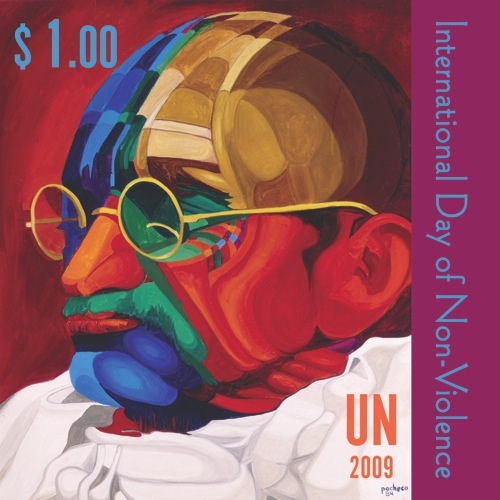
"The first victory we can claim is that our hearts are free of hatred. Hence we say to those who persecute us and who try to dominate us: ‘You are my brother. I do not hate you, but you are not going to dominate me by fear. I do not wish to impose my truth, nor do I wish you to impose yours on me. We are going to seek the truth together’. THIS IS THE LIBERATION WHICH WE ARE PROCLAIMING."
Oswaldo José Payá Sardiñas (2002)
Ramiro Valdés Menéndez (1932–2026) was a Cuban revolutionary commander, one of the survivors of the Granma expedition, a key participant in the 1953 Moncada Barracks attack and the Sierra Maestra campaign, and a close associate of Fidel and Raúl Castro.
After the 1959 victory, he held senior roles including Minister of the Interior (twice: 1961–1968 and 1979–1985), founder and head of the Ministry of the Interior (MININT) and its G2 State Security apparatus, and later Vice President.
en.wikipedia.org
He died on June 21, 2026, at age 94. The Cuban dictatorship portrayed him as a loyal “Commander of the Revolution” and hero who helped build and defend the socialist state.
Critics, including Cuban exiles, dissidents, human rights observers, and outlets like Center for a Free Cuba and Diario Las Américas, describe him as one of the primary architects and enforcers of the regime’s repressive security apparatus, often using nicknames such as “El Carnicero de Artemisa” (Butcher of Artemisa), “Charco de sangre” (Pool/Puddle of Blood), and “El Verdugo de Cuba” (The Executioner/Hangman of Cuba).
He has been compared by some to Lavrentiy Beria.
cubacenter.org
Specific personal orders for individual crimes are difficult to document publicly because many actions were systemic under his command as head of intelligence and interior security.
Ramiro Valdez, Raul Castro, Fidel Castro and Mengistu Mariam
The following are the main alleged crimes and repressive activities attributed to him or carried out under his direct oversight, drawn from regime critics, former prisoners, exile accounts, and documentation of the Castro era:1. Post-Revolutionary Executions and Purges (1959 onward)Valdés was involved early in the revolutionary tribunals and security structures. He served in a leadership role (sometimes described as second-in-command or involved) at La Cabaña fortress in Havana, where numerous Batista-era officials, police, and opponents were executed by firing squad, often under Che Guevara’s oversight.
He assisted or was present during some of these executions in La Cabaña and Santa Clara. As head of the DIER (Department of Investigations of the Rebel Army), the precursor to G2, he directed repression against remaining opposition groups.
diariolasamericas.com
The broader apparatus he helped build is linked to thousands of documented firing-squad executions and extrajudicial killings in the early years of the regime (part of estimates ranging from several thousand to over 10,000+ across the Castro period, per sources like Cuba Archive and the Black Book of Communism).2. Suppression of the Escambray Insurgency (“Limpia del Escambray,” 1960s–1970s)Valdés oversaw or directed counterinsurgency operations against anti-Castro guerrillas in the Escambray Mountains. This included:
Forced displacement and relocation of thousands of peasants from their lands to “captive towns” or distant areas, separating families.
Establishment of concentration/forced-labor-style camps in the region (e.g., La Sierrita, Arroyo Blanco, El Condado).
Alleged involvement in specific atrocities, such as the La Ceiba massacre, where 19 men were reportedly executed by machine gun.
diariolasamericas.com
Government forces killed thousands of guerrillas and civilians in these operations; critics describe excesses, summary executions, and collective punishment.3. UMAP Forced Labor and Re-Education Camps (1965–1968)Valdés collaborated with the armed forces in creating and operating the Unidades Militares de Ayuda a la Producción (UMAP) camps. An estimated ~30,000 people were sent there without judicial process, including:
Homosexuals and others targeted under “Operation of the Three Ps” (prostitutes, pimps, pederasts).
Religious believers (especially Jehovah’s Witnesses), artists, intellectuals, and perceived dissidents or “counter-revolutionaries.”
Conditions involved forced agricultural labor, psychological and physical abuse, isolation, and attempts at ideological re-education. These camps are widely condemned as sites of persecution based on sexual orientation, religion, and political views.
cubacenter.org
4. Creation and Oversight of the Totalitarian Police StateAs founder of MININT and G2 (modeled on Soviet KGB and East German Stasi practices), Valdés built and directed:
The Comités de Defensa de la Revolución (CDR) — neighborhood watch committees for mass surveillance, informants, and denunciations.
Widespread arbitrary arrests (hundreds of thousands at peak times, e.g., during the Bay of Pigs invasion), prolonged political imprisonment without fair trials, and harsh prison conditions.
Interrogation and torture methods, including beatings, electroshock, prolonged isolation, temperature extremes, “truth serum” (sodium pentothal), and other psychological tactics. Critics also allege plans to plant explosives in prisons (e.g., Isla de Pinos) to suppress potential uprisings.
diariolasamericas.com
The system he institutionalized is blamed for a large share of the regime’s political repression, contributing to estimates of tens of thousands affected by executions, imprisonment, torture, or death in custody over decades.5. Export of RepressionLater in his career (including as a consultant in Venezuela around 2010), he helped train and advise security forces in allied countries, notably Venezuela under Chávez and Maduro. This included embedding Cuban G2-style methods of infiltration, interrogation, and control. He was also linked to broader Cuban support for revolutionary movements and groups abroad.
cubacenter.or
Important context: No international tribunal convicted Valdés of these acts; he died without facing formal accountability for the alleged crimes.
In summary, Valdés’ “worst crimes” are his central role in institutionalizing a totalitarian security state—through early executions, the Escambray campaign, UMAP camps, and the pervasive G2/CDR apparatus—that enabled mass political repression, persecution of minorities, and thousands of deaths or ruined lives.
"I’ve learned of the death of hunger striker Franklin Brito. It appears that Hugo Chavez now has his own Orlando Zapata" - Yoani Sanchez, August 31, 2010 on twitter
Fifteen years ago on August 30, 2020 Franklin Brito died on a hunger strike in Venezuela. Franklin was a farmer and a biologist whose land was expropriated by Hugo Chavez in 2000 according to CNN. Other news agencies place the date of expropriation anywhere between 2003 and 2004.
Brito exhausted every recourse and was repeatedly driven to the extreme option: the hunger strike. El Universal out of Caracas offers a chronology
of the expropriated farmer's odyssey.
In the video below, published on October 28, 2009, after over 90 days on hunger strike that Franklin was carrying out, he explains how all of this began.
Hunger strikes are the ultimate recourse in the arsenal of non-violent resistance, and over the years around the world it has succeeded at times but in places like Cuba, Ireland, and now in Venezuela human beings have died on hunger strikes.
Article 17
of the Universal Declaration of Human Rights states: (1) Everyone has
the right to own property alone as well as in association with others.
(2) No one shall be arbitrarily deprived of his property.
Article XXIII
of the American Declaration states: "Every person has a right to own
such private property as meets the essential needs of decent living and
helps to maintain the dignity of the individual and of the home."
When
Franklin Brito's family said that he stood for "the struggle of
the Venezuelan people for property rights, access to justice, for
living in freedom," they were simply stating the facts of the matter. Brito states in the video below, which was shot on November 19,
2009, that he is defending human dignity.
"I am not doing this strike for something material or because persons
have behaved badly towards me - that one could say are corrupt. I am
doing this strike for dignity and justice. I believe that these are the
greatest values that a human being should have."
The tactics Mr. Chavez is using in questioning the mental stability of
his adversaries, and smearing them, even in death, is straight out of
his Cuban mentor's repertoire.
Friends and family of Franklin Brito had best organize the facts and
evidence surrounding his case protect it and duplicate it so that it
cannot be seized and destroyed. They should engage in speaking out
anywhere and everywhere to counter the avalanche of slander and libel from regime apologists against a man who can no longer defend himself.
Hugo Chávez nationalized 2.5 million hectares
as part of a “land reform drive.” The so-called reform, combined with
increased government control over the economy, exacerbating food
shortages in Venezuela with Chavez forced to step up imports despite
abundant land and a tropical climate just like Cuba did decades ago.
It
is not madness to take extremes in the defense of liberty and justice,
but it is madness to repeat the same failed policies that have
bankrupted and destroyed nations the world over and expect a different
outcome in your own homeland.
Franklin Brito was a sane man
confronting an evil system, and through his protest embarrassed the
Venezuelan dictatorship. The regime sought to disappear him and drove him to
his death.
Three years later Hugo Chavez was dead. Nicolas Maduro, a former bus driver trained in Cuba before embracing Chavismo, became the Venezuelan dictator's successor.
Fifteen years have now passed, and Franklin Brito is not forgotten, and the
evil of the regime in Caracas is now recognized around the world.
Earlier today Venezuelan opposition leader Maria Corina Machado tweeted in remembrance of Franklin Brito and his importance in Venezuela's history.
Franklin Brito is a name that Venezuelans WILL REMEMBER FOREVER. The man who challenged the regime, stood firm, and gave his own life to defend what was his, his PROPERTY, his DIGNITY, OUR RIGHTS.
Today marks 15 years since his death, which has a culprit: Hugo Chávez and his obsession with EXPROPRIATING, WHICH IS STEALING.
Below is the original Spanish text.
Franklin Brito es un nombre que los venezolanos RECORDAREMOS SIEMPRE. El hombre que desafió al régimen, se paró firme y entregó su propia vida para defender lo suyo, su PROPIEDAD, su DIGNIDAD, NUESTROS DERECHOS.
Mahsa Amini was beaten to death by morality police in Iran.
Morality police in Iran beat Mahsa Amini, a 22-year-old Kurdish woman, to death for not complying
with Tehran's hijab regulations. Mahsa was arrested on September 13, 2022 badly beaten, left in a coma, and she died three days later on September 16th.
Mass protests erupted in Iran, the Iranian regime periodically shutdown the internet and carried out massacres,
and executions against demonstrators over the past three years. The world has
not forgotten, and songs continue to be sung by artists in remembrance
of Mahsa Amini.
The previous time this happened in Iran was in 2019, when the Mullahs killed 1,500 people,
and I didn't know about it.
This time the suppression was successful, but the Iranian diaspora ensured that the repression was not repeated without worldwide attention and condemnation.
On the third anniversary of Mahsa Amini's untimely death global rallies are planned to ensure that the barbarity of the Islamic regime in Iran is not forgotten.
Global rallies are being organized to mark the 3rd anniversary of Jina #MahsaAmini’s death at the hands of the regime and to support the ongoing Woman, Life, Freedom revolutionary movement, the Iranian people’s fight for freedom, democracy, and human rights. Find a rally in your… pic.twitter.com/5sETrgVrqT
Dear friends of freedom reading this blog entry, please amplify these Iranian voices, let your elected representatives know that you are
watching, and that this is unacceptable.
This has been going on for far too long in Iran, and the terror tactics have been copied elsewhere with Iranian help.
Neda Agha-Soltan and Génesis Carmona shot in the head.
Note to Western policy makers: the regime's in Iran, Cuba, and Venezuela are not your friends.
Cuba and Iran have regime's with different ideological formations. Cuba
has a communist dictatorship run by the Castros since 1959 and Iran has a
Islamist regime run by the mullahs since 1979.
Iranian President Hassan Rouhani meets with General Raul Castro (2016)
Robin Wright referred to Cuba and Iran
as "melancholy twins" in The New Yorker in 2015. They are both state sponsors of terrorism, and Iran has been linked to a mass killing of Jewish people in Argentina.
Venezuela is an off shoot of the Cuban revolution and shares both its anti-Americanism and warm relations with Tehran.
They do not hide their intentions, even if they lie about it afterwards.
The lateFidel Castro visited Iran
on May 10, 2001, four months before the September 11, 2001 attacks,
where he was quoted by the Agence France Presse at the University of
Tehran stating that "Iran and Cuba, in cooperation with
each other, can bring America to its knees." ... "The U.S. regime is
very weak, and we are witnessing this weakness from close up."
Eleven years later on January 12, 2012 in Havana, Cuba the controversial president of Iran, Mahmoud Ahmadinejad, declared "Our
positions, versions, interpretations are alike, very close. We have
been good friends, we are and will be, and we will be together forever."
Iran's Ahmadinejad with Fidel Castro and Klansman David Duke
Even closer to home, the
relationship between the Iranian regime and white supremacists such as David Duke and anti-Semites such as Louis Farrakhan should not be forgotten.
Iran sought out asymmetric means to
achieve maximum damage against Israel through their proxies Hamas and Hezbollah killing over 1,200 in Israel on October 7, 2023, sparking a terrible war that continues today. Tehran's decades long alliance
with Cuba cannot and must not be ignored at such a time of ongoing peril.
Martin Luther King Jr. was right: Injustice anywhere is a threat to justice everywhere.