Showing posts with label Black Cuban Spring. Show all posts

Friday, March 18, 2022

Remembering the 2003 Black Cuban Spring, the failure of the UN Human Rights Council, and the terror in Cuba today

Remembering the 2003 Black Cuban Spring, the long winter, and the new Black Spring
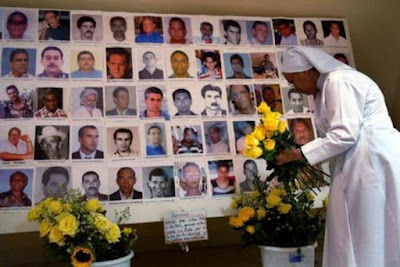
Nun places sun flowers to images of 75 Cubans jailed in 2003

Nineteen years ago on March 18, 2003 a crackdown began in Cuba on the eve of the United States going to war in Iraq. Scores of nonviolent Cuban dissidents were rounded up and subjected to political show trials. 75 were condemned to lengthy prison terms of up to 28 years in prison. This became known as the Black Cuban Spring

This past year the Castro regime carried out a crackdown not seen since 2003, and that may exceed it. On March 16, 2022 the draconian sentences were justified in an official communication that marked a new Black Spring for hundreds of imprisoned Cubans and their families. Many of the jailed are young Cubans.
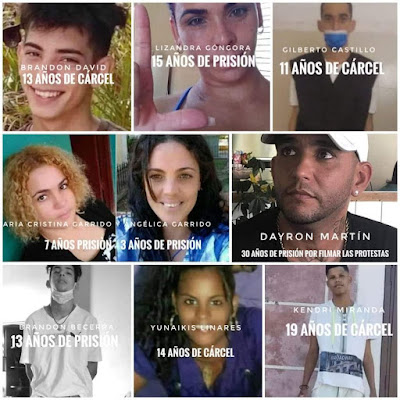
Some of the young Cubans sentenced to long prison terms (Photo: Claudia Peiro)


The Cuban dictatorship released a statement on March 16, 2022 that "it had sentenced upwards of 100 protesters in Havana to between 4 and 30 years in prison for violence committed during island-wide demonstrations last year, the largest since Fidel Castro's 1959 revolution," reported Reuters and other news outlets.
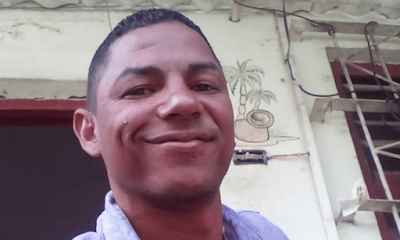
Diubis Laurencio Tejeda, age 36, shot in the back on July 12, 2021

Regime officials failed to mention that it was they who had initiated and carried out the deadly violence that day, not anti-government demonstrators who were non-violent. On July 12, 2021, during the 11J protests, Diubis Laurencio Tejeda, age 36, was shot in the back by regime officials on day two of nationwide protests in Cuba. He was not the only one shot by them.

Worse yet, the longest sentences handed out were for video recording the protests. Cubans that recorded or live streamed the protests were accused of sedition. Here are four high profile cases.
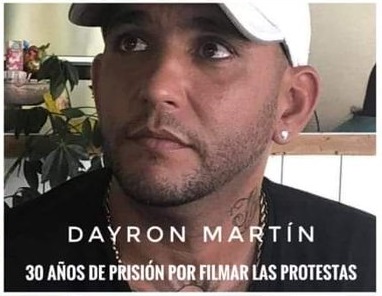
Dayron Martín sentenced to 30 years of prison for filming protests (Photo: Claudia Peiro)

France24 reported on the plight of Dayron Martín Rodríguez (age 36) who was sentenced to 30 years in prison. He was "detained in La Güinera. He was out "to buy food for his pigeons when he ran into the rally," said his mother, Esmeralda Rodríguez (age 63), who added that "he started recording to send his father the video." He felt the stones hitting him, he fell and lost his phone. Video emerged during the 11J protests of police throwing rocks and firing on unarmed protesters. Esmeralda Rodríguez, "suffered a pre-infarction when she found out in Ecuador, where she emigrated. eight years ago" that her son had been sentenced to 30 years in prison. 
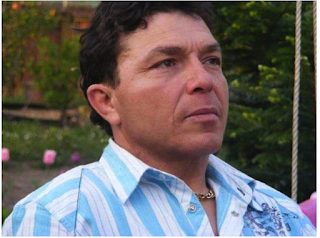
German tourist and dual citizen, Luis Frómeta Compte, was sentenced to 25 years in prison on December 23, 2021 for spontaneously filming a demonstration in Havana for private purposes with his smartphone while visiting relatives and was subsequently arrested. According to the Frankfurt arm of the International Society for Human Rights (ISHR), "the Dresden family man is one of about two thousand demonstrators arrested on July 11 during protests against the dictatorship." ISHR strongly criticized the long prison sentence and pointed out that, in the meantime, the 59-year-old’s brother-in-law is also in pre-trial detention.
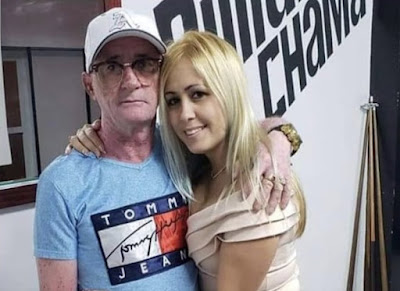
Fredy Beirut (age 64) and Katia Beirut (age 36) each sentenced to 20 years in prison

Agence France Presse reported on the plight of a father and daughter punished for filming the protests.  Fredy Beirut (age 64) and Katia Beirut (age 36) who filmed the July 2022 protests were each sentenced to 20 years in prison. The father will emerge from prison at 84 years of age, and the daughter will be 56 years old.

Filming, and bearing witness can end your life as a free person in Cuba. 19 years ago it was organizing a petition drive, or being an independent journalist or human rights activist that could cost you a 28 year prison sentence.

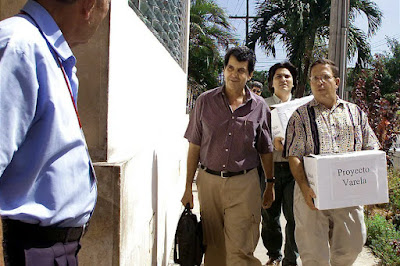
The majority of the activists imprisoned in 2003 had participated in the Varela Project, a petition drive that called for a referendum under the terms of the Cuban Constitution on whether there should be more freedom of expression, an amnesty for political prisoners and a chance for ordinary citizens to own small businesses. 11,020 signatures had been turned in 10 months earlier on May 10, 2002. 
 
The regime responded with its own mandatory petition drive to make the Cuban Constitution unchangeable. 
 
The Economist in its December 14, 2005 issue published a conversation with Oswaldo Payá Sardiñas titled "An unsilenced voice for change" that outlined what had taken place:
Between 2001 and 2004, Mr Payá's movement gathered 25,000 signatures in a vain attempt to persuade Cuba's National Assembly to change the constitution to allow multi-party democracy. Activists of his Christian Liberation Movement made up more than two-thirds of the 75 dissidents and journalists rounded up and jailed for long terms in April 2003. [...] Spain is “complaisant” with Mr Castro's regime, Mr Payá says. “We need a campaign of support and solidarity with peaceful change in Cuba” of the kind that brought an end to apartheid in South Africa and to the Pinochet dictatorship in Chile.

It took over eight years, but the last of the group of the 75 were eventually released. This was in large part due to the Ladies in White and international solidarity campaigns carried out by NGOs, but the international community failed to call out Havana's impunity.

Castro expected the March 2003 crackdown, dubbed the “Black Cuban Spring,” to be the end of the opposition. Instead, it sparked the emergence of a new movement, the Ladies in White, led by the wives, mothers, sisters and daughters of the men jailed. For eight years, these women lobbied, protested and marched for their loved ones’ freedom. They were successful, and the last of the men were released from prison in 2011, a nonviolent victory over the dictatorship. The Ladies in White continue to the present day, demanding human rights be respected in Cuba.

On April 2, 2003 three young black men were arrested, tried and executed by firing squad nine days later on April 11, 2003 for trying to flee the island in a hijacked ferry, in which no one had been physically harmed. This drew worldwide condemnation at the time, and became known as Cuba's Black Spring, but it did not prevent the end of the mandate for monitoring human rights violations in Cuba in a backroom deal for the establishment of the UN Human Rights Council on March 15, 2006.

11,020 Varela Project signatures turned in on May 20, 2002
Oswaldo was murdered along with the Christian Liberation Movement's youth leader Harold Cepero on July 22, 2012. His successor Eduardo Cardet was a prisoner of conscience from November 30, 2016 through September 3, 2019. He was jailed for giving a frank assessment of Fidel Castro's legacy following his death on November 25, 2016.

Sixteen years ago the United Nations Human Rights Council was founded on a small moral compromise that sacrificed human rights oversight in Belarus and Cuba in what U.N. officials called the dawn of a new era. Special rapporteurs with mandates to specifically monitor the human rights situation in those two countries were formally gotten rid of in 2007 and a code of conduct established that undermined the independence of all special rapporteurs.

Ending oversight of Belarus and Cuba not only left the victims of these dictatorships exposed to more repression, with impunity by their oppressors, but emboldened these dictatorships not only to worsen their practices at home but to undermine human rights abroad. Worse yet, both would be elected to serve on the UN Human Rights Council with other outlaw regimes. 

Throughout this entire period, despite repeated requests, the Castro regime has not allowed the International Committee of the Red Cross to visit prisons in Cuba. 

Prison conditions are so poor that of the 75 imprisoned in 2003, fourteen have died, many due to conditions arising from their time in prison. There names are: Orlando Zapata, Miguel Tamayo, Antonio Villarreal, Arturo Pérez, Jorge Luis González, José G. Ramón, Julio César Gálvez, Omar Pernet, Raúl Rivero, Julio A. Valdés, Arnaldo Ramos, Carmelo Díaz, Orlando Fundora, and Oscar M. Espinosa.
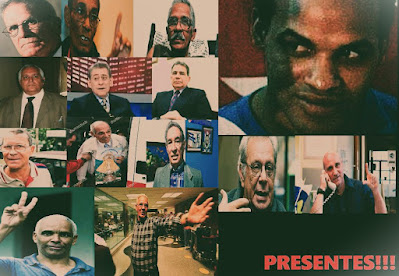
Cubans jailed during the 2003 Black Spring that died before their time. (Photo: Regis Iglesias )

This failure of accountability led to greater levels of violence and repression by the Cuban dictatorship that continues to sit on the UN Human Rights Council. The regime in Havana is an outlaw regime, and cannot be trusted.

This can be seen in their legal system and how it treats poor Cubans.

Havana Times reported on La Guinera, a Havana neighborhood, "where 96 of the 790 people in Cuba for taking part in the protests on July 11th and 12th, that is to say, 12 out of every 100 people arrested for protesting are La Guinera locals." Regime claims do not hold up when their own documents are examined, demonstrates Havana Times citing official documents.

"The Public Prosecutor’s Office says that sedition charges against La Guinera residents are due to the 'level of violence in vandalic acts that in a riot-like situation led to injuries and put the lives of civilians, public officials and law enforcement officers at risk, by attacking them with sharp, blunt and incendiary objects, seriously disturbing public order with the deliberate purpose of subverting rule of law.' However, these same records state that in La Guinera police patrol cars weren’t attacked —unlike other parts of the country—, and the highly-criticized dollar stores weren’t vandalized, there was no looting or serious damage to property. Furthermore, those charged with sedition include people who were only recording and live streaming events on Facebook, without taking part in any conflict with the police, as well as detainees who the Public Prosecutor’s Office is charging with sedition for the simple fact they were present in the crowd that prevented public order."

The pattern repeats itself, the longest prison sentences are meted out to those accused of sedition for "recording and live streaming events on Facebook, without taking part in any conflict with the police" or "for the simple fact they were present in the crowd." Press bureaus in Havana, perhaps in order not to be expelled, failed to report that deadly violence came not from the protesters, but from regime agents, and counter protesters that they head armed with clubs and bussed in to violently shut down what had been peaceful protests. Havana Times offers the following in evidence that conflicts with the official version.

The Public Prosecutor’s Office also justifies sedition charges by saying detainees attacked and injured police officers and counter-protestors without reason, but this statement also falters. Stones and objects were thrown during the protests, but the Public Prosecutor’s Office was unable to find police officers and counter-protestors who sustained severe injuries. The records state that only three counter-protestors were injured and none of them required medical attention. In the case of police officers, 14 were injured, and only one needed medical attention. On the contrary, during the police’s response —involving the use of firearms—, Diubis Laurencio lost his life, the only fatality recognized by the Government, and many protestors were hit by bullets, including minors. “I was told my wife went to look for my stepson at the protest. She didn’t find him, and she soon found out that he had been hit by a bullet in his knee, just before they killed the other young man,” Janoi Ceballos wrote in a text message, the step-father of 16-year-old Cuban teenager Misael Yoel Fuentes Garcia, who was injured in La Guinera.

Dictatorship's need to be held accountable, at least ostracized, and removed from international human rights bodies. Western democracies, such as the Spanish government, should not be selling weapons to the Cuban dictatorship to use them against the Cuban people. 

These failings on the international stage have real world consequences as we are seeing today in Ukraine.

This is why we are circulating a petition to leaders in the Western democracies and the international community to finally hold the dictatorship in Havana accountable.


Sunday, March 18, 2018

15 years after the "Black Spring" of Cuba

Remembering the Black Cuban Spring and the future

2003 - 2018 Spring will return
Fifteen years ago on March 18, 2003 a crackdown began in Cuba on the eve of the United States going to war in Iraq. Scores of Cuban dissidents were rounded up and subjected to political show trials. 75 were condemned to lengthy prison terms of up to 28 years in prison. This became known as the Black Cuban Spring. The majority of the imprisoned activist had participated in the Varela Project, a petition drive that called for a referendum under the terms of the Cuban Constitution on whether there should be more freedom of expression, an amnesty for political prisoners and a chance for ordinary citizens to own small businesses. 11,020 signatures had been turned 10 months earlier on May 10, 2002. The regime had responded with its own mandatory petition drive to make the Cuban Constitution unchangeable, and with this crackdown that included the firing execution of three young black men who had tried to hijack a vessel to Cuba. 

The Economist in its December 14, 2005 issue published a conversation with Oswaldo Payá Sardiñas titled "An unsilenced voice for change" that outlined what had taken place:

Between 2001 and 2004, Mr Payá's movement gathered 25,000 signatures in a vain attempt to persuade Cuba's National Assembly to change the constitution to allow multi-party democracy. Activists of his Christian Liberation Movement made up more than two-thirds of the 75 dissidents and journalists rounded up and jailed for long terms in April 2003. [...] Spain is “complaisant” with Mr Castro's regime, Mr Payá says. “We need a campaign of support and solidarity with peaceful change in Cuba” of the kind that brought an end to apartheid in South Africa and to the Pinochet dictatorship in Chile.
It took over eight years, but the last of the group of the 75 were eventually released. Oswaldo was murdered along with the Christian Liberation Movement's youth leader Harold Cepero on July 22, 2012. His successor Eduardo Cardet is a prisoner of conscience, brutally beaten, and repeatedly stabbed while under the Castro regime's custody. Nevertheless the legacy of the Varela Project continues in the campaign One Cuban, One Vote.
One Cuban, One Vote proposes to members of the National Assembly that at the time of drafting a new electoral law, the right to choose of all Cubans inside and outside Cuba, the right to return to their own country and be elected all must be recognized and guaranteed. The right of Cubans to vote directly and without the Candidacy Commissions, which are the anti-constitutional instrument of the regime to prevent it.
 Today, one of the Cuban dissidents arrested, tried and sentenced to 18 years in prison, Regis Iglesias Ramírez, wrote a reflection, in Spanish, on the 15th anniversary of the crackdown. Below is the translation.

11,020 Varela Project signatures turned in on May 20, 2002
15 years after the "Black Spring" of Cuba 
by Regis Iglesias Ramírez
There is no need for a pretext, the mere fact of dissent and work so that in Cuba the people take back the reins of their own destiny is enough for the gangster regime of Havana to repress with all the violent forces of power those that challenge it even by exercising the rights that a draconian Constitution in force recognizes.
On May 10, 2002, the world learned that Cubans not only expressed their disapproval with more than half a century of totalitarianism by setting up rustic and fragile boats or taking refuge in embassies to try to escape from the suffocating lack of freedom and economic hardship. On that day, the Varela Project initiative of law was presented to the National Assembly with the support of 11,020 citizen signatures as established in article 88, paragraph g of the Cuban Constitution.
The collection and revision of that vote was made by a handful of leaders and activists of the opposition, also citizens who without belonging to any organization joined and in the midst of persecution, without material resources, with betrayals, manipulations, repression, and violence crossed the whole country to find the Cubans who were tired of their own fatigue and wanted to tell the regime "we have the right to rights."
 
The Project had been announced to the public in January 1998, then, in 2000, more than 140 opposition and human rights groups, under the unifying initiative All United Todos Unidos, promoted, led by Oswaldo Payá, an appeal to the population to join the initiative. In 2001, when it was already evident that some from All United dedicated themselves to giving us false signatures, discouraging the liberating attempt and deceiving about the objectives and mobilizing methodology of the Varela Project, the Citizens' Committee were founded that saved and achieved the objective of collecting the signatures but also that of extending to every corner of the country the civic action and began to be the minimum social base capable of being the reference in the fight against totalitarianism.
This was what really triggered the alarms of the dictatorship, many Cubans inside the island began to organize themselves in a civic way to demand their rights. When the first 11,020 citizen signatures validating the bill demanding the referendum were presented to the National Assembly on May 10, 2002, the Spring of Cuba began.
Therefore, on March 18, 2003, the regime unleashed a repressive escalation that lasted several days and more than forty national managers of the referendum lawsuit, seventy-five opponents in all, were kidnapped and sentenced in summary trials to long prison sentences.
The 15th anniversary of those events that were known as "The Black Spring" has been celebrated, but the repressive vortex against those in Cuba or exile remains coherently committed to returning popular sovereignty to the Cubans.

In 2010 most of the managers of the Varela Project in prison were exiled to Spain, after the regime left to die in prison after a prolonged hunger strike in which potable water was removed during a critical time, to Orlando Zapata Tamayo. A few months later, the regime was in negotiated with Cardinal Jaime Ortega and the Spanish Socialist government of José Luis Zapatero for the exile of most of the prisoners of that Black Spring.
Oswaldo Paya and Harold Cepero, the latter a young man who had been expelled from the University for collecting signatures backing Varela in 2003 and joined the Christian Liberation Movement, were murdered in 2012 while traveling to the east of the island to meet with activists and leaders of the Citizens Committee. Laura Pollán, leader of the Ladies in White, the group of mothers, wives, daughters and relatives of the opponents imprisoned in 2003, which was founded to demand the freedom of their own, had died due to medical complications still not fully clarified. We, the Referendum Managers on the Varela Project, banished, do not have the right to return to our own country.
The regime managed to get the democracies of the old continent to lift the Common European Position, which was an instrument in solidarity with the rights of the Cuban people. It restored its relations with the United States. But it continues to imprison opponents such as the leader of the Christian Liberation Movement, Dr. Eduardo Cardet. They also tried to murder him a few months ago in the prison where they keep him kidnapped. The regime maintains the segregation, the oppression, the Black Spring has not ended, the rights demanded in the Varela Project have not yet been recognized and guaranteed.
But no one can prevent spring from coming, that the Cuban people will be reborn after more than half a century of darkness and oppression. The spring that made possible 11,020 citizens who have been joined over these years with tens of thousands more in the demand for freedom

Saturday, March 18, 2017

Cuba's 2003 Black Spring 14 years later

"They are in prison only for defending human rights, which in any country are recognized as fundamental..." - Oswaldo Payá Sardiñas, March 16, 2007

Catholic nun lays flowers before photos of the prisoners of conscience of the Black Spring
 It began 14 years ago today, the massive roundup of dissidents by the Castro regime's secret police. Their crimes? Some had organized a petition drive, legally recognized within the existing constitution; others were independent journalists or human rights activists. Over a 100 were rounded up but 75 would be subjected to political show trials and sentenced to lengthy prison terms ranging up to 28 years in prison. Amnesty International recognized them all as prisoners of conscience. The Cuban dictatorship thought it had crushed the Cuban democratic opposition, but they were wrong.

In the midst of the crackdown emerged a new and formidable force: The Ladies in White. The mothers, wives, sisters, and daughters of the 74 men imprisoned organized into this movement that began to march through the streets of Cuba following mass on Sundays, organizing literary teas, and strategizing how to nonviolently free their loved ones. One woman was condemned to prison in the 2003 Black Spring and she was sentenced to 20 years.

Despite the slanders, death threats, beatings, and broken bones by 2011 all of the 75 political prisoners, who became known as the "group of the 75" where out of prison. Most were sent into exile but 12 who held out to the end remain in the island and today continue the struggle and the others now outside, who still live, press on for a democratic transition in Cuba.

Looking back fourteen years ago there is a documentary The Black Spring La Primavera Negra filmed in Cuba before and after the crackdown that captures that moment in time. Filmed by Czech - Chilean journalist Carlos Gonzalez.


List of prisoners of the Black Cuban Spring
Name of the prisoner of conscience, age at the time of his arrest, and prison sentence (Source: Amnesty, 2003)

1. Nelson Alberto Aguiar Ramírez, age 57, 13 year prison sentence 
2. Osvaldo Alfonso Valdés , age 38, 18 year prison sentence.  
3. Pedro Pablo Alvarez Ramos, age 55, 25 year prison sentence 
4. Pedro Argüelles Morán, age 55, 20 year prison sentence 
5. Víctor Rolando Arroyo Carmona, age 52, 26 year prison sentence
6. Mijail Barzaga Lugo, age 35, 15 year prison sentence

7. Oscar Elías Biscet González, age 41, 25 year prison sentence
8. Margarito Broche Espinosa, age 45, 25 year prison sentence
9. Marcelo Cano Rodríguez , age 38, 18 year prison sentence 
10. Juan Roberto de Miranda Hernández, age 57, 20 year prison sentence
11. Carmelo Agustín Díaz Fernández, age 65,16 year prison sentence
12. Eduardo Díaz Fleitas, age 51, 21 year prison sentence.
13. Antonio Ramón Díaz Sánchez, age 40, 20 year prison sentence
14. Alfredo Rodolfo Domínguez Batista, age 41, 14 year prison sentence
15. Oscar Manuel Espinosa Chepe, age 62, 20 year prison sentence.
16. Alfredo Felipe Fuentes, age 53 26 year prison sentence.
17. Efrén Fernández Fernández, age 54, 12 year prison sentence
18. Juan Adolfo Fernández Sainz, age 54, 15 year prison sentence
19. José Daniel Ferrer García, age 32,  25 year prison sentence. (prosecution requested the death penalty)
20. Luis Enrique Ferrer García, age 27, 28 prison sentence
21. Orlando Fundora Alvarez, age 47, 18 year prison sentence

22. Próspero Gaínza Agüero (age not given), 25 year prison sentence
23. Miguel Galván Gutierrez, age 38, 26 year prison sentence
24. Julio César Gálvez Rodríguez, age 58, 15 year prison sentence
25. Edel José García Díaz, age 57, 15 year prison sentence.
26. José Luis García Paneque, age 38, 24 year prison sentence
27. Ricardo Severino Gonzales Alfonso, age 53, 20 year prison sentence

28. Diosdado González Marrero age 40,  20 year prison sentence
29. Léster González Pentón, age 26, 20 year prison sentence
30. Alejandro González Raga age 45, 14 year prison sentence
31. Jorge Luis González Tanquero, age 32, 20 year prison sentence
32. Leonel Grave de Peralta Almenares age 27, 20 year prison sentence
33. Iván Hernández Carrillo age 32, 25 year prison sentence
34. Normando Hernández González, age 32,
25 year prison sentence
35. Juan Carlos Herrera Acosta, age 36, 20 year prison sentence
36. Regis Iglesias Ramírez, age 33, 18 year prison sentence
37. José Ubaldo Izquierdo Hernández, age 37,  16 year prison sentence
38. Reinaldo Miguel Labrada Peña, age 40, six year prison sentence
39. Librado Ricardo Linares García, age 42,
20 year prison sentence 
40. Marcelo Manuel López Bañobre, age 39, 15 year prison sentence
41. Héctor Fernando Maseda Gutierrez, age 60, 20 years prison sentence

42. José Miguel Martínez Hernández, age 39, 13 years prison sentence
43. Mario Enrique Mayo Hernández, age 38, 20 year prison sentence 

44. Luis Milán Fernández, age 33, 13 year prison sentence
45. Nelson Moliné Espino, age 38, 20 year prison sentence
46. Angel Juan Moya Acosta, age 38, 20 year prison sentence

47. Jesús Miguel Mustafa Felipe, age 58, 25 year prison sentence
48. Félix Navarro Rodríguez, age 49, 25 year prison sentence
49. Jorge Olivera Castillo, age 41, 18 year prison sentence
50. Pablo Pacheco Avila, age 31, 20 year prison sentence
51. Héctor Palacios Ruiz, age 61, 25 year prison sentence

52. Arturo Pérez de Alejo Rodríguez, age 52, 20 year prison sentence.
53. Omar Pernet Hernández, age 57, 25 year prison sentence

54. Horacio Julio Piña Borrego, age 36, 20 year prison sentence  

55. Fabio Prieto Llorente, age 40, 20 year prison sentence
56. Alfredo Manuel Pulido López, age 42, 14 year prison sentence
57. José Gabriel Ramón Castillo, [not available] 20 year prison sentence
58. Arnaldo Ramos Lauzerique, age 60, 18 year prison sentence
59. Blas Giraldo Reyes Rodríguez, age 46, 25 year prison sentence.
60. Raúl Rivero Castañeda, age 57, 20 year prison sentence
61. Alexis Rodríguez Fernández, age 33, 15 year prison sentence
62. Omar Rodríguez Saludes, age 37, 27 year prison sentence
63. Marta Beatriz Roque Cabello, age 57,
20 year prison sentence

64. Omar Moisés Ruiz Hernández, age 56, 18 year prison sentence
65. Claro Sánchez Altarriba, age 49, 15 year prison sentence
66.
Ariel Sigler Amaya, age 39, 20 year prison sentence
67. Guido Sigler Amaya, age 46, 20 year prison sentence
68. Ricardo Silva Gual, age 30, 10 year prison sentence
69. Fidel Suárez Cruz, age 33, 20 year prison sentence.
70. Manuel Ubals González, age 34, 20 year prison sentence
71. Julio Antonio Valdés Guevara, age 52, 20 year prison sentence
72. Miguel Valdés Tamayo, age 46, 15 year prison sentence
73. Héctor Raúl Valle Hernández, age 35, 12 year prison sentence
74. Manuel Vázquez Portal, age 51, 18 year prison sentence
75. Antonio Augusto Villareal Acosta, age 52, 15 year prison sentence


Amnesty International in their 2003 report "Essential Measures" also expressed concern over the following additional arrests:

A number of additional dissidents were reportedly arrested during or around the time of the crackdown. The organisation is currently gathering information on their activities, the circumstances of their arrest and their current legal status, in order to determine if they too should be considered prisoners of conscience. They include Rafael Ernesto Avila Pérez, Javier García Pérez, Félix Jaime González Martínez, Rolando Jimenes Posada, Rafael Millet Leyva, Miguel Sigler Amaya, Pablo Solis Cubilla and Orlando Zapata Tamayo.


Fourteen years later and the founder of the Ladies in White died under suspicious circumstances in 2011 and  Oswaldo Payá Sardiñas, who many asked at the time why he was not jailed in 2003, was killed in what appears to have been a state security engineered "accident." In two days the individual who was elected to head the Christian Liberation Movement, Eduardo Cardet, who has been jailed since November 30, 2016 is expected to have his three year prison sentence confirmed by the Castro regime.