Showing posts with label Ofelia Acevedo Maura. Show all posts

Monday, June 12, 2023

Inter-American Commission on Human Rights holds Cuban government responsible for extrajudicial killings of pro-democracy leaders Oswaldo Payá and Harold Cepero

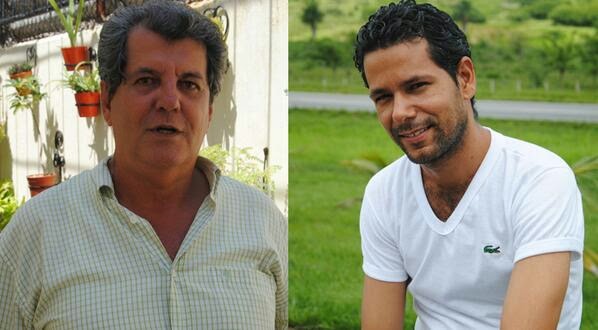
The Inter-American Commission on Human Rights (IACHR) today made public its “Report on Admissibility and Merits No. 83/23 of Case 14,196” in which it held the State of Cuba responsible for the deaths of Oswaldo Payá and Harold Cepero. This has been a 10 year struggle for truth and justice for the Payá and Cepero families.

Many questions remain unanswered that demand a thorough investigation. The Washington Post editorial published today with the title “The case of Oswaldo Payá’s death in Cuba is not closed” is right. There are too many questions that still need to be answered.

“Cuba has never lifted a finger to properly investigate Payá’s death. Payá’s wife, Ofelia Acevedo Maura, has repeatedly requested the autopsy report but never got one. Many unanswered questions remain about the deaths. One of the most important — not answered by the commission — is: Who were the Cuban agents in that car that rammed Payá? Who sent them?”

Over 10 years ago on March 16, 2013 UN Watch issued an appeal for an international inquiry into the deaths of Oswaldo Payá and Harold Cepero that was addressed to United Nations Secretary-General Ban Ki-moon, High Commissioner for Human Rights Navi Pillay, and Ambassadors of all Member States. On March 22, 2013 the UN Secretary General's spokesman acknowledged the appeal during a briefing.  

Less than a month later on April 15, 2013, the Inter-American Commission on Human Rights (IACHR) received a petition filed by the Robert F. Kennedy Center for Human Rights to investigate if the Cuban government was responsible for the deaths of Oswaldo Payá and Harold Cepero, on July 22, 2012.

On July 22, 2015, Javier El-Hage and Roberto González of the Human Rights Foundation released a 147-page report titled The Case of Oswaldo Payá that concluded Harold and Oswaldo’s deaths were "the result of a car crash directly caused by agents of the State, acting (1) with the intent to kill Oswaldo Payá and the passengers in the vehicle he was riding, (2) with the intent to inflict grievous bodily harm to them, or (3) with reckless or depraved indifference to an unjustifiably high risk to the life of the most prominent Cuban activist in the last twenty-five years and the passengers riding with him in the car."

On December 14, 2021 the Inter-American Commission on Human Rights held an audience with family members of the two victims, and one of the surviving victims.

Ten years later after the Robert F. Kennedy Center for Human Rights delivered their petition to the IACHR, the 28 page decision was published today in Spanish and in English on their website.

Based on the findings of fact and law, the Inter-American Commission on Human Rights concludes that the State of Cuba is responsible for the violation of the rights established in Articles I, IV, V, VIII, IX, X, XVIII, XXII, XXIV and XXV of the American Declaration to the detriment of Oswaldo Paýa; also is responsible for the violations of the rights established in Articles I, IV, V, XXII, XVIII and XXIV to the detriment of Harold Cepero; also is responsible for the violation of the rights established in Articles I, XXVI y XXV to the detriment of Ángel Carromero; and responsible for the violation of the rights established in articles VIII, IX and X in detriment of the relatives of Oswaldo Paya and Harold Cepero.

Robert F. Kennedy Human Rights celebrated the decision published today by the IACHR, and Kerry Kennedy, president of the organization said in a video statement: “It has been our honor to represent the Payá and Cepero families in their pursuit of justice and accountability, and it is my sincere hope that this long-awaited verdict brings them some degree of peace and healing.”

Today, let us also remember Oswaldo Payá and Harold Cepero, and how they lived.

Oswaldo Payá was sixty years old when he was murdered by Castro regime agents. He was a family man and lay Catholic from Havana, an engineer, who in September 1988 founded the Christian Liberation Movement with fellow Catholics in the neighborhood of El Cerro. Over the next 23 years he carried out important campaigns to support human rights and a transition to democracy in Cuba. He spoke out against human rights violations and demand dignity for victims, even if it meant criticizing the US for the mistreatment of Al Qaeda prisoners at the Guantanamo Naval Base prison in 2002. Oswaldo was a consistent defender of human rights. He was awarded the Sakharov Prize for Freedom of Thought by the European Parliament in 2002.

Harold Cepero was 32 years old when he was killed along with Oswaldo. He was from the town of Chambas in Ciego de Ávila. At age 18, he began to study at the University of Camaguey, and in 2002, together with other students, Harold signed the Varela Project. It was an initiative that was legal within the existing Cuban constitution that had been authored by the Christian Liberation Movement. Despite this, Harold and other students were expelled from the university for signing it and sharing it with others. The secret police would organize a mob to "judge", scream at, insult, threaten and expel the students who had signed the Varela Project. Following his expulsion on November 13, 2002, Harold wrote a letter in which he cautioned that "Those who steal the rights of others steal from themselves. Those who remove and crush freedom are the true slaves."


Saturday, November 28, 2020

Where is Luis Manuel Otero Alcántara? Secret police violently raided San Isidro Movement, removed hunger strikers and protests multiply

“The limits of tyrants are prescribed by the endurance of those whom they oppose.” -
Frederick Douglass

Where is Luis Manuel Otero Alcántara? According to ISM spokesperson Michel Matos, both Luis Manuel and Anamely Ramos González were detained again at 6:00am by Castro's secret police. State security did not want Luis Manuel Otero Alcántara to return to his home, the headquarters of the San Isidro Movement. Anamely is now back home, and has made video declarations confirming her continuing commitment, and that she is under a de facto house arrest.

Several sources, including the San Isidro Movement Twitter, are saying that Luis Manuel Otero Alcántara is at the Hospital Manuel Fajardo in Havana, Cuba and still on hunger strike, but those closest to Luis Manuel have not been able to see him.

Cuban artist Denis Solís González, who was sentenced to eight months in prison for “contempt” for speaking critically of a police officer illegally searching his home, remains at Valle Grande, a maximum-security prison just outside Havana. The demands of the San Isidro Movement hunger strikers have not been met, and the hunger strike continues.

This morning over social media the University of Miguel de Cervantes in Chile held the second day of the seventh session of the International Encounter Oswaldo Payá Sardiñas to discuss the Christian Democratic thought that the martyred Cuban leader lived through action throughout his life in Cuba before being murdered by the Castro dictatorship together with Harold Cepero on July 22, 2012. Medgar Evers, the American civil rights leader gunned down in his drive way on June 12, 1963 for advocating for an end to Jim Crow segregation through non-violent change, wrote prophetically that "you can kill a man, but you can't kill an idea."  Oswaldo Payá was killed, but his ideas live on both inside and outside of Cuba, and continue to do good.

Ofelia Acevedo Maura calls for solidarity with San Isidro hunger strikers

This morning Oswaldo's widow, Ofelia Acevedo Maura, closed the session at the
University of Miguel de Cervantes with an appeal for solidarity with the San Isidro Movement hunger strikers. 

"Today in my country there is a group of brave youth that preferred to risk their lives on hunger strike than to continue living in the lies that annihilate the soul. State security assaulted the home that they were in, and took them beating them while they were locked up. We still don’t know where three of them are. Some were already very weak.   This desperate cry of freedom for these young people reaches the world through you gathered in this forum."
The Washington Post's editorial board today addressed what happened on November 26, 2020 at approximately at 8:00pm:

CUBA’S POLICE broke down the door of an artists’ collective in Old Havana on Thursday night and detained about 14 people, several of whom were on a hunger strike. Most were later released, but the raid showed just how uneasy the Cuban government is with even a hint of protest or whisper of dissent. Art must run free, but in Cuba it must obey.

The raid was directed at the San Isidro Movement, a loose collection of creative types made up of “ghetto rappers, design professors, dissident poets, art specialists, scientists and regular citizens,” as writer Carlos Manuel Álvarez, a contributor to The Post, described it.

Last week this blog highlighted the physical assault against the San Isidro Movement headquarters and posted a photo of a bloodied Luis Manuel Otero Alcántara, and discussed the origins of the movement in the 2018 campaign against the Castro regime's Decree 349, a law that further restricted artistic expression in Cuba.

The dictatorship tried brute violence, escalated with a forced eviction of all the activists from the home of Luis Manuel Otero Alcántara that is also the San Isidro Movement's headquarters, together with an act of repudiation organized outside to shout down the protesters as they were beaten up by the secret police inside the vehicles they were spirited away.

This movement responded to each escalation of violence with a non-violent response that challenged the regime.  Restrictions on getting food, and regime contaminating the water supply with a chemical agent, okay the strongest started a hunger and thirst strike to conserve supplies for the weakest among them. Following an individual knocking down the door to the entrance with a hammer, they carried out their call for Cubans across the country to go to public parks and peacefully protest.  When they were dislodged and beaten on November 26th the following day hundreds of young people gathered outside of the Castro regime's Ministry of Culture and challenged the dictatorship.

Today at 4:00pm the San Isidro Movement will be announcing what their next steps will be. Friends of freedom please keep an eye on what is going on in Cuba they need both your witness and solidarity.

Witnessing what has taken place over the past 20 days in Cuba reminds me of the lyrics to a Peter Gabriel song from 1980 that warns repressive regimes that they cannot blow out a fire. The events of yesterday indicate that a fire is raging in Cuba that is seeking change. The crowds outside are but the tip of the iceberg, and this fire is raging in the minds of millions of Cubans striving to live in freedom.

"You can blow out a candle
But you can't blow out a fire
Once the flames begin to catch
The wind will blow it higher"

 Peter Gabriel, Biko

Thursday, March 1, 2018

Celebrating the legacy of Cuban dissident Oswaldo Payá: honoring a courageous man

Oswaldo Payá honored by Miami, a documentary short premiered, and award announced.

City of Miami Mayor Francis Suarez reads proclamation for Oswaldo Payá Day
On the evening of what would have been Oswaldo Payá Sardiñas's 66th birthday, if he had not been murdered on July 22, 2012, family, friends, and community leaders gathered to celebrate his legacy. City of Miami Mayor Francis Suarez presented a proclamation declaring February 28, 2018 Oswaldo Payá Day in the city.

Hawk Jensen, of Smock Media and the director and lead editor of the documentary short, Witness Project: Rosa María Payá, who explained that the film sought to present the situation in Cuba through a human lens that can be better understood by a wider audience without bombarding them with mountains of statistics and data that they would not be able to absorb. 

Director and lead editor Hawk Jensen, of Smock Media, introduces documentary
 On the same evening the Latin American Network of Youth for Democracy Red Latinoamericana de Jóvenes por la Democracia (RLJD) awarded the Oswaldo Payá Prize: Life and Liberty to Democratic Initiative of Spain and the Americas Iniciativa Democrática de España y las Américas (IDEA) during the same event. Former Caracas mayor, now exiled, Antonio Ledezma was awarded an honorable mention.

A day earlier in Washington, D.C. the plaza in front of the Russian Embassy was renamed after murdered Russian dissident, Boris Nemtsov, and remembered the effort by a bipartisan group of U.S. Senators to rename the street in front of the Cuban Embassy after Oswaldo Payá can move forward tweeted the following.


Oswaldo Payá was murdered by a regime that feared his civic and nonviolent message that spoke truth to power and endangered their plans for a fraudulent transition that is now underway that seeks to entrench another generation of the Castro dynasty in absolute power in Cuba. The least that one can do is bear witness, demand justice, call for the street in front of the Cuban Embassy to bear his name, and demonstrate solidarity with Cubans seeking to live in freedom.

Tuesday, October 31, 2017

No Right Travel for Cubans: Continues to be up to the arbitrary whim of the Cuban dictatorship

Article 13 of the Universal Declaration of Human Rights: "(1) Everyone has the right to freedom of movement and residence within the borders of each state. (2) Everyone has the right to leave any country, including his own, and to return to his country."

 Ofelia Acevedo Maura, and Rosa María Payá at the airport

 “The U.S. government closes, and Cuba opens,” Cuban Foreign Minister Bruno Rodriguez told a meeting of pro-Castro Cuban Americans in Washington" on October 28th that "Cuban citizens in the United States would no longer need to have a special review of their Cuban passports to rehabilitate them before traveling to the island." This so-called liberalization, according to Rodriguez, is a side effect of the U.S. government expelling 15 Cuban diplomats and making the procedure more difficult due to staff shortages at the Cuban embassy. 

The Castro regime's propaganda offensive hit a snag. While trying to portray an opening on travel Cuban officials two days earlier did not allow Cuban national Ofelia Acevedo Maura, the widow of slain human rights defender Oswaldo Payá Sardiñas, to return to Cuba. They stopped her at the airport in Havana and forced her to leave the country.

On the morning of Wednesday, October 26, 2017, Ofelia Acevedo, a Cuban citizen and widow of Oswaldo Paya, opposition leader, and Sakharov Prize laureate was forced by the Cuban emigration service to board a plane bound for Miami after being informed that she was forbidden to enter her country.
 
Ofelia returned to Havana for the first time after the attack that ended her husband's life in 2012. She was accompanied by her daughter Rosa María Payá, who resides on the island. "I return to visit the tomb of my husband murdered by the regime and to legally demand the report that the Cuban government has arbitrarily denied us for more than five years," said Ofelia Acevedo before leaving for Havana.

Upon landing in Havana, emigration services informed mother and daughter that only Rosa María could enter the country because she was a resident of the island but that the Cuban State prohibited Cuban citizen Ofelia Acevedo from entering. "We said that we would not move until they told us why they were violating my mother's right to return to her own country, but emigration officer Hernández Báez said he did not know the reason. We were there from 10:30 in the morning until four in the afternoon sitting in the emigration room surrounded by State Security agents demanding an explanation until my mother was forced to board a flight to Miami,"explained Rosa María, who stayed in Cuba, to the press. Cuban law deprives any Cuban citizen who has spent more than two consecutive years out of the country of residing in Cuba and of all their citizen rights. Cubans not residing in Cuba require a special authorization in their Cuban passport to enter the island, an authorization that was granted to Ofelia Acevedo by the Cuban consulate in Washington D.C. in August 2017. 

However, "the new measures do not prevent the Cuban government from continuing to decide who enters or leaves the national territory because the obtaining of the passport is still conditioned to the will of the State, the Cuban emigrants continue to be deprived of their residence and citizens' rights in Cuba and the Emigration services at the border continue to be able to deny entry to any Cuban non-resident in Cuba or the exit to any Cuban resident in Cuba according to the will of the State "clarified Rosa María Payá. In the last six months dozens of members of Cuban civil society have been informed at the airport by emigration services that are prohibited from leaving the country. 

This has been going on a lot longer than the past six months.

Ana Margarita Perdigón Brito denied entry to her homeland to see ailing mother
 On June 28, 2016 Ana Margarita Perdigón Brito, who was born in Sancti Spíritus, Cuba and immigrated to the United States in March of 2012, was forced to return at 10:00am that morning after having arrived the day before at 2:00pm at José Martí International Airport. She had traveled to Cuba to see her mother who who was extremely ill and might soon die. 

Ana Margarita shows cuts from broken glass during scuffle at airport (CubaNet)
CubaNet reported that Ana Margarita Perdigón Brito was a former independent journalist who had worked with various independent publications, including CubaNet among them. CubaNet reached her brother, Pablo Perdigón who had gone to pick up his sister only to find as he informed the reporter: "A colonel from the airport told me that she is turned around, that I could not see her. I had to return to Sancti Spiritus, because we rented a car to go get her." Her brother added that the soldier who met with him told him "some glass was broken and she was injured." This was the second time she had tried to travel to Cuba, the first being in March of 2015 when she and her daughter were taken off the plane while it was still in Miami and told that she was not permitted to enter. 

Blanca Reyes: Denied entry to Cuba to visit her ailing dad
Blanca Reyes, the representative of the Ladies in White in Europe, had requested on July 22, 2013 permission to return to her homeland to visit her ailing 93 year old father and on August 13, 2013 was denied by a Cuban consulate official.  Two months later on October 13, 2013 Blanca tweeted:
"My dad fractured his hip, they are going to operate, and Cuban government denies me entrance to see him. He is 93 years old."
In a later tweet she raised an important question:

"Unable to enter your home, Cuba, can someone explain that? I address the people who still support the Cuban Government." 
Two days later on October 15, 2013 over twitter received the sad news that father and daughter were never again to be reunited:

"My father died today in Cuba did not see him for 9 years the Cuban government stopped me. UNTIL WHEN MY GOD?"
Celia Cruz was not allowed to return to Cuba to say goodbye to her mom
 Even Cuban music icon Celia Cruz was not exempt from this treatment. When her mother was dying the Cuban singer was blocked by Fidel Castro from returning to Cuba to say goodbye to her mom or to attend her funeral afterwards in 1962.  

This practice still goes on today with Cubans and Cuban Americans barred arbitrarily from seeing their loved ones by the Castro regime.  The denial of the freedom to travel in these four cases demonstrates that the Castro regime divides families, picking and choosing who can travel in and out of the country. Even cases of extreme hardship when a loved one is dying are not taken into consideration. 

Between 70,000 and 300,000 Cubans are banned from returning to their homeland under arbitrary criteria set up by the dictatorship. This is a systematic human rights violation that has been going on for over half a century and despite the propaganda and spin by the Castro regime continues today as the case of Ofelia Acevedo Maura just demonstrated.

*Portions of this essay were translated from a Facebook entry by CubaDecide.

Tuesday, March 1, 2016

Rosa María Payá holds mass in Havana, announces CubaDecide campaign in Matanzas, asks for your support

"The legacy of my father is the living word, a generous gift to the Cuban people for the democratic transition." - Rosa María Payá Acevedo,  Havana, Cuba, February 29, 2016

Rosa María Payá Acevedo back home in Havana campaigning for CubaDecide

Arrival in Cuba
Rosa María Payá Acevedo arrived in Cuba along with Mexican Federal Deputy  Cecilia Romero on Sunday night and the next day, February 29, 2016 at 5:30pm attended a mass for her dad, Oswaldo Payá Sardiñas, on what would've been his 64th birthday. However on July 22, 2012 he was killed along with Rosa's friend Harold Cepero in what appears to have been an extrajudicial killing carried out by Cuban State Security.

Oswaldo Payá traveled out of Cuba in 2002 and returned in 2003
Mass in Havana and Miami for her dad and friend
Rosa María invited friends in Cuba to join her on February 29th in a Mass in celebration of her dad's and Harold Cepero's lives at 5:30pm first at the Church of  Los Pasionistas in Havana, but the location was later changed to Cerro parish "El Salvador del Mundo",  located on Santo Tomás y Peñón in Havana, Cuba. She also reported that her SMS texting service has been arbitrarily blocked. She visited her father's tomb and stayed at her family home.  Fifty Cubans attended the service in Havana according to news accounts Rosa María read aloud quotes she had gathered made by her dad. She also made her own powerful observation: "Each time the regime murders a Cuban it commits a crime against all Cubans."


Rosa with Sayli Navarro and Cecilia Romero at her dad's tomb
In Miami a Mass was held at 8:00pm at the Church of Our Lady of Charity (La Ermita) at 8:00pm in celebration of the lives of  Oswaldo Payá Sardiñas and Harold Cepero Escalante. Oswaldo Payá Sardiñas's widow Ofelia Acevedo Maura led the Payá family and family friends in prayer.

Rosa María Payá traveled to Matanzas, Cuba on March 1, 2016 she announced the campaign for CubaDecide and over social media asked Cubans and non-Cubans to support the effort. The Castro regime's agents on social media responded with slanderous attacks which Rosa responded to head on. Below are her tweets translated to English and linked to the original tweets.
"Its unfortunate that the Cuban regime defames me on captive official internet, but dare not debate civil society for five minutes."


"It is vile to use your voice to silence the Cuban citizens who struggle to make the voice of Cuban citizens count."


They killed her dad and her friend Harold then made late night death threats over the phone while following the family during the day forcing them to leave. She is back in Cuba and speaking truth to power. Please show your solidarity and #PrayForRosaMaríaPayá

Thursday, May 14, 2015

Daughter of Oswaldo Payá holds Mass in Cuba for her dad and Harold Cepero

Rosa María Payá continues in Cuba demanding justice for her dad and Harold

Rosa María Payá in Cuba continuing to demand justice for her dad and freedom for Cubans
On May 13, 2015 at 4:30pm a mass was celebrated at the Church of the Pasionistas in Havana, Cuba with the presence of Rosa María Payá. Rosa arrived in Cuba on May 11, 2015 and laid a flower at her father's tomb. Oswaldo Payá and Harold Cepero were killed on July 22, 2012 under circumstances that point to an extrajudicial killing carried out by state security.

At the mass on May 13 activists from the Ladies in White,  Antonio Rodiles and Ailer González of Estado de Sats, Manuel Cuesta Morúa,  of Arco Progresista, along with members of the Christian Liberation Movement, among others. Cubanet published a video of the mass and interviewed Rosa Maria.


Ofelia Acevedo, mother of Rosa Maria and widow of Oswaldo Payá,spoke out on America Teve on the program El Espejo (The Mirror) May 13th expressing her concerns with her daughter's visit and the reasons behind it.

Rosa's mom pointed out that her daughter wanted to return to Cuba before the two year mark was reached because that is when, under current Cuban law, her right to return would expire for being out of the country longer than permitted. She would then have to request permission and a visa to return to her homeland, something that the dictatorship could deny in an arbitrary fashion.

Last month, following her arbitrary detention, Rosa Maria Payá Acevedo was criticized, her mistreatment questioned, and dissidents in general were described as a "rats and a mercenaries" by Giovanni Montano, of the Student Federation of Cuba in an interview with NexTV. This discourse that dehumanizes an adversary should be of concern to people of good will everywhere. The best way to combat it is by recognizing the humanity of all parties and challenging these assumptions using nonviolent means.


Rosa Maria Payá Acevedo has asked over twitter to continue to express messages of support through social media using the hashtag #UnaFlorParaPaya ( #AFlowerForPaya). Please continue to follow her on twitter and encourage others to use the before mentioned hashtag. My prayers and thoughts are with her and the Payá family.


Thursday, October 9, 2014

Teach-in on Nonviolence at St. Brendan Catholic Church

Thank you to the Christian Liberation Movement for hosting and organizing this teach-in on nonviolence.
Gathering here on Church property it seems appropriate to take a moment and pray an Our Father.
"Our Father, Who art in Heaven, hallowed be Thy name; Thy Kingdom come, Thy will be done on earth as it is in Heaven. Give us this day our daily bread; and forgive us our trespasses as we forgive those who trespass against us; and lead us not into temptation, but deliver us from evil. Amen." 

Mohandas Gandhi, a Hindu, regularly read the Sermon on the Mount and said: "The message of Jesus as I understand it, is contained in the Sermon on the Mount unadulterated and taken as a whole. If then I had to face only the Sermon on the Mount and my own interpretation of it, I should not hesitate to say, ‘Oh, yes, I am a Christian.’"
Reading an excerpt the Sermon on the Mount found in Matthew 5:38 underlines the nonviolent nature of Jesus's teachings:
38 “You have heard that it was said, ‘Eye for eye, and tooth for tooth.’ 39 But I tell you, do not resist an evil person. If anyone slaps you on the right cheek, turn to them the other cheek also.
Further on it explicitly calls on one to proactively care and pray for our enemies:
43 “You have heard that it was said, ‘Love your neighbor and hate your enemy.’ 44 But I tell you, love your enemies and pray for those who persecute you, 45 that you may be children of your Father in heaven. He causes his sun to rise on the evil and the good, and sends rain on the righteous and the unrighteous. 46 If you love those who love you, what reward will you get? Are not even the tax collectors doing that? 47 And if you greet only your own people, what are you doing more than others? Do not even pagans do that? 48 Be perfect, therefore, as your heavenly Father is perfect. 
Nevertheless, the behavior of many who call themselves Christians led to the following observation by the leader of Indian independence: "It is a first class human tragedy that people of the earth who claim to believe in the message of Jesus, whom they describe as the Prince of Peace, show little of that belief in actual practice."  
How many of us follow the Christ's instruction to love our enemies and to pray for those who persecute us? When we say the Our Father do we understand and internalize Matthew 6:14-15: 
14 For if you forgive other people when they sin against you, your heavenly Father will also forgive you. 15 But if you do not forgive others their sins, your Father will not forgive your sins.  
In a speech he gave in St. Augustine in 1964 Rev. Martin Luther King Jr. described both the kind of love referred to in the Sermon on the Mount and the impracticability of violence:
"Its difficult advice and in some quarters it isn't too popular to say it...Let us recognize that violence is not the answer. I must say to you tonight that violence is impractical...We have another method that is much more powerful and much more effective than the weapon of violence...Hate isn't our weapon either...I am not talking now about a weak love it would be nonsense for an oppressed people to love their oppressor in an affectionate sense I'm not talking about that too many people confuse the meaning of love when they go to criticizing the love ethic. ...I am talking about a love that is so strong that it becomes a demanding love. A love that is so strong that it organizes itself into a mass movement and says somehow I am my brothers keeper and he is so wrong that I am willing to suffer and die to get him right and to see that he is on the wrong road."
There are two fundamental elements for nonviolence to function laid out by nonviolence scholar Michael Nagler:
1. We approach our situation with right intention. We are not and do not need to be against the well-being of any person.
2. We employ right means. Wrong means such as violence can never, in the long run, bring about right ends.

Mohandas Gandhi observed that "To answer brutality with brutality is to admit to one’s moral and intellectual bankruptcy and it can only start a vicious cycle." It is not only the history of Cuba in the 20th century that demonstrates the truth of that statement but of the world in general. 

It was said that the First World War, that started a hundred years ago on July 28, 1914 and ended in 1918 with more than 16 million dead, was to make the world safe for democracy and that it would be the war to end all wars. Instead it ended up with the creation of the first communist state in Russia and with the humiliation of Germany gave rise to Nazism. Twenty one years later the Second World War started with more than 50 million dead. It ended with the United States using two nuclear arms over civilian population centers in Japan. In the long run violence can lead to the end of human life on the planet. It does not work.   

Oswaldo Payá Sardiñas understood this.
 Teach-in on Nonviolence at St. Brendan's Catholic Church
Oswaldo Payá Sardiñas was one of the founders of the Christian Liberation Movement that came into existence on September 8, 1988, and had it become a national movement despite all the obstacles presented by the dictatorship. Oswaldo Payá explained the methods of this movement in December of 2002 while receiving the European Union's Sakharov Prize:
We have not chosen the path of peace as a tactic, but because it is inseparable from the goal for which our people are striving. Experience teaches us that violence begets more violence and that when political change is brought about by such means, new forms of oppression and injustice arise. It is our wish that violence and force should never be used as ways of overcoming crises or toppling unjust governments. This time we shall bring about change by means of this civic movement which is already opening a new chapter in Cuba’s history, in which dialogue, democratic involvement, and solidarity will prevail. In such a way we shall foster genuine peace.
In the struggle against dictatorship in Cuba it was the internal opposition that first took up nonviolence as a method to resist injustice without becoming unjust. It was the nonviolent opposition that confronted a regime rooted in hatred without hating but were followed by other organizations in exile such as:
  • Brothers to the Rescue was a grassroots movement founded in May 1991 in response to the death of a fifteen year old named Gregorio Pérez Ricardo who had died fleeing Cuba on a raft only to die of exposure and dehydration. The movement was funded by the community through donations in order to carry out a nonviolent constructive program saving the lives of Cuban rafters before they died of dehydration or starvation on the high seas in small rafts. Brothers to the Rescue actively collaborated with both The King Center in Atlanta, Georgia and Gene Sharp of the Albert Einstein Institution. Brothers to the Rescue conducted more than  2,400 aerial search missions.  These resulted in the rescue of more than 4,200 men, women and children ranging in age from a five day old infant to a man 79 years of age.
  • The Democracy Movement was founded in 1995 following the July 13, 1995 13-boat flotilla that paid tribute to 37 men, women and children massacred on the "13 de Marzo" tugboat by Cuban government agents a year earlier on July 13, 1994. Over the past 20 years it has carried flotillas, hunger strikes, and demonstrations in a obstructive program of civil disobedience challenging injustices not only in Cuba but in the Bahamas and the United States as well.
Jose Basulto played a crucial role in the formation of Brothers to the Rescue in 1991 and Ramon Saul Sanchez played an equally crucial role in founding the Democracy Movement in 1995. Unlike Oswaldo Payá both Jose Basulto and Ramon Saul Sanchez did not begin as nonviolent activists but came to it later. 

I want to conclude quoting Oswaldo Payá Sardiñas from the same speech of 2002 in Strasbourg mentioned earlier:
"The first victory we can claim is that our hearts are free of hatred. Hence we say to those who persecute us and who try to dominate us: ‘You are my brother. I do not hate you, but you are not going to dominate me by fear. I do not wish to impose my truth, nor do I wish you to impose yours on me. We are going to seek the truth together’. This is the liberation which we are proclaiming."

One should not underestimate the importance of not having one's heart filled with hatred.   

Wednesday, March 26, 2014

Ángel's Courage: Telling the truth in the Oswaldo Payá and Harold Cepero killings

"Proverbs about truth are well-loved in Russian. They give steady and sometimes striking expression to the not inconsiderable harsh national experience: 'One word of truth outweighs the world.'" - Aleksandr Solzhenitsy, 1970 Nobel Lecture

Ofelia Acevedo and Ángel Carromero in Madrid, Spain
The book's title: Muerte Bajo Sospecha translates to "Death under suspicion" is subtitled "all the truth about the Ángel Carromero case." Ángel Carromero, the author of the book, is one of two survivors of the circumstances that on July 22, 2012 resulted in the deaths of Oswaldo Payá Sardiñas and Harold Cepero Escalante and here narrates the odyssey of that day along with what he has traversed since then. Rosa María Payá Acevedo, the daughter of Oswaldo Payá wrote the prologue.  The book was presented in Madrid, Spain on Tuesday, March 25, 2014 and in addition to Ángel, Esperanza Aguirre and Ofelia Acevedo joined him in the presentation. Ángel spoke clearly and to the point as he has done before:
"The reality is that neither Oswaldo nor Harold died at the time, the reality is that there was no collision with any tree, the reality is that we were taken off the road and they got rid of the two Cuban dissidents, which why the two Europeans are unharmed."
Now there is a book that provides greater and more complete details on what happened and serves the important purpose of placing the case of Oswaldo and Harold back in the media spotlight. Carromero has received death threats in Spain and taking this stand of telling the truth makes him a target of the Castro regime and its infamous state security services.


 Ofelia Acevedo Maura, the widow of Oswaldo Payá Sardiñas, stood beside Ángel Carromero and defended the young man's courage while at the same time reporting on the lack of support of the Spanish authorities in investigating the circumstances of her husband's and Harold Cepero's deaths on July 22, 2012 and continued the families call for an international investigation:
If he had accepted what the Cuban government wanted him to accept I would not know today what really happened. I would not know with all the details that I know today what happened.  We are grateful to Angel and we've said it to him many times. That he had the courage, with how young he is, and in a world today where personal interests are generally above the dignity of persons. That he has been able to write this book and give his testimony. We have not received, it has been null, the support of judicial institutions of this country, of Spain . We filed a complaint with the national audience. All we wanted was to open an investigation. We had enough evidence for this to have happened and it did not happen. We just want to say that we will continue to explore opportunities to open an international investigation, it is our right . We now have the more explicit testimony of Angel. I know the argument of the Court, the trial judge , or the prosecutor , is that they have the trial in Cuba. It's almost a perfect crime. It is a total trap. You get out, but your exit is modified by a trial which we all know does not have any guarantees. That trials in Cuba where the Cuban government where it controls all power: judicial, administrative, and all others. The fact is that they [The Spanish government] accepted to ventilate this matter, as if it where any consular case, to use the treaty between the two countries , and not as what it was, a political case. ...  It is a known fact by the Spanish government and the rest of the world. The way to get  Ángel out was that one. Possibly otherwise at this point  Ángel would have followed the same path of Oswaldo and Harold or would be rotting in a cell in Cuba.
Ofelia went on to explain the significance of Oswaldo Payá and his life's work and the intransigence of the military dictatorship in her country:
He had finalized a project for a political alternative to the government; he had prepared a transition program precisely inspired by the Spanish transition, ...I take this opportunity to convey my condolences to the family of Adolfo Suárez who masterfully lead this transition and thanks to him and a group of generous people who put aside their personal projects to work together for the common project of democracy for the Spanish people. Spain lives a democracy now and has for many years. That has still to happen in my country. Oswaldo Payá led that transition project that the government of Cuba does not want. The military dictatorship that has been in my country for 55 years does not want this. It does not want to talk about rights. It does not want to talk of free elections. It does not want to talk of  my people being consulted to choose freely their future in Cuba. There have not been free elections in 62 years.
During the book presentation Ángel Carromero raised an important question that was tweeted at the time: " "I don't understand how one can believe the dictatorship's version against version of the deceased's families."  Thankfully, many people of good will are siding with the families of Oswaldo and Harold.  Sadly, the death threats of the Cuban dictatorship have forced the Payá family into exile providing them an opportunity to directly engage the international community.

Oswaldo's daughter Rosa on twitter posted these photos and hashtag: #NoMoreImpunity