“The truth cannot be erased”
1 day ago

"The first victory we can claim is that our hearts are free of hatred. Hence we say to those who persecute us and who try to dominate us: ‘You are my brother. I do not hate you, but you are not going to dominate me by fear. I do not wish to impose my truth, nor do I wish you to impose yours on me. We are going to seek the truth together’. THIS IS THE LIBERATION WHICH WE ARE PROCLAIMING."
Oswaldo José Payá Sardiñas (2002)

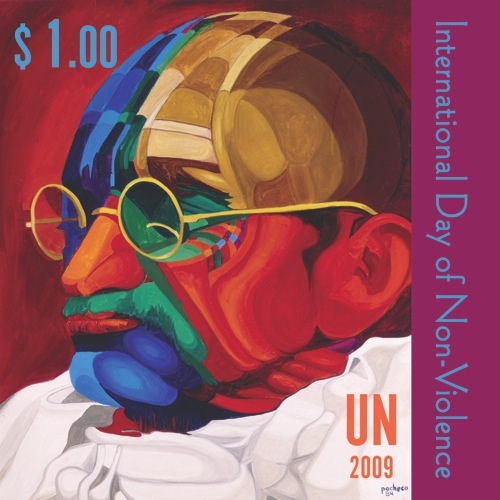
But what is Gandhi's noble philosophy? To sum it up in one word it is satyagraha. According to Gandhi " its root meaning is holding onto truth, hence truth-force. I have also called it love-force or soul-force. In the application of satyagraha , I discovered in the earliest stages that pursuit of truth did not admit of violence being inflicted on one's opponent but that he must be weaned from error by patience and sympathy. For what appears to be truth to the one may appear to be error to the other. And patience means self-suffering. So the doctrine came to mean vindication of truth, not by infliction of suffering on the opponent, but on oneself ." Applied to politics it is manifested as civil disobedience . Gandhi described civil disobedience as "not only the natural right of a people, especially when they have no effective voice in their own Government, but that it is also a substitute for violence or armed rebellion."
The trouble with the events in Tibet is that no matter how minimal the violence it will contaminate the resistance as a whole and diminish its effectiveness and legitimacy while at the same time offering the oppressor a free hand to up the repression. Those voices and activists supporting the burning of cars and looting of stores in defense of Tibetan independence are doing great harm to the cause. The Dalai Lama has appealed " to the Chinese leadership to stop using force and address the long-simmering resentment of the Tibetan people through dialogue with the Tibetan people. I also urge my fellow Tibetans not to resort to violence ." The Dalai Lama is not calling on Tibetans to cease their protests but to protest and resist non-violently . The media seems to find the two ideas (nonviolence and resistance) to be in contradiction. Mahatma Gandhi on the other hand finds no contradiction stating that "civil disobedience does not admit of any violence or countenancing of violence directly or indirectly."
To those advocating a Tibetan Intifada today they should recall Gandhi's observations during the Indian struggle for independence from Britian that "popular violence is as much an obstruction in our path [to independence] as the Government violence" and "what senseless violence does is to prolong the lease of life of British or any foreign rule." As it applied to India then so does it apply to China's occupation of Tibet now. Finally they should recall that the Palestinian Intifada has not achieved the goal of an independent Palestinian state. Permitting violent rock throwers to associate with the larger non-violent movement as was done in Palestine is a strategic mistake of the first order. Do not allow justified frustrations with the evil actions of the Chinese occupation to explode into violence that will only serve the interests of an extremely well armed adversary.
As observers to this ongoing conflict we should call on China to recognize the right of the Tibetan people to maintain their customs and traditions and to denounce the cultural and ethnic genocide being committed by the Chinese communist occupation in Tibet.

Cuba and the democratic opposition
Carlos Alberto Montaner
Cuba, two perspectives: The European Union and Cubans
Association of Ibero-Americans for Freedom
Casa de América, Madrid, Feb. 3, 2009
The Association of Ibero-Americans for Freedom, presided by Dr. Antonio Guedes, has asked me to share with you some reflections about the Cuban democratic opposition. I accept the challenge but begin by saying that I cannot speak on behalf of the dozens of organizations that, inside and outside the island, have their points of view and strategies, as befits a complex society with a certain degree of sophistication, although I believe I maintain excellent relations with most of their leaders. Therefore, my opinions should be accepted only as the personal criteria of someone who, for the past several decades, has not ceased to pay attention and give aid to those groups intent on achieving the establishment in Cuba of a pluralistic political regime that respects individual freedoms and human rights.
In any case, this seems to me to be an extremely important topic, given that the Cuban dictatorship, as part of its strategy of immobility, insists on picturing the opposition as a pitiful gang of fascists at the service of the United States, for the purpose of demonstrating that there is no better option to the communist government and that the Cubans on the island do not want it. Such statements run headlong against reality. The truth is that, within the democratic opposition, one can find all the factors of knowledge, moderation and common sense that will contribute very constructively to the transition to freedom.
The revolutionary tradition
An inevitable observation ab initio is that the experience of half a century of communist dictatorship has totally changed the political behavior of the Cuban opposition. During the 57 years of our short republican experience, from the establishment of an independent state in 1902 until the collapse of the Batista dictatorship on Jan. 1, 1959, Cubans resorted to violence to solve their political crises or impose the will of the caudillos. This pushed us into abortive civil wars in 1906, 1912 and 1917, to the revolution of 1933, the military coup of 1952, and finally to the triumph of the revolution in 1959, with Fidel Castro as the country's "Maximum Leader," a title with which he was unctuously baptized at the time.
That tradition of violence continued during the early years of Castroism, when the opposition, through inertia and habit, attempted to halt the enthronement of the communist dictatorship by resorting to the conventional means of struggle that society used to practice and with which it had just liquidated Batista: armed landings, such as the one at Bay of Pigs in 1961; guerrilla uprisings, such as those on the Escambray mountain range (1961 to 1966); military conspiracies, sabotage and terrorist acts. None of this was surprising for the Cubans, given that a good many leaders of the struggle against communism were veterans of the war against Batista: Huber Matos, Manuel Artime, Humberto Sorí Marín, Manuel Ray, David Salvador, Porfirio Remberto Ramírez, Aldo Vera and a very long etcetera [2] that might include dozens of notable personalities who directed the early confrontations against Castroism.
This violent effort to forcibly replace the dominant elite (which, it must be said, left absolutely no space for civic struggle) lasted until approximately 1966, when the last foci of peasant guerrillas on the central mountains were exterminated. During that period, the government efficiently mounted an enormous repressive apparatus, a carbon copy of the Soviet model, which made it practically impossible for its enemies to turn to armed resistance for the purpose of overthrowing it.
A change in vision and behavior
During the following decade, under the distant influence of the civil-rights struggle in the United States and the peaceful resistance of dissidents in communist Europe, a slow ideological and strategic evolution began in the ranks of the Cuban democratic opposition, which came to a notable turning point: the rise to power in Washington of President Jimmy Carter and his defense of human rights as the banner of U.S. foreign policy, in the spirit of the Helsinki Accords signed in the mid-1970s.
That pacifist and rational atmosphere, which rejected violence and vindicated democratic methods, led some oppositionists to realize that perhaps it was a historic error for Cubans to resort to force to try to solve their political crises. It might have been more sensible, they thought, to follow the road of negotiation and the search for mechanisms of consensus that might save the institutions from the shoals without the need to periodically topple the republican structures.
Finally, in 1976, half a dozen Cuban oppositionists with leftist backgrounds were summoned by professor Ricardo Bofill [3] and founded in Havana the Cuban Committee for Human Rights, the first political organization in the nation's history to expressly renounce violence as a method of struggle. The group decided to abide by the rule of law to reclaim the rights quashed by the dictatorship. Meanwhile, in exile in Washington, about the same time, Mrs. Elena Mederos, former minister in the revolutionary government, and activist and politologist Frank Calzón, founded Of Human Rights with the same objective: to defend, by peaceful and legal means, persecuted individuals, dissidents and political prisoners in Cuba.
That aggiornamento of the Cuban democratic opposition, which put it in step with the major civic-struggle movements that existed worldwide, had as a corollary another predictable evolution: the opposition began to move closer to the paradigms and political discourses of the main ideological currents that spread through the contemporary world, somehow evading the autochthonous political roots and the harmful dichotomy of "revolutionaries and counter-revolutionaries."
Precisely in Madrid in 1990, a few short months after the toppling of the Berlin Wall, three political groups of exiles with some internal ramifications, steeped in a civic spirit and internationally linked to their respective party families, created the Cuban Democratic Platform [4] to try to propitiate a peaceful change to democracy. Shortly thereafter, this new ideological vision of political struggle began to propagate inside the island.
An opposition similar to that in the rest of democratic world
In fact, the Cubans who today live in Cuba or abroad, display all the ideological hues that one might find in the parliaments of any Western country, except that the Cubans on the island must endure the constant harassment of the political police, while the exiles can defend their ideas without any fear. Roughly speaking, the current opposition has an abundance of Christian democrats, social democrats, liberals and conservatives. There are Green oppositionists, who are very concerned by the environmental destruction seen in their country; there are oppositionists who are deeply committed to the protection of respect for human rights, and there are union-minded oppositionists who vindicate the rights granted to workers.
Which of these tendencies is the most powerful? It may be futile to speculate on this issue. More than true political parties, what exists inside and outside Cuba are currents of opinion and some small structural streams that will eventually evolve into true, multitudinous political formations. In addition, these tendencies have effected a certain international linkage with similar parties and ideological institutions, the so-called "internationals," which helps develop clear ideological paradigms and public-policy recipes that are perfectly reasonable. All this will somehow guarantee the foreseeable evolution of post-Castroism.
This observation is very interesting because it belies the theory that the end of the communist dictatorship will lead to great political and economic chaos. That's not true. Most probably, the same theoretical schemes we saw in the countries that abandoned communism in eastern Europe will be reproduced in Cuba. The lectures and debates so common among opposition democrats point in that direction: they not only want to spur the end of communism but also have a very clear idea of the direction in which the country should move in a peaceful manner. Practically all of them think of a political model characterized by pluralism, tolerance, alternation in power, and subordination to the rules. What has disappeared from the Cubans' ideological mindset are veneration for caudillos and the cult of revolution.
The frozen regime
Lamentably, the healthy evolution undergone by the democratic opposition is not present in the behavior of the dictatorship. Over and again, the government of the Castro brothers reiterates the hard line of the early days of the revolution, as if the world had become frozen in the schemes of the Cold War. As far as the ruling cupola is concerned, the Berlin Wall was never toppled, Marxism-Leninism remains in effect, and the entire propaganda efforts of its huge disinformation machine (endowed with the obscene language of the rankest Stalinist lineage) insists on picturing the democratic opposition as an artificial appendix created by the United States, and opposition leaders as "the Miami mafia," composed of terrorist gangs in the service of the CIA.
Nevertheless, there is very clear evidence that, under the surface, the attitude that really prevails among government supporters, many of them in the ruling class, totally diverges from the official line. In this regard, the recent statements made by singer-composer Pablo Milanés [5] to a Spanish newspaper, as interpreted by the finest experts in the intricacies of Cuban society and the doublespeak used in Cuba, [6] constitute a lot more than an isolated opinion; they represent the point of view of a huge majority of the Cuban Communist Party, whose most important segment acknowledges -- to varying degrees -- what we might call a "willingness to reform." Among many of them, that attitude does not exclude political pluralism and an end to Marxist-Leninist collectivism, as shown by a survey [7] done last November by the party at the University of Havana, but never published. The survey revealed that only 8 percent of all professors and barely 22 percent of the students espouse the orthodox point of view propounded by Fidel and Raúl Castro.
The end of an era
How will the Cuban dictatorship end? Probably the way it happened in several countries that managed to orderly bury their old and obsolete dictatorships: through a reform inside the very structure of power, a reform that quickly and gradually will broaden the channels of societal participation, until the old regime is peacefully dismantled through various democratic procedures. That's what happened in Spain, Hungary, Poland and most communist countries in eastern Europe. There is a high probability that something similar will occur in Cuba.
When? The first step will be the burial of Fidel Castro, the true obstacle to any symptom of sensibility and common sense. The second will come with the enactment of the reformist moves that will presumably be advocated by Raúl Castro at the Sixth Congress of the Communist Party, scheduled for the second half of 2009. [8] The third will come when the democratic opposition can begin to act with greater freedom inside the country. From that time on, it is very likely that events will precipitate in ways that today are unpredictable but that will eventually fling the dictatorship into the dustbin of history. What seems unquestionable is the fact that Cuba can no longer remain a Marxist-Leninist exception in an era when that option was totally forsaken as a consequence of its errors, abuses and legendary unproductivity.
The same, or something very similar, will happen in Cuba. And when we do a balance sheet on the effects of this nigh-eternal nightmare, we might come to the conclusion that so much sacrifice has brought us an unexpected gain: we Cubans have learned that revolutionary violence, caudillism and intolerance always lead to the worst of all possible fates. Fortunately, the time to rectify these nefarious behaviors is close at hand.
NOTES
1. Carlos Alberto Montaner is a writer and journalist. He is president of the Cuban Liberal Union and vice president of the Liberal International. He has published some 25 books and hundreds of articles. His latest title, released in 2008, is “Cuba: The battle of ideas.”
2. Dr. Huber Matos (teacher and commander in the Sierra Maestra campaign); Dr. Manuel Artime (physician and lieutenant in Sierra Maestra; later, civilian chief of the Brigade 2506 expeditionists who landed in Bay of Pigs); Humberto Sorí Marín (lawyer and commander in Sierra Maestra, author of the text of the first agrarian reform carried out by the revolution; he was executed by firing squad in April 1961); Manuel Ray (engineer and Minister of Public Works in the first revolutionary Cabinet; chief of Civic Resistance, an organization in the service of the 26 July Movement; later, creator of the People’s Revolutionary Movement, which opposed communist dictatorship); David Salvador (labor leader of the 26 July Movement and, after the triumph of the revolution, Secretary General of the Federation of Cuban Workers; when he turned against communism, he created the 30 November Movement); Porfirio Ramírez (student leader and captain in the rebel army during the struggle against Batista; he led the Federation of University Students in Las Villas before being executed by the government in 1960); Aldo Vera Serafín (police commander in Havana after the triumph of the revolution; former chief of Action and Sabotage in Havana. He was assassinated in Puerto Rico in 1976 by the Cuban intelligence services.)
3. Bofill had been a member of the Communist Party but had landed in prison after a trial called “the microfraction,” accused of conspiring to limit the authority of Castro supporters. The other five members were Adolfo Rivero Caro, Elizardo Sánchez Santa Cruz, Edmigio López Castillo, Enrique Hernández Méndez and Dr. Marta Frayde. A short while later, the group was joined by brothers Gustavo and Sebastián Arcos, prestigious figures in the struggle against Batista. All of them were sentenced to long prison terms.
4. The three political groups that formed the Cuban Democratic Platform were the Christian Democratic Party (linked to the Christian Democratic International), represented by its president, José Ignacio Rasco; the Social Democratic Coordinator (with some incipient links to the Socialist International), represented by Enrique Baloyra; and the Cuban Liberal Union, a member of the Liberal International, headed by Carlos Alberto Montaner. Other, non-political groups were also present at the event.
5. See Público.es, Dec. 29, 2008, (http://www.publico.es/culturas/186756/socialismo/cubano/estancado),
an interview done by journalist Carlos Fuentes. In it, Pablo Milanés not only criticizes the government openly but also declares his total mistrust of the gerontocracy that rules the country.
6. A few months after Milanés’ statements, the so-called “war of the e-mails” broke out. A group of writers and artists who belonged to the Union of Writers and Artists of Cuba (UNEAC) utilized the Internet to harshly reproach two former functionaries in the culture sector – Luis Pavón and Jorge “Papito” Serguera – for their cruelly repressive acts during the so-called “Gray Quinquennium” in the first half of the 1970s. In reality, the rebuke was a shot fired in the air to complain about the current situation without running great risk, because the desire for deep changes felt by the intellectuals is practically unanimous.
7. The results of the survey remain unpublished but have been learned abroad thanks to the cooperation of European embassies accredited in Havana. As interesting as the overwhelming number of reformers who express their disconformity with the system is the fact that most of them are not satisfied with reforming the regime -- they believe in the need for a radical change in the system.
8. In the extended discussions prior to that long-awaited Congress (the last one was held in 1997 and culminated in enormous frustration), the criticism against the government and the clumsiness of the public administration has been copious and has been heard throughout the island.
Thank you very much Mr. President. Some of these interventions reminds me of an anecdote from my student days at univesity. Where they asked what would be the reaction of a right winger, a Christian Democrat, and a communist to his wife's infidelity: the right winger would beat her up; that the Christian Democrat would sit down with her and say to her "my love try not to have this happen again", and the communist would go look for some rocks and throw them at the Embassy of the United States. This in reality appears to be what happens with a few of my colleagues.


 Posts
All Comments