Sunday, August 23, 2009

Che Guevara's Lamentable Legacy


Che Guevara's Lamentable Legacy


By John Suarez

“We must say here what is a known truth, which we have always expressed before the world: firing squad executions, yes, we have executed; we are executing and we will continue to execute as long as is necessary. Our struggle is a struggle to the death."
Ernesto "Che" Guevara
UN General Assembly, 1964


"Hatred as an element of the struggle; a relentless hatred of the enemy, impelling us over and beyond the natural limitations that man is heir to and transforming him into an effective, violent, selective and cold killing machine. Our soldiers must be thus; a people without hatred cannot vanquish a brutal enemy."
Ernesto "Che" GuevaraHavana, April 16, 1967.

Film makers have been erecting a romantic image of Che Guevara from the days of his youth, as in Walter Salles's film ''The Motorcycle Diaries,"or his final days in Bolivia in Steven Soderbergh's " Che Guevara." It is important to highlight Guevara's actual message, actions, and legacy. Both films are a revisionist white wash that ignore both the atrocities committed, his hate filled writings, and their aftermath not only in Cuba but in the Americas.

The image of Che Guevara hanging in the College dorms of student radicals in 2009 may be cliché, but his message is not. In his Message to the Tricontinental Guevara argued that hatred was something to be harnessed and used: "Not only as an element to struggle against injustice,” but to be used to perpetrate new injustices. Guevara describes the utilization of hatred or as he put it “relentless hatred” to “impel us over and beyond the natural limitations of man.” This use of hatred to encourage the dehumanization of an adversary is but another manifestation of the doctrine found throughout the centuries to justify mass murder and torture.

If hate was the solution to all problems then the heroes of the 20th century would have been: Lenin, Hitler, Mussolini, Stalin, Pol Pot, and Guevara. Instead they are viewed in most quarters as mass murderers and criminals except for those who are blinded by their "relentless hatred" of their fellow human and/or their political ideology. History has demonstrated two fundamental approaches to change the face of the world. One way views hatred of the other as an element of the struggle in which the ends justify whatever means and has been the way for the individuals listed above.

Che Guevara was an admirer of Mao Zedong and his formulation of guerilla warfare is adapted from the Chinese leader. Che published influential manuals Guerrilla Warfare (1961) and Guerrilla Warfare: A Method (1963), which were based on his own experiences and partly chairman Mao Zedong's writings. Guevara stated that revolution in Latin America must come through insurgent forces developed in rural areas with peasant support. His international legacy of glorifying violence through an erroneous analysis of guerilla warfare, based on his experiences with the Batista army, which was too incompetent and corrupt to fight, and applying Zedong’s writings on the subject led to bloodbaths in Argentina, Chile, El Salvador, Nicaragua, Chiapas, Congo, Angola and decades of military dictatorship and political violence. Nevertheless it could have been worse. Che was killed in 1967 in the jungles of Bolivia. Another disciple of Mao Zedong who adapted his theories was Pol Pot, who unlike Che achieved power in 1975 after a guerilla struggle in Cambodia. He carried out a radical revolution modeled after Mao and ended by killing 25% of the entire population of his country: Cambodia.

Children in Cuba beginning at age 5 are taught to chant " We will be like Che!" every Friday at school. They are taught to be like the man who saw people as material to be molded and shaped in his Guevara’s own words: " To build communism, you must build new men as well as the new economic base. Hence it is very important to choose correctly the instrument for mobilizing the masses. Basically, this instrument must be moral in character, without neglecting, however, a correct utilization of the material stimulus-especially of a social character." One method of material stimulus was the firing squad. Che Guevara personally carried out hundreds of executions and issued even more death warrants. According to journalist Luis Ortega, who knew him, Che sent 1,897 men to the firing squad.

The consequences of building violent, selective, and cold killing machines is that these means lead to tragic ends that continue the cycle of violence and bloodshed. One example took place in the early morning hours of July 13, 1994 just six miles from Havana’s sea wall, the Malecón, out in the ocean a tug-boat with more than 71 Cubans trying to head for sanctuary were attacked. These victims were met by other tugboats captained by Che's "new men" who used high pressure hoses to knock these refugees overboard into the sea, and later rammed and sank the boat drowning 41 passengers. 21 of the dead were women and children. Ten years after the massacre acts of remembrance were carried out around the world. Jorge García, who lost 14 family members on the tugboat, poke out rejecting Che Guevara’s approach while embracing another: "There are those who think that we should be full of rancor and a thirst for vengeance, but I don't want revenge. I feel sorry for the people who assassinated my family but I do want a trial so that this situation can serve as a lesson and that these people or others like them in other parts of the world, don't do this kind of thing again. Not in Cuba. Not anywhere.” Seek justice but not revenge. Address an injustice with justice not new injustices.

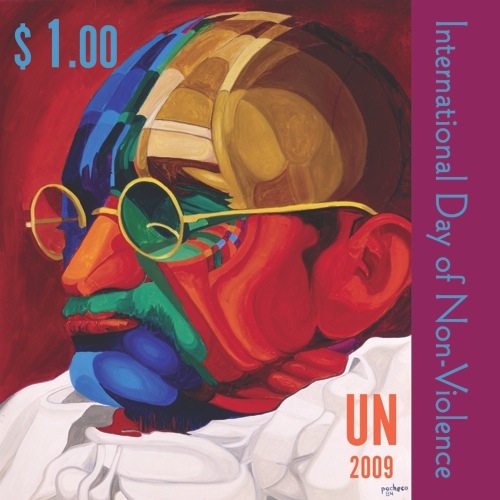
This is a radical alternative to Che Guevara and Mao Ze Dong, tragically an alternative that would have saved tens of millions of more lives in the past century. Its philosophical underpinning is found in the statement: " Love your enemies, do good to those who hate you, bless those who curse you, pray for those who mistreat you.” This path has and continues to be followed by persons of such diverse backgrounds as Mahatma Gandhi, Martin Luther King Jr., Lech Walesa, Vaclav Havel, Corazon Aquino, Desmond Tutu, Aung San Suu Kyi, and Dr. Oscar Elias Biscet. These men and women have demonstrated that hatred is something to be overcome, not an "element of struggle," but rather a stumbling block to freedom. Martin Luther King Jr. spoke of the challenge in November of 1960 in reference to sit-ins organized to protest segregation:

The sit-in demonstrations seek to secure moral ends through moral means. And ever so often in history when men seek to achieve the splendid goals of freedom, human dignity, and justice they resort to methods of violence, such as guerrilla warfare, such as assassination, and other methods of bloody revolution. […] We see here a crusade without violence, and there is no attempt on the part of those who engaged in sit-ins to annihilate the opponent but to convert him. […] I submit that this method […] is justifiable because it uses moral, humanitarian, and constructive means in order to achieve the constructive end.

Guevara had been executed on October 9, 1967 and just months before his own assassination Martin Luther King Jr. called on his staff to combat the “romantic illusion” of guerilla warfare in the style of Che Guevara among young radicals concluding: “We must not be intimidated by those who are laughing at nonviolence now.”

Che Guevara argued in his writings and speeches that hatred is good because it, "transforms us into effective, violent, selective, and cold killing machines" Yet Mahatma Gandhi directly challenged this kind of thinking when decades before Che arrived on the political scene others advocated the same methods as Guevara in India arguing with great prescience: It is a cowardly thought, that of killing others. Whom do you suppose to free by assassination? The millions of India do not desire it. Those who are intoxicated by the wretched modern civilization think these things. Those who will rise to power by murder will certainly not make the nation happy.

Forty years after the assassination of Martin Luther King Jr. an African American took the oath of office and became President of the United States in a country that has profoundly changed. What of the rest of Latin America? Guevara’s call to action in a hemisphere with too many military juntas led to new military juntas in countries that had not known them before in their history: Brazil, Ecuador, Panama, and Uruguay all had their longest military juntas following the Castro regime exporting guerillas to violently overthrow governments in 1959 along with promoting Guevarist ideology. On January 3-15, 1966 the Tricontinental Conference hosted by the Cuban government and the explicit announcement of their goals in Guevara’s Message to the Tricontinental. Other countries such as Chile, who had last known a military junta between 1924 and 1931, in reaction to communist threats in 1973 embraced Augusto Pinochet who remained in power for seventeen years.

With the exception of Nicaragua Che Guevara’s prescription for revolution in Latin America led to a generation of right wing military dictatorships and harsh repression. In Nicaragua it led to a Marxist left wing military dictatorship and civil war. Ironically, Pinochet was brought down by followers of Gandhi and King who through non-violent action pressured Pinochet into a plebiscite which he lost and through persistence and patience sought and continue to seek justice for his victims. If Fidel Castro and Che Guevara had not created the Tricontinental in 1966 and explicitly called for the use of terrorism and armed guerrillas then there might not have been an Operation Condor, in which the military establishments responded to Che Guevara's call to create "cold killing machines" by creating their own and setting them loose on left wing partisans. A month before Pinochet's September 11, 1973 coup against the democratically elected Salvador Allende four radical left wing organizations from Argentina, Bolivia, Chile, and Uruguay met and established the Revolutionary Coordinating Junta.

This struggle for real freedom is both spiritual and material. The spiritual enemies are hatred, distrust, fear and despair. For example in the case of Cuba there are abundant reasons to hate the evils and injustices committed by Guevara and his co-conspirators. They have imprisoned tens of thousands of prisoners of conscience, attempted to indoctrinate an entire generation, made Cubans second class citizens in their own country, they have divided families, made political ideology a litmus test for patriotism, and executed thousands. Cuban dissident leaders inspired by Gandhi and King have rejected this culture of violence and hatred despite great suffering on their own part. Dr. Oscar Elias Biscet, an opposition leader currently serving a 25-year prison sentence for his human rights activism believes that: "To love one's neighbor is also to love one's enemy. Although in reality that qualifier-'enemy' does not exist in my vocabulary. I recognize that I only have adversaries and I have acquired the capacity to love them because in this way we do away with violence, wrath, vengeance, hatred and substitute them with justice and forgiveness."

Oswaldo Paya Sardiñas addressing the European Parliament upon being awarded the Sakharov Prize for Freedom of Thought in Strasbourg, France on the 17 of December 2002 declared: “ The first victory we can claim is that our hearts are free of hatred. Hence we say to those who persecute us and who try to dominate us: ‘You are my brother. I do not hate you, but you are not going to dominate me by fear. I do not wish to impose my truth, nor do I wish you to impose yours on me. We are going to seek the truth together’.” With this victory courageous Cuban democrats are in the process of bringing this lamentable legacy to an end with a rebirth of freedom and national reconciliation.

Freedom of Expression & The Juanes Affair

Freedom of Expression & The Juanes Affair

Recognizing the boundary between vigorous debate and assault

"Only oppression should fear the full exercise of freedom."
Jose Marti y Perez

“Everyone has the right to freedom of opinion and expression; this right includes freedom to hold opinions without interference and to seek, receive and impart information and ideas through any media and regardless of frontiers."
Article 19 Universal Declaration of Human Rights

I had committed myself to not addressing the Peace Without Frontiers concert organized by Juanes in Havana due to a lack of time and interest viewing it through an entertainment and cultural prism.
At this moment Ariel Sigler Amaya, Alfredo Pulido López, Juan Carlos Herrera Acosta, Normando Hernández González, Alfredo Dominguez Batista, Jose Daniel Ferrer and Dr. Garcia Paneque are deathly ill. I especially fear for the lives of Ariel Sigler Amaya and Normando Hernandez who are both emaciated and in the case of Ariel can no longer walk.

I am also deeply concerned about the July 21 arrest of Dr. Darsi Ferrer who has exposed the horrible injustices of the Cuban medical system on film and now faces years in prison. Amnesty International has identified 58 Cuban prisoners of conscience rotting in Cuban prisons for exercising their fundamental human rights. This should generate a lot more passion and outrage then a pop concert in Cuba.

Sadly Cuba is not the only human rights disaster in the world there are others in similar circumstances that need help. In the past few weeks I’ve had to mobilize with others to get a friend out of a Zimbabwean detention center that has a track record of torture; denounce attacks against journalists in Venezuela not to mention highlight a new law to clamp down on freedom of expression; march with Iranian exiles against the killing of students and pro-democracy activists in Iran; sign petitions and lobby for the release of Aung San Suu Kyi who has spent more than a decade under house arrest and has now had her sentence unjustly extended an additional 18 months along with more than 2,000 Burmese political prisoners rotting in prisons throughout Burma; denouncing the extrajudicial execution of Russian human rights activist Natalia Estemirova; denouncing the rape of a Chinese student in one of the infamous Chinese black jails and other actions. These outrages should generate more passion than a pop music concert.

Nevertheless the Juanes affair dominates the news in South Florida and has gotten uglier obligating me to speak out. Why? Because as a human rights activist one cannot remain silent when they are being violated in front of you in your own hometown. Sadly this is not the first time Human Rights Watch back in 1992 wrote a report on violations of the freedom of expression in Miami and followed up with a 1994 report. This is the same organization accused by the Cuban Ambassador to the UN Human Rights Council in June of 2009 of being mercenaries. This is because Human Rights Watch is both independent and objective and has written a profound analysis of Cuba’s repressive machinery and held the regime accountable for decades. With regards to the situation in Miami I’ve spoken out in print and in public both in 1996 and 1999 respectively during the Rubalcaba and Los Van Van affairs and do so again now.

Now a vigorous debate about the merits of a pop music concert in Cuba is fine, although not of great interest. My plan was to watch or listen to the September 20th concert get feedback from people who attended the concert and from members of the democratic opposition then draw conclusions about the event. This remains the plan with regards to the concert, but this essay serves to address a more important topic: the right of Juanes and a group of musicians to play in Cuba and the right of a Colombian artist to form his own opinions about Cuba and not be threatened with physical violence.

Freedom of expression is an inalienable right for all individuals in all countries, at all times especially in matters of civic and political expression and those that seek to censor free expression, intimidate persons seeking to express themselves, imprison them or terrorize them is guilty of committing a profound injustice. Individuals here have crossed that line and demonstrated their contempt for human rights.

Two clear examples first at the demonstration on August 14th on 35th Ave. and SW 8th Street where a black shirt representing Juanes was doused with a flammable liquid and set on fire by one of the demonstrators who stated to the press: “This is what we are going to do with him burn him for being a communist, a traitor, a terrorist, and for licking Fidel Castro’s boots.” Secondly, A day later on Twitter Juanes received the following message: "I hate what you are saying but you will die for defending your right to say it."These are not examples of free speech but fall under the legal definition of assault: the threat to carry out physical harm against an individual and demonstrating the means to do it and constitutes a true threat. Another example of this type of language involving death threats against a Cuban exile activist occurred in 2007 the individual making the phone calls was identified by the police and interviewed on Channel 41.

This is intolerable in a free society. However this is the kind of language often used by Cuban government agents and reflects a country that is second in the world only to China (28) with 21 imprisoned journalists according to the Committee to Protect Journalists. Currently there are 58 human beings rotting in Cuban prisons recognized by Amnesty International as prisoners of conscience which means they are there because they were willing to put their lives and reputation on the line to defend human rights. Just days ago a man spoke out in front of a camera that he is hungry and days later is sentenced to two years in prison. These are the kind of threats that are all too common in totalitarian states like Cuba.

Everyone, even a musician, has the right to their opinion and to expression; and that includes the freedom to hold opinions without interference and to seek, receive and impart information and ideas through any media and regardless of frontiers. The debate over whether the concert and the message will leave a positive legacy in Cuba can be heatedly debated but the right of anyone from any country going to any country to play their music and express themselves is a fundamental right. Death threats meant to intimidate and silence dissent are unacceptable and need to be condemned.

One must separate politics from other spheres of life only totalitarians subsume everything to a political ideology. One of the questions raised by critics of the concert is "if Juanes would’ve played in Chile during the Pinochet dictatorship?" Well for the record one of the greatest bands of all time The Police did just that in 1982 in Viña del Mar. They played a concert and were interviewed on Chilean television. They did not criticize the Pinochet regime during their visit: they played their set and did their interview focusing on their music and the band. That did not mean that Sting, Andy Summers, or Stewart Copeland were Pinochet supporters. They were musicians doing a gig.

Years later in 1988 Sting did pen a song They Danced Alone which blasts Pinochet’s dictatorship. The band also played in Argentina during the military junta in the midst of thousands being disappeared and brutally extrajudicially killed. Do not expect much from musicians other than they play their music well and are entertaining. If they care about human rights fine, but they better know how to play well.

A final observation about the Juanes concert which is billed as an apolitical affair. When you visit the official website of the concert series you’ll find that one of the documents of interest is the Universal Declaration of Human Rights. Human rights encompasses civil and political rights but are not political in and of themselves but fundamental and transcendent rights that are beyond the politics of the day. If the musician understands this fact the September 20 concert in Havana should be an interesting show.

Monday, February 26, 2007

Obituary : MARIO CHANES DE ARMAS, 80

The Miami Herald
Mon, Feb. 26, 2007
 MARIO CHANES DE ARMAS, 80

Funeral today for former Cuban political prisoner

A one-time comrade of Fidel Castro and former Cuban political prisoner will be buried Tuesday in Miami after suffering a heart attack.

BY WILFREDO CANCIO ISLA
El Nuevo Herald

Mario Chanes de Armas, the Cuban political prisoner who served the longest sentence in modern times and symbolized the struggle for civic freedom in 20th century Cuba, will be remembered today with a funeral service in Miami.

Chanes, 80, who suffered a fatal heart attack Saturday, spent his life in prison and in exile, but no adversity convinced him to halt his quest for a democratic future for his homeland.

Certainly not during the 30 years he spent in prison for opposing the regime of Fidel Castro, his comrade-in-arms during the failed raid on the Moncada army barracks in Santiago de Cuba in 1953.
In the past two years, Chanes' health deteriorated rapidly as a consequence of Alzheimer's disease. His memory failed, and in 2005, he was admitted into an assisted living facility in Hialeah.
Chanes died at Hialeah Hospital, where he had been taken in serious condition. His closest relatives were at his bedside.

''He died with the serenity and peace that accompanied him his whole life through,'' said his sister, Belén López. `He was a marvelous and kind man, willing to help everybody in exchange for nothing, a man of an earlier era.''

Labor organizer Mario Chanes de Armas
 THE EARLY YEARS

Born in the Marianao neighborhood of Havana on Oct. 25, 1926, Chanes took up commerce after graduating from high school.

Because of his leadership abilities, he soon became a labor leader in the Havana areas of Puentes Grandes and Ceiba and later extended his influence as an organizer to other provinces.

He was on his way to becoming an influential figure in Cuban labor circles, when the military coup of March 10, 1952, led by Gen. Fulgencio Batista, forced him to reassess his future.

Chanes gave up his labor work and joined the underground, where he conspired against Batista. That is where he met Fidel Castro, during a meeting with young people opposed to Batista's regime.
''A dear friend of ours, photographer Fernando Chenard Piña, knew a gentleman named Fidel Castro Ruz, and we began to meet in a house at 109 Prado in Havana,'' Chanes recalled during a long interview with El Nuevo Herald in 2003.

Along with Chenard, Chanes became chief of the secret cells that trained young men in the use of firearms, in preparation for the raid on the Moncada barracks on July 26, 1953. Chanes drove in the third car behind Castro and was wounded in the hand before retreating.

Captured days later outside Santiago de Cuba, he was tried and sentenced to 10 years' imprisonment, but he was released in 1955 in a general amnesty to the raiders. He then moved to Miami and worked here as a dishwasher.


CASTRO CALLS
Not long thereafter, Castro summoned him from Mexico and asked him to join the expeditionaries aboard the yacht Granma. Chanes did not hesitate to take up arms again. On Dec. 2, 1956, he and 81 other rebels landed on the eastern coast of Cuba.

After the failed landing, Chanes managed to reach Havana, where he directed sabotage teams. He was arrested again, and was in prison when the revolution triumphed, on Jan. 1, 1959.
Chanes became disenchanted by the shift in the revolutionary process toward communism and tried to pull away from the circles of power.

On July 17, 1961, he was arrested on charges of conspiring to assassinate Castro and sentenced to 30 years' imprisonment. He always maintained that the charges were fabricated, pointing out that no weapons or compromising documents were ever found in his possession.

`A PLANTADO'
Refusing to accept the routine in prison or even wear prison garb, Chanes identified himself as a plantado -- a disobedient inmate -- until July 16, 1991, when he was released.

Chanes found exile in Miami in 1993.

Mario Chanes de Armas in 1993
He went on to became a tireless activist for the release of Cuban political prisoners and called for the democratization of Cuba at numerous international conferences. Until 2003, Chanes worked actively in the group Plantados, along with other well-known former political prisoners with whom he served time in Cuban prisons.

Chanes took up the banner of peaceful reconciliation among Cubans and vigorously supported all activists who practiced domestic opposition on the island.

Chanes is survived in Miami by his sisters Belén, Mercedes, Aleida and Merceditas. His son, Mario, died in 1984.

Visiting will begin at 5 p.m. today at the Bernardo Garcia Funeral Home, 4100 NW Seventh St., Miami. Burial has been set for Tuesday.

Miami Herald translator Renato Pérez contributed to this report. 


Monday, August 21, 2006

Tape suggests Raul Castro ordered Brothers shootdown

Miami Herald, August 21, 2006

Tape suggests Raul Castro ordered Brothers shootdown

A recording purportedly of Raúl Castro suggests he gave direct orders for the shootdown of Brothers to the Rescue planes.

By WILFREDO CANCIO ISLA 

Posted on Mon, Aug. 21, 2006

Cuban Defense Minister Raúl Castro discussed plans for the 1996
shootdowns of two Brothers to the Rescue airplanes during a meeting with
official journalists just weeks after the event, according to an audio
tape obtained by El Nuevo Herald.

In the tape, a voice identified as Raúl’s details the planning carried
out during a meeting of military officers around Jan. 13, 1996, the day
Brothers aircraft allegedly had overflown Havana to drop anti-government
leaflets.

”I made it clear that [the decision to shoot] had to be decentralized
if we wanted it to be effective, so we gave the power to five
generals,” the voice says. The Brothers airplanes “were going to
escalate this, and we had no other recourse but to make this decision.

”I told them [MiG pilots] to try to knock them down over [Cuban]
territory, but they [the Brothers aircraft] would enter Havana and go
away . . . Of course, with one of those missiles, air-to-air, what comes
down is a ball of fire that will fall on the city,” the voice says.
“Well, knock them down into the sea when they reappear. If not, consult
with the people in authority.”

The two Brothers Cessna C-337 were shot down by MiGs Feb. 24, killing
Armando Alejandre, Carlos Costa, Mario de la Peña and Pablo Morales.
Brothers to the Rescue has denied any violations of Cuban airspace.

The 11-minute recording was taped during a June 21, 1996, conversation
at a Cuban Communist Party office in the eastern city of Holguín between
Castro, government officials and journalists from the government’s Radio
Rebelde network.

The authenticity of the recording could not be independently confirmed.
A telephone call Sunday to the Cuban diplomatic mission in Washington
went unanswered.

RECORDING’S SOURCE

The recording was obtained by a Havana who requested
anonymity for his own security. Cubans in Miami who listened to it say
they believe it is indeed Raúl’s voice. The Holguín newspaper carried a
report on Raúl’s presence there the day after the meeting. The recording
was delivered to El Nuevo Herald through Nueva Prensa Cubana, a Miami
agency that represents several journalists in Cuba.

On two occasions, the voice on the recording is heard warning the
government journalists to “publish nothing about this.”

Cuban leader told CBS News anchor Dan Rather in April of
1996 that he had given general orders that violations of Cuban airspace
should be stopped, but that neither he nor Raúl had given the specific
order for the Feb. 24 shootdown.

Fidel Castro temporarily ceded power to his younger brother three weeks
ago after undergoing ”complicated” intestinal surgery. He is reported
to be recovering but has not been seen in public since although photos
and a video have been released.

Cuba has long maintained that the Brothers’ Cessna 337 planes were shot
down within its territorial waters. But an investigation by the United
Nations’ International Civil Aviation Organization concluded they were
well outside Cuban waters.

The tape does not specify the names of the five generals empowered to
order the shootdowns. In August 2003, federal prosecutors in Miami
indicted three Cuban officers for the attacks: Gen. Rubén Martínez
Puente, then head of the anti-aircraft command, and MiG pilot-brothers
Alberto Lorenzo and Francisco Pérez Pérez.

ON FULL ALERT

In the recording, the voice says that Cuban military forces were put on
full alert after Brothers airplanes allegedly violated Cuban airspace on
July 13, 1995.

‘One MiG-23 got behind them . . . `I have him, I have him,’ he said.
‘Let him go,’ he was ordered,” says the voice, adding later that the
order to stop the incursions remained in force as of the Holguín
meeting. “The order stays.”

In the tape, the voice also says that just before the Holguín meeting
the speaker ordered the emergency landing of a plane carrying Fidel
Castro from central Cuba to Havana because air force radars had detected
”several” suspicious marks in Havana province.

”I ordered that the plane land in Varadero,” the voice says. ‘It was
necessary to say that the order was mine. `Make it land in Varadero!’
and [Fidel] told them to obey it.”

José Basulto, of Brothers to the Rescue, and relatives of the
dead pilots have long insisted on bringing Raúl Castro before U.S.
justice for the shootdowns.

”This is the type of proof we have been seeking from day one as
confirmation that the murder was premeditated,” said Maggie Alejandre
Khuly, sister of pilot Armando Alejandre.

Basulto, who was in another plane during the attacks, said the tape
“points to Raúl Castro as the direct source of the decision to down the
airplanes . . . This is a record of the plans for the crime.”

Audio:
http://www.miami.com/multimedia/miami/elnuevo/archive/audio/0820raulcastro.html

http://www.miami.com/mld/miamiherald/news/special_packages/fidel_castro/15322216.htm


Find more about SHOOTDOWN

Monday, August 14, 2006

From the Archives: Raul Castro: Cocaine Connection? (ABC News)


Investigative

Raul Castro: Cocaine Connection?

By Brian Ross And Vic Walter
Aug 14, 2006 9:55am

Federal prosecutors in Miami were prepared to indict Raul Castro as the head of a major cocaine smuggling conspiracy in 1993, but the Clinton Administration Justice Department overruled them,  current and former Justice Department officials tell ABC News.

The officials say Castro, as Cuban Defense Minister, permitted Colombian drug lords to pay for the use of Cuban waters and airstrips as staging grounds for smuggling runs into the United States in the 1980s and early 1990s. "It was a major investigation involving numerous witnesses that was killed at the highest levels in Washington," said a former Justice Department official with direct knowledge of the case. "There were numerous national security and intelligence issues that would have made the case difficult," said Tom Cash, the former head of the Drug Enforcement Administration office in Miami. 

Convicted Colombian drug boss Carlos Lehder of the Medellin cartel testified in a 1991 federal trial that he met twice in Havana with Raul Castro to arrange safe passage for cocaine flights over Cuban airspace. The draft indictment, as described by a former Justice Department official who saw it, listed Raul Castro as the leader of a conspiracy involved in smuggling seven and a half tons of cocaine into the United States over a 10-year period. At least a dozen other Cubans were also to be indicted. 

In 1989, a top Cuban General, Arnoldo Ochoa, was convicted by a Cuban court and ordered executed with three other military officers for their roles in drug smuggling. Cuban waters continue to be used by drug smugglers, according to federal law enforcement officials. "The smugglers know that the U.S. Coast Guard can’t go after them in Cuban waters," one official said. There was no immediate comment from the Cuban Interest Section in Washington, D.C.  In the past, Fidel Castro has denied that his country or his brother had any role in protecting drug smugglers. 

http://abcnews.go.com/blogs/headlines/2006/08/raul_castro_coc/