Showing posts with label Diubis Laurencio Tejeda. Show all posts

Monday, July 13, 2026

July 13th now has a double significance for victims of communism in China and Cuba

  Free Chinese and free Cubans share a common day to mourn their victims of communism.

Over the past 32 years Cubans have mourned the 37 men, women, and children who were extrajudicially executed by Cuban government agents on July 13, 1994 when the "13 de Marzo" tugboat was attacked and sunk.

To mark 30 years of impunity on July 13, 2024 at Florida International University we held a vigil in memory of the victims, distributed information, and demanded justice for the 37 victims. 

We have also paid homage to Chinese Nobel Peace Prize Laureate and human rights defender Liu Xiaobo who died nine years ago on July 13, 2017 at the First Hospital of China Medical University, in Shenyang, China after being unjustly imprisoned from December 8, 2008 until his untimely death nearly 10 years later. 

It is likely that he died of a cancer made terminal by politically motivated neglect. Today marks five years since his passing. After eight years in "unofficial detention" his widow Liu Xia was finally allowed to leave China on July 10, 2018.

Liu Xiaobo  was one of the authors of Charter 08 and signed it along with more than three hundred Chinese citizens. The Charter is a manifesto that was released on December 10, 2008, the 60th anniversary of the adoption of the Universal Declaration of Human Rights. It calls for more freedom of expression, human rights, more democratic elections, the privatization of state enterprises and economic liberalization and would collect over 10,000 signatures.


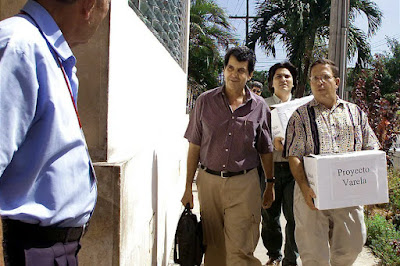
 Charter 08 is reminiscent of the Varela Project that was initially signed by 11,020 Cubans in May of 2002 calling on the Cuban government to respect international human rights norms and engage in the same kind of reforms. Both were inspired by Vaclav Havel and Charter 77. Lamentably, the author of the Varela Project, Oswaldo Payá Sardiñas, founding leader of the Christian Liberation Movement and a youth leader of the same movement, Harold Cepero Escalante were both extrajudicially executed twelve years ago on July 22, 2012 in a crash engineered by the Cuban dictatorship's agents.

The demand for justice remains unfulfilled in all these cases, but we must not despair.

We bear witness embracing truth and memory in defiance of the attempt to whitewash and forget. 

Holocaust survivor Elie Wiesel explained the importance of doing this in his 1986 Nobel Lecture on why it is important to remember:  

"To forget the victims means to kill them a second time. So I couldn't prevent the first death. I surely must be capable of saving them from a second death." ... "There may be times when we are powerless to prevent injustice, but there must never be a time when we fail to protest." 

In 2017, I was present at a candlelight vigil in Washington, DC on July 17th organized by the Victims of Communism Memorial Foundation to pay my respects for Liu Xiaobo and demonstrate my solidarity with Chinese human rights defenders.


 On Saturday July 11, 2026 I was in front of the Cuban embassy in a vigil in solidarity with Cubans jailed for taking to the streets in over 50 towns and cities across Cuba, in remembrance of Diubis Laurencio Tejeda, and Christian Barrera Díaz during the 11J protests, for the 37 victims of the July 13, 1994 "13 de Marzo" tugboat massacre and in remembrance of Oswaldo Payá Sardiñas and Harold Cepero Escalante both killed by the secret police on July 22, 2012, and for Liu Xiaobo. Together with15 others I said prayers for these victims of communism, their loved ones, and for justice.

Today, July 13, 2026, we visited the Cuban and Chinese Embassies and briefly picketed the,, and distributed information to passersby.


We continue to remember, and demand justice. 


July 11, 2022
Diubis Laurencio Tejeda, Age: 36
Christian Barrera Díaz, Age: 24


July 13, 2017
Liu Xiaobo, Age: 61

July 22, 2012
Oswaldo Payá Sardiñas, Age: 60
Harold Cepero Escalante, Age: 32

July 13, 1994
Hellen Martínez Enriquez. Age: 5 Months
Xicdy Rodríguez Fernández. Age: 2
Angel René Abreu Ruíz. Age: 3
José Carlos Niclas Anaya. Age: 3
Giselle Borges Alvarez. Age: 4
Caridad Leyva Tacoronte. Age: 5
Juan Mario Gutiérrez García. Age: 10
Yousell Eugenio Pérez Tacoronte. Age: 11
Yasser Perodín Almanza. Age: 11
Eliécer Suárez Plasencia. Age: 12
Mayulis Méndez Tacoronte. Age: 17
Miladys Sanabria Leal. Age: 19
Joel García Suárez. Age: 20
Odalys Muñoz García. Age: 21
Yalta Mila Anaya Carrasco. Age: 22
Luliana Enríquez Carrazana. Age: 22
Jorge Gregorio Balmaseda Castillo. Age: 24
Lissett María Alvarez Guerra. Age: 24
Ernesto Alfonso Loureiro. Age: 25
María Miralis Fernández Rodríguez. Age: 27
Leonardo Notario Góngora. Age: 28
Jorge Arquímedes Levrígido Flores. Age: 28
Pilar Almanza Romero. Age: 31
Rigoberto Feu González. Age: 31
Omar Rodríguez Suárez. Age: 33
Lázaro Enrique Borges Briel. Age: 34
Julia Caridad Ruíz Blanco. Age: 35
Martha Caridad Tacoronte Vega. Age: 35
Eduardo Suárez Esquivel. Age: 38
Martha Mirella Carrasco Sanabria. Age: 45
Augusto Guillermo Guerra Martínez. Age: 45
Rosa María Alcalde Puig. Age: 47
Estrella Suárez Esquivel. Age: 48
Reynaldo Joaquín Marrero Alamo. Age: 48
Amado González Raices. Age: 50
Fidencio Ramel Prieto Hernández. Age: 51
Manuel Cayol. Age: 56 

Saturday, July 13, 2024

July 13th now has a double significance for victims of communism in China and Cuba

  Free Chinese and free Cubans share a common day to mourn their victims of communism.

Over the past 30 years Cubans have mourned the 37 men, women, and children who were extrajudicially executed by Cuban government agents on July 13, 1994 when the "13 de Marzo" tugboat was attacked and sunk.
In 2024, to mark 30 years of impunity, we gathered at the main fountain of Florida International University to remember, share copies of the report prepared by the IACHR, and continue to demand justice.
Tragically, Chinese Nobel Peace Prize Laureate and human rights defender Liu Xiaobo who died seven years ago on July 13, 2017 at the First Hospital of China Medical University, in Shenyang, China after being unjustly imprisoned from December 8, 2008 until his untimely death nearly 10 years later. 

It is likely that he died of a cancer made terminal by politically motivated neglect. Today marks five years since his passing. After eight years in "unofficial detention" his widow Liu Xia was finally allowed to leave China on July 10, 2018.

Liu Xiaobo  was one of the authors of Charter 08 and signed it along with more than three hundred Chinese citizens. The Charter is a manifesto that was released on December 10, 2008, the 60th anniversary of the adoption of the Universal Declaration of Human Rights. It calls for more freedom of expression, human rights, more democratic elections, the privatization of state enterprises and economic liberalization and would collect over 10,000 signatures.


 Charter 08 is reminiscent of the Varela Project that was initially signed by 11,020 Cubans in May of 2002 calling on the Cuban government to respect international human rights norms and engage in the same kind of reforms. Both were inspired by Vaclav Havel and Charter 77. Lamentably, the author of the Varela Project, Oswaldo Payá Sardiñas, founding leader of the Christian Liberation Movement and a youth leader of the same movement, Harold Cepero Escalante were both extrajudicially executed twelve years ago on July 22, 2012 in a crash engineered by the Cuban dictatorship's agents.

The demand for justice remains unfulfilled in all these cases, but we must not despair.

We bear witness embracing truth and memory in defiance of the attempt to whitewash and forget. Holocaust survivor Elie Wiesel explained the importance of doing this in his 1986 Nobel Lecture on why it is important to remember:  

"To forget the victims means to kill them a second time. So I couldn't prevent the first death. I surely must be capable of saving them from a second death." ... "There may be times when we are powerless to prevent injustice, but there must never be a time when we fail to protest." 

In 2017, I was present at a candlelight vigil in Washington, DC on July 17th organized by the Victims of Communism Memorial Foundation to pay my respects for Liu Xiaobo and demonstrate my solidarity with Chinese human rights defenders.


 On Wednesday, July 10, 2024 I was in front of the Cuban embassy in a vigil in solidarity with Cubans jailed for taking to the streets in over 50 towns and cities across Cuba, in remembrance of Diubis Laurencio Tejeda, and Christian Barrera Díaz during the 11J protests, for the 37 victims of the July 13, 1994 "13 de Marzo" tugboat massacre and in remembrance of Oswaldo Payá Sardiñas and Harold Cepero Escalante both killed by the secret police on July 22, 2012. 

Together with a dozen others we said prayers for these victims of communism, their loved ones, and for justice.

We continue to remember, and demand justice. 

July 11, 2022
Diubis Laurencio Tejeda, Age: 36
Christian Barrera Díaz, Age: 24

July 13, 2017
Liu Xiaobo, Age: 61

July 22, 2012
Oswaldo Payá Sardiñas, Age: 60
Harold Cepero Escalante, Age: 32

July 13, 1994
Hellen Martínez Enriquez. Age: 5 Months
Xicdy Rodríguez Fernández. Age: 2
Angel René Abreu Ruíz. Age: 3
José Carlos Niclas Anaya. Age: 3
Giselle Borges Alvarez. Age: 4
Caridad Leyva Tacoronte. Age: 5
Juan Mario Gutiérrez García. Age: 10
Yousell Eugenio Pérez Tacoronte. Age: 11
Yasser Perodín Almanza. Age: 11
Eliécer Suárez Plasencia. Age: 12
Mayulis Méndez Tacoronte. Age: 17
Miladys Sanabria Leal. Age: 19
Joel García Suárez. Age: 20
Odalys Muñoz García. Age: 21
Yalta Mila Anaya Carrasco. Age: 22
Luliana Enríquez Carrazana. Age: 22
Jorge Gregorio Balmaseda Castillo. Age: 24
Lissett María Alvarez Guerra. Age: 24
Ernesto Alfonso Loureiro. Age: 25
María Miralis Fernández Rodríguez. Age: 27
Leonardo Notario Góngora. Age: 28
Jorge Arquímedes Levrígido Flores. Age: 28
Pilar Almanza Romero. Age: 31
Rigoberto Feu González. Age: 31
Omar Rodríguez Suárez. Age: 33
Lázaro Enrique Borges Briel. Age: 34
Julia Caridad Ruíz Blanco. Age: 35
Martha Caridad Tacoronte Vega. Age: 35
Eduardo Suárez Esquivel. Age: 38
Martha Mirella Carrasco Sanabria. Age: 45
Augusto Guillermo Guerra Martínez. Age: 45
Rosa María Alcalde Puig. Age: 47
Estrella Suárez Esquivel. Age: 48
Reynaldo Joaquín Marrero Alamo. Age: 48
Amado González Raices. Age: 50
Fidencio Ramel Prieto Hernández. Age: 51
Manuel Cayol. Age: 56 

Monday, February 27, 2023

Observing Black History Month in Cuba

the U.S. Embassy in Havana disrespecting the people of Cuba "by celebrating Black History Month with the Cuban Ministry of Culture and Cuban Institute of Music, two communist regime agencies responsible for targeting and censoring Black artists and dissidents."

The U.S. Embassy's invitation was tone deaf, and the date selected to announce it, February 23rd, problematic. 

Orlando Zapata Tamayo, a human rights activist and black Cuban prisoner of conscience was subjected to systematic physical and psychological torture between 2003 and 2010. Denied water by prison officials during a hunger strike, contributed to his death. Following his killing on February 23, 2010, Orlando was subjected to a campaign of vilification by Cuba's Communist authorities. 

Today, the plight of political prisoners such as Virgilio Mantilla Arango, Luis Manuel Otero Alcántara, Maykel Castillo Pérez (Osorbo), and their health status raise great concerns in the international human rights community. It is also no coincidence that all are black Cubans. 

These and other cases raise questions on the racist nature of the Castro regime.

In his book Racial Politics in Post-Revolutionary Cuba, Mark Q. Sawyer, a professor of African American Studies at UCLA, describes encounters with members of the Ministry of Interior that reveal the paradox of revolutionary racism. Since Fidel Castro ended systemic racism and capitalism in Cuba, so these government officials claim - any difference in outcomes between black and white Cubans - according to them - is due to "black deficiency."

Based on the Institute for Crime and Justice Policy Research, according to the January 13, 2020 article by EuropaPress, Cuba today has the largest per capita prison population in the world. Although official data is unavailable, it is known that a disproportionate number are Black Cubans.

On March 22, 1959 Fidel Castro declared that racism no longer existed in Cuba, to question that was to be a counter-revolutionary. The regime claimed over the next six decades that there is no racism in Cuba while poverty disproportionately impacts black Cubans with 95% having the lowest incomes compared to 58% of white Cubans, after six decades of communism, and independent black voices continue to be silenced

Decades imprisoned for defying Castro regime


Eusebio Peñalver opposed the Batista regime and fought with the rebel army to restore Cuba's constitutional democracy."But when Castro hijacked the revolution for himself, Peñalver broke ranks rather than 'sell my soul to the same devil that here on earth is Castro and communism,’”wrote Mary O'Grady in 2013 and quoted him. He took up arms against Castro's military in the Escambray Mountains, he was captured in October 1960. He spent 28 years in Cuban prisons and was banished from the island upon his release in 1988. "From exile in Los Angeles he wrote about the 'naked brutality' and round-the-clock beating and harassment that he had endured: 'They made the men eat grass, they submerged them in sewage, they beat them hard with bayonets and they hit them with fence posts until their bones rattled.’" Eusebio passed away in 2006 still banished from Cuba. 

Jorge Luis Garcia Perez "Antunez" served 17 years and 38 days in prison for calling for democratic reforms in a public space in Cuba in 1990. 

In August 1999 Dr. Oscar Elias Biscet was beaten and burned with a cigarette when police detained him at a provincial station in Matanzas. In November 1999 he was imprisoned for three years after holding a press conference where he was accused of displaying the Cuban flag upside down.  

Oscar was freed for 36 days on October 31, 2002 after serving a three year sentence and then arbitrarily imprisoned again on December 6, 2002, only to be subjected during the 2003 Black Spring crackdown, to a show trial and sentenced to 25 years in prison. Oscar Elías was released on March 11, 2011 after a total of more than 12 years in prison.On both occasions he was considered a prisoner of conscience.

Died or executed by Castro regime

Three black men executed by firing squad for trying to leave Cuba
 

Lorenzo Enrique Copello Castillo, Bárbaro Leodán Sevilla García, and Jorge Luis Martínez Isaac, were shot by firing squad following a speedy "trial" on April 11, 2003 for trying to leave Cuba. On April 2, 2003 eleven Cubans hijacked a ferry traveling to Regla from Havana with 40 people on board with the intention of traveling to the United States of America but ran out of fuel 28 miles off the Cuban coast and were towed back to the island. Despite verbal threats made against the safety of the passengers to maintain control of the vessel, the situation, according to the authorities, ended without violence and that “all of those who had been on board were rescued and saved without so much as a shot or a scratch.” They were captured, tried and executed in nine days. 

Hansel Ernesto Hernández Galiano

On June 24, 2020 in Guanabacoa, Cuba 27 year old unarmed black Cuban, Hansel Ernesto Hernández Galiano was shot in the back and killed by the police. The official version claims that he was stealing pieces and accessories from a bus stop when he was spotted by two Revolutionary National Police (PNR in Spanish). Upon seeing the police Hansel ran away and the officers pursued him nearly two kilometers. PNR claimed that during the pursuit Hansel threw rocks at the officers. Police fired two warning shots and a third in his back killing him. Hansel's body was quickly cremated.

This prevented an independent autopsy to verify official claims, or a proper funeral. When activists attempted to organize to protest the death of Hansel, secret police preemptively shut them down surrounding homes, and detaining scores of activists. The Castro regime launched a Heroes of the Blue ( #HeroesDeAzul ) campaign at the national level and social media in Cuba to portray their police positively to counter negative feelings after the killing. 

Yosvany Arostegui died on hunger strike on August 7, 2020


Cuban dissident Yosvany Arostegui Armenteros died on August 7, 2020 in Cuba while in police custody following a 40 day hunger strike. He had been jailed on false charges in the Kilo 8 prison of Camagüey. His body was quickly cremated by the dictatorship. 

Diubis Laurencio Tejeda, (age 36) was shot in the back by regime officials on July 12, 2021 during nationwide protests in Cuba. Video emerged on July 15th of the aftermath of Diubis being shot and killed and posted over Twitter. 


Christian Díaz, age 24, disappeared after joining the protests. Relatives on July 12 reported him missing to the PNR in Cárdenas. Police told his father that Christian was jailed in Matanzas. On Aug. 5, officials informed his family he’d drowned in the sea and was buried in a mass grave. His family is convinced he was beaten to death.

Pablo Moya Delá died on August 26, 2021 at the Clinical Surgical Hospital in Santiago de Cuba. He was jailed on October 23, 2020 for protesting socioeconomic conditions and overall repression. He was beaten, mistreated for months, weakened following a hunger strike and after destroying his health released on probation earlier this month near death. His plight had drawn international attention.

Pablo Moya Delá: Before Oct 23, 2020 jailing and after being "probation" Aug 2021.

The Castro regime has sought to create a negative narrative of the Cuban Republic on all fronts, including race, but as in other matters, the record of the regime is worse than what preceded it.

The Spanish Congress of Deputies on January 19, 1880 voted to abolish slavery in Cuba. The last vestiges of slavery ended in Cuba by royal decree on October 7, 1886. Juan Gualberto Gómez Ferrer, a free Cuban black, and leader of the independence struggle defended the rights of Black Cubans for his entire career.  

Cuban statesman and founder of Directory of Colored Societies

Between 1886 and 1892 in Cuba, free black people were able to organize into a network of societies formally founded by Gómez Ferrer in 1892 in the “Directory of Colored Societies” to press for black social, economic and political advancement in Cuba. Gómez Ferrer represented Havana in the Cuban House of Representatives (1914–1917) and Senate (1917–1925). The Central Directory of Societies of Color would spend the next seventy six years pushing for Black advancement in Cuba. 

The Spanish Congress of Deputies on January 19, 1880 voted to abolish slavery in Cuba. The last vestiges of slavery ended in Cuba by royal decree on October 7, 1886. Juan Gualberto Gómez Ferrer, a free Cuban black, and leader of the independence struggle defended the rights of Black Cubans for his entire career. 

Between 1886 and 1892 in Cuba, free black people were able to organize into a network of societies formally founded by Gómez Ferrer in 1892 in the “Directory of Colored Societies” to press for black social, economic and political advancement in Cuba. Gómez Ferrer represented Havana in the Cuban House of Representatives (1914–1917) and Senate (1917–1925). The Central Directory of Societies of Color would spend the next seventy five years pushing for Black advancement in Cuba. 

L to R: Gobardo Pérez Oliva, Marta Sarduy Vargas; Conrado Pérez Oliva, Antonia Armenteros at Bella Unión Society, Santa Clara, Las Villas.

Cuba during the later colonial period, and during the Republic wrestled with the legacy of slavery, and racism, but it was part of the public discussion – with its high and low points. Ugly periods in the early Cuban Republic, such as the 1912 race war, and private discrimination persisted, but so did black agency to advocate for each other.

Political leaders had to answer to these black societies, and provide patronage to them, and in a vibrant free press, and in publishing houses debates on race, and racism, and the need for redress took place. 

Some of the more prominent clubs that are still remembered are the Sociedad Buena Vista ( Buena Vista Social Club), Amantes del Progreso, Unión Fraternal, Progreso, Nueva Era, and El Club Atenas. 

The Central Directory of Societies of Color succeeded in lobbying for the 1940 Constitution to address racism in Articles 10, 20, 74, and 102, and in labor legislation to provide greater inclusion for black Cubans over the next 20 years. 

All of this came crashing down with Castro’s communist revolution. Cuban black nationalist Juan René Betancourt in his essay "Castro and the Cuban Negro" published in the NAACP publication The Crisis in 1961.

“Of the 256 Negro societies in Cuba, many have had to close their doors and others are in death agony. One can truthfully say, and this is without the slightest exaggeration, that the Negro movement in Cuba died at the hands of Sr. Fidel Castro.” … “Yet this is the man who had the cynical impudence to visit the United States in 1960 for the purpose of censuring American racial discrimination. Although this evil obviously exists in the United States, Castro is not precisely the man to offer America solutions, nor even to pass judgement.”

Between 1898 and 1959 the relationship between Black-Americans and Black-Cubans was based on their being part of an international black diaspora. This relationship ended when the Castro regime ended autonomous black civil society in 1962, and consolidated totalitarian rule.

Juan René Betancourt: Forced into exile

Castro and his white revolutionary elite replaced it by allying with Black elites in the United States, Africa, and condemning American racism. For 64 years, black agency in Cuba was put to an end. Instead, a policy based on deference, submission, and appreciation to the white revolutionary leadership was implemented, and this was represented in state propaganda using racist tropes. 

Castro regime's publication Verde Olivo 1, no. 29 (October 1, 1960)

The elimination of Afro-Cubans from this dynamic by the new communist revolutionary elite turned racism into a political tool outside of Cuba to advance the Castro regime's communist agenda, but turned it into a taboo topic by "ungrateful" blacks, labeled counter-revolutionaries by the dictatorship.

Cuban blacks today that would have been political leaders in the 1940s and 1950s are dissidents persecuted, hunted and killed by the secret police.

Wednesday, July 13, 2022

July 13th now has a double significance for victims of communism in China and Cuba

 Free Chinese and free Cubans share a common day to mourn their victims of communism.

Over the past 28 years Cubans have mourned the 37 men, women, and children who were extrajudicially executed by Cuban government agents on July 13, 1994 when the "13 de Marzo" tugboat was attacked and sunk.

Tragically, Chinese are mourning Chinese Nobel Peace Prize Laureate and human rights defender Liu Xiaobo who died five years ago on July 13, 2017 at the First Hospital of China Medical University, in Shenyang, China after being unjustly imprisoned from December 8, 2008 until his untimely death nearly 10 years later. 

It is likely that he died of a cancer made terminal by politically motivated neglect. Today marks five years since his passing. After eight years in "unofficial detention" his widow Liu Xia was finally allowed to leave China on July 10, 2018.

Liu Xiaobo  was one of the authors of Charter 08 and signed it along with more than three hundred Chinese citizens. The Charter is a manifesto that was released on December 10, 2008, the 60th anniversary of the adoption of the Universal Declaration of Human Rights. It calls for more freedom of expression, human rights, more democratic elections, the privatization of state enterprises and economic liberalization and would collect over 10,000 signatures.


Charter 08 is reminiscent of the Varela Project that was initially signed by 11,020 Cubans in May of 2002 calling on the Cuban government to respect international human rights norms and engage in the same kind of reforms. Both were inspired by Vaclav Havel and Charter 77. Lamentably, the author of the Varela Project, Oswaldo Payá Sardiñas, founding leader of the Christian Liberation Movement and a youth leader of the same movement, Harold Cepero Escalante were both extrajudicially executed ten years ago on July 22, 2012 in a crash engineered by the Cuban dictatorship's agents.

The demand for justice remains unfulfilled in all these cases, but we must not despair.

We bear witness embracing truth and memory in defiance of the attempt to whitewash and forget. Holocaust survivor Elie Wiesel explained the importance of doing this in his 1986 Nobel Lecture on why it is important to remember:  

"To forget the victims means to kill them a second time. So I couldn't prevent the first death. I surely must be capable of saving them from a second death." ... "There may be times when we are powerless to prevent injustice, but there must never be a time when we fail to protest." 

In 2017, I was present at a candlelight vigil in Washington, DC on July 17th organized by the Victims of Communism Memorial Foundation to pay my respects for Liu Xiaobo and demonstrate my solidarity with Chinese human rights defenders.

On Monday, July 11, 2022 I was in front of the Cuban embassy in a vigil in solidarity with Cubans jailed for taking to the streets in over 50 towns and cities across Cuba, in remembrance of Diubis Laurencio Tejeda, and Christian Barrera Díaz during the 11J protests, for the 37 victims of the July 13, 1994 "13 de Marzo" tugboat massacre and in remembrance of Oswaldo Payá Sardiñas and Harold Cepero Escalante both killed by the secret police on July 22, 2012. Together with scores of others we lit candles and said prayers for these victims of communism, their loved ones, and for justice.
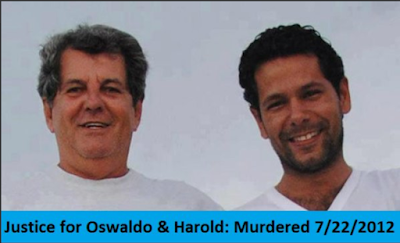
We continue to remember, and demand justice.


July 11, 2022

Diubis Laurencio Tejeda, Age: 36
Christian Barrera Díaz, Age: 24


July 13, 2017
Liu Xiaobo, Age: 61

July 22, 2012
Oswaldo Payá Sardiñas, Age: 60
Harold Cepero Escalante, Age: 32

July 13, 1994
Hellen Martínez Enriquez. Age: 5 Months
Xicdy Rodríguez Fernández. Age: 2
Angel René Abreu Ruíz. Age: 3
José Carlos Niclas Anaya. Age: 3
Giselle Borges Alvarez. Age: 4
Caridad Leyva Tacoronte. Age: 5
Juan Mario Gutiérrez García. Age: 10
Yousell Eugenio Pérez Tacoronte. Age: 11
Yasser Perodín Almanza. Age: 11
Eliécer Suárez Plasencia. Age: 12
Mayulis Méndez Tacoronte. Age: 17
Miladys Sanabria Leal. Age: 19
Joel García Suárez. Age: 20
Odalys Muñoz García. Age: 21
Yalta Mila Anaya Carrasco. Age: 22
Luliana Enríquez Carrazana. Age: 22
Jorge Gregorio Balmaseda Castillo. Age: 24
Lissett María Alvarez Guerra. Age: 24
Ernesto Alfonso Loureiro. Age: 25
María Miralis Fernández Rodríguez. Age: 27
Leonardo Notario Góngora. Age: 28
Jorge Arquímedes Levrígido Flores. Age: 28
Pilar Almanza Romero. Age: 31
Rigoberto Feu González. Age: 31
Omar Rodríguez Suárez. Age: 33
Lázaro Enrique Borges Briel. Age: 34
Julia Caridad Ruíz Blanco. Age: 35
Martha Caridad Tacoronte Vega. Age: 35
Eduardo Suárez Esquivel. Age: 38
Martha Mirella Carrasco Sanabria. Age: 45
Augusto Guillermo Guerra Martínez. Age: 45
Rosa María Alcalde Puig. Age: 47
Estrella Suárez Esquivel. Age: 48
Reynaldo Joaquín Marrero Alamo. Age: 48
Amado González Raices. Age: 50
Fidencio Ramel Prieto Hernández. Age: 51
Manuel Cayol. Age: 56 

Friday, March 18, 2022

Remembering the 2003 Black Cuban Spring, the failure of the UN Human Rights Council, and the terror in Cuba today

Remembering the 2003 Black Cuban Spring, the long winter, and the new Black Spring

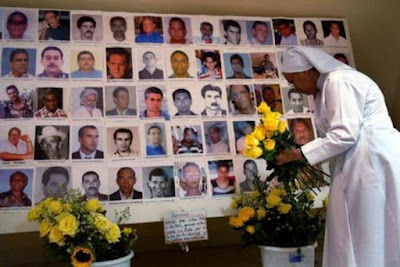
Nun places sun flowers to images of 75 Cubans jailed in 2003

Nineteen years ago on March 18, 2003 a crackdown began in Cuba on the eve of the United States going to war in Iraq. Scores of nonviolent Cuban dissidents were rounded up and subjected to political show trials. 75 were condemned to lengthy prison terms of up to 28 years in prison. This became known as the Black Cuban Spring

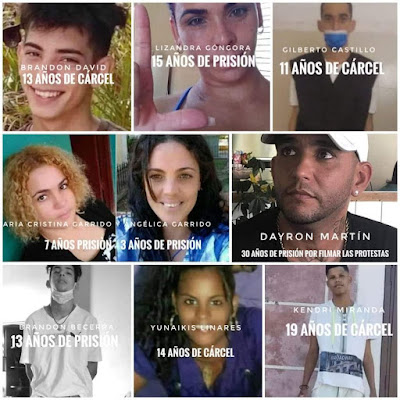
This past year the Castro regime carried out a crackdown not seen since 2003, and that may exceed it. On March 16, 2022 the draconian sentences were justified in an official communication that marked a new Black Spring for hundreds of imprisoned Cubans and their families. Many of the jailed are young Cubans.

Some of the young Cubans sentenced to long prison terms (Photo: Claudia Peiro)


The Cuban dictatorship released a statement on March 16, 2022 that "it had sentenced upwards of 100 protesters in Havana to between 4 and 30 years in prison for violence committed during island-wide demonstrations last year, the largest since Fidel Castro's 1959 revolution," reported Reuters and other news outlets.

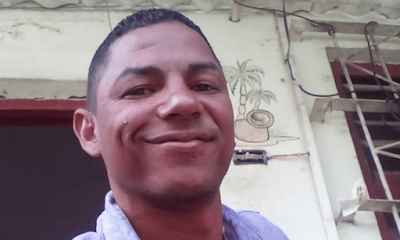
Diubis Laurencio Tejeda, age 36, shot in the back on July 12, 2021

Regime officials failed to mention that it was they who had initiated and carried out the deadly violence that day, not anti-government demonstrators who were non-violent. On July 12, 2021, during the 11J protests, Diubis Laurencio Tejeda, age 36, was shot in the back by regime officials on day two of nationwide protests in Cuba. He was not the only one shot by them.

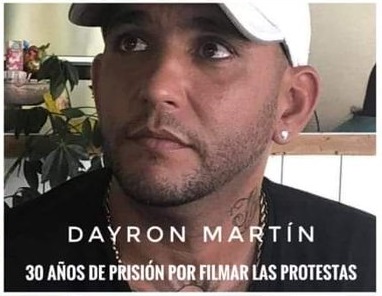
Worse yet, the longest sentences handed out were for video recording the protests. Cubans that recorded or live streamed the protests were accused of sedition. Here are four high profile cases.

Dayron Martín sentenced to 30 years of prison for filming protests (Photo: Claudia Peiro)

France24 reported on the plight of Dayron Martín Rodríguez (age 36) who was sentenced to 30 years in prison. He was "detained in La Güinera. He was out "to buy food for his pigeons when he ran into the rally," said his mother, Esmeralda Rodríguez (age 63), who added that "he started recording to send his father the video." He felt the stones hitting him, he fell and lost his phone. Video emerged during the 11J protests of police throwing rocks and firing on unarmed protesters. Esmeralda Rodríguez, "suffered a pre-infarction when she found out in Ecuador, where she emigrated. eight years ago" that her son had been sentenced to 30 years in prison. 

German tourist and dual citizen, Luis Frómeta Compte, was sentenced to 25 years in prison on December 23, 2021 for spontaneously filming a demonstration in Havana for private purposes with his smartphone while visiting relatives and was subsequently arrested. According to the Frankfurt arm of the International Society for Human Rights (ISHR), "the Dresden family man is one of about two thousand demonstrators arrested on July 11 during protests against the dictatorship." ISHR strongly criticized the long prison sentence and pointed out that, in the meantime, the 59-year-old’s brother-in-law is also in pre-trial detention.

Fredy Beirut (age 64) and Katia Beirut (age 36) each sentenced to 20 years in prison

Agence France Presse reported on the plight of a father and daughter punished for filming the protests.  Fredy Beirut (age 64) and Katia Beirut (age 36) who filmed the July 2022 protests were each sentenced to 20 years in prison. The father will emerge from prison at 84 years of age, and the daughter will be 56 years old.

Filming, and bearing witness can end your life as a free person in Cuba. 19 years ago it was organizing a petition drive, or being an independent journalist or human rights activist that could cost you a 28 year prison sentence.

The majority of the activists imprisoned in 2003 had participated in the Varela Project, a petition drive that called for a referendum under the terms of the Cuban Constitution on whether there should be more freedom of expression, an amnesty for political prisoners and a chance for ordinary citizens to own small businesses. 11,020 signatures had been turned in 10 months earlier on May 10, 2002. 
 
The regime responded with its own mandatory petition drive to make the Cuban Constitution unchangeable. 
 
The Economist in its December 14, 2005 issue published a conversation with Oswaldo Payá Sardiñas titled "An unsilenced voice for change" that outlined what had taken place:
Between 2001 and 2004, Mr Payá's movement gathered 25,000 signatures in a vain attempt to persuade Cuba's National Assembly to change the constitution to allow multi-party democracy. Activists of his Christian Liberation Movement made up more than two-thirds of the 75 dissidents and journalists rounded up and jailed for long terms in April 2003. [...] Spain is “complaisant” with Mr Castro's regime, Mr Payá says. “We need a campaign of support and solidarity with peaceful change in Cuba” of the kind that brought an end to apartheid in South Africa and to the Pinochet dictatorship in Chile.

It took over eight years, but the last of the group of the 75 were eventually released. This was in large part due to the Ladies in White and international solidarity campaigns carried out by NGOs, but the international community failed to call out Havana's impunity.

Castro expected the March 2003 crackdown, dubbed the “Black Cuban Spring,” to be the end of the opposition. Instead, it sparked the emergence of a new movement, the Ladies in White, led by the wives, mothers, sisters and daughters of the men jailed. For eight years, these women lobbied, protested and marched for their loved ones’ freedom. They were successful, and the last of the men were released from prison in 2011, a nonviolent victory over the dictatorship. The Ladies in White continue to the present day, demanding human rights be respected in Cuba.

On April 2, 2003 three young black men were arrested, tried and executed by firing squad nine days later on April 11, 2003 for trying to flee the island in a hijacked ferry, in which no one had been physically harmed. This drew worldwide condemnation at the time, and became known as Cuba's Black Spring, but it did not prevent the end of the mandate for monitoring human rights violations in Cuba in a backroom deal for the establishment of the UN Human Rights Council on March 15, 2006.

11,020 Varela Project signatures turned in on May 20, 2002

Oswaldo was murdered along with the Christian Liberation Movement's youth leader Harold Cepero on July 22, 2012. His successor Eduardo Cardet was a prisoner of conscience from November 30, 2016 through September 3, 2019. He was jailed for giving a frank assessment of Fidel Castro's legacy following his death on November 25, 2016.

Sixteen years ago the United Nations Human Rights Council was founded on a small moral compromise that sacrificed human rights oversight in Belarus and Cuba in what U.N. officials called the dawn of a new era. Special rapporteurs with mandates to specifically monitor the human rights situation in those two countries were formally gotten rid of in 2007 and a code of conduct established that undermined the independence of all special rapporteurs.

Ending oversight of Belarus and Cuba not only left the victims of these dictatorships exposed to more repression, with impunity by their oppressors, but emboldened these dictatorships not only to worsen their practices at home but to undermine human rights abroad. Worse yet, both would be elected to serve on the UN Human Rights Council with other outlaw regimes. 

Throughout this entire period, despite repeated requests, the Castro regime has not allowed the International Committee of the Red Cross to visit prisons in Cuba. 

Prison conditions are so poor that of the 75 imprisoned in 2003, fourteen have died, many due to conditions arising from their time in prison. There names are: Orlando Zapata, Miguel Tamayo, Antonio Villarreal, Arturo Pérez, Jorge Luis González, José G. Ramón, Julio César Gálvez, Omar Pernet, Raúl Rivero, Julio A. Valdés, Arnaldo Ramos, Carmelo Díaz, Orlando Fundora, and Oscar M. Espinosa.

Cubans jailed during the 2003 Black Spring that died before their time. (Photo: Regis Iglesias )

This failure of accountability led to greater levels of violence and repression by the Cuban dictatorship that continues to sit on the UN Human Rights Council. The regime in Havana is an outlaw regime, and cannot be trusted.

This can be seen in their legal system and how it treats poor Cubans.

Havana Times reported on La Guinera, a Havana neighborhood, "where 96 of the 790 people in Cuba for taking part in the protests on July 11th and 12th, that is to say, 12 out of every 100 people arrested for protesting are La Guinera locals." Regime claims do not hold up when their own documents are examined, demonstrates Havana Times citing official documents.

"The Public Prosecutor’s Office says that sedition charges against La Guinera residents are due to the 'level of violence in vandalic acts that in a riot-like situation led to injuries and put the lives of civilians, public officials and law enforcement officers at risk, by attacking them with sharp, blunt and incendiary objects, seriously disturbing public order with the deliberate purpose of subverting rule of law.' However, these same records state that in La Guinera police patrol cars weren’t attacked —unlike other parts of the country—, and the highly-criticized dollar stores weren’t vandalized, there was no looting or serious damage to property. Furthermore, those charged with sedition include people who were only recording and live streaming events on Facebook, without taking part in any conflict with the police, as well as detainees who the Public Prosecutor’s Office is charging with sedition for the simple fact they were present in the crowd that prevented public order."

The pattern repeats itself, the longest prison sentences are meted out to those accused of sedition for "recording and live streaming events on Facebook, without taking part in any conflict with the police" or "for the simple fact they were present in the crowd." Press bureaus in Havana, perhaps in order not to be expelled, failed to report that deadly violence came not from the protesters, but from regime agents, and counter protesters that they head armed with clubs and bussed in to violently shut down what had been peaceful protests. Havana Times offers the following in evidence that conflicts with the official version.

The Public Prosecutor’s Office also justifies sedition charges by saying detainees attacked and injured police officers and counter-protestors without reason, but this statement also falters. Stones and objects were thrown during the protests, but the Public Prosecutor’s Office was unable to find police officers and counter-protestors who sustained severe injuries. The records state that only three counter-protestors were injured and none of them required medical attention. In the case of police officers, 14 were injured, and only one needed medical attention. On the contrary, during the police’s response —involving the use of firearms—, Diubis Laurencio lost his life, the only fatality recognized by the Government, and many protestors were hit by bullets, including minors. “I was told my wife went to look for my stepson at the protest. She didn’t find him, and she soon found out that he had been hit by a bullet in his knee, just before they killed the other young man,” Janoi Ceballos wrote in a text message, the step-father of 16-year-old Cuban teenager Misael Yoel Fuentes Garcia, who was injured in La Guinera.

Dictatorship's need to be held accountable, at least ostracized, and removed from international human rights bodies. Western democracies, such as the Spanish government, should not be selling weapons to the Cuban dictatorship to use them against the Cuban people. 

These failings on the international stage have real world consequences as we are seeing today in Ukraine.

This is why we are circulating a petition to leaders in the Western democracies and the international community to finally hold the dictatorship in Havana accountable.


Wednesday, February 9, 2022

"Extrajudicial killings continue in Cuba" By John Suarez | The Washington Post

Cases of Diubis Laurencio Tejeda (2021), Christian Díaz (2021), Oswaldo Payá (2012) and Harold Cepero (2012) highlighted in The Washington Post.


The Washington Post, January 27, 2022

Opinion: Extrajudicial killings continue in Cuba

Oswaldo Payá, seen here in 2006, was killed in July 2012 while in a car in Cuba. (Javier Galeano/AP)

The Jan. 23 editorial “Cuba’s show trials roll on” was spot on, but it left unsaid that the extrajudicial killings also continue.

Cuban President Miguel Díaz-Canel appeared on state television after the 11J protests started on July 11, stating, “The order of combat is given, revolutionaries take to the streets.” This directive incited government security forces to commit violence against civilians. They shot and killed unarmed demonstrators.

Diubis Laurencio Tejeda and Christian Díaz killed in 2021.

Authorities recognized one death in these protests. Diubis Laurencio Tejeda was a 36-year-old singer who was shot in the back by the National Revolutionary Police (PNR) in Havana on July 12. There are others, but they have not been officially recognized.

Christian Díaz, age 24, disappeared after joining the protests. Relatives on July 12 reported him missing to the PNR in Cárdenas. Police told his father that Christian was jailed in Matanzas. On Aug. 5, officials informed his family he’d drowned in the sea and was buried in a mass grave. His family is convinced he was beaten to death.

This isn’t the first time Havana has covered up state murders. The 2012 killings of Cuban dissident leaders Oswaldo Payá and Harold Cepero by security forces are two high-profile examples.

John Suarez, Washington

The writer is executive director of the Center for a Free Cuba.

https://www.washingtonpost.com/opinions/2022/01/27/extrajudicial-killings-continue-cuba/