“The choice is not between violence and nonviolence but between nonviolence and nonexistence.” - Martin Luther King Jr.
"Be not overcome of evil, but overcome evil with good." - Rom. xii. 21.
One
hundred years ago this month on August 4, 1914
World War I began, a conflict that
destroyed Western Civilization, out of which emerged empowered the toxic ideologies of Communism and Nazism.
This conflict paused between 1918 and 1939 only to explode again in September 1939 in what became known as World War II and is viewed by some academics as a
continuous process. Today, the peoples of the West are living in the ruins of a once great civilization after what some describe as a
wasted century.
World War One was supposed to be the “war to end all wars”, but instead it turned
out to be the suicide of the West. Nazi Germany and Communist Russia
emerged out of the ashes and
together plunged the world into another total war on September 1, 1939.
The weight of this history fills one with sadness. However, at the same time one must not despair recalling while there is life there is also hope and that Martin Luther King Jr. was right, we do have a choice between nonviolence and nonexistence.
The above mentioned
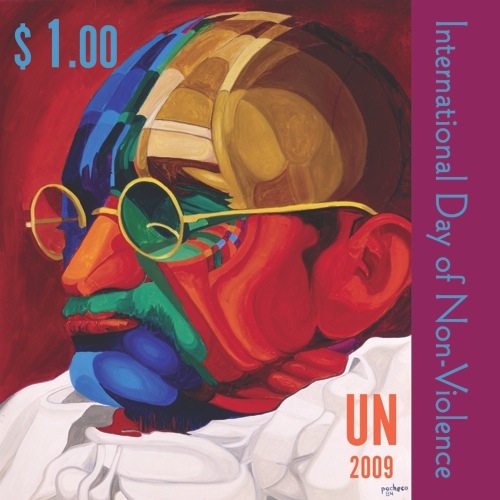
southern civil rights leader, and decades earlier the Indian national independence leader Mohandas Gandhi, demonstrated that nonviolence could confront and overcome powerful governments such as the
United States and the British Empire without firing a shot.
Furthermore that at the core of Western Civilization is found the doctrine of
Jesus Christ whose whole ministry was a testament to nonviolent resistance and living in truth challenging evil and injustice. Reclaiming this ministry is at the heart of saving the West and taking nonviolence seriously as a means for creating, preserving and defending a system rooted in justice that protects human rights and dignity.
This is not
pacifism or
passive aggressiveness but rather nonviolent resistance to evil and injustice. In the run up to World War II in many quarters passivity was practiced before the great evils of Communism and Nazism. There is nothing passive about nonviolent resistance.
The
best manner to confront and defeat
evil
is not denouncing or destroying one's adversary but producing and
preserving that which is true and having a constructive program. On
September 11, 1906 in South Africa, as part of a contest, Mohandas
Gandhi
coined the term Satyagraha which translates into English
literally as "
holding firmly to truth."
Nonviolent resistance calls for having an
aggressive attitude in confronting injustice while at the same time refraining from hating your enemy or seeking to do them or their
property harm.
Martin Luther King Jr. listed
the six principles of nonviolence that remain relevant today:
SIX PRINCIPLES OF NONVIOLENCE
Fundamental
tenets of Dr. King’s philosophy of nonviolence described in his first
book, Stride Toward Freedom. The six principles include:
(1.) Nonviolence is not passive, but requires courage;
(2.) Nonviolence seeks reconciliation, not defeat of an adversary;
(3.) Nonviolent action is directed at eliminating evil, not destroying an evil-doer;
(4.) A willingness to accept suffering for the cause, if necessary, but never to inflict it;
(5.) A rejection of hatred, animosity or violence of the spirit, as well as refusal to commit physical violence; and
(6.) Faith that justice will prevail.
The struggle for
civil rights in the United States demonstrated the
superiority of nonviolent resistance over violent resistance. The early and sustained successes of the nonviolent civil rights movement contrast sharply with the
failed and sterile violence of the later black power movement.
On the international front beginning in 1989 with the
freedom of Poland,
the Velvet Revolution in the Czech Republic, the tearing down of the
Berlin Wall and the
end of the Soviet Union in 1991 were all achieved through mass movements that nonviolently resisted brutal and violent regimes.
Advocates for waging the First World War
claimed it was the "
war to end all wars" but should have called it "the war to debase human life" and would continue to find new lows in the 1930s and 1940s with
gulags,
death camps, and nuclear bombings of
Hiroshima and
Nagasaki.
Despite the century of horror unleashed by this conflict the twentieth century was not a wasted century. Nonviolence was able to demonstrate in high profile and well documented instances throughout that century around the world in
India,
the United States,
the Philippines,
Poland,
Czechoslovakia,
Lithuania,
Estonia,
Russia,
Chile and many other places that it could liberate millions at a fraction of the human cost found in violent conflicts.
In Cuba nonviolent exemplars demonstrated that it was possible to
live the life of a free individual under the most extreme totalitarian regime
In these uncertain times nonviolence is more relevant than ever and its
study is needed to
confront and transform violent and unjust regimes. At the same time
nonviolent art and imagery is desperately needed in this world bombarded
with extreme and violent images.
The choice to embrace nonviolent resistance as a method to confront and defeat evil is a development critical for the survival of the human race and will conclusively demonstrate that the 20th century was not a waste of time, lives and a prelude to human extinction. It comes down to a question of non-violence or non-existence: civic resistance or
nuclear holocaust.



 Posts
Posts

