Showing posts with label Margaret Thatcher. Show all posts

Tuesday, March 8, 2022

International Women's Day 2022: Reflection on women leaders around the world

 "We still think of a powerful man as a born leader and a powerful woman as an anomaly". - Margaret Atwood, author of The Handmaid's Tale


In 2020 focused on the problematic origins of International Women's Day, but today reflect on women who have achieved power around the world by both democratic and other means
Capitalist Democracies have seen the rise of women leaders around the world: Golda Meir in Israel, Margaret Thatcher in the United Kingdom, Indira Gandhi in India, Angela Merkel in Germany, Vigdís Finnbogadóttir in Iceland, Ellen Johnson Sirleaf in Liberia, Kim Campbell in Canada, Michelle Bachelet in Chile, Erna Solberg in Norway, Simonetta Sommaruga in Switzerland, and the list goes on for a while.  
Prime Ministers Indira Gandhi and Margaret Thatcher
Women leaders in communist regimes are few and far between, such as Jiang Qing in China, Elena Ceaușescu in Romania, and Vilma Espín in Cuba became high profile figures because of their respective husbands and owed whatever power they had to these male leaders. 
Independent women with popular support and their own power base did not (and do not) fare well in these regimes.
In the Cuban case strong women, not related or backing the Castro brothers, were subjected to violent repression and exile or death.
Laura Inés Pollán Toledo, a courageous woman spoke truth to power and protested in the streets of Cuba demanding an amnesty for Cuban political prisoners. She had been a school teacher, before her husband was jailed for his independent journalism in 2003 along with more than 75 other civil society members. Laura was greatly admired both inside and outside of the island for founding the Ladies in White movement after the Black Cuban Spring of 2003. She, and the group of women she led, nonviolently challenged the Castro regime in the streets of Havana initially, and eventually across the island. 
Laura reached out to the wives, mothers, sisters, and daughters of the 75 prisoners of conscience jailed in March of 2003 along with her husband and they carried out a sustained nonviolent campaign that after nine years obtained the freedom of their loved ones. She did not disband the Ladies in White when her husband returned home. Laura recognized that the laws had not changed, that prisoners of conscience remained behind bars and that she would continue her human rights activism. This is why the Castro regime did away with her on October 14, 2011.
Ladies in White continue in their activism in Cuba a decade after Laura's death
Lady in White Daisy Cuello Basulto denounced that her 21 year old daughter was arrestedviolently stripped and forced to urinate in front of police officers in a police station in Cotorro. The 21 year old was arrested along with her mom and other family on September 27, 2015 while on their way to attend the Sunday march of the Ladies in White. In the police station "she was humiliated," although she refused to urinate in front of the agentswho constantly jeered at her, explained her mother in an interview with Radio República. The young woman was locked in a cell with a strong smell of hydrochloric acid and now suffers from a sore throat. "She has a fever and feels very bad," reported her mother.
 This has gone on for decades.
Maria Elena Cruz Varela (1991)
Thirty-one years earlier on November 19, 1991 Cuban poet Mariela Elena Cruz Varela, who peacefully dissented asking for nonviolent change, was assaulted by a mob organized by the dictatorship who tried to force feed the poet her own words. She wrote about the assault in her book, Dios en las cárceles cubanas (God in the Cuban jails):
"They broke my mouth trying to make me swallow the leaflets that members of my group had distributed throughout HavanaAfterwards I spent three days brutally besiegedimprisoned in my own home with my two children, with no water, no electricityno food, no cigarettesWe heard what the huge speakers never stopped amplifyingallegorical songs to the country, the necessary punishment of traitorsand anyone who wanted to could shout at meorganized, of course, the slogans they pleasedComrade wormwe are going to execute you by firing squad!"
And the violence continues today against women in Cuba, who demonstrate leadership. Cuban dissident Sirley Ávila León, age 56, was gravely wounded in a machete attack on May 24, 2015 by Osmany Carrión who had been "sent by state security thugs" and that she is sure that the aggression "was politically motivated." 
Sirley Ávila León in May 2015
The attack was severe enough that she suffered deep cuts to her neck and knees, lost her left hand and nearly lost her right arm. Sirley had been a local official who had sought the reopening of a school for Cuban children and drew the ire of the dictatorship with her persistent demands.
Laura, Maria Elena, and Sirley were leaders that in a democratic Cuba would have had leadership positions in government, and at least one could have become president, but Cuba is a communist, male dominated dictatorship.  
47 Chinese activists were arrested in January 2021 and now face life sentences for organizing an unofficial primary to choose opposition candidates for the now-postponed 2020 Legislative Council election. It attracted approximately 600,000 voters. One of the youngest defendants is a  23-year-old young woman, Wong Ji-yuet, she is a first time political hopeful. The pro-democratic primary nominee won 22,911 votes, and came in third in the NTW Constituency in Hong Kong. She is a political leader.
Wong Ji-yuet, 23-year-old young woman

In the Orwellian world that is the Peoples Republic of China in the 21st century, exercising democratic rights under the National Security Law imposed last year on Hong Kong is grounds for a maximum sentence of life in prison
What of women communist leaders? They appear to achieve power through their husbands, and their fortunes rise and fall with their spouse. They also have a poor track record on women's liberation. Considering that Elena Ceausescu is considered one such "leader" as the First Vice Chairwoman of the Council of Ministers. Her husband, Nicolae Ceausescu, presided over policies that were not pro-women.
Elena Ceaușescu and Nicolae Ceausescu

Shannon Quinn authored the essay "17 Moments In History that Inspired the Handmaid’s Tale" in History Collection and provides a summary of Ceauşescu's Decree 770 policy for women.
One of the specific events that Margaret Atwood found during her research process was “Decree 770” in Romania. This was a law that passed in 1967 that made abortions and all forms of contraception illegal. This had nothing to do with religious beliefs. It was an action that the government believed was necessary for the future of their country. The government already taxed married couples a 6% income tax if they did not have children between the ages of 25 and 50, but they realized that this was not enough to stop people from using contraception.


During the 1950’s, Romanian women were entering the workforce and having fewer children. By the 1960’s, abortion became a common practice, because there were very few birth control options available to women to prevent pregnancy. This began a sharp dip in the country’s birth rate. The Communist Party wanted the population to increase from 23 million to 30 million in a single year, so they enacted Decree 770. After the change of law in 1967, and women no longer had access to birth control, the number of babies born that year skyrocketed to roughly double what they had been the year before. Thousands of new preschools and nursery schools had to be built. Orphanages were overflowing with children whose parents could not afford them.  Aside from making abortions illegal and taking contraception off of store shelves, women’s bodies were literally policed. Decree 770 forced women to visit the gynecologist once a month to check for pregnancy, and police officers stood in the halls to make sure women complied. If a woman was pregnant, the doctors followed her progress very closely. Wealthy women were able to buy birth control pills and condoms on the black market, but poor women did not have that option. There were some cases where women caught the pregnancy before the doctors did, and some women died while attempting to give themselves an at-home abortion. The policy continued until the fall of the Soviet Union in the 1980’s.

Hundreds of thousands of children were subjected to this in Romania, and millions of women were forced to have children.

International Women's Day should be a day to celebrate democracy and markets as instruments for the empowerment of women, and observe closely the dystopian record for women under communist regimes, and resolve to resist the system that inspired Margaret Atwood's The Handmaid's Tale

Monday, March 8, 2021

International Women's Day 2021: Reflection on women leaders around the world

"We still think of a powerful man as a born leader and a powerful woman as an anomaly". - Margaret Atwood, author of The Handmaid's Tale

First  edition of The Handmaid's Tale

In 2020 focused on the problematic origins of International Women's Day, but today reflect on women who have achieved power around the world by both democratic and other means

Capitalist Democracies have seen the rise of women leaders around the world: Golda Meir in Israel, Margaret Thatcher in the United Kingdom, Indira Gandhi in India, Angela Merkel in Germany, Vigdís Finnbogadóttir in Iceland, Ellen Johnson Sirleaf in Liberia, Kim Campbell in Canada, Michelle Bachelet in Chile, Erna Solberg in Norway, Simonetta Sommaruga in Switzerland, and the list goes on for a while.  

Prime Ministers Indira Gandhi and Margaret Thatcher

Women leaders in communist regimes are few and far between, such as Jiang Qing in China, Elena Ceaușescu in Romania, and Vilma Espín in Cuba became high profile figures because of their respective husbands, and owed whatever power they had to these male leaders. Independent women with popular support and their own power base did not fare well in these regimes.

In the Cuban case strong women, not related or backing the Castro brothers, were subjected to violent repression and exile or death.

Laura Inés Pollán Toledo, a courageous woman spoke truth to power and protested in the streets of Cuba demanding an amnesty for Cuban political prisoners. She had been a school teacher, before her husband was jailed for his independent journalism in 2003 along with more than 75 other civil society members. Laura was greatly admired both inside and outside of the island for founding the Ladies in White movement after the Black Cuban Spring of 2003. She, and the group of women she led, nonviolently challenged the Castro regime in the streets of Havana initially, and eventually across the island. 

Ladies in White continue in their activism in Cuba a decade after Laura's death

Laura reached out to the wives, mothers, sisters, and daughters of the 75 prisoners of conscience jailed in March of 2003 along with her husband and they carried out a sustained nonviolent campaign that after nine years obtained the freedom of their loved ones. Since she did not disband the Ladies in White when her husband returned home. Laura recognized that the laws had not changed, that prisoners of conscience remained behind bars and that she would continue her human rights activism. This is why the Castro regime did away with her on October 14, 2011.

Lady in White Daisy Cuello Basulto denounced that her 21 year old daughter was arrested, violently stripped and forced to urinate in front of police officers in a police station in Cotorro. The 21 year old was arrested along with her mom and other family on September 27, 2015 while on their way to attend the Sunday march of the Ladies in White. In the police station "she was humiliated," although she refused to urinate in front of the agents, who constantly jeered at her, explained her mother in an interview with Radio República. The young woman was locked in a cell with a strong smell of hydrochloric acid and now suffers from a sore throat. "She has a fever and feels very bad," reported her mother.

 This has gone on for decades.

Maria Elena Cruz Varela (1991)

Twenty years earlier on On November 19, 1991 Cuban poet Mariela Elena Cruz Varela, who peacefully dissented asking for nonviolent change, was assaulted by a mob organized by the dictatorship who tried to force feed the poet her own words. She wrote about the assault in her book, Dios en las cárceles cubanas (God in the Cuban jails):

"They broke my mouth trying to make me swallow the leaflets that members of my group had distributed throughout Havana. Afterwards I spent three days brutally besieged, imprisoned in my own home with my two children, with no water, no electricity, no food, no cigarettes. We heard what the huge speakers never stopped amplifying, allegorical songs to the country, the necessary punishment of traitors, and anyone who wanted to could shout at me, organized, of course, the slogans they pleased: Comrade worm, we are going to execute you by firing squad!"

And the violence continues today against women in Cuba, who demonstrate leadership. Cuban dissident Sirley Ávila León, age 56, was gravely wounded in a machete attack on May 24, 2015 by Osmany Carrión who had been "sent by state security thugs" and that she is sure that the aggression "was politically motivated." 

Sirley Ávila León in May 2015
The attack was severe enough that she suffered deep cuts to her neck and knees, lost her left hand and nearly lost her right arm. Sirley had been a local official who had sought the reopening of a school for Cuban children, and drew the ire of the dictatorship with her persistent demands.

Laura, Maria Elena, and Sirley were leaders that in a democratic Cuba would have had leadership positions in government, and at least one could have become president, but Cuba is a communist, male dominated dictatorship.  

47 Chinese activists were arrested in January 2021 and now face life sentences for organizing an unofficial primary to choose opposition candidates for the now-postponed 2020 Legislative Council election. It attracted approximately 600,000 voters. One of the youngest defendants is a  23-year-old young woman, Wong Ji-yuet, she is a first time political hopeful. The pro-democratic primary nominee won 22,911 votes, and came in third in the NTW Constituency in Hong Kong. She is a political leader.

Wong Ji-yuet, 23-year-old young woman

In the Orwellian world that is the Peoples Republic of China in the 21st century, exercising democratic rights under the National Security Law imposed last year on Hong Kong is grounds for a maximum sentence of life in prison

What of women communist leaders? They appear to achieve power through their husbands, and their fortunes rise and fall with their spouse. They also have a poor track record on women's liberation. Considering that Elena Ceausescu is considered one such "leader" as the First Vice Chairwoman of the Council of Ministers. Her husband, Nicolae Ceausescu, presided over policies that were not pro-women.

Elena Ceaușescu and Nicolae Ceausescu

Shannon Quinn authored the essay "17 Moments In History that Inspired the Handmaid’s Tale" in History Collection and provides a summary of Ceauşescu's Decree 770 policy for women.

One of the specific events that Margaret Atwood found during her research process was “Decree 770” in Romania. This was a law that passed in 1967 that made abortions and all forms of contraception illegal. This had nothing to do with religious beliefs. It was an action that the government believed was necessary for the future of their country. The government already taxed married couples a 6% income tax if they did not have children between the ages of 25 and 50, but they realized that this was not enough to stop people from using contraception.

During the 1950’s, Romanian women were entering the workforce and having fewer children. By the 1960’s, abortion became a common practice, because there were very few birth control options available to women to prevent pregnancy. This began a sharp dip in the country’s birth rate. The Communist Party wanted the population to increase from 23 million to 30 million in a single year, so they enacted Decree 770. After the change of law in 1967, and women no longer had access to birth control, the number of babies born that year skyrocketed to roughly double what they had been the year before. Thousands of new preschools and nursery schools had to be built. Orphanages were overflowing with children whose parents could not afford them.  Aside from making abortions illegal and taking contraception off of store shelves, women’s bodies were literally policed. Decree 770 forced women to visit the gynecologist once a month to check for pregnancy, and police officers stood in the halls to make sure women complied. If a woman was pregnant, the doctors followed her progress very closely. Wealthy women were able to buy birth control pills and condoms on the black market, but poor women did not have that option. There were some cases where women caught the pregnancy before the doctors did, and some women died while attempting to give themselves an at-home abortion. The policy continued until the fall of the Soviet Union in the 1980’s.
Hundreds of thousands of children were subjected to this in Romania, and millions of women were forced to have children.

International Women's Day should be a day to celebrate democracy and markets as instruments for the empowerment of women, and observe closely the dystopian record for women under communist regimes, and resolve to resist the system that inspired Margaret Atwood's The Handmaid's Tale. 

Wednesday, November 20, 2019

How the Castro regime expanded misery in Cuba

Socialist governments traditionally do make a financial mess. They always run out of other people’s money. - Margaret Thatcher, February 5, 1976


November 14, 2019

A Publication of the Cuban Studies Institute
 
Impact of Socialism in Cuba 

 *By Jaime Suchlicki


One of the first economic measures introduced by the Castro revolution after 1959 was the 50% reduction in rents people paid for apartments and single-family residences. This Urban Reform Law was hailed as a victory for the lower and middle classes, and a measure that would stimulate the economy since now renters would have more money to spend.

The result was very different. The law had a snowballing effect on the economy. Investors in apartments and commercial real estate refused to further invest. The real estate industry was paralyzed. Cement plants, plumbing companies, wood manufacturing, electronic factories and many more related enterprises closed, many went bankrupt. The economy entered a period of stagnation which never to recovered.

Other “revolutionary” or socialist laws such as the “Agrarian Reform Law” which confiscated, without payment, privately own land had similar results, also the confiscation of large and small businesses produced an economic paralysis and threw hundreds of thousands of workers to the unemployment lines.

All these measures and actions of the government were accompanied by a demonization of capitalism, private enterprise and moneymaking. Business enterprises, as well as money, were considered evil. “Money is the evil intermediary” said Fidel Castro, “between what man produces and what man consumes.”

Two years after the beginning of the revolution the economy entered into a major down spiral. Massive unemployment developed; inflation became out of control; all commercial and industrial production was paralyzed.The country rapidly followed this socialist phase with a Marxist-Leninist period with rationing of most products, militarization of society, alliance with the Soviet Union, conflict with the United States and the migration of more than 2 million Cubans. The economy never recovered. The middle and upper classes were destroyed, and the workers joined the ranks of the unemployed,underemployed or of the state, working for miserable wages.

* Jaime Suchlicki, Professor Emeritus, University of Miami and Director and founder of the Cuban Studies Institute, CSI, a non-profit research group in Coral Gables, FL. He is the author of Cuba: From Columbus to Castro& Beyond, now in its 5th edition; Mexico: From Montezuma to the Rise of the PAN, 2nd edition, and Breve Historia de Cuba. 

Published by The Miami Herald, November 13, 2019

 https://cubanstudiesinstitute.us/principal/economic-impact-of-socialism-in-cuba/ 

Impacto económico del socialismo en Cuba

Una de las primeras medidas económicas introducidas por la revolución de Castro después de 1959 fue la reducción del 50% en los alquileres que los inquilinos pagaban por apartamentos y residencias unifamiliares. Esta Ley de Reforma Urbana fue aclamada como una victoria para las clases bajas y medias, y unamedida que estimularía la economía ya que ahora los inquilinos tendrían más dinero para gastar.

El resultado fue muy diferente. La ley tuvo un efecto negativo para la economía. Los inversores en apartamentos e inmuebles comerciales se negaron a seguir invirtiendo. La industria inmobiliaria se paralizó. Las plantas de cemento, las empresas de fontanería, la fabricación de madera, las fábricas electrónicas y muchas más empresas relacionadas cerraron, muchas se declararon en bancarrota. La economía entró en un período de estancamiento del que nunca se recuperó.

Otras leyes “revolucionarias” o socialistas como la “Ley de Reforma Agraria” que confiscaron, sin pago, tierras privadas tuvieron resultados similares, también la confiscación de grandes y pequeñas empresas produjo una parálisis económica y lanzó cientos de miles de trabajadores a las líneas de desempleo.

Todas estas medidas y acciones del gobierno fueron acompañadas de una demonización del capitalismo y la empresa privada. Los negocios, así como el dinero, se consideraban malvados. “El dinero es el intermediario malvado”, dijo Fidel Castro, “entre lo que el hombre produce y lo que el hombre consume”.

Dos años después del comienzo de la revolución, la economía entró en una gran espiral descendente. Se desarrolló un desempleo masivo; la inflación sedes controló; toda la producción comercial e industrial quedó paralizada. Elpaís siguió rápidamente esta fase socialista con un período marxista-leninista con racionamiento de la mayoría de los productos, militarización de la sociedad, alianza con la Unión Soviética, conflicto con los Estados Unidos y la migración de más de 2 millones de cubanos. La economía nunca se recuperó. Las clases medias y altas fueron destruidas, y los trabajadores se convirtieron en desempleados, subempleados o empleados del estado, trabajando por salarios miserables.

*Jaime Suchlicki es Director del Instituto de Estudios Cubanos, CSI, un grupo de investigación sin fines de lucroen Coral Gables, FL. Es el autor de Cuba: De Colón a Castro y más allá, ahora en su quinta edición; México: de Montezuma al ascenso del PAN, 2ª edición, y de Breve Historia de Cuba

Publicado en inglés por el Miami Herald, noviembre 13, 2019

https://www.miamiherald.com/opinion/letters-to-the-editor/article237308304.html


Sunday, June 9, 2013

A conservative conception of universal human rights: Does full human rights protection require an engaged social democratic welfare state?

The dialogue on human rights continues
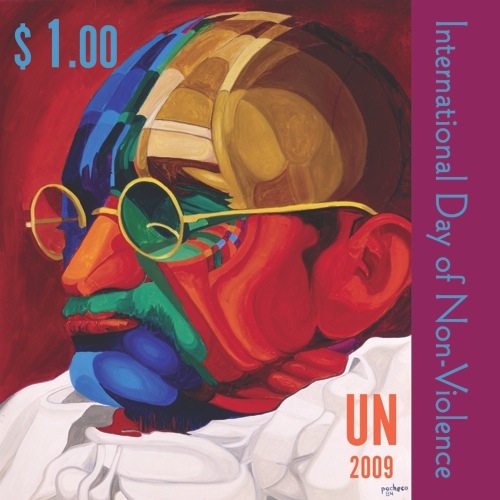
Gandhi: "The State represents violence in a concentrated and organized form."
This is the third part of a dialogue with Joel R. Pruce, a Post Doc in Human Rights Studies at the University of Dayton on the conflicts between a conservative political outlook  and a liberal conception of human rights. In part one offered a conservative conception of human rights rooted in the Catholic Church. In part two explored, although incompletely, Edmund Burke's conception of particular human rights versus abstract human rights.

Now, will address two questions that arise from Joel's observation over twitter that:
"A full version of rights-protection requires an engaged social democratic welfare state, which modern conservatives oppose.  Short of that, certain rights may be protected (civ/pol), but the rest are left up to charity and the will of the market. Certainly many conservatives are caricatures, but even Reagan/Thatcherites had a disdain for the state and for its expansion. Spiritual and moral 'conservatism' as you call it may be very compatible w/ rights, but mainstream political conservatism isn't."   
 First question that arises as a matter of policy would conservatives when given power undo the social democratic welfare state? Both under Ronald Reagan and Margaret Thatcher the social democratic welfare state continued to grow, although at a slower pace than Democratic and Labor governments respectively. Also it was under George Herbert Walker Bush, Reagan's successor, that the American Disabilities Act was signed into law. Furthermore, under George W. Bush the Federal Government expanded into both health care with a seniors prescription drug benefit and the expansion of federal government control over education with No Child Left Behind.

It appears that mainstream "modern political conservatives" rhetorically oppose some aspects of "the social democratic welfare state"  but in practice have expanded it when not creating new entitlements and expanding rights categories.

The second question that arises is to the degree that an engaged social democratic welfare state requires an expansive and centralized government does it pose a threat to human rights? Conservatives, not libertarians, do not have a problem with a strong state that is limited to its proper scope. Unfortunately, today in American discourse those voices are few and far between. At the same time you have those who have some conservative instincts but combine them with libertarianism, which is not conservative, as is the case with former Congressman Ron Paul and Senator Rand Paul.

History has demonstrated, in the case of Weimar Germany in the 1920s and 1930s that a powerful social democratic welfare state can become so powerful that when bad actors get into a position of political control it can be transformed into a state that can systematically deny human rights to an extreme never seen before and with horrific consequences. Barry Goldwater's speechwriter Karl Hess summed it up:  "Adolf Hitler as chancellor of Germany is a horror; Adolf Hitler at a town meeting would be an asshole." In a social democratic welfare state the opportunity for the abuse of power is great whereas in a New England town hall meeting it is minimal.

Mohandas Gandhi, a self-described socialist, was not an enthusiastic proponent of an expanded welfare state arguing
The State represents violence in a concentrated and organized form. The individual has a soul, but as the State is a soulless machine, it can never be weaned from violence to which it owes its very existence. Hence I prefer the doctrine of trusteeship. [...] What I would personally prefer would be not centralization of power in the hands of the State, but an extension of the sense of trusteeship, as, in my opinion, the violence of private ownership is less injurious than the violence of the State. However, if it is unavoidable, I would support a minimum of State-ownership.

An aside, when Gandhi was assassinated in 1948 the Soviet press initially attacked him as a "reactionary utopian" due to his rejection of class warfare as violence and his doctrine of trusteeship.

 Finally, returning to Edmund Burke who observed that “Men are qualified for civil liberty in exact proportion to their disposition to put moral chains upon their own appetites." The conservative argument would be translated into modern terms that the more developed and responsive civil society is the less government is needed.  That this depends on the fundamental unit of political life, the family, being in good shape with divorce rates low and high percentages of two parent families. Now with the decline of two parent families over the past two generations in the United States the need for an expanded social welfare state is an unhappy necessity and a failure of civilization. The Catholic Church has a principle of subsidiarity that within in its catechism outlines the danger of extensive state intervention: 
Excessive intervention by the state can threaten personal freedom and initiative. The teaching of the Church has elaborated the principle of subsidiarity, according to which "a community of a higher order should not interfere in the internal life of a community of a lower order, depriving the latter of its functions, but rather should support it in case of need and help to co- ordinate its activity with the activities of the rest of society, always with a view to the common good."
In conclusion, full human rights protection requires a fully engaged state but that does not mean that it has to be administered by the government. Now if society at large begins to fail then responsibilities that were handled in the private sphere may have to be picked up by government. The problem is that this raises new problems because the government is not good in doing many of these things and also it can lead to social atrophy which decreases social capital and leads to additional responsibilities being loaded onto the government in a vicious cycle that leads to a crisis of legitimacy for the government when it cannot meet its vastly expanded obligations.