Showing posts with label conservative. Show all posts

Saturday, November 30, 2024

What are human rights and how can they be rescued from utopians now creating dystopia?

“All the races of the world are men, and of all men and of each individual there is but one definition, and this is that they are rational. All have understanding and will and free choice, as all are made in the image and likeness of God . . . Thus the entire human race is one.” - Bishop Bartolomé De Las Casas (1550)


Since it is akin to asking what color Napoleon's white horse is, the definition of human rights ought to be self-evident at first glance. Human rights are those that you have just by virtue of being a person. These rights ought to apply to everyone since they are fundamental to being a human. 

The modern concept of a universal human rights standard, despite its simplicity, was not even discussed until the 1550s. In a discussion concerning the rights of the native people of the Americas, Bishop Bartolomé De Las Casas presented a universal concept of human rights for the first time.

“All the races of the world are men, and of all men and of each individual there is but one definition, and this is that they are rational. All have understanding and will and free choice, as all are made in the image and likeness of God . . . Thus the entire human race is one.”

The French revolution is tied the emergence of rights to a particular national experience while appealing to enlightenment values. At the same time critical voices, such as Edmund Burke, emerged that challenged the abstract rights discourse with concrete examples and through his own prior actions provided a working alternative rooted in tradition, and moral values.

Bartolomé de Las Casas by Parra

Why return to these ideas now?

 Theologian Nigel Biggar and The European Conservative's monthly show, The Forge, "hosted by Harrison Pitt which aims to revive the art of Socratic dialogue and intellectual combat," discuss questions that this blog has previously addressed and returns to them because of their conversation which raise important questions. "What is the proper relationship of these alleged rights to other important concerns, from duties and virtues to democratic politics and national traditions? Do natural and/or human rights exist at all? And even if they do, how did rights-talk come to be so effectively weaponized by utopian activists?  
 
The failed enlightenment human rights project
 
Enlightenment liberalism is committed to full equality, individual rights, dignity and has a discourse to protect the marginalized. All of that is true and is backed up in the historical record. An excellent example of a document that is a pure product of enlightenment liberalism is "The Declaration of the Rights of Man and of the Citizen," also known as the "Declaration of Human and Civic Rights" adopted on August 26, 1789 and is a product of the French Revolution as is the even more egalitarian document produced in 1793 the Declaration of the Rights of Man and Citizen from the Constitution of Year I. Article 1 of the 1789 declaration reads: "Men are born and remain free and equal in rights. Social distinctions may be founded only upon the general good."

Enlightenment liberalism constructed abstract models that failed to take into account the full complexity of human nature and its contradictions. The French human rights charter declares men absolutely both free and equal. Edmund Burke believed that "full equality" outside of the moral and spiritual sphere is unattainable and a dangerous fiction. First, to permit absolute freedom is to tolerate profound inequalities because people if left to their own devices develop hierarchies. Secondly, to enforce absolute equality requires an all powerful state to repress natural inequalities.  The French Revolution: How utopian aspirations led to dystopian results 

The execution of Robespierre and his supporters on 28 July 1794.

The end result is not absolute equality but a small group with great power at its disposal making slaves of the majority. This is what happened in the French Revolution and reached its apex with Maximilien Robespierre, in 1794 with an observation that he applied in governance: "The government in a revolution is the despotism of liberty against tyranny." It is a contradiction in the same way that combining absolute freedom and equality as revolutionary goals are in contradiction and doomed to failure. Robespierre was only applying the logic of enlightenment thinker Jean Jacques Rousseau's who spoke of "forcing men to be free." The "rights" that emerged out of the French Revolution were a rejection of tradition, the Ancien Régime and the Catholic Church more specifically, gave Europe its first modern genocide of peasants in which men, women, and children were systematically exterminated, The Vendee, and the end result was the rise of Napoleon Bonaparte and a world war that took three million lives.  Edmund Burke, and a conservative conception of Human Rights

Edmund Burke

In Reflections on the Revolution in France, written less than a year into the French Revolution, Edmund Burke predicted in 1790 that the follies of enlightenment liberalism and its abstractions would lead to widespread slaughter, tyranny, and ultimately a dictatorship.

Burke provides an alternative approach to the defense of human rights that rejects abstractions, defends tradition, but also has a moral sense informed by his Christian faith. Edmund Burke's lifelong opposition to "entrenched and arbitrary power" led him to clash with enlightenment liberalism at pivotal moments. He was the prosecutor who attempted to remove Warren Hastings, the Governor General of India, ten years before the French Revolution, for poor leadership, personal corruption, and mistreatment of the Indians he was responsible for. On February 15, 1788, Edmund Burke opened with a speech which is excerpted below:

My Lords, the East India Company have not arbitrary power to give him; the King has no arbitrary power to give him; your Lordships have not; nor the Commons, nor the whole Legislature. We have no arbitrary power to give, because arbitrary power is a thing which neither any man can hold nor any man can give. No man can lawfully govern himself according to his own will; much less can one person be governed by the will of another. We are all born in subjection—all born equally, high and low, governors and governed, in subjection to one great, immutable, pre-existent law, prior to all our devices and prior to all our contrivances, paramount to all our ideas and all our sensations, antecedent to our very existence, by which we are knit and connected in the eternal frame of the universe, out of which we cannot stir. 
Edmund Burke in the trial against Hastings advocated for the idea that people of different races should not be exploited and of the need for accountability. It was not the first time Burke spoke out against arbitrary rule. In his March 22, 1775 speech on conciliation with America he explained to the British government that the way to keep the allegiance of the colonies was to maintain the identification with civil rights associated with colonial rule warning that if that relation were broken it would lead to dissolution. 
Let the colonies always keep the idea of their civil rights associated with your government-they will cling and grapple to you, and no force under heaven will be of power to tear them from their allegiance. But let it be once understood that your government may be one thing and their privileges another, that these two things may exist without any mutual relation - the cement is gone, the cohesion is loosened, and everything hastens to decay and dissolution. As long as you have the wisdom to keep the sovereign authority of this country as the sanctuary of liberty, the sacred temple consecrated to our common faith, wherever the chosen race and sons of England worship freedom, they will turn their faces towards you.
Edmund Burke's concept of human dignity as derived from the creator combined with a concept of man's moral equality has deep roots in the Christian tradition which incidentally is where the very language and concept of human rights first emerged in the 1200s in the Catholic Church and was refined by Thomas Aquinas.  Edmund Burke's defense of the marginalized, the colonized, and the conquered was rooted not in abstract enlightenment theory but a Christian moral vision of the universe. According to Burke, in his 1796 Letters on a regicide peace, man has freedom but it is not absolute:
As to the right of men to act anywhere according to their pleasure, without any moral tie, no such right exists. Men are never in a state of total independence of each other. It is not the condition of our nature: nor is it conceivable how any man can pursue a considerable course of action without its having some effect upon others; or, of course, without producing some degree of responsibility for his conduct.

Conservative skepticism

The skepticism expressed by conservatives Nigel Biggar and Harrison Pitt in their conversation on human rights is not new. Paleo-conservative writer Thomas Fleming in The Morality of Everyday Life asks: “If rights are claims to be enforced by government, then what are ‘international human rights’ if not the theoretical justification for world government?”[Fleming, T. 2007 ] American conservatives are also concerned with the proliferation of rights into areas that undermine traditions.

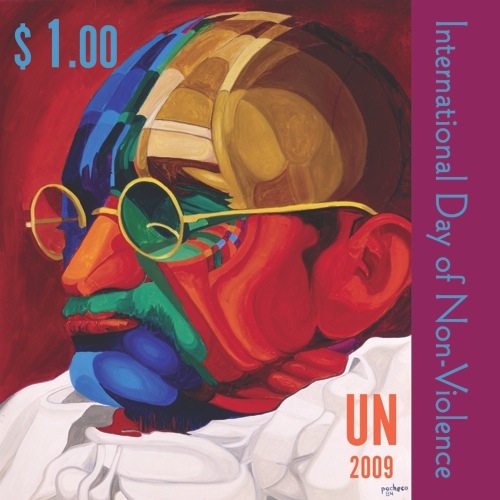
It has been demonstrated that governments have a history of mass killing. Why should one think that a world government would be any better? The question has not only been raised by American conservatives but also by a man who the official media of the Soviet Union described as a reactionary utopian upon his death in 1948. Mohandas Gandhi looked upon an increase in the power of the State with the greatest fear because, although it appeared to be doing good by minimizing exploitation, it did the greatest harm to mankind by destroying individuality. Furthermore Gandhi believed that: “Centralization as a system is inconsistent with [a] non-violent structure of society.”

Nature abhors a vacuum.
 
Despite this skepticism the fact remains that both human rights discourse and the universality of human rights emerged out of one of the most conservative institutions: The Catholic Church. Conservatives must not abandon the conversation on human rights to the Left. Therefore, if one wants to understand how human rights came to be and what can be done to ensure that they can be preserved in a way that, while acknowledging that utopia is unattainable, aims to improve the lives of their fellow humans, one must have a conservative conception of human rights. The Revolution in China, France, Russia, Cuba, and many other countries demonstrate that, when left to their own devices, the Revolutionary's imposition of expanding abstract rights results in a dystopian hellscape rather than a utopian paradise.


Sunday, January 12, 2020

Requiescat in pace Sir Roger Scruton: Remembering a great man of letters who has been called home.

“I am a conservative. Quite possibly I am on the losing side; often I think so. Yet, out of a curious perversity I had rather lose with Socrates, let us say, than win with Lenin.” - Russell Kirk, "Why I Am a Conservative," Confessions of a Bohemian Tory: Episodes and Reflections of a Vagrant Career (1963)

Requiescat in pace, Sir Roger Scruton (1944-2020)
Sir Roger Scruton died today, at age 75, and the world is a lesser place with his absence. A one paragraph press statement on his website announced the death of the writer, philosopher, husband, father, and brother following a six month battle with cancer.

Sir Roger was a courageous man who in the midst of the Cold War traveled behind the Iron Curtain into Poland and Czechoslovakia to meet with dissidents, and demonstrate his solidarity with them, while risking prison himself.  He helped create "a pool of light" in which they could converse in freedom. He would continue this kind of work for the rest of his life.

I was introduced to who many describe as "the greatest conservative of our age" around 15 years ago by my friend Aramis Perez, and am grateful for it. In 2013 had the opportunity to meet the conservative writer and philosopher at a Forum 2000 gathering in Prague.  He was gracious, down to earth, and demonstrated his solidarity with Yris Perez Aguilera, a Cuban dissident attending the meeting.

Sir Roger Scruton together with Cuban dissident Yris Perez Aguilera at Forum 2000
Sir Roger's writings on beauty, morality, politics, environmentalism, democracy and education, and the importance of tradition are required reading with both a depth and breadth of knowledge  reminiscent of Anglo-Irish statesman Edmund Burke.

This blog has quoted this man of letters on several occasions over the past ten years, and been influenced by him.  Sir Winston Churchill observed that it was beneficial to read books of quotations, and that in doing so would spark interest in reading more of the person cited. Below is the full quote.
“It is a good thing for an uneducated man to read books of quotations. Bartlett’s Familiar Quotations is an admirable work, and I studied it intently. The quotations when engraved upon the memory give you good thoughts. They also make you anxious to read the authors and look for more.” - Winston Churchill
In the spirit of wanting to encourage others to read the works of Sir Roger Scruton and share his views with others, below are some quotes of his that have impacted me over the years. Thanks to the internet some of these quotes are also linked to the essays from which they were excerpted.
"Without tradition, originality cannot exist: for it is only against a tradition that it becomes perceivable. Tradition and originality are two components of a single process, whereby the individual makes himself known through his membership of the historical group" - Roger Scruton, 2000. Modern Culture

"Rights are not secured by declaring them. They are secured by the procedures that protect them. And these procedures must be rescued from the state, and from all who would bend them to their own oppressive purposes." - Roger Scruton, October 16, 2004, "The State Can't Set You Free", The Spectator

"Hayek’s theory of evolutionary rationality shows how traditions and customs (those surrounding sexual relations, for example) might be reasonable solutions to complex social problems, even when, and especially when, no clear rational grounds can be provided to the individual for obeying them. These customs have been selected by the ‘‘invisible hand’’ of social reproduction, and societies that reject them will soon enter the condition of ‘‘maladaptation,’’ which is the normal prelude to extinction." - Roger Scruton "Hayek and conservatism", in Edward Feser (ed.), The Cambridge Companion to Hayek (2006)

"For art cannot live in the world of kitsch, which is a world of commodities to be consumed, rather than icons to be revered. True art is an appeal to our higher nature, an attempt to affirm that other kingdom in which moral and spiritual order prevails. Others exist in this realm not as compliant dolls but as spiritual beings, whose claims on us are endless and unavoidable. For us who live in the aftermath of the kitsch epidemic, therefore, art has acquired a new importance … That is why art matters. Without the conscious pursuit of beauty we risk falling into a world of addictive pleasures and routine desecration, a world in which the worthwhileness of human life is no longer clearly perceivable." -Roger Scruton, May 5, 2009, Beauty
"I argue that environmental problems must be addressed by all of us in our everyday circumstances, and should not be confiscated by the state. Their solution is possible only if people are motivated to confront them." - Roger Scruton, December 4, 2012, How to Think Seriously About the Planet: The Case for an Environmental Conservatism 
"When we ask questions like this, are we naturally democratic? And what is the place of the democratic ethos in education? We realize that we are pulled between two competing forces. “Competition it seems to me has two different forms, one the natural form, the other the artificial form that we are all hoping for. The natural form of competition is that in which one person strives to dominate the rest and that person, if he succeeds, will then impose upon the rest his view of things. However, we hope for another form of competition, a non-natural form of competition in which the person who succeeds doesn’t want to dominate but simply to be heard. That you compete in politics for example in order that your voice should be heard and then you make room for the voices of others, that it seems to me is what the democratic instinct is."- Roger Scruton, September 13, 2015 "Are we naturally un-democratic" Forum 2000
My colleague Aramis Perez noted over social media that Sir Roger Scruton died on the same day Anglo-Irish statesman Edmund Burke was born 291 years ago today. This day will now be marked as one to remember and honor two conservative icons.

Requiescat in pace, Sir Roger Scruton (1944-2020)

Wednesday, February 7, 2018

The Real Nature of Politics: Nonviolent protest as an instrument for change in Cuba

Thank you Gene Sharp.

Protests in Cuba in September 2017 following regime response to Hurricane Irma
Human action is a powerful force and not to be underestimated, but to be maximized requires knowledge, strategic planning and courage. It also requires an understanding of the real nature of political power.

Last month on January 28th, the anniversary of Jose Marti's birth, non-violent resistance theoretician Gene Sharp passed away at the age of ninety.  Professor Sharp in his book, Waging Nonviolent Struggle: 20th Century Practice and 21st Century Potential, recognized that political power is "the totality of influences and pressures available for use to implement, change, or oppose official policies for a society." This means that political power "may be wielded by the institutions of government, or in opposition to the government by dissident groups and organizations."

A must read for activists.
Mao Zedong was wrong. Political power does not grow out of the barrel of a gun. According to Gene Sharp the sources of political power include "authority, human resources, skills and knowledge, intangible factors, material resources, and sanctions."

If we look at Cuba, the communist dictatorship there uses propaganda claims, both internally and internationally, to assert that the regime has achieved successes in education and health care. These are pillars of legitimacy and authority for the Castro regime. The dictatorship has also trained and staffed a massive intelligence apparatus to monitor and surveil the populace in Cuba.

Between 1959 and 2006 Fidel Castro had all power concentrated in his hands and due to a serious illness turned it over provisionally to his brother, General Raul Castro, who had previously been Minister of Defense. On February 24, 2008 the 597 members of the rubber stamp assembly unanimously elected a 31 member Council of State that in turn elected Raul Castro “president” at the Palace of Conventions in Havana, Cuba.

There is a large military that is heavily embedded in the Cuban economy, including tourism.  In the area of skill and knowledge there is a dictatorship with 59 years of experience in ruling a country. First generation leaders are dying out, but many remain in key posts, including Raul Castro.

There have been and continue to be opportunities for dissident and resistance groups to shift political power away from this regime using nonviolent resistance. Gene Sharp described this active technique of struggle:
"Nonviolent action, or nonviolent struggle, is a technique of action by which the population can restrict and sever the sources of power of their rulers or other oppressors and mobilize their own power potential into effective power. This technique is based on the understanding of political power presented [above].  That understanding showed that the power of rulers and of hierarchical systems, no matter how dictatorial, depends directly on the obedience and cooperation of the population. Such obedience and cooperation, in turn, depend on the willingness of the population and a multitude of assistants to consent by their actions or inaction to support the rulers."
Sharp's 2009 book available online: "Self-Liberation A Guide to Strategic Planning  for Action to End a Dictatorship  or Other Oppression" offers a clearer and more developed insight to his theoretical approach.  Critics of nonviolent resistance view it as an unarmed struggle when contrasted with violent resistance. Gene Sharp in 1990 at the National Conference on Nonviolent Sanctions and Defense in Boston contested that mistaken view:

"I say nonviolent struggle is armed struggle. And we have to take back that term from those advocates of violence who seek to justify with pretty words that kind of combat. Only with this type of struggle one fights with psychological weapons, social weapons, economic weapons and political weapons. And that this is ultimately more powerful against oppression, injustice and tyranny then violence."
University Academics Maria J. Stephan and Erica Chenoweth in their 2008 study "Why Civil Resistance Works: The Strategic Logic on Nonviolent Conflict" compared the outcomes of 323 nonviolent and violent resistance campaigns from 1900 to 2006. They found that major nonviolent campaigns achieved success 53 percent of the time, compared with just under half that at 26 percent for violent resistance campaigns.

History demonstrates that even the Nazis could be stopped in particular instances with nonviolence. In Denmark, under Nazi occupation, the Danes disobeyed under penalty of death and saved between 70% -90% of the Jewish population between 1940 and 1945 first hiding them and then smuggling approximately 7,500 Jews out of the country.  In Germany in February and March of 1943 German (non-Jewish) wives married to Jewish men and their relatives organized mass demonstrations in Rosenstrasse Street in Berlin to protest their husband’s being sent to concentration camps and escalated the protests until their men were released and returned home which they were.

The above mentioned Stephan, Chenoweth study also suggests “that nonviolent campaigns are more likely than violent campaigns to succeed in the face of brutal repression.” This depends on the nonviolent opposition movement having a strategic vision and maintaining its non-violent posture even under the worse repression. However the more brutal the regime the better the results with nonviolent resistance and the worse the results with violent resistance.
This can be seen in Syria. The uprising against Assad in 2011 was initially nonviolent and despite the brutal repression of the Syrian regime the nonviolent opposition registered great victories until elements of the Syrian military defected  and the resistance abandoned its nonviolent posture in the mistaken belief that violent resistance would achieve change faster. The end result, rather than undermine the Assad regime it changed the entire dynamic of the struggle, the body count of the opposition skyrocketed, and the Syrian dictatorship consolidated its rule.

Conservative activist Morton Blackwell explained a profound truth often ignored by activists of all ideological stripes in a talk titled "The Real Nature of Politics," which is required reading and offers three conclusions.
"1. Being right in the sense of being correct is not sufficient to win.  You don't win just because your heart is pure, even if you can prove logically that you are right.
2. The winner in a political contest over time is determined by the number and the effectiveness of the activists and leaders on the respective sides.
3. The number and effectiveness of the activists and leaders on a given side in a political contest is determined by the political technology used by that side."
 These conclusions work both in a political struggle within a democratic order, and in confronting a dictatorship that does not play by democratic rules.  These three ideas need to be present when planning protests in Cuba. Protests can have two general goals: one is symbolic and the other strategic. Strategic protests are symbolic, but often times symbolic and improvised protests are not strategic.

Strategic protests require carrying out a strategic estimate (identifying the reality on the ground, the strengths and weaknesses of the regime and the opposition) then plotting out a strategy which can be broken down into a series of campaigns using a variety of tactics. However all of this should be in the service of restricting and severing the sources of power of the dictatorship. According to Sharp this means weakening the power of the rulers "to the degree that the population
  • repudiates the moral right of the current rulers to rule;
  • disobeys, non-cooperates, and refuses to assist the rulers;
  • declines to supply the skills and knowledge required by the rulers;
  • denies the rulers control over administration, property, natural resources, financial resources, the economic system, communications, and transportation."
In a democratic order protests are legally recognized and carry little danger and are commonplace. This is not the case in Cuba. According to Gene Sharp, "[d]ictatorial conditions make an act of nonviolent protest less common and more dangerous. Hence, if it does occur, the act may be more dramatic and may receive greater attention than it would where the act is common or carries no penalty." Gene Sharp identified "54 methods of nonviolent protest and persuasion and listed them in seven subclasses."  Protests can seek to show what "resisters are against or in favor of something, the degree of opposition or support, and, sometimes, the number of people involved."


THE METHODS OF NONVIOLENT PROTEST AND PERSUASION 
By Gene Sharp

Formal Statements                     
1. Public Speeches               
2. Letters of opposition or support               
3. Declarations by organizations and institutions               
4. Signed public statements               
5. Declarations of indictment and intention               
6. Group or mass petitions

Communications with a Wider Audience                     
7. Slogans, caricatures, and symbols               
8. Banners, posters, and displayed communications               
9. Leaflets, pamphlets, and books               
10. Newspapers and journals               
11. Records, radio, and television               
12. Skywriting and earthwriting

Group Representations                     
13. Deputations               
14. Mock awards               
15. Group lobbying               
16. Picketing               
17. Mock elections

Symbolic Public Acts                     
18. Displays of flags and symbolic colors               
19. Wearing of symbols               
20. Prayer and worship               
21. Delivering symbolic objects               
22. Protest disrobings               
23. Destruction of own property               
24. Symbolic lights               
25. Displays of portraits               
26. Paint as protest               
27. New signs and names               
28. Symbolic sounds               
29. Symbolic reclamations               
30. Rude gestures

Pressures on Individuals                     
31. “Haunting” officials               
32. Taunting officials               
33. Fraternization               
34. Vigils  Drama and Music               
35. Humorous skits and pranks               
36. Performances of plays and music               
37. Singing  Processions               
38. Marches               
39. Parades               
40. Religious processions               
41. Pilgrimages               
42. Motorcades  Honoring the Dead               
43. Political mourning               
44. Mock funerals               
45. Demonstrative funerals               
46. Homage at burial places

Public Assemblies                     
47. Assemblies of protest or support               
48. Protest meetings               
49. Camouflaged meetings of protest               
50. Teach-ins

Withdrawal and Renunciation                     
51. Walk-outs               
52. Silence               
53. Renouncing honors               
54. Turning one’s back

In the case of Cuba, following Hurricane Irma in 2017, and the regime prioritizing tourist destinations in the island as priorities for re-establishing electricity and clean water, while Cubans had to do without, mass protests spontaneously erupted around the island. This may indicate that this is a topic that can mobilize large numbers of Cubans to become disaffected with the regime. Effective protests that can reach a majority of the populace, and could lead to recruits for campaigns to change things for the better and reduce the number of activists and leaders on the other side through a process of demobilization.


Monday, October 31, 2016

Conservative and Christian Democratic Internationals Issue Joint Statement for Freedom in Venezuela

Bringing Freedom, Democracy and Prosperity back to Venezuela

Joint Statement of the International Democrat Union (IDU) and the Centrist Democrat International (CDI) by the Rt Honorable John KEY (IDU Chairman) and the Honorable Andrés PASTRANA (CDI President)
Venezuela is facing its worst political, social and economic crisis, with corruption, nepotism and the mismanagement of the Maduro regime at the heart of the failure. Despite its large oil and natural reserves the people of Venezuela are suffering terribly.
In the December 2015 elections the United Opposition of Venezuela (Mesa de la Unidad Democrática MUD) won a 2/3 majority in the National Assembly. This was a clear signal to the Venezuelan government to change their politics and take care of the basic needs of the people. But instead the crisis has worsened due to the authoritarian behaviour of the Maduro regime. Governmental institutions are constantly blocking, bypassing or ignoring legislation that would bring back freedom and democracy to Venezuela.
The ongoing dictatorial actions of the Maduro regime against the people of Venezuela will likely lead to a complete state failure. Moreover, the recent decision of the Electoral Supreme Court to unconstitutionally postpone the presidential impeachment process has seriously jeopardized the peace and stability of the nation.
IDU and CDI therefore call upon the Venezuelan government:
  • to guarantee the people of Venezuela the freedom of expression, freedom of assembly and freedom from oppression.
  • to respect the independence and immunity of the members of the National Assembly.
  • to respect the rule of law and the constitution, including the procedures that may lead to the impeachment of the country´s President.
  • to free all political prisoners in Venezuela, including Antonio Ledezma, Daniel Ceballos and Leopoldo López.
  • to ensure that police and military remain peaceful and nonviolent towards the people of Venezuela.
  • to grant access of international humanitarian aid to end life- threatening shortages of food and medicine.
IDU and CDI represent more than 150 political christian-democrat, center-right and conservative parties from all over the world. IDU Deputy Chairman The Honorable Tony Clement, MP led a delegation to Venezuela on 25-27 April 2016 in order to meet with National Assembly and civic society leaders. It was clear even then that President Maduro had no intention of respecting basic human rights and the rule of law.
The IDU and CDI both believe that a solution to this crisis can be found through dialogue from all relevant parties. As a precondition the dialog must comply with the constitutional order of Venezuela and the Government has to guarantee the sovereign right of the Venezuelan people to vote in free, transparent and fair elections. This dialogue will lead to a nonviolent transition in the political responsibility.
It will bring back Freedom, Democracy and Prosperity to Venezuela peacefully.
Issued on 28th October 2016

Tuesday, September 6, 2016

Phyllis Schlafly, conservative activist and ally of free Cubans

Requiescat in pace
August 15, 1924 – September 5, 2016
Phyllis Schlafly, American constitutional lawyer, founder of the Eagle Forum, and a long time conservative political activist passed away yesterday at age 92. She was a conservative icon who strode across the political scene for more than sixty years shaking up the consensus on political, cultural and foreign policy questions that on more than one occasion altered the status quo. One constant theme that she touched on for five decades was her defense of a free Cuba.

On April 9, 2015 Phyllis Schlafly offered the following critical analysis of the Obama administration's new Cuba policy.
Without the approval of the American people or even of Congress, President Obama made the unilateral decision to normalize relations with Cuba. His decision is bad for freedom and an outright concession to Communist tyranny, for which we got absolutely nothing in return, either for ourselves or for the Cuban people.
America has always been the beacon of hope for oppressed people all over the world. Obama’s decision makes it look like we have abandoned our support and encouragement for freedom. Obama’s decision certainly does not support freedom. Instead, it rewards tyranny. Communist Cuba will not have to give up any of its dictatorial policies in order to be recognized by America.
This sends a bad message to the world. It appears to say that our new policy will be to help dictators even though they refuse to reform human rights. This decision is an offense to the Cuban people who have been hoping that their country, with America’s help, will one day be free. Alas, Obama’s decision financially supports the current Communist dictatorship and gives it access to American dollars and economic aid without any concessions whatsoever for freedom.
We could have demanded, for example, free speech, the legalization of other political parties, and the immediate stoppage of terrorist activities. This decision was made by Obama unilaterally without any discussion or debate by Congress. This decision is bad for America, bad for Cuba, and bad for freedom all over the world. It is inconsistent with American principles and policies.
On the Cuba question Phyllis Schlafly was always ahead of the curve foreseeing how U.S. policy would perpetuate the Castro regime.  At the same time she was calling for a policy of liberation in Cuba. Following the 1962 Cuban Missile Crisis she observed that “Cuba is now the headquarters of the Communist conspiracy in the Western hemisphere... Our policy should be to liberate Cuba." In 1964 Phyllis looked back at the legacy of the Kennedy Administration taking it to task for capitulating to the Soviet Union and abandoning the goal of a free Cuba:
"the Kennedy administration presented the Cuban crisis to the American people as a great victory and as evidence that we made Khrushchev back down! - whereas the truth is that the deal was a defeat for the United States, binding us to give up our bases in Turkey and Italy, guarantee Castro against any invasion, and accept Khrushchev’s word on how many missiles he withdrew."
When the mainstream media was demonizing Cuban American during the Elian affair in 2000 Phyllis Schlafly acknowledged the mother's sacrifice for her son to live in freedom and made the case as follows:
The mother of six-year-old Elian Gonzalez sacrificed her life so that her son could grow up in America. Her dying wish, according to a Cuban man who survived for two days on an inner tube, was that Elian could reach the United States and freedom. A reporter for the socialist Madrid newspaper El Pais investigated and learned that Elian's father, Juan Miguel Gonzalez, had wanted Elian to go to America. Elian's relatives in Florida know very well that Elian is far better off in free America than in Communist Cuba where people are denied the everyday liberties we take for granted, including freedoms of speech, travel, and education.

One person, however, disagrees: Fidel Castro, whose apparatchiks no doubt "persuaded" Mr. Gonzalez to change his story. Elian's escape, like all defections, is an acute embarrassment to Castro. Communist suppression of the right to travel has long demonstrated the inhumanity of its system. The Berlin Wall, guarded by sharpshooters ordered to kill anyone who attempted to escape, symbolized the terror of Communism for an entire generation.

Flight that risks death constitutes the ultimate repudiation of Communist regimes and is often followed by vindictive attempts at retaliation by the humiliated dictator. KGB files newly opened to the West are full of examples.

[...]

Like all dictators, Castro is used to getting his way. He deliberately raised the political stakes of this controversy to the point where Elian Gonzalez is unlikely to have a normal life if he were returned to Cuba. The arguments about father's rights and family unity are phony when it comes to Elian's predicament. If U.S. authorities send Elian back to Cuba, it won't be to Elian's father; it will mean sending him back to be paraded around as a Castro trophy and raised, perhaps in a daycare center, to be a good Communist. The only persons the United States has forcibly returned to Cuba are criminals, and Elian surely is not a criminal. Does anyone believe that, if Elian's mother had died in the act of throwing her son over the Berlin Wall that we would have forcibly returned her boy to East Germany?

The mystery is why Clinton has sided with Castro. Perhaps his corporate friends are salivating over the potential for investments in tourism, gambling and other industries in Cuba where forty years of Communism have depressed the economy to the point where the ultimate luxury is a 1956 Chevrolet. Perhaps the Clinton Administration considers deporting Elian as necessary to appease Castro and facilitate open trade relations. Based on Clinton's policies toward Communist China, "follow the money" is usually a good explanation of his foreign policy. 
The first time I saw Phyllis Schlafly was at Florida International University on January 29, 1988 was when she was debating Sarah Weddington, the lawyer who defended "Jane Roe" pseudonym for Norma Leah McCorvey in the case that legalized abortion in the United States: Roe versus Wade. 
Schlafly was brilliant in her defense of the pro-life issue and leftists in the audience hated her with a passion.

Five years later in 1993, as president of Young Americans for Freedom at FIU successfully lobbied student activities to bring Phyllis Schlafly to speak at Florida International University. FIU Yafers took her out to dinner prior to the lecture. At the university lecture itself, I had the honor of introducing the conservative icon. She was a gracious guest and delivered an excellent lecture.

Years later met Phyllis Schlafly once again at the Conservative Political Action Conference in Washington DC she signed a copy of her book, A Choice Not an Echo and was once again friendly and approachable.  Over the internet, all kinds of leftists are slandering and libeling this great lady now that she cannot defend herself, but we Cuban Americans should honor her not only for her patriotic defense of America but also for her steadfast truth telling on Cuba and advocacy for Cuban freedom.

FIU YAF founder Craig Herrero, Phyllis Schlafly, Cesar Vasquez, John Suarez (1993)


Tuesday, June 28, 2016

The conservative case to save human rights from decline

"Article 3. Everyone has the right to life, liberty and security of person." - Universal Declaration of Human Rights, 1948

“…Conservatives have excellent credentials to speak about human rights. By our efforts, and with precious little help from self-styled liberals, we were largely responsible for securing liberty for a substantial share of the world’s population and defending it for most of the rest.” — Margaret Thatcher, State Craft P. 249

 
Freedom House 2016 charts decade of decline in rights and freedoms

End of the Human Rights Consensus?
The nonviolent end of the Cold War between 1989 and 1991 along with the end of totalitarian communism in Europe coincided with a decade long improvement in human rights and freedoms world wide. This trend over the past ten years has been in the opposite direction and is due to a number of factors, including the rise of China and Russia's return to authoritarianism after a brief democratic spring in the 1990s.

The War on Terror following the September 11, 2001 attacks in the United States, the March 11, 2004 attacks in Spain and the July 7, 2005 attacks in Great Britain led to set backs in human rights in Western countries responding to international terrorism.  However, the geopolitical map and the war on terror do not alone explain this worsening international environment for human rights.

There is a crisis of values reflected in the fragmentation of the international human rights consensus achieved in 1948. What is manifested now had its origins 26 years ago with Cairo Declaration on Human Rights in Islam.  The Iranian representative to the United Nations explained that the Universal Declaration of Human Rights was a "relativistic secular understanding of the Judeo Christian tradition." However the UN Human Rights Declaration as initially conceived was not relativistic but over time human rights mechanisms have engaged in a proliferation of rights that give that appearance creating a breakdown in the 1948 consensus. Sadly, on the human rights front the practitioners of Islam have not been the only ones alienated but so too have many Catholics.

Human Rights in Decline: the decade long crisis
2016 marks the tenth anniversary of the establishment of the United Nations Human Rights Council and also coincides with the tenth consecutive year that human rights are in decline world wide. The United Nations bureaucracy has gotten a lot wrong that has contributed to this worsening situation. The UN Human Rights Council has been described as having been turned into Frankenstein's monster.

Although a contributing factor, the international decline in human rights cannot be laid solely at the feet of the United Nations. The cause goes to the abandonment of the foundations of human rights thought. First principles have been compromised and ignored in the service of expediency. For example, taking a human life can never be a right because human beings have a right to life. Taking a life is at best a necessary evil done in self-defense to save one's own life. The right to an abortion is a contradiction in conflict with universally recognized human rights.
 
The Left's take over of human rights discourse over the past decades to advance its own agenda has benefited it but at the expense of the pre-existing international human rights consensus. For example, Amnesty International's campaign beginning in 2007 to conflate the right to an abortion with its worldwide campaign to stop violence against women alienated many Catholic supporters, and has been described as anti-Catholic. Catholic bishops, who had been members of Amnesty International, had to resign over the abortion issue because the human rights group had become an abortion lobby group. Catholics generally have been encouraged to boycott the organization. Independent Catholic News reported:
Cardinal Martino, who served as the Holy See's permanent observer at the United Nations, says that this change of position is part of the "pro-death" agenda in modern culture. The cardinal said that Amnesty International's decision means Catholics and Catholic organizations should no longer financially support the group. "The promotion of abortion opens the door to the slippery slope of evil and death, where human rights are taken away from the most innocent and vulnerable children of God," he said. "I believe that, if in fact Amnesty International persists in this course of action, individuals and Catholic organizations must withdraw their support."
Furthermore Article Three of the Universal Declaration of Human Rights guarantees the right to life, and this is not accidental. This is because this human rights document drafted and signed on December 10, 1948 was not a compromise between liberalism and socialism but lobbied for and drafted by Christian Democrats with the active support of the Catholic Church and all the world's great faith traditions.

Jacques Maritain
Catholic roots of the Universal Declaration of Human Rights
Pope John Paul II recalled the Roman Catholic Church's role in 1991 in the Papal Encyclical Centesimus Annus published on the 100th anniversary of Rerum Novarum:
...[A]fter the Second World War, and in reaction to its horrors, there arose a more lively sense of human rights, which found recognition in a number of International Documents52 and, one might say, in the drawing up of a new "right of nations", to which the Holy See has constantly contributed. The focal point of this evolution has been the United Nations Organization.
One of the drafters of the Universal Declaration of Human Rights was Jacques Maritain, a French philosopher who was a profound Catholic and anti-modernist inspired by Christian humanism:
There is but one solution for the history of the world, I mean in a Christian regime, however it may be otherwise. It is that the creature be truly respected in its connection with God and because receiving everything from Him: humanism but theocentric humanism, rooted where man has his roots, integral humanism, humanism of the incarnation.
The formation of the United Nations was an opportunity for Latin Americans to push for international human rights standards. The American Declaration of the Rights and Duties of Man was the first international human rights instrument signed into existence in Bogota, Colombia on May 2, 1948 eight months prior to the Universal Declaration of Human Rights in December of 1948 where Latin Americans played a major and crucial role, among them the Cuban delegation. The first draft of the Declaration was fashioned from various models collected by the UN Secretariat among them "a model based on a Cuban-sponsored proposal at the San Francisco conference, a proposed first draft offered by the Chilean delegation, and the earlier Panamanian draft."

The Universal Declaration of Human Rights is heavily informed and influenced by Catholic social doctrine found in the 1891 Papal Encyclical Rerum Novarum by Pope Leo XIII. The Catholic Church in its social teaching rejects both liberalism and communism embracing a defense of the dignity of human beings grounded in its own metaphysical vision of personhood.

The holistic approach to human rights that embraces both civil/political and social/economic rights was not found in a compromise between the liberal Anglosphere and the socialist Soviet sphere but was the initiative of Catholic thinkers, states and the Holy See that shaped this important document that was embraced by the major faiths around the world that shared its common truths achieving a unanimous human rights consensus with that document.

Bishop Bartolomé De Las Casas
The debate on personhood
Human rights, as an idea, have a conservative pedigree that stretches back to the Middle Ages and to the Catholic Church. The first time in human history that a universal concept of human rights in which they are applied to all living beings on the planet emerged out of a debate concerning the Spanish conquest of the Americas in the 16th century. The modern language of human rights emerges out of the public debate surrounding the treatment of Native Americans  in the first years of the Spanish conquest and led King Charles V to organize a debate between the Catholic Bishop Bartolomé De Las Casas and the humanist attorney Juan Ginés de Sepúlveda in 1550 in which the personhood of the indigenous peoples of the Americas and their ability to govern themselves was recognized as briefly outlined in the following quote by Bishop Bartolomé De Las Casas:
“All the races of the world are men, and of all men and of each individual there is but one definition, and this is that they are rational. All have understanding and will and free choice, as all are made in the image and likeness of God . . . Thus the entire human race is one.” 
Although relatively unknown in the English language Francisco de Vitoria (1483-1546), the founder of the “School of Salamanca,” arrived at the University of Salamanca and was elected the prime chair of theology there in 1526, the University itself had been founded in 1218. Following the debate between De Las Casas and de Sepúlveda, King Charles V would side with neither but followed de Vitoria's council which recognized the humanity of the indigenous people and their right to their own property. The Salamanca School and Bishop De Las Casas would leave a profound mark on Latin American thought and human rights discourse. Despite this history some academics claim that only liberals can have a conception of universal human rights.

The debate on personhood rages today over the unborn and in order to justify abortion claims a difference between human life and moral personhood. Not treating human life and moral personhood as interchangeable opens up the debate not only to abortion but also infanticide because very young babies, according to Oxford University medical ethicists, and some philosophers do not achieve the status of moral personhood.  established through modern philosophical inquiry. This is a slippery slope long rejected by the Catholic Church.

The proliferation of rights, this includes abortion rights are paradoxically undermining fundamental human rights to life, liberty and private property. Meanwhile progressives demonize conservatives, and traditional religious institutions for not joining their "human rights" bandwagon that fractures human identity, cheapens human dignity and undermines human rights while claiming to celebrate them.

Meanwhile history demonstrates that conservative forces led the drive to limit the absolute power of the sovereign in the 13th Century. Remember that on June 15, 1215 forty barons pressured King John into affixing his seal on The Great Charter (Magna Carta in Latin) at a field in Runnymede, England. It was the British aristocracy that initiated this profound change. This document placed the sovereign under the rule of law and established this principle among the English speaking peoples.  730 years later after the catastrophe of WW2 Conservatives and Christian Democrats sought to advance regional and international human rights structures with the aim of strengthening the protection of human rights in Latin America, Europe and Internationally.

Conservative roots of the European Union's Human Rights System
 Dr. Marco Duranti's new book The Conservative Human Rights Revolution:  European Identity, Transnational Politics, and the Origins of the European Convention will be available on December 1, 2016, but the description that is already available points to the key role conservatives, Winston Churchill among them, played in bringing about the EU's human rights system.
"The Conservative Human Rights Revolution radically reinterprets the origins of the European human rights system, arguing that its conservative inventors envisioned the European Convention on Human Rights (ECHR) not only as an instrument to contain communism and fascism in continental Europe, but to allow them to pursue a controversial political agenda at home and abroad. Just as the Supreme Court of the United States had sought to overturn Franklin Roosevelt's New Deal, a European Court on Human Rights was meant to constrain the ability of democratically elected governments to implement left-wing policies that conservatives believed violated their basic liberties."
The Modernist rewrite of human rights history
This history is often overlooked with a preference in modern human rights circles given to documents from the Enlightenment associated with the French Revolution which would be associated with the Left. For example "The Declaration of the Rights of Man and of the Citizen," also known as the "Declaration of Human and Civic Rights" adopted on August 26, 1789 which is a product of the French Revolution as is the even more egalitarian document produced in 1793 the Declaration of the Rights of Man and Citizen from the Constitution of Year I. Article 1 of the 1789 declaration reads:
"Men are born and remain free and equal in rights. Social distinctions may be founded only upon the general good." 
Nonetheless, the fruits of these documents did not offer much in the way of protections or safe guards for French citizens who were subjected to the French Revolution's terror. The French Revolution born of enlightenment liberalism, and a rejection of the Ancien Régime and the Catholic Church, gave Europe its first modern genocide of peasants in which men, women, and children of The Vendee were systematically exterminated, and the end result was the rise of the dictator Napoleon Bonaparte and a world war that took three million lives.

Edmund Burke by James Watson © National Portrait Gallery, London
Failure of the Abstract predicted by the first modern conservative
Edmund Burke was one of the few who foresaw as early as 1790 in his book, Reflections on the Revolution in France, published less than a year into the French Revolution, foresaw where the follies of enlightenment liberalism and its abstractions would end in wholesale slaughter, tyranny and war. 
Burke's concept of human dignity as derived from the creator combined with a concept of man's moral equality has deep roots in the Christian tradition which incidentally is where the very language and concept of human rights first emerged in the 1200s in the Catholic Church and was refined by Thomas Aquinas.  Edmund Burke's defense of the marginalized, the colonized, and the conquered was rooted not in abstract enlightenment theory but a Christian moral vision of the universe combined with respect for tradition and a knowledge of history. According to Burke, in his 1796 Letters on a regicide peace ,man has freedom but it is not absolute:
As to the right of men to act anywhere according to their pleasure, without any moral tie, no such right exists. Men are never in a state of total independence of each other. It is not the condition of our nature: nor is it conceivable how any man can pursue a considerable course of action without its having some effect upon others; or, of course, without producing some degree of responsibility for his conduct.
Enlightenment liberalism constructed abstract models that failed to take into account the full complexity of human nature and its contradictions. The French human rights charter declares men absolutely both free and equal. Edmund Burke and modern conservatives believe that "full equality" outside of the moral and spiritual sphere is unattainable and a dangerous fiction. The same ideas rooted in Christendom that motivated de Vitoria in 1550 in Spain drove Burke's vision 240 years later in Great Britain: the intrinsic dignity of man.

The trouble with absolute equality
First, to permit absolute freedom is to tolerate profound inequalities because people if left to their own devices develop hierarchies naturally. Secondly, to enforce absolute equality requires an all powerful state to repress natural inequalities. The end result is not absolute equality but a small group with great power at its disposal making slaves of the majority. 

This is what happened in the French Revolution and reached its apex with Maximilien Robespierre, in 1794 with his observation that he applied in governance: "The government in a revolution is the despotism of liberty against tyranny." It is a contradiction in the same way that combining absolute freedom and equality as revolutionary goals are in contradiction and doomed to failure. Robespierre was only applying the logic of enlightenment thinker Jean Jacques Rousseau who wrote of "forcing men to be free."

Descendants of Robespierre confronting and infiltrating human rights institutions today
The communist regime in Cuba has played an active role at the United Nations and in the Americas to undermine human rights standards and institutions. Sadly, it has had some successes in undermining international free speech standards and next month may see a long term objective realized with the crippling of the Inter-American Commission on Human Rights.  The Castro regime's allies in the region: Bolivia, Ecuador, Nicaragua, and Venezuela have refused to fund the world's oldest human rights system. Bolivia and Ecuador have called for the elimination of the human rights body.

However the Stalinists of old and the new "Socialists of the 21st Century" who divided humanity along class lines have not had as great an impact as the newest generations of the Left that instead of appealing to a common humanity has further fractured and divided people by race, sex, class, gender, sexual orientation, and ability.  The great religions are now to be restricted to the private sphere and any questions that they may raise about the new divisions can be dismissed as "belief-based bigotry."
Civil and political rights and social and economic rights may all be in decline but repressive regimes can pay lip service to the above six areas and improve their ranking while still denying all humans within their territory their civil, political, social and economic rights.

Ireland's Pro-Life stance criticized by the UNHRC in contradiction with the UDHR
The UN Human Rights Committee in March of 2016 criticized Ireland's pro-life laws, but at the same contradicted the Universal Declaration of Human Rights and its pro-life clause under Article 3. Both Catholicism (1.27 billion) and Islam (1.6 billion) which make up 2.87 billion believers hold strong bioethical considerations about abortion that are also shared with Orthodox Judaism. Post-Christian societies in Western Countries have legalized abortion with varying levels of restrictions with the United States having some of the most extreme pro-abortion laws when compared to Western Europe.

British Section of Amnesty International and its objectives in 1962


Restoring the dynamic tension to the human rights conversation
In 1961 Amnesty International was founded by Peter Benenson and consisted of a board of trustees that included all the major British political parties: Labour, Conservative, Liberal and religions: Roman Catholic, Anglican, Baptist, Jewish and Humanist.  

If human rights are to regain their relevance and end its worldwide decline then all parties (and this includes religions) must be invited to the table and not censored beforehand because it does not serve a particular political agenda. Furthermore the right to life, enshrined in both Article 3 of the Universal Declaration of Human Rights and in Article 1 of the American Declaration of the Rights and Duties of Man should apply to all, at all stages of life. Competing rights claims need to be weighed and measured carefully, but recognizing the transcendent importance of the person. 

Finally, human rights defenders instead of focusing on what divides us by race, sex, class, gender, sexual orientation, ability, and religion should seek to recognize our common humanity with a focus on the dignity of the person and the right to life.

Conservatives need to embrace their human rights legacy and reject attempts by intellectual adversaries who claim that there is only a "liberal conception of human rights." There is a conservative tradition of human rights that stretches back centuries and has a far better track record of success than their liberal enlightenment and revolutionary counterparts. This is because Conservatism respects the past, and informed by it looks to how its actions today will impact future generations.

This is why Conservatism is best positioned to rebuild the international human rights consensus in 2016 that the Left has wrought asunder with its abstract utopian projects.