Showing posts with label remolcador. Show all posts

Sunday, June 2, 2024

R.I.P. Jorge A. Garcia, truth teller who had 14 family members murdered by agents of Communist Cuba on July 13, 1994

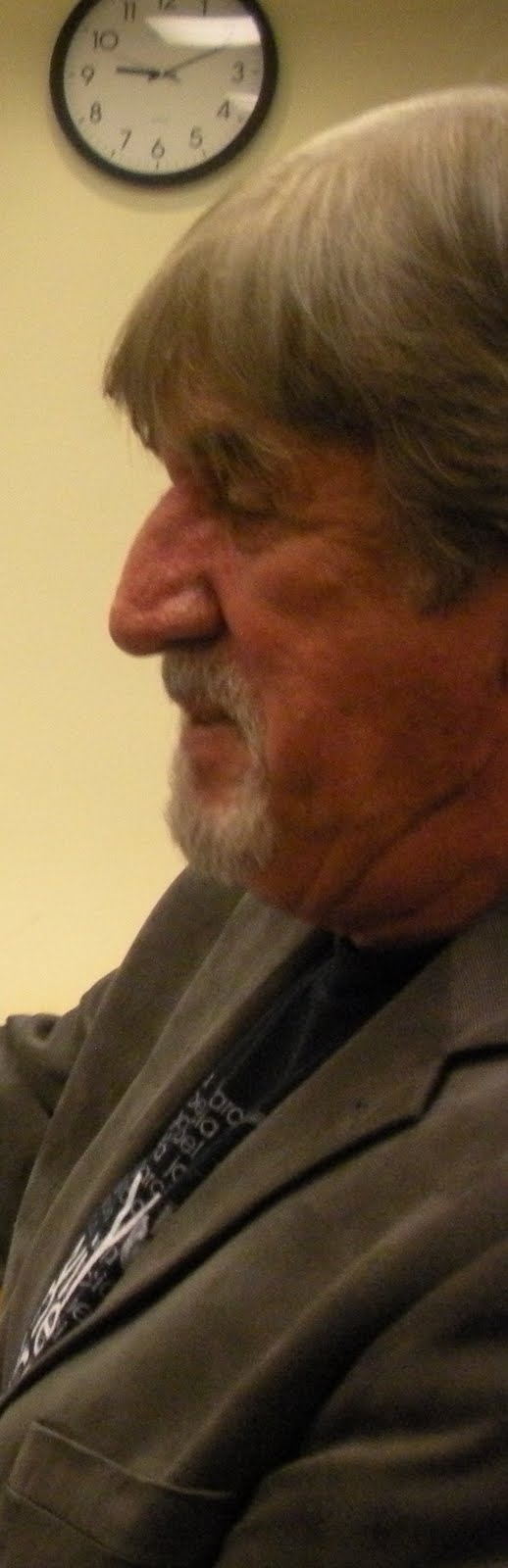
Jorge A. Garcia
 

'There are those who think that we should be full of rancor and a thirst for vengeance but I don't want revenge. I feel sorry for the people who assassinated my family. I can never be compensated for my loss. I will never be happy again with my family surrounding me. There will always be a tinge of sadness but I do want there to be a trial so that this situation can serve as a lesson and that these people or others like them in other parts of the world, don't do this kind of thing again. Not in Cuba. Not anywhere.''

Jorge A. García, July 13, 2004 (A decade after July 13, 1994 tugboat massacre

Jorge A. Garcia who had 14 members of his family massacred by agents of the Cuban dictatorship on July 13, 1994 rejected revenge but demanded justice, truth, and memory has reportedly died. Cuban activist Ramon Saul Sanchez shared a statement from his son Jorge Félix García.

"My father Jorge García Más is resting after a painful illness that in recent months stole the peace of all those around him who cared for him. He accompanied me for 60 years in which at his side I learned everything I know and I am what I have become with his help.
Today, June 2, 2024, the life of a human being who, full of pain, filled the lives of so many with love, ends. What does not go away is the tireless work of this man in favor of justice, which will remain there forever, as an example of personal sacrifice and at the same time as a perpetual tribute to those who he dedicated
the last 30 years of his existence his battle for the victims of the sinking of the "13 de Marzo" Tugboat.
The legacy of a man like my father undoubtedly creates commitment, and sets an example to follow for anyone that injustice has taken away what is just. Let us give thanks for what we experienced at his side, for what we learned along the way, for the hug, the helping hand.
Jorge García Más (Jomás) is staying with us today, not leaving us."

First time I heard Jorge A. Garcia speak out about the July 13, 1994 massacre was on a television program on the eve of the arrival of Pope John Paul II to Cuba.
 
In the January 1998 Nightline interview Jorge described how he learned the news. “When I asked my daughter, ‘What about Juan Mario?’ ‘Papa, he's lost.’ ‘And Joel?’ ‘Papa, he's lost.’ ‘And Ernesto?’ ‘Papa, he's lost.’ And then we knew that other members of the family were all lost, 14 in all.” His daughter, Maria Victoria Garcia, had survived but she lost her brother, Joel García Suárez age 24;  her husband, Ernesto Alfonso Loureiro age 25; and her son, Juan Mario Gutiérrez García age 10.
 
Jorge García was detained and interrogated on several occasions. His longest detention was for 15 days. His daughter, María Victoria García, was one of three of his family who survived the massacre but was still in danger:  "They tried on several occasions to kill my daughter, because she was the first to speak out and contradict the regime’s official narrative.”

Father and daughter had spoken on camera to Nightline from Havana, Cuba about the July 13, 1994 attack on the “13 de Marzo” tugboat.  A year later in 1999 they had to go into exile as political refugees fearing for their lives.

In 2009, Jorge Garcia, agreed to address Florida International University students at a panel organized by the Free Cuba Foundation on the fifteenth anniversary of the July 13, 1994 “13 de Marzo” tugboat massacre. We meet beforehand, and I sat down with him and interviewed him in a series of short videos about the events surrounding this crime.

 María Victoria García passed away in early January 2024.

Jorge had been suffering from a serious illness for some time.

I learned he was desperately ill, and paid him a visit in hospice care on May 12, 2024. We spoke, and he remembered when we swapped t-shirts 15 years earlier at Florida International University. At the time I gave him my Free Cuba t-shirt and he in turn gave me a t-shirt that read "We will never forget" with the name Joel Garcia repeated in the back ground, and image of his murdered son Joel Garcia in the foreground.

Next month on July 13th, G-d-willing, I will be remembering the victims, demanding justice, and wearing the shirt given to me by Jorge A. Garcia, a truth teller who risked all to bear witness, and following his example.


Friday, January 5, 2024

R.I.P. María Victoria Garcia, truth-teller and survivor of the tugboat "13 de marzo" massacre.

María Victoria Garcia passes away in Miami. She was a survivor of the tugboat "13 de marzo" massacre, which remains an unpunished atrocity.

Three Cuban families totaling about 70 persons seeking a better life in freedom boarded the Cuban tugboat "13 de Marzo" on July 13, 1994. 17 were members of the Garcia family. The captain of the tug was among those who wanted to depart. Despite their best efforts, an informant had already reported them to State Security.  The Cuban dictatorship's actions on July 13, 1994, were premeditated.

The "13 de Marzo" left the port at 3:00am and almost immediately were being pursued by other tugboats of the Ministry of Transportation. Seven miles from the Cuban coast line the “13 de Marzo” tugboat was confronted by the tugboats. Amnesty International in their 1997 investigation reported that the vessels which attacked the “13 de Marzo” were Polargo 2”, “Polargo 3″ and “Polargo 5″ and identified as belonging to the Ministry of Transport. According to the IACHR report the attack did not appear improvised. The Amnesty International report mentions another vessel that "appeared to be directing operations was believed to belong to the Cuban Coast Guard, which is part of the Ministry of the Interior.”


Despite the “13 de Marzo” tugboat stopping and passengers attempting to surrender the other tugboats continued to ram the tug and use high pressure hoses to blast them overboard. Following this the attackers began to circle the wreckage with the aim of creating a whirlpool effect to ensure that all would drown. Sergio Perodin, one of the survivors who lost his wife and young son during the incident, explained how the massacre stopped when a boat with a Greek flag appeared in the area. "lt looked like the boat was watching what they were doing, the murder they were committing. So they stopped and decided to pick us up." It was then and only then that the attack was suspended and the survivors were picked up by the Cuban Coast Guard.

María Victoria García, was one of three members of the García family who survived the massacre. Fourteen members of the García family were murdered, including her 20 year old brother, and María Victoria's ten-year-old son Juan Mario Gutiérrez García.  

Juan Mario Gutiérrez García

Her father, Jorge García who survives his daughter also sat down and spoke on camera about what he had learned about the actions of the Cuban government both before and after the massacre.  He had been detained and interrogated on several occasions by state security. His longest detention was for 15 days.

María Victoria García spoke out but it nearly came at a great cost according to Jorge, "[t]hey tried on several occasions to kill my daughter, because she was the first to speak out and contradict the regime’s official narrative.

The massacre and the aftermath left her physically and psychologically scarred for the rest of her life..

Jorge and his daughter left Cuba for exile. He wrote a book about this crime that is a must read. During a question and answer session at Florida International University on July 13, 2004 he spoke of the need for justice:

''There are those who think that we should be full of rancor and a thirst for vengeance but I don't want revenge. I feel sorry for the people who assassinated my family. I can never be compensated for my loss. I will never be happy again with my family surrounding me. There will always be a tinge of sadness but I do want there to be a trial so that this situation can serve as a lesson and that these people or others like them in other parts of the world, don't do this kind of thing again. Not in Cuba. Not anywhere.''

María Victoria described what happened to Voces de Cuba in an interview nine years ago, about when she confronted an official saying, "I told the colonel that it had not been an accident, that they sank us."

The following persons were executed extrajudicially by the Castro regime on July 13, 1994, in the "13 de Marzo" tugboat massacre, and thirty years later justice has still not been provided them and their loved ones.

Helen Martínez Enríquez ( 5 months)
Cindy Rodríguez Fernández (age 2)
José Carlos Nicole Anaya (3)
Angel Rene Abreu Ruiz ( age 3)
Yisel Borges Alvarez (4)
Caridad Leyva Tacoronte (age 5)
Juan Mario Gutiérrez García (age 10)
Yousell E. Perez Tacoronte (age 11)
Yasser Perodin Almanza (age 11)
Eliecer Suarez Plasencia ( age 12)
Mayulis Mendez Tacoronte (age 17)
Miladys Sanabria Cabrera ( age 19 )
Odalys Muñoz García (age 21)
Yuliana Enríquez Carrazana (age 22)
Yaltamira Anaya Carrasco (age 22)
Lissett María Álvarez Guerra (age 24)
José Gregorio Balmaceda Castillo (24)
Joel García Suárez (age 24)
Ernesto Alfonso Loureiro (age 25)
María Miralis Fernández Rodríguez (age 27)
Pilar Almanza Romero (age 28)
Leonardo Notario Góngora ( age 28)
Jorge Arquímides Lebrijio Flores (age 28)
Rigoberto Feut Gonzáles (age 31)
Omar Rodriguez Suarez (age 33)
Lázaro Enrique Borges Briel (age 34)
Julia Caridad Ruiz Blanco (age 35)
Martha Caridad Tacoronte Vega (age 36)
Eduardo Suárez Esquivel ( age 39)
Martha M.Carrasco Sanabria (age 45)
Augusto Guillermo Guerra Martínez ( age 45)
Rosa María Alcalde Puig (age 47)
Estrella Suárez Esquivel (age 48)
Reynaldo Joaquín Marrero (age 48)
Manuel Cayol (age 50)
Amado Gonzáles Raices (50)
Fidelio Ramel Prieto-Hernández (51) 

María Victoria García, survivor of the July 13, 1994 “13 de Marzo” Tugboat massacre, courageously spoke out about what had happened while still in Cuba. She denounced this mass murder carried out by the Cuban dictatorship. María Victoria died on January 4, 2023 at age 58 due to complications arising from heart surgery performed in December.. My prayers go out to her, her father Jorge A. García, and her friends and family. My sincerest condolences on this terrible loss.


 Requiescat in pace María Victoria Garcia, and the 37 victims of the July 13, 1994 tugboat massacre.


Thursday, July 13, 2023

The July 13, 1994 "13 de Marzo" tugboat massacre: 29 years demanding justice

"The struggle of man against power is the struggle of memory against forgetting." - Milan Kundera.

Three Cuban families totaling about 70 persons looking for a better life away from the regime boarded the Cuban tugboat "13 de Marzo" in the early morning hours of July 13, 1994. The captain of the tug was among those who wanted to depart. Despite their best efforts, an informant had already reported them to State Security..

On July 12, 1994, around 6:00 p.m., Cuban state security knew that the "13 de Marzo" tugboat was going to be taken and had nine hours to prepare their response. What happened on July 13, 1994, was planned ahead of time.

They left the port at 3:00am on July 13, 1994 and almost immediately were being pursued by other tugboats, also of the Maritime Services Enterprise of the Ministry of Transportation. Seven miles from the Cuban coast line at a location known as "La Poceta" the “13 de Marzo” tugboat was confronted by the tugboats. Amnesty International in their 1997 investigation reported that the vessels which attacked the “13 de Marzo” were Polargo 2”, “Polargo 3″ and “Polargo 5″ and identified as belonging to the Ministry of Transport. According to the IACHR report the attack did not appear improvised:

"Polargo 2," one of the boats belonging to the Cuban state enterprise, blocked the old tug "13 de Marzo" in the front, while the other, "Polargo 5," attacked from behind, splitting the stern.  The two other government boats positioned themselves on either side and sprayed everyone on deck with pressurized water, using their hoses.
The Amnesty International report mentions another vessel that "appeared to be directing operations was believed to belong to the Cuban Coast Guard, which is part of the Ministry of the Interior.”

Despite the “13 de Marzo” tugboat stopping and passengers attempting to surrender while mothers held up their children begging for mercy the other tugboats continued to ram the tug and use high pressure hoses to blast them overboard. Following this the attackers began to circle the wreckage with the aim of creating a whirlpool effect to ensure that all would drown. Sergio Perodin, one of the survivors who lost his wife and young son during the incident, explained how the massacre stopped in the Nightline program:

"We saw in the distance a boat with a Greek flag that appeared to be what stopped them. lt looked like the boat was watching what they were doing, the murder they were committing. So they stopped and decided to pick us up."
It was then and only then that the attack was suspended and the survivors were picked up by the Cuban Coast Guard.

On August 5, 1994 Fidel Castro made a speech to the official news media justifying the incident and praising the men on the ships that attacked and sank the "13 de Marzo"tugboat:

"The workers' behavior was exemplary, there's no denying it, because they tried to stop them from stealing the boat.  What are we to say to them now, let them steal the boats, their livelihood?  The actions of the Coast Guard crews were irreproachable, they saved 25 lives.  So, this is what happened and as soon as information became available, more details were given. 

Within three years of the crime, the United Nations Human Rights Commission in 1995, the Inter-American Commission on Human Rights (IACHR) in 1996, and Amnesty International in 1997 all issued findings based on the facts available at the time. The report prepared by the IACHR was the most detailed. Human Rights Watch emphasized the importance of the IACHR report in their 1999 report "Cuba's Repressive Machinery: Human Rights Forty Years After the Revolution" in the chapter on impunity:

 On October 16, 1996, the commission approved a public report concluding that on July 13, 1994, Cuba violated the right to life of forty-one people who died when Cuban government boats rammed, flooded, and sank the 13 de Marzo, a hijacked tugboat loaded with civilians fleeing Cuba. The report also found that Cuba violated the right of personal integrity of the thirty-one survivors of the sinking, and violated the rights to transit and justice of all of the seventy-two persons who attempted to leave Cuba. The report provides shocking survivors' testimony of the Cuban government's deliberate attempts to sink the boat. Statements by President Castro and the Interior Ministry regarding responsibility for the incident provide a disturbing counterpoint to the victims' experiences. Clearly, the government's effort was to exculpate itself from responsibility, rather than conduct a serious investigation and punish those responsible for this incident.
Following the massacre, family members expected their loved ones' bodies to be returned to them. The authorities set up rapid response brigades to prevent anyone from entering their homes. The Cuban government used armed individuals to intimidate survivors and victims' families.

Jorge García who lost several family members in the July 13, 1994 attack sat down and spoke on camera about what he had learned about the actions of the Cuban government  both before and after the massacre.  He had been detained and interrogated on several occasions by state security. His longest detention was for 15 days. His daughter, María Victoria García, was one of three of his family who survived the massacre and spoke out but it nearly came at a great cost according to Jorge, "[t]hey tried on several occasions to kill my daughter, because she was the first to speak out and contradict the regime’s official narrative. Jorge and his daughter are now exiled in Miami. During a question and answer session at Florida International University on July 13, 2004 he explained his need for justice:

''There are those who think that we should be full of rancor and a thirst for vengeance but I don't want revenge. I feel sorry for the people who assassinated my family. I can never be compensated for my loss. I will never be happy again with my family surrounding me. There will always be a tinge of sadness but I do want there to be a trial so that this situation can serve as a lesson and that these people or others like them in other parts of the world, don't do this kind of thing again. Not in Cuba. Not anywhere.''
Oswaldo Payá Sardiñas, who was murdered on July 22, 2012 by state security agents, addressed the significance of this crime.
"Behind the Christ of Havana, about seven miles from the coast, "volunteers" of the Communist regime committed one of the most heinous crimes in the history of our city and of Cuba." ... "Let the silenced bells toll. But let them toll for all the victims of terror that in reality is only one sole victim: the Cuban people that without distinctions, suffers the loss of each one of their children."

The following persons were executed extrajudicially by the Castro regime on July 13, 1994, in the "13 de Marzo" tugboat massacre.

Helen Martínez Enríquez ( 5 months)
Cindy Rodríguez Fernández (age 2)
José Carlos Nicole Anaya (3)
Angel Rene Abreu Ruiz ( age 3)
Yisel Borges Alvarez (4)
Caridad Leyva Tacoronte (age 5)
Juan Mario Gutiérrez García (age 10)
Yousell E. Perez Tacoronte (age 11)
Yasser Perodin Almanza (age 11)
Eliecer Suarez Plasencia ( age 12)
Mayulis Mendez Tacoronte (age 17)
Miladys Sanabria Cabrera ( age 19 )
Odalys Muñoz García (age 21)
Yuliana Enríquez Carrazana (age 22)
Yaltamira Anaya Carrasco (age 22)
Lissett María Álvarez Guerra (age 24)
José Gregorio Balmaceda Castillo (24)
Joel García Suárez (age 24)
Ernesto Alfonso Loureiro (age 25)
María Miralis Fernández Rodríguez (age 27)
Pilar Almanza Romero (age 28)
Leonardo Notario Góngora ( age 28)
Jorge Arquímides Lebrijio Flores (age 28)
Rigoberto Feut Gonzáles (age 31)
Omar Rodriguez Suarez (age 33)
Lázaro Enrique Borges Briel (age 34)
Julia Caridad Ruiz Blanco (age 35)
Martha Caridad Tacoronte Vega (age 36)
Eduardo Suárez Esquivel ( age 39)
Martha M.Carrasco Sanabria (age 45)
Augusto Guillermo Guerra Martínez ( age 45)
Rosa María Alcalde Puig (age 47)
Estrella Suárez Esquivel (age 48)
Reynaldo Joaquín Marrero (age 48)
Manuel Cayol (age 50)
Amado Gonzáles Raices (50)
Fidelio Ramel Prieto-Hernández (51) 

This is a heinous crime, but the purpose behind it is much more disturbing. Milan Kundera, a Czech-born novelist who grew up under communism and understood its true nature. His observation regarding communist regimes in Eastern Europe is applicable to communist Cuba as well.

"Anyone who thinks that the Communist regimes of Central Europe are exclusively the work of criminals is overlooking a basic truth: The criminal regimes were made not by criminals but by enthusiasts convinced they had discovered the only road to paradise. They defended that road so valiantly that they were forced to execute many people. Later it became clear that there was no paradise, that the enthusiasts were therefore murderers."


Requiescat in pace Milan Kundera.and the 37 victims of the July 13, 1994 tugboat massacre.


Tuesday, January 17, 2017

Presentación de Libro: “El Hundimiento del Remolcador 13 de Marzo” por Jorge A. García

This event is in Spanish, but if you want to learn more about this topic in English then visit here for information on the sinking of the "13 de Marzo" tugboat massacre of July 13, 1994 off the coast of Havana by agents of the Castro regime. This is not an isolated incident but part of the Castro regime's pattern of repression which also includes an act of international state terrorism in which three U.S. citizens and one resident were extrajudicially executed on the Castro brothers' orders. Below is the invite to event and an interview with the author from 2009 and excerpts from the event on January 19, 2017.


El Instituto de Estudios Cubanos y Cubanos-Americanos
Anuncia la presentación del libro

“EL HUNDIMIENTO DEL REMOLCADOR 13 DE MARZO”
por
Jorge A. García
                                   
El 13 de julio de 1994, García Más Jorge Andrés (nombre en Cuba) pierde 14 familiares en el hundimiento del remolcador 13 de marzo. Hecho criminal cometido por el régimen cubano, a siete millas del litoral habanero, donde mueren infinidad de niños, madres y personas inocentes, ahogados en el mar. Desde entonces, García comienza a investigar el hecho por su cuenta y logra en unión de sus colaboradores, hacer entrevistas y obtener fotos que evidencian la naturaleza criminal del suceso. El fruto de este trabajo de terreno por las calles de La Habana, queda atrapado en las páginas de lo que en principio se bautiza bajo el nombre de “SOS a siete millas del litoral”, más tarde denominado “El hundimiento del remolcador 13 de marzo”.


PRESENTACIÓN:   Carlos Alberto Montaner, periodista y escritor, autor de numerosos libros.  Su columna periodística aparece semanalmente en docenas de publicaciones de Europa, América Latina y Estados Unidos.  Carlos Alberto es investigador asociado a ICCAS.


AUTOR:   Jorge A. Garcia, es autor de numerosos libros, entre ellos “Un grito de amor” poemario románticoganador del Premio Nacional de Cuento con la obra Operación Secuestro, La Habana 1997; Premio de Ensayo con la obra, Un jubileo por los Derechos, esbozo y reflexiones y Convocatoria por el 50 aniversario de la Declaración Universal de los Derechos Humanos, 1er lugar Cuba 1998.  Ya en Miami trabaja en la radio “La Voz de la Fundación” como locutor y guionista de programas especiales en el área digital; en “La Poderosa” programa Medicina, Arte y Cultura junto al Dr. Omar Vento; y en Radio Paz programa “Así es mi Cuba”. Actualmente, García conduce su programa “Íntimamente” en un espacio radial, de 24 horas en Online, de la emisora global Ivoox.com..  También colabora con instituciones literarias y participa de Concursos en distintos países donde gana algunas menciones.   


FECHA: Jueves 19 de enero, 2017
                6:30 Recepción
                7:00 p.m. Presentación


LUGAR:
Casa Bacardi
                 Instituto de Estudios Cubanos  y Cubano-Americanos
                 Universidad de Miami,
                 1531 Brescia Avenida,
                 Coral Gables, FL  33146

RSVP:     Para reservar llamar al Instituto al
                 (305) 284-CUBA (2822).
                 Capacidad limitada.


Wednesday, November 12, 2014

Why the disappearance of 43 students in Mexico hits close to home for Cubans

Injustice anywhere is a threat to justice everywhere. - Martin Luther King Jr.
Mural of 43 missing (now assumed murdered) Mexican students
 The apparent murder of 43 Mexican students taken by criminal gangs in collusion with the local authorities on September 26, 2014 is an outrage that has sparked protests across Mexico and international scrutiny.  Amnesty International in a October 7, 2014 urgent action reported on what had taken place:
The 43 students remain disappeared since 26 September in the city of Iguala, Guerrero state, southern Mexico. Around 25 of them had been arrested by municipal police, while those remaining were abducted by unidentified armed men operating with the acquiescence of local authorities, a few hours later. All missing students are victims of enforced disappearances.
 On November 7, 2014 at a news conference Jesus Murillo Karam, the Mexican Attorney General, announced that the students disappeared in rural Ayotzinapa had been "abducted by police on order of a local mayor, and are believed to have been turned over to a gang that killed them and burned their bodies before throwing some remains in a river." Putting an end to the press conference Murillo raised his eyebrows and said: "Ya me canse" or "I'm tired" and has now gone viral with the hashtags #YaMeCanse and #estoycansado.


For Cubans this massacre twenty years after the July 13, 1994 “13 de Marzo” tugboat massacre when 37 Cubans were massacred by government officials is particularly shocking and strikes close to home as does the indifference manifested online by Nestle that made a joke out of the murder of these students to promote their Crunch candy bar. Twenty years later in July of 2014 in New York City, Washington DC, Miami and in Cuba demonstrations in the memory of the 37 massacred Cubans were held. All these years later and the victims are not forgotten. This will also be the case for these 43 students. This is a crime that will not be forgotten but remembered for years to come.

Both in the 1994 murder of 37 Cuban refugees and the 2014 murder of 43 Mexican students a Pope spoke out  on behalf of the victims. In the first case it was Pope John Paul II and in the latter Pope Francis. It is an outrage that 20 years after 37 men, women and children were massacred that not only the individuals responsible have yet to face justice but that the remains of the victims have not been recovered because of the intransigence and complicity of the Cuban government. Decades have passed but the names of the victims are not forgotten the list of names circulated on the date of the massacre and their faces remembered. The same is now happening with the names and faces of the 43 Mexican students.

 It is a shocking outrage that a crime on a roughly equivalent scale in terms of the number of dead has been committed in Mexico. At least in Mexico, it appears that the lowest levels of this criminal act have been arrested. Let us hope that all those responsible for this atrocity be held accountable and the students (in whatever condition they are found) be returned to their loved ones. At the same time let us send a message to Nestle and boycott their candy bars in a sign of protest for their disrespect of the victims of this massacre.


The names of the 43 disappeared normalista students of Ayotzinapa who the government of Mexico now assumes have been murdered are listed below and cry out for justice:

Abel García Hernández
Abelardo Vázquez Periten
Adán Abrajan de la Cruz
Alexander Mora Venancio
Antonio Santana Maestro
Benjamín Ascencio Bautista
Carlos Iván Ramírez Villarreal
Carlos Lorenzo Hernández Muñoz
César Manuel González Hernández
Christian Alfonso Rodríguez Telumbre
Christian Tomás Colón Garnica
Cutberto Ortiz Ramos
Dorian González Parral
Emiliano Alen Gaspar de la Cruz
Everardo Rodríguez Bello
Felipe Arnulfo Rosas
Giovanni Galindes Guerrero
Israel Caballero Sánchez
Israel Jacinto Lugardo
Jesús Jovany Rodríguez Tlatempa
Jonás Trujillo González
Jorge Álvarez Nava
Jorge Aníbal Cruz Mendoza
Jorge Antonio Tizapa Legideño
Jorge Luis González Parral
José Ángel Campos Cantor
José Ángel Navarrete González
José Eduardo Bartolo Tlatempa
José Luis Luna Torres
Joshvani Guerrero de la Cruz
Julio César López Patolzin
Julio César Ramírez Nava
Leonel Castro Abarca
Luis Ángel Abarca Carrillo
Luis Ángel Francisco Arzola
Magdaleno Rubén Lauro Villegas
Marcial Pablo Baranda
Marco Antonio Gómez Molina
Martín Getsemany Sánchez García
Mauricio Ortega Valerio
Miguel Ángel Hernández Martínez
Miguel Ángel Mendoza Zacarías
Saúl Bruno García

Thursday, June 26, 2014

A Cruel and Brutal Crime Witnessed at the Guantanamo Naval Base on June 26, 1993

 Never Forget
Cuban Patrol Boat near Guantanamo Naval Base
Twenty one years ago today on June 26, 1993 at 11 a.m., three Cuban patrol boats surrounded a group of swimmers trying to reach the Guantanamo Naval Base, lobbing grenades and spraying them with automatic weapons fire. At least three corpses were lifted out of the water with gaffs. The Clinton Administration reported the incident witnessed by U.S. personnel on the base. This was but one of five separate "incidents" documented in the summer of 1993 that didn't make much of an impact at the time.

However, both a year later and 19 years later two other incidents would take place that would not be so easily covered up and forgotten. Next month marks the dates of two crimes that shocked the Cuban people and reverberated around the world.

One took place twenty years ago on July 13, 1994 a tugboat named the "13 de Marzo" in the early morning hours made its way out of  Havana Harbor with families seeking a better life in freedom. Six miles off the coast line they were surrounded and attacked by other tugboats as state security agents aboard the Cuban coast guard witnessed the massacre. Before everyone on the "13 de Marzo" tugboat could be murdered a Greek trawler passing by witnessed what was going on and the operation was brought to a halt.

Extrajudicially executed by the Castro regime on July 13, 1994
 The death toll came to 37 men, women and children. Apparently leaving Cuba for a better life without the Castro regime's permission was punishable by death.

Enough time has passed that the reports and investigations into what happened on July 13, 1994 have been published by Human Rights Watch, Amnesty International, the Inter American Commission on Human Rights and the United Nations Human Rights Commission and the Castro regime found to be responsible for the massacre.

The second, just two years ago, demonstrated that even staying in Cuba and working for non-violent democratic change is still punishable by death as was seen in the suspicious deaths of Oswaldo Payá Sardiñas and Harold Cepero Escalante on July 22, 2012 under circumstances that have still not been cleared up but appear to have involved a state security operation. 

Oswaldo and Harold
 The names of the three Cubans who tried to swim for freedom but instead died in a hail of automatic weapons fire and exploding hand grenades may not be known but their deaths cannot be forgotten nor the need for accountability for those who attacked them and those who gave the orders to kill defenseless swimmers. It is amazing that in a world where so many are concerned about the plight of emigrants that what the Castro regime does to its own emigrants is ignored.

The Christian Liberation Movement has organized a month of remembrance for Oswaldo and Harold presenting information surrounding the circumstances of their deaths on July 22, 2012 and exile organizations are planning activities and acts of remembrance to mark 20 years without justice for the victims of the "13 de Marzo" tugboat massacre.

Saturday, July 13, 2013

July 13, 2013: Nineteen years after the massacre; still no justice

 37 identified victims of the July 13, 1994 "13 de Marzo" Tugboat Massacre

July 13, 1994 at three in the morning three extended Cuban families set out for a better life aboard the "13 de Marzo" tugboat from Havana, Cuba and were massacred in a heinous crime committed by the Cuban government. The most extensive international report on the the events that took place was prepared by the Inter-American Commission on Human Rights. A Cuban women who lost 14 relatives, including her 10 year old son, Juan Mario Gutiérrez García described what she experienced.

María Victoria García Suarez and her son Juan Mario
 María Victoria García SuarezNo, they never told us to stop.  Then what they did was to shoot water at us.  Then the time came when we saw that we could not go on because it was going to be fatal and we stopped because the water was getting in.  Then we stopped and we told them:  "Look, we're turning back, we have already stopped, and they saw that we had stopped, and it was then that they split the side and turned the boat  around."  When they turned you around, what happened to you?  Those of  us on deck, we all went under and the boat sank immediately, but those of us in the water tried to get to the surface.  It was very deep.  I was carrying my son, I was holding him, I did not let go of him and then I pulled him up, but I don't know how to swim, then I came up but I went under again.  Then when I came up there was a woman who had drowned, she was floating beside me, then I grabbed her and carried my son--the waves were high--then  I could­n't... I couldn't, he had already drowned... 
The Victims

Hellen Martínez Enriquez. Age: 5 Months 
Xicdy Rodríguez Fernández. Age: 2 
Angel René Abreu Ruíz. Age: 3 
José Carlos Nicle Anaya. Age: 3 
Giselle Borges Alvarez. Age: 4 
Caridad Leyva Tacoronte. Age: 5 
Juan Mario Gutiérrez García. Age: 10 
Yousell Eugenio Pérez Tacoronte. Age: 11 
Yasser Perodín Almanza. Age: 11 
Eliécer Suárez Plasencia. Age: 12 
Mayulis Méndez Tacoronte. Age: 17 
Miladys Sanabria Leal. Age: 19 
Joel García Suárez. Age: 20 
Odalys Muñoz García. Age: 21 
Yaltamira Anaya Carrasco. Age: 22 
Luliana Enríquez Carrazana. Age: 22 
Jorge Gregorio Balmaseda Castillo. Age: 24 
Lissett María Alvarez Guerra. Age: 24 
Ernesto Alfonso Loureiro. Age: 25 
María Miralis Fernández Rodríguez. Age: 27 
Leonardo Notario Góngora. Age: 28 
Jorge Arquímedes Levrígido Flores. Age: 28 
Pilar Almanza Romero. Age: 31 
Rigoberto Feu González. Age: 31 
Omar Rodríguez Suárez. Age: 33 
Lázaro Enrique Borges Briel. Age: 34 
Julia Caridad Ruíz Blanco. Age: 35 
Martha Caridad Tacoronte Vega. Age: 35 
Eduardo Suárez Esquivel. Age: 38 
Martha Mirilla Carrasco Sanabria. Age: 45 
Augusto Guillermo Guerra Martínez. Age: 45 
Rosa María Alcalde Puig. Age: 47 
Estrella Suárez Esquivel. Age: 48 
Reynaldo Joaquín Marrero Alamo. Age: 48 
Amado González Raices. Age: 50 
Fidencio Ramel Prieto Hernández. Age: 51 
Manuel Cayol. Age: 56


This atrocity is not an aberration of the Cuban dictatorship but part of its totalitarian DNA. The men responsible for giving the orders and carrying them out 19 years later have still not had to answer for this crime.  Today, let us remember those who died, their names and how many were just children and youth who never got to live out their lives.


Sunday, July 7, 2013

Placing a massacre of Cuban civilians into context

Originally published in The PanAm Post blog The Canal on July 7, 2013
“In Cuba there are missing and it is known who has disappeared them, the latter are heroes for the government….There are more than 20 murdered children waiting to be claimed and mothers and grandmothers who were not allowed to look for them when they were killed off the coast of Havana” – Oswaldo Payá Sardiñas, El Nuevo Herald, March 18, 2005*
 Cuba is being subjected to a totalitarian dictatorship that for over half a century has erased and rewritten inconvenient chapters of its history. As was the case with the Soviet Union under Stalin the scale of the crimes can not be accurately measured during the life of the dictator, but occasionally state security and the propaganda machinery unable to cover up a particular crime offers an insight into the regime’s underlying nature. The events of July 13, 1994 is one such instance. 

What happened
 The July 13, 1994 massacre that took place just six miles off the Cuban coastline and claimed 37 lives, the majority women and children is one instance where the true nature of the Cuban government was exposed. Three Cuban families seeking a better life away from the dictatorship sought passage aboard the Cuban tugboat the “13 de Marzo.” The captain of the tug was part of the group wanting to leave. The tugboat left Havana on Wednesday, July 13, 1994 in the early morning hours.

Six miles from the Cuban coast line the “13 de Marzo”tugboat was confronted by three other tugboats . Amnesty International in their 1997 investigation reported that the vessels which attacked the “13 de Marzo” were named and identified as belonging to the Ministry of Transport:
“…Polargo 2”, “Polargo 3″ and “Polargo 5″. According to survivors, “Polargo 5″ was the vessel which acted most aggressively towards them. The fourth vessel which followed along behind them and which appeared to be directing operations was believed to belong to the Cuban Coast Guard, which is part of the Ministry of the Interior.”
Despite the “13 de Marzo” tugboat attempting to surrender and the mothers holding up their children begging for mercy the other tugboats continued to ram them and use high pressure hoses to blast the passengers overboard. Following this they began to circle the wreckage with the aim of creating a whirlpool affect to ensure that any survivors would drown. Their plans were dashed however when a Greek trawler passing by witnessed the massacre. It was then and only then that the attack was suspended and the survivors picked up. 

International Investigation
International human rights bodies and organizations investigated the incident. The United Nations Human Rights Commission’s special rapporteur on Cuba made the following observation on October 24, 1995 in his report on the human rights situation in Cuba to the UN General Assembly:
Although the Government maintains that the authorities bore no responsibility for what was considered to have been an accident, the Special Rapporteur received testimony from some of the survivors indicating that Government launches from the port of Havana tried to stop the 13 de Marzo with pressurized water jets and then deliberately rammed it, causing it to sink. Non-governmental sources informed the Special Rapporteur that the number of persons who died was not 32, as the Government had stated, but at least 37 and that the families have for a year now been asking for an investigation to be initiated.
 On October 16, 1996 the Inter-American Commission on Human Rights (IACHR) released Report Nº 47/96 Case 11.436 Victims of the Tugboat “13 de Marzo” vs. Cuba. Among the conclusions reached in the investigation was that:
The Cuban State is responsible for violating the right to life (Article 1 of the American Declaration of the Rights and Duties of Man) of the 41 people who were shipwrecked and perished as a result of the sinking of the tug “13 de Marzo”, which events occurred seven miles off the Cuban coast on July 13, 1994. The persons who died that morning are: Leonardo Notario Góngora, Marta Tacoronte Vega, Caridad Leyva Tacoronte, Yausel Eugenio Pérez Tacoronte, Mayulis Méndez Tacoronte, Odalys Muñoz García, Pilar Almanza Romero, Yaser Perodín Almanza, Manuel Sánchez Callol, Juliana Enriquez Carrasana, Helen Martínez Enríquez, Reynaldo Marrero, Joel García Suárez, Juan Mario Gutiérrez García, Ernesto Alfonso Joureiro, Amado Gonzáles Raices, Lázaro Borges Priel, Liset Alvarez Guerra, Yisel Borges Alvarez , Guillermo Cruz Martínez, Fidelio Ramel Prieto-Hernández, Rosa María Alcalde Preig, Yaltamira Anaya Carrasco, José Carlos Nicole Anaya, María Carrasco Anaya, Julia Caridad Ruiz Blanco, Angel René Abreu Ruiz, Jorge Arquímides Lebrijio Flores, Eduardo Suárez Esquivel, Elicer Suárez Plascencia, Omar Rodríguez Suárez, Miralis Fernández Rodríguez, Cindy Rodríguez Fernández, José Gregorio Balmaceda Castillo, Rigoberto Feut Gonzáles, Midalis Sanabria Cabrera, and four other victims who could not be identified.
 The IACHR made three recommendations:
1) that the Cuban State conduct an exhaustive investigation in order to identify, prosecute and punish those responsible for sinking the tug “13 de Marzo”
2) that the Cuban state recover the sunken boat and the remains of the victims and hand them over to their relatives and
3) that the Cuban State pay fair compensation to the surviving victims and to the families of the dead for physical and nonphysical damages, including emotional distress.
 Placing the July 13, 1994 massacre into context
The state security apparatus in Cuba was trained by the East German intelligence service, known as the Stasi, the most brutal security apparatus behind the Iron Curtain rivaling the Soviet KGB in brutality and surpassing it in its espionage capabilities. It is also important to note that Fidel Castro visited the Berlin Wall and paid homage to the soldiers who were extrajudicially killing Germans trying to make it across to West Germany in 1972:
“The comrades of the party and the citizens of socialist Berlin have told us with great satisfaction about the activity of the border troops, speaking with great admiration for you and for your services.”
The orders issued to these border guards by the East German government were simple and without mercy:
“It is your duty to use your combat … skills in such a way as to overcome the cunning of the border breacher, to challenge or liquidate him in order to thwart the planned border breach… Don’t hesitate to use your weapon even when border breaches happen with women and children, which traitors have often exploited in the past.”
 The actions of Cuban border patrols on July 13, 1994, and instances such as the June 1993 use of machine gun fire and hand grenades on defenseless swimmers trying to reach the U.S. Guantanamo Naval base that drew an official protest from the United States government at the time, are not aberrations. Unfortunately, this was not an isolated incident, talking to Cuban exiles randomly in Miami have heard accounts of others who died in the same manner trying to flee the island over the past half century. It just happened to be one of the few times when it was properly documented and an official complaint lodged.

The men responsible for the July 13, 1994 tugboat massacre where given medals and described as heroes by Fidel Castro. This should not be a surprise when considering that he had praised the East German border guards that carried out orders to kill men, women, and children whose sole “crime” was trying to reach freedom on the other side of the Berlin Wall. 

New information that has emerged
Fifteen years after the events of July 13, 1994 I had the opportunity to sit down with Jorge García who lost 14 family members that day. Jorge learned the names of those who took part in the massacre of the “13 de Marzo” tugboat.

The one who was the most aggressive, the bloodiest and oversaw the operation was Jesús González Machín, captain of the “Polargo 5″ that sunk the “13 de Marzo” tugboat. He actually had the opportunity to meet him and photograph him. Although Machín denied having sunk the “13 de Marzo,” he said something of tremendous legal importance: “I didn’t work that day. They called me at 6 p.m. that there was an operation at the port.”

That is to say that from 6 p.m. on July 12, 1994, at the Port of Havana, Cuban state security was there to direct the operations of the sinking of the “13 de Marzo.” They knew what was going to happen. It was a double crime. They could have stopped or impeded the departure of the tugboat. They followed orders and sank the boat.

Following the massacre, family members imagined that the bodies would be returned to them. The government organized Rapid Response Brigades and blocked anyone from visiting the home. The dictatorship had persons with weapons to intimidate. Jorge García was detained and interrogated on several occasions. The longest detention was 15 days. His daughter, María Victoria García, was one of three of his family who survived the massacre and spoke out:
They tried on several occasions to kill my daughter, because she was the first to speak out and contradict the regime’s official narrative.
He and his daughter are now exiled in Miami. Jorge maintains an archive of information and has interviewed the survivors of the massacre and the families of the victims. He has also confirmed that the number killed that day was 37. The initial investigation had placed the number at 41 with four unknown but has now been confirmed to be the 37 listed above.

 The continuing need for justice
 Although it has been 19 years the bodies of the victims have not been returned to the families and the men responsible have not had to answer for their crimes before any tribunal. Nevertheless, as has been seen in Argentina, Ethiopia, and Cambodia justice may be delayed but still applied against those who commit human rights atrocities. The victims of the July 13, 1994 tugboat massacre still need justice.
* Oswaldo Payá Sardiñas was killed i n Cuba on July 22, 2012 following a suspicious car crash.


Sunday, August 5, 2012

Cuba's Day of National Rebellion: August 5, 1994

August 5, 1994 in Havana, Cuba during "El Maleconazo" uprising
18 years ago today the word "liberty"was chanted through the streets of Havana, Cuba by thousands of Cubans spontaneously gathered in protest against the dictatorship and desiring freedom.

Part of the reason that they were out there was the "13 de Marzo"tugboat massacre that had taken place less than three weeks earlier just six miles from the Malecon in Havana. Family members and survivors bravely spoke out and the news of what happened had gotten out.


Thousands of Cubans beginning in the early hours of August 5, 1994 took to the streets shouting for freedom and continued throughout the day.

The response by the regime was violent repression and police shooting at unarmed civilians and beating them down with night sticks. After things were under control the dictator Fidel Castro appeared on the scene.

State security agent with gun drawn during August 5 uprising

The end result was another mass exodus of Cubans. Eighteen years later the Cuban punk rock band Porno para Ricardo recalls those days of protest and frustration in their song "El Maleconazo". The video begins with a call for more Maleconazos.

Saturday, July 3, 2010

Jorge Garcia lost 14 family members on July 13, 1994

Rejects revenge offers pity for the killers and continues to demand justice


''There are those who think that we should be full of rancor and a thirst for vengeance but I don't want revenge. I feel sorry for the people who assassinated my family. I can never be compensated for my loss. I will never be happy again with my family surrounding me. There will always be a tinge of sadness but I do want there to be a trial so that this situation can serve as a lesson and that these people or others like them in other parts of the world, don't do this kind of thing again. Not in Cuba. Not anywhere.''

Jorge García, July 13, 2004 (A decade after July 13, 1994 tugboat massacre)

I had the opportunity to sit down with Jorge García days prior to and on the 15th anniversary of the "13 de Marzo" Tugboat sinking and ask him in detail about the events surrounding the "13 de Marzo" Tugboat sinking and its aftermath. I met him in a modest efficiency in Little Havana. He was wearing a black t-shirt with a photograph of his son Joel Garcia with the name repeated on the t-shirt with the phrase: "We Will Never Forget." We sat down and he offered a detailed breakdown of what occurred which are available in Spanish in five parts (if anyone would like to help in translating it would be much appreciated).


On July 19, 1994, the Archbishop of Havana and President of the Conference of Catholic Bishops of Cuba, Monsignor Jaime Ortega Alamino said that: “the sinking of the vessel, which was carrying women and children, and the difficulties of the rescue of the survivors do not appear to be in any way accidental. This adds to the sorrow a feeling of astonishment and a need for the facts to be clarified and responsibilities to be established.. What can lead a human being to set off on such risky ventures except a certain degree of desperation or despair? What can lead other human beings to use such unusual force against their brothers other than a violent mentality?”

Sixteen years later the questions he raised then are still relevant and still unanswered by the dictatorship but other institutions analyzed and documented what had taken place.


Amnesty International in their 1997 investigation reported that the vessels which attacked the “13 de Marzo” were identified as belonging to the Ministry of Transport and are called:

“Polargo 2", “Polargo 3" and “Polargo 5". According to survivors, “Polargo 5" was the vessel which acted most aggressively towards them. The fourth vessel which followed along behind them and which appeared to be directing operations was believed to belong to the Cuban Coast Guard, which is part of the Ministry of the Interior."

The previous blog entry offers a brief review of the different international organizations investigations and conclusions surrounding the events in Cuba on July 13, 1994. Nevertheless it is important to explain the role of the Cuban government and its state security apparatus.


I still can't imagine the horror and pain of losing fourteen relatives, among them children and grandchildren yet in the course of the conversation Jorge described the circumstances that led to the massacre itself but also the government's attempted cover up afterward. The reason that he lost so many family members were that three families had together planned their escape from the island therefore the massacre disproportionately impacted these families. Worse yet, Jorge offers an explanation of why there were survivors.

The other boats created a whirlpool effect to drown everyone. After sinking the tugboat the remaining 31 survivors were saved because of three factors. There were three factors that saved lives, the famous board, that turns out to have been the tugs cooler; a person who died of fear Rosa María Alcalde Preig appears to have died of a heart attack floating face down the others hung on to her; and a greek boat that appeared in the night. That led to the end of the plan of extermination, and the Cuban coastguard began to pick up the survivors. Thanks to that 31 people were saved. The total number of dead was 37 and 31 saved. A total of 68. Initially we thought there were 72 in total. Time has told us differently. I traveled through Havana visiting all the families taking photographs of the victims of which you see in the picture. The names and photos of 37 victims have been identified.

Jorge learned the names of those who took part in the massacre of the "13 de Marzo" tugboat. There were two of them that were the most aggressive and the bloodiest.
--> Jesús González Machín, patron of the "Polargo 5" that sunk the "13 de Marzo" tugboat. He actually had the opportunity to meet him and photograph him. Although Machín denied having sunk the "13 de Marzo" he said something of tremendous legal importance: "I didn't work that day. They called me at 6pm that there was an operation at the port."


That is to say that from 6pm at the Port of Havana Cuban state security was there to direct the operations of the sinking of the "13 de Marzo." They knew what was going to happen. It was a double crime. They could have stopped or impeded the departure of the tugboat. They followed orders and sank the boat. For Jorge's family it cost 14 lives of the 17 who traveled.

Jorge Garcia speaks with FIU students following his presentation 7/13/2009

Following the massacre family members imagined that the bodies would be returned to them. What happened was the opposite. Jorge's home was filled with people. His son had been a disc jockey in Guanabacoa. The government responded by organizing Rapid Response Brigades and blocked anyone from visiting the home.


The dictatorship had persons with weapons to intimidate. I was detained and interrogated on several occasions. The longest detention was 15 days. They tried on several occasions to kill my daughter, because she was the first to speak out and contradict the regime's official narrative.


Jorge Garcia following his presentation at FIU on July 13, 2009

At the end of Jorge's presentation at Florida International University organized and hosted by the Free Cuba Foundation on July 13, 2009 a member of the audience asked him if there was someone other than him who could renounce justice and speak of reconciliation other than you? His response was that he was in disagreement with the question adding:

"I could've easily executed the man who killed my family. The only picture of that man I took the picture of. I knew where he lived. Despite that I didn't do it. The government itself directed me towards him. They wanted to turn me into a criminal. The regime sought to justify what it had first said. The regime had said that a group of antisocials had stolen the boat and that there were an undetermined number of victims. If you look at the photographs and the profiles there were no "anti-social elements." What were there were entire families. I told the man that he would have to face trial that it might not be me but my son. It might take generations but there would be justice."
The question and answer in full (in Spanish) is posted below, and is a powerful message about the difference between justice and revenge. It also indicates the nature of the Cuban regime to try to tempt a good man to do evil to cover up its own criminal actions.