Showing posts with label zika. Show all posts

Sunday, December 26, 2021

Media coverage of the Covid-19 response in Cuba reveals crisis in U.S. journalism

Yander Zamora/EPA

Newspapers, TV news, and their websites  are losing an audience to levels never seen before. Some blame it on the departure of Trump, and others on the arrival of Biden. However, there is a more troublesome reason, and I will focus on an area that this blog is knowledgeable about to explain. The 2016 campaign accelerated negative trends, and the media has never recovered

According to media reports, Zika was raging through all of the Caribbean in 2016, except Cuba. This blog at the time repeatedly raised concerns about these claims and found circumstantial evidence and a past history of coverups and underreporting by Havana that should have given one pause. 
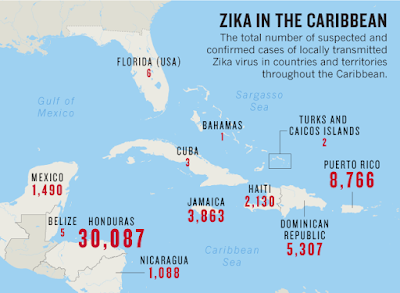
Fake news in Cuba: PAHO chart from 2016 was wrong (Source: PAHO/WHO)

On April 5, 2021, The Washington Post published a letter to the editor were I highlighted part of this history of regime obfuscation of health data, including Zika.

Desi Mendoza Rivero was arrested on June 25, 1997, for warning about a dengue epidemic in Cuba. On Nov. 24, 1997, he was sentenced to eight years in prison for “enemy propaganda.” Amnesty International declared him a prisoner of conscience and campaigned for his freedom. Dr. Rivero’s claims were eventually confirmed, and he was forcibly exiled.

On Sept. 2, 2016, the Associated Press reported that Cuba had “remarkable success in containing Zika virus.” On Jan. 8, 2019, New Scientist reported the whole story when the facts became known: “Cuba failed to report thousands of Zika virus cases in 2017.”

Repression patterns during this pandemic in Cuba indicate officials seek to downplay covid-19’s severity on the island. According to Duane Gubler at the Duke-NUS Medical School in Singapore, “Cuba has a history of not reporting epidemics until they become obvious,” and that is pretty bad.

Havana had claimed to be Zika free, until the impending March 2016 state visit by President Barack Obama necessitated their admitting to its existence on the island to avoid embarrassment if someone in the US delegation contracted the illness. [This is my hypothesis.] Meanwhile, Scientific American, the Associated Press, and too many others to list here continued peddling the official line that all was under control.

Cuba in August 2016 was reporting three confirmed cases and 30 cases brought in from abroad while having mounted a propaganda campaign in February 2016 claiming to have deployed 9,000 troops in a preventive battle against Zika reported The Guardian.

This turned out to be false, and scores of sick foreign tourists exposed the lie.

New Scientist broke the story on January 8, 2019 that "thousands of Zika virus cases went unreported in Cuba in 2017, according to an analysis of data on travelers to the Caribbean island. Veiling them may have led to many other cases that year."  Based on analysis based on the number of travelers infected in Cuba, the number of Zika infections were 5,400. Nowhere near the numbers reported by Cuban health officials.

What is shocking is that less than three years later the media continue to report Havana's claims without qualification, including New Scientist. They are doing this now with the deadly COVID-19 pandemic, and once again it does not pass the smell test. 

Castro regime officials decided not to acquire vaccines from their allies, China and Russia, or sign up with the United Nation's COVAX program. Russian and Chinese vaccines became available in Latin America as early as February 2021. Reports of Russian and Chinese COVID-19 vaccines reaching Latin America made news in early March 2021, but Havana declined them preferring to promote their still unavailable domestic vaccines while most other countries in Latin America did.

Official regime journalist Leticia Martinez Hernandez over Twitter on May 18, 2021 bragged that "Cuba will be the first country in the world to vaccinate their whole population with their own vaccines. Live to see!" She even replied to her own Tweet that she would keep the above "tweet fixed until then. I want to remember the feat on which we have bet." Havana's foreign ministry on June 9, 2021 repeated the same campaign theme as the official journalist: "Cuba could be the first country to immunize its entire population with its own vaccines. The population wants and trusts the vaccine candidates, our science, and the country's experience in vaccine development."  

Officials rejected using alternative vaccines over the six months that they were available because their first "homegrown vaccines" were not ready for clinical trials until May 2021 in Havana and June 2021 in the rest of the island. Meanwhile thousands of Cubans died, and the regime could not cover it up. This was one of the causes of the July 2021 protests.
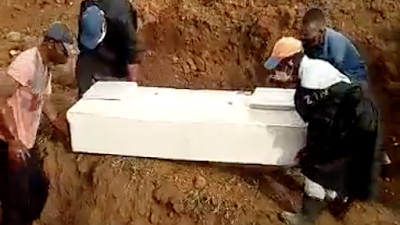
Tîcö Äwö Ôrümîlä, buried his grandmother in a mass grave at the Juan González cemetery, in Santiago, Cuba. (Facebook)

No mention of this was made in the NBC News or New Scientist reports, which echoed glowing claims about vaccination and COVID-19 rates made by officials in Havana. The NBC News article in the first paragraph reads like Prensa Latina.

"Cuba has vaccinated more of its citizens against Covid-19 than most of the world’s largest and richest nations, a milestone that will make the poor, communist-run country a test case as the highly contagious Omicron variant begins to circle the globe."

 It is only way down in paragraph nine that the NBC News article reveals that none of the Cuban vaccines have been peer reviewed.  The Hill goes even further with a video extolling the regime's successes and claims that the regime will submit to being peer reviewed in 2022 by the World Health Organization.

Where are the fact checkers? Where is the institutional memory? These acts of journalistic malpractice are part of the reason that Newspapers, TV news, and their websites  are losing their audiences. They want news not recycled government propaganda.

The data provided by Havana cannot be independently verified, but that is not revealed in the reporting. Also, why not compare Cuba's COVID-19 response with Taiwan's? They are both islands with powerful nations next door with competing ideologies.

Sunday, April 26, 2020

Three observations and questions on Americans returning home from Cuba

 "Read not to contradict and confute; nor to believe and take for granted; nor to find talk and discourse; but to weigh and consider."—Francis Bacon

Woman greets her father who was repatriated Friday and arrived at Miami International Airport from Cuba. (Local 10 News)
On Friday, April 24, 2020 Local 10 reported that "300 U.S. citizens who had been stranded in Cuba since authorities suspended flights earlier this month" arrived back home in Miami. Flights to and from Cuba were suspended at midnight on April 1st.

This is great news.

However there are some observations that need to be raised.

1. Cuba has a history of covering up prior epidemics of contagious diseases including dengue, cholera, and most recently zika.

2. Cuba has extremely poor hygiene conditions, with shortages of soap, and other toiletries due to an internal blockade constructed by the Castro regime that makes it difficult for Cubans even to make their own soap using house hold items. The regime, prior to the suspension of flights, limited how much soap or detergent Cubans could bring in.

3. Cubans inside and outside of the island are warning of a humanitarian crisis with both rising numbers of Wuhan virus cases and rising repression by the dictatorship. Independent reporting on what is actually taking place on the ground in the island is punishable by hefty fines and prison, at a time when coronavirus can turn a prison detention into a death sentence.

Taking all of this into consideration the following questions arise:

Were Americans who returned home from Cuba tested for the Wuhan virus before leaving the airport?

Will both asymptomatic and symptomatic cases be kept in quarantine, and for how long?

When travel opens up again will these kind of screening measures be in place to limit the spread of Wuhan virus from international travelers especially from governments such as China, North Korea, Nicaragua, Venezuela and Cuba that can not be trusted to give accurate information on outbreaks? 

We are in a new world with the current pandemic and recent history has shown that it is better to be prepared than caught by surprise because other countries and international health agencies have not done their due diligence endangering millions.

Policymakers should look to what Taiwan, South Korea, and Australia have done to prevent the spread of the Wuhan virus and keep death rates low while maintaining democratic norms.


Wednesday, March 11, 2020

Cuba, China, and the Coronavirus cover-up

Breaking through the false narrative to save lives
Cuban healthcare facilities are in a poor state.
Taken and updated from CubaBrief

Reuters reported the claim made by the official press on March 11, 2020 that "four Italian tourists who were staying at a hostel in the southern town of Trinidad after arriving at Havana airport on Monday had presented respiratory symptoms and were taken to a hospital on Tuesday. On Wednesday, the hospital confirmed that three of the tourists had tested positive for the coronavirus, the broadcaster said."

Prior to this, the Cuban government claimed that it had no cases, and claimed to be mobilized and prepared. On March 6, 2020 Granma, the official communist newspaper of Cuba, made the claim that "to date, no cases of Coronavirus ( Covid-19 ) have been confirmed in Cuba." Presently, there are cases in Brazil, Dominican Republic, Mexico, Panama, Peru, Argentina, Paraguay, Spain, the United States, Canada, Italy, Germany, France, and many other places. Regime officials claim to be ready if and when an outbreak takes place. At the same time officials of the Castro regime have reported that there is a shortage of soap and detergent in Cuba that will not be alleviated until May - June 2020.

The World Health Organization (WHO) is recommending a number of measures, two of which are: washing your hands regularly, and maintaining social distancing. (Maintain at least 1 metre [3 feet] distance between yourself and anyone who is coughing or sneezing.) There is a shortage in Cuba of the ingredients needed to wash your hands, and a housing shortage. Cubans live one on top of another in tight spaces. This is not sufficient for a good public health response.

Cuba has covered up epidemics in the past targeting doctors and journalists who speak out, just like in China We have witnessed in China how the communist regime covered up the coronavirus outbreak making it worse. Doctors and journalists who tried to warn about the coronavirus were arrested. Is this something to be congratulated or declared a huge achievement?

The Castro regime has done the same thing in Cuba during other outbreaks, and endangered lives in the process.

In 1997 a Cuban doctor was silenced for warning about a deadly dengue epidemic. Dr Desi Mendoza Rivero, married with four children at the time, was arrested on June 25, 1997. On November 28, 1997 he was sentenced to eight years in prison for "enemy propaganda." Amnesty International declared Dr. Mendoza Rivero a prisoner of conscience and campaigned for his freedom. He was released on November 20, 1998 due to health reasons following the visit of the Spanish Foreign Minister, under the condition that he leave Cuba for exile in Spain.

First official report to the World Health Organization of the dengue outbreak was six months after initial identification made by the jailed and later forcibly exiled physician. Mendoza Rivero's reports were eventually confirmed. This episode would have a chilling effect on other doctors coming forward.

News of a cholera outbreak in Manzanillo, in the east of the island, broke in El Nuevo Herald on June 29, 2012 thanks to the reporting of an independent reporter in the island. Calixto Martinez, the independent Cuban journalist who broke the story was jailed. The state controlled media did not confirm the outbreak until days later on July 3, 2012. The BBC reported on July 7, 2012 that a patient had been diagnosed with cholera in Havana. The Cuban government stated that it had it under control and on August 28, 2012 said the outbreak was over.


In July 2013 an Italian tourist returned from Cuba with severe renal failure due to cholera. New York high school teacher Alfredo Gómez contracted cholera during a family visit to Havana during the summer of 2013 and was billed $4,700 from the government hospital. A total of 12 tourists were identified who had contracted cholera in Cuba. On August 22, 2013 Reuters reported that Cuba was still struggling with cholera outbreaks in various provinces.

In the August 22, 2019 The New York Times article by Carl Zimmer, "Zika Was Soaring Across Cuba. Few Outside the Country Knew", the newspaper tries to shift the blame for an unreported outbreak of zika in Cuba in 2017 on a reporting glitch. This ignored a decades long government pattern of covering up epidemics.
"Until now, the Pan American Health Organization had no record of any Zika infection in Cuba in 2017, much less an outbreak. Following inquiries by The New York Times about the new study, published in the journal Cell, officials acknowledged that they had failed to tally 1,384 cases reported by Cuban officials that year. [...] Officials at P.A.H.O., an arm of the World Health Organization, blamed the failure to publish timely data on the Cuba outbreak on a “technical glitch.” The information was held in a database, they said, but not visible on the website. By Thursday afternoon, the website had been updated."
On September 2, 2016 the Associated Press reports that Cuba had "remarkable success in containing Zika virus." This report made no mention of the regime's past history of covering up epidemics. On January 8, 2019 New Scientist reported: "Cuba failed to report thousands of Zika virus cases in 2017."
 Reality of Cuba's healthcare system
Cuba has a two tiered health care system one tier for the nomenklatura and foreign tourists with hard currency that offers care with modern equipment and fully stocked pharmacies, then there is a second tier which is for the rest with broken down equipment, run down buildings and rooms, scarce supplies, a lack of hygiene, the denial of certain services and lengthy wait times. Healthcare professionals are poorly paid and lack food.

There are serious consequences for travelers to Cuba when they are not properly informed with what to expect with Cuba's public health failures and the disastrous state of Cuban healthcare. Not to mention a hefty bill for catching Cholera while on vacation, or worse yet discovering that you had been exposed to Zika virus when your child is born with microcephaly, a serious birth defect.

Reports that travelers that passed through Cuba tested positive for coronavirus have already emerged, but the Cuban government continues to maintain the claim that the country is without the illness..
The healthcare claims about Cuba made by many who should know better are but one of the many myths propagated by the Castro regime that do not hold up under scrutiny.

Hospital bed in Cuba
What to do?
Call on civil society in and out of the country to provide soap and detergent to Cubans on the island. Tell the Cuban government to get out of the way. Now is not a time to profit off of human need but help each other.  The Castro regime, like their Chinese counterpart, cannot be trusted.

The Conversation on March 6, 2020 published  a must read article titled "China’s coronavirus cover-up: how censorship and propaganda obstructed the truth" that also contains a video of Chinese nationals trying to circumvent repression and censorship that is both heart breaking and compelling.  Sadly, Cuban nationals are suffering the same type of practices in Cuba.

Monday, December 2, 2019

Cuba’s treatment of gay people is nothing to celebrate

This is a abbreviated version published today in the Tampa Bay Times responding to a November 30th column backing the quarantine of Cubans with HIV between 1986 and 1997 as a successful policy. The long version was published in this blog on November 30, 2019.

 Health Ministry employees paint AIDS/HIV virus awareness mural in Cuba [J GOITIA | Canadian Press]

Gay rights and Cuba’s bad record


This column omits both Fidel Castro’s persecution of gay people over decades and Cuba’s faking of epidemic statistics. In 1964 Fidel and Raul Castro rounded up gay people and sent them to Military Units to Aid Production (UMAP), forced labor camps for those suspected of “improper conduct.” Cubans with effeminate mannerisms, what Castro called “extravagant behavior,” were interned. 

The 1986-1997 quarantine of HIV-positive Cubans must be considered in this context. Furthermore, claims that AIDS rates are lower in Cuba should be met with skepticism when considering the dictatorship’s failure to accurately report outbreaks.

In 1997 when dengue broke out, Castro tried to cover it up. When a doctor spoke out, he was locked up, sentenced to 8 years in prison. Amnesty International recognized Dr. Desi Mendoza as a prisoner of conscience, and he was released from prison in 1998 under condition he leave Cuba. Castro eventually recognized that there had been a dengue epidemic.

A 2012 cholera outbreak demonstrated how the Cuban public health system operates. News of the outbreak broke on June 29, 2012, thanks to reporting by journalist Calixto Martinez. He too was jailed

Thousands of Zika virus cases went unreported in 2017, according to an analysis of data on travelers to Cuba, which said “veiling them may have led to many other cases that year.” According to Avert, an NGO that provides information on HIV worldwide, “nearly 90 percent of new infections in the Caribbean in 2017 occurred in four countries — Cuba, Dominican Republic, Haiti and Jamaica.” 

Worse yet, prisoner of conscience Ariel Ruiz Urquiola accused the Cuban government last week of inoculating him with HIV while in its custody in 2018. Castro-ism’s track record of repressing gay people, faking health statistics and covering up epidemics is nothing to celebrate.

John Suarez, Falls Church, Va.
The writer is executive director of the Center for a Free Cuba.

Saturday, November 30, 2019

Castro rounded up Gays in the 1960s and HIV positive people in the 1980s, and both times it was wrong.

“We would never come to believe that a homosexual could embody the conditions and requirements of conduct that would enable us to consider him a true revolutionary, a true communist militant.” ... A deviation of that nature clashes with the concept we have of what a militant communist should be.” - Fidel Castro, 1965

Pride March shut down by Castro regime's state security on May 11, 2019
The state of Academia in the United States grows more worrisome each year. Imagine for a moment a graduate student in Bioethics and a Professor of Practice in Global Health defending a totalitarian dictatorship rounding up individuals with an illness that is not casually transmitted, while using deceptive propaganda that led others to contract the disease in order to get preferential housing conditions.  Morris Fabbri and Kearsley A. Stewart of Duke University in their November 29, 2019 OpEd "Cuba quarantined people with HIV. It was controversial, but it worked" have done just that in the Tampa Bay Times. Their essay also overlooks both the decades long history of the Cuban government's persecution of Gays and falsifying statistics, and jailing doctors and reporters in order to cover up epidemics.

Cuban government officials inoculated him with HIV in 2018.
 HIV-AIDS is present in Cuba and according to Avert,a UK-based charity that has been providing accurate information about HIV worldwide for over 30 years, "nearly 90% of new infections in the Caribbean in 2017 occurred in four countries - Cuba, Dominican Republic, Haiti and Jamaica." Worse yet, on Ariel Ruiz Urquiola, a scientist, dissident, and former Amnesty International prisoner of conscience publicly accused the Cuban government on November 27, 2019 of having intentionally inoculated him with the human immunodeficiency virus (HIV) while he was in the prison ward of the Abel Santamaría Hospital last year in Pinar del Río.

It is important to look at the wider context. 

The hostility to Gays began early and from the top. On March 13, 1963 Fidel Castro gave a speech were he openly attacked “long-haired layabouts, the children of bourgeois families,” roaming the streets wearing “trousers that are too tight,” carrying guitars to look like Elvis Presley, who took “their licentious behavior to the extreme” of organizing “effeminate shows” in public places. The Cuban dictator warned: “They should not confuse the Revolution’s serenity and tranquility with weaknesses in the Revolution. Our society cannot accept these degeneracies.”


In 1964 the Cuban government began rounding up Gays and sending them to Military Units to Aid Production or UMAPs (Unidades Militares de Ayuda a la Producción). These forced labor camps were for those suspected of or found guilty of "improper conduct."  Persons with effeminate mannerisms, what the Cuban government called "extravagant behavior," were taken to these camps.

This history should be taken into account when considering the Cuban quarantine of HIV positive Cubans from 1986 to 1997. In the early days of the AIDS epidemic it was associated with the Gay community. Furthermore the claim that HIV rates are lower in Cuba should also be taken with a grain of salt when considering the failure to report on other outbreaks.This is motivated by their need to justify the existence of the dictatorship with supposed successes in health care.

The statistics and numbers that the international community has access to with relation to the Cuban healthcare system have been manipulated by the Castro regime. Katherine Hirschfeld, an anthropologist, in Health, Politics, and Revolution in Cuba Since 1898 described how her idealistic preconceptions were dashed by 'discrepancies between rhetoric and reality.' She observed a repressive, bureaucratized and secretive system, long on 'militarization' and short on patients' rights

In 1997 when a Dengue epidemic broke out in Cuba the dictatorship tried to cover it up. When a courageous doctor spoke out he was locked up on June 25, 1997 and later sentenced to 8 years in prison. Amnesty International recognized Dr. Desi Mendoza Rivero as a prisoner of conscience. He was released from prison under condition he went into exile in December of 1998. The regime eventually had to recognize that there had been a dengue epidemic.  

 
In 2012 a cholera outbreak in Cuba presented an opportunity to see how the Cuban public health system operates. News of the outbreak in Manzanillo, in the east of the island, broke in El Nuevo Herald on June 29, 2012 thanks to reporting by the outlawed independent press in the island. Official media did not confirm the outbreak until days later on July 3, 2012. BBC News reported on July 7, 2012 that a patient had been diagnosed with Cholera in Havana. The dictatorship stated that it had it under control. Independent journalist Calixto Martínez was arrested on September 16, 2012 for reporting on the Cholera outbreak, and declared an Amnesty International prisoner of conscience.

Calixto Martinez: Journalist and prisoner of conscience
In July 2013 an Italian tourist returned from Cuba with severe renal failure due to Cholera. New York high school teacher Alfredo Gómez contracted cholera during a family visit to Havana during the summer of 2013 and was billed $4,700 from the government hospital. A total of 12 tourists have been identified who have contracted cholera in Cuba. 


The publication New Scientist reported on January 8, 2019 that "thousands of Zika virus cases went unreported in Cuba in 2017, according to an analysis of data on travelers to the Caribbean island. Veiling them may have led to many other cases that year."

Rounding up people with HIV in Cuba did not work, and worse yet, according to the above mentioned OpEd the government propaganda was so effective that some Cubans injected themselves with HIV to go into quarantine. The Cuban government has a long track record of repression against Gays and Lesbians, faking health statistics, and covering up epidemics. Repeating Cuban government propaganda is not only a disservice to the truth, but in this case endangers lives.

However on top of a poor analysis, that ignores years of repression against Gays that has continued to the present day and a horror show with regards to public health, the authors are guilty of bad timing with the announcement two days earlier alleging that the Cuban government infected a dissident in 2018 with the HIV virus. 

April 11th marked the 35th anniversary of the release of Improper Conduct, the film that exposed communist intolerance to Gays and Lesbians in Cuba, and documents what happened during the first 30 years of the Castro regime.  Hopefully,  Morris Fabbri and Kearsley A. Stewart will view the documentary to obtain a broader vision of what is really happening in Cuba.

Saturday, August 24, 2019

Correcting The New York Times spin machine on the 2017 Zika outbreak in Cuba

Setting the paper of record straight


The New York Times spin machine is working over time trying to cover up the fact that healthcare in Cuba is a disaster.  In a August 22, 2019 article by Carl Zimmer, "Zika Was Soaring Across Cuba. Few Outside the Country Knew", the newspaper tries to shift the blame for an unreported outbreak of Zika in Cuba in 2017 on a reporting glitch. This ignores a decades long government pattern of covering up epidemics.
"Until now, the Pan American Health Organization had no record of any Zika infection in Cuba in 2017, much less an outbreak. Following inquiries by The New York Times about the new study, published in the journal Cell, officials acknowledged that they had failed to tally 1,384 cases reported by Cuban officials that year. [...] Officials at P.A.H.O., an arm of the World Health Organization, blamed the failure to publish timely data on the Cuba outbreak on a “technical glitch.” The information was held in a database, they said, but not visible on the website. By Thursday afternoon, the website had been updated."
On August 25, 2016 this blog raised concerns about the reporting on Zika in Cuba. This was done by looking back at past Castro regime responses to previous epidemics, and expressed skepticism of reporting that claimed their was nothing to worry about.
Daniel Chang of the Miami Herald reported on August 17, 2016 in the article "How Cuba is fighting Zika" in the first paragraph a claim that should raise concerns:
"After Cuba was ravaged in 1981 by an epidemic of hemorrhagic dengue fever — a mosquito-borne illness — the island nation’s communist government launched an aggressive response that created the framework for its reportedly successful fight against Zika, according to an article published Wednesday in the scientific journal Nature."
Tragically, the so-called aggressive response to dengue by 1997 involved arresting at least one doctor for enemy propaganda who correctly warned of a Dengue outbreak.  Eventually when the bodies started to pile up, it was no longer possible to cover up the epidemic, and the regime admitted it had a problem. This pattern of denial and lack of transparency was repeated with a cholera outbreak in 2012.
On September 2, 2016 this blog again warned about the dangers of Zika and Associated Press reports that Cuba had "remarkable success in containing Zika virus." This report made no mention of the regime's past history of covering up epidemics on the island.

On January 8, 2019 New Scientist reported: "Cuba failed to report thousands of Zika virus cases in 2017," but this blog added that New Scientist had "forgot to mention that Havana failed to report outbreaks of Dengue (1997) and Cholera (2012). Jailing those who warned the world of the threat.

Reality of Cuba's healthcare system

Cuba has a two tiered health care system one tier for the nomenklatura and foreign tourists with hard currency that offers care with modern equipment and fully stocked pharmacies, then there is a second tier which is for the rest with broken down equipment, run down buildings and rooms, scarce supplies, a lack of hygiene, the denial of certain services and lengthy wait times. Healthcare professionals are poorly paid and lack food.

In 1997 a Cuban doctor was silenced for warning about a deadly dengue epidemic. Dr Desi Mendoza Rivero, married with four children at the time, was arrested on June 25, 1997. On November 28, 1997 he was sentenced to eight years in prison for "enemy propaganda." Amnesty International declared Desi a prisoner of conscience and campaigned for his freedom. He was released on November 20, 1998 due to health reasons following the visit of the Spanish Foreign Minister,  under the condition that he go into exile in Spain.  First official report to the World Health Organization of the dengue outbreak was six months after initial identification made by the jailed and later forcibly exiled physician. Mendoza's reports were eventually confirmed. This episode would have a chilling effect on other doctors coming forward.

Three of the victims of exposure and hypothermia at Mazorra in 2010
On January 15, 2010 The New York Times reported the confirmed deaths of at least 20 mental patients at the Psychiatric Hospital in Cuba, known as Mazorra, due to "criminal negligence by a government characterized by its general inefficiency," a day later the Cuban government confirmed that 26 patients had died due to “prolonged low temperatures that fell to 38 degrees.”

News of a cholera outbreak in Manzanillo, in the east of the island, broke in El Nuevo Herald on June 29, 2012 thanks to the reporting of an independent reporter in the island. Calixto Martinez, the independent Cuban journalist who broke the story was jailed. The state controlled media did not confirm the outbreak until days later on July 3, 2012. The BBC reported on July 7, 2012 that a patient had been diagnosed with Cholera in Havana. The dictatorship stated that it had it under control and on August 28, 2012 said the outbreak was over

In July 2013 an Italian tourist returned from Cuba with severe renal failure due to Cholera. New York high school teacher Alfredo Gómez contracted cholera during a family visit to Havana during the summer of 2013 and was billed $4,700 from the government hospital. A total of 12 tourists were identified who had contracted cholera in Cuba.

On August 22, 2013 Reuters reported that Cuba was still struggling with cholera outbreaks in various provinces.  

On December 28, 2017 the Spanish news service EFE reported that the Castro regime had dismantled a network of medical officials and workers who'd adulterated a medicine for children made at the laboratories of the state-owned drug company BioCubaFarma. They replaced the active substance methylphenidate with a placebo substance in the manufacture of the drug marketed as "Ritalin." The active substance was sold on the black market. Nevertheless, the Miami Herald had an article touting the importance of importing drugs from Cuba on December 14, 2017.

The statistics and numbers that the international community has access to with relation to the Cuban healthcare system are manipulated by the dictatorship. Anthropologist Katherine Hirschfeldin the book she authored, Health, Politics, and Revolution in Cuba Since 1898, describes how her idealistic preconceptions were dashed by 'discrepancies between rhetoric and reality,' she observed a repressive, bureaucratized and secretive system, long on 'militarization' and short on patients' rights.

Mosquitos are the vector for Zika
Conflict of interests? Pan American Health Organization (PAHO) and the Castro regime's relationship

The Pan American Health Organization (PAHO) is being sued for conspiring "with the Cuban government to collect millions of dollars by unlawfully trafficking Cuban doctors to Brazil." (PAHO is the Regional Office for the Americas for the World Health Organization [WHO], and is recognized internationally as a part of the United Nations system.) According to a November 29, 2018 article by Frances Robles, in The New York Times, PAHO "made about $75 million off the work of up to 10,000 Cuban doctors who earned substandard wages in Brazil." 

Perhaps Mr. Zimmer and The New York Times should explore this relationship and the possibility that more than a glitch was involved in endangering the lives of thousands of travelers with the complicity of both the Cuban government and the Pan American Health Organization.


Tuesday, January 8, 2019

New Scientist reports: "Cuba failed to report thousands of Zika virus cases in 2017"

“I willingly accept Cassandra's fate To speak the truth, although believed too late.”- Anne Killigrew  (1685)

Fake news in Cuba? This is a PAHO chart from 2016 (Source: PAHO/WHO)
New Scientist reports today: "Cuba failed to report thousands of Zika virus cases in 2017" … Forgot to mention that the Castro regime in the recent past failed to report Dengue (1997) and Cholera (2012) outbreaks in Cuba. Jailing those who warned the world of the threat.

The publication New Scientist reported today in an exclusive report that "thousands of Zika virus cases went unreported in Cuba in 2017, according to an analysis of data on travelers to the Caribbean island. Veiling them may have led to many other cases that year." Founded in 1956, New Scientist is the world’s most popular weekly science and technology magazine.  The article should raise concerns for travelers to the island.
The analysis suggests that Zika infections peaked in Cuba in the second half of 2017, at a time when the virus was waning in mainland North and South America. Cuban authorities didn’t follow the agreed practice of notifying the Pan American Health Organization (PAHO) of the outbreak. Cuba’s first case of Zika occurred in March 2016. A PAHO report says the country stopped providing updates on Zika in January 2017. In press reports in May 2017, Cuba said that nearly 1900 infections had been detected up to that point. But Nathan Grubaugh at the Yale School of Public Health and his colleagues estimate that the total cases in 2017 alone would have been more than double that at 5700.
Meanwhile, Cubanet published an interview today with Cuban independent journalist, Vladimir Turró, who was detained and threatened for attempting to investigate a case of medical negligence in which a baby died in a Cuban hospital. He was arrested Friday at 6:00pm and held until Sunday morning. He was interrogated and threatened constantly to abandon the story.

Vladimir, and potentially his family, are in a dangerous situation. Other journalists have been jailed for months for reporting on health threats in Cuba. Independent journalist, Calixto Martinez, who reported on a cholera outbreak in Cuba on July 13, 2012, was imprisoned in September of 2012 in horrible conditions and only released in April of 2013 after Amnesty International had declared him a prisoner of conscience in January of 2013 and campaigned for his release. His offense? Informing the public about the Cholera threat and the poor government response.

Calixto Martinez jailed for 7 months for report on Cholera outbreak
However the silencing of voices reporting on healthcare threats is not limited to journalists. A Cuban doctor was sentenced to eight years in prison for warning about a deadly dengue epidemic in 1997. Dr Desi Mendoza Rivero, married with four children at the time, was arrested on June 25, 1997. On November 28, 1997 he was sentenced to eight years in prison for "enemy propaganda." Amnesty International declared Desi a prisoner of conscience and campaigned for his freedom. He was released on November 20, 1998 due to health reasons following the visit of the Spanish Foreign Minister,  under the condition that he leave the country and was exiled to Spain.

Official press announces no dengue epidemic in Cuba
None of this should be a surprise, but this reality is not often reported in the press. In August of 2016, this blog raised questions about the Cuban government's reporting of Zika cases and their economic motivation for not doing so in the midst of an outbreak.
"Consider that 3.5 million people visited Cuba in 2015 and tourism to the island in 2016 so far is 15 percent higher than last year. The crisis in Venezuela is impacting Cuba economically making tourism a priority source of hard income. In the past the regime has demonstrated a resistance to reporting or it has under-reported on the outbreaks of diseases in the island. The trouble is that the lack of transparency and the spread of the virus will pose a danger to tourists visiting the island who not being advised of the danger may return home as asymptomatic carriers of the virus spreading it in their country unknowingly."
On September 2, 2016 the Associated Press in the article "Cuba reports remarkable success in containing Zika virus," said that "six months after President Raul Castro declared war on the Zika virus in Cuba, a militarized nationwide campaign of intensive mosquito spraying, monitoring and quarantine appears to be working. Cuba is among the few countries in the Western Hemisphere that have so far prevented significant spread of the disease blamed for birth defects in thousands of children."

Now we know that the spread of Zika in Cuba peaked in the second half of 2017 and that the outbreak in Cuba was similar to other countries of similar size in 2016.  How did they find out, while the Castro regime failed to report?
"The team looked at the travel logs of 184 people who had contracted Zika while abroad and found that 95 per cent had been to Cuba. Such “hidden” outbreaks can spread epidemics to other countries because travelers and health authorities are unaware of the heightened risk of infection, the authors write (bioRxiv, doi.org/czdk)."
 Tragically, the consequences of this obfuscation of a health threat will become evident as babies, exposed to Zika during pregnancy,  are born "with an abnormally small head, a condition known as microcephaly."

Cholera patients in Cuba (CNN)
 On November 29, 2018 The New York Times reported that the  Pan American Health Organization (PAHO), a division of the World Health Organization (WHO) "made about $75 million off the work of up to 10,000 Cuban doctors who earned substandard wages in Brazil." A group of these Cuban medical doctors are now suing PAHO for the organization's alleged role in human trafficking.

This may also raise new questions on the relationship between PAHO, Cuba and reporting not only on outbreaks but the healthcare statistics that present the regime in a positive light.
