Sunday, January 9, 2011

Join the Continuing Call to Nonviolent Action

"Action for one’s own self binds, action for the sake of others delivers from bondage." - Mohandas Gandhi


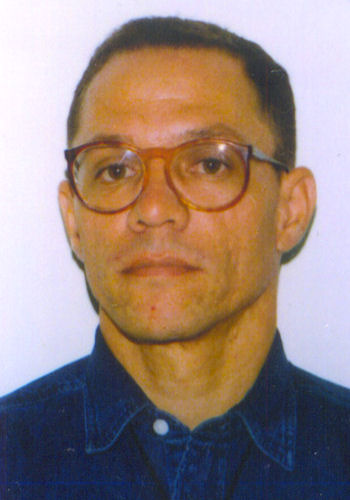
They were born 32 years and 748 miles apart. The man born in Atlanta, Georgia on January 15, 1929 would grow up to be a Baptist minister and civil rights leader. While the man born in Havana, Cuba on July 20, 1961 would grow up to be a medical doctor and human rights leader. They never met because an assassin shot the 39 year old Baptist minister in the head on April 4, 1968 at 6:01pm. The older of the two grew up in the Jim Crow South while the younger grew up in communist Cuba under the dictatorship of the Castro brothers. Despite the distance in both time, geography, and language they are brothers. Both are Christians and disciples of Mohandas Gandhi's teachings on nonviolence.

Both Martin Luther King Jr. and Oscar Elias Biscet would spend time in prison defending human rights and human dignity accepting imprisonment as a necessary sacrifice to expose and challenge injustice with the goal of ending it through nonviolent means and loving their enemies. In a speech he gave in St. Augustine in 1964 the Rev. Martin Luther King Jr. described both this kind of love and the impracticability of violence:
"Its difficult advice and in some quarters it isn't too popular to say it...Let us recognize that violence is not the answer. I must say to you tonight that violence is impractical...We have another method that is much more powerful and much more effective than the weapon of violence...Hate isn't our weapon either...I am not talking now about a weak love it would be nonsense for an oppressed people to love their oppressor in an affectionate sense I'm not talking about that too many people confuse the meaning of love when they go to criticizing the love ethic. ...I am talking about a love that is so strong that it becomes a demanding love. A love that is so strong that it organizes itself into a mass movement and says somehow I am my brothers keeper and he is so wrong that I am willing to suffer and die to get him right and to see that he is on the wrong road."
In July of 1999 Dr. Oscar Elias Biscet ending a 40-day fast in Havana at a residence in Tamarindo 34 spoke to other activists who had joined him in the fast and international media gathered explained:
“To love one's neighbor is also to love one's enemy. Although in reality that qualifier-'enemy' does not exist in my vocabulary. I recognize that I only have adversaries and I have acquired the capacity to love them because in this way we do away with violence, wrath, vengeance, hatred and substitute them with justice and forgiveness.”
They are neither willing to idly stand by as injustice is being committed nor are they willing to commit new injustices to remedy the old and both suffered and in Dr. Biscet's case continues to suffer the consequences. Imprisoned in harsh conditions since November 1999, save for a month in 2002, Oscar Elias Biscet continues to denounce injustice and advocate nonviolence for example in an open letter to all Cubans in August of 2006:
“The people of Cuba have been suffering the scorn of a totalitarian tyranny, Communism, throughout four decades. Due to this inhumane treatment whereby the decorum of a people is violated, many Cubans are indignant and have risen up to pray and fast, beseeching the God of the Bible,…we must expedite the achievement of these basic rights through civil disobedience and by putting into practice all methods to obtain our humanitarian aim. Here, in this dark jail where they force me to live, I will be resisting until the freedom of my people is obtained."
There are those who view this kind of approach as noble but ineffective preferring violence. They are profoundly mistaken. Oscar Elias Biscet in a letter to his wife in July of 2009 reflected on those who ridiculed his adherence to Gandhian principles of non-violence:
"I remember when I started preaching about Gandhi and Thoreau some said I would walk through the streets of Havana with a loin cloth like Gandhi. When I learned of these words spoken about me in a derogatory manner I just smiled because I knew I would be in these conditions but not in the streets of Havana. Rather in the infinite captivity that I would have through suffering. They had not been mistaken those who had made the joke to humiliate me. Because from the humiliation of a man in loincloth highlights the reflection of human dignity over barbarism."
Martin Luther King Jr. while imprisoned in a Birmingham jail wrote an open letter on April 16, 1963 to moderate clergy men who had criticized his non-violent approach. Rev. King outlined the context in which this struggle was carried out which has numerous parallels to Cuba in 2011:
"I began thinking about the fact that I stand in the middle of two opposing forces in the Negro community. One is a force of complacency, made up in part of Negroes who, as a result of long years of oppression, are so drained of self respect and a sense of "somebodiness" that they have adjusted to segregation; and in part of a few middle-class Negroes who, because of a degree of academic and economic security and because in some ways they profit by segregation, have become insensitive to the problems of the masses. The other force is one of bitterness and hatred, and it comes perilously close to advocating violence. It is expressed in the various black nationalist groups that are springing up across the nation, the largest and best known being Elijah Muhammad's Muslim movement. Nourished by the Negro's frustration over the continued existence of racial discrimination, this movement is made up of people who have lost faith in America, who have absolutely repudiated Christianity, and who have concluded that the white man is an incorrigible 'devil.' I have tried to stand between these two forces, saying that we need emulate neither the "do nothingism" of the complacent nor the hatred and despair of the black nationalist. For there is the more excellent way of love and nonviolent protest."
Reverend King's insight that both doing nothing to resist the evil of segregation and embracing the hatred and despair of the black nationalist would not achieve the end of the system. In the United States the disciples of Martin Luther King Jr. ended up in Congress; leading non-governmental organizations; and created the terrain in which an African American could be elected president. On the other hand many of the black nationalists embraced political violence and killed people. Some of them are still fugitives from justice today and share a measure of responsibility in the culture of violence that gripped segments of the African American Community and which is still a problem today. On the other side those who criticized the sit-ins and actually profited from institutionalized racism would argue that passivity and polite negotiations was the way to gradually end the system of segregation. Those voices are also heard in 2011 in the debate over how to deal with the Cuban regime. Reverend King's response in 1963 reverberates today in the Cuban context:
" 'Why direct action? Why sit ins, marches and so forth? Isn't negotiation a better path?' You are quite right in calling for negotiation. Indeed, this is the very purpose of direct action. Nonviolent direct action seeks to create such a crisis and foster such a tension that a community which has constantly refused to negotiate is forced to confront the issue. It seeks so to dramatize the issue that it can no longer be ignored. My citing the creation of tension as part of the work of the nonviolent resister may sound rather shocking. But I must confess that I am not afraid of the word 'tension.' I have earnestly opposed violent tension, but there is a type of constructive, nonviolent tension which is necessary for growth."
If you are up against a regime that refuses to negotiate because it believes that it has no reason to engage in dialogue then non-violent direct action creates the "constructive, nonviolent tension" that Rev. King refers to above and forces dialogue. This was done in the United States in the 1950s and 1960s ushering in a Civil Rights era. In Cuba, since 1976 with the founding of the Cuban Committee for Human Rights, a nonviolent movement for human rights and democratic change has emerged and grown. In 2010 the death of Orlando Zapata Tamayo, the marches of the Ladies in White and the hunger strike of Guillermo Fariñas combined with international scrutiny to create a non-violent moment that exposed the injustice of the Cuban regime.

These moments put the oppressor on the defensive and as in the case of the racial segregationists in the 1950s and 1960s and the communist dictatorship in the 1990s and 2000s forced them to resort to moments of restraint and nonviolent tactics and propaganda to discredit their adversaries. Reverend King described the practice in in 1963:
"Over the past few years I have consistently preached that nonviolence demands that the means we use must be as pure as the ends we seek. I have tried to make clear that it is wrong to use immoral means to attain moral ends. But now I must affirm that it is just as wrong, or perhaps even more so, to use moral means to preserve immoral ends. Perhaps Mr. Connor and his policemen have been rather nonviolent in public, as was Chief Pritchett in Albany, Georgia, but they have used the moral means of nonviolence to maintain the immoral end of racial injustice. As T. S. Eliot has said: "The last temptation is the greatest treason: To do the right deed for the wrong reason."


In the Cuban context today it is seen in the cynical practice of coercing prisoners of conscience imprisoned since 2003 ( or before) with the choice of immediate exile or continue to rot in prisons where torture and mistreatment are commonplace and describing this process as "freeing political prisoners." Doctor Oscar Elias Biscet speaking on the phone from prison in December of 2010 after having spent over a decade in prison, in which he has lost many of his teeth, declared:
“I've always refused to leave the country permanently, because I believe that I must cooperate in the welfare of my people and that welfare can only be achieved when we live in freedom, because only freedom leads to peace … This is a government plan to try to crush it the opposition and that no voice be raised by the vanguard, but they made a mistake, because there are at least 12 of us that are willing to stay here in prison, that want to stay here in Cuba, to live in Cuba, together with our relatives here in Cuba and with our friends and brothers.”
Doctor Biscet has referred to Martin Luther King Jr. on numerous occasions as a great teacher of nonviolence and in June 2003 described what motivated him and kept his morale high while in prison:
"My inspiration is alive: God and the great teachers of nonviolence, present today now more than ever. As Martin Luther King said: "If a people can find among their ranks a 5% of men willing to voluntarily go to prison for a cause they consider just then there is no obstacle that can stop them."
Although you reading this most likely are not in Cuba there is still much that you can do to support this continuing call to nonviolent action in defense of human rights and dignity. On January 15, 2010 the world will observe the 82nd birthday of Martin Luther King Jr. and on Sunday, January 16, 2010 at Our Lady of Charity [La Ermita de la Caridad] located at 3609 South Miami Avenue Miami, FL at 2:00pm EST Winnie Biscet, the daughter of Oscar Elias Biscet is organizing a vigil for the freedom of her father and other Cuban prisoners of conscience followed by a special Mass at 3:00pm. She is asking that those in attendance wear black and carry a white flower.


You have heard that it was said, 'Love (agape) your neighbor and hate your enemy.' But I tell you: Love (agape) your enemies and pray for those who persecute you, that you may be sons of your Father in heaven. He causes his sun to rise on the evil and the good, and sends rain on the righteous and the unrighteous. If you love those who love you, what reward will you get?
Matthew 5:42-44

Tuesday, January 4, 2011

Take Urgent Action for Néstor Rodríguez Lobaina

Friends and family fear for his life

Néstor Rodríguez Lobaina

Today, reports have emerged expressing extreme concern for the plight of Néstor Rodríguez Lobaina.
Néstor has been a pro-democracy and human rights activist in Cuba for over 20 years and has paid the price both in prison time and suffering brutal physical assaults. He has been recognized in the past as an Amnesty International prisoner of conscience on more than one occasion.

Nestor was invited to attend an international human rights conference in Geneva between March 8-9, 2010 but was denied an exit permit required for all Cubans who wish to travel out of the country. Below is the audio of the statement broadcast at the Geneva Summit for Human Rights, Tolerance and Democracy.


He was arrested on December 9, 2010 [ the eve of International Human Rights Day] , pepper sprayed extensively, beaten up and detained in front of his 10 year old daughter, Diana Rodriguez Castillo. She was left to find her way back home alone (15 blocks away) after witnessing the brutal assault on her father. She is pictured below with Nestor and her recently born born sibling.

Nestor with his 10 year old daughter, Diana Rodriguez Castillo and new born child.

Today, Nestor's wife,Daneysi Gálvez Pereira, in an interview with the Cuban Democratic Directorate warned that her husband's life is in danger:
"I want to denounce the situation that Néstor Rodríguez Lobaina is suffering at this moment in prison. His life is being threatened by convicts inside the same prison that the military police placed in Nestor's cell to beat on him. Yesterday while he was explaining they would not let him speak on the telephone. The attending guard hung up the phone. He was telling him: 'listen compadre, you cannot be saying that over the telephone.' They didn't want him to say any of that over the phone, that these situations were resolved inside. They are doing this in an effort finish of Nestor."

In addition to Daneysi over twitter, his brother, Rolando Rodriguez Lobaina warned: They are preparing a 2001 style attack against
Néstor Rodríguez Lobaina in the Combinado provincial prison of Guantanamo. In another tweet Rolando provided the name of the criminal in charge of attacking Nestor under orders of the police identifying Leovigildo Almaguer Peña. Blogger Luis Felipe Rojas called for an international solidarity effort to bring attention to Nestor's plight.

Remember that in the past Nestor suffered a broken jaw at the hand of prisoners ordered to attack him by prison guards and that he also had to undergo surgery on his leg after beating carried out by prison guards against his person.


Saturday, January 1, 2011

Cuba : New Year, Old Injustices

“There may be times when we are powerless to prevent injustice, but there must never be a time when we fail to protest.” - Elie Wiesel

Today marks 52 years of the establishment of a new dictatorship that replaced an old one. No one could've imagined when Fulgencio Batista fled into exile on December 31, 1958 that more than a half century later the Castro brothers would still be running Cuba into the ground.

At the same time they probably did not imagine that the ideology they championed as the wave of the future would implode and be discredited nor that generation after generation of Cuban men and women would stand up and resist communist rule in Cuba.


Their efforts to smear Cuba's democratic opposition have failed miserably as have their efforts to force the opposition into exile. The agreement reached back in July with the Ladies in White and the Catholic Church as mediators was not conditioned on prisoners of conscience agreeing to go into exile. Nevertheless, save one, all the prisoners released were sent into exile.

Eleven Cuban prisoners of conscience from the 2003 Black Cuban Spring remain imprisoned today that were supposed to be released on November 7, 2010. There names and faces are listed below:


Pedro Argüelles Morán

Oscar Biscet González

Eduardo Díaz Fleitas

José Daniel Ferrer García

Diosdado González Marrero

Iván Hernández Carrillo

Librado Linares García

Héctor Maseda Gutiérrez

Angel Moya Acosta

Félix Navarro Rodríguez

Guido Sigler Amaya

It is up to people of good will with access to the internet to remind the world that there are Cuban prisoners of conscience unjustly imprisoned that were supposed to have been freed on November 7, 2010. This is a time for quick and concrete action that requires a minimum of effort but will make an impact. Here are three suggestions:

1) Operation Cubans have a Right to their Rights focusing on Article XIX of the Universal Declaration of Human Rights which states:Article 19.
  • Everyone has the right to freedom of opinion and expression; this right includes freedom to hold opinions without interference and to seek, receive and impart information and ideas through any media and regardless of frontiers.

The human rights defenders imprisoned since 2003 were imprisoned for seeking, receiving and imparting information and ideas to other Cubans and the international community. Name each one of the 11 imprisoned activists. All have been recognized by Amnesty International as prisoners of conscience. They can be listed together or separately. Post their names on facebook, twitter, in blogs and any other social media that is appropriate.

2) Organize flash mobs beginning on December 10 to generate awareness outside of cyberspace and in the real world. By definition its quick and can be organized quickly through social media tools. Go out and gather signatures petitioning the Cuban regime for their release. Norwegian students in November 2010 gathered over 400 signatures calling for the release of Cuban prisoner of conscience Librado Linares and made the newspapers raising awareness.

3) Record and post video messages of solidarity on youtube directed at these prisoners of conscience and their families by name demanding their freedom along with what human rights mean to you. Make a poster with a photo of the prisoner and their name. For example the image at the top of the page with the phrase: "I Stand with Dr. Oscar Elias Biscet." Take your picture holding up the poster or a message of solidarity and e-mail it to us at freecubanow@hotmail.com

These are just three concrete ideas for action. They've been tried in other places where prisoners of conscience have been imprisoned and have worked.

Thursday, December 30, 2010

Celia Cruz Honored and Remembered

"A dazzling performer of many genres of Afro-Caribbean music, Celia Cruz (1925-2003) had a powerful contralto voice and a joyful, charismatic personality that endeared her to fans from different nationalities and across generations. Settling in the United States following the Cuban revolution, the “Queen of Salsa” performed for more than five decades and recorded more than 50 albums." United States Postal Service, December 28, 2010

Celia Cruz born in Havana, Cuba as Úrsula Hilaria Celia de la Caridad Cruz Alfonso was one of the most successful Salsa performers of the 20th century, with twenty-three gold albums to her name. She was renowned internationally as the "Queen of Salsa" as well as "La Guarachera de Cuba". She spent most of her career living in New Jersey, and working in the United States and several Latin American countries.

Celia Cruz

She was a nonperson in Cuba. Celia Cobo of Billboard Magazine once said "Cruz is indisputably the best known and most influential female figure in the history of Cuban music." At the time of her death the Associated Press reported:
"While the death of salsa singer Celia Cruz was reported prominently in newspapers across the world, the news got scant and somewhat bitter treatment Thursday in the official media of her homeland. The Cuban Communist Party newspaper Granma reported Cruz’s death in a tiny, two-paragraph story published low on page 6 of the eight-page edition." [...] Cuban officials reportedly refused her request to visit her dying mother. “She always said that they didn’t let her see her mother when she was dying,” Soriano said, “and now she (Cruz) died without ever getting her fondest wish, which was to see this house again one day.”

Celia Cruz is being honored by the U.S. Postal Service along with four other Latin Music Legends: Selena, Carlos Gardel, Carmen Miranda and Tito Puente for their lasting impact on American music.

Unfortunately, in her native Cuba the communist regime has done everything possible to convert her and other musicians, such as Olga Guillot, into non-persons banning and censoring their music. This has been so extreme that according to the book Shoot the singer!: music censorship today edited by Marie Korpe there is increasing concern within the international music community that post-revolution generations are growing up without knowing or hearing these censored musicians and that this could lead to a loss of Cuban identity in future generations.

Below are two performances of Celia Cruz together with Tito Puente in remembrance of these two great artists that are no longer with us:


Celia Cruz and Tito Puente at the Harlem Hospital Auditorium in 1994

Tuesday, December 28, 2010

Fidel Castro, the Argentine Military Junta and the Dirty War

“They say, 'means are, after all, means'. I would say, 'means are, after all, everything'. As the means so the end.” - Mohandas Gandhi

Justice has arrived for General Jorge Videla, the former de facto head of Argentina from 1976 to 1981, was sentenced to life in prison on December 22, 2010 for being "criminally responsible" for the torture and deaths of 31 prisoners in Cordoba. The world is again looking at the events during Argentina's "Dirty War" and the Cuban regime's complicated involvement bears closer examination.


The current Cuban government in power since 1959 has a long history of supporting urban guerrilla movements and training terrorists. The Heritage Foundation in its Backgrounder #289 "The Castro Doctrine Makes Gains" described the regime's efforts in Argentina:
Throughout the 1970s, Cuba provided training and tactical advice to Argentina's two most powerful terrorist groups: the Montoneros and the Peoples' Revolutionary Army (ERP At one time Cuba used its Buenos Aires embassy to maintain direct contact with those groups. When the Argentine government decisively suppressed the two groups in 1978, Cuba permitted Montoneros to establish headquarters (and later, intelligence facilities, labor union organizational apparatus, and top command facilities) on Cuban soil.

From there, Montoneros groups are sent to infiltrate Argentina and to participate in Internationalist brigades," such as those that fought with the Sandinista guerrillas. Argentina is the home base of the Junta de Coordinación Revolucionaria (JCR) founded in February 1974 to coordinate the activities of guerrilla movements in Chile, Argentina, Uruguay and Bolivia. The JCR was disbanded in 1977 but reactivated in the summer of 1979 following the Sandinista victory in Nicaragua.

None of the above should surprise anyone with a basic knowledge of the Cuban revolution and its ideological underpinnings and the 1966 Tricontinental meeting in Havana. However, there is another side to the Cuban government's relationship with Argentina that does offer surprises

On the picture on the right is Fidel Castro with Argentine foreign minister Nicanor Costa Mendez, one of the planners of the Falkland's invasion, of the Argentine military junta that extra-judicially executed and disappeared as many as 30,000 Argentinians between 1976 and 1983 in the Dirty War meeting in Havana at the Non-Aligned Movement gathering. He died of lung cancer on August 3, 1992.


That is not the only member of the junta that Castro commiserated with because he was also photographed here on the left with "President"
Reynaldo Benito Antonio Bignone Ramayón who, like Fidel Castro then and Raul Castro today , was"President" in name only, but in reality a brutal military dictator between 1982 and 1983. On April 20, 2010, he was sentenced to 25 years in prison for the kidnapping, torture, and murder of 56 people in a concentration camp.

Whereas groups like Human Rights Watch and Amnesty International sought to expose the Dirty War and stop it and to later document the crimes committed and along with the victims demand justice
the Cuban government did everything at the time to block efforts to investigate the disappearances from their perch at the United Nations Human Rights Commission.

This leads to the obvious question: Why? There appear to be two answers and both involve Jimmy Carter. In December of 1979 when the Soviet Union launched a large scale invasion of Afghanistan, President Jimmy Carter responded with boycotting the 1980 Olympics in Moscow and a grain embargo. Secondly, one of the hallmarks of the Carter Presidency was to focus on human rights as a foreign policy priority. The United States went after gross human rights abusers, including strategic allies, such as Somoza in Nicaragua; Pinochet in Chile; and the Military Junta in Argentina.

This combination of factors led to the Military Junta in Argentina breaking the U.S. grain embargo on the Soviet Union in 1980 and becoming close trade partners with the Soviet Union. At the same time a human rights focus did not play into the interests of the Cuban government because it systematically violates human rights. The condemnation of the military junta in Argentina for gross human rights violations would soon lead to the condemnation of the Cuban communist regime for its own gross human rights violations. This led to Fidel Castro and the Cuban regime backing the military junta in international forums like the United Nations Human Rights Commission and inviting members of the military junta to Havana to drink champagne with Fidel Castro.

The same Cuban regime that trained and placed urban guerrillas in Argentina creating the conditions that led to the existence of the military junta then forged an unusual alliance with it to the detriment of the very people it had trained.