Showing posts with label José Martí. Show all posts

Wednesday, January 28, 2026

Remembering José Martí and his legacy on his 173rd birth anniversary both in Cuba and in exile

 "Freedom can not be fruitful for the peoples who have their forehead stained in blood." - José Martí*

José Martí, 28 January 1853 – 19 May 1895

 
He re-launched an independence struggle, but he did so without inciting hatred or dehumanizing his opponents. He was a fervent supporter of civil liberties, particularly the freedom of thought and expression. 

Additionally, he worked as a journalist and poet, having previously been imprisoned by the Spanish monarchy for his political views. 

 On this day in 1853 José Julián Martí Pérez was born.
 
Cubans of all ideological stripes claim him as their own, but objectively who has maintained the spirit of his words and ideas?

Not the Cuban dictatorship.

Falsifying Martí 

Sadly, the Castro brothers over the past 67 years has been misrepresenting his writings with the assistance of international institutions such as the United Nations Educational, Scientific and Cultural Organization (UNESCO). They have re-written the real Jose Marti in an Orwellian fashion to advance their totalitarian narrative.

This is not unique to the Marxist-Leninist regime in Cuba but a common practice among other totalitarian regimes to legitimize their rule.

Carlos Ripoll, an expert on the life and thought of Jose Marti in 1994 wrote in the journal Cuban Studies published by the University of Pittsburgh Press the article titled, "The Falsification of José Martí in Cuba" and provided an abstract of his argument:

"Marxist-Leninist governments have traditionally falsified history to justify their rise to power and the political systems they have imposed. In response to the worldwide collapse of Communism, Cuban authorities have intensified their adulteration of history so as to offer a nationalistic rationale for their continuation in power. The highest exponent of the revolutionary tradition in Cuba is José Marti and, therefore, the falsification of his thought and doctrines is the first priority of many historians and critics. They concentrate, in particular, on the Cuban Revolutionary party founded by Marti, which they misrepresent as a forerunner of the Cuban Communist party, the basic institution that holds the monopoly of power and consequently is responsible for all the misfortunes and injustices that afflict the country. This study shows some of the forms this falsification takes in Cuba, its objectives, and attempts to disprove the inconsistent and false arguments of those who purport to find similarities or coincidences between the free, democratic republic that Marti wished for his country and the totalitarian state there in existence." 
In a letter in 1988 to The New York Review of Books, Professor Ripoll revealed how José Martí in a letter to his friend, Valdes Dominguez, written just a year before Martí’s death, criticized the “arrogance and hidden rage” of “socialist ideology” whose adherents, “in order to climb up in the world, pretend to be frantic defenders of the helpless.”

Seven months after the 100th anniversary of the birth of the Cuban independence leader, in 1953, a failed armed attack on the Moncada barracks by Fidel Castro and a group of revolutionaries, led the future Cuban dictator,  during his trial to declare José Martí the "intellectual author" of the attack.

Castro was lying.

In 1972, the Cuban dictatorship created the "Order of Jose Marti" and over the next  54 years awarded it to dictators and war criminals such as: Alexander Lukashenko, Jiang Zemin, Xi Jinping, Kim Il-sung, Nicolae Ceaușescu, Hugo Chávez, Mengistu Haile Mariam, Robert Mugabe, Erich Honecker, Vladimir Putin, Saddam Hussein, and Nicolas Maduro.


The modern counterparts of Martí 

There is a movement in Cuba that seeks to restore human rights and liberties using nonviolent means. 

There are courageous Cubans who risk everything standing up to dictatorship and some of them have been assassinated in the process and their families targeted for reprisals, and forced into exile.

They embrace the principle expressed by José Martí that "There is no forgiveness for acts of hatred. Daggers thrust in the name of liberty are thrust into liberty's heart." 

Following this statement to its logical conclusion leads us over a century later to new generations carrying on his legacy.

"The first victory we can claim is that our hearts are free of hatred. Hence we say to those who persecute us and who try to dominate us: ‘You are my brother. I do not hate you, but you are not going to dominate me by fear. I do not wish to impose my truth, nor do I wish you to impose yours on me. We are going to seek the truth together.’" - Oswaldo Payá Sardiñas, December 17, 2002

"Those who steal the rights of others steal from themselves. Those who remove and crush freedom are the true slaves." Harold Cepero Escalante, November 3, 2002  

In their writings and in their lives, Oswaldo and Harold exemplified the best qualities of José Martí, rejecting hatred and continuing to defy injustice while pursuing liberation and national reconciliation. 

Cuban Martyrs: Oswaldo Payá Sardiñas, and Harold Cepero Escalante,

 Oswaldo and Harold were leaders in the Christian Liberation Movement. They sought freedom for their fellow Cubans.

One of their most important efforts was the Varela  Project. 

The Varela Project, named after the Cuban Catholic Priest Felix Varelasought to reform the Cuban legal system to bring it in line with international human rights standards. They had followed the letter of the law in organizing the campaign and yet the dictatorship's response to a nonviolent citizen's initiative was to first coerce Cubans into signing another petition declaring the Constitution unchangeable and quickly passed it through the rubber stamp legislature without debating the Varela Project, which according to the Cuban law drafted by the dictatorship meant that it should have been debated by the National Assembly. 


The Economist in its December 14, 2005 issue published a conversation with Oswaldo Paya titled "An unsilenced voice for change" that outlined what the Christian Liberation Movement had accomplished.

Between 2001 and 2004, Mr Payá's movement gathered 25,000 signatures in a vain attempt to persuade Cuba's National Assembly to change the constitution to allow multi-party democracy. Activists of his Christian Liberation Movement made up more than two-thirds of the 75 dissidents and journalists rounded up and jailed for long terms in April 2003. [...] Spain is “complaisant” with Mr Castro's regime, Mr Payá says. “We need a campaign of support and solidarity with peaceful change in Cuba” of the kind that brought an end to apartheid in South Africa and to the Pinochet dictatorship in Chile.

 Oswaldo and Harold were assassinated by Cuban government agents on July 22, 2012.

Today in Cuba over a thousand Cubans are jailed for calling for freedom, and an end to dictatorship. 

This tradition also exists in exile, and was best reflected by Brothers to the Rescue.

How and why Brothers to the Rescue formed
In February of 1991 news accounts of the death by dehydration of 15-year-old Gregorio Perez Ricardo, a rafter fleeing Cuba, as U.S. Coast Guard officials tried to save his life shocked the moral imagination of several pilots. 

This was not an isolated event. Academics Holly Ackerman and Juan Clark, in the 1995 monograph The Cuban Balseros: Voyage of Uncertainty reported that “as many as 100,000 Cuban rafters may have perished trying to leave Cuba.” Anecdotal evidence documents that some of them were victims of the Cuban border patrol using sand bags and snipers against defenseless rafters.

Gregorio Perez Ricardo

It was within this context that on May 13, 1991 Brothers to the Rescue was founded with the aim of searching for rafters in the Florida Straits, getting them water, food, and rescued. In December of 1993 Brothers to the Rescue inaugurated their permanent hangar naming it after Gregorio.

Brothers to the Rescue by November of 1995 was collaborating with the Florida Martin Luther King Institute for Non-violence and took part in the King Day parade in 1996. On February 8, 1996 The Miami Times reported “that this group has come around to the belief that change can be brought about in Cuba in the same way that it was brought about by Dr. King in the United States.” The Miami Times concluded in the editorial “Spreading King’s Message” that “In throwing Dr. King's principle into the volatile mix of Cuban exile politics, Brothers to the Rescue is showing a willingness to be creative.”
 

Brothers to the Rescue logo


They risked their lives in the Florida Straits to rescue Cuban rafters and at the same time Brothers to the Rescue challenged the Cuban exile community to abandon both the failed violent resistance and appeasement approaches in order to embrace strategic nonviolence.  This path followed the way of Martin Luther King Jr. with both civil disobedience and a constructive program. What was the end result? Brothers to the Rescue saved more than 4,200 men, women, and children ranging from a five-day old infant to a 79 year old man, and rescued thousands more during the 1994 refugee crisis.

One year after the July 13, 1994 tugboat massacre in which 37 men, women and children were killed Cuban exiles organized a flotilla to travel in a civic non-violent manner to the spot six miles off the Havana coastline where the "13 de Marzo" tugboat had been attacked and sunk to hold a religious service for the victims. The Brothers to the Rescue overflight of Havana, where they dropped bumper stickers in Spanish that read "Comrades No. Brothers" was in response to Cuban gunboats ramming the lead boat of the flotilla.

Brothers to the Rescue also served as a bridge between a nonviolent civic movement inside of Cuba and an exile community seeking a different approach. Cuban dissidents announced on October 10, 1995 the intention to hold a national gathering of the opposition in Cuba on February 24, 1996. The coalition of over a 160 groups named themselves the Cuban Council. Brothers to the Rescue in an open and transparent manner sent $2,000 of privately raised assistance to this coalition on February 13, 1996. In the days leading up to February 24 over a 180 dissidents were imprisoned in a nationwide crackdown. 
 
Coretta Scott King and Jose Basulto of Brothers to the Rescue

 
They risked their lives to serve a great idea, and paid the ultimate price thirty years ago on February 24, 1996.
 
 
On February 24, 1996 at 3:21pm and 3:27pm two Brothers to the Rescue planes were shot down by two Cuban MiGs over international airspace killing four. Two more MIG’s chased a third plane to within three minutes of downtown Key West, but that plane made it back and provided critical information on what had occurred.
 
  
The four men who were killed represented all aspects of the Cuban diaspora: Armando Alejandre Jr, a child who arrived with his parents from Cuba in 1960, Carlos Costa, born in Miami Beach in 1966 and Mario Manuel de la Peña, born in New Jersey in 1971 the children of Cuban exiles. Pablo Morales was born in Cuba in 1966, raised there and was saved by Brothers to the Rescue when he was 26 years old while fleeing the island on a raft. Two were from Havana, one was from New Jersey and the other from Miami Beach. 
These four men, and many other members of Brothers to the Rescue who volunteered their time to save lives, were living out the values and example of Jose Marti in exile. 
"Just as he who gives his life to serve a great idea is admirable, he who avails himself of a great idea to serve his personal hopes of glory and power is abominable, even if he too risks his life, observed Marti." 
 They, both inside and outside of Cuba, are the direct heirs of José Martí. Let us continue to honor and remember them, and Cuba's apostle in campaigning for their freedom, and for the liberation of Cuba from the present communist dictatorship.

*"La libertad no puede ser fecunda para los pueblos que tienen la frente manchada de sangre." - Jose Marti  

Monday, May 19, 2025

On this day in 1895 José Martí was killed by Spanish troops in Cuba. The struggle for Cuban freedom continues. #JoséMartí130

"There is no forgiveness for acts of hatred. Daggers thrust in the name of liberty are thrust into liberty's heart." - José Martí


 #JoséMartí130

José Julián Martí Pérez: 28 January 1853 – 19 May 1895

 José Julián Martí Pérez was killed 130 years ago today in battle against Spanish troops at the Battle of Dos Ríos, near the confluence of the rivers Contramaestre and Cauto, on May 19, 1895. He is buried in the Santa Efigenia Cemetery in Santiago de Cuba. Cubans the world over honor his memory and Cuban independence follows a day later. Seven years and one day after Martí's death Cuba formally obtained its independence on May 20, 1902. Cuban historian Dr. Jaime Suchlicki in his essay "The Death of a Hero" describes him as Cuba’s greatest hero and most influential writer.

Yesterday, a modern José Martí, marked four years in prison. Maykel Castillo Pérez "Osorbo" is an artist, husband, father, and an Amnesty International prisoner of conscience who has spent 48 months separated from his family for "the crime" of exercising his fundamental rights. He is a rap artist,  like Martí a poet, a defender of human rights, and imprisoned for his defense of Cuban sovereignty residing among the Cuban people.  

Cuban prisoner of conscience: Maykel Castillo Pérez "Osorbo"

The Cuban dictatorship jails minors for expressing themselves, in an action reminiscent of the Spanish colonial government's targeting of the future Cuban independence leader when he was a child. On October 21, 1869, José Martí, then 16, was jailed and accused of sedition for a letter he wrote to a friend criticizing his decision to join the Spanish colonial army.

Cubans across the ideological divide claim José Martí as their own. The claims of the dictatorship, led by the Castro family, that Martí is the intellectual author of their political project is ironic considering that the life and writings of this Cuban journalist, poet, and independence leader are the antithesis of the Castro dictatorship. The late Cuban scholar Carlos Ripoll is required reading to understand the thought of José Martí.

The Institutional Repository of Florida International University’s Digital commons offered the following description of two videos examining the work of Carlos Ripoll on May 10, 2017.

Carlos Ripoll (1922-2011) was a Cuban scholar who lived in the U.S. for close to half a century, during which he carried out outstanding research on several Cuban historical, literary, and political topics. Chief among them was Ripoll’s life-long interest in the life and work of Jose Marti. Based on personal acquaintance with Ripoll, reading of his works, and a survey of Martiana donated by Ripoll himself to the FIU library upon his death, Dr. Santi will explore Ripoll’s reading of Marti, is legacy and, in particular, what Ripoll called repeatedly “the falsification of Jose Marti in present-day Cuba.”

 Dr. Enrico Mario Santí in this 2017 presentation hosted by the Cuban Research Institute at Florida International University discussed his relationship with Carlos Ripoll’s and his view of Martí, describing a Martí who “was not a Marxist, but he was a radical revolutionary. On the one hand Martí was not a socialist, but Martí was very interested in pursuing a revolution after the War of Independence. In other words there were no easy political solutions that Ripoll was advocating, but on the contrary was asking us to think through these issues and to be very careful about the facts of Cuban history, and the way Cuban history was being manipulated.”

For Spanish language readers, Professor Santí recommends reading Ripoll’s essay “La noble intransigencia de José Martí” which is available online, among other works.

Both José Martí’s writings and actions taken by him in life point to a man who prized liberty, independence based in popular sovereignty, and freedom of speech, thought and association as fundamental to his sense of being. He was a prisoner of conscience, before Amnesty International coined the term, jailed for writing a disapproving letter to a classmate for joining the Spanish colonial army.


Under the Castro regime freedom of expression can end in prison for engaging in “enemy propaganda,” and freedom of thought can also lead you to prison for the crime of “dangerousness.” This is an affront to José Marti’s belief that “liberty is the right of every man to be honest, to think and to speak without hypocrisy.” Hypocrisy, under the Castro regime, is a currency for survival.

The Castro regime's celebration of José Martí is doubly ironic because both Francisco Franco's father and Fidel and Raul Castro's father had been soldiers who fought in Cuba to preserve its colonial status within the Spanish empire. Castro's father, Angel, according to the 2016 documentary, "Franco and Fidel: A Strange Friendship", had a photo of Franco on his nightstand. This historical link translated into a "special relationship" between the two dictators and is available online.

Cuba under the Castros is not the vision advanced by Cuba’s greatest hero. This tradition of freedom and respect for freedom of thought and speech exists among Cuban dissidents, and on more than one occasion cost the lives of other heroes to defend. One of Martí's modern day counterparts is Oswaldo Payá Sardiñas, who addressed the European Parliament on December 17, 2002:

“The first victory we can claim is that our hearts are free of hatred. Hence we say to those who persecute us and who try to dominate us: ‘You are my brother. I do not hate you, but you are not going to dominate me by fear. I do not wish to impose my truth, nor do I wish you to impose yours on me. We are going to seek the truth together.’”

Oswaldo was extra-judicially executed by the secret police on July 22, 2012.  International human rights body's have recognized that this murder was a political assassination.

Other counterparts of Martí are found among the Cuban artists, journalists and intellectuals that nonviolently gathered in front of the Ministry of Culture to read his works on January 27, 2021, and were beaten up by the Castro dictatorship’s Minister of Culture, and arrested by the regime’s political police.

José Martí with shirt of stars by Camila Ramírez Lobón

 Today we remember and honor José Martí and his modern day counterparts risking all for Cuba to be free, and hope that their authentic history will reach a wider audience to counter the disinformation spread by the Cuban dictatorship, and others.

"I think they kill my child every time they deprive a person of their right to think." - José Martí 

Tuesday, January 28, 2025

José Julián Martí Pérez at 172: The heirs of José Martí and those who repress them now

 "I think they kill my child every time they deprive a person of their right to think." - José Martí

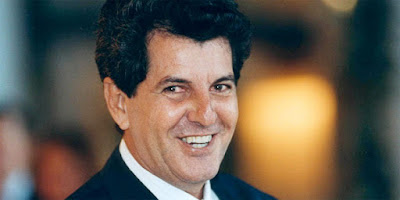
Oswaldo Payá Sardiñas and José Martí

José Martí was a poet, journalist, and Cuban independence leader. He had also endured prison for writings critical of the Spanish government. He organized a war of independence, but did so without resorting to dehumanizing his adversary or appealing to hatred. He was also a fierce advocate for civil liberties and especially freedom of thought and expression. Today, January 28 marks 172 years since the day José Julián Martí Pérez was born.

Four horseman: Ventura, Valdés, Castro, and Díaz-Canel

On the evening of January 27th the Cuban dictatorship held its torch march on the eve of  José Martí's birth anniversary. Leading the march were José Ramón Machado Ventura, Ramiro Valdés Menéndez, Raúl  Castro Ruz, and Miguel Díaz-Canel Bermúdez.

The communist dictatorship in Cuba claims José Martí as its own, but their ideology and actions are in stark contrast to his values.

Over a thousand sons and daughters of Cuba are arbitrarily and unjustly imprisoned today for exercising their right to free thought and expression in calling for freedom. Eleven thousand are jailed for pre-crime in Cuba. The regime jails them for what they might potentially do in the future.  

Millions of Cubans have gone into exile, and many are barred from returning home by the Castro regime. 

The dictatorship continues to kill Cubans for standing up for liberty or attempting to flee Cuba to live in freedom.  It has criminalized free speech, and jailed artists and independent journalists for exercising their profession.

José Martí with shirt of stars by Camila Ramírez Lobón

Ideas cited below by José Martí are in conflict with Castroism, but are in accord with the democratic Cuba that helped draft the Universal Declaration of Human Rights in 1948, and struggled for a more just and democratic order, but was damaged by Fulgencio Batista after 1952, then systematically destroyed by the Castro brothers after 1959. 

"Man loves liberty, even if he does not know that he loves it. He is driven by it and flees from where it does not exist."

"Freedoms, like privileges, prevail or are imperiled together You cannot harm or strive to achieve one without harming or furthering all."

"Liberty is the right of every man to be honest, to think and to speak without hypocrisy."

"It is the duty of man to raise up man. One is guilty of all abjection that one does not help to relieve. Only those who spread treachery, fire, and death out of hatred for the prosperity of others are undeserving of pity."  

 Martí also criticized the writings of Karl Marx, observing they were antithetical to his own values. If one considers that he wrote, "It is the duty of man to raise up man. One is guilty of all abjection that one does not help to relieve. Only those who spread treachery, fire, and death out of hatred for the prosperity of others are undeserving of pity." He was a contemporary of Marx who had written in 1849, "We are ruthless and ask no quarter from you. When our turn comes we shall not disguise our terrorism." Martí recognized the dangers of Socialism and its doctrine of envy, observing: 

"Socialist ideology, like so many others, has two main dangers. One stems from confused and incomplete readings of foreign texts, and the other from the arrogance and hidden rage of those who, in order to climb up in the world, pretend to be frantic defenders of the helpless so as to have shoulders on which to stand." 

The observation of José Martí that “A revolution is still necessary: the one that does not make its caudillo president, the revolution against revolutions, the uprising of all peaceful men, once soldiers, so that neither they nor anyone will ever be so again,” is a damning indictment of the 64 year dictatorship of the Castro brothers, but also relevant to free Cubans.  

Martí wrote this before nonviolence was recognized as a powerful force to be used to achieve change. He led the effort to initiate Cuba's second war of independence and was killed in action during an early skirmish in that war in 1895

However, the idea of an uprising of nonviolent men and women to carry out a "revolution against revolutions"  that will usher in a democracy, and not another dictator, is precisely what many Cubans want. 

Today also marks seven years since nonviolence scholar Gene Sharp died. He taught generations that there was an alternative to bloody conflict and that it was non-violent armed conflict. Professor Sharp practiced nonviolence as a conscientious objector during the Korean War, and studied the examples of Mohandas Gandhi, the Reverend Martin Luther King Jr., and many other nonviolent practitioners. He demonstrated that nonviolent resistance was anything but passive, and that success in a struggle required strategy as well.

Gene Sharp: January 21, 1928 – January 28, 2018

 Gene Sharp presented his case succinctly at the National Conference on Nonviolent Sanctions and Defense in Boston in 1990. 

"I say nonviolent struggle is armed struggle. And we have to take back that term from those advocates of violence who seek to justify with pretty words that kind of combat. Only with this type of struggle one fights with psychological weapons, social weapons, economic weapons and political weapons. And that this is ultimately more powerful against oppression, injustice and tyranny then violence."

Cubans of all ideological stripes claim him as their own, but objectively who has maintained the spirit of his words and ideals? 

 Castroism is the antithesis of all that José Martí represented. 

There is a movement that seeks to restore human rights and liberties using nonviolent means that uphold his values. These are courageous men and women who risk all standing up to the Cuban dictatorship. Many have been jailed, some have been killed, and their families targeted for reprisals in this struggle for freedom.

Oswaldo Payá Sardiñas addresses the EU parliament (2002)

Looking for these values leads one to Oswaldo Payá Sardiñas, who in a speech to the European Parliament on December 17, 2002 stated:

 "The first victory we can claim is that our hearts are free of hatred. Hence we say to those who persecute us and who try to dominate us: ‘You are my brother. I do not hate you, but you are not going to dominate me by fear. I do not wish to impose my truth, nor do I wish you to impose yours on me. We are going to seek the truth together.’"

This founder of the Christian Liberation Movement was murdered by agents of the Cuban government on July 11, 2012 together with the movement's youth leader Harold Cepero. Like  José Martí they too are martyrs for Cuba's freedom.


Friday, May 19, 2023

On this day in 1895 José Martí was killed by Spanish troops in Cuba. The struggle for Cuban freedom continues.


"There is no forgiveness for acts of hatred. Daggers thrust in the name of liberty are thrust into liberty's heart." - José Martí

José Julián Martí Pérez: January 28, 1853 - May 19, 1895

José Julián Martí Pérez was killed 128 years ago today in battle against Spanish troops at the Battle of Dos Ríos, near the confluence of the rivers Contramaestre and Cauto, on May 19, 1895. He is buried in the Santa Efigenia Cemetery in Santiago de Cuba. Cubans the world over honor his memory and Cuban independence follows a day later. Seven years and one day after Martí's death Cuba formally obtained its independence on May 20, 1902. Cuban historian Dr. Jaime Suchlicki in his essay "The Death of a Hero" describes him as Cuba’s greatest hero and most influential writer.


Maykel Castillo Pérez "Osorbo"

Yesterday, a modern José Martí, marked two years in prison. Maykel Castillo Pérez "Osorbo" is an artist, husband, father, and an Amnesty International prisoner of conscience who has spent 48 months separated from his family for "the crime" of exercising his fundamental rights. He is a rap artist,  like Martí a poet, a defender of human rights, and imprisoned for his defense of Cuban sovereignty residing among the Cuban people.  

The Castro regime jails minors for expressing themselves, in an action reminiscent of the Spanish colonial government's targeting of the future Cuban independence leader when he was a child. On October 21, 1869, when he was just 16 years old, José Martí was jailed,and accused of sedition for a letter he wrote criticizing a friend for joining the Spanish army.

Cubans across the ideological divide claim José Martí as their own. The claims of the dictatorship, led by the Castro family, that Martí is the intellectual author of their political project is ironic considering that the life and writings of this Cuban journalist, poet, and independence leader are the antithesis of the Castro regime.

Killed 128 years ago today riding into battle on horseback.
 

It is doubly ironic because both Francisco Franco's father and Fidel and Raul Castro's father had been soldiers who fought in Cuba to preserve its colonial status within the Spanish empire. Castro's father, Angel, according to the 2016 documentary, "Franco and Fidel: A Strange Friendship", had a photo of Franco on his nightstand. This historical link translated into a "special relationship" between the two dictators and is available online.

Both José Julián Martí Pérez's writings and actions taken by him in life point to a man who prized liberty, independence based in popular sovereignty, and freedom of speech, thought and association as fundamental to his sense of being. He was a prisoner of conscience, before Amnesty International coined the term, jailed for writing a disapproving letter to a classmate who joined the Spanish army.

Under the Castro regime freedom of expression can end in prison for engaging in "enemy propaganda," and freedom of thought can also lead you to prison for the crime of "dangerousness." This is an affront to José Marti's belief that "liberty is the right of every man to be honest, to think and to speak without hypocrisy." Hypocrisy, under the Castro regime, is a currency for survival.

Oswaldo Payá Sardiñas

Cuba under the Castros is not the vision advanced by Cuba's greatest hero. This tradition of freedom and respect for freedom of thought and speech existed during the Republic (1902 - 1952) and still exists today, underground, among dissidents in the island, and on more than one occasion cost the lives of other heroes to defend. One of Marti's modern day counterparts is Oswaldo Payá Sardiñas, who addressed the European Parliament on December 17, 2002:

"The first victory we can claim is that our hearts are free of hatred. Hence we say to those who persecute us and who try to dominate us: ‘You are my brother. I do not hate you, but you are not going to dominate me by fear. I do not wish to impose my truth, nor do I wish you to impose yours on me. We are going to seek the truth together.’"

Oswaldo was extra-judicially executed by the secret police on July 22, 2012. Other modern counterparts can also be found in the 27N and San Isidro movements, and the artists, journalists and intellectuals that nonviolently gathered in front of the Ministry of Culture to read the works of José Martí on January 27, 2021, and were beaten up by the Castro dictatorship's Minister of Culture, and arrested by the regime's political police.

The Cuban dictatorship has managed to exceed the Spanish colonial authority by jailing a parent for speaking up for their imprisoned child. Rowland Jesús Castillo Castro, jailed at age 17 for nonviolently protesting during the 11J protests, is serving an unjust five year prison sentence with forced labor. His father, Rolando Castillo, was subjected on May 18, 2022 to an "express trial" without an attorney and sentenced to two years in prison, with less than two hours notice is also serving out his prison sentence today.

Father and Son: Rowland Jesús Castillo Castro and his dad Rolando Castillo
 

The legacy of José Martí in Cuba today is found among the persecuted dissidents defending free speech, freedom of association and demanding a free and independent Cuba. Although the Castro regime uses the name and image of the Cuban journalist and poet they have done everything to pervert and destroy his true message of liberation.

"I think they kill my child every time they deprive a person of their right to think." - José Martí 


Burial site of José Martí


Thursday, May 19, 2022

On this day in 1895 José Martí was killed by Spanish troops in Cuba. The struggle for Cuban freedom continues.

"There is no forgiveness for acts of hatred. Daggers thrust in the name of liberty are thrust into liberty's heart." - José Martí

José Julián Martí Pérez: January 28, 1853 - May 19, 1895
 

José Julián Martí Pérez was killed 127 years ago today in battle against Spanish troops at the Battle of Dos Ríos, near the confluence of the rivers Contramaestre and Cauto, on May 19, 1895. He is buried in the Santa Efigenia Cemetery in Santiago de Cuba. Cubans the world over honor his memory and Cuban independence follows a day later. Seven years and one day after Martí's death Cuba formally obtained its independence on May 20, 1902. Dr. Suchlicki in his essay "THE DEATH OF A HERO" describes him as Cuba’s greatest hero and most influential writer.

Maykel Castillo Pérez Osorbo

Yesterday, a modern José Martí, marked one year in prison. Maykel Castillo Pérez Osorbo is an artist, husband, father, and an Amnesty International prisoner of conscience who has spent one year in prison for exercising his fundamental rights. He is a rap artist,  like Martí a poet, a defender of human rights, and imprisoned for his defense of Cuban sovereignty residing among the Cuban people.  

The Castro regime jails minors for expressing themselves, in an action reminiscent of the Spanish colonial government's targeting of the future Cuban independence leader when he was a child. On October 21, 1869, when he was just 16 years old, José Martí was jailed,and accused of sedition for a letter he wrote criticizing a friend for joining the Spanish army.

Cubans across the ideological divide claim José Martí as their own. The claims of the dictatorship, led by the Castro family, that Martí is the intellectual author of their political project is ironic considering that the life and writings of this Cuban journalist, poet, and independence leader are the antithesis of the Castro regime.

Killed 127 years ago today riding into battle on horseback.

It is doubly ironic because both Francisco Franco's father and Fidel and Raul Castro's father had been soldiers who fought in Cuba to preserve its colonial status within the Spanish empire. Castro's father, Angel, according to the 2016 documentary, "Franco and Fidel: A Strange Friendship", had a photo of Franco on his nightstand. This historical link translated into a "special relationship" between the two dictators and is available online.

Both José Julián Martí Pérez's writings and actions taken by him in life point to a man who prized liberty, independence based in popular sovereignty, and freedom of speech, thought and association as fundamental to his sense of being. He was a prisoner of conscience, before Amnesty International coined the term, jailed for writing a disapproving letter to a classmate who joined the Spanish army.

Under the Castro regime freedom of expression can end in prison for engaging in "enemy propaganda," and freedom of thought can also lead you to prison for the crime of "dangerousness." This is an affront to José Marti's belief that "liberty is the right of every man to be honest, to think and to speak without hypocrisy." Hypocrisy, under the Castro regime, is a currency for survival.

Oswaldo Payá Sardiñas

Cuba under the Castros is not the vision advanced by Cuba's greatest hero. This tradition of freedom and respect for freedom of thought and speech existed during the Republic (1902 - 1952) and still exists today, underground, among dissidents in the island, and on more than one occasion cost the lives of other heroes to defend. One of Marti's modern day counterparts is Oswaldo Payá Sardiñas, who addressed the European Parliament on December 17, 2002:

"The first victory we can claim is that our hearts are free of hatred. Hence we say to those who persecute us and who try to dominate us: ‘You are my brother. I do not hate you, but you are not going to dominate me by fear. I do not wish to impose my truth, nor do I wish you to impose yours on me. We are going to seek the truth together.’"

Oswaldo was extra-judicially executed by the secret police on July 22, 2012. Other modern counterparts can also be found in the 27N and San Isidro movements, and the artists, journalists and intellectuals that nonviolently gathered in front of the Ministry of Culture to read the works of José Martí on January 27, 2021, and were beaten up by the Castro dictatorship's Minister of Culture, and arrested by the regime's political police.

The Cuban dictatorship has managed to exceed the Spanish colonial authority by jailing a parent for speaking up for their imprisoned child. Rowland Jesús Castillo Castro, jailed at age 17 for nonviolently protesting during the 11J protests, is serving an unjust 18 year prison sentence. His father, Rolando Castillo, was subjected on May 18, 2022 to an "express trial" without an attorney and sentenced to two years in prison, with less than two hours notice.

Father and Son: Rowland Jesús Castillo Castro and his father Rolando Castillo

The legacy of José Martí in Cuba today is found among the persecuted dissidents defending free speech, freedom of association and demanding a free and independent Cuba. Although the Castro regime uses the name and image of the Cuban journalist and poet they have done everything to pervert and destroy his true message of liberation.

"I think they kill my child every time they deprive a person of their right to think." - José Martí 


Burial site of José Martí