Showing posts with label Walter Duranty. Show all posts

Saturday, November 28, 2020

Holodomor Remembrance Day: Memory and witness for the victims of Stalin's Ukrainian Famine

 "In the future, there will be fewer but better Russians." - Greta Garbo, Ninotchka, 1939


The genocide in Ukraine is known as the Holodomor and took place between 1932 -1933. Millions of children died in an artificial famine. This crime was ignored by the United States as it formally recognized the Soviet Union in 1933The Economist in 2012 reported on the 80th anniversary of this man-made famine:

Holodomor literally means death by hunger. In 1932 and 1933, a vast famine in Soviet Ukraine killed three to seven million people, according to estimates. While people starved, the grain was shut away in barns for export.

The deadliest famines in the 20th century were not in Africa but in Europe (Ukraine) and China.
Social science research has demonstrated that famines "happen only with some degree of human complicity."  Human decisions "determine whether a crisis deteriorates into a full-blown famine."


According to Felix Wemheuer, professor of Modern China Studies at the University of Cologne, in his book Famine Politics in Maoist China and the Soviet Union," during the twentieth century, 80 percent of all famine victims worldwide died in China and the Soviet Union." 

Millions starved to death under brutal famine imposed by Joseph Stalin

However, to understand the nature of famine politics in communist regimes the monograph of Andrea Graziosi and Frank E. Sysyn in the East/West: Journal of Ukranian Studies titled "Communism and Hunger" is required reading. Consider the following:

"In fact, with the exception of the 1943 Bengal famine with its approximately two million victims, all of the other major famines of the twentieth century are directly connected to socialist "experiments": in 1921 and 1922 in Russia and Ukraine ( 1million - 1.5 million deaths); in 1931, 1932, and 1933 in the USSR (6.5 million - 7.5 million deaths, of which 4 million were in Ukraine and 1.3 million - 1.5 million in Kazakhstan); in 1946 and 1947 in the USSR (1 million - 1.5 million deaths); from 1958 to 1962 in China (30 million - 45 million deaths); from 1983 to 1985 in Ethiopia (0.5 million - 1.0 million deaths); and from 1994 to 1998 in North Korea ( estimates vary from a few hundred thousand to more than 2 million deaths)."

This was not due to poor central planning and socialist inefficiencies, but a deliberate policy of genocide against targeted population to consolidate political control by eliminating those who do not support their regime. The percentage of victims in the USSR and China relative to their respective overall populations were the same (5%). In the case of the USSR that meant around 7 million deaths out of a population of 160 million and in the case of China  estimates between 30 million and 45 million deaths out of a population of 600 million.


 We must also remember those who bore witness and spoke truth, and those who covered it up. 


Gareth Jones, a Welsh journalist broke the story on the Ukranian famine on March 29, 1933 despite official denials. Walter Duranty of The New York Times wrote an article a day later rebutting Jones's claims that was published in the paper of record on March 31, 1933. 


Sunday, November 15, 2020

High price of good journalism: Case of Gareth Jones and the Ukranian famine told in the film Mr. Jones now streaming

Honoring honor

Brave Welsh journalist Gareth Jones broke story on Soviet famine

Gareth Jones, a Welsh journalist broke the story on the Ukranian famine on March 29, 1933 despite official denials. Walter Duranty of The New York Times wrote an article a day later rebutting Jones's claims that was published in the paper of record on March 31, 1933. 

In the end seven million souls starved to death in a communist manufactured famine in the Ukraine between 1931 and 1933 under the rule of Josef Stalin. Mr. Jones was banned from returning to the Soviet Union by the Communists. 

Two years after publishing this story he was murdered in Inner Mongolia on the eve of his 30th birthday by Chinese bandits in what his family believes was a Moscow coordinated plot to eliminate him.

Mr. Gareth Jones

There are many who look the other way, remain silent, or worse defend the lie to cover up the crime, and are rewarded with prizes and a long and healthy life. This was the case of Walter Duranty, who won a Pulitzer Prize for covering up the famine. Gareth Jones took the path less traveled, that of truth and honor, and paid a high price.

Thankfully, the Polish director Agnieszka Holland has brought his story to the big screen in the 2019 film Mr. Jones

The film is not a docudrama, and takes dramatic license, but it should lead a new generation to explore what he did and the price he paid for witnessing a great crime and reporting the truth. Between 1931 and 1933 Josef Stalin weaponized famine against millions of civilians in the Ukraine, and he had willing accomplices in the West, like Mr. Walter Duranty of The New York Times.

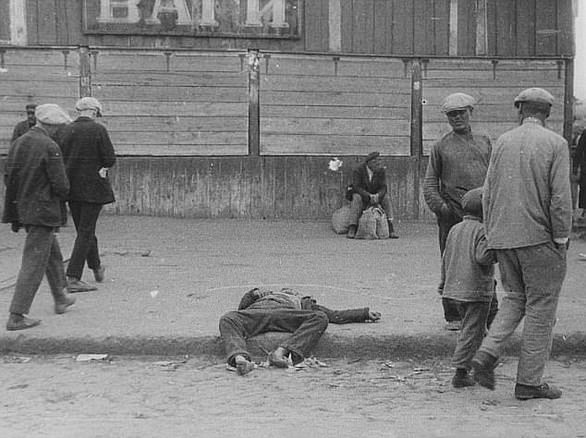
Famine victim in the Ukraine

Thankfully, there were also men of honor like Gareth Jones who risked their lives gathering the facts, and reporting the truth. These are heroes that are still needed today, and tragically all too rare. If you have not seen the film, see it, but also learn the full story of Mr. Jones.

Wednesday, May 3, 2017

World Press Freedom Day 2017: The Good, The Bad and the Ugly

"Th newspaper does ivrything f'r us. It runs th' polis foorce an' th' banks, commands th' milishy, controls th' ligislachure, baptizes th' young, marries th' foolish, comforts th' afflicted, afflicts th' comfortable, buries th' dead an' roasts thim aftherward". -   Mr. Dooley ( Finley Peter Dunne), 1902


On World Press Freedom Day the map of press freedom prepared by Reporters Without Borders is bleak with a darkening tide of censorship across the globe. Despite having a First Amendment to the Constitution that protects free speech and freedom of the press the United States today has 43 countries ahead of it with greater press freedoms.  This confirms the observation of the late conservative polemicist Joseph Sobran, who passed away in 2010 that “the U.S. Constitution poses no serious threat to our form of government.” It gives me no comfort to be able to say, but hey Cuba, our next door neighbor, is at 173 much less free then the USA. As a citizen and a patriot this is one list that if not number one, the United States should strive to be in the top ten. It has not been there for some time. The ten most censored countries in the world according to the Committee to Protect Journalists are also terrible places to live not only for journalists but everyday people.

A free press is a benchmark of a free society that needs to be celebrated and defended from both  external and internal threats to its good works. Since it is a free institution, it must be self-policing and only answer to its customers on the basis of the quality of the journalism.

The ten countries with the greatest press freedom, according to Reporters Without Borders, in contrast do not have refugee exodus crises, even as is the case with Costa Rica (6) and Jamaica (8) they are not materially the richest countries but they are free peoples.

Today is a day to honor courageous and professional journalists who take their work seriously, but are willing to poke fun at themselves as Finley Peter Dunne did 115 years ago. It is an ironic tribute that his skewering of the self-important news media has been edited down and turned into a challenge to some journalists to "comfort the afflicted, and afflict the comfortable." On this day let us comfort journalists afflicted for practicing their trade in closed societies.

The Vietnamese blogger Nguyen Ngoc Nhu Quynh, better known as Me Na or "Mother Mushroom" has been detained since October 2016 while trying to visit an imprisoned activist. She stands accused of "propagandizing against the state."  

Let us also recognize Nguyen Van Hoa, a 22 year old video journalist jailed for using a drone to broadcast environmental protests in Vietnam.

In Venezuela on the evening of May 1, 2017 Marcos Vergara and Deivis Valera, production assistants for the online media platform VivoPlay were taken into the custody of the Venezuelan National Guard while covering a protest, reports the Committee to Protect Journalists.

Please spread the world and demand their freedom.

Peter Greste, Mohamed Fahmy, journalists for Al Jazeera who were arrested in Egypt in 2013, writing today in The Australian warn that a "tragedy is unfolding in Turkey. Independent journalism is being systematically stamped out. Prison doors are slamming, media outlets are being boarded up and a disturbing silence is falling over what has been a vibrant and ­diverse media landscape."

Be not silent before this atrocity against freedom.

George Orwell well understood that "Freedom of the press if it means anything at all, means the freedom to criticize and oppose." He also understood what was not only "fake news" but also fake language and called it "newspeak" in his novel 1984. 

We must recognize that there are hacks that can due great and lasting damage peddling "fake news" working in free newspapers. The ghosts of Walter Duranty and Herbert Matthews continue to possess the Gray Lady with their enduring and shameful legacies in Ukraine and Cuba. Walter Duranty won the Pulitzer covering up Stalin's 1930s manufactured famine in Ukraine that claimed eight to 10 million lives. With his reports denying the reality all around him this New York Times journalist was complicit in genocide. Twenty years later in Cuba Herbert Matthews engaged in a fallacious propaganda campaign disguised as news reporting to turn Fidel Castro into a national figure presenting him as an anti-communist and a democrat. The total number of dead  is still being added to 58 years later for the lies he reported in the 1950s.

However this hacks are small time purveyors of fake news compared to governments that manufacture entire news agencies, black mail journalists with the threat of expulsion.  The way to counter fake news is with more press freedom to challenge it along with greater reader discernment to weigh the facts and seek the truth. Facts matter, recognizing objective truth exists and getting the story right regardless of agendas is the best way to serve readers.

Believing the government can be dangerous to your freedom. President Ronald Reagan said it best, "trust but verify." He applied that to his dealings with the Russians, but it should be expanded when dealing with all governments.

However the threats to a free press are not only state actors, but also technology and artificial intelligence that threatens to simulate writing and overwhelm the net with inferior prose designed to push an agenda or a product and not inform a readership is a future threat. However, an ever present threat today thanks to the greed of Western technology companies such as Yahoo, Sun Microsystems, Google and others that helped erect the Great Fire Wall of China. Modernizing totalitarianism and giving it new life into the 21st Century. Google is now collaborating with the Cuban intelligence service and military allowing them to store their servers. This means that journalists can write their articles but no one will be able to find them in their online searches. Russia is also now adopting their own version of the great fire wall. This is also a profound threat to press freedom.

The belief that legitimacy is no longer found in objective truth but in "positive results" has proven a destructive meme in schools of journalism that in the final analysis rejects reality as a social construct are bearing fruit in declining readership and sales.

These are great challenges but can be overcome if confronted and resisted.


Tuesday, November 18, 2014

The New York Times: A Propaganda Rag?

 Some of the news that they refused to print.

Since 1851 there have been lapses in journalistic ethics
Until now this blog has not addressed the eruption of New York Times editorials regarding Cuba and U.S. policy out of sheer weariness over treading once again over well trodden ground on the sanctions debate, but two items have necessitated a response. The call by The New York Times to release Cuban spies imprisoned for their crimes including the murder of U.S. citizens.

The ten members of the Cuban "WASP" spy network arrested in 1998 used coded material on computer disks to communicate with other members of the spy network of which the FBI was able to obtain 1,300 pages taken from those diskettes translated and used during the spy trial. The documents demonstrate the criminal nature of the Cuban regime's operation in South Florida including their primary objective of penetrating and obtaining information on a U.S. naval station. Furthermore intelligence operatives communicated about burning down a warehouse and sabotaging Brothers to the Rescue equipment. The Cuban government requested that the spies attempt to identify who would be flying at certain times.  What is left out of The New York Times reporting is that in the documents the operatives discuss plans to prepare a "book bomb" that evades post office security while at the same time phoning death threats to a man they describe as a CIA agent in order to terrorize him and then killing him with the mail bomb.
The seriousness of these planned action items would be confirmed by the February 24, 1996 shoot down where two MiGs hunted Brothers to the Rescue planes in international airspace and used air to air missiles to destroy two of the planes killing two pilots and two passengers based on intelligence supplied by the WASP network.

Cover of 2014 article on KGB plans to eliminate MLK
 The second item was the publication of the full letter sent to Martin Luther King Jr. on November 11, 1964  to provoke his suicide and/or silence in The New York Times Magazine article by Barbara Gage titled "What an Uncensored Letter to M.L.K. Reveals" pointing to the FBI as the guilty party. However, at no time does the article mention that the KGB also had a campaign of active measures in place to destroy Martin Luther King Jr. that is well documented.

Letter sent to MLK in 1964 published by The New York Times
The New York Times has had a long time bias in favor of dictatorships and making glaring omissions. The paper has had reporters such as Walter Duranty who ignored a genocide in Ukraine in the 1930s while providing a sympathetic portrayal of the Soviet Union under Josef Stalin. Beginning in 1957 Herbert Matthews built up Fidel Castro's image both inside and outside of Cuba with a series of misleading articles in The New York Times. In July of 1959 Matthews reported: "[t]his is not a Communist Revolution in any sense of the term. Fidel Castro is not only not a Communist, he is decidedly anti-Communist." Anthony De Palma has written a book on Herbert Matthews titled, "The Man Who Invented Fidel" and describes how his heroic portrayal of Fidel Castro influenced the fall of the Batista dictatorship and the consolidation of the future dictator as a national figure.

Considering that the Castro dictatorship in Cuba, that The New York Times assisted in putting into power, has five decades of engaging and sponsoring international terrorism along with a terrible human rights record at home one would think that the Grey Lady would be more cautious in its reporting. Unfortunately what should be the paper of record has too often become a propaganda rag especially when the topic has been Cuba.

Monday, August 11, 2014

AP in Cuba: When misreporting news becomes the news

Caution foreign news agencies! Your representatives in these lands are always in danger of becoming hostages, first, and then collaborators of the rulers. - Yoani Sánchez, Generation Y, August 12, 2014
Associated Press in Cuba crossed the line on journalistic standards
 Oswaldo Payá Sardiñas,on September 20, 2011 videotaped his interview with Andrea Rodriguez of the Associated Press and released it because he believed that what he had told her was not fairly reflected in the article she had written.  In the interview he described how victims in Cuba are criticized because no one dare criticize the executioner and offered a critique that Ms. Rodriguez did not publish:
"There is a real “moral inversion,” in what the foreign media, intellectual circles, ecclesiastical circles, diplomats and politicians are doing against the people of Cuba and against the dissident right now. They judge the persecuted, the poor, those who are silenced, but they do not dare to judge the government."
Both in Cuba and North Korea the Associated Press has jumped the shark in its coverage becoming a pale imitation of its more formidable former self. It appears that the news agency has gone beyond self censorship of the news, to avoid being kicked out of these countries, into what amounts to biased reporting that is a violation of the code of ethics of the Society of Professional Journalists which in broad strokes are: 1) Seek Truth and Report It. 2) Minimize Harm 3) Act Independently 4) Be Accountable.

The Inter American Press Association Report on Cuba in 2011 described the process whereby press agencies can cross the line into biased reporting through something akin to Stockholm syndrome:
The Cuban government wages a policy of the carrot and the stick against foreign correspondents accredited in Havana. If the correspondent becomes too raucous in his criticism, all sorts of problems are created for him until his presence in Havana turns into a torment, or else they denounce him in the official press to the point that he leaves the country. If, on the other hand, if he behaves nicely, they let him work and even facilitate contacts and interviews for him. This brings about permanent self-censorship and even reports with a touch of sympathy for the regime.
The Committee to Protect Journalists in a report that identified Cuba as the ninth most censored country in the world described how "Government supporters sometimes gather outside the homes of critical journalists to intimidate them. Officials grant visas to foreign journalists selectively."

Mike Gonzalez in an oped essay titled "Cubans still suffer, but media looks away" speculates on why the media remains silent as the Castro regime beats up on women and children attending mass and peacefully demanding that their loved ones be freed. They'd just been brutalized the day before on July 17, 2011 . He offers two possibilities: "they’re either so afraid of being expelled, or have so bought into the regime’s propaganda." Journalists in Cuba have ample reason to fear being expelled having seen colleagues such as Chicago Tribune's Gary Marx, the BBC's Stephen Gibbs and Cesar Gonzalez-Calero of Mexico's El Universal all expelled in 2007 from Cuba for offering reporting, that although bending over backwards not to offend, still ran afoul of the regime.  

Unfortunately, it appears Oswaldo Payá was extrajudicially executed by state security agents along with Harold Cepero on July 22, 2012. Since his death the moral inversion that he described in 2011 has expanded beyond Cubans and dissidents to endangering visitors by not reporting epidemics in a timely manner and now targeting and misrepresenting international human rights and pro-democracy activists visiting the island. The Associated Press, for example, has described common sense precautions as a "clandestine operation"  while also engaging in the same practices themselves.

In January of 2013 one had to learn about a Cholera epidemic by following the twitter feeds of independent activists and journalists in Cuba because the international press with news bureaus there preferred to remain silent in order to avoid being expelled from the island. The Cholera outbreak had reached Havana and the reason we knew it was thanks to independent journalists. Journalism in Cuba that seeks to report the truth independently and minimize harm become prisoners of conscience. Amnesty International described the circumstances under which one reporter was arrested:
Calixto Ramón Martínez Arias works for the unofficial news agency, Let’s Talk Press (Hablemos Press). He was arrested in Havana on 16 September 2012 by the Cuban Revolutionary Police (Policía Revolucionaria de Cuba) at José Martí International Airport in Havana. He had been investigating allegations that medicine provided by the World Health Organization to fight the cholera outbreak (which began in mid-2012) was being kept at the airport instead of being distributed.
The non-governmental organizations (ngos) targeted by the Associated Press in a "gotcha article" have pushed back and are criticizing the reporting. The Costa Rican NGO, FundaOGI, released a statement that criticized the twisted nature of the article calling it completely false:
"Information published by AP is distorted. Information was manipulated to try to make it look like FundaOGI had instructions of generating cultural and artistic activities to covertly achieve destabilizing ends, which is completely false. FundaOGI developed, artistic, educational, cultural, health and human rights activities for young people because it is part of its model of organizational performance.  Activities such as these FundaOGI has carried out not only in Cuba but in several countries, including Costa Rica. And the organization has done it simply because it is an efficient mechanism for working with youth, raising awareness on the issues of Human Rights, Environment, Collaborative Leadership and Social Entrepreneurship and helping them solve problems of their immediate context through social action and volunteerism."
The Washington Free Beacon quoted a second NGO targeted by the Associated Press in a August 8, 2014 article titled "Human Rights NGOs dispute AP report on Cuba Democracy Program":
The group’s members said they were not “spies” that sought to “destabilize” the Cuban government, and they accused the AP of publishing “false testimonies,” violating the anonymity of sources, and subjecting one of its members to “harassment.”
The Associated Press story went public on August 4, 2014 and four days later Felipe Cuevas, a Chilean student opposition leader, was detained in Venezuela accused of "trying to overthrow the government of Maduro." The reality of the situation was that he was visiting Venezuela to meet counterparts in political parties and attempted to attend the trials of imprisoned non-violent democratic opposition leaders. Thanks to a rapid mobilization in the social networks and the Chilean government's ambassador intervention the young man was released after being held more than 24 hours and was able to return to Chile.

Felipe Cuevas: First victim of AP's latest propaganda piece?
 This is not the first time that the Associated Press has engaged in reporting that misrepresents the facts on the ground and the objectives of the USAID program. Back in April 2014 the AP created another tempest in a teapot about Cuban twitter. More ominous was the distorted story they produced on Alan Gross, a U.S. citizen held hostage in Cuba since 2009 as a bargaining chip by the Cuban government to pressure the U.S. government to release a Cuban spy who had planned terrorist attacks on U.S. soil and was found guilty of a capital offense who is currently serving a life sentence.

Meanwhile, businessmen from Canada and Europe are rotting in Cuban prisons under questionable charges, but it also goes unreported by the foreign news bureaus in Cuba. Stephen Purvis spent 15 months in a Cuban prison and in a letter to the Economist in 2013 raised some interesting points:
 I spent time with a number of foreign businessmen arrested during 2011 and 2012 from a variety of countries, although representatives from Brazil, Venezuela and China were conspicuous in the absence. Very few of my fellow sufferers have been reported in the press and there are many more in the system than is widely known. As they are all still either waiting for charges, trial or sentencing they will certainly not be talking to the press. Whilst a few of them are being charged with corruption many are not and the accusations range from sabotage, damage to the economy, tax avoidance and illegal economic activity. It is absolutely clear that the war against corruption may be a convenient political banner to hide behind and one that foreign governments and press will support. But the reasons for actively and aggressively pursuing foreign business are far more complicated.  Why for example is the representative of Ericsson in jail for exactly the same activities as their Chinese competitor who is not? Why for example was one senior European engineer invited back to discuss a potential new project only to be arrested for paying technical workers five years ago when he was a temporary resident in Cuba?
This is not a story that the Associated Press and other news agencies in Havana are following because they dare not judge the Cuban government but prefer to be its lapdog targeting dissidents and human rights defenders while remaining silent before the systematic repression and violence of the dictatorship.

Eight decades ago Walter Duranty, an employee of the New York Times assisted in covering up the crimes of Josef Stalin. He was The New York Times's man in Moscow. To avoid being expelled from the Soviet Union, he regurgitated Stalinist propaganda and downplayed the atrocities taking place there. Duranty received the Pulitzer Prize in 1932 and only decades later would the world finally learn the truth that more than 10 million people had died in a genocide in the Ukraine despite the efforts of the New York Times reporter in covering it up. Although Stalin's surviving victims sought to have the prize revoked, the Pulitzer Prize board refused to do it.
  

Today, with twitter, e-mail and the social networks it is more difficult for someone to get away with such an outrageous propaganda operation.

The Pew Research Center's Project for Excellence in Journalism has made public a report that found that audiences are abandoning news outlets because of the decline in quality of coverage. Looking at the reporting done by the Associated Press in Cuba one begins to wonder why there is not an even larger decline.

Sunday, August 26, 2012

Crackdown underway in Cuba and many in the media remain silent

News is something someone wants suppressed. Everything else is just advertising. - Lord Northcliff

Major crackdown underway in Cuba.
 The Cuban Patriotic Union observed the one year anniversary of its founding inside Cuba on August 24 suffering a massive crackdown its movement by State Security in which key leaders of the Union were arrested. José Daniel Ferrer García a key leader and founder of the Union had his home assaulted and was arrested on August 23, 2012 and still remains detained as of this hour with scores of other activists. In Santa Clara, Guillermo Fariñas was detained three times in the span of one week.  Former prisoner of conscience Felix Navarro and his daughter Sayli Navarro were arrested on Saturday and released later the same day but political police stole her laptop.

Over the previous two days Thursday, August 23rd and Friday, August 24th more than 60 Cuban dissidents have been arrested reports Hablemos Press and they are still receiving additional reports of detentions. There is a crackdown underway in Cuba that began in the East of the island and has spread westward through the rest of the island. Unfortunately, the international media in Cuba are not reporting on this. Only El Nuevo Herald based in Miami broke the story on Friday interviewing dissidents on the island. Juan O. Tamayo reported:
Cuban dissidents Friday reported a crackdown across the island, with several activists detained to keep them from marking the monthly "Day of Resistance" and the one-year anniversary of one of the most active opposition groups.
Fourteen members of the Cuban Patriotic Union were detained in Havana as they gathered for the anniversary of the group, according to Pedro Arguelles, another member of the Union.
Five other dissidents were reported detained in the central city of Santa Clara during a vigil demanding the release of all political prisoners. Another four were arrested in the eastern town of San Luis and three more in the central town of Placetas.
Police told a dozen dissidents in eastern Camaguey province they would be arrested if they left their homes to attend an opposition gathering, and told seven others gathered in a Placetas home that they would be arrested if they did not leave.
Another 11 Union members gathered in the eastern town of Palma Soriano reported late Friday that they were headed outside to demand the release of all the activists detained. There was no further word from them.
Dissident Osmani Cespedes said more than 30 signs with anti-government slogans such as "Down with Raul" and "Raul Murderer" appeared Friday morning in several spots around the eastern town of Palma Soriano.
The Cuban Patriotic Union was founded a year ago by a group of opposition activists that include Jose Daniel Ferrer Garcia, a peaceful dissident who served eight years in prison and was freed last year. Based in Palma Soriano, his hometown, the Union has been one of the most active opposition groups in recent months.
Police detained Ferrer himself during a police raid of his home early Thursday morning, and seized several documents, the Cuban Commission for Human Rights and National Reconciliation noted Friday in an "urgent communique."
Dissidents also have been marking the "Day of Resistance" on the 24th of each month, recalling the Feb. 24, 2010, death of political prisoner Orlando Zapata Tamayo after a lengthy hunger strike to demand an end to prison abuses.
The dissident Ladies in White, meanwhile, urged democratic governments and human rights organizations to "take urgent and coordinated action to stop the violence unleashed by the Cuban regime" against the women and other peaceful opposition figures.
Their statement alleged that the Raul Castro government "has stepped up the intimidations, the arbitrary jailings and the cruelty against all those who fight to install a democratic system in our country."

Read more here: http://www.mcclatchydc.com/2012/08/24/163486/dissidents-report-a-crackdown.html#storylink=cpy
The failure of international news bureaus based in Cuba to report on this news is not new. It is also worthwhile to explore why this is taking place. In addition to well grounded fears that serious and tough reporting on the reality in Cuba would lead to having ones press credentials revoked and being expelled from the island there are others that apparently have ideological affinities with the regime. The Calgary Sun's Ezra Levant  reported on one such correspondent by the name of Stephen Wicary of the Globe and Mail:
He’s condemning Cubans who want to flee to freedom — the freedom he himself will presumably exercise one day, probably when he needs free health care and doesn’t want to go to a filthy Cuban hospital. Stephen Wicary is the Walter Duranty of our age. Duranty was a New York Times “reporter” in the 1930s who, like Wicary, went to the Communist country of the U.S.S.R. He was the Times’ bureau chief in Moscow from 1922 to 1936, a time of horrendous massacres, including the man-made Ukrainian famine called the Holodomor, where Stalin starved to death as many as 12 million souls.
What is disappointing is that even when the dictatorship itself makes clear for example that the policy of banning of musicians such as the late Celia Cruz and their music will continue despite Cuba based reports from international press stationed on the island. The reporters do not retract or correct their story. Meanwhile, as they report on the non-story of the Castro regime ending its censorship of musicians like Celia Cruz, Arturo Sandoval and Olga Guillot (which the regime has stated explicitly that it will not do) the Cuba based international journalists remain silent of the island wide crackdown on dissidents.

This is troubling on a number of levels. First this conduct raises not only questions of journalistic ethics but if the best way to learn what is happening in Cuba is not to read the reporters but the tweets from dissidents and persecuted independent journalists on the island who are breaking stories. Secondly, the failure of the international media to explain what is actually happening on the island. The nature of the regime's repressive apparatus and the rising discontent in the populace and the role of civic nonviolent opposition in the island, in the short term, gives the regime a free pass to repress and kill more opposition leaders and in the long term sow the seeds either for continued totalitarian rule or bloody change. A nonviolent movement needs to be able to communicate effectively with both the populace and the international community and the facts on the ground need to be made known in order to properly inform policy makers and Cubans on the island. This is also why independent news broadcasts are needed to break through the regime's information monopoly and get the facts out.

Waiting for Fidel Castro to die in order to cover the story of his death and burial from inside the island at the expense of covering the struggles and realities of the Cuban people is not only short sighted and a disservice to Cubans. It is also bad journalism.

Friday, May 4, 2012

The Castro Regime May Be the Most Anti-Women Government in Latin America

Reading the article by Luisita Lopez Torregrosa, "Cuba May Be the Most Feminist Country in Latin America" in the International Herald Tribune on May 1, 2012, raises a number of questions.


Cuban female icon, Laura Inés Pollán Toledo, who could have been a future president of a democratic Cuba, died under mysterious circumstances on October 14, 2011 interviewed above prior to her untimely death.

Between 1959 and the present date the Castro brothers have ruled Cuba in the longest lasting dictatorship in Latin America. The Cuban parliament has no real power other than to rubber stamp the decisions of the Castro brothers. Meanwhile throughout Latin America women have been elected to the presidency of their respective countries: In Argentina, Cristina Fernández de Kirchner entered office on December 10, 2007; In Brazil, Dilma Rousseff was elected on October 31, 2010; In Chile, Michelle Bachelet was elected on March 11, 2006; In Costa Rica, Laura Chinchilla Miranda was elected on May 8, 2010; In Nicaragua Violeta Chamorro entered office on April 25, 1990. How can one claim that women have a greater level of political participation in government if they have no political power and are, like their male counterparts, rubber stamping decisions by the Castro brothers?

The statistics that place women in high percentages in the professions and technical workers fails to look at the context in Cuba where these professions do not pay a living wage. In the 2004 book, After Castro: Legacies, Challenges, and Impediments, Edward Gonzalez reports on page18 that “Education has become superfluous. Teachers, doctors and other professionals have abandoned their peso-dominated, low paying careers in the state sector to earn dollars as taxi-drivers, small entrepreneurs, hustlers and prostitutes.” In a July 11, 1992 speech, Fidel Castro sought to put the best spin possible on a terrible situation stating:
"There are no women forced to sell themselves to a man, to a foreigner, to a tourist. Those who do so do it on their own, voluntarily, and without any need for it. We can say that they are highly educated hookers and quite healthy, because we are the country with the lowest number of AIDS cases. There are nearby countries which have tens of thousands of AIDS cases. Therefore, there is truly no tourism healthier than Cuba's."
The jobs sought after in Cuba are the ones that place Cubans in contact with foreigners with hard currency. Professionals in the state sector depending on pesos literally go hungry. That a majority of them are women is tragic. Considering this reality how can one view as an advance the choices left to women in the socialist Cuban economy?

2 Ladies in White currently imprisoned in Cuba: Niurka Luque Alvarez (Left) and Sonia Garro Alfonso (Right)

Finally, the plight of women who attempt to exercise real political power and an authentic voice demonstrates that the dictatorship is both violent and patriarchal. Independent women's organizations such as the Ladies in White have been repeatedly physically assaulted by Cuban government agents. This movement founded in March of 2003 following a regime crackdown on nonviolent opponents forced the dictatorship to the negotiating table in 2010. The founding leader of this movement, Laura Inés Pollán Toledo, who could have been a future president of a democratic Cuba, died under mysterious circumstances on October 14, 2011. Other women have been repeatedly beaten up, brutalized and threatened with rape to  dissuade them from participating in the political and social life of the country. How on Earth can this be considered pro-woman?

Two Ladies in White are currently in prison for their nonviolent activities in defense of human rights. They have suffered beatings and mistreatment. Their names are Sonia Garro Alfonso and Niurka Luque Alvarez. Niurka has epilepsy and is suffering numerous epileptic attacks because prison officials refuse to provide her with medication to stop the attacks and also do not permit family members to give her the needed medicine. Why do women's experts remain silent when women are being mistreated?


Finally, the name of Walter Duranty immediately came to mind. It is important to point out that The International Herald Tribune is the global edition of The New York Times. Although it may be on a smaller scale history repeats itself at the Grey Lady. Eight decades ago Walter Duranty, an employee of the New York Times assisted in covering up the crimes of Josef Stalin. He was The New York Times's man in Moscow. To avoid being expelled from the Soviet Union, he regurgitated Stalinist propaganda and downplayed the atrocities taking place there. Duranty received the Pulitzer Prize in 1932 and only decades later would the world finally learn the truth that more than 10 million people had died in a genocide in the Ukraine despite the efforts of the New York Times reporter in covering it up. Although Stalin's surviving victims sought to have the prize revoked, the Pulitzer Prize board refused to do it.

Today, in Cuba although thankfully the body count is smaller than Josef Stalin's it is still rising and lamentably the defenders of another tyrant continue to extol the virtues of the dictatorship while ignoring or denigrating the victims. Unfortunately, the Duranty legacy is alive and well in the American media. Guess that answers a lot of the previously raised questions.