Showing posts with label stasi. Show all posts

Wednesday, August 9, 2017

US expelled 2 Cuban diplomats in May for actions against US diplomats in Havana

Were U.S. diplomats targeted and harmed by a sonic weapon in Havana?
 
Spokesperson Heather Nauert in a State Department briefing today revealed that two Cuban diplomats were expelled from the United States on May 23, 2017 in response to "incidents in Cuba." Cuban diplomats have had a checkered history in their postings overseas and reducing their number on U.S. soil is a positive development. In Cuba the totalitarian state security apparatus spies on everyone and carries out active measures against both foreign and domestic actors. According to U.S. officials five U.S. diplomats were targeted by a "sonic weapon" that led to "severe hearing loss" that led to some of them canceling their tours and returning early to the United States.

Cubans have played hardball before. U.S. diplomat Robin Meyers was subjected to cars being used against her as weapons by state security agents on February 23-24, 1996. The Miami Herald reported on it on November 24, 1996 after she had been expelled from Cuba:
"On Friday, Feb. 23, she was driving home from the U.S. interests section when a white Soviet-built Lada nearly sideswiped her car. She wrote off the near-miss to faulty brakes. Then it happened again. And again. She doubled back to the mission and had a U.S. security agent escort her home. The next day, she left for work, comfortably sandwiched between two U.S. escort cars. But another Lada, stuffed with her now-familiar baby sitters, tried to break into the chain of cars. She fled through an intersection on a changing light. The Lada tried to follow but was too late, and was slammed by an oncoming car."
This type of arranged accident was an innovation of the East German spy agency, known as the Stasi, who trained the Cuban State Security service known as "G2" and one of its standard tactics. Diplomats working in Cuba should not underestimate the dictatorship nor should those visiting the island for recreation or business.

Monday, November 9, 2015

Berlin Wall's end 26 years ago and the walls that still remain in Cuba

"26 years since German reunification, Cubans today also deserve a reunion in freedom." #BerlinWall - Rosa María Payá over twitter November 9, 2015

Tearing down the Berlin Wall in 1989
November 9, 1989 was a great day for freedom when the Berlin Wall, a symbol of division, repression and terror was nonviolently torn down by the German people and ushered in the beginning of German reunification and the end of communist East Germany.

Between 1961 and the year it was torn down at least 136 Germans were extrajudicially executed by the East German border guards just for trying to cross the Berlin Wall to freedom. There is The Berlin Wall Museum that offers a complete listing of the 136 known victims with details about them and their deaths. One of the last victims, Chris Gueffroy was born on June 21, 1968 and shot dead on February 5, 1989 trying to cross the Berlin Wall. Murdered at 20 years of age for the crime of wanting to live in freedom. 

Chris Gueffroy born 1968 and killed at the Berlin Wall 1989 
The Castro regime and the East German communist regime had a close relationship for three decades. John O. Koehler on page 297 of his book Stasi: the untold story of the East German secret police outlined the relationship between the Cuban and East German intelligence services.
"The Stasi's first major task abroad was in Cuba, after Fidel Castro and Vice Premier Anastas Mikoyan signed the Soviet-Cuban pact on February 13, 1960, officially placing Cuba in the Soviet bloc. As Soviet arms shipments began, Mielke sent a number of Stasi officers of General Wolf's HVA to Havana. Led by Colonel Siegfried Fiedler, they assisted in setting up what became a first-rate intelligence service and an oppressive secret police. As a result Cuba's relations with East Germany developed as closely as those with the Soviet Union. Intelligence gathered in the United States by the Cubans was routinely shared with the Stasi. Much of the information contained in the dossier the Stasi maintained on President Ronald Reagan, for example, originated with the Cubans."
Fidel Castro at the Berlin Wall
Fidel Castro's first visit to Berlin began on June 13, 1972 and at various points the Cuban dictator addressed the border guards that policed the Berlin Wall to prevent East Germans from escaping to the West. At Brandenburg gate on June 14 in the afternoon he addressed the men charged with shooting East Germans fleeing to West Germany as "the courageous and self-denying border guards of the GDR People's Army who stand guard in the front line of the entire-socialist community." Later in the evening Fidel Castro addressed the Nikolay Bezarin Barracks in East Berlin:
"It is very important to know that the people of the GDR have great confidence in you, that they are truly proud of you. The comrades of the party and the citizens of socialist Berlin have told us with great satisfaction about the activity of the border troops, speaking with great admiration for you and for your services."
Later on in the same speech the Cuban communist leader offered his take on what he saw there and prospects for the future:
"We have no doubt that a great political and revolutionary victory has been won in the GDR. You have created the foundations for the future, a truly revolutionary state, a border state to whom the future belongs. You are the new generation, which will continue this work."
Fidel Castro at the Berlin Wall in 1973
Order to liquidate border breachers including women and children
The regime that hosted Fidel Castro's visit and that the Cuban dictator celebrated had given a clear Order to Border Guards on October 1, 1973 that left no doubt to their criminal nature:
"It is your duty to use your combat … skills in such a way as to overcome the cunning of the border breacher, to challenge or liquidate him in order to thwart the planned border breach... Don’t hesitate to use your weapon even when border breaches happen with women and children, which traitors have often exploited in the past.” 
In 2012 reports emerged in The Frankfurter Allgemeine Zeitung (FAZ) of East German files concerning a deal for Ikea furniture to be made in Cuban prisonsThe deal was struck in September 1987, after a delegation of East Germans went to Havana for talks with the Cuban Interior Ministry. East German documents show that they also spoke with Enrique Sanchez, who headed the Cuban company Emiat – responsible for furnishing the holiday and guest homes of the Cuban political elite.  The East German files say production sites were “incorporated in the prison facilities of the Interior Ministry” in Cuba. 

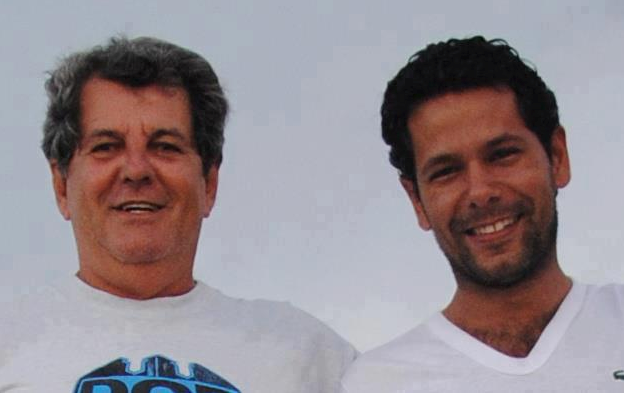
Oswaldo Payá and Harold Cepero killed July 22, 2012
 The Stasi's Continuing Legacy in Cuba
The East German Stasi trained the Cuban State Security service known as "G2" and one of its standard tactics was arranging car accidents. Not only in East Germany but in West Germany as well as was the case with Lutz Eigendorf an East German soccer player who defected to the West on March 20, 1979 and died in a mysterious car accident on March 5, 1983. Wolfgang Welsch a critic of the East German regime was subjected to three attempts on his life the second being a "car accident."

Like their East German counterparts, Castro's State Security has not only infiltrated dissident groups on the island but the highest levels of the United States intelligence services and State Department. The case of Ana Belen Montes and Walter Kendall Myers should serve as a warning to those that underestimate this dictatorship. The poisoning of dissidents and staged car accidents were standard tactics of the Stasi that the Cuban intelligence service made their own and continue to use to the present day. A well documented and high profile example of Cuban state security staging a fatal "car accident" are the July 22, 2012 killings of  Oswaldo Payá Sardiñas and Harold Cepero Escalante

 
Cuba's Berlin Wall: The Florida Straits
On December 16, 2014, the Cuban coast guard rammed and sank a boat with 32 refugees, one of them, Diosbel Díaz Bioto, went missing and is presumed dead. The rest were repatriated and detained. Less than four months later, Yuriniesky Martínez Reina (age 28) was shot in the back and killed by state security chief Miguel Angel Río Seco Rodríguez in the Martí municipality of Matanzas, Cuba, for peacefully trying to leave Cuba. The Castro regime for decades has engaged in the murder of fleeing refugees. A particularly egregious, well documented, example is the July 13, 1994 "13 de Marzo" tugboat massacre in which 37 men, women and children were killed. According to academics, Juan Clark and Holly Ackerman, in their 1995 monograph The Cuban Balseros: Voyage of Uncertainty as many as 100,000 Cubans have died crossing the Florida Straits, with many of them victims of the Cuban border patrol.

The need for solidarity 
Former Czech president and dissident leader Vaclav Havel, who successfully confronted a totalitarian regime using nonviolent means on the 20th anniversary of the Fall of the Berlin Wall gave an address to the European Parliament where he gave the following advice as to what free countries should do: 
Above all, clear and unequivocal solidarity with all those confronted by totalitarian or authoritarian regimes wherever they are in the world. And economic or other particular interests should not hinder such solidarity. Even a minor, discreet and well-intentioned compromise can have fatal consequences– even if only in the long term, or indirectly. One must not retreat in the face of evil, because it is in the nature of evil to take advantage of every concession. Besides, Europe has already had its own unfortunate experience of appeasement policies. Our support can help open-minded people or outspoken witnesses to the situation in North Korea, Burma, Iran, Tibet, Belarus, Cuba or anywhere else, much more than we think.
 The Cuban Adjustment Act according to a former Cuban prisoner of conscience is the "most comprehensive and humane act of solidarity, of the great American nation." Now is not the time to eliminate it.

Wednesday, January 16, 2013

"MURDER Jose Daniel Ferrer & we will solve your problems." - State Security to 18-yr old

Cuban State Security outdoes Machiavelli

"I can add colours to the chameleon,
Change shapes with Proteus for advantages,
And set the murderous Machiavel to school." (Henry VI, Part III)


Cuban state security agent to 18-year old, Yohandry Pupo Sarmiento, a young dissident that they had pressured into a suicide attempt: "MURDER Jose Daniel Ferrer and we will solve your problems."

Capitol Hill Cubans in their blog entry "Pro-Democracy Leader Targeted in Murder Plot" outlined the context of the conspiracy to murder Jose Daniel Ferrer Garcia of the Patriotic Union of Cuba (UNPACU). UNPACU has identified and mobilized new activists in Eastern Cuba and carried out numerous actions that have upset regime officials and the dictatorship is responding:
Thirty-two of UNPACU's members are currently in prison for political offenses -- two of them are women. Moreover, recently three UNPACU activists, Jesus Diaz Morales, Josue Senna and Ariel Meneses Cruz, were chased down by hooded individuals and beaten with blunt objects. The 18-year old, Yohandry Pupo Sarmiento, attempted suicide due to the pressure put on him by Castro's secret police. Pupo would later confess the episode to Ferrer. He was asked to poison Ferrer's food -- also putting Ferrer's wife and children at risk.
The deaths of human rights defenders in Cuba, over the past three years such as Orlando Zapata Tamayo, Laura Pollan, and Oswaldo Paya is evidence that the regime has taken its previous tactic of decapitation of the opposition to a new and more permanent level involving extrajudicial killings. The latest attempt against the life of Jose Daniel Ferrer Garcia is part of the pattern.

There are two constants in the patterns of repression and human rights violations in Cuba over the past 53 years and they are the rising body count of victims and the use of fear as a tool of political control to maintain power over the Cuban populace. Underestimating the Castro regime has been a great mistake made by numerous "Cuba experts." 


One should recall that what would become the Castro regime's Department of State Security also known as G-2 got its start in the Guerrilla movement on August 22, 1958.  G-2 was trained by the most brutal intelligence service in the Soviet East Bloc, the East German Stasi. This relationship between the Stasi and the G-2 officially began on February 13, 1960 when Fidel Castro and Vice Premier Anastas Mikoyan signed the Soviet-Cuban pact. In addition to the Castro brothers another one of the founders of state security in Cuba, Ramiro Valdez, is still active and as ruthless as ever with over a half century of experience.


Like their East German counterparts, Castro's State Security has not only infiltrated dissident groups on the island but the highest levels of the United States intelligence services and State Department. The case of Ana Belen Montes and Walter Kendall Myers should serve as a warning to those that underestimate this dictatorship. The poisoning of dissidents and staged car accidents were standard tactics of the Stasi that the Cuban intelligence service made them their own.


Cuban state security has managed to out survive their murderous Stasi mentors or in other words to outdo Machiavelli. 

Tuesday, July 24, 2012

Killing the future?: The Suspicious Death of Oswaldo Paya

The death of Oswaldo Paya has all the signs of a State Security operation

Burial of Oswaldo Paya today in Cuba


Oswaldo Paya's family has reported that he and the other three passengers in the car were forced off the road deliberately and that this led to the deaths of the two Cuban passengers riding in the vehicle. There is a long track record that demonstrates that the regime practices this type of tactic with individuals it does not want around.

Since Raul Castro took over from his brother in 2006 a lethal shift in tactics has been observed. As recently as 2003 Fidel Castro had presided over sending innocent men to 25 and 28 year prison sentences for organizing a petition drive while threatening to have them executed before a firing squad. Seventy Five new prisoners of conscience gave birth to a new formidable opponent in March of 2003, the Ladies in White.

It appears that the lessons drawn by Raul Castro and first learned by Cuban State Security when being formed and trained by the brutal and effective East German Stasi is that instead of long term prison sentences continuous harassment, short term prison sentences, "accidents" organized to liquidate dissidents and the occasional brutal killing to strike fear into the populace.  Its not to say that Fidel Castro back in the 1960s and as recently as 1994 and 1996 respectively did not organize intelligence operations to kill innocent Cubans.  The July 13, 1994 "13 de Marzo"tugboat massacre and the February 24, 1996 Brothers to the Rescue shoot down are but two examples of the regime's brutality with a body count stretches back 53 years.

Further evidence that the "car accident" was a premeditated act arranged for Oswaldo Paya was that this was not the first time; the regime had also tried with another vehicle 20 days earlier while he was in Havana. In addition we know that an attempt was made against Ladies in White leader Laura Pollan and captured on the video below at 7 minutes and 27 seconds.


It is not only Cubans that are targeted. A U.S. diplomat Robin Meyers was subjected to cars being used against her as weapons by state security agents on the eve and day of the Brothers to the Rescue shootdown February 23-24, 1996 The Miami Herald reported on it on November 24, 1996 after she had been expelled from the country by the Cuban regime:
On Friday, Feb. 23, she was driving home from the U.S. interests section when a white Soviet-built Lada nearly sideswiped her car. She wrote off the near-miss to faulty brakes. Then it happened again. And again. She doubled back to the mission and had a U.S. security agent escort her home.
The next day, she left for work, comfortably sandwiched between two U.S. escort cars. But another Lada, stuffed with her now-familiar baby sitters, tried to break into the chain of cars. She fled through an intersection on a changing light. The Lada tried to follow but was too late, and was slammed by an oncoming car.
As mentioned earlier the East German Stasi trained the Cuban State Security service known as "G2" and one of its standard tactics was arranging car accidents. Not only in East Germany but in West Germany as well as was the case with Lutz Eigendorf an East German soccer player who defected to the West on March 20, 1979 and died in a mysterious car accident on March 5, 1983. Wolfgang Welsch a critic of the East German regime was subjected to three attempts on his life the second being a "car accident." These strange car accidents also took place in other countries of the East Bloc for instance on December 1, 1984 two police men investigating the murder of a solidarity priest in Poland died in a car crash.  A car accident was set up to kill another Solidarity priest, Jerzy Popiełuszko on October 13, 1984, but he escaped it, only to later be kidnapped beaten, tortured and killed by three state security officers on October 19, 1984. His body was dumped in a reservoir and recovered on October 30, 1984.

The deaths of Laura Pollan by a mysterious illness and what amounted to purposeful medical neglect in October of 2011 and now the suspicious death of Oswaldo Paya should tell opinion makers around the world the Castro brothers maybe killing Cuba's future in order to hang on to power today. Remaining silent before these crimes and possible crimes is to be complicit. A transparent international investigation is needed into the circumstances that led to the deaths of Oswaldo Paya and Harold Cepero.

Thursday, May 3, 2012

East German and Cuban prisoners were forced to make Ikea furniture in the 1980s

National German newspaper, Frankfurter Allgemeine Zeitung (FAZ), says that Ikea furniture company used East German and Cuban prison labor to make its furniture in the 1980s. Newspaper said that it was possible that political prisoners were made to build Ikea furniture.


Ikea 'also used Cuban prison labour'

Published: 3 May 12 12:49 CET


The Frankfurter Allgemeine Zeitung (FAZ) said it has seen East German files about a deal for Ikea furniture to be made in Cuban prisons. 

The deal was struck in September 1987, after a delegation of East Germans went to Havana for talks with the Cuban Interior Ministry. East German documents show that they also spoke with Enrique Sanchez, who headed the Cuban company Emiat – responsible for furnishing the holiday and guest homes of the Cuban political elite. 

The East German files say production sites were “incorporated in the prison facilities of the Interior Ministry” in Cuba. 

A contract was later signed with East Berlin-based “Ikea Trading Berlin”, the paper said, for up to 4,000 “Falkenberg” three-piece suites and then 10,000 tables for children and 35,000 dining tables, all to be made in Cuba. 

Problems arose in early 1988, when the first delivery of “Falkenberg” sofas was halted because of poor quality, prompting the East Germans to take another trip to Cuba to ensure production was up to Ikea quality standards. Only then, the documents show, could, “a direct shipment from Havana to Sweden be undertaken.”

The claims will increase pressure on the Swedish retail firm, which has already said this week it will look into allegations that East German prisoners were forced to make its products in the 1970s and 1980s. A spokesman told the FAZ it knew nothing about the Cuban production claims. 

But this was also the initial response to the East German prison labour claims – and early this week the company said it planned to examine Stasi secret service files from the time to check for evidence. 

“We take this matter extremely seriously,” said Ikea spokeswoman Jeanette Skjelmose on Monday. 

“We have requested documents from the old Stasi archive and are speaking with people who were with us at that time.”

The FAZ said it was possible that political prisoners were made to build Ikea furniture in East Germany without the company knowing about it. It said many prisoners had to work for companies, without the prisoners knowing where the stuff they made was destined for, nor the firms themselves knowing who had been involved. 

The Local/hc


http://www.thelocal.de/national/20120503-42321.html

Friday, September 11, 2009

Cuba uses sniffer dogs to track down dissidents copying E. German Stasi


For dissidents, "this is routine. Without a judicial ruling, they order them to swab a little cloth on their armpits and genitals. . . . The sample is not because of anything specific. It's just to store it.They say that if someone puts up graffiti against the government, the specialized dogs can identify them.'' - said Elizardo Sánchez by phone from Havana to The Miami Herald

Taken from:
Cuba uses sniffer dogs to track down crooks, dissidents by Juan O. Tamayo http://www.miamiherald.com/581/story/1225982.html?storylink=omni_popular September 9, 2009 The Miami Herald

The East German spy agency Stasi's first major task abroad was training Cuba's intelligence service and secret police in 1960

"The Stasi's first major task abroad was in Cuba, after Fidel Castro and Vice Premier Anastas Mikoyan signed the Soviet-Cuban pact on February 13, 1960, officially placing Cuba in the Soviet bloc. As Soviet arms shipments began, Mielke sent a number of Stasi officers of General Wolf's HVA to Havana. Led by Colonel Siegfried Fiedler, they assisted in setting up what became a first-rate intelligence service and an oppressive secret police. As a result Cuba's relations with East Germany developed as closely as those with the Soviet Union. Intelligence gathered in the United States by the Cubans was routinely shared with the Stasi. Much of the information contained in the dossier the Stasi maintained on President Ronald Reagan, for example, originated with the Cubans."

Taken from Stasi: the untold story of the East German secret police By John O. Koehler pg 297 http://bit.ly/16tDhW

One of the Stasi's practices was gathering scents of suspects such as dissidents so that dogs could later target them. They trained Cuba's intelligence service known as "G2" that is still using the same practices today

Hernandez's 13-page paper, written in an academic style that includes a definition of ``smell,'' notes that the use of ``criminal odorology'' started in the Soviet Union in the 1960s, was developed by the former East Germany and in 1972 was established around Communist-ruled Europe.

After East Germany collapsed in 1989, West German investigators found a warehouse packed with tens of thousands of sealed jars containing bits of cloth impregnated with the odors of criminals and dissidents -- used to identify or track them.

Cuba began building an ``odorology laboratory'' in 1989 ``with the experience of some compañeros who had visited those countries,'' Hernandez noted. Operational tests were carried out in 1991, and by 1993 the technique had been established throughout the island.

Many of the sniffer dogs are German shepherds from the Czech Republic, Bulgaria and Hungary. Less threatening cocker spaniels have been used at the Havana airport.

Taken from: Cuba uses sniffer dogs to track down crooks, dissidents by Juan O. Tamayo http://www.miamiherald.com/581/story/1225982.html?storylink=omni_popular

The "odor bank" at the Havana police offices, popularly known as "100 and Aldabó" after its street address, measures about 75 by 30 feet and is filled with metal shelving and clear glass jars containing cloth swabs, according to one Cuban exile who toured it in the early 1990s. He asked for anonymity to protect his relatives still in Cuba.

As for the dogs' use against dissidents, "this is an Orwellian thing, a routine thing," said Havana human-rights activist Elizardo Sánchez, referring to George Orwell's 1984 tale of totalitarian repression. "Criminality here continues to rise in an alarming manner, but they continue to prioritize the political repression."

Taken from: Cuba uses sniffer dogs to track down crooks, dissidents by Juan O. Tamayo http://www.miamiherald.com/581/story/1225982.html?storylink=omni_popular

The Oscar winning film The Lives of Others dramatizes how the scents were gathered in the following scene: http://bit.ly/11drRP