Showing posts with label political prisoners. Show all posts

Friday, February 23, 2024

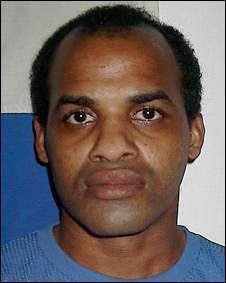
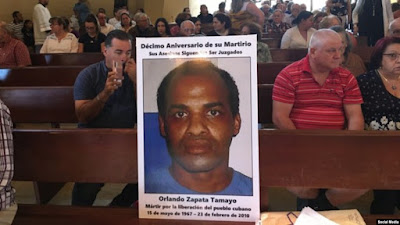
Fourteen years ago on February 23, 2010 prisoner of conscience Orlando Zapata Tamayo was killed by Cuban guards while on hunger strike in Cuba

"Long live human rights, with my blood I wrote to you so that this be saved as evidence of the savagery we are subjected to that are victims of the Pedro Luis Boitel political prisoners [movement]" - Orlando Zapata Tamayo, letter smuggled out April of 2004*

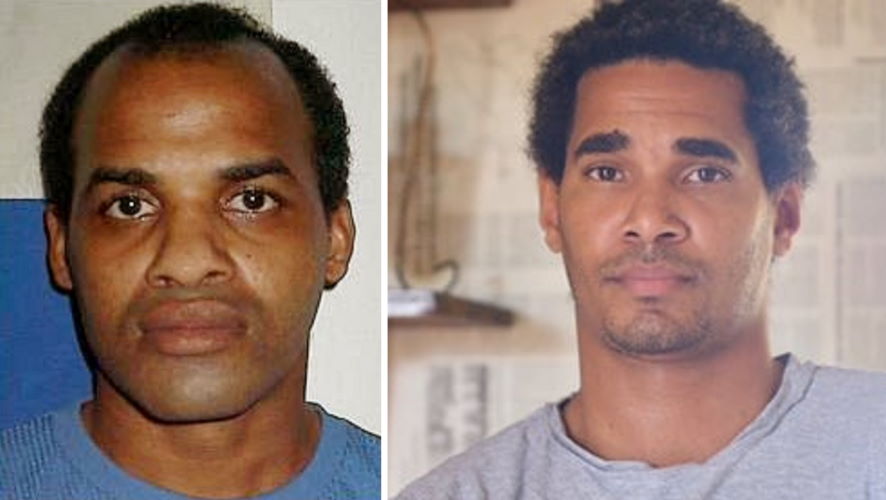
Orlando Zapata Tamayo May 15, 1967 - February 23, 2010

Fyodor Dostoevsky wrote in his 1861 book, The House of the Dead  that "the degree of civilization in a society can be judged by entering its prisons." What does this say about the Cuban government that has barred the International Committee of the Red Cross from visiting Cuba's prisons for decades?

Many Cubans have died over the past 64 years suffering cruel treatment at the hands of communist prison officials in the Castro dictatorship.

Today marks the death of one more. His name was Orlando Zapata Tamayo.

Orlando Zapata Tamayo was a human rights defender who was unjustly imprisoned in the Spring of 2003 and was tortured by Cuban prison officials and state security agents over the next six years and ten months. He was killed on February 23, 2010 following a prolonged hunger strike, during which prison guards repeatedly refused him water over 18 days causing his kidneys to fail. He is a martyr of Cuban communism.

Oswaldo Payá Sardiñas with photocopy image of Orlando Zapata Tamayo

Cuban opposition leader Oswaldo Payá Sardiñas, who was murdered by agents of the Cuban dictatorship on July 22, 2012, issued a statement the same day that Orlando died and appeared in a photograph holding up a photocopy of the martyred human rights defender name and image. 

"Orlando Zapata Tamayo, died this afternoon, February 23, 2010, after suffering many indignities, racist slights, beatings and abuse by prison guards and State Security. Zapata was killed slowly over many days and many months in every prison in which he was confined. Zapata was imprisoned for denouncing human rights violations and for daring to speak openly of the Varela Project in Havana's Central Park. He was not a terrorist, or conspirator, or used violence. Initially he was sentenced to three years in prison, but after successive provocations and maneuvers staged by his executioners, he was sentenced to more than thirty years in prison." 

A brief biography of Orlando Zapata Tamayo 

Orlando Zapata Tamayo was born in Santiago, Cuba on May 15, 1967. He was by vocation a brick layer and also a human rights activist, a member of the Movimiento Alternativa Republicana, Alternative Republican Movement, and of the Consejo Nacional de Resistencia Cívica, National Civic Resistance Committee. Orlando gathered signatures for the Varela Project, a citizen initiative to amend the Cuban constitution using legal means with the aim of bringing Cuba in line with international human rights standards.

Amnesty International had documented how Orlando had been arrested several times in the past. For example, he was temporarily detained on 3 July 2002 and 28 October 2002. In November of 2002 after taking part in a workshop on human rights in the central Havana park, José Martí, he and eight other government opponents were arrested and later released. He was also arrested on December 6, 2002 along with fellow prisoners of conscience Oscar Elías Biscet and Raúl Arencibia Fajardo. 

Dr. Biscet just released from prison a month earlier had sought to form a grassroots project for the promotion of human rights generally and the Universal Declaration of Human Rights more specifically, called "Friends of Human Rights." State security prevented them from entering the home of Raúl Arencibia Fajardo, Oscar Biscet, Orlando Zapata Tamayo,Virgilio Marante Güelmes and 12 others held a sit-in in the street in protest and chanted "long live human rights" and "freedom for political prisoners." They were then arrested and taken to the Tenth Unit of the National Revolutionary Police, Décima Unidad de La Policía Nacional Revolucionaria (PNR)

Orlando Zapata Tamayo was released three months later, on March 8, 2003, but Oscar Elias Biscet, Virgilio Marante Güelmes, and Raúl Arencibia Fajardo remained imprisoned. On the morning of March 20, 2003 whilst taking part in a fast at the Fundación Jesús Yánez Pelletier, Jesús Yánez Pelletier Foundation, in Havana, to demand the release of Oscar Biscet and the other political prisoners. Orlando was taken to the Villa Marista State Security Headquarters.

He was moved around different prisons, including Quivicán Prison, Guanajay Prison, and Combinado del Este Prison in Havana. According to Amnesty International on October 20, 2003 Orlando was dragged along the floor of Combinado del Este Prison by prison officials after requesting medical attention, leaving his back full of lacerations. Orlando managed to smuggle a letter out following another brutal beating that was published in April of 2004:

"My dear brothers in the internal opposition in Cuba. I have many things to say to you, but I did not want to do it with paper and ink, because I hope to go to you one day when our country is free without the Castro dictatorship. Long live human rights, with my blood I wrote to you so that this be saved as evidence of the savagery we are subjected to that are victims of the Pedro Luis Boitel political prisoners [movement]."*

On May 18, 2004 Orlando Zapata Tamayo, Virgilio Marante Güelmes, and Raúl Arencibia Fajardo were each sentenced to three years in prison for contempt for authority, disorderly conduct and resisting arrest in a one-day trial. Orlando Zapata Tamayo would continue his rebelliousness and his non-violent resistance posture while in prison and suffer numerous beatings and new charges of disobedience and disrespect leading to decades added to his prison sentence in eight additional trials.

Protests for Orlando Zapata Tamayo continue

Even though it has been fourteen years, the martyred Cuban human rights defender is still remembered. The dictatorship tried from the start to put down and stifle protests and acts of remembrance for him, but they were unsuccessful. Last night in Washington DC outside of the Cuban Embassy activists gathered to demand justice for Orlando Zapata Tamayo, and others martyred by the communist dictatorship in Cuba.

On September 30, 2010 the Canadian punk rock band I.H.A.D. released a song linking what happened to Orlando Zapata Tamayo to the indifference of Canadian tourists visiting Cuba asking the question: Where were you the day Orlando Zapata died? On May 10, 2012 the Free Cuba Foundation published a video accompanying the song, after receiving the band's permission, with images and song lyrics. 

Cuban Historical Political Prison and the United Exile Now on Saturday, February 24, 2024 at 2:00pm at the headquarters of Cuban Historical Political Prison located on 140 SW 13th Avenue in Miami, Florida will pay homage to Orlando Zapata Tamayo.

Sunday, May 21, 2023

May 21: International Day of Solidarity with Political Prisoners and the people of Belarus

 Solidarity with our brothers and sisters in Belarus

May 21st is the day of the political prisoner in Belarus. This event was organized by Libereco, a partnership for Human Rights is a Swiss-German NGO that advocates for the respect and maintenance of human rights in Belarus and Ukraine.

This blog today is dedicated to Belarusian journalist Raman Pratasevich and his Russian girlfriend Sofia Sapega who today are political prisoners in Belarus.

Belarus, Europe's last dictatorship, its security services and a MiG-29 on May 23, 2021 diverted a commercial airline to kidnap a dissident journalist and his girlfriend. "Belarusian authorities scrambled a [Mig-29] fighter jet and flagged what turned out to be a false bomb alert to force a Ryanair plane to land on Sunday and then detained [Raman Pratasevich] an opposition-minded journalist, and [ his girlfriend Sofia Sapega ] who [were] on board, drawing condemnation from Europe and the United States," reported Reuters.  

Political Prisoners: Raman Pratasevich and Sofia Sapega

According to the U.S. Secretary of State Antony Blinken in a statement released on May 23, 2021, " initial reports suggesting the involvement of the Belarusian security services and the use of Belarusian military aircraft to escort the plane are deeply concerning and require full investigation."

CNN on May 25, 2021 reported on the gravity of what happened and also quoted the CEO of Ryanair:

The 26-year-old dissident was traveling on Ryanair flight 4978 from Athens, Greece to Vilnius, Lithuania on Sunday when shortly before touchdown the plane was diverted by Belarusian air traffic control to the capital Minsk over a supposed security alert.

Ryanair's CEO Michael O'Leary accused Belarus of "state-sponsored piracy," telling Ireland's Newstalk radio Monday that he believed Belarusian KGB agents were also on the flight that was carrying 26-year-old Protasevich, who is wanted in Belarus on a variety of charges.

A  short while later a coerced confession was aired in violation of international standards.


Nearly a year later on May 6, 2022 Sofia Sapega was sentenced to six years in a Belarusian prison.  Raman Pratasevich was sentenced to eight years in prison earlier this month, nearly two years after a arbitrary detention that appeared to be more of an international kidnapping.

They should have never been arrested in the first place.

Wednesday, February 22, 2023

Thirteen years ago on February 23, 2010 prisoner of conscience Orlando Zapata Tamayo died on hunger strike in Cuba

"Long live human rights, with my blood I wrote to you so that this be saved as evidence of the savagery we are subjected to that are victims of the Pedro Luis Boitel political prisoners [movement]" - Orlando Zapata Tamayo, letter smuggled out April of 2004*

Orlando Zapata Tamayo May 15, 1967 - February 23, 2010

Fyodor Dostoevsky wrote in his 1861 book, The House of the Dead  that "the degree of civilization in a society can be judged by entering its prisons." What does this say about the Cuban government that has barred the International Committee of the Red Cross from visiting Cuba's prisons for decades?

Throughout the previous 64 years, a large number of Cubans have perished as a result of inhumane treatment by prison guards of the Cuban communist dictatorship. 

Tomorrow will observe the 13th anniversary of another unjust death. Orlando Zapata Tamayo was the martyred man's name. 

Orlando Zapata Tamayo was a human rights defender who was unjustly imprisoned in the Spring of 2003 and was tortured by Cuban prison officials and state security agents over the next six years and ten months. He died on February 23, 2010 following a prolonged hunger strike, aggravated by prison guards refusing him water in an effort to break his spirit. He is a victim of Cuban communism.

Human rights defender Orlando Zapata Tamayo was wrongfully detained in the spring of 2003. Throughout the ensuing six years and ten months, he was tortured by state security personnel and prison guards in Cuba. Following a protracted hunger strike that was made worse by prison guards depriving him of water in an effort to crush his spirit, he passed away on February 23, 2010. He is a casualty of communist Cuba. 

Oswaldo Payá Sardiñas with photocopy image of Orlando Zapata Tamayo

Cuban opposition leader Oswaldo Payá Sardiñas, who was killed under suspicious circumstances on July 22, 2012, issued a statement the same day that Orlando died and appeared in a photograph holding up a photocopy of the martyred human rights defender name and image. 

"Orlando Zapata Tamayo, died this afternoon, February 23, 2010, after suffering many indignities, racist slights, beatings and abuse by prison guards and State Security. Zapata was killed slowly over many days and many months in every prison in which he was confined. Zapata was imprisoned for denouncing human rights violations and for daring to speak openly of the Varela Project in Havana's Central Park. He was not a terrorist, or conspirator, or used violence. Initially he was sentenced to three years in prison, but after successive provocations and maneuvers staged by his executioners, he was sentenced to more than thirty years in prison." 
Remembering Orlando Zapata

Orlando Zapata Tamayo was born in Santiago, Cuba on May 15, 1967. He was by vocation a brick layer and also a human rights activist, a member of the Movimiento Alternativa Republicana, Alternative Republican Movement, and of the Consejo Nacional de Resistencia Cívica, National Civic Resistance Committee. Orlando gathered signatures for the Varela Project, a citizen initiative to amend the Cuban constitution using legal means with the aim of bringing Cuba in line with international human rights standards.
 
Amnesty International had documented how Orlando had been arrested several times in the past. For example, he was temporarily detained on 3 July 2002 and 28 October 2002. In November of 2002 after taking part in a workshop on human rights in the central Havana park, José Martí, he and eight other government opponents were arrested and later released. He was also arrested on December 6, 2002 along with fellow prisoners of conscience Oscar Elías Biscet and Raúl Arencibia Fajardo.  
 
Dr. Biscet just released from prison a month earlier had sought to form a grassroots project for the promotion of human rights generally and the Universal Declaration of Human Rights more specifically, called "Friends of Human Rights." State security prevented them from entering the home of Raúl Arencibia Fajardo, Oscar Biscet, Orlando Zapata Tamayo,Virgilio Marante Güelmes and 12 others held a sit-in in the street in protest and chanted "long live human rights" and "freedom for political prisoners." They were then arrested and taken to the Tenth Unit of the National Revolutionary Police, Décima Unidad de La Policía Nacional Revolucionaria (PNR)

Orlando Zapata Tamayo was released three months later, on March 8, 2003, but Oscar Elias Biscet, Virgilio Marante Güelmes, and Raúl Arencibia Fajardo remained imprisoned. On the morning of March 20, 2003 whilst taking part in a fast at the Fundación Jesús Yánez Pelletier, Jesús Yánez Pelletier Foundation, in Havana, to demand the release of Oscar Biscet and the other political prisoners. Orlando was taken to the Villa Marista State Security Headquarters.

He was moved around different prisons, including Quivicán Prison, Guanajay Prison, and Combinado del Este Prison in Havana. According to Amnesty International on October 20, 2003 Orlando was dragged along the floor of Combinado del Este Prison by prison officials after requesting medical attention, leaving his back full of lacerations. Orlando managed to smuggle a letter out following another brutal beating that was published in April of 2004:
"My dear brothers in the internal opposition in Cuba. I have many things to say to you, but I did not want to do it with paper and ink, because I hope to go to you one day when our country is free without the Castro dictatorship. Long live human rights, with my blood I wrote to you so that this be saved as evidence of the savagery we are subjected to that are victims of the Pedro Luis Boitel political prisoners [movement]."*

On May 18, 2004 Orlando Zapata Tamayo, Virgilio Marante Güelmes, and Raúl Arencibia Fajardo were each sentenced to three years in prison for contempt for authority, disorderly conduct and resisting arrest in a one-day trial. Orlando Zapata Tamayo would continue his rebelliousness and his non-violent resistance posture while in prison and suffer numerous beatings and new charges of disobedience and disrespect leading to decades added to his prison sentence in eight additional trials.

Protests for Orlando Zapata Tamayo continue


Even though it has been thirteen years, the martyred Cuban human rights defender is still remembered. The dictatorship tried from the start to put down and stifle protests and acts of remembrance for him, but they were unsuccessful.

In March of 2010 at the second Geneva Summit for Human Rights, former prisoner of conscience Jose Gabriel Ramon Castillo testified to what had happened to Orlando Zapata. 

In Norway, regime agents became violent and created international controversy after a Cuban diplomat bit a young Norwegian-Cuban woman for trying to record her mom engaged in a protest remembering Orlando Zapata Tamayo in front of the Cuban Embassy in Oslo in May of 2010.

On September 30, 2010 the Canadian punk rock band I.H.A.D. released a song linking what happened to Orlando Zapata Tamayo to the indifference of Canadian tourists visiting Cuba asking the question: Where were you the day Orlando Zapata died? On May 10, 2012 the Free Cuba Foundation published a video accompanying the song, after receiving the band's permission, with images and song lyrics. 

Rosa María Payá Acevedo remembers Orlando Zapata Tamayo in 2016.

On February 23, 2016 at the 8th edition of the Geneva Summit for Human Rights and Democracy Rosa María Payá gave the final presentation in which she remembered and honored the memory of Orlando Zapata Tamayo on the sixth anniversary of his passing.  

On 2/19/2018 twenty activists remember Orlando Zapata Tamayo

Four days prior to marking eight years to the day that Orlando Zapata died, activists inside Cuba took to protest in the streets with banners remembering the  martyred human rights activist. The Castro regime continues to do all it can to eliminate the memory of this humble and good man, but the dictatorship has failed.

On May 21, 2021 Cuban feminist Ileana Fuentes in an essay published in Cubanet titled "Let it be known: Black Lives Do Not Matter in Cuba" brought together the cases of Orlando Zapata Tamayo and Luis Manuel Otero Alcántara.

Orlando Zapata Tamayo y Luis Manuel Otero Alcántara (Fotos: Internet)

Tomorrow, we will once again honor and remember the brick layer and human rights defender by writing about him, holding a vigil at Lafayette Park, next to the White House, then march to the Cuban Embassy, and hold a second vigil outside the Cuban Embassy in Washington DC.

We are also continuing Orlando's work for human rights in Cuba by circulating a petition calling for the release of the hundreds of political prisoners held in Cuban jails under the Castro regime, allowing the International Committee of the Red Cross access to all Cuban prison facilities, and a second petition requesting the expulsion of Cuba from the UN Human Rights Council. 

Orlando Zapata Tamayo's legacy is carried on by nonviolent protests against injustice both inside and outside of Cuba's prisons. The Castro dictatorship was shocked to find that tens of thousands of Cubans were carrying on his tradition of upholding human rights and demanding an end to the Castro regime in mid-July 2021. 

Mass for Orlando Zapata Tamayo at Our Lady of Charity on February 23, 2020

*Source: "Queridos hermanos míos de la oposición interna de Cuba", escribió Zapata en su misiva, "tengo muchas cosas que decirles, pero no he querido hacerlo por papel y tinta, pues espero ir a ustedes un día cuando nuestra patria sea libre y sin dictadura castrista. Vivan los derechos humanos, con mi sangre les escribí, para que la guarden como parte del salvajismo de que somos víctima el presidio político Pedro Luis Boitel". - "Golpiza y celda tapiada para Orlando Zapata"  La Habana, 22 de abril 2004 (María López, Lux Info Press / www.cubanet.org )


Wednesday, May 25, 2022

#OTD: 50 years ago today student leader Pedro Luis Boitel who fought against the Batista and Castro dictatorships died on hunger strike


Martyred student leader Pedro Luis Boitel fought by Fidel Castro's side to bring an end to the Batista dictatorship and restore Cuban democracy. However, as Castro came to impose a communist regime, the student leader became a liability.
 
Pedro Luis Boitel was born in Cuba to a family of modest means of French origin. He studied at the University of Havana while working as a radio technician. He was also a poet. Opposing the dictatorship of Fulgencio Batista, he joined the July 26 movement led by Fidel Castro. The majority of the movement's members, like Pedro Luis, were anti-communists.

Once Batista left for exile and Fidel Castro took control, the anti-communist members of the July 26 movement became an obstacle to absolute power. Following the revolution, Boitel returned to University, where his fellow students nominated him to run for the presidency of the Federation of University Students in 1960.  Fidel Castro personally intervened to remove him from the presidency. Pedro Luis Boitel refused to betray the Federation of University Students. He sought to maintain academic freedom and autonomy. This made Pedro Luis an obstacle
to the emerging communist regime. 

Pedro Luis Boitel at CMQ Radio Station

As time went on and the dictatorial nature of the Castro regime became more apparent, the student leader became an opponent of Fidel Castro. Condemned to a decade in prison in 1961, he served the cruel and unjust sentence, but as the date of his release came and went, prison officials refused to release him. 


While imprisoned, Boitel continued to challenge the repression and the impunity of regime prison officials.  He left a powerful impression on his fellow political prisoners. In 2009, Gregorio Asorio in an interview discussed how he first met Boitel while in prison for his opposition to the Castro dictatorship in the 1960s. Prison officials condemned black Cuban political prisoners for opposing Castro, thinking that they should be grateful to the dictator, and this thin man challenged the guards, declaring that Cuban blacks were part of the Cuban nation, and had helped found the Cuban nation in the struggle for independence. This man then cited Jose Marti's quote that anything that divides humanity is a sin against humanity. Gregorio introduced himself and asked his name, and learned that he was Pedro Luis Boitel.

In response to the years of cruelty, torture, and now denial of his freedom, he went on hunger strike on April 3, 1972. Pedro Luis Boitel died fifty years ago on May 25, 1972, after 53 days on hunger strike in Havana at the Castillo del Principe prison. Academic freedom and autonomy ended in 1960 and were replaced with fear, repression, and ideological litmus tests to attend university. It has still not been restored today. He was buried in an unmarked grave.

Fifteen years later, in the documentary Nobody Listened, Boitel's mother spoke on camera about her son's imprisonment and death.  

Fifty years later, the Castro dictatorship's cruelty continues unabated, as does the courage of Cubans who oppose it. 

Below is a poem by Pedro Luis written during his long years of imprisonment.


The Exile 
by Pedro Luis Boitel 
 
Distant melody that invades my room 
shadows that travel the corners of my mind 
my hands, destiny with experiences chained 
that, that is the law of the exile. 
 
Crosses of experiences etched on my skin 
hurting me like the deadly disdain of a woman 
covered with ephemeral times my heart subsists
nostalgic dependence on a child who forgot to grow up. 
 
Memories turned into ghosts 
those who besiege me while I rest 
omnipresent shadows that disturb my dreams 
while I evoke my country in my own way. 
 
Island that disappears on the horizon 
roaring station I once occupied 
today only this withered exodus picks up the wind 
petals scattered in a stream away from the sea. 
 
Exile links me to the past 
I am a slave to a concept, to an idea 
I search among the memories for the beginning of everything 
but I only find ashes, partially buried during my journey. 
 
Exile has sentenced me to live imprisoned in nostalgia, sharing his cell 
but as the years have passed I have learned to wake up, 
and now in my reality I seek my emancipation, my path.

Original Spanish text below

El destierro

por Pedro Luis Boitel

Melodía distante que invade mi habitación
sombras que transitan los rincones de mi mente
mis manos, el destino con vivencias ha encadenado
esa, esa es la ley del desterrado.

Cruces de experiencias grabadas en mi piel
lastimándome cual el mortífero desdeño de una mujer
recubierto de épocas efímeras subsiste mi corazón
dependencia nostálgica de un niño que se olvido de crecer.

Memorias transformadas en fantasmas
aquellos que me asedian mientras reposo
omnipresentes sombras que perturban mis sueños
mientras yo evoco mi país a mi modo.

Isla que desaparece en el horizonte
crepitante estación que alguna vez ocupé
hoy sólo este éxodo marchito recoge el viento
pétalos esparcidos en una corriente ausente de mar.

El destierro me vincula al pasado
soy esclavo de un concepto, de una idea
busco entre los recuerdos el principio de todo
más sólo hallo cenizas, parcialmente sepultadas durante mi trayectoria.

El destierro me ha sentenciado a vivir encarcelado a la nostalgia, compartiendo su celda
pero al transcurrir los años he aprendido a despertar,
y ahora en mi realidad busco mi emancipación, mi senda.

Tuesday, February 22, 2022

Twelve years ago on February 23, 2010 prisoner of conscience Orlando Zapata Tamayo died on hunger strike in Cuba

"Long live human rights, with my blood I wrote to you so that this be saved as evidence of the savagery we are subjected to that are victims of the Pedro Luis Boitel political prisoners [movement]" - Orlando Zapata Tamayo, letter smuggled out April of 2004*

Orlando Zapata Tamayo May 15, 1967 - February 23, 2010

Fyodor Dostoevsky wrote in his 1861 book, The House of the Dead  that "the degree of civilization in a society can be judged by entering its prisons." What does this say about the Cuban government that has barred the International Committee of the Red Cross from visiting Cuba's prisons for decades?

Many Cubans have died over the past 63 years suffering cruel treatment at the hands of communist prison officials in the Castro dictatorship.

Tomorrow marks the death of one more. His name was Orlando Zapata Tamayo.

Orlando Zapata Tamayo was a human rights defender who was unjustly imprisoned in the Spring of 2003 and was tortured by Cuban prison officials and state security agents over the next six years and ten months. He died on February 23, 2010 following a prolonged hunger strike, aggravated by prison guards refusing him water in an effort to break his spirit. He is a victim of Cuban communism.

Oswaldo Payá Sardiñas with photocopy image of Orlando Zapata Tamayo

Cuban opposition leader Oswaldo Payá Sardiñas, who was killed under suspicious circumstances on July 22, 2012, issued a statement the same day that Orlando died and appeared in a photograph holding up a photocopy of the martyred human rights defender name and image. 

"Orlando Zapata Tamayo, died this afternoon, February 23, 2010, after suffering many indignities, racist slights, beatings and abuse by prison guards and State Security. Zapata was killed slowly over many days and many months in every prison in which he was confined. Zapata was imprisoned for denouncing human rights violations and for daring to speak openly of the Varela Project in Havana's Central Park. He was not a terrorist, or conspirator, or used violence. Initially he was sentenced to three years in prison, but after successive provocations and maneuvers staged by his executioners, he was sentenced to more than thirty years in prison." 
Remembering Orlando Zapata
Orlando Zapata Tamayo was born in Santiago, Cuba on May 15, 1967. He was by vocation a brick layer and also a human rights activist, a member of the Movimiento Alternativa Republicana, Alternative Republican Movement, and of the Consejo Nacional de Resistencia Cívica, National Civic Resistance Committee. Orlando gathered signatures for the Varela Project, a citizen initiative to amend the Cuban constitution using legal means with the aim of bringing Cuba in line with international human rights standards.
 
Amnesty International had documented how Orlando had been arrested several times in the past. For example he was temporarily detained on 3 July 2002 and 28 October 2002. In November of 2002 after taking part in a workshop on human rights in the central Havana park, José Martí, he and eight other government opponents were arrested and later released. He was also arrested on December 6, 2002 along with fellow prisoners of conscience Oscar Elías Biscet and Raúl Arencibia Fajardo.  
 
Dr. Biscet just released from prison a month earlier had sought to form a grassroots project for the promotion of human rights generally and the Universal Declaration of Human Rights more specifically, called "Friends of Human Rights." State security prevented them from entering the home of Raúl Arencibia Fajardo, Oscar Biscet, Orlando Zapata Tamayo,Virgilio Marante Güelmes and 12 others held a sit-in in the street in protest and chanted "long live human rights" and "freedom for political prisoners." They were then arrested and taken to the Tenth Unit of the National Revolutionary Police, Décima Unidad de La Policía Nacional Revolucionaria (PNR)

Orlando Zapata Tamayo was released three months later on March 8, 2003, but Oscar Elias Biscet, Virgilio Marante Güelmes, and Raúl Arencibia Fajardo remained imprisoned. On the morning of March 20, 2003 whilst taking part in a fast at the Fundación Jesús Yánez Pelletier, Jesús Yánez Pelletier Foundation, in Havana, to demand the release of Oscar Biscet and the other political prisoners. Orlando was taken to the Villa Marista State Security Headquarters.

He was moved around different prisons, including Quivicán Prison, Guanajay Prison, and Combinado del Este Prison in Havana. According to Amnesty International on October 20, 2003 Orlando was dragged along the floor of Combinado del Este Prison by prison officials after requesting medical attention, leaving his back full of lacerations. Orlando managed to smuggle a letter out following another brutal beating that was published in April of 2004:
"My dear brothers in the internal opposition in Cuba. I have many things to say to you, but I did not want to do it with paper and ink, because I hope to go to you one day when our country is free without the Castro dictatorship. Long live human rights, with my blood I wrote to you so that this be saved as evidence of the savagery we are subjected to that are victims of the Pedro Luis Boitel political prisoners [movement]."*

On May 18, 2004 Orlando Zapata Tamayo, Virgilio Marante Güelmes, and Raúl Arencibia Fajardo were each sentenced to three years in prison for contempt for authority, disorderly conduct and resisting arrest in a one-day trial. Orlando Zapata Tamayo would continue his rebelliousness and his non-violent resistance posture while in prison and suffer numerous beatings and new charges of disobedience and disrespect leading to decades added to his prison sentence in eight additional trials. 


Protests for Orlando Zapata Tamayo continue
Twelve years have passed but the martyred Cuban human rights defender is not forgotten. From the beginning the regime sought to put down and silence protests and acts of remembrance for him, but failed. 

In March of 2010 at the second Geneva Summit for Human Rights former prisoner of conscience Jose Gabriel Ramon Castillo testified to what had happened to Orlando Zapata. 

In Norway, regime agents became violent and created international controversy after a Cuban diplomat bit a young Norwegian-Cuban woman for trying to record her mom engaged in a protest remembering Orlando Zapata Tamayo in front of the Cuban Embassy in Oslo in May of 2010.

On September 30, 2010 the Canadian punk rock band I.H.A.D. released a song linking what happened to Orlando Zapata Tamayo to the indifference of Canadian tourists visiting Cuba asking the question: Where were you the day Orlando Zapata died? On May 10, 2012 the Free Cuba Foundation published a video accompanying the song, after receiving the band's permission, with images and song lyrics. 

Rosa María Payá Acevedo remembers Orlando Zapata Tamayo in 2016.

On February 23, 2016 at the 8th edition of the Geneva Summit for Human Rights and Democracy Rosa María Payá gave the last presentation in which she remembered and honored the memory of Orlando Zapata Tamayo on the sixth anniversary of his passing.  

On 2/19/2018 twenty activists remember Orlando Zapata Tamayo

Four days prior to marking eight years to the day that Orlando Zapata died, activists inside Cuba took to protest in the streets with banners remembering the  martyred human rights activist. The Castro regime continues to do all it can to eliminate the memory of this humble and good man, but the dictatorship has failed.

On May 21, 2021 Cuban feminist Ileana Fuentes in an essay published in Cubanet titled "Let it be known: Black Lives Do Not Matter in Cuba" brought together the cases of Orlando Zapata Tamayo and Luis Manuel Otero Alcántara.

Orlando Zapata Tamayo y Luis Manuel Otero Alcántara (Fotos: Internet)

Tomorrow, we will once again honor and remember the brick layer and human rights defender by writing about him, organizing a vigil and protest outside the Cuban Embassy in Washington DC, and continuing his work for human rights in Cuba, and signing petitions demanding the freedom of hundreds of Cuban political prisoners today inside the Castro regime's prisons, and that the International Committee of the Red Cross be granted access to all the jails in Cuba. 

Following his example, and Article 13 of the Universal Declaration of Human Rights, we will also join in the demand to recognize and advocate for Anamely Ramos's right to return home to Cuba.

The legacy of Orlando Zapata Tamayo continues in the nonviolent resistance to injustice inside and outside of Cuba's prisons, and in mid-July 2021 the dictatorship was surprised to learn that there are tens of thousands continuing his legacy of defending human rights, and calling for an end to the dictatorship.

Special Mass for Orlando Zapata Tamayo at Our Lady of Charity on February 23, 2020

*Source: "Queridos hermanos míos de la oposición interna de Cuba", escribió Zapata en su misiva, "tengo muchas cosas que decirles, pero no he querido hacerlo por papel y tinta, pues espero ir a ustedes un día cuando nuestra patria sea libre y sin dictadura castrista. Vivan los derechos humanos, con mi sangre les escribí, para que la guarden como parte del salvajismo de que somos víctima el presidio político Pedro Luis Boitel". - "Golpiza y celda tapiada para Orlando Zapata"  La Habana, 22 de abril 2004 (María López, Lux Info Press / www.cubanet.org )