"The first victory we can claim is that our hearts are free of hatred. Hence we say to those who persecute us and who try to dominate us: ‘You are my brother. I do not hate you, but you are not going to dominate me by fear. I do not wish to impose my truth, nor do I wish you to impose yours on me. We are going to seek the truth together’. THIS IS THE LIBERATION WHICH WE ARE PROCLAIMING."
Oswaldo José Payá Sardiñas (2002)
Showing posts with label Cuito Cuanavale. Show all posts
Showing posts with label Cuito Cuanavale. Show all posts
These are the top 12 monthly blog entries of the year arranged in chronological
order. George Santayana understood the importance of remembering the
past in order to avoid repeating the same mistakes.
Thursday, January 28, 2021
José Julián Martí Pérez at 168: The heirs of José Martí and those who repress them now
"I think they kill my child every time they deprive a person of their right to think." - José Martí
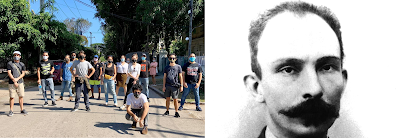
On 27J, the eve of the 168th anniversary of the birth of José Julián Martí Pérez, better known as José Martí, approximately 20 artists, journalists and intellectuals gathered to read some of his works. [...] Preemptive arrests, an act of repudiation against gathered artists and
intellectuals, the Minister of Culture Alpidio Alonso and his
Vice-Minister Fernando León Jacomino, caught on camera
physically assaulting nonviolent demonstrators, and the dissidents
arrested and crammed into a small bus by secret police and beaten up
while already detained, reported Diario de Cuba. [ Full blog entry]
Wednesday, February 17, 2021
Celebrating real Cuban culture and the artists defying totalitarian efforts to rewrite it
Let us no longer shout "Homeland and Death" but "Homeland and Life"
Artists from the San Isidro Movement celebrating Cuban culture
"Totalitarianism demands, in fact, the continuous alteration of the
past, and in the long run probably demands a disbelief in the very
existence of objective truth," observed George Orwell in his essay, "The Prevention of Literature" in the journal Polemic, published in
January 1946. Writers that refuse to go along with alteration of the
past all too often pay a terrible price. This is also true for artists
in other fields because totalitarians seek to control the culture. [ Full blog entry ]
Tuesday, March 23, 2021
Setting the record straight on Cuito Cuanavale, General Arnaldo Ochoa,
and how South African democrats overcame and defeated Apartheid in 1991
Revisiting the nonviolent victory over Apartheid, Castro's
genocidal crimes in Africa, and the show trial of the Cuban general that
spent months battling the South African Defence forces.
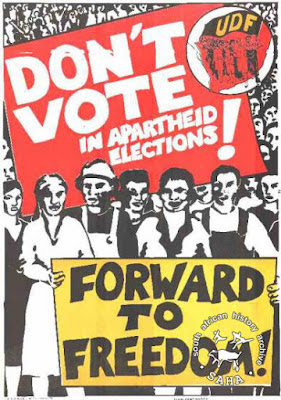
UDF boycotted elections
Communists reject nonviolence as a means to achieve lasting change,
because civil disobedience to them is incompatible with Karl Marx's
theory of class struggle. This is why they demonize and misrepresent Mohandas Gandhi, downplay the real events that brought an end to Apartheid in South Africa, highlight a dubious military victory in 1988 involving Cuban troops and falsely celebrate it as the agent of change. [ Full blog entry ]
Sunday, April 4, 2021
The Radical Left's Contempt for Martin Luther King Jr. in his final years
"But first He must suffer many things and be rejected by this generation." - Luke 17:25
MLK Jr. shot in Memphis, TN at the Lorraine Motel on 4/4/68 at 6:01pm CST
Today is Easter Sunday, but it is also the 53rd observance of the assassination of Reverend Martin Luther King Jr. On Good Friday, I quoted Reverend James Lawson, who like King is an apostle of nonviolence and a Christian pastor, said that “if you want to understand King, you must look at Jesus.” Dr. Martin Luther King Jr., like Jesus, was rejected by all. He was rejected by conservatives, by liberals, by radicals, and by communists. [ Full blog entry ]
Sunday, May 2, 2021
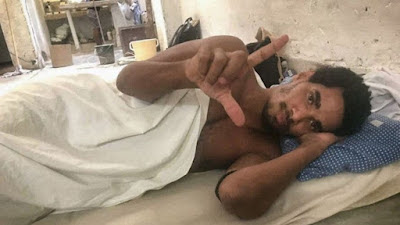
Cuban Dissident Luis Manuel Otero Alcántara on Day 8 of a hunger and
thirst strike: Some context informed by past actions and nonviolence
theory
"I think they kill my child every time they deprive a person of their right to think." - José Martí
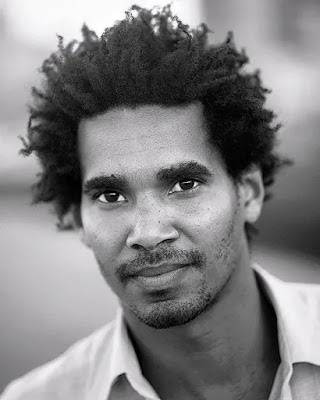
Artist and human rights defender Luis Manuel Otero Alcántara
Luis Manuel Otero Alcántara is on the eighth day of a hunger and thirst strike, and in increasingly poor health. He is engaged in a profound dialogue with a regime that for decades has refused to listen,
to really listen, to Cuban citizens petitioning for and demanding
change. This dialogue has been going on for at least three years. He has
tried all types of protests, petitions, performance art pieces, and
music videos in defense of freedom of expression, especially artistic
expression. [ Full blog entry ]
Monday, June 14, 2021
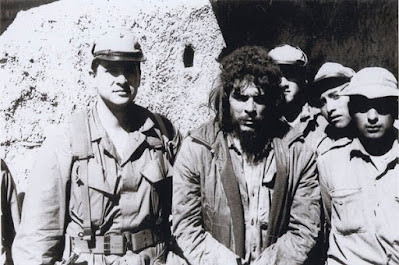
Ernesto "Che" Guevara born on this day in 1928. Nothing to celebrate.
A mass murdering racist, who dined with Mao as millions died of hunger is not someone to celebrate.
"All they that take the sword shall perish with the sword." - Matthew 26, 26:52
Some wish to celebrate Ernesto Guevara's birthday today. If he and his comrades had their way the world would have been subjected to a nuclear holocaust in October 1962, and they were bitterly disappointed that it did not happen.
Thankfully, John F. Kennedy and Nikita Khrushchev reached a peaceful outcome to the Cuban Missile Crisis, but
the Castro regime protested it and was unhappy with their Soviet
allies not launching their nuclear missiles. [ Full blog entry ]
Monday, July 19, 2021
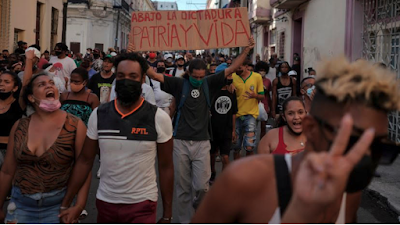
#11July: One week later and nonviolent resistance continues in Cuba
For freedom and justice.
On the streets of Cuba on July 11, 2021
One week later and the protests continue, despite the most brutal
efforts of the Castro regime to silence Cubans on the island. It began
on July 11, 2021 in San Antonio de los Baños, just South East of Havana when Cubans took to the streets in protest.
Others saw it streaming live, and also took to the street in cities and
towns across the country chanting "Freedom" and "Down with the
dictatorship."
President Miguel Diaz-Canel appeared on official television threatening: "They [protesters] would have to pass
over our dead bodies if they want to confront the revolution, and we are
willing to resort to anything." [ Full blog entry ]
Sunday, August 22, 2021
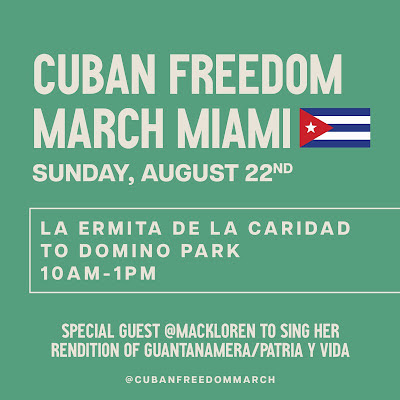
Cuban Freedom March Miami today August 22nd from 10am to 1pm: A reflection on its significance
"If there is to be any chance at all of success, there is only one
way to strive for decency, reason, responsibility, sincerity, civility
and tolerance, and this is decently, reasonably, responsibly, sincerely,
civilly, and tolerantly" - Václav Havel
The Cuban Freedom March
arrives in Miami, Florida today on August 22, 2021 with a march from la
Ermita de la Caridad to Domino Park. The protest starts at 10:00am.
Organizers have carried out successful marches in Washington DC, and Los
Angeles.
On August 11, 2021 the leader of this movement, Alian Collazo, moderated a conversation on "what's really happening in Cuba"
that is necessary viewing to listen to different perspectives, from
young Cuban and Cuban American voices both inside and outside of Cuba.
Twenty years after 9/11: Remembering a horrible day
"Are you ready? Okay. Let's roll."—Todd Morgan Beamer, November 24, 1968–September 11, 2001
2,977 men, women and children
were murdered on September 11, 2001 over the course of a few hours on a
sunny Tuesday morning in three different states. The victims were distributed as follows: 246 on
the four planes
converted into flying missiles. Two of the planes flew into the Twin
Towers which collapsed and led to the deaths of 2,606 human beings in
New York City in the towers and on the ground, and a third struck the
Pentagon taking 125 lives. The fourth plane, heading to Washington D.C.,
never arrived and crashed into an open field near Shanksville,
Pennsylvania as the passengers of the flight fought the terrorists over control of the flight. [ Full blog entry ]
Saturday, October 2, 2021
Join the non-violent movement for democracy and human rights in Cuba
"Use truth as your anvil, nonviolence as your hammer, and anything that
does not stand the test when it is brought to the anvil of truth and
hammered with nonviolence, reject it." - Mohandas Gandhi
Luis Manuel Otero Alcántara on day six of hunger strike in Cuba
July 11, 2021 national nonviolent protests
in Cuba marked a before and after in the history of the island. Tens of
thousands of Cubans across the island demanded an end to the
dictatorship, rejected the official slogan Patria o Muerte (Homeland or Death) and chanted Patria y Vida (Homeland and Life). The reaction of the dictatorship was swift and brutal. Boinas Negras
(black berets) formally known as the National
Special Brigade of the Ministry of the Interior, fired on unarmed
protesters, and were captured on video. The dictatorship handed out
clubs to regime agents to attack protesters. Thousands were detained,
and hundreds remain jailed and face summary trials with prison sentences
in excess of 25 years. [ Full blog entry ]
Tuesday, December 7, 2021
125 years ago today Antonio Maceo Grajales died fighting for Cuban
independence and 31 years ago Reinaldo Arenas died after decades
rebelling against the Castro dictatorship
"My
duties to country and to my own political convictions are above all
human effort; with these I shall reach the pedestal of freedom or I
shall perish fighting for my country's redemption." - Antonio Maceo, November 3, 1890
Today
marks the day 125 years ago on December 7, 1896 when Lieutenant General
Antonio Maceo Grajales died fighting for Cuban independence.
Today, also marks the day 31 years ago on
December 7, 1990 Cuban novelist Reinaldo Arenas killed himself in New
York City, after battling AIDS for several years. He was an important
critic of the Castro regime, and those intellectuals who supported it.
As a Gay man he also suffered discrimination because of the communist dictatorship's hostility to homosexuals. [ Full blog entry ]
Revisiting the nonviolent victory over Apartheid, Castro's genocidal crimes in Africa, and the show trial of the Cuban general that spent months battling the South African Defence forces.
UDF boycotted elections
Communists reject nonviolence as a means to achieve lasting change, because civil disobedience to them is incompatible with Karl Marx's theory of class struggle. This is why they demonize and misrepresent Mohandas Gandhi, downplay the real events that brought an end to Apartheid in South Africa, highlight a dubious military victory in 1988 involving Cuban troops and falsely celebrate it as the agent of change.
Today the communist networks led by their Cuban allies are celebrating the "victory" at the Battle of Cuito Cuanavale on March 23, 1988. This presents a great opportunity to reflect on the role played by the Castro regime in South Africa, and what happened to the Cuban general who headed the Cuban military mission in Angola and prosecuted the battles against the South African Defence Forces, and their allies.
General Arnaldo Ochoa Sanchez walking with Fidel Castro
General Arnaldo Ochoa Sanchez, who organized and led Cuban troop build ups in Angola (1976) and Ethiopia (1977), led Sandinista and Cuban troops in Nicaragua against Contra forces in the early 1980s, and distinguished himself in Southern Africa
in a months long military campaign against the Apartheid regime's army in Angola from August 1987 to March 1988. Unfortunately for General Ochoa, it is believed that he had grown too
popular among the troops, and had the mistaken idea that he had the
right to an opinion.
Arturo J. Cruz's article in the November 1989 issue of Commentary Magazine titled "Anatomy of an Execution" outlined what cost General Ochoa his life.
"On Wednesday night, June 14, Raul Castro addressed the nation on radio
and television. He spoke for two hours, at times almost incoherently,
and his words betrayed a barely suppressed hatred for Ochoa—an envious
passion toward a colleague who was a senior general officer in the
fullest, most professional military sense. Raul accused Ochoa of being
irreverent; he complained about Ochoa’s jokes; he derided what he called
Ochoa’s “populist deviations” with the troops (referring, evidently, to
the one thing which Raul himself has never enjoyed with the Cuban
enlisted man—genuine popularity)."
This was in a sensitive moment for the regime. Panamanian strong man Manuel Noriega, who had been involved, together with the Castro brothers, in drug trafficking has been indicted in U.S. courts and the American military invaded Panama captured him had been Others like Tony de la Guardia were executed
because they could have testified to the direct involvement of the
Castro brothers in the drug trade. Bad luck for his twin brother Patricio, who ended up sentenced to 30 years in prison.
Antonio de la Guardia and Arnaldo Ochoa during their show trial in 1988. (CodigoAbierto)
Nationalist narratives tend to glorify violent narratives, at the
expense of successful nonviolent initiatives. In India for example, the
3,000 nationalists who joined ranks with Hitler and the Third Reich to fight the British get credit with speeding up Indian Independence. However the millions who took part in nonviolent actions in Gandhi's movement get short shrift as the Hindu nationalists grow in power in India.
The same holds true in South Africa. Piero Gleijeses. a professor of
American foreign policy at the Johns Hopkins School of Advanced
International Studies writing in The National Interest in 2014 gives a positive assessment of the Cuban intervention in Angola quoting Nelson Mandela that their victory “destroyed the myth of the invincibility of the white oppressor ...
[and] inspired the fighting masses of South Africa ... Cuito Cuanavale
was the turning point for the liberation of our continent—and of my
people—from the scourge of apartheid.”
For the record both sides claimed victory in the battle of Cuito Canavale.
Professor Gleijeses failed to look at the historical context, and Nelson
Mandela's commitment to the violent overthrow of the Apartheid regime.
In the case of South Africa the decision of the African National Congress (ANC) to adopt violence as a means to end Apartheid in 1961 may in fact have prolonged the life
of the racist regime by decades. It also led to Nelson Mandela spending
decades in prison refusing to renounce his violent stand.
Mandela became a symbol of resistance, and later an agent of national reconciliation, but he was not the agent of regime change in South Africa.
It was not
the armed struggle of the ANC that brought the Apartheid regime to the
negotiating table but the United Democratic Front
(UDF). The history of how the Apartheid regime was brought to an end is often overlooked. This is the
history of the UDF and the successful nonviolent struggle it carried out that is documented in A Force More Powerful:
In the city of Port Elizabeth, Mkhuseli Jack, a charismatic 27-year-old youth leader,
understands that violence is no match for the state's awesome arsenal. Jack stresses the
primacy of cohesion and coordination, forming street committees and recruiting
neighborhood leaders to represent their interests and settle disputes. Nationally, a
fledgling umbrella party, the United Democratic Front (UDF), asserts itself through a
series of low-key acts of defiance, such as rent boycotts, labor strikes, and school
stay aways.
Advocating nonviolent action appeals to black parents who are tired of chaos in their
neighborhoods. The blacks of Port Elizabeth agree to launch an economic boycott of the
city's white-owned businesses. Extending the struggle to the white community is a
calculated maneuver designed to sensitize white citizens to the blacks' suffering.
Beneath their appeal to conscience, the blacks' underlying message is that businesses
cannot operate against a backdrop of societal chaos and instability.
Confronted by this and other resistance in the country, the government declares a
state of emergency, the intent of which is to splinter black leadership through arbitrary
arrests and curfews. Jack and his compatriots, however, receive an entirely different
message: the country is fast becoming ungovernable. Apartheid has been cracked.
Undaunted by government reprisals, the UDF continues to press its demands,
particularly for the removal of security forces and the release of jailed African
National Congress leader Nelson Mandela. White retailers, whose business districts have
become moribund, demand an end to the stalemate. The movement also succeeds in turning
world opinion against apartheid, and more sanctions are imposed on South Africa as
foreign corporations begin to pull out many investments. In June 1986, the South African
government declares a second state of emergency to repress the mass action that has
paralyzed the regime.
End of the Cold War coincides with End of Apartheid
The negotiations to
end Apartheid began in 1990 after the collapse of the East Bloc and ended in 1991 the year the Soviet Union peacefully dissolved. The ANC no longer had the weapons and financial support provided
by Havana and Soviets from the 1960s into the early 1980s. There are those in South Africa who in 1989 mourned the passing of the Berlin Wall but if not for the end of the Cold War things may not have changed. Paul Trewhela in politicsweb offered the following analysis:
On 9 November 1989, twenty years ago, the Berlin Wall cracked open, the Cold War in Europe
came to an end, the Soviet empire tottered to its grave and the ANC
military option lost whatever teeth it might have had. The
military/security state erected by the National Party never lost a
centimeter squared of its soil. Umkhonto weSizwe, the military wing of
the ANC and the South African Communist Party, never won a centimeter
squared of soil. True, the repeated mass mobilizations and popular
uprisings within South Africa
through the Seventies and the Eighties placed a colossal strain upon
the regime, and, true, the economic strain upon the state - especially
in conditions of attrition exercised against it by the US
banking system - placed it under further serious pressures.
Nevertheless, honest accounting must say that, given the continuation of
the Cold War system in Africa, this nuclear-armed state at its southern tip was nowhere near collapse.
The international situation that undermined the ANC's armed struggle,
combined with the successful nonviolent campaigns of the United
Democratic Front (UDF) facilitated the end of Apartheid in South Africa.
In South Africa there was a older tradition going back to 1893 - 1914 with Mohandas Gandhi's experiments with nonviolence against anti-Indian racism there. It was in South Africa on September 11, 1906 that the word Satyagraha came into existence. It is
this legacy of nonviolence that has endured and gives hope for the
future.
Left to right: Ramiro Valdes, Raul Castro, Fidel Castro and Mengistu Haile Mariam
Unfortunately abandoning nonviolence and embracing the false and violent
narrative of Castroism is a recipe for endangering South African
democracy. There lies the way of mass murder and genocide. This is not conjecture. General Arnaldo Ochoa Sanchez was sent to Ethiopia in 1977 to build up Cuba's military presence. Fidel and Raul Castro were both deeply and personally involved in sending 17,000 Cuban
troops to Eastern Africa in order to assist Mengistu Haile Mariam consolidate
his rule, eliminating actual and potential opposition.
In December 1979, a new Ethiopian military offensive, this time
including Soviet advisors and Cuban troops, “was more specifically
directed against the population’s means of survival, including poisoning
and bombing waterholes and machine gunning herds of cattle.”24
Militarily, the counter-insurgency operations succeeded in greatly
weakening the insurgents or driving them across the border into Somalia.
Charles Lane of The Washington Post raised the issue of the Cuban role in Ethiopia's famine:
The last Cuban troops did
not leave Ethiopia until September 1989; they were still on hand as
hundreds of thousands died during the 1983-1985 famine exacerbated by
Mengistu’s collectivization of agriculture.
Cuban
troops were complicit
in Mengistu's engineered famine in Ethiopia. Also present was Ramiro Valdes, the founder of Castro's police state, who decades later would play an important role in Venezuela.
Meanwhile South African medical students in Cuba join those of other African nations in protesting their treatment by both African and Cuban
officials. They have more rights in their home countries, and are in a relative position of privilege, compared to the average Cuban living in Cuba. This is thanks to South Africa's legacy of civic, nonviolent resistance that drove out Apartheid, and established an imperfect democratic order, but one that is far superior to the systems of terror visited upon Cubans and Ethiopians.









 Posts
Posts

