"The first victory we can claim is that our hearts are free of hatred. Hence we say to those who persecute us and who try to dominate us: ‘You are my brother. I do not hate you, but you are not going to dominate me by fear. I do not wish to impose my truth, nor do I wish you to impose yours on me. We are going to seek the truth together’. THIS IS THE LIBERATION WHICH WE ARE PROCLAIMING."
Oswaldo José Payá Sardiñas (2002)
Showing posts with label Pope John Paul II. Show all posts
Showing posts with label Pope John Paul II. Show all posts
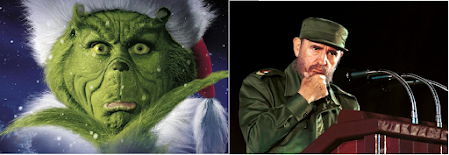
The fictional original Grinch, and the more sinister real life counterpart
American children's author, Theodor Seuss Geisel, better known as Dr. Seuss brought the Grinch into existence in 1955, and wrote about How the Grinch Stole Christmas in 1957. In the story the Grinch, a creature covered in green fur, decides to stop Christmas from coming. He does this by dressing up like Santa Claus then proceeds to expropriate all of the presents, the Christmas tree, and the food for the Christmas feast among those observing the holiday.
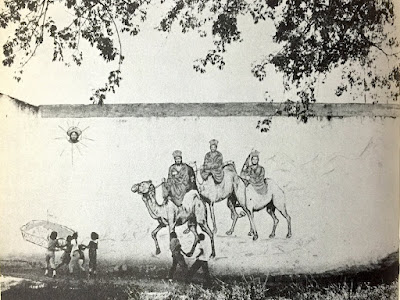
Although not covered in green fur, Fidel Castro dressed in a green camouflage uniform throughout his dictatorial rule. He claimed to be a force of liberation, but in short order began expropriating everyone's property, mass executions, and turned the country into a vast prison. In the case of Cuba children were familiar with the Three Kings, and propaganda murals portrayed Mr. Castro and other revolutionaries in that light.
The Independent (Ireland) in 2017 had Fidel Castro on the short list of Grinch like figures who were sworn enemies of Christmas, and there is reason for the comparison.
Fidel Castro canceled Christmas in 1969 under the pretext to prevent work shortages for the 1970 ten million ton sugar harvest but continued the ban through 1997. The Cuban dictator would send mobs to intimidate Cubans who attended religious services. Three Kings Day and Easter were also abolished.
Priests who stayed behind often paid a terrible price. In 1976 the Castro dictatorship adopted a constitution which turned Cuba into an atheist state.
Unlike the Grinch, Fidel Castro did not restore Christmas due to a change of heart. It took 29 years and a Catholic Pope leveraging the old dictator.
Cuban independent journalist and labor activist Iván Hernández Carrillo
in a series of tweets on January 5, 2017 reported on repression against Lady in White Leticia Ramos Herrería and
her family in order to prevent them giving toys to children on January 6, 2017:
Combined forces of the national police and secret police raided the home of Lady in White Leticia Ramos this morning (tweeted on January 5th at 1:53pm). Armed forces confiscated the toys that were in the home for Three Kings Day in Cárdenas, Matanzas (1:54pm). In the raid they brutally beat up Randy Monteoca and Alexey Ramos son and brother of the Lady in White, were also arrested (1:55pm). Since
this morning the situation of Lady in White Leticia Ramos is unknown,
her mobile phone is off or outside the coverage area (6:14pm). This morning at 11:05am Iván Hernández Carrillo tweeted that "Leticia Ramos and her son Randy Monteoca released yesterday afternoon, the latter with a 2,000 peso fine.
The Office of Religious Affairs (ORA), an arm of the Central Committee
of the Cuban Communist Party, continues to oversee religious affairs in Cuba,
and exists to monitor, hinder and restrict religious activities.
Meanwhile,the repressive apparatus continues to grind on destroying Cuban lives. Over 90 Cubans have been subjected to political show trials between December 13th and December 23rd.
CiberCuba reported today on the condemnation of a father and daughter present during the July protests.
Fredi Beirut Matos, (64) Katia Beirut Rodríguez, (36), condemned 20 years in prison
Fredi Beirut Matos, (age 64), and his daughter, Katia Beirut Rodríguez, (age 36), both witnessed the killing of Diubis Laurencio by police, in Havana, were both sentenced on Thursday December 23, 2021to 20 years in prison for the alleged crime of sedition.Independent journalist Claudia Padrón Cueto denounced on her Facebook
profile, based on a previous publication by a relative, that their "greatest crime is they witnessed how police killed Laurencio, a Black man, from a poor neighborhood who was unarmed, who was shot. The military prosecutor's office says it was in self-defense. The videos of his death show that the only thing thathe had was a cell phone in his hand. Fredi and Katia were direct witnesses and they are paying for it, "
The proceedings continued today on Christmas Eve in the Isle of Pines.
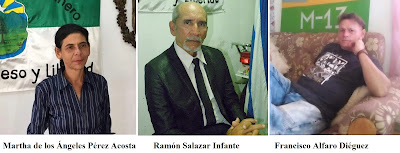
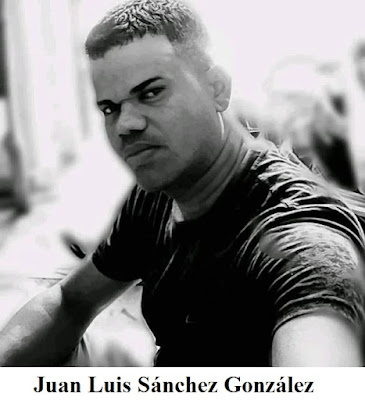
Vicente Morin Aguado reports in Havana Timesthat the prosecution is requesting that Martha de los Ángeles Pérez Acosta, Ramón Salazar Infante and Francisco Alfaro Diéguez be sentenced to three years in prison, and Juan Luis Sánchez González be sentenced to eight years in prison for "inciting public disorder."
What did they actually do? They proclaimed in a city park the lack of existing freedoms, and called for democracy.
Hundreds of Cuban families are suffering across the island this Christmas as the dictatorship launches another wave to terrorize and silence Cubans.
The Cuban Grinch died in 2016, but his toxic legacy continues.
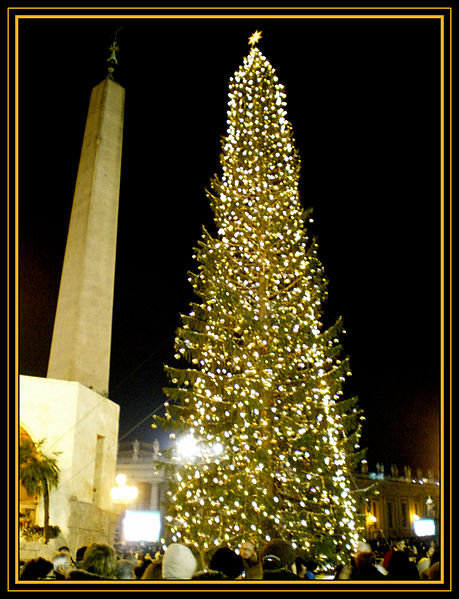
On December 18, 1999 Václav Havel presented a Christmas tree to His Holiness Pope John Paul II and made the speech reproduced below. Twelve years later to the day on December 18, 2011 Havel passed away. Nevertheless it remains as relevant today, despite all that has happened since then, as it was 13 years ago.
Speech of President of
the Czech Republic Václav Havel on the occasion of the presentation of
the Christmas tree for St. Peter's Square to the Holy Father, John Paul
II
Vatican, 18 December 1999
Distinguished Ladies and Gentlemen,
It is a great
privilege to be able to present , on behalf of the Czech Republic, to
the Vatican and the city of Rome, a Christmas tree which will stand this
year on this famous square, and to be able to greet you all from this
site.
It is also a great privilege for the Czech Republic and
all its citizens, irrespective of their denominations, that it has been
namely our country which was asked to decorate this place at Christmas
at a time when we are all preparing for the advent of the jubilee Year
2000.
Since ancient times jubilee years have traditionally
served as an appeal for reflection and reconciliation. I have deep
respect for the persistent effort of the Holy Father to have this
dividing line of epochs inscribed by the Catholic Church and, generally,
by all people of good will into the history of the world as a time of
universal reconciliation, reconciliation of nations, cultures, spheres
of civilization, and thus, especially, as a time of new and better
mutual understanding between followers of different faiths.
For a long time I have been deeply convinced that the
good future of this civilization depends on how well and how quickly is
mankind able to find and understand again the absolutely fundamental
spiritual values and principles common to all religions. We all know
what they comprise: respect for the miracle of creation, of the creation
of the world, Nature, life, and the human being, as well as respect for
the moral order growing out of this miracle. I am sure that without the
restoration of these values mankind would hardly be able to face all
the threats looming over civilization.
People, simply, should not focus so much on what makes
their spiritual traditions different, but much more on what they have in
common and what is being revealed today by the dialogue between various
religions.
I am convinced that if we were to descend to the very
depths of our diverse traditions, we would start finding common roots
and perceiving them much more strongly as merely different branches of
the same tree. A tree of certainty that all that is has its source, its
order, its inspiration and its memory beyond us and above us.
I shall be happy if the Christmas tree which I have
brought from the Czech Republic could symbolize, amongst other things,
the spiritual reconciliation between the different branches of human
spirituality based on the awareness of their common trunk and common
roots.
This tree grew in a country which used to be depicted on
ancient maps as the heart of Europe, and now it will light up in the
city which used to be considered Europe's head. It would be wonderful if
it could also remind us that the spiritual reconciliation and spiritual
rebirth, to which we attach our hopes at the divide of epochs, must
grow from harmony between head and heart.
Christmas is the holiday of the advent of hope to this world.
Let the coming jubilee year bring all people of good
will new hope that the human family will, after all, find a way of
averting the dangers which it is inflicting upon itself.
I greet you, I wish you a Merry Christmas, and,
especially, peace with the world, with Nature, with your brothers and
sisters and with yourselves!
"Reconciliation should be accompanied
by justice, otherwise it will not last. While we all hope for peace it
shouldn't be peace at any cost but peace based on principle, on
justice." - Corazon Aquino
"Our Fatherland and respect of human dignity must be the common objective
for reconciliation. You must unite in reconciliation in the spirit of
love, but also in the spirit of justice. As the Holy Father said five
years ago, no love exists without justice. Love is greater than justice
and at the same time finds reassurance in justice." -Father Jerzy Popieluszko
In the struggle against the totalitarian regime in Cuba the battle is one not only of power but also of ideas and definitions. Totalitarian regimes throughout history have sought to empty words of their meanings and often times tried to turn them into their opposites. George Orwell best described this process in his novel 1984 in which the fictional regime's slogans were contradictions: WAR IS PEACE, FREEDOM IS SLAVERY, and IGNORANCE IS STRENGTH. We are witnessing an effort to create a new contradictory slogan in the Cuban context: RECONCILIATION IS COLLABORATION. As someone who believes in authentic reconciliation and has spoken about it time and time again this campaign to turn it into an oxymoron is profoundly offensive.
Scott Richert in About Catholicism describes how the Sacrament of Confession is also known as the Sacrament of Reconciliation explaining that: "Whereas "Confession" stresses the action of the believer in the
sacrament, "Reconciliation" stresses the action of God, who uses the
sacrament to reconcile us to Himself by restoring sanctifying grace in
our souls." Yale Professor Carlos Eire echoing Richert has written an important essay explaining exactly what reconciliation is within a Catholic context and the error surrounding shifting its meaning and how Catholic teaching actually defines the word as a process of repentance:
"Interior repentance is a radical reorientation of our whole life, a
return, a conversion to God with all our heart, an end of sin, a turning
away from evil, with repugnance toward the evil actions we have
committed. At the same time it entails the desire and resolution to
change one's life, with hope in God's mercy and trust in the help of his
grace. This conversion of heart is accompanied by a salutary pain and
sadness which the Fathers called animi cruciatus (affliction of spirit)
and compunctio cordis (repentance of heart)."
In March of 2010, Cuban prisoners of conscience announced in a document titled Petitions for Days of Fasting and Bible Readings that called for the unconditional release of all prisoners of conscience and political prisoners in Cuba "as a first step for justice and reconciliation." Towards the end of the same document the word reconciliation appears again in the following phrase:
We
propose to proclaim the 18th of March as the National Day of Fasting
for Freedom of all captives for Motives of Politics and Conscience, for
the end to the discord among Cubans, and the beginning of
reconciliation and peaceful changes to democracy that the country needs.
(1.) Nonviolence is not passive, but requires courage;
(2.) Nonviolence seeks reconciliation, not defeat of an adversary;
(3.) Nonviolent action is directed at eliminating evil, not destroying an evil-doer;
(4.) A willingness to accept suffering for the cause, if necessary, but never to inflict it;
(5.) A rejection of hatred, animosity or violence of the spirit, as well as refusal to commit physical violence; and
(6.) Faith that justice will prevail.
In a later book titled Why We Can't Wait (1964) he explained why African Americans could not wait for White Americans to decide to give them their rights. In the 1950s, Martin Luther King Jr. did not council passivity and accommodation with those in power and in a 1957 interview emphasized the importance of being aggressive in confronting injustice as a necessary stage from the old unjust order to a new order based in justice in freedom:
“I think it’s better to be aggressive at this point. It seems to me that
it is both historically and sociologically true that privileged classes
do not give up their privileges voluntarily and they do not give them
up without strong resistance.
However, this aggressiveness still embodied the six principles listed above as Reverend King stated in the same interview:
"All of the gains made that we received in the area of civil rights have
come about because the Negro stood up courageously for these rights and
he was willing to aggressively press on. So I would think that it would
be much better in the long run to stand up and be aggressive with
understanding, good will and with a sense of discipline. Yet these
things should not be substitutes for pressing on and with this
aggressive attitude. I believe we will bring the gains or other civil
rights into being much sooner than just standing idly by waiting for
these things to be given voluntarily.”
The Cuban opposition that is aggressively advocating for change using nonviolent means to bring a halt to injustice and violence are following in the same foot steps as the Reverend Martin Luther King Jr. who himself was inspired both by Jesus Christ and Mohandas Gandhi.
Bishop Agustin Roman
in a December 16, 2006 speech to Cuban exiles in Miami on The importance of the current internal dissident movement in Cubaspoke of reconciliation:
Justice, truth, forgiveness and reconciliation. I said earlier that the
cause of the internal dissident movement, the cause of all of us in the
end, is the continued pursuit of justice for the Cuban people. Cuba
cries out to heaven for justice, justice is essential. The truth is the
complement of justice and should be the first condition of our work and
firm foundation of the society. Every Cuban will recognize the truth of
their responsibilities and errors if we want to enter the new Cuba with
the cleanness that we want. At the same time, the country equally
needs of forgiveness and reconciliation in order to have possibilities
of a future. A society that remains with its wounds permanently open
condemns itself to a continuation of its conflicts and eliminates its
possibilities to live in peace. Justice, truth, forgiveness and
reconciliation are not mutually exclusive or contradictory terms. Our
very remembered Pope John Paul II said with respect to the following, in his message for World Day of Peace on 1 January 1997.
I quote: "Forgiveness, far from excluding the search for truth, demands
it. The wrong must be recognized and, where possible, repaired ...
Another essential requisite for forgiveness and reconciliation, is
justice, which finds its justification in the law of God ... In effect -
the Pontiff added - forgiveness does not eliminate or decreases the
demand for reparation, which belongs to justice, but seeks to
reintegrate equally individuals and groups into society. "End of quote.
The Church calls everyone to make faith a
reality in their lives, as the best path to the integral development of
the human being, created in the image and likeness of God, and for
attaining true freedom, which includes the recognition of human rights
and social justice. In this regard, lay Catholics — holding to their
specific role as lay persons so that they may be "salt and leaven" in
the midst of the society of which they are part — have the duty and the
right to participate in public debate on the basis of equality and in an
attitude of dialogue and reconciliation.
"I could have easily executed the man who killed
my family. The only picture of that man is the one I took a picture
of. I knew where he lived. Despite that I didn't do it. The government
itself directed me towards him. They wanted to turn me into a
criminal. The regime sought to justify what it had first said. The
regime had said that a group of anti-socials had stolen the boat and
that there were an undetermined number of victims. If you look at the
photographs and the profiles there were no 'anti-social elements.' What
were there were entire families. I told the man that he would have to
face trial that it might not be me but my son. It might take generations
but there would be justice."
The dictatorship in Cuba preferred that blood be spilled in an act of revenge that would morally compromise a victim rather than provide justice through a court of law. The refusal of Jorge Garcia to engage in physical violence and his rejection of hatred is a profoundly Christian response, but the actions of the current regime in Cuba to tempt an innocent man is profoundly anti-Christian and is the antithesis of reconciliation. Asking Cubans to collaborate in their own oppression while remaining silent before ongoing injustices is also the opposite of reconciliation.
"You cultivate the essential virtues: high purpose, intelligence, decency, humility, fear of the Lord, and the passion for freedom." - William F. Buckley Jr.
Archbishop Wenski's homily delivered in a steady and calm voice was powerful and stirring an excerpt is reproduced below:
Mary’s life – and our own lives – if we, like her, follow Jesus to the end, will be lived under the sign of the cross. For in a fallen world, in a world that has turned its back on God, those who live “ad orientam,” that is, looking, in joyful expectation, towards the coming of Our Lord, Jesus Christ, inevitably will encounter opposition and resistance. Such was the life of Christ – and such was the life of his mother who at Calvary shared in his sufferings; such is the life of the Church.
The “thoughts of many hearts” have been revealed in the betrayals and apostasies of the Church’s sinners but also in the constancy of her confessors, in the purity of her virgins and in the courage of her martyrs. Blessed John Paul II, when as Karol Wojtyla he preached a Lenten retreat to Pope Paul VI, said that “sign of contradiction” maybe be the “distinctive definition of Christ and his Church.”
Today, the witness of the Church on behalf of the dignity and right to life of the human person from the first moment of conception till natural death is itself a “sign that will be contradicted” – and is in fact contradicted in the present mandate of the Obama administration’s Department of Health and Human Services’ mandate to deny a religious exemption to Catholic institutions and thus force us to violate our consciences and to make us accomplices in evil.
Today’s feast of the Presentation of the Lord – thanks to the initiative of Blessed John Paul II – is also observed as the World Day of Prayer for Consecrated Life. Those who live their Christian baptism through vows of poverty, chastity and obedience as religious sisters, brothers and priests, should see the oblation of the Son of God presented today in the temple as the model for religious life. We pray for them – may their perseverance in seeking first the Kingdom of God above all else inspire all of us to seek to live holy lives in fidelity to the promises of our baptism.
The lighted candles carried in procession this evening are a sign of the divine splendor of the Christ who comes to expel the dark shadows of evil. May our lives as Catholics reflect the light of Christ to all who meet us; and may that same light guide us, as it guided that righteous and devout man, Simeon, when we go forth from this life to meet Christ.
The following day I was invited to briefly address the Pope's visit to the island on a local television station giving me an opportunity to further reflect on it. Reading medieval scholar Carlos Eire on the subject offers historical context to what is happening in relations between the Church and the communist dictatorship in Cuba. At the same time reading Carlos Espinosa gives insights into the impact it is having within some families.
Firing Line with William F. Buckley Jr. "The Fight over Catholic Orthodoxy" (1980)
Although not as pessimistic about the Pope's visit to the island as the individuals who protested outside of the Church of the Epiphany one can understand their concern considering some of the historical and modern currents in the Catholic Church. There was a time that Liberation theology was on the upswing in the Catholic Church but Pope John Paul II put an end to that. In his sermon "An option for the poor" given in Mexico in 1990 His Holiness spoke plainly:
When the world begins to notice the clear failures of certain ideologies and systems, it seems all the more incomprehensible that certain sons of the Church in these lands - prompted at times by the desire to find quick solutions - persist in presenting as viable certain models whose failure is patent in other places in the world.
You, as priests, cannot be involved in activities which belong to the lay faithful, while through your service to the Church community you are called to cooperate with them by helping them study Church teachings...
...Be careful, then, not to accept nor allow a Vision of human life as conflict nor ideologies which propose class hatred and violence to be instilled in you; this includes those which try to hide under theological writings.
There are other currents within the Church that do give reason for encouragement. Pope Benedict XVI emerged from a current within the Church that has accomplished great things on behalf of orthodoxy and tradition. The question that Cuban exiles need to ask themselves is how to encourage and support those currents that will more robustly challenge the militant atheistic communist dictatorship in Cuba?
At the same time remembering that Pope Benedict XVI's visit to the island (March 26-28, 2012) will offer an opportunity for Cubans in large numbers to hear the Gospel and the message of hope and freedom that resides in it. The visit of Pope John Paul II that met with similar criticism at the time was, in spiritual terms, incredibly important to the millions of Cubans who heard his message and his exhortation not to be afraid and to be the protagonists of their own history.
Fourteen years later many Cubans who heeded his message are being persecuted for seeking change using ethical, nonviolent means. This is part of the legacy of John Paul II. It is no accident that the largest sustained dissident action was the Varela Project petition drive (named after a Cuban catholic priest) that obtained more than 25,000 signatures demanding fundamental changes to the Cuban constitution to bring it in line with international human rights standards. Nor is it an accident that the largest sustained opposition action are the weekly marches by the Ladies in White to attend Sunday Mass demanding their loved one's freedom. Since March of 2003 following the Black Cuban Spring these women have been subjected to acts of repudiation, physical assaults, and in the case of Laura Pollan - premature death at the hands of agents of the Cuban government.
One understands that the Pope will meet with sinners, possibly including Fidel Castro, excommunicated by John XXIII on January 3, 1962, but at the same time one would also hope that some of those who have suffered beatings, tortures and assaults on their dignity at the hands of this regime would also be ministered to by His Holiness.
Protesters outside the Church of the Epiphany on Thursday evening during the Mass
The protesters sign outside of the Mass on Thursday night said a profound truth that perhaps they did not themselves understand the full significance of: "We must not forget. Faith is not negotiable. Long live Christ the King!" The good works of the Church transcend the princes and principalities of this fallen world and calls all of humanity to Jesus Christ and his teachings as set out in the Bible as the only way to real freedom. Don't forget it. An epiphany long to be remembered.
"The poorest among us are those who do not have precious access to freedom." -Archbishop Pedro Claro Meurice Estiu, January 24, 1998
Sad news today Monsignor Pedro Meurice Estiu passed away from a heart attack. During Pope John Paul II's visit to Santiago de Cuba where the Monsignor was then Archbishop he spoke powerful truths to 150,000 people packed in the central square in the presence of His Holiness Pope John Paul II. The New York Times reported the following on January 25, 1998 the day after the events described:
In remarks that drew sustained applause from a crowd of some 150,000 people packing Santiago de Cuba's central square under a hot tropical sun, the city's Archbishop, Pedro Meurice Estiu, spoke ''of a growing number of Cubans who have confused the fatherland with a single party, the nation with the historical process we have lived through during the last few decades, and culture with an ideology.''
Archbishop Meurice also lamented that many Cubans had not been able to realize their ambitions ''because of the road of depersonalization that is the fruit of paternalism.'' As the Pope listened attentively, the prelate recalled the church's commitment to the poor, adding, ''The poorest among us are those who do not have precious access to freedom.''
The full text of his speech in the original Spanish is reproduced below.
Texto leído por el arzobispo de Santiago de Cuba Pedro Meurice Estiuen la Plaza Antonio Maceo, durante la misa de Su Santidad el 24 de enero de 1998.
Santísimo Padre:
En nombre de la Arquidiócesis de Santiago de Cuba y de todos los hombres de buena voluntad de estas provincias orientales le doy la más cordial bienvenida.
Esta es una tierra indómita y hospitalaria, cuna de libertad y hogar corazón abierto.
Lo recibimos como a un Padre en esta tierra que custodia, con entrañas dignidad y raíces de cubanía, la campana de La Demajagua y la bendita imagen de la Virgen de la Caridad de El Cobre.
El calor de Oriente, el alma indomable de Santiago y el amor filial de los católicos de esta diócesis primada proclaman: ¡Bendito el que viene en nombre del Señor!
Quiero presentarle, Santo Padre, a este pueblo que me ha sido confiado. Quiero que Su Santidad conozca nuestros logros en educación, salud, deportes…, nuestras grandes potencialidades y virtudes…, y los anhelos y las angustias de esta porción del pueblo cubano.
Santidad: este es un pueblo noble y es también un pueblo que sufre.
Este es un pueblo que tiene la riqueza de la alegría y la pobreza material que lo entristece y agobia casi hasta no dejarlo ver más allá de la inmediata subsistencia.
Este es un pueblo que tiene vocación de universalidad y es hacedor de puentes de vecindad y afecto, pero cada vez está más bloqueado por intereses foráneos y padece una cultura del egoísmo debido a la dura crisis económica y moral que sufrimos.
Nuestro pueblo es respetuoso de la autoridad y le gusta el orden, pero necesita aprender a desmitificar los falsos mesianismos.
Este es un pueblo que ha luchado largos siglos por la justicia social y ahora se encuentra, al final de una de esas etapas, buscando otra vez, cómo superar las desigualdades y la falta de participación.
Santo Padre: Cuba es un pueblo que tiene una entrañable vocación a la solidaridad, pero a lo largo de su historia, ha visto desarticulados o encallados los espacios de asociación y participación de la sociedad civil, de modo que le presento el alma de una nación que anhela reconstruir la fraternidad a base de libertad y solidaridad.
Quiero que sepa, Beatísimo Padre, que toda Cuba ha aprendido a mirar en la pequeñez de la imagen de este Virgen bendita, que será coronada hoy por su Santidad, que la grandeza no está en las dimensiones de las cosas y las estructuras sino en la estatura moral del espíritu humano.
Deseo presentar en esta eucaristía a todos aquellos cubanos y santiagueros que no encuentran sentido a sus vidas, que no han podido optar y desarrollar un proyecto de vida por causa de un camino de despersonalización que es fruto del paternalismo.
Le presento, además, a un número creciente de cubanos que han confundido la Patria con un partido, la nación con el proceso histórico que hemos vivido en las últimas décadas, y la cultura con una ideología. Son cubanos que al rechazar todo de una vez, sin discernir, se sienten desarraigados, rechazan lo de aquí y sobrevaloran todo lo extranjero. Algunos consideran esta como una de las causas más profundas del exilio interno y externo.
Santo Padre, durante años este pueblo ha defendido la soberanía de sus fronteras geográficas con verdadera dignidad, pero hemos olvidado un tanto que esa independencia debe brotar de una soberanía de la persona humana que sostiene desde abajo todo proyecto como nación.
Le presentamos la época gloriosa del P. Varela, del Seminario San Carlos en La Habana y de San Antonio María Claret en Santiago, pero también los años oscuros en que, por el desgobierno del patronato, la iglesia fue diezmada a principios del siglo XIX y así atravesó el umbral de esta centuria tratando de recuperarse hasta que, en la década del cincuenta, encontró su máximo esplendor y cubanía. Luego, fruto de la confrontación ideológica con el marxismo leninismo, estatalmente inducido, volvió a ser empobrecida de medios y agentes de pastoral, pero no de emociones del Espíritu como fue el Encuentro Nacional Eclesial Cubano.
Su Santidad encuentra a esta Iglesia en una etapa de franco crecimiento y de sufrida credibilidad que brota de la cruz vivida y comparada. Algunos quizá puedan confundir este despertar religioso con un culto pietista o con una falsa paz interior que escapa del compromiso.
Hay otra realidad que debo presentarle. La nación vive aquí y vive en 1a diáspora. El cubano sufre, vive y espera aquí y también sufre, vive y espera allá fuera. Somos un único pueblo que, navegando a trancos sobre todos los mares, seguimos buscando la unidad que no será nunca fruto de 1a uniformidad, sino de un alma común y compartida a partir de la diversidad. Por esos mares vino también esta Virgen, mestiza como nuestro pueblo .Ella es la esperanza de todos los cubanos. Ella es la Madre cuyo manto tiene cobija para todos los cubanos sin distinción de raza, credo, opción política lugar donde viva.
La Iglesia en América Latina hizo en Puebla la opción por los pobres, y lo más pobres entre nosotros son aquellos que no tienen el don preciado de la libertad. Ore, Santidad, por los enfermos, por los presos, por los ancianos por los niños.
Santo Padre: Los cubanos suplicamos humildemente a Su Santidad ofrezca sobre el altar, junto al Cordero Inmaculado que se hace para nosotros Pan de vida, todas estas luchas y azares del pueblo cubano tejiendo sobre la frente de la Madre del cielo, esta diadema de realidad sufrimientos, alegrías y esperanzas, de modo que, al coronar con ella esta imagen de Santa María, la Virgen Madre de Nuestro Señor Jesucristo, que en Cuba llamamos bajo el incomparable título de Nuestra Señora de 1a Caridad del Cobre, la declare como Reina de la República de Cuba. Así todas las generaciones de cubanos podremos continuar dirigiéndonos a Ella, pero con mayor audacia apostólica y serenidad de espíritu, con la bella estrofas de su himno:
"Y tu Nombre será nuestro escudo, nuestro amparo tus gracias serán".
Six years ago we gathered in this Square to celebrate the funeral of Pope John Paul II. Our grief at his loss was deep, but even greater was our sense of an immense grace which embraced Rome and the whole world: a grace which was in some way the fruit of my beloved predecessor’s entire life, and especially of his witness in suffering. Even then we perceived the fragrance of his sanctity, and in any number of ways God’s People showed their veneration for him. For this reason, with all due respect for the Church’s canonical norms, I wanted his cause of beatification to move forward with reasonable haste. And now the longed-for day has come; it came quickly because this is what was pleasing to the Lord: John Paul II is blessed!
I would like to offer a cordial greeting to all of you who on this happy occasion have come in such great numbers to Rome from all over the world – cardinals, patriarchs of the Eastern Catholic Churches, brother bishops and priests, official delegations, ambassadors and civil authorities, consecrated men and women and lay faithful, and I extend that greeting to all those who join us by radio and television.
Today is the Second Sunday of Easter, which Blessed John Paul II entitled Divine Mercy Sunday. The date was chosen for today’s celebration because, in God’s providence, my predecessor died on the vigil of this feast. Today is also the first day of May, Mary’s month, and the liturgical memorial of Saint Joseph the Worker. All these elements serve to enrich our prayer, they help us in our pilgrimage through time and space; but in heaven a very different celebration is taking place among the angels and saints! Even so, God is but one, and one too is Christ the Lord, who like a bridge joins earth to heaven. At this moment we feel closer than ever, sharing as it were in the liturgy of heaven.
“Blessed are those who have not seen and yet have come to believe” (Jn 20:29). In today’s Gospel Jesus proclaims this beatitude: the beatitude of faith. For us, it is particularly striking because we are gathered to celebrate a beatification, but even more so because today the one proclaimed blessed is a Pope, a Successor of Peter, one who was called to confirm his brethren in the faith. John Paul II is blessed because of his faith, a strong, generous and apostolic faith. We think at once of another beatitude: “Blessed are you, Simon, son of Jonah! For flesh and blood has not revealed this to you, but my Father in heaven” (Mt 16:17). What did our heavenly Father reveal to Simon? That Jesus is the Christ, the Son of the living God. Because of this faith, Simon becomes Peter, the rock on which Jesus can build his Church. The eternal beatitude of John Paul II, which today the Church rejoices to proclaim, is wholly contained in these sayings of Jesus: “Blessed are you, Simon” and “Blessed are those who have not seen and yet have come to believe!” It is the beatitude of faith, which John Paul II also received as a gift from God the Father for the building up of Christ’s Church.
Our thoughts turn to yet another beatitude, one which appears in the Gospel before all others. It is the beatitude of the Virgin Mary, the Mother of the Redeemer. Mary, who had just conceived Jesus, was told by Saint Elizabeth: “Blessed is she who believed that there would be a fulfilment of what was spoken to her by the Lord” (Lk 1:45). The beatitude of faith has its model in Mary, and all of us rejoice that the beatification of John Paul II takes place on this first day of the month of Mary, beneath the maternal gaze of the one who by her faith sustained the faith of the Apostles and constantly sustains the faith of their successors, especially those called to occupy the Chair of Peter. Mary does not appear in the accounts of Christ’s resurrection, yet hers is, as it were, a continual, hidden presence: she is the Mother to whom Jesus entrusted each of his disciples and the entire community. In particular we can see how Saint John and Saint Luke record the powerful, maternal presence of Mary in the passages preceding those read in today’s Gospel and first reading. In the account of Jesus’ death, Mary appears at the foot of the cross (Jn 19:25), and at the beginning of the Acts of the Apostles she is seen in the midst of the disciples gathered in prayer in the Upper Room (Acts 1:14).
Today’s second reading also speaks to us of faith. Saint Peter himself, filled with spiritual enthusiasm, points out to the newly-baptized the reason for their hope and their joy. I like to think how in this passage, at the beginning of his First Letter, Peter does not use language of exhortation; instead, he states a fact. He writes: “you rejoice”, and he adds: “you love him; and even though you do not see him now, you believe in him and rejoice with an indescribable and glorious joy, for you are receiving the outcome of your faith, the salvation of your souls” (1 Pet 1:6, 8-9). All these verbs are in the indicative, because a new reality has come about in Christ’s resurrection, a reality to which faith opens the door. “This is the Lord’s doing”, says the Psalm (118:23), and “it is marvelous in our eyes”, the eyes of faith.
Dear brothers and sisters, today our eyes behold, in the full spiritual light of the risen Christ, the beloved and revered figure of John Paul II. Today his name is added to the host of those whom he proclaimed saints and blesseds during the almost twenty-seven years of his pontificate, thereby forcefully emphasizing the universal vocation to the heights of the Christian life, to holiness, taught by the conciliar Constitution on the Church Lumen Gentium. All of us, as members of the people of God – bishops, priests, deacons, laity, men and women religious – are making our pilgrim way to the heavenly homeland where the Virgin Mary has preceded us, associated as she was in a unique and perfect way to the mystery of Christ and the Church. Karol Wojtyła took part in the Second Vatican Council, first as an auxiliary Bishop and then as Archbishop of Kraków. He was fully aware that the Council’s decision to devote the last chapter of its Constitution on the Church to Mary meant that the Mother of the Redeemer is held up as an image and model of holiness for every Christian and for the entire Church. This was the theological vision which Blessed John Paul II discovered as a young man and subsequently maintained and deepened throughout his life. A vision which is expressed in the scriptural image of the crucified Christ with Mary, his Mother, at his side. This icon from the Gospel of John (19:25-27) was taken up in the episcopal and later the papal coat-of-arms of Karol Wojtyła: a golden cross with the letter “M” on the lower right and the motto “Totus tuus”, drawn from the well-known words of Saint Louis Marie Grignion de Montfort in which Karol Wojtyła found a guiding light for his life: “Totus tuus ego sum et omnia mea tua sunt. Accipio te in mea omnia. Praebe mihi cor tuum, Maria – I belong entirely to you, and all that I have is yours. I take you for my all. O Mary, give me your heart” (Treatise on True Devotion to the Blessed Virgin, 266).
In his Testament, the new Blessed wrote: “When, on 16 October 1978, the Conclave of Cardinals chose John Paul II, the Primate of Poland, Cardinal Stefan Wyszyński, said to me: ‘The task of the new Pope will be to lead the Church into the Third Millennium’”. And the Pope added: “I would like once again to express my gratitude to the Holy Spirit for the great gift of the Second Vatican Council, to which, together with the whole Church – and especially with the whole episcopate – I feel indebted. I am convinced that it will long be granted to the new generations to draw from the treasures that this Council of the twentieth century has lavished upon us. As a Bishop who took part in the Council from the first to the last day, I desire to entrust this great patrimony to all who are and will be called in the future to put it into practice. For my part, I thank the Eternal Shepherd, who has enabled me to serve this very great cause in the course of all the years of my Pontificate”. And what is this “cause”? It is the same one that John Paul II presented during his first solemn Mass in Saint Peter’s Square in the unforgettable words: “Do not be afraid! Open, open wide the doors to Christ!” What the newly-elected Pope asked of everyone, he was himself the first to do: society, culture, political and economic systems he opened up to Christ, turning back with the strength of a titan – a strength which came to him from God – a tide which appeared irreversible. By his witness of faith, love and apostolic courage, accompanied by great human charisma, this exemplary son of Poland helped believers throughout the world not to be afraid to be called Christian, to belong to the Church, to speak of the Gospel. In a word: he helped us not to fear the truth, because truth is the guarantee of liberty. To put it even more succinctly: he gave us the strength to believe in Christ, because Christ is Redemptor hominis, the Redeemer of man. This was the theme of his first encyclical, and the thread which runs though all the others.
When Karol Wojtyła ascended to the throne of Peter, he brought with him a deep understanding of the difference between Marxism and Christianity, based on their respective visions of man. This was his message: man is the way of the Church, and Christ is the way of man. With this message, which is the great legacy of the Second Vatican Council and of its “helmsman”, the Servant of God Pope Paul VI, John Paul II led the People of God across the threshold of the Third Millennium, which thanks to Christ he was able to call “the threshold of hope”. Throughout the long journey of preparation for the great Jubilee he directed Christianity once again to the future, the future of God, which transcends history while nonetheless directly affecting it. He rightly reclaimed for Christianity that impulse of hope which had in some sense faltered before Marxism and the ideology of progress. He restored to Christianity its true face as a religion of hope, to be lived in history in an “Advent” spirit, in a personal and communitarian existence directed to Christ, the fullness of humanity and the fulfillment of all our longings for justice and peace.
Finally, on a more personal note, I would like to thank God for the gift of having worked for many years with Blessed Pope John Paul II. I had known him earlier and had esteemed him, but for twenty-three years, beginning in 1982 after he called me to Rome to be Prefect of the Congregation for the Doctrine of the Faith, I was at his side and came to revere him all the more. My own service was sustained by his spiritual depth and by the richness of his insights. His example of prayer continually impressed and edified me: he remained deeply united to God even amid the many demands of his ministry. Then too, there was his witness in suffering: the Lord gradually stripped him of everything, yet he remained ever a “rock”, as Christ desired. His profound humility, grounded in close union with Christ, enabled him to continue to lead the Church and to give to the world a message which became all the more eloquent as his physical strength declined. In this way he lived out in an extraordinary way the vocation of every priest and bishop to become completely one with Jesus, whom he daily receives and offers in the Church.
Blessed are you, beloved Pope John Paul II, because you believed! Continue, we implore you, to sustain from heaven the faith of God’s people. You often blessed us in this Square from the Apostolic Palace: Bless us, Holy Father! Amen.
"Pure, selfless, persecuted, tormented, poetic and simple, the religion of the Nazarene enthralled all honourable men.... Every people needs to be religious. Not only as part of its essence, but for its own practical benefit it needs to be religious.... An irreligious people will die, because nothing in it encourages virtue. Human injustices offend virtue; it is necessary that heavenly justice guarantee it". -José Martí
I think they kill my child every time they deprive a person of their right to think. -José Martí
Approaching the end of the first month of the second decade of the new millennium offers an opportunity to look back over a decade ago as Pope John Paul II visited Cuba and spoke before the José Martí Plaza in Havana and outlined what Cubans need to do to be free, and reflect on his message eleven years later with the culture of fear and the lie under-girding the totalitarian superstructure weakened but still maintaining the system :
On the threshold of the Year 2000, the teachings of Jesus maintain their full force. They are valid for all of you, dear brothers and sisters. In seeking the justice of the kingdom we cannot hesitate in the face of difficulties and misunderstandings. If the Master's call to justice, to service and to love is accepted as good news, then the heart is expanded, criteria are transformed and a culture of love and life is born. This is the great change which society needs and expects; and it can only come about if there is first a conversion of each individual heart, as a condition for the necessary changes in the structures of society.
6. "The Spirit of the Lord has sent me to proclaim release to the captives ... to set at liberty those who are oppressed" (Lk 4:18). The Good News of Jesus must be accompanied by a proclamation of freedom based on the solid foundation of truth: "If you continue in my word, you are truly my disciples, and you will know the truth and the truth will make you free" (Jn 8:31-32). The truth of which Jesus speaks is not only the intellectual grasp of reality, but also the truth about man and his transcendent condition, his rights and duties, his greatness and his limitations. It is the same truth which Jesus proclaimed with his life, reaffirmed before Pilate and, by his silence, before Herod; it is the same truth that led him to his saving Cross and his glorious Resurrection.
A freedom which is not based on truth conditions man in such a way that he sometimes becomes the object and not the subject of his social, cultural, economic and political surroundings; this leaves him almost no initiative for his personal development. At other times that freedom takes on an individualistic cast and, with no regard for the freedom of others, imprisons man in his own egoism. The attainment of freedom in responsibility is a duty which no one can shirk. For Christians, the freedom of the children of God is not only a gift and a task, but its attainment also involves an invaluable witness and a genuine contribution to the journey towards the liberation of the whole human race. This liberation cannot be reduced to its social and political aspects, but rather reaches its fullness in the exercise of freedom of conscience, the basis and foundation of all other human rights.
To the crowds who were shouting: "The Pope is free and wants us all to be free", the Holy Father replied:
Yes, he lives with that freedom for which Christ has set you free.
José Martí understood this, but after the terror imposed amnesia initiated in 1959 it is important to repeat it, internalize it and let others know of this profound truth that the process of liberation begins with the exercise of freedom of conscience and that is precisely what Pope John Paul II did on that Sunday afternoon reminding Cubans:
The teaching of José Martí on love between all people had profoundly evangelical roots, and thus overcame the false conflict between faith in God and love and service to one's country. This great leader wrote: "Pure, selfless, persecuted, tormented, poetic and simple, the religion of the Nazarene enthralled all honourable men.... Every people needs to be religious. Not only as part of its essence, but for its own practical benefit it needs to be religious.... An irreligious people will die, because nothing in it encourages virtue. Human injustices offend virtue; it is necessary that heavenly justice guarantee it".
"In this way each person, enjoying freedom of expression, ... and enjoying appropriate freedom of association, will be able to cooperate effectively in the pursuit of the common good." -Pope John Paul II
1. "Blessed is the nation whose God is the Lord" (Ps 32:12). With the psalmist we have sung that blessings accompany the people which has God as its Lord. More than 500 years ago, when the cross of Christ arrived on this island and with it his saving message, there began a process which, nourished by Christian faith, has continued to forge the characteristic traits of this nation.
The series of this nation’s illustrious figures include: that soldier who was the first catechist and missionary of Macaca; the first Cuban teacher, Fr Miguel de Velázquez; the priest Esteban Salas, the father of Cuban music; the renowned man of Bayamo, Carlos Manuel de Céspedes, father of his country, who, prostrate at the feet of the Our Lady of Charity, began the fight for Cuba's freedom and independence; Antonio de la Caridad Maceo y Grajales, whose statue stands in the plaza where our celebration is taking place today, and whose mother prayed before the crucifix asking that he commit himself wholly and completely to the freedom of Cuba. In addition to these, there are many other illustrious men and women who, motivated by their unshakeable faith in God, chose the way of freedom and justice as the foundation of their people's dignity.
2. I am pleased to be here today in this distinguished Archdiocese, which counts St Anthony Mary Claret among its Pastors. First of all, I offer cordial greetings to ArchbishopPedro Meurice Estíu of Santiago de Cuba and Primate of the nation. I greet as well the other Cardinals, Bishops, priests and deacons who are committed to furthering the kingdom of God in this land. I likewise greet the men and women religious and all the faithful present here.
I wish to extend my respectful greetings to the Vice-President of the Council of State, to Minister Raúl Castro and to the other civil authorities taking part in this Holy Mass, and I thank them for their help in organizing this event.
3. During this celebration we will crown the image of Our Lady of Charity of El Cobre. From her shrine, not far from here, the Queen and Mother of all Cubans — regardless of race, political allegiance or ideology — guides and sustains, as in times past, the steps of her sons and daughters towards our heavenly homeland, and she encourages them to live in such a way that in society those authentic moral values may reign which constitute the rich spiritual heritage received from your forebears.
With gratitude, we turn to her, as did her cousin Elizabeth, and say: "Blessed is she who believed that there would be a fulfillment of what was spoken to her by the Lord" (Lk 1:45). In these words lies the secret of the true happiness of individuals and peoples: to believe and proclaim that the Lord has done marvelous things for us and that his mercy is from generation to generation on those who are faithful to him. This conviction is the force which inspires men and women to commit themselves selflessly, even at the cost of sacrifice, to the service of others.
Mary's example of readiness to serve shows us the path to take. With her, the Church fulfils her own vocation and mission, proclaiming Jesus Christ and exhorting us to do what he says, building a universal brotherhood in which every person can call God "Father".
4. Like the Virgin Mary, the Church is Mother and Teacher in the following of Christ, who is light for the nations and the dispenser of divine mercy. As the community of all the baptized, the Church is likewise the place of forgiveness, peace and reconciliation, opening her arms to all people so that she might proclaim to them the true God. By serving the faith of the men and women of this beloved people, the Church helps them to advance on the path of goodness.
The evangelizing efforts being carried out in different places, for example, the missions in districts and towns which have no churches, must be sustained and promoted so that they may increase and serve not only Catholics but the whole Cuban people, so that everyone may come to know and love Jesus Christ. History teaches that without faith virtue disappears, moral values are dulled, truth no longer shines forth, life loses its transcendent meaning and even service of the nation can cease to be inspired by solid motivations. In this respect, Antonio Maceo, the great patriot of the East, said: "He who loves not God loves not his country".
The Church calls everyone to make faith a reality in their lives, as the best path to the integral development of the human being, created in the image and likeness of God, and for attaining true freedom, which includes the recognition of human rights and social justice. In this regard, lay Catholics — holding to their specific role as lay persons so that they may be "salt and leaven" in the midst of the society of which they are part — have the duty and the right to participate in public debate on the basis of equality and in an attitude of dialogue and reconciliation.
Likewise, the good of a nation must be promoted and achieved by its citizens themselves through peaceful and gradual means. In this way each person, enjoying freedom of expression, being free to undertake initiatives and make proposals within civil society, and enjoying appropriate freedom of association, will be able to co-operate effectively in the pursuit of the common good.
The Church, immersed in civil society, does not seek any type of political power in order to carry out her mission; she wishes only to be the fruitful seed of everyone's good by her presence in the structures of society. Her first concern is the human person and the community in which the individual lives; she is well aware that actual people with all their needs and aspirations constitute her primary path. All that she claims for herself she places at the service of people and society.
For this reason Christ charged her to bring his message to all peoples, and for this she needs sufficient freedom and adequate means. Defending her own freedom, the Church defends the freedom of each individual, of families, of different social units, which are living realities with a right to their own sphere of autonomy and sovereignty (cf. Centesimus annus, n. 45).
In this sense, "Christians and Christian communities are very much a part of the life of their respective nations and can be a sign of the Gospel in their fidelity to their native land, people and national culture, while always preserving the freedom brought by Christ.... The Church is called to bear witness to Christ by taking courageous and prophetic stands in the face of the corruption of political or economic power; by not seeking her own glory and material wealth; by using her resources to serve the poorest of the poor and by imitating Christ's own simplicity of life" (Redemptoris missio, n. 43). This is a constant, permanent teaching of the social Magisterium, what is called the Church's social doctrine.
5. In recalling these aspects of the Church's mission, we give thanks to God who has called us to be part of his Church. In the Church, the Virgin Mary has a unique place. An expression of this is the new crowning of the venerated image of Our Lady of Charity of El Cobre. Cuban history is marked by wonderful displays of love for the patroness of Cuba, at whose feet the figures of humble natives, two Indians and a Black, symbolize the rich plurality of this people. El Cobre, where the shrine is located, was the first place in Cuba where freedom was won for slaves.
Beloved brothers and sisters in the faith, never forget the great events connected with your Queen and Mother. With the canopy of his family altar, Céspedes put together the Cuban flag and went to prostrate himself at the feet of Our Lady before beginning the battle for freedom. The brave Cuban soldiers, the "Mambises", bore on their breast the medal and "medida" of her holy image.
The first act of liberated Cuba in 1898 was when the troops of General Calixto García knelt during a solemn Mass at the feet of Our Lady of Charity for the "Mambisa Declaration of Independence of the Cuban People". The various pilgrimages of the image through the towns of the island, heeding the desires and hopes, the joys and sufferings of all her children, have always involved great displays of faith and love.
From this place I wish to send my greetings also to all of Cuba's children who, in whatever part of the world, venerate Our Lady of Charity; together with all your brothers and sisters who live in this fair land, I place you under her maternal protection, asking her, loving Mother of all, to unite her children once more through reconciliation and brotherhood.
6. Today, following the glorious tradition of love for the our common Mother, before proceeding with her crowning, I turn to her and together with all of you I call upon her:
Our Lady of Charity of El Cobre,
Patroness of Cuba!
Hail Mary, full of grace!
You are the beloved Daughter of the Father,
the Mother of Christ, our God,
the living Temple of the Holy Spirit.
Your name, O Virgin of Charity,
evokes thoughts of the God who is
Love,
recalls the new commandment given
by Jesus,
invokes the Holy Spirit:
love poured into our hearts,
fire of charity sent on Pentecost over
the Church,
gift of the total freedom of the sons
and daughters of God.
Blessed are you among women
and blessed is the fruit of your
womb, Jesus!
You came to visit our people
and wished to remain with us
as Mother and Lady of Cuba,
throughout its pilgrimage
along the paths of history.
Your name and image are sculpted
in the mind and heart of every Cuban,
both within and outside the country,
as a sign of hope and a focus
of fraternal communion.
Holy Mary, Mother of God and
Mother of us all!
Pray for us before your Son Jesus Christ,
intercede for us with your maternal heart,
filled with the Spirit's charity.
Increase our faith, enliven our hope,
augment and strengthen love in us.
Shelter our families,
protect young people and
little children,
comfort the suffering.
Be the Mother of the faithful and of
the Shepherds of the Church,
the model and star of the new
evangelization.
Mother of reconciliation!
Gather together your people
scattered throughout the world.
Make the Cuban nation a home
of brothers and sisters
so that this people will open wide
its mind, its heart and its life
to Christ,
the sole Saviour and Redeemer,
who lives and reigns with the Father
and the Holy Spirit,
for ever and ever.
Amen.
At the end of Mass the Holy Father announced the creation of the new Diocese of Guantánamo-Baracoa:
I have had the joy of celebrating Holy Mass with you all in this plaza dedicated to Antonio Maceo. By your presence here you too have given visible proof of the Church's perseverance and growth in this beautiful land, an expression of her rich vitality. In this regard, I have the joy of informing you that, to further the Church's activity in Cuba, I have decided to establish the Diocese of Guantánamo-Baracoa and to appoint Bishop Carlos Jesús Patricio Baladrón Valdés, until now Auxiliary of Havana, as its first Bishop.
I would like to encourage the priests and faithful of this new ecclesiastical jurisdiction to commit themselves, like living stones around their Shepherd, to building this particular Church which is born today.
Dear Bishop Baladrón, consider the great importance of the mission that is now entrusted to you, and with all your might proclaim the Good News of Jesus Christ to your diocesans, calling them to the Eucharist and the other sacraments, so that they may grow in holiness and justice in the Lord's presence.
Before imparting the final blessing, the Holy Father spoke extemporaneously:
I want to thank you for this warmth, the warm weather but also the human warmth, the warmth of your hearts. I would like to offer the final blessing of the Mass to this people, to this Church which is so warm.








 Posts
Posts

