Showing posts with label medical neglect. Show all posts

Sunday, August 11, 2019

Please Take Urgent Action for Cuban Lady in White and prisoner of conscience Xiomara Cruz

Help save Xiomara de las Mercedes Cruz Miranda's life.

Xiomara de las Mercedes Cruz Miranda before and during her jailing.
Xiomara de las Mercedes Cruz Miranda is a Cuban dissident. member of the Ladies in White, a mother, and a prisoner of conscience. She was arrested on April 16, 2016 for speaking out during a human rights demonstration in Havana's Central park. She was placed on parole in January of 2018. She was re-arrested in mid-September 2018 under the charge of being "threatening." On September 19, 2018 she was tried and sentenced to one year and four months in prison. She was sent to a prison 400 kilometers from her home. This was an added hardship for her family to visit her, and keep an eye on her well being.

Xiomara was sent to a punishment cell for at least 10 days for speaking to her daughter over the phone. Apparently, officials did not like the content of their conversation.

Over the course of one year in custody of the Castro dictatorship her health has radically declined. Above and below are photos of rashes that appeared on her body in June that Cuban medical doctors in Ciego de Ávila claimed to be unable to diagnose. In mid-July she was returned to Havana to La Covadonga hospital.


On August 8, 2019 she was transferred to intensive care. Cuban dissident Angel Juan Moya has posted videos of interviews from August 6th and August 7th with doctors at the hospital. Family members are complaining that they are receiving differing diagnosis and her situation continues to worsen. Xiomara is intensive care and now doctors are saying that it could be lung cancer. A doctor refuses to update the family saying: "that he did not want to see those people."

Their is cause for great concern. Xiomara's condition is deteriorating, and one of the doctors raised the issue of a "political" question.  Healthcare in Cuba has a history of being subordinated to political considerations. The health of the patient is not the top priority.

Laura Pollán February 13, 1948 – October 14, 2011
Xiomara de las Mercedes Cruz Miranda may become the second Lady in White to be a victim of purposeful medical neglect. The first was Laura Inés Pollán Toledo, founding leader of the Ladies in White, who was a victim of a sad, tragic and unnecessary death on October 14, 2011.

This practice of politically motivated medical negligence is not just limited to members of the Ladies in White. Two other examples separated by twenty years demonstrates that this is a long term regime tactic to deal with dissidents in a manner that rises to the level of cruel and unusual punishment.

Sirley Avila Leon was denied adequate medical care in Cuba
On May 24, 2015 Sirley Avila Leon was the victim of a politically motivated machete attack carried out by Osmany Carriòn, with the complicit assistance of his wife, that led to the loss of her left hand, right upper arm nearly severed, and knees slashed into leaving her crippled. Following the attack Sirley did not receive adequate medical care and was told quietly by medical doctors in Cuba that if she wanted to get better that she would need to leave the country. She arrived in Miami on March 8, 2016 in a wheel chair unable to bend her legs, or close her remaining hand.

Sebastián Arcos Bergnes Born: 1931, Died: December 22, 1997
Sebastián Arcos Bergnes, a human rights defender and leader in the Cuban Committee for Human Rights, died from a case of purposeful medical neglect.

On January 13, 1992 the executive board of the Cuban Committee for Human Rights again issued a statement reaffirming their commitment to nonviolence and calling for dialogue with the Cuban government.

Sebastian Arcos Bergnes was detained on January 15, 1992 and charged with "enemy propaganda" and "inciting rebellion," he was sentenced to four years and eight months in prison. Sebastian was transferred to Ariza Prison in  Cienfuegos Province,  more than 130 miles from Havana, where he was imprisoned alongside dangerous criminals and systematically denied medical attention.

In 1993 the regime offered Sebastian a deal: He would be released immediately if he only agreed to leave the island for good. Sebastian rejected the deal, choosing prison in Cuba over freedom in exile.

After an international campaign that included his designation as an Amnesty International prisoner of conscience and a request by France Libertés, the organization founded by former French first lady Danielle Mitterrand, Sebastian Arcos was released in 1995.

A few weeks after his release, Arcos was diagnosed with a malignant tumor in the rectum, for which he had previously been denied medical care in prison. After a Cuban doctor was fired from his post for diagnosing Arcos, he traveled to Miami for further care. In 1996, Sebastián Arcos Bergnes testified before the UN Human Rights Commission in Geneva, Switzerland.


Sebastian died on December 22, 1997 from the cancer that could have been easily diagnosed much earlier, and saved his life.

The fear is that a similar process is being carried out against Xiomara de las Mercedes Cruz Miranda. The international community and people of good will need to make their voices heard.
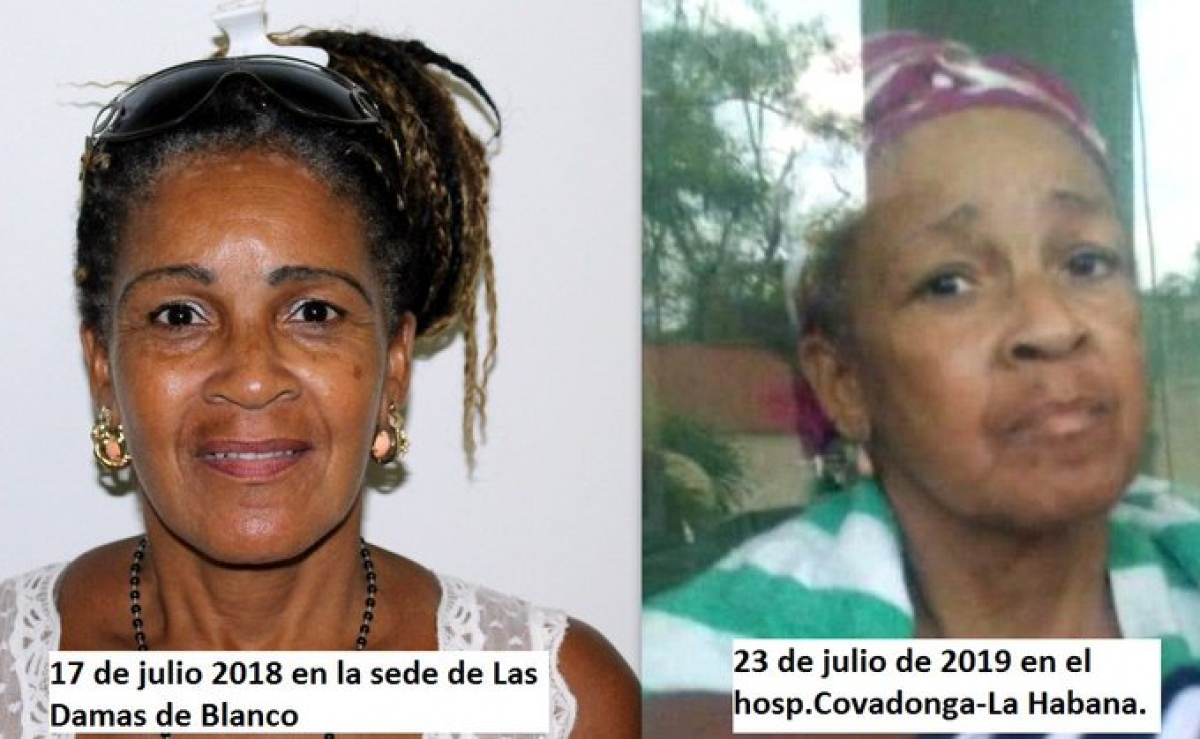
Xiomara Cruz, prisoner of conscience, Covadonga Hospital intensive care, Aug 8th

Thursday, July 13, 2017

China's Liu Xiaobo and Cuba's Sebastián Arcos Bergnes: Parallel lives that ended in politically motivated medical neglect

"I hope that I will be the last victim of China's endless literary inquisitions and that from now on no one will be incriminated because of speech." - Liu Xiaobo, I Have No Enemies: My Final Statement 2009
 
Liu Xiaobo and his wife Liu Xia

Today when news broke that Nobel Peace Prize Laureate Liu Xiaobo had died of "multiple organ failure" while still under the custody of the Chinese communists. Friends and family had expressed concern that he was not receiving proper medical care.

The nonviolent dissident, scholar and prisoner of conscience was arrested on June 23, 2009 and charged with “inciting subversion of state power” for co-authoring Charter 08, a declaration calling for political reform, greater human rights, and an end to one-party rule in China. Still imprisoned from the June 2009 arrest he was sentenced to 11 years in prison on December 25, 2009 following a political show trial. 

Liu Xiaobo was told by prison authorities on October 9, 2010 that he had won the Nobel Peace Prize. When his wife Liu Xia visited him in prison the prisoner of conscience told her: “This is for the lost souls of June 4th.” Dedicating the prize to the demonstrators killed in Tiananmen Square  on June 4, 1989. Liu Xia was placed under house arrest after returning home from visiting her jailed husband Liu Xiaobo, and communications and visitors curtailed. Activists that wanted to gather and celebrate Liu Xiaobo’s award were also detained.

Liu Xiaobo and his wife Liu Xia in happier times
 Less than a month ago Chinese communist authorities made public that he had been diagnosed with terminal liver cancer but his access and movement continue to be restricted. His wife, Liu Xia said that her husband, according to The Guardian, "cannot be given surgery, radiotherapy or chemotherapy," allegedly "because the cancer is so advanced." Chinese Human Rights Defenders had reported that individuals in custody, like Liu Xiaobo, have been denied medical treatment and that this is a life threatening form of torture. The NGO called for him to be freed and allowed to choose doctors and treatment. Liu Xiaobo had wanted to obtain medical care for his cancer outside of China but his request was denied by regime officials.

Upon hearing the news of the late cancer diagnosis and the possible use of the denial of medical treatment as punishment for dissent the case of Cuban human rights defender Sebastián Arcos Bergnes came to mind. Although Beijing is 7,913 miles from Havana with a very different language, culture and history both share something in common: they are communist dictatorships. Both Liu Xiaobo and Arcos Bergnes were nonviolent dissidents, the Cuban activist had also played a historic role in the Cuban revolution but quickly grown disillusioned with the failure to restore democracy following the end of the Batista regime.

In 1982 at the Combinado de Este prison Gustavo Arcos Bergnes and his younger brother, Sebastián Arcos Bergnes, joined the Cuban Committee for Human Rights. The brothers had been imprisoned in 1981 for trying to leave the country illegally. The two brothers had fought alongside Fidel Castro in the 1950s against the Batista dictatorship. Gustavo had participated in the July 26, 1953 attack on the Moncada military barracks and was wounded during the assault, an injury that plagued him for the rest of his long life. Shortly after his release from prison in 1988, Gustavo Arcos succeeded the committee’s founding executive director, Dr. Bofill, who was forced into exile in 1987.

On January 13, 1992 the executive board of the Cuban Committee for Human Rights again issued a statement reaffirming their commitment to nonviolence and calling for dialogue: "Violence is not and cannot be the solution to our problems... We will not tire from insisting that the only possible solution is civilized discussion of our differences. This is an appeal to Cubans for wisdom and common sense... No act of violence is justified... Let us say no to violence and learn to live in peace."

Sebastián Arcos Bergnes in front of his home on May 31, 1995 following his release
Two days later, Sebastián Arcos Bergnes, his brother Gustavo and another Cuban Committee for Human Rights activists were arrested at their homes in Havana. The others were released after approximately 24 hours. Sebastian Arcos Bergnes was charged with "enemy propaganda" and "inciting rebellion," he was sentenced to four years and eight months in prison. Sebastian was transferred to Ariza Prison in  Cienfuegos Province,  more than 130 miles from Havana, where he was imprisoned alongside dangerous criminals and systematically denied medical attention. In 1993 the regime offered Sebastian a deal: He would be released immediately if he only agreed to leave the island for good. Sebastian rejected the deal, choosing prison in Cuba over freedom in exile.


After an international campaign that included his designation as an Amnesty International prisoner of conscience and a request by France Libertés, the organization founded by former French first lady Danielle Mitterrand, Sebastian Arcos was released in 1995. A few weeks after his release, Arcos was diagnosed with a malignant tumor in the rectum, for which he had previously been denied medical care in prison. After a Cuban doctor was fired from his post for diagnosing Arcos, he traveled to Miami for further care. In 1996, Sebastián Arcos Bergnes testified before the UN Human Rights Commission in Geneva, Switzerland:
My name is Sebastián Arcos Bergnes, and I am the Vice-president of the Cuban Committee for Human Rights, a non-governmental organization founded in Cuba in 1976 to observe the respect for the Universal Declaration of Human Rights in the island.
On the 15 of January 1992 I was arrested in my home by the Cuban political police; the second time in ten years. On October of that year I was sentenced to 4 years and eight months in prison for the sole crime of reporting to this Commission the violations of human rights committed by the government of my country. The labor of those volunteers of this Commission inside of Cuba are considered by the government as "enemy propaganda."
I will not enter into the details concerning the multiple irregularities of the judicial process always against me, nor about the conditions that I had to tolerate for more than three years. I will refer solely to one aspect of this my last experience in Cuban prisons.
When I was arrested in January of 1992, I enjoyed excellent general health for a man my age, 60 years then. I weighed around 170 pounds, and ran 5 to 6 kilometers every morning. Eight months later, when after a campaign of denunciations of my family I was transferred finally to a military hospital, I'd lost over 30 pounds and suffered from multiple ailments.
My stay in the hospital was not long. In December of 1992 I was transferred to the Prison of Ariza in the Province of Cienfuegos, over 300 km from my home and my relatives. All of the medical treatments indicated by specialists of the military hospital were immediately suspended. During the next 30 months that I spent in Ariza my state of health worsened considerably, and I was systematically denied access to the medications that my family sent me.
During those 30 months only occasionally did I see inexperienced doctors that gave me incomplete medical exams and additionally lacked the medication to prescribe me. I have in my possession a detailed chronology of my repeated denunciations concerning the abandonment of my health by the Cuban authorities.
In February of 1994, in an attempt to refute my denunciations, the Cuban government presented before this Commission a strip of video filmed without my knowledge, in which I appeared to be undergoing a medical exam. That was the second and last time that I was taken to the hospital, that time for a cardiological exam which had been ordered with urgency on three previous occasions.
In mid - 1994 I commenced to suffer pains in my left leg, which later spread to the rest of my extremities. After a rapid examination, a doctor in the prison determined that I suffered from polineutritis -a deficiency illness very common in the Cuban jails, and he prescribed treatment with vitamins. The pain continued with me for nearly a year later when I was liberated as a result of a gesture of the humanitarian organization France Liberte.
A few days after being liberated the pain worsened suddenly. Many weeks later I had to be urgently admitted to the hospital, were a doctor (friend) discovered that I had a malignant tumor in the rectum. Finally I had to leave Cuba to receive medical treatment in Miami, where my children live. The medical team which examined me in Mercy Hospital diagnosed a rectal tumor of 8 cm of diameter, with more than a year and a half of growth, with metastasis in the bones of the pelvis. At only 4 cm from the anal sphincter, the tumor could have been easily detectable with a simple feel of the area which is included in a basic medical exam for any man over 50 years old. Attached here are medical diagnosis which confirm what I've been saying.
These conclusions put the Cuban government in a difficult juncture. Or the Cuban government didn't know of the existence of the tumor, and in that case they recognize that they did not give me adequate medical assistance; or I'm lying and the Cuban government did know about the tumor and hid that knowledge for more than a year.Or the Cuban government recognizes itself guilty of criminal negligence in my case, or it recognizes itself guilty of an attempted premeditated homicide against my person.
Mr. President:
Before I finish, I would like to make clear that mine is not an isolated case, but only an example of the regular practice of Cuban authorities in their treatment of prisoners of conscience. Out of the group of 6 political prisoners liberated by the Cuban government after the requests of France Liberte, only two enjoyed good health. In addition to my own case, Reinaldo Figueredo has cancer in his vocal chords, Luis Enrique Gonzalez Ogra has pancreatic cancer, and Ismael Salvia Ricardo is nearly blind. Terrible nutrition, crowded and unsanitary cells, housing with common violent criminals, violent repression, and reluctant medical assistance - if any- are the norm and not the exception in Cuban prisons.
Because of all this, Mr. President, it is urgent that this Commission demand of the Cuban government that it permit without restriction the International Red Cross to all the Cuban prisons, and that Cuba comply with the international statutes about prisoners and the treatment of prisoners. This is the least we can do in the short run to avoid that cases like mine be repeated, in which medical assistance came-tragically-when it was already far too late.

Thank you very much,
Sebastián Arcos Bergnes
Sebastián Arcos Bergnes died in Miami surrounded by relatives on December 22, 1997, but in the two years he lived abroad, his life prolonged thanks to state of the art medical care at the time, he was able to give his testimony and expose the criminal nature of the Castro regime and document it on the record. It is known that Cuba and China have a close working relationship and share "worse practices" and it would not be a surprise that the lessons learned from the Arcos Bergnes episode would have led Chinese commissars to decide against his release, preferring the short term bad press to having the possibility of Liu Xiaobo traveling the world for a couple of years, or more, with all measures taken to prolong his life and providing testimony as the Cuban human rights defender did between 1995 and 1997, while battling a terminal cancer. Nevertheless both men were victims of politically motivated medical neglect, a despicable practice shared by these two communist regimes.


Wednesday, October 10, 2012

Honoring Ladies in White Founder Laura Pollán and Cuba's Call to Freedom Remembered

Cuba's Yara Proclamation 144 years later and honoring Laura Pollán one year after her death

Laura Inés Pollán Toledo:  February 13, 1948 – October 14, 2011
144 years ago on October 10, 1868 a Cuban planter and lawyer, Carlos Manuel de Céspedes del Castillo, sounding a bell gathered his slaves together and told them that they were free and if they chose they could join him and his compatriots in the struggle for a new nation. The nearest town to the plantation was called Yara and this cry for freedom became known as the "Grito de Yara" the (Proclamation of Yara). This initial act led to ten years of war with Spain and although ending in a frustrating and temporary peace under continued Spanish rule it did much to forge the Cuban character.

Less than three months ago not far from Yara in the same province of Bayamo, two Cuban patriots Oswaldo Payá Sardiñas and Harold Cepero Escalante, died under suspicious circumstances in what appears to have been an extra-judicial killing disguised as a car accident.

In four days, the one year observance of a tragic anniversary: the untimely death of opposition leader Laura Inés Pollán Toledo through what a Cuban medical doctor described as medical neglect. On October 14, 2011, Laura Pollan, one of the founders of the human rights movement the Ladies in White died after years of suffering physical and psychological assaults against her person. Finally, she would become a victim of the Cuban healthcare system that following the Castroite dictum of inside the revolution everything outside of it nothing - would suffer and die in a matter of days while under the supervision of doctors who were revolutionaries first and doctors second.

Carlos Manuel de Céspedes never got to see Cuban independence nor even the end of the Ten Years war he died in 1874. Unfortunately, as with Jose Marti and Antonio Maceo we are seeing another generation of heroes continuing the drive for Cuban freedom but dying before achieving their goal. It is for this reason that we must remember and honor these men and women who have given their last full measure to free a country subjugated to more than six decades of dictatorship. Seven years of authoritarian tyranny with Fulgencio Batista followed by 53 years of totalitarian tyranny with the Castro brothers. The body count of innocent Cubans has been steadily rising these past six decades with brutal patterns of repression.

Let us remember Laura Pollan the school teacher who became an international human rights icon and sadly today a martyr of the Cuban freedom movement. On October 14 there will be activities inside and outside of Cuba to remember and honor this remarkable and courageous woman.  At the headquarters of the Ladies in White in Havana, Cuba they will open a guestbook throughout the day and invite people to come and pay their respects. No doubt throughout the world wide web there will be different efforts and actions underway to honor this Cuban mother and wife who was taken from us far to soon.


Thankfully her words and writing survive and we can learn from her wisdom and continue the struggle for a free Cuba.

"They can either kill us, put us in jail or release them. We will never stop marching no matter what happens." (2010)

"We are going to continue. We are fighting for freedom and human rights.” (September 24, 2011)

"As long as this government is around there will be prisoners because while they've let some go, they've put others in jail. It is a never-ending story." (2011)

“If we must give our own lives in pursuit of the freedom of our Cuba that it be what God wants.” (September 24, 2011)

"We are not going to stop. If you have imprisoned our sisters thinking that we would give up, they are mistaken. We are very united (...) all the women's movements are very close." (October 2, 2011)

They tried to silence 75 voices, but now there are more than 75 voices shouting to the world the injustices the government has committed. (2004)

“We ask on this Christmas Day for freedom for our political prisoners and for the Cuban people to have a better future.” (2005)

“It's an extremely sad day for us, because Christmas is a family holiday. Since our husbands are not with us, our families cannot be complete.” (2005)

"We fight for the freedom of our husbands, the union of our families. We love our men." (2005)

“We would never have thought this would go on for so long.” (2006)

Human rights basically have been dead in our country for three years. Physically, I am tired. But I am still fighting, as long as I am alive and my husband is jailed, I am going to keep fighting. – Laura Pollan (2006)

“We are calling for freedom for all political prisoners.” (2006)


Saturday, July 7, 2012

Cholera and the Cuban Health Care System


The current cholera outbreak in Cuba offers an opportunity to see how the Cuban public health system operates. Unfortunately, the well being of Cubans is not the first item on the agenda. This is demonstrated in the regime's response. News of the outbreak in Manzanillo, in the east of the island, broke in El Nuevo Herald on June 29, 2012 thanks to the reporting of the outlawed independent press in the island. The state controlled media did not confirm the outbreak until days later on July 3, 2012. The BBC reported on July 7, 2012 that a patient had been diagnosed with Cholera in Havana. The dictatorship states that it has it under control.

The regime in Cuba has both an incredibly effective propaganda and state security apparatus however what it does not have is an effective healthcare system for all Cubans. As masters of propaganda the Castro regime can produce statistics and spin a story of wonderful medical care that is the envy of the world.  Filmmakers like Michael Moore have repackaged the propaganda and spread it globally. With their state security apparatus the regime in Cuba is able to terrorize many into going along with the lie.

For example the Cuban regime reports that "this is the first cholera outbreak since soon after the 1959 revolution." However, doing a search through The New York Times archives the last quarantine for Cholera it reported in a headline on Cuba was on September 16, 1916. The last cholera epidemic in Cuba ended in 1882.

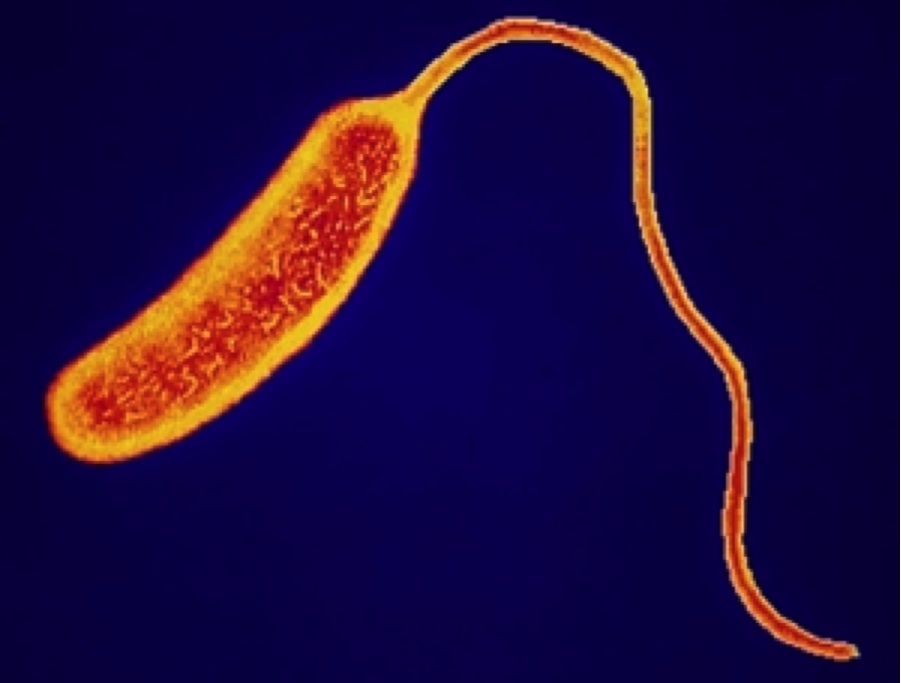
Vibrio cholera bacterium
The claim that there have been no other cholera outbreaks should be met with skepticism. In 1997 when a Dengue epidemic broke out in Cuba the dictatorship tried to cover it up. When a courageous doctor spoke out he was locked up on June 25, 1997 and later sentenced to 8 years in prison. Amnesty International recognized Dr. Desi Mendoza Rivero as a prisoner of conscience. He was released from prison under condition he go into exile in December of 1998. The regime eventually had to recognize that there had been a dengue epidemic. However, if there were a cholera outbreak, not an epidemic, that the dictatorship could contain they would cover it up because it would go against their "revolutionary" narrative of progress.

Nevertheless, as it becomes more difficult to contain information and as other courageous Cubans report on human rights abuses despite the continuing terror some of the facts come to light.

For example in January of 2010 news got out that 26 mental patients had died in Havana at the Psychiatric Hospital, known as Mazorra, from negligence and neglect.

With the regime gaining free publicity with the highly publicized trips of Hugo Chavez for cancer treatment to Cuba, in June of 2011 a Cuban human rights defender raised important questions to Chavez about the quality of care over twitter such as "What would he say of Cuban health care if he were a widower of one of the women who died in the Palma Soriano maternity hospital?"

Another element of concern is the medical mistreatment of dissidents:

Juan Wilfredo Soto García was beaten up by police on May 5, 2011 then hospitalized later that same day and discharged. He returned the following day complaining of back pains and died a day later in intensive care.

The October 14, 2011 death of Laura Pollán under mysterious circumstances which Cuban physician and human rights defender, Oscar Elias Biscet described as "death by purposeful neglect."

Since November 22, 2011 Yris Perez Yris Tamara Pérez Aguilera has been suffering from a large hematoma to the back of her head and state security along with medical doctors have denied her adequate health care. 

Katherine Hirschfeld, an anthropologist, in Health, Politics, and Revolution in Cuba Since 1898 describes how her idealistic preconceptions were dashed by 'discrepancies between rhetoric and reality,' she observed a repressive, bureaucratized and secretive system, long on 'militarization' and short on patients' rights.

There is a health care system which is decent for regime elites in good favor and tourists with hard currency and another one for everyday Cubans that is a disaster. With regards to the public health system the priority is  the good image of the dictatorship not the well being of Cubans.

This is not a pattern that is unique to Cuba, their close ally North Korea also has a dysfunctional healthcare system.


Sunday, October 30, 2011

The case of Laura Pollán: Death by Purposeful Medical Neglect

A medical analysis of the painful, tragic and unnecessary death of Laura Pollán

by Dr. Oscar Elías Biscet


Photo from September 24, 2011 of Laura Pollán being scratched during protest

On several occasions I visited in solidarity with the Lady in White Laura Pollán and to present my condolences to her family. During these visits, some dissidents raised concerns to me for the beginning and the fatal outcome of her disease. They wondered if it was possible that the disease had been caused by a bite or scratch by someone. This extreme but real and justified suspicion, by the Cuban opposition is based on the intense and constant repression of a Stalinist Castro police acting with the cruelty and cowardice of terrorists.

The Cuban democratic opposition is subjected to continuous and prolonged stress as a mechanism of destabilization of the political police. This type of stress leads in the human person to an imbalance of their state of health, both physically and mentally. Neutralization is one of the basic techniques in the work of agents of the regime that kill, eliminate or get rid of political opponents, such as forcing an organization to cease their activities or disintegrate completely.

During our turbulent past, the Castro regime has committed multiple extrajudicial political killings that it has disguised as accidents, false legal proceedings, and even street fights, and even diseases without reason or apparently accurate medical diagnosis.

Now, if the Castro government decided to kill with impunity the leader of the Ladies in White it could not have done it with chemicals that trigger the process of poisoning by ingestion, inhalation or skin contact. The reason is that these products are only in the hands of the state and the family access to the corpse, the felony would have been discovered.

The most suitable way the regime would have had to commit this morbid crime would have been through diseases caused by elements within the broad field of biotechnology in the country. To the point, that the government of Cuba has been included in several lists of the Department of State of the United States as a bioterrorism threat to the free world.

It is common knowledge that Laura Pollán was bitten and scratched by a State Security agent on September 24 of this year and eight days later fell ill in critical condition. As a physician, immediately I asked myself the following questions: Which diseases can be transmitted by direct contact from person to person? Were the scratches caused by human nails or sharp objects? What is the epidemiological state in the region and the nation?

The transmission of disease through a human bite is rare not only in Cuba but also in the world. This should at least meet two characteristics, namely that the bite lacerate the human skin and infected salivary secretions of the perpetrator come in contact with her, or that the bite lacerate the human skin and that the aggressor have lesions in the buccal mucosa allowing offender's blood to make contact with the wound of the victim.

In both cases there are few diseases described that can be transmitted this way. One is human rabies, which is a very rare disease. In fact, it has only confirmed that it occurred when checked for in corneal transplants of persons who have died of a undiagnosed central nervous system disease. In some regions where the disease is endemic, human autopsies show evidence of rabies as low as 1 to 2%. The animals are the reservoir of the disease, especially dogs, cats, bats and nearly all mammals. In Cuba, for example, there are no diagnosed cases of human transmission.

Actinomycosis is another rare disease transmitted by the bite of a human being. Its natural reservoir is man. The infectious agent Actin-mycesisraelii is an anaerobic organism that produces a chronic infection localized of granulomas strongly indurated of purulence and fibrosis. They are located in the abdomen, chest and jaw. In these cases septicemia spread may occur with a generalized infection.

There are other human infectious diseases that are transmitted through blood and saliva. Needles, syringes and other instruments contaminated from intravenous use is another common means of spread of infectious entities. In some cases the infection can be spread by contamination of wounds or lacerations, as well as mucous membrane exposure to infected blood and blood products.

On the other hand, there are diseases such as hepatitis B and C, AIDS, infectious mononucleosis, cytomegalovirus infection, syphilis, Ebola-Marburg and others that could be transmitted by infected blood contact with wounds or skin lacerations. Although in reality, the medical literature contains no specific examples of these processes cases transmitted by human bites. For its part, infectious mononucleosis, cytomegalovirus and hepatitis B are infectious in human saliva and one of the routes of infection is the kiss. It is also possible that skin wounds in contact with contaminated saliva but not in the medical literature there are recorded cases of human bites.

Also, through sharps all the diseases described in the previous paragraph can be transmitted. But this does not seem to have been the method used to attack Laura. The scratches were made by human hands, in medical literature, does not know of any disease that has been transmitted in this way. In the case of shigellosis bacteria may be present in the nails of individuals but their way of transmission is by direct or indirect fecal-oral route.

What is definitely motive for concern is the epidemiological state in the island. In our country there are several infectious processes that trigger epidemics in several provinces, especially in Havana. These epidemics are those of the H1N2 influenza virus, the respiratory syncytial and dengue. The first two were publicly acknowledged by the government authorities in the Saturday October 12, 2011 edition of Granma newspaper. The dengue epidemic remains hidden so as not to alarm foreign tourists and threaten desperately needed foreign exchange.

However, in the course followed by the disease in Laura Pollán there existed things that caught my attention as a physician and that led me to an early diagnosis. Vomiting, chills, joint pains, severe weakness, fever and shortness of breath are associated with an epidemic of dengue. Incredibly, the patient's skin was not reviewed to discover escarlatiforme or maculopapular, or the presence of petechiae that are unmistakable signs of this process, nor indicated the loop or tourniquet test that is done at the foot of the bed.

Nor were immunological investigations performed for the diagnosis of dengue in the health center where she was treated. Four days after admission to the intensive care unit of Hospital Calixto Garcia, precisely because of the orientation of an independent physician and friend of the family, it is decided to search in the skin of the patient and verify the presence of petechiae on the chest.

Before being admitted the hemoglobin was at 12g/l and two days after admission to hospital 6g/l, because there was a bleeding that was never reported to the family. Even transfused 500mm/l of blood, increasing hemoglobin 8.6g/l. Arterial blood pressure was 74/57 that constitutes a low differential pressure. So, the patient is in a serious state, I would say in an irreversible vascular shock, which went from a moderate awareness to stupor and finally coma.

This alteration of consciousness was not communicated to the family. The proof is that while they had their eyes occluded with moist gauzes, method utilized in comatose cases, in the medical reports limited themselves to saying that they had her sedated. Hemoglobin dropped from 12 to 6 g/l. Why? For post-hemorrhagic anemia due to hemolytic anemia. This last factor explains the final diagnosis that they gave the patient of an acute respiratory failure because of the respiratory syncytial virus (RSV).

But there was no jaundice of skin or mucosa, or other hemolytic sign. But when I saw the skin of the corpse during the course of the funeral it was translucent and white. As could be described as pale alabaster skin that is caused by acute hemorrhage and contrasts with hemolytic anemias where the skin takes on a yellowish color. There was also a generalized edema that deformed her, defining feature of renal failure, improper RSV and very common in hemorrhagic dengue fever/dengue shock syndrome (DHF/DSS).

Dengue viruses include immunological types 1, 2, 3 and 4 and are flaviviruses, which are transmitted by arthropods, generally the mosquito Aedes aegypti. These same viruses cause hemorrhagic dengue fever. In rare cases, primary infections with dengue virus cause a syndrome of hemorrhagic fever (HF). Although most frequent to the onset of HF is the previous infection with heterologous dengue predisposes.

However, the patient Laura Pollán's was misdiagnosed with the illness of respiratory distress or acute respiratory failure because of the respiratory syncytial virus. This is a negative RNA virus of the paramyxovirus family. The largest number of affected is between infants and children that in certain environments such as nurseries, approaches 100%. At the age of two years most children will have been infected. And it is the cause of 25% of hospitalizations for pneumonia in infants and young children and 75% of cases of bronchiolitis in this age group.

In older children and adults the disease is milder than in infants. In adults, it appears as a common cold. In the elderly, often in patients admitted to health facilities, and patients with immunodepressive process or treatment serious infections appear of the lower portion of the airways. None of these symptoms is unrelated to the physical condition of the patient who, though a person who started the third age and suffered from chronic but compensated illnesses, behaved like a healthy person. This patient presented failures in all vital organs: lung, brain, heart, liver, pancreas, kidney and hematopoietic system observed in hemorrhagic dengue fever and not in respiratory failure by syncytial virus.

Nevertheless dengue can cause hemorrhagic shock syndrome or disseminated vascular coagulation. Both processes can cause acute respiratory failure, which would justify its severity and death. There is concrete evidence that the closest relatives, friends and dissidents expressed suspicions about a possible assassination by the communist regime's political police. Now, what has been proven over and over again is the stubborn nature of the regime at this sad, tragic and unnecessary death.


Original Spanish text available here.

Thursday, July 18, 1996

Cuban Dissident Sebastian Arcos Bergnes addresses the UN Human Rights Commission

Address to the United Nations Human Rights Commission in Geneva, Switzerland

 April 18, 1996

Sebastián Arcos Bergnes in front of his home on May 31, 1995

Mr. President: Members of the Commission:

My name is Sebastian Arcos Bergnes, and I am the Vice-president of the Cuban Committee for Human Rights, a non-governmental organization founded in Cuba in 1976 to observe the respect for the Universal Declaration of Human Rights in the island.

On the 15 of January 1992 I was arrested in my home by the Cuban political police; the second time in ten years. On October of that year I was sentenced to 4 years and eight months in prison for the sole crime of reporting to this Commission the violations of human rights committed by the government of my country. The labor of those volunteers of this Commission inside of Cuba are considered by the government as "enemy propaganda."

I will not enter into the details concerning the multiple irregularities of the judicial process always against me, nor about the conditions that I had to tolerate for more than three years. I will refer solely to one aspect of this my last experience in Cuban prisons.

When I was arrested in January of 1992, I enjoyed excellent general health for a man my age, 60 years then. I weighed around 170 pounds, and ran 5 to 6 kilometers every morning. Eight months later, when after a campaign of denunciations of my family I was transferred finally to a military hospital, I'd lost over 30 pounds and suffered from multiple ailments.

My stay in the hospital was not long. In December of 1992 I was transferred to the Prison of Ariza in the Province of Cienfuegos, over 300 kilometers from my home and my relatives. All of the medical treatments indicated by specialists of the military hospital were immediately suspended. During the next 30 months that I spent in Ariza my state of health worsened considerably, and I was systematically denied access to the medications that my family sent me.

During those 30 months only occasionally did I see inexperienced doctors that gave me incomplete medical exams and additionally lacked the medication to prescribe me. I have in my possession a detailed chronology of my repeated denunciations concerning the abandonment of my health by the Cuban authorities.

In February of 1994, in an attempt to refute my denunciations, the Cuban government presented before this Commission a strip of video filmed without my knowledge, in which I appeared to be undergoing a medical exam. That was the second and last time that I was taken to the hospital, that time for a cardiological exam which had been ordered with urgency on three previous occasions.

In mid - 1994 I commenced to suffer pains in my left leg, which later spread to the rest of my extremities. After a rapid examination, a doctor in the prison determined that I suffered from polineutritis -a deficiency illness very common in the Cuban jails, and he prescribed treatment with vitamins. The pain continued with me for nearly a year later when I was liberated as a result of a gesture of the humanitarian organization France Liberte.

A few days after being liberated the pain worsened suddenly. Many weeks later I had to be urgently admitted to the hospital, were a doctor (friend) discovered that I had a malignant tumor in the rectum.

Finally I had to leave Cuba to receive medical treatment in Miami, where my children live. The medical team which examined me in Mercy Hospital diagnosed a rectal tumor of 8 cm of diameter, with more than a year and a half of growth, with metastasis in the bones of the pelvis. At only 4 cm from the anal sphincter, the tumor could have been easily detectable with a simple feel of the area which is included in a basic medical exam for any man over 50 years old. Attached here are medical diagnosis which confirm what I've been saying.

These conclusions put the Cuban government in a difficult juncture. Or the Cuban government didn't know of the existence of the tumor, and in that case they recognize that they did not give me adequate medical assistance; or I'm lying and the Cuban government did know about the tumor and hid that knowledge for more than a year.Or the Cuban government recognizes itself guilty of criminal negligence in my case, or it recognizes itself guilty of an attempted premeditated homicide against my person.

Mr. President:

Before I finish, I would like to make clear that mine is not an isolated case, but only an example of the regular practice of Cuban authorities in their treatment of prisoners of conscience. Out of the group of 6 political prisoners liberated by the Cuban government after the requests of France Liberte, only two enjoyed good health. In addition to my own case, Reinaldo Figueredo has cancer in his vocal chords, Luis Enrique Gonzalez Ogra has pancreatic cancer, and Ismael Salvia Ricardo is nearly blind. Terrible nutrition, crowded and unsanitary cells, housing with common violent criminals, violent repression, and reluctant medical assistance - if any- are the norm and not the exception in Cuban prisons.

Because of all this, Mr. President, it is urgent that this Commission demand of the Cuban government that it permit without restriction the International Red Cross to all the Cuban prisons, and that Cuba comply with the international statutes about prisoners and the treatment of prisoners. This is the least we can do in the short run to avoid that cases like mine be repeated, in which medical assistance came-tragically-when it was already far too late.

Thank you very much,

Sebastian Arcos Bergnes

Reference summarizing his speech: UN

Saturday, June 1, 1996

CHRONOLOGICAL ACCOUNT OF THE INCARCERATION OF SEBASTIAN ARCOS BERGNES

CHRONOLOGICAL ACCOUNT OF THE INCARCERATION OF
SEBASTIAN ARCOS BERGNES
VICEPRESIDENT OF THE CUBAN COMMITTEE FOR HUMAN RIGHTS (CCPDH)


01/15/1992
Sebastian Arcos Bergnes is arrested at approximately 7:30 p.m. and taken to Villa Marista, headquarters of the State Security Department (DSE). While an organized aggressive mob demonstrates outside, a minute search of his residence is conducted, and numerous personal documents belonging to Arcos and his son are seized, as well as papers pertaining to the Cuban Committee for Human Rights. 
 
01/16/1992
Arcos is indicted for rebellion in Case #9-92, Indictment #24-92. Captain Orlando Soroa Clapera is appointed to take charge of the proceedings. 
 
01/27/1992
Arcos suffers from an abscessed molar that causes pain, swelling, and draining of pus. He is given only painkillers and antibiotic, since the DSE has no specialists in this area of dentistry and refuses to take him to a clinic. 
 
01/29/1992
Visiting relatives to Villa Marista find that Arcos is having an attack of jaundice, from which he eventually recovered on his own. His chronic allergy has increased due to being locked in with smokers, in spite of his complaints. Arcos refuses an offer by the DSE to exercise in the Villa Marista gym and outdoor running track. 
 
02/18/1992
Arcos' defense attorney, Ms. Jenny Bejar Rivery, submits a motion to the Prosecution requesting that her client be released on bond pending trial, based on his age and present state of health, or else that he be removed to another prison. 
 
02/28/1992
In a written response, the Prosecutor, Ms. Edelmira Pedris Yumar, denies both defense requests and orders the defendant to remain in Villa Marista claiming that his presence is essential to the investigation of the case.
 
03/18/1992
After almost two months without treatment, Arcos' abscessed tooth is given apparently adequate treatment by a specialist brought to Villa Marista for that purpose. (See 08/31/93.)
 
April 1992
CCPDH activists at Combinado del Este Prison report that political prisoner Arturo Suarez Ramos has been moved to Villa Marista, and hence to a house on the beach in Eastern Havana, where DSE officers are urging him to testify against Sebastian Arcos Bergnes. Suarez Ramos refuses to get involved in this scheme and is threatened by the DSE with removal to a prison in the interior of the country.
 
04/15/1992
Once again, Arcos' defense attorney moves for his pre-trial release on bond.
 
04/22/1992
Arcos is removed to the State Security Ward of Carlos J. Finlay Military Hospital in Marianao, where he undergoes various tests and treatments. In spite of his repeated protests, he is confined alongside two common criminals who constantly provoke and threaten him (one of them has been in prison since the age of 13 for murdering his own father).
 
05/06/1992
The last defense motion for Arcos' pre-trial release is denied, and his indictment file is finally closed.
 
05/13/1992
On this Wednesday, the DSE drops the charge of rebellion against Sebastian Arcos Bergnes and charges him with enemy propaganda. In Indictment #24/92, dated April 27,1992, the Prosecution requests a 6-year prison term. Arcos' defense attorney will not be able formally to receive the document until Monday, May 18. This affords her only 14 days to submit her response, since the cutoff date is June 2, 1992.
 
05/18/1992
Arcos is suddenly removed back to Villa Marista without having completed his medical treatment at the Military Hospital.
 
05/21/1992
After complaints by Arcos and his relatives, he is again removed to the Military Hospital.
 
06/01/1992
Arcos' defense attorney submits her response to the allegations made by the Prosecution, moving for acquittal based on the absence of criminal conduct and requesting that the evidence be examined by independent experts, Messrs. Juan Francisco Orellana and Son, of the legal firm Gabinete Juridico Pericial Orellana, from Barcelona, Spain.
 
06/04/1992
Arcos is removed to Valle Grande Prison, southwest of Havana. For four days he sleeps on the floor, he is locked up with common criminals, his medication is removed, his treatment suspended, and he is constantly mov ed from one prison unit to another (4 times in 10 days). He experiences a loss of hearing on his right ear as a result of otitis inappropriately treated. 
 
Monthly family visits are allowed. 

 Meanwhile, political prisoner Arturo Suarez Ramos is removed to Boniato Prison, in Santiago de Cuba Province, in order to prevent him from testifying in Arcos' behalf.
 
July 1992
The Prosecution refuses to allow the Spanish experts to review the evidence. The trial is set for September 2.
 
08/07/1992
Arcos' trial is reset for September 3, 1992.
 
08/31/1992
The September 3 trial date is canceled without explanation. A new date is set for October 5.
 
09/26/1992
Arcos meets with Prosecutor Edelmira Pedriz in the presence of the officer in charge of proceedings, Captain Orlando Soroa Clapera. Upon being asked by Arcos whether they had ever met before, since her face looks familiar, Ms. Pedriz vehemently denies this.
 
09/29/1992
Arcos is removed to Villa Marista. He is minutely searched for documents that he may be planning to read at the trial, describing the violations committed against him since his arrest.
 
10/01/1992
Arcos is removed to the Security Ward at Carlos J. Finlay Hospital, and treatment is resumed. There is another meeting with Prosecutor Edelmira Pedriz, where she again denies having ever met Sebastian Arcos Bergnes.
 
10/05/1992
Arcos' trial takes place before the State Security Court for Ciudad Habana Province. Only close relatives are allowed in the courtroom, which is crowded with DSE personnel. The Presiding Judge obstructs Arcos' defense and allows numerous procedural violations, such as charges not contained in the original indictment and threats by the Prosecutor against the witnesses and the attorney for the defense. At the end of her conclusion, the Prosecutor admits being familiar with the defendant since the '70's, when she was a schoolmate of his daughter's, and breaks out into personal abuse against Arcos, which in fact constitutes an act of self- impeachment to proceed with the case. None of the charges is proved during the trial.
 
11/03/1992
The defense attorney is advised of the official sentence of 4 years and 8 months, pronounced on October 8.
 
12/02/1992
Arcos writes to Rapporteur Carl Johann Groth, describing his condition in Valle Grande Prison and the violations committed in his trial.
 
12/11/1992
Arcos is removed to Ariza Prison, in Cienfuegos Province, more than 300 km from Havana. Family visitation is set every two months, his medication is withdrawn, his medical treatment is discontinued, and he is locked up in the company of common criminals.
 
12/21/1992
First family visit to Ariza Prison. The medication brought by the family is seized by prison authorities.
 
12/23/1992
Arcos lodges a formal protest before the DSE officer in Ariza at being held alongside dangerous criminals The DSE officer known as Jose Antonio responds that "he had instructions from his superiors that political prisoners and common inmates be housed together," Arcos asks to meet with Prison Director, Lieutenant Colonel Gustavo Proenza. This request goes unanswered.
 
12/24/1992
Attorney Rene Gomez Manzano submits a motion to the Court of Crimes Against State Security, with a formal request to have Arcos removed to a prison within Havana Province, given his age, state of health, and hardship encountered by the family to visit him in Ariza.

1993

01/14/1993
Second family visit to Ariza Prison. The medicines seized on the prior visit have not been delivered to Arcos.
 
01/23/93
First theft of personal effects belonging to political prisoners Sebastian Arcos Bergnes and Ronald Leon Cabrera, perpetrated by common inmates Ramon Hurtado, a.k.a. Furrumaya, and two other inmates with the worst criminal records. In spite of the theft having been reported to the prison authorities, the perpetrators have not been punished or prosecuted.
Witnesses to the theft: Manuel Acosta Larena, Pedro Perez Sastre, and Mario Antonio Navarro Rosell.
 
02/04/1993
Common inmates Ramon Hurtado and one of his accomplices beat up and rape common inmate Tomas Diaz Herrera, who is mentally retarded. This time both criminals are punished with 21 days' isolation. A few days after being released from punishment, they steal all the personal belongings of political prisoner Orlando Hernandez Ibarra, without the authorities taking any steps to punish them.
 
03/16/1993
Third family visit to Ariza Prison. Arcos' weight loss (20-25 lbs) is considerable.
 
03/23/1993
The appeal submitted by Attorney Rene Gomez Manzano in behalf of Sebastian Arcos Bergnes is denied.
 
05/14/1993
Fourth family visit to Ariza Prison. On the way out, all three female visitors are undressed, and a search is conducted inside their mouths and in their hair. Arcos suffers from high blood pressure, which he has never experienced before, and both his legs are swollen. Some of the criminals have been removed to other prison units. Arcos refuses a DSE offer of immediate release on condition that he depart the country for good. The authorities threaten to cancel his visitation privileges unless he accepts the offer.
 
06/08/1993
Due to increased swelling in Arcos' legs, prison physisian Dr. Lissette Quintana prescribes an EKG. He is not taken to the hospital.
 
07/06/1993
For the second time, Dr. Quintana orders an EKG procedure for Arcos. Again, he is not taken to the hospital.
 
07/09/1993
Second theft of Arcos' personal effects. Again, the authorities take no steps against the guilty parties.
 
07/16/1993
After traveling to Ariza, Arcos' relatives are informed that his visitation privileges have been canceled in reprisal for the reports of human rights violations that he has been sending out from prison. Arcos reports that the real reaso n is his refusal to accept the offer of release in exchange for departing the country. Both his legs are still swollen, and the two other political prisoners who were his cellmates have been removed to another prison unit. He finds it impossible to go o utdoors for sun and air, for fear that his property may be stolen again.
 
07/30/1993
For the third time, now on a note of urgency, the doctor orders that Arcos be given an EKG. Again, he is not taken to the hospital.
 
08/06/1993
The EKG procedure is conducted without evidence of complications. In view of swelling, the cardiologist orders Arcos to undergo an ergometric test.
 
08/25/1993
The bonus family visit regularly granted to inmates every six months is canceled for the same reasons as the last time.
 
08/31/1993
Arcos' abscessed tooth flares up again, since the filling has dissolved and the cones have become loose and shapeless. He asks to be taken to a doctor, without success.
 
09/01/1993
The swelling from the abscessed tooth affects Arcos' right ear, and he requests to see a doctor. Again this time, he is not taken to see one.
 
09/02/1993
The abscess gets worse, and once more Arcos asks for a doctor. He is not taken to see one, with the excuse that the prison dentist is on vacation. 
 
09/03/1993
On this Friday, Arcos is taken to see a doctor. It is impossible to cure his abscess, since the X-ray machine is out of order. Pain-relieving treatment must wait until Monday. The dentist makes a surprise entran ce in the office, proving that he was not on vacation.
 
09/06/1993
Arcos is not given his medication.
 
09/07/1993
The medication is delivered, but the amount is less than has been prescribed.
 
09/09/1993
Pain and swelling have increased. Arcos asks to see a doctor, without success.
 
09/10/1993
Arcos asks for a doctor. He is not taken to see one. He writes a letter of protest to the Chief Prison Re-education Officer, Captain Luis Gomez, describing how he is systematically being denied medical attention . Arcos makes it clear that no amount of pressure will force him to leave the country against his will, and makes the authorities responsible for his health and his life.
 
09/20/1993
Fifth family visit to Ariza Prison, after 4 months without visitation privileges. Arcos is extremely thin, his abscessed tooth remains untreated, and the entire right side of his face is swollen. The medication brought by the family is still being confiscated. The authorities threaten to cancel other visits and to increase Arcos' sentence unless he agrees to leave the country. His relatives are threatened in order to make them stop the campaign that has been launched abroad in behalf of Arcos' freedom. Copies of his letter of protest are sent to the Cuban Minister of Justice and to the Attorney General.
 
09/30/1993
Common inmate Lazaro Mora Morejon, a.k.a. Matanzas, is moved in with Arcos to Cell #7. Mora Morejon is considered troublesome by other inmates and even by the authorities. Common inmate Edilberto Aguilar Hidalgo, a.k.a. Pelao, is also moved into Cell #7 from the isolation area, where he had been confined for his involvement in numerous fights and for trafficking in psychotropic drugs inside the prison. In response to complaints by the other inmates in Cell #7, the guards state that the transfers were "an express order given by Re-education Officer Lieutenant Luis Becquer." That night, the authorities conduct a minute search of Arcos' belongings.
 
10/02/1993
Common inmate Edilberto Aguilar Hidalgo, a.k.a. Pelao, assisted by Lazaro Mora Morejon, Jorge Luis Lopez Couto, a.k.a. Cachirulo, and Isidoro Garcia Rodriguez, a.k.a. Jicara, steal most of the food that Arcos had received in his Sept. 20 family visit. The authorities do nothing. Aguilar Hidalgo and his accomplices met with the prison DSE Captain, Alfredo Fuentes Dapena, a few days before the theft. Witnesses: Jorge Luis Peņa Perez, Jorge Alberto Sanchez Martinez, Armando Labrada Ibargoyin, and Rafael Vasquez Alpizar.
 
10/08/1993
Arcos and a group of common inmates catch Lazaro Mora eating some of Arcos' food in secret. When questioned by the inmates themselves, Lazaro Mora confesses to his involvement and that of his accomplices in the theft. Moreover, he states that before his transfer to Cell #7, Deputy Chief Enforcement Officer for the prison, Lieutenant Rojas, had urged him to watch Arcos. 

 Sebastian Arcos Bergnes asks to meet with Re-education Officer Luis Becquer, whom he advises of the facts. Arcos seeks to have the thieves removed from Cell #7 and requests the presence of a police Proceedings Officer in order to file formal charges. None of his requests is granted.
 
10/11/1993
All the inmates in the unit are brought out to the yard with the excuse of a head count, and they are called back inside in alphabetical order. To everyone's surprise, Edilberto Aguilar is called ahead of others . Suspecting another theft, Arcos attempts to go quickly back to the unit after his name is called, but he is stopped by two guards, who take him into a separate room and search him carefully. On returning to the cell, Arcos finds that what little food he had left after the prior theft has also been stolen. Immediately, Arcos accuses Edilberto Aguilar and slaps his face, at which Edilberto is temporarily removed from Cell #7. Aside from this, the authorities take no other steps to prevent the recurren ce of the thefts or an assault against Arcos.
 
10/16/1993
Arcos writes to Rapporteur Carl Johann Groth, describing in detail the thefts and provocations that he is suffering, as well as the obvious complicity of the prison authorities. Prison gossip has it that the thefts were ordered by the prison DSE Officer, Captain Alfredo Fuentes Dapena.
 
11/17/1993
Sixth family visit to Ariza Prison. Arcos is still extremely thin. Temporary pads have been placed on his tooth, but no permanent treatment has been provided because of the broken X-ray machine and because the authorities refuse to take him to the hospital. When outdoors on the yard for sun and air, he is forced to take his belongings with him, to prevent another theft.

1994

01/17/1994
Seventh family visit to Ariza Prison. Arcos is still extremely thin. He is forced to sleep with his belongings in a bag tied to his wrist, to prevent theft. He has not yet received any medical treatment. 
 
02/20/1994
There is a quarrel between Arcos and common inmate Fulgencio Colina Cabezas, a.k.a. Alguacil (a so-called "excludable" who has been deported from the U.S.), after Arcos learned that Colina had stolen part of his food. Arcos is admonishe d by the prison authorities, while the thief is granted a special family visit by way of "reward."
 
02/27/1994
Common inmates Jesus Moises Gonzalez Gonzalez, a.k.a. El Pepillo, Fulgencio Colina, and Edilberto Aguilar steal the rest of Arcos' food while he sleeps. Since the bag of food is tied to his wrist, they slash it at the bottom. When Arcos discovers the theft and reports it to Head Shift Officer Rojas, the latter does nothing against the criminals and refuses to search the cell. The thieves had met the day before with DSE Captain Alfredo. Witnesses: Alberto Fernandez Diaz de Villegas and Rafael Vazquez Alpizar.
 
02/28/1994
The Cuban government delegation to the U.N. Human Rights Commission in Geneva presents a video film, allegedly dated Feb. 3, 1994, showing Arcos while receiving medical attention. This is an attempt to belie the accusatory reports made in his case.
 
03/02/1994
News of the Ariza incident reach the CCPDH office in Havana. Vice-President Jesus Yanez Pelletier reports the events to foreign press agencies. In the absence of details, it is feared that Arcos may have been attacked by the criminals.
 
03/04/1994
Relatives and friends attempt to see Arcos after learning of the Feb. 27 events. This is prevented by the Ariza Prison authorities, who confirm the fact of the incident's happening, but assure them that Arcos has not been injured.
 
03/17/1994
Eighth family visit to Ariza Prison. Arcos confirms the February incidents, but assures the family that he came to no physical harm. Arcos new complaints submitted to Re-education Officer Captain Luis Becquer h ave obtained no results. Another letter sent by Arcos to the prison's Chief Re-education Officer, Captain Luis Gomez, has also remained unanswered. The thieves are still in the same cell. Arcos' mail is being retained, his medication has not been deliv ered to him, and treatment of his abscessed tooth has not been concluded. The authorities inform him that his next family visit in May has been canceled because Arcos keeps on sending out human rights violations reports from prison.
 
03/28/1994
Arcos is removed to Villa Marista to appear as a defense witness at the trial of CCPDH executive officer Rodolfo Gonzalez Gonzalez. In his testimony, Arcos states that all reports sent out by Gonzalez Gonzalez concerning the poor medical attention received by Arcos since his arrest are strictly true.
 
03/29/1994
After the trial, Arcos is taken to see his brother Gustavo Arcos Bergnes, who has been bedridden for months from a burn in his leg. The brothers talk in the presence of State Security agents. Subsequently, Sebastian Arcos Bergnes is removed back to Ariza.
 
04/04/1994
Arcos writes a document enumerating the thefts he has sustained since his arrival, with the names of the thieves and of the witnesses. In each case, Arcos' request to have the thieves prosecuted has not been hear d, and he has been forced to live alongside the criminals. The promoter of the latest thefts has been common inmate Jesus Moises Gonzalez Gonzalez, a.k.a. El Pepillo. When privately confronted by Arcos, Gonzalez Gonzalez admits that he has been followin g orders given by Captain Alfredo and Lieutenant Becquer. Gonzalez Gonzalez also confirms that the medication sent by Arcos' family is being kept in Lieutenant Becquer's office, and as proof of this gives Arcos two samples of the drugs.
 
04/29/1994
Arcos meets with Captain Alexis Perez, who assures him that he will be able to meet with Prison Director Major Tomas Piovet Perez the following week, to discuss the thefts and Arcos' condition in general. 

 That same afternoon Arcos is brought to an office where he is met by two police Proceedings Officers in order to file a complaint for the theft of his property. A few minutes later, the DSE Captain known as Alfredo comes into the room followed by a photographer, who immediately begins to take pictures of Arcos beside the police Proceedings Officers. Arcos refuses to give a statement with the photographer present and leaves the room.
 
05/19/1994
Ninth family visit to Ariza Prison. Arcos' medical attention continues to be poor. He is still waiting to meet with the Prison Director and ask to be moved to a smaller cell, since he prefers isolation to the company of criminals who have repeatedly robbed him.
 
07/13/1994
Tenth family visit to Ariza Prison. Arcos has been moved to a different unit, dubbed by the inmates "the Gulf" (after the Persian Gulf), for its prevailing violence and terrible heat. Most of Arcos' fellow inmat es in this new unit are young men 21 to 30 years old and serving prison terms for all types of crimes, thus increasing the potential for aggression against Arcos. Interestingly, Lieutenant Luis Becquer was also transfered to that same unit, so he is stil l Arcos' "re-educator." 

 The food, health, and sanitation conditions in Ariza Prison are still disastrous. Arcos has not yet received the dental treatment he has been requesting for a year and a half, and concern for his health has increased since the appearance of melanodermatitis in his back. The dark patch on the skin is approximately 3 cms in diameter, and in spite of its continuous growth and constant itching, the prison authorities have not provided Arcos with any medical attention, with the excuse that they do not have the appropriate medication. Meanwhile, prison regulations forbid the family to bring any medication.

A so-called "bonus visit" to which Arcos was entitled on June 2 was been canceled. With the obvious intention of causing emotional instability, the authorities told Arcos that his relatives had not come to see him because they didn't want to.

Notwithstanding the fact that Arcos has served out one-half of his 4- year-and-8-month sentence last May, the Interior Ministry authorities have not even considered his case for conditional release as specified by the Criminal Code currently in force.

Again Arcos makes the regime responsible for any injury to his life and health, whether resulting from the lack of medical attention or from any act of violence against him.
 
08/15/1994
After months of insistence, Arcos is granted an interview by the Prison Director, to whom he reports all the thefts and rights violations he has suffered, along with the names the inmates and officers involved. The official takes down Arcos' concerns and promises to resolve them.
 
08/18/1994
Eleventh family visit to Ariza Prison. After his transfer to another unit, Arcos' visiting schedule changes, and his next family visit is set for October 18. 

 Arcos is still locked up alongside highly dangerous common criminals, in the unit known as "the Gulf", and he has not received notice that his case has come up for conditional release.

Following a recent medical examination, the prison doctors have informed Arcos that the numbness in his feet and insensitive areas in his legs are symptoms of the disease called polyneuritis, which has spread in Cuba during the last few years and which is mainly the result of malnutrition. On the other hand, those same doctors state that the melanodermatitis in his back may be a consequence of other ailments suffered by Arcos, such as those of his gall bladder and prostate gland, his vitamin deficiency, and the constant stress in which he is forced to exist. Moreover, he still suffers from high blood pressure, sinusitis, and arm and leg pains, especially in his left leg.

Two of his three damaged back teeth have been treated, and he has been prescribed a daily dose of aspirin for his blood circulation and for the heart.

Arcos' family submit letters arguing his case before the Ministry of Justice, the Board of Jails and Prisons, and the Council of State. Only the Council of State and the Ministry of Justice have signed acknowledgments of receipt.
 
08/26/1994
Arcos makes a formal complaint before a National Police Proceedings Captain called Lazaro, who agrees to return with official complaint forms, but never comes back.
 
10/18/1994
Twelfth family visit to Ariza Prison. Arcos is still housed in the unit called "the Gulf" alongside dangerous common criminals, although his property has not been stolen again. His former "re-educator" has been replaced by another.
The polyneuritis diagnosed two months ago has started to develop. By way of treatment he has received several B-complex shots, and it has been recommended that he work outdoors on a tomato patch, so he can walk and get some sun. Arcos advises the authorities that he has agreed to work outdoors as part of his medical treatment but refuses to make any political concession whatever. He has also stated that the moment he shows up in a video working in the field, he will immediately stop going outside to work.

It is not clear whether the improvement in Arcos' condition are due to the forthcoming November visit to Cuba of the High U.N. Commissioner for Human Rights, to pressure by governments such as that of Spain, or to the fact that he is now on the short list of candidates to the Andrei Sajarov Award given by the European Parliament.

The DEA officer known as Aristides comes to see Arcos again and renews the offer of immediate release if he will agree to leave Cuba for Spain or Chile. Arcos flatly refuses the new offer and reaffirms his position of not accepting freedom in exchange for exile.
There is still no answer from the authorities to the legal steps taken by the family to obtain Arcos' conditional release, to which he has been entitled since May 1994.
 
11/27/1994
Special "bonus" visit in which relatives are allowed to bring only food for the inmates. Arcos' condition remains stable. His bag of food has not been stolen again, and medical treatment of his polyneuritis continues with multivitamin pills. Arcos prefers not to be administered shots because he does not trust the authorities. He is still working out on the field. His next regular visit is set for Dec. 16.
 
12/16/1994
Thirteenth family visit to Ariza Prison. Arcos still suffers from leg cramps and numbness in the tips of his hands and toes. He also shows symptoms of prostatitis (hypertrophy of the prostate gland), which obst ructs urination. Medical treatment continues with multivitamin pills, and outdoor work proceeds. Prison authorities are allowing the family to bring him vitamins. His general condition remains stable. There is still no answer to the motion for conditi onal release, to which he has been entitled since May 1994. He is also entitled to another "bonus" visit next December 26, 1994.

1995

02/02/1995
In a note dated Jan. 15, 1995, exactly 3 years from his arrest, Arcos reports that on Friday Jan. 15, 1995, he was visited by the DSE agents called Nelson and Aristides, who attempted to persuade him to travel to Havana to see his brother Gustavo Arcos Bergnes, General Secretary of the CCPDH, who has been suffering for months from a prostate ailment. According to these officers, Arcos would be allowed to see his brother "wherever he wished, at whatever house he chose, without time constraints, and with assurance of safety for his belongings back at the prison." (Arcos had been removed to Havana in March 1994 to testify for the defense at the trial of Rodolfo Gonzalez Gonzalez. Upon returning to Ariza, he found that his belongings had been stolen again. See 03/38/1994.)
Suspecting a scheme, Arcos flatly refuses the offer and states that he will wait for his next family visit on Feb. 16 to learn of his brother's health. The DSE officers insist, saying that this would take too long, that he should travel to Havana before that. This confirms Arcos' suspicions, since the U.N. Human Rights Commission will be meeting around that date. (See 02/28/1994.)
 
02/16/1995
Fourteenth family visit to Ariza Prison. Arcos is still suffering from polyneuritis, with arm and leg cramps, particularly severe in his right arm. Symptoms of prostatitis have increased. Prison rations are meager and poor in protein content, with cabbage as the basic food. 
 
02/24/1995
In a letter sent to the U.N. High Commissioner for Human Rights and to the U.N. Human Rights Commission, Arcos denounces the impunity enjoyed by the criminals who have stolen his belongings on eight different occasions, months after proceedings have been formally opened in the case. (See 04/29/1994 and 08/26/1994.)
In this same letter, Arcos reports that the neuritis diagnosed in August 1994 by the prison's Medical Board has become worse instead of improving, in spite of vitamin treatment and daily outdoor activity.

Arcos also reports to the High Commissioner that, in Dec. 1994, the Prison Executive Board has denied him all the benefits to which he is entitled by law, namely:
1. Reduction of his sentence by 36 days for every year served.
2. Right of removal to a minimum security prison (correctional institution). This right has been denied to him two times in a row -- June 1994 and Jan. 1995.
3. Conditional release, to which he has been entitled since having served one-half of his sentence (May 1994).
A press release published by EFE News Agency on March 28,1995, reproduces a statement by the present Attorney General of the Republic of Cuba, Mr. Juan Escalona Reguera, in which he asserts: "...in Cuba, conditional release is granted to convicts after having served out one-half their sentences with good behavior and by decision of the prison institutions."
 
03/17/1995
"Bonus" family visit to Ariza Prison. Arm and leg cramps persist, as well as numbness in the tips of fingers and toes. Arcos is having trouble with vision after sundown. At his insistence, the authorities have brought in two doctors who deny that he suffers from polyneuritis and who prescribe eyeglasses and medication for muscular pain. Dr. Valverde, former Head of the Prison Medical Board, who originally diagnosed polyneuritis in Aug. 1994, assures Arcos' relatives that he actually does suffer from the disease.
 
05/05/1995
Mr. Jose Miguel Vivanco, Executive Director of Human Rights Watch/Americas, who is visiting Cuba as part of a delegation from four different human rights organizations, meets with the General Secretary of the CCPDH, Mr. Gustavo Arcos Bergnes. At this meeting, Mr. Vivanco confirmed the fact that the delegation had come to visit Sebastian Arcos Bergnes in Ariza Prison. Dr. Pierre Micheletti, a member of the delegation representing the organization Doctors of the World, gave Arcos a medical exam and concluded that the latter was suffering from polyneuritis, and that he had received no treatment whatever for prostatitis, or undergone a medical checkup since 1992.
In a preliminary report issued that same day in Havana, the Verification Committee requests the release, among others, of Sebastian Arcos Bergnes for medical and humanitarian reasons.
 
05/23/1995
In a press release, the Foundation France Liberté announces in Paris that the Cuban government has agreed to release a group of 6 political prisoners, among whom is Sebastian Arcos Bergnes. The announcement was made to France Liberté in a personal letter addressed by Fidel Castro to Mme. Mitterrand.
 
05/25/1995
While working in the prison vegetable patch at Ariza, Arcos hears the news of his release from relatives of other inmates.
 
05/27/1995
Four days after the announcement made by France Liberté, none of the political prisoners involved has been released as yet. A letter sent to this organization by the Cuban Ambassador in Paris, plus the fact that political prisoner Yndamiro Restano is in Villa Marista, give rise to the suspicion that the Cuban government is planning to force the prisoners to leave Cuba.
 
05/29/1995
The Cuban government confirms that the six political prisoners will be released unconditionally, but does not say when.
 
05/31/1995
The Director of Ariza Prison informs Sebastian Arcos Bergnes that he is being removed to Havana. As Arcos is preparing for what he believes to be a removal to Villa Marista, he is advised by the Director that he is to be driven directly home. At 7:20 p.m. that evening, Arcos arrives at his home in Reparto Aldabo, Havana. 
 

Reference Index To Instances of Medical Neglect

(for use as a supplement to the Chronological Account of the Incarceration of Sebastian Arcos Bergnes, Vice-President of the Cuban Committee for Human Rights)

DATES OF REQUESTED MEDICAL CARE


1992

1993

1994