Wednesday, March 8, 2023

International Women's Day 2023: Reflection on women's resistance in Cuba and Iran

  "We still think of a powerful man as a born leader and a powerful woman as an anomaly". - Margaret Atwood, author of The Handmaid's Tale


In 2022 focused on the different treatment of women under capitalist and communist regimes. Explored how a communist regime in Romania was a main inspiration for Margaret Atwood's dystopian novel, The Handmaid's Tale.

Shannon Quinn, an author at History Collection, in her post  "17 Moments In History that Inspired the Handmaid’s Tale" in History Collection cited Nicolae Ceausescu's Decree 770 policy targeting Romanian women.

One of the specific events that Margaret Atwood found during her research process was “Decree 770” in Romania. This was a law that passed in 1967 that made abortions and all forms of contraception illegal. This had nothing to do with religious beliefs. It was an action that the government believed was necessary for the future of their country. The government already taxed married couples a 6% income tax if they did not have children between the ages of 25 and 50, but they realized that this was not enough to stop people from using contraception. 


In 2020 focused on the problematic origins of International Women's Day, but today reflect on women who are resisting tyranny.

Specifically, this year will examine how women in Cuba and Iran are challenging totalitarian rule in a communist and theocratic regime respectively. 

Cuba

Over the past sixty four years the Castro dictatorship has systematically violated the human rights of prisoners of conscience and political prisoners in Cuba. Between 1959 and 1988 no international organizations were allowed to visit prisons in Cuba. This included the International Committee of the Red Cross. Lilo Vilaplana’s film Plantadas, screened on Sunday at the Miami Film Festival, examines this chapter of Cuban history, how it impacted Cuban women, and offers viewers the opportunity to revisit some important works to accompany this important movie.

In 1995 Ana Rodriguez with the assistance of Glenn Garvin wrote her memoir DIARY OF A SURVIVOR: Nineteen Years in a Cuban Women's Prison. Ana Rodriguez, a medical student who first conspired against the Batista dictatorship, first welcoming the arrival of Fidel Castro to power she soon became disillusioned and turned against the emerging communist dictatorship. Captured, Ana was sentenced to a 30 year prison sentence for her non-violent dissent in the anti-Castro underground. Over the 19 years she spent in prison, Ana "consistently defied the authorities' brutal and at times comically inept efforts to break her will." She is an example of a plantada, and she was not alone.

Sadly, there were many others like Ana Rodriguez, Gloria Argudín and Luisa Pérez who endured years of torture and mistreatment in Cuban prisons for their political beliefs.

The testimony of Luisa Pérez, another former plantada ( defiant) political prisoner about Cuban prisons in "Nobody listened" (1987), a documentary by Néstor Almendros and Jorge Ulla, is consistent with the testimony of Dora Delgado "Japón" on pages. 175-176 of the 2007 book Todo Lo Dieron Por Cuba (They Gave Everything For Cuba) by Mignon Medrano:

... Mother's Day falls on the 14th again. It was a month full of fights with the militia, of beatings, it was a terrible month. On the 6th they came to galley 1 with a list and called Caridad Roque, me and others. As they called, the others said, "Hey, save me a good bed, and if there are mangoes, pick one for me," because we thought we were going to the farm. But when they noticed that they were taking five from here, two from there and four from another place, and they heard the names, they said, "This smells rotten to us... that the first transfer to the farm is with these people? ... listen, girls, whatever happens, shout!" ...

Indeed, at the end of the long and dark corridor, Ramiro Valdés himself was waiting for us in front of about 600 men. I could not shout and alert because the galleys were open and they would have launched into a certain massacre. I kept walking, behind me came Pola and noticing my reaction she also hid it. That helped the others do the same. But when those who stayed behind found out that we had been taken to Guanajay with the general prison population, they began to break everything that was within their reach and clang metal objects against the iron bars of the cells that was so loud that it became famous in the history of the prison...

... I would like to add to the story of the escape from Guanabacoa that when the verdeolivos caught us and they dragged us to the galley, they had some long weapons that looked like old muskets, which we began to make fun of. We didn't know they were gas launchers. They fired them at point-blank range and with the flashes they burned her face, shattered the face of Luisa Pérez… It was a tremendous fight, blows come and go… They burned all of us with flashes.

Without giving us medical attention, they threw us into the cells like pigs and several days later they separated us in different places…"

Today there are at least 125 Cuban women jailed for exercising their fundamental human rights, and many of them are Plantadas.

 
The women political prisoners who signed with their blood a letter demanding that Miguel Díaz-Canel fulfill Pope Francis' wish that the protesters of July 11, 2021 be released, were taken this past Thursday to a disciplinary court in the women's prison of Guatao in Havana.
 

In 1987 the documentary "Nobody Listened" captured Cuba's human rights reality combining interviews with former political prisoners, including some Plantadas, archival footage of firing squads and other instances of repression. Former prisoners described show trials, extajudicial executions, and cruel and unusual punishment that rose to the level of torture. This is the perfect documentary to accompany the new film, Plantadas and provides historical context to the new movie, and is available online and for purchase on Amazon. 
 
Please follow these courageous Cuban women: Anamely Ramos González @AnamelyRamos, Berta Soler Fernández @bertasolerf, Carolina Barrero @carolinabferrer, Damas de Blanco @DamasdBlanco, Mar por Cuba @MARporCuba, Omara @OmaraRUrquiola, Ileana Ros-Lehtinen @RosLehtinen, Rosa María Payá A. @RosaMariaPaya, Sirley Avila Leon @Sirleyavilaleon and there are many more that are impossible to list all here.

,

Iran

In September 2022 this blog published a "Call for solidarity with protesters in Iran. Please share hashtags: #MahsaAmini #ZhinaAmini #IranProtests," that highlighted the killing of Mahsa Amini by the Guidance Patrol, also called the morality police, massive nationwide protests that followed, how to help, provided some historic context on relations between Tehran and Cuba, and highlighted the important role of Iranian women in this nationwide uprising. A revolution driven by a celebration and defense of Women, Life, Freedom.

In July 2022, Tehran tried to kidnap, then murder Masih Alinejad.

Iranian journalist Masih Alinejad, who was repeatedly cited in the previous blog post, was targeted by the Iranian Intelligence Services in a plot to kidnap her for Rendition to Iran, revealed the FBI on July 13, 2021. A little over a year later on July 31, 2022 Khalid Mehdiyev, age 23, was found outside her home with an AK-47, a high-capacity magazine and more than $1,000 in cash.

Khalid Mehdiyev is from Azerbaijan, and according to Jason Brodsky at the United Against Nuclear Iran nonprofit the dictatorship in Iran has been known to contract "Azeri hitmen to target Israelis in Cyprus."   

Ayatollah Khomeini, then supreme leader of Iran, issued a fatwa on February 14, 1989 condemning Salman Rushdie to death for blasphemy, and it was never rescinded. Salman Rushdie was attacked by Hadi Matar, age 24, on August 12, 2022 and stabbed in the stomach, chest, eye, hand and thigh. Rushdie needed to be placed on a respirator following the attack, and nearly died. 

U.S. residents are being targeted for kidnapping and murder by agents of Iran in 2022. This is happening in America. This is unacceptable.

Ignoring the injustices taking place in Iran, brought them to New York. Time to pay attention, and hold the mullahs accountable.

Seven months later and it appears that the Mullahs in Iran, in their desperation before women's and young girls resistance to their theocratic rule, may be poisoning young girls who attend school in a war against girl's education.  

The time for solidarity with Iranian women continues.

Please follow Masih Alinejad @AlinejadMasih on Twitter and amplify her voice, and that of other Iranian women such as:  Nazanin Nour @NazaninNour, Roya Hakakian @RoyaTheWriter, Nazanin Boniadi @NazaninBoniadi, Nazenin Ansari @NazeninA, Nazanin Afshin-Jam MacKay @NazaninAJ, and Mariam Memarsadeghi @memarsadeghi. 

On Saturday at 2:00pm in Washington DC Iranian activists will gather at Freedom Plaza and hold a Global Women's March for Iran.


Tuesday, February 28, 2023

Oswaldo Payá Sardiñas born 71 years ago: Honoring Cuba's Consistent Human Rights Defender

 "In Cuba we are being prohibited from preparing that future, working now at night for the following morning, because someone has said that the night will not end. But the night will not be eternal, it is ending." - Oswaldo Payá Sardiñas


Oswaldo José Payá Sardiñas was born 71 years ago on February 29, 1952 and was extrajudicially executed in Cuba by Castro's secret police on July 22, 2012 along with Harold Cepero.


Twenty one years earlier, Oswaldo Payá along with other members of the Christian Liberation Movement in May 2002 turned in thousands of signatures from the Varela Project, a petition that called for human rights to be respected in Cuba, and that the matter be debated before the National Assembly.

In December of 2002, thanks to lobbying and pressure from Spain, Oswaldo Payá was able to travel to Strasbourg, France to receive the European Union's Sakharov Prize and address the chamber.


In 2011, seven Norwegian members of parliament nominated Oswaldo Payá for the Nobel Peace Prize. (Václav Havel had also twice nominated Oswaldo Payá ).

Following the untimely deaths of Oswaldo and Harold, the Cuban opposition leader's family was subjected to death threats and heightened surveillance by state security.  

Eleven years later and his legacy lives on in Cuba, in the diaspora, and with his family and friends.

On June 21, 2022 David Hoffman's book on Oswaldo Payá, "Give Me Liberty: The True Story of Oswaldo Payá and his Daring Quest for a Free Cuba" was made available for purchase. You can purchase it here.

Today, let us also remember and pray for the soul of this good man, who sacrificed all for the freedom of the Cuban people.

It is also a moment to share with others how others looking from outside the Cuban experience viewed this human rights defender and Cuban patriot. Below are observations made by Norwegian members of parliament in 2011 when they nominated him for the Nobel Peace Prize.


Norwegian MPs nominate Oswaldo Payá for Nobel Peace Prize

Source: Christian Liberation Movement

A group of 7 Norwegian Members of Parliament has nominated the Cuban Oswaldo Payá for this year’s Nobel Peace Prize. – The Nobel Prize to Cuba’s most important oppositional leader would be an important contribution to peace and democracy for a people who have been denied their fundamental human rights for far too long, the MPs write in their nomination letter.

Through nearly two decades Oswaldo Payá has been the leading figure in a peaceful struggle for basic human rights in Cuba. Oswaldo Payá represents all Cubans who want a peaceful change based on reconciliation and dialogue.

– We believe the Nobel Peace Prize would send a strong signal to the Cuban government that it is time for change, says Dagrun Eriksen, MP, deputy leader of the Christian Democratic Party and one of the signatories.

Oswaldo Payá has built his work on the conviction that all human beings have inviolable rights. He believes that the right to freedom of speech is the basis on which to solve all other problems in society. Only when the people themselves can express their concerns, Cuba will be able to find its own way out of the country’s challenges.

- Oswaldo Payá recognizes that freedom of speech and respect for fundamental human rights is a precondition for a peaceful development, says Jan Tore Sanner, MP, deputy leader of the Conservative Party and one of the other signatories.

Oswaldo Payá has consistently tried to work within the frames of Cuban law, through petitions calling for the respect for basic human rights. When the Varela project succeeded in collecting enough signatures to set of a referendum in 2002, the Cuban regime’s response, however, was to arrest 75 oppositional leaders, in what became known as the Black Spring.

Last spring, Mr Sanner and Mrs Eriksen took the initiative to form a support group for Cuban political prisoners in the Norwegian Parliament, including MPs from all the Norwegian parties. Following the release of more than 40 prisoners into forced exile last summer, 19 of them wrote a letter to the group, proposing that they nominate Oswaldo Payá for this year’s Nobel Peace Prize.

- The support from the former prisoners of conscience shows how Oswaldo Payá has succeeded in gathering different groups of dissidents in dialogue and peaceful resistance, says Dagrun Eriksen.

Jan Tore Sanner was one of the nominators behind last year’s winner Liu Xiabo.

- Oswaldo Payá represents the same peaceful struggle for human rights as Liu Xiabo, says Mr Sanner.

Payá has continued to call for unity and dialogue between all Cubans, in and outside the country. His National Dialogue program and All Cubans Forum, have involved thousands of Cubans in discussions on proposals for a peaceful change towards democracy. Payá is now again calling for a referendum on basic human rights.

- Oswaldo Payá would be a worthy winner of this year’s Nobel Peace Prize, say Dagrun Eriksen and Jan Tore Sanner.

Monday, February 27, 2023

Observing Black History Month in Cuba

the U.S. Embassy in Havana disrespecting the people of Cuba "by celebrating Black History Month with the Cuban Ministry of Culture and Cuban Institute of Music, two communist regime agencies responsible for targeting and censoring Black artists and dissidents."

The U.S. Embassy's invitation was tone deaf, and the date selected to announce it, February 23rd, problematic. 

Orlando Zapata Tamayo, a human rights activist and black Cuban prisoner of conscience was subjected to systematic physical and psychological torture between 2003 and 2010. Denied water by prison officials during a hunger strike, contributed to his death. Following his killing on February 23, 2010, Orlando was subjected to a campaign of vilification by Cuba's Communist authorities. 

Today, the plight of political prisoners such as Virgilio Mantilla Arango, Luis Manuel Otero Alcántara, Maykel Castillo Pérez (Osorbo), and their health status raise great concerns in the international human rights community. It is also no coincidence that all are black Cubans. 

These and other cases raise questions on the racist nature of the Castro regime.

In his book Racial Politics in Post-Revolutionary Cuba, Mark Q. Sawyer, a professor of African American Studies at UCLA, describes encounters with members of the Ministry of Interior that reveal the paradox of revolutionary racism. Since Fidel Castro ended systemic racism and capitalism in Cuba, so these government officials claim - any difference in outcomes between black and white Cubans - according to them - is due to "black deficiency."

Based on the Institute for Crime and Justice Policy Research, according to the January 13, 2020 article by EuropaPress, Cuba today has the largest per capita prison population in the world. Although official data is unavailable, it is known that a disproportionate number are Black Cubans.

On March 22, 1959 Fidel Castro declared that racism no longer existed in Cuba, to question that was to be a counter-revolutionary. The regime claimed over the next six decades that there is no racism in Cuba while poverty disproportionately impacts black Cubans with 95% having the lowest incomes compared to 58% of white Cubans, after six decades of communism, and independent black voices continue to be silenced. 

Decades imprisoned for defying Castro regime


Eusebio Peñalver opposed the Batista regime and fought with the rebel army to restore Cuba's constitutional democracy."But when Castro hijacked the revolution for himself, Peñalver broke ranks rather than 'sell my soul to the same devil that here on earth is Castro and communism,’”wrote Mary O'Grady in 2013 and quoted him. He took up arms against Castro's military in the Escambray Mountains, he was captured in October 1960. He spent 28 years in Cuban prisons and was banished from the island upon his release in 1988. "From exile in Los Angeles he wrote about the 'naked brutality' and round-the-clock beating and harassment that he had endured: 'They made the men eat grass, they submerged them in sewage, they beat them hard with bayonets and they hit them with fence posts until their bones rattled.’" Eusebio passed away in 2006 still banished from Cuba. 

Jorge Luis Garcia Perez "Antunez" served 17 years and 38 days in prison for calling for democratic reforms in a public space in Cuba in 1990. 

In August 1999 Dr. Oscar Elias Biscet was beaten and burned with a cigarette when police detained him at a provincial station in Matanzas. In November 1999 he was imprisoned for three years after holding a press conference where he was accused of displaying the Cuban flag upside down.  

Oscar was freed for 36 days on October 31, 2002 after serving a three year sentence and then arbitrarily imprisoned again on December 6, 2002, only to be subjected during the 2003 Black Spring crackdown, to a show trial and sentenced to 25 years in prison. Oscar Elías was released on March 11, 2011 after a total of more than 12 years in prison.On both occasions he was considered a prisoner of conscience.

Died or executed by Castro regime

Three black men executed by firing squad for trying to leave Cuba
 

Lorenzo Enrique Copello Castillo, Bárbaro Leodán Sevilla García, and Jorge Luis Martínez Isaac, were shot by firing squad following a speedy "trial" on April 11, 2003 for trying to leave Cuba. On April 2, 2003 eleven Cubans hijacked a ferry traveling to Regla from Havana with 40 people on board with the intention of traveling to the United States of America but ran out of fuel 28 miles off the Cuban coast and were towed back to the island. Despite verbal threats made against the safety of the passengers to maintain control of the vessel, the situation, according to the authorities, ended without violence and that “all of those who had been on board were rescued and saved without so much as a shot or a scratch.” They were captured, tried and executed in nine days. 

Hansel Ernesto Hernández Galiano

On June 24, 2020 in Guanabacoa, Cuba 27 year old unarmed black Cuban, Hansel Ernesto Hernández Galiano was shot in the back and killed by the police. The official version claims that he was stealing pieces and accessories from a bus stop when he was spotted by two Revolutionary National Police (PNR in Spanish). Upon seeing the police Hansel ran away and the officers pursued him nearly two kilometers. PNR claimed that during the pursuit Hansel threw rocks at the officers. Police fired two warning shots and a third in his back killing him. Hansel's body was quickly cremated.

This prevented an independent autopsy to verify official claims, or a proper funeral. When activists attempted to organize to protest the death of Hansel, secret police preemptively shut them down surrounding homes, and detaining scores of activists. The Castro regime launched a Heroes of the Blue ( #HeroesDeAzul ) campaign at the national level and social media in Cuba to portray their police positively to counter negative feelings after the killing. 

Yosvany Arostegui died on hunger strike on August 7, 2020


Cuban dissident Yosvany Arostegui Armenteros died on August 7, 2020 in Cuba while in police custody following a 40 day hunger strike. He had been jailed on false charges in the Kilo 8 prison of Camagüey. His body was quickly cremated by the dictatorship. 

Diubis Laurencio Tejeda, (age 36) was shot in the back by regime officials on July 12, 2021 during nationwide protests in Cuba. Video emerged on July 15th of the aftermath of Diubis being shot and killed and posted over Twitter. 


Christian Díaz, age 24, disappeared after joining the protests. Relatives on July 12 reported him missing to the PNR in Cárdenas. Police told his father that Christian was jailed in Matanzas. On Aug. 5, officials informed his family he’d drowned in the sea and was buried in a mass grave. His family is convinced he was beaten to death.

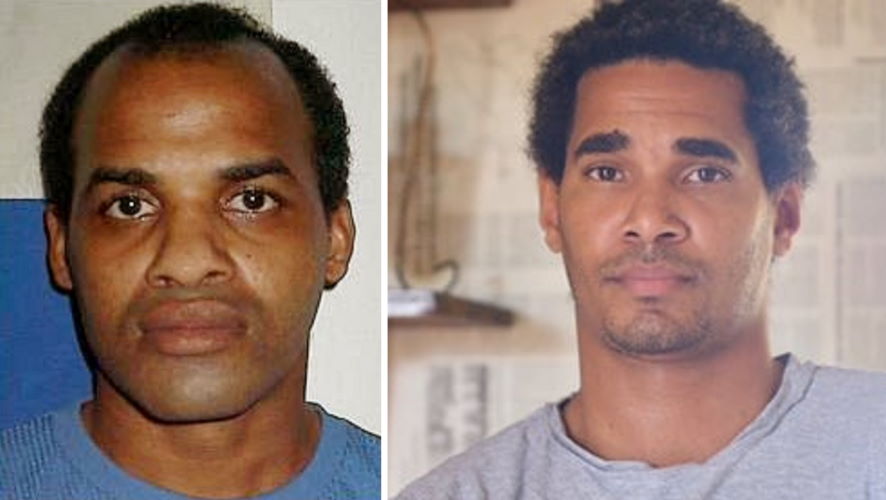
Pablo Moya Delá died on August 26, 2021 at the Clinical Surgical Hospital in Santiago de Cuba. He was jailed on October 23, 2020 for protesting socioeconomic conditions and overall repression. He was beaten, mistreated for months, weakened following a hunger strike and after destroying his health released on probation earlier this month near death. His plight had drawn international attention.

Pablo Moya Delá: Before Oct 23, 2020 jailing and after being "probation" Aug 2021.

The Castro regime has sought to create a negative narrative of the Cuban Republic on all fronts, including race, but as in other matters, the record of the regime is worse than what preceded it.

The Spanish Congress of Deputies on January 19, 1880 voted to abolish slavery in Cuba. The last vestiges of slavery ended in Cuba by royal decree on October 7, 1886. Juan Gualberto Gómez Ferrer, a free Cuban black, and leader of the independence struggle defended the rights of Black Cubans for his entire career.  

Cuban statesman and founder of Directory of Colored Societies

Between 1886 and 1892 in Cuba, free black people were able to organize into a network of societies formally founded by Gómez Ferrer in 1892 in the “Directory of Colored Societies” to press for black social, economic and political advancement in Cuba. Gómez Ferrer represented Havana in the Cuban House of Representatives (1914–1917) and Senate (1917–1925). The Central Directory of Societies of Color would spend the next seventy six years pushing for Black advancement in Cuba. 

The Spanish Congress of Deputies on January 19, 1880 voted to abolish slavery in Cuba. The last vestiges of slavery ended in Cuba by royal decree on October 7, 1886. Juan Gualberto Gómez Ferrer, a free Cuban black, and leader of the independence struggle defended the rights of Black Cubans for his entire career. 

Between 1886 and 1892 in Cuba, free black people were able to organize into a network of societies formally founded by Gómez Ferrer in 1892 in the “Directory of Colored Societies” to press for black social, economic and political advancement in Cuba. Gómez Ferrer represented Havana in the Cuban House of Representatives (1914–1917) and Senate (1917–1925). The Central Directory of Societies of Color would spend the next seventy five years pushing for Black advancement in Cuba. 

L to R: Gobardo Pérez Oliva, Marta Sarduy Vargas; Conrado Pérez Oliva, Antonia Armenteros at Bella Unión Society, Santa Clara, Las Villas.

Cuba during the later colonial period, and during the Republic wrestled with the legacy of slavery, and racism, but it was part of the public discussion – with its high and low points. Ugly periods in the early Cuban Republic, such as the 1912 race war, and private discrimination persisted, but so did black agency to advocate for each other.

Political leaders had to answer to these black societies, and provide patronage to them, and in a vibrant free press, and in publishing houses debates on race, and racism, and the need for redress took place. 

Some of the more prominent clubs that are still remembered are the Sociedad Buena Vista ( Buena Vista Social Club), Amantes del Progreso, Unión Fraternal, Progreso, Nueva Era, and El Club Atenas. 

The Central Directory of Societies of Color succeeded in lobbying for the 1940 Constitution to address racism in Articles 10, 20, 74, and 102, and in labor legislation to provide greater inclusion for black Cubans over the next 20 years. 

All of this came crashing down with Castro’s communist revolution. Cuban black nationalist Juan René Betancourt in his essay "Castro and the Cuban Negro" published in the NAACP publication The Crisis in 1961.

“Of the 256 Negro societies in Cuba, many have had to close their doors and others are in death agony. One can truthfully say, and this is without the slightest exaggeration, that the Negro movement in Cuba died at the hands of Sr. Fidel Castro.” … “Yet this is the man who had the cynical impudence to visit the United States in 1960 for the purpose of censuring American racial discrimination. Although this evil obviously exists in the United States, Castro is not precisely the man to offer America solutions, nor even to pass judgement.”

Between 1898 and 1959 the relationship between Black-Americans and Black-Cubans was based on their being part of an international black diaspora. This relationship ended when the Castro regime ended autonomous black civil society in 1962, and consolidated totalitarian rule.

Juan René Betancourt: Forced into exile

Castro and his white revolutionary elite replaced it by allying with Black elites in the United States, Africa, and condemning American racism. For 64 years, black agency in Cuba was put to an end. Instead, a policy based on deference, submission, and appreciation to the white revolutionary leadership was implemented, and this was represented in state propaganda using racist tropes. 

Castro regime's publication Verde Olivo 1, no. 29 (October 1, 1960)

The elimination of Afro-Cubans from this dynamic by the new communist revolutionary elite turned racism into a political tool outside of Cuba to advance the Castro regime's communist agenda, but turned it into a taboo topic by "ungrateful" blacks, labeled counter-revolutionaries by the dictatorship.

Cuban blacks today that would have been political leaders in the 1940s and 1950s are dissidents persecuted, hunted and killed by the secret police.

Friday, February 24, 2023

The Brothers to the Rescue shootdown 27 years later: Continuing the struggle for truth, justice, and memory

#TruthJusticeMemory


On February 24, 1996, at 3:21 and 3:27 PM, heat-seeking air-to-air missiles fired from a MiG-29 UB piloted by Lorenzo Alberto Peréz Peréz that destroyed the two planes the men were onboard, and killed Mario de la Peña, age 24; Carlos Costa, Pablo Morales, both 30, and Armando Alejandre Jr., 45. Mario, Carlos,Pablo and Armando were members of the humanitarian organization Brothers to the Rescue.

This was a premeditated act of state terrorism carried out by Mr. Peréz Peréz on the orders of both Fidel and Raul Castro and through the chain of command issuing the unlawful order that murdered these four men.

Cuban spies learned the flight schedules and were instructed not to fly on February 24 and, if they had to, to alert the MiGs with a motion while in flight to save them from suffering the same fate as the other planes. 

This was a premeditated killing over international airspace. The International Civil Aviation Organization (ICAO) concluded that the two planes "were shot down miles away from Cuba’s boundary having never entered or touched it on that day and the planes had been in contact with the Cuban tower throughout the flight."

They failed to destroy a third plane with Sylvia Iriondo, Andrés Iriondo, Jose Basulto, and Arnaldo Iglesias on board. 

There is no statue of limitations on murder and state terrorism.  There is much more in the Inter-American Commission on Human Rights reports on the Brothers to the Rescue shoot down, and worth reading.

Over the past 27 years friends, and family have continued to demand truth, respect memory and demand justice through protests, petitions, and law suits. 

They will hold a silent vigil for their loved ones later today at 3:15 pm at Florida International University.


Wednesday, February 22, 2023

Thirteen years ago on February 23, 2010 prisoner of conscience Orlando Zapata Tamayo died on hunger strike in Cuba

"Long live human rights, with my blood I wrote to you so that this be saved as evidence of the savagery we are subjected to that are victims of the Pedro Luis Boitel political prisoners [movement]" - Orlando Zapata Tamayo, letter smuggled out April of 2004*

Orlando Zapata Tamayo May 15, 1967 - February 23, 2010

Fyodor Dostoevsky wrote in his 1861 book, The House of the Dead  that "the degree of civilization in a society can be judged by entering its prisons." What does this say about the Cuban government that has barred the International Committee of the Red Cross from visiting Cuba's prisons for decades?

Throughout the previous 64 years, a large number of Cubans have perished as a result of inhumane treatment by prison guards of the Cuban communist dictatorship. 

Tomorrow will observe the 13th anniversary of another unjust death. Orlando Zapata Tamayo was the martyred man's name. 

Orlando Zapata Tamayo was a human rights defender who was unjustly imprisoned in the Spring of 2003 and was tortured by Cuban prison officials and state security agents over the next six years and ten months. He died on February 23, 2010 following a prolonged hunger strike, aggravated by prison guards refusing him water in an effort to break his spirit. He is a victim of Cuban communism.

Human rights defender Orlando Zapata Tamayo was wrongfully detained in the spring of 2003. Throughout the ensuing six years and ten months, he was tortured by state security personnel and prison guards in Cuba. Following a protracted hunger strike that was made worse by prison guards depriving him of water in an effort to crush his spirit, he passed away on February 23, 2010. He is a casualty of communist Cuba. 

Oswaldo Payá Sardiñas with photocopy image of Orlando Zapata Tamayo

Cuban opposition leader Oswaldo Payá Sardiñas, who was killed under suspicious circumstances on July 22, 2012, issued a statement the same day that Orlando died and appeared in a photograph holding up a photocopy of the martyred human rights defender name and image. 

"Orlando Zapata Tamayo, died this afternoon, February 23, 2010, after suffering many indignities, racist slights, beatings and abuse by prison guards and State Security. Zapata was killed slowly over many days and many months in every prison in which he was confined. Zapata was imprisoned for denouncing human rights violations and for daring to speak openly of the Varela Project in Havana's Central Park. He was not a terrorist, or conspirator, or used violence. Initially he was sentenced to three years in prison, but after successive provocations and maneuvers staged by his executioners, he was sentenced to more than thirty years in prison." 
Remembering Orlando Zapata

Orlando Zapata Tamayo was born in Santiago, Cuba on May 15, 1967. He was by vocation a brick layer and also a human rights activist, a member of the Movimiento Alternativa Republicana, Alternative Republican Movement, and of the Consejo Nacional de Resistencia Cívica, National Civic Resistance Committee. Orlando gathered signatures for the Varela Project, a citizen initiative to amend the Cuban constitution using legal means with the aim of bringing Cuba in line with international human rights standards.
 
Amnesty International had documented how Orlando had been arrested several times in the past. For example, he was temporarily detained on 3 July 2002 and 28 October 2002. In November of 2002 after taking part in a workshop on human rights in the central Havana park, José Martí, he and eight other government opponents were arrested and later released. He was also arrested on December 6, 2002 along with fellow prisoners of conscience Oscar Elías Biscet and Raúl Arencibia Fajardo.  
 
Dr. Biscet just released from prison a month earlier had sought to form a grassroots project for the promotion of human rights generally and the Universal Declaration of Human Rights more specifically, called "Friends of Human Rights." State security prevented them from entering the home of Raúl Arencibia Fajardo, Oscar Biscet, Orlando Zapata Tamayo,Virgilio Marante Güelmes and 12 others held a sit-in in the street in protest and chanted "long live human rights" and "freedom for political prisoners." They were then arrested and taken to the Tenth Unit of the National Revolutionary Police, Décima Unidad de La Policía Nacional Revolucionaria (PNR)

Orlando Zapata Tamayo was released three months later, on March 8, 2003, but Oscar Elias Biscet, Virgilio Marante Güelmes, and Raúl Arencibia Fajardo remained imprisoned. On the morning of March 20, 2003 whilst taking part in a fast at the Fundación Jesús Yánez Pelletier, Jesús Yánez Pelletier Foundation, in Havana, to demand the release of Oscar Biscet and the other political prisoners. Orlando was taken to the Villa Marista State Security Headquarters.

He was moved around different prisons, including Quivicán Prison, Guanajay Prison, and Combinado del Este Prison in Havana. According to Amnesty International on October 20, 2003 Orlando was dragged along the floor of Combinado del Este Prison by prison officials after requesting medical attention, leaving his back full of lacerations. Orlando managed to smuggle a letter out following another brutal beating that was published in April of 2004:
"My dear brothers in the internal opposition in Cuba. I have many things to say to you, but I did not want to do it with paper and ink, because I hope to go to you one day when our country is free without the Castro dictatorship. Long live human rights, with my blood I wrote to you so that this be saved as evidence of the savagery we are subjected to that are victims of the Pedro Luis Boitel political prisoners [movement]."*

On May 18, 2004 Orlando Zapata Tamayo, Virgilio Marante Güelmes, and Raúl Arencibia Fajardo were each sentenced to three years in prison for contempt for authority, disorderly conduct and resisting arrest in a one-day trial. Orlando Zapata Tamayo would continue his rebelliousness and his non-violent resistance posture while in prison and suffer numerous beatings and new charges of disobedience and disrespect leading to decades added to his prison sentence in eight additional trials.

Protests for Orlando Zapata Tamayo continue


Even though it has been thirteen years, the martyred Cuban human rights defender is still remembered. The dictatorship tried from the start to put down and stifle protests and acts of remembrance for him, but they were unsuccessful.

In March of 2010 at the second Geneva Summit for Human Rights, former prisoner of conscience Jose Gabriel Ramon Castillo testified to what had happened to Orlando Zapata. 

In Norway, regime agents became violent and created international controversy after a Cuban diplomat bit a young Norwegian-Cuban woman for trying to record her mom engaged in a protest remembering Orlando Zapata Tamayo in front of the Cuban Embassy in Oslo in May of 2010.

On September 30, 2010 the Canadian punk rock band I.H.A.D. released a song linking what happened to Orlando Zapata Tamayo to the indifference of Canadian tourists visiting Cuba asking the question: Where were you the day Orlando Zapata died? On May 10, 2012 the Free Cuba Foundation published a video accompanying the song, after receiving the band's permission, with images and song lyrics. 

Rosa María Payá Acevedo remembers Orlando Zapata Tamayo in 2016.

On February 23, 2016 at the 8th edition of the Geneva Summit for Human Rights and Democracy Rosa María Payá gave the final presentation in which she remembered and honored the memory of Orlando Zapata Tamayo on the sixth anniversary of his passing.  

On 2/19/2018 twenty activists remember Orlando Zapata Tamayo

Four days prior to marking eight years to the day that Orlando Zapata died, activists inside Cuba took to protest in the streets with banners remembering the  martyred human rights activist. The Castro regime continues to do all it can to eliminate the memory of this humble and good man, but the dictatorship has failed.

On May 21, 2021 Cuban feminist Ileana Fuentes in an essay published in Cubanet titled "Let it be known: Black Lives Do Not Matter in Cuba" brought together the cases of Orlando Zapata Tamayo and Luis Manuel Otero Alcántara.

Orlando Zapata Tamayo y Luis Manuel Otero Alcántara (Fotos: Internet)

Tomorrow, we will once again honor and remember the brick layer and human rights defender by writing about him, holding a vigil at Lafayette Park, next to the White House, then march to the Cuban Embassy, and hold a second vigil outside the Cuban Embassy in Washington DC.

We are also continuing Orlando's work for human rights in Cuba by circulating a petition calling for the release of the hundreds of political prisoners held in Cuban jails under the Castro regime, allowing the International Committee of the Red Cross access to all Cuban prison facilities, and a second petition requesting the expulsion of Cuba from the UN Human Rights Council. 

Orlando Zapata Tamayo's legacy is carried on by nonviolent protests against injustice both inside and outside of Cuba's prisons. The Castro dictatorship was shocked to find that tens of thousands of Cubans were carrying on his tradition of upholding human rights and demanding an end to the Castro regime in mid-July 2021. 

Mass for Orlando Zapata Tamayo at Our Lady of Charity on February 23, 2020

*Source: "Queridos hermanos míos de la oposición interna de Cuba", escribió Zapata en su misiva, "tengo muchas cosas que decirles, pero no he querido hacerlo por papel y tinta, pues espero ir a ustedes un día cuando nuestra patria sea libre y sin dictadura castrista. Vivan los derechos humanos, con mi sangre les escribí, para que la guarden como parte del salvajismo de que somos víctima el presidio político Pedro Luis Boitel". - "Golpiza y celda tapiada para Orlando Zapata"  La Habana, 22 de abril 2004 (María López, Lux Info Press / www.cubanet.org )