Showing posts with label Rosa María Payá. Show all posts

Wednesday, January 29, 2025

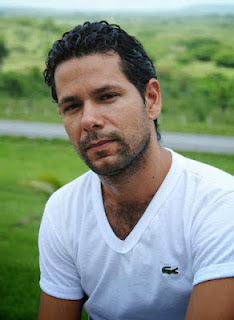
Remembering Cuban martyr and dissident Harold Cepero on what would have been his 45th birthday

"Whoever destroys a single life is considered by Scripture to have destroyed the whole world, and whoever saves a single life is considered by Scripture to have saved the whole world." - Mishnah  (1135-1204)

Harold Cepero Escalante (1980 - 2012)
 

Harold Cepero Escalante was born in Ciego de Avila on January 29, 1980 and was murdered by the Cuban dictatorship together with Oswaldo Payá Sardiñas in Bayamo, Granma on July 22, 2012. This was confirmed by the Inter-American Commission on Human Rights on June 12, 2023

Harold was a member of the Christian Liberation Movement and a youth leader. Harold understood that those who engaged in repression were also not free stating: "Those who remove and crush freedom are the real slaves."

Today would have been his 45th birthday, but due to the actions of the Castro regime's secret police his life was ended 13 years ago at the age of 32.

Clare Short, a former Labor member of parliament addressing the topic of forgiveness and justice raises two important points that underline reconciliation within an ongoing injustice and repression:

"Is anger about injustice one of the forces that drives historical progress and important social reform? Is there an important difference between the bitterness,hatred and quest for vengeance that can be so damaging to those who have been hurt or wronged, and the anger that thirsts after justice?" ... "I also agree that the quest for vengeance is also wrong because it so often inflicts harm on people who share an identity with the original perpetrator but have no guilt,and it means the evil of the original harm is recreated in the actions of the person who has been wronged. But all this said, there is such a thing as just anger and those who are subject to continuing oppression can get strength from that anger in order to join with others to liberate themselves. And so I wish to conclude by celebrating forgiveness and reconciliation but also by reminding us that reconciliation can not be the answer when there is a continuing wrong or continuing oppression."

In the Cuban context, Antonio "Tony" Ramón Díaz Sánchez, a former prisoner of conscience and secretary general of the Christian Liberation Movement, rejects hatred while at the same time forgiving past injustices but refuses to forgive those that are ongoing or that will be carried out in the future. 

Because to forgive ongoing and future evils raises the danger of one becoming morally complicit in them or as Tony puts it:

"Because what I do not forgive is that the year has started with the same repression that ended last year. What I can not forgive is that in my country, those who govern, do not recognize the need to change to democracy and allow the people to decide in free and pluralistic elections. I can not and do not want to forgive that right now, at this instant, there are political prisoners in Cuba and that the existing laws guarantee their imprisonment or perhaps the firing squad for others. I do not forgive that young people are living without life projects, while a group in power live as billionaires. Nor do I forgive the complicity of many interests that seek capital now in Cuba without wanting to find out today what is happening there. I do not forgive out of hate. No, no but because forgiving a present and a future of injustice and totalitarianism for your country, is not mercy but complicity with the evil of others."

The perils of speaking truth to power in Cuba were and still are understood by Tony Díaz Sánchez. Long years in prison and forced exile were the price he paid. 

Harold also understood the dangers of advocating for freedom in Cuba under the Castro dictatorship. In 2012, shortly before his death he explained the cost of resistance.

"Christians and non-Christians who have the courage and the freedom to consider the peaceful political option for their lives, know they are exposing themselves to slightly less than absolute solitude, to work exclusion, to persecution, to prison or death."

This courageous young man is remembered and the demand for justice continues The petition demanding an international investigation into the circumstances of Harold and Oswaldo's killing on July 22, 2012 has crossed 16,500 signatures

Defending memory by pursuing truth and maintaining the call for justice is an ever present opportunity for the other to repent and embrace justice and actual forgiveness. The antithesis of this is "forgiving and forgetting" while injustices are ongoing  and new ones being compounded not only harms the victims but also condemns the perpetrator to continue committing evil acts and is described as a "false reconciliation."

In the spirit of defending truth and memory, this video of a 2002 interview with Harold Cepero provided by the Christian Liberation Movement on their Youtube channel is being shared.

Tuesday, March 26, 2024

Expel Cuba from the UN Human Rights Council

Rosa María Payá, Cuba Decide and Julie Trebault, Int'l PEN at the UNHRC

Today, in the  in Geneva, Switzerland Rosa María Payá Acevedo addressed the UN Human Rights Council and called for the expulsion of Cuba from the UN Human Rights Council. Below is the text followed by the video provided by CubaDecide of her presentation.

ITEM 6: UPR outcomes – Cuba, UPR Report Consideration

My name is Rosa María Payá, our citizen initiative Cuba Decide defends the right of the Cuban people to live in democracy, a right that is denied by the constitution imposed by the leaders in my country.

Mr. President, Cuba should be expelled from this Council for its serious and systematic violations of human rights.

In April 2022, Russia was expelled from this Council. Today we officially call for the same to be done with Cuba, under article 8 of United Nations Resolution 60/251. The Cuban government is an ally of Russia in its war of aggression against Ukraine and facilitates the sending of young Cubans to the Russian army.

The Cuban government uses state terrorism against its citizens, using the following methods:

  1. The government extrajudicially executes its opponents: The Inter-American Commission on Human Rights ruled that the Cuban State is responsible for the murder of my father Oswaldo Payá, Cuban democratic leader, and Harold Cepero.

  2. The government represses, imprisons and tortures those who think differently: There are more than 1000 people in prison in Cuba for expressing their opinion publicly. Among them Jose Daniel Ferrer, opposition leader systematically tortured and in danger of death.

  3. The government violates fundamental human rights and prevents Cubans from prospering with the fruit of their labor, forcing the people into a deep humanitarian crisis.

Despite the hunger and repression imposed, hundreds of thousands of Cubans come out peacefully demanding a change of system to democracy.

We urge this Council to listen to the voices of our people and to demand that Cuban leaders submit to the sovereign will of the citizens. To this end, we urge the international community to demand that all electoral guarantees be respected in Cuba, including freedom of expression, association and access to information, the end of repression and the freedom of all political prisoners, with the objective of changing the system in a binding plebiscite and beginning the transition to democracy.

Mr. President, member states, it is time to stand with the Cuban people and expel Cuba from this Council.

 Join Rosa María Payá’s call to expel the Cuban dictatorship from the UN Human Rights Council by signing the petition, Expel Cuba from the UN Human Rights Council.  


Wednesday, June 14, 2023

Oslo Freedom Forum at XV: Speaking truth to power for 15 years

"Human rights are universal and indivisible. Human freedom is also indivisible: if it is denied to anyone in the world, it is therefore denied, indirectly, to all people. This is why we cannot remain silent in the face of evil or violence; silence merely encourages them." - Vaclav Havel 


Since 2011 this blog has followed the Oslo Freedom Forum and the different human rights themes over the past decade, and  celebrated in 2012 when the Vaclav Havel Prize for Creative Dissent was inaugurated. This year marks 15 years of this important human rights forum.  

 Cuban speakers Abraham Jiménez Enoa and Rosa María Payá were present at this 15th edition Oslo Freedom Forum. It coincided with the Inter-American Commission on Human Rights (IACHR) making public on June 12, 2023  its “Report on Admissibility and Merits No. 83/23 of Case 14,196” in which it held the Cuban government responsible for the deaths of Oswaldo Payá and Harold Cepero.

Eight years earlier on July 22, 2015, Javier El-Hage and Roberto González of the Human Rights Foundation released a 147-page report titled The Case of Oswaldo Payá that concluded Harold and Oswaldo’s deaths on July 22, 2012 were "the result of a car crash directly caused by agents of the State, acting (1) with the intent to kill Oswaldo Payá and the passengers in the vehicle he was riding, (2) with the intent to inflict grievous bodily harm to them, or (3) with reckless or depraved indifference to an unjustifiably high risk to the life of the most prominent Cuban activist in the last twenty-five years and the passengers riding with him in the car."

It was a powerful moment today at the Oslo Freedom Forum where Rosa María Payá and Roberto González discussed the case of Oswaldo Payá, and the failure of many human rights organizations to report on this assassination. Human Rights Foundation wrote the first independent, international report of the attack that killed Oswaldo Payá and Harold Cepero in what is now known to have been a political assassination. The report is available online for free.

This blog entry thus far is Cuba-centric, but the Oslo Freedom Forum spans the world, and the human rights crises across the globe. 

Oswaldo Payá when awarded the Sakharov prize for Freedom of Thought on December 17, 2002 spoke prophetically when he said: “The cause of human rights is a single cause, just as the people of the world are a single people. The talk today is of globalization, but we must state that unless there is global solidarity, not only human rights but also the right to remain human will be jeopardized.”

Too often many Cubans, for justifiable reasons, are focused on the troubles in Cuba, but fail to see what is happening elsewhere.  Too many believe that we are alone, and that no one is watching our plight.

This is a mistake, and it is also not true.

Martin Luther King Jr. in his "Letter from Birmingham Jail" explained why.  “In a real sense all life is inter-related. All men are caught in an inescapable network of mutuality, tied in a single garment of destiny. Whatever affects one directly, affects all indirectly. I can never be what I ought to be until you are what you ought to be, and you can never be what you ought to be until I am what I ought to be... This is the inter-related structure of reality.”

Just as what happened in Cuba affected what is happening in Venezuela, and Nicaragua, so is what happening in China and Russia affecting Cuba. Therefore we owe it to ourselves what is happening around the world, and to be in solidarity with human rights defenders, and friends of freedom everywhere.

Please take the time to watch the  Oslo Freedom Forum in its entirety, and raise your awareness, and take nonviolent action in solidarity with others.


Wednesday, March 8, 2023

International Women's Day 2023: Reflection on women's resistance in Cuba and Iran

  "We still think of a powerful man as a born leader and a powerful woman as an anomaly". - Margaret Atwood, author of The Handmaid's Tale


In 2022 focused on the different treatment of women under capitalist and communist regimes. Explored how a communist regime in Romania was a main inspiration for Margaret Atwood's dystopian novel, The Handmaid's Tale.

Shannon Quinn, an author at History Collection, in her post  "17 Moments In History that Inspired the Handmaid’s Tale" in History Collection cited Nicolae Ceausescu's Decree 770 policy targeting Romanian women.

One of the specific events that Margaret Atwood found during her research process was “Decree 770” in Romania. This was a law that passed in 1967 that made abortions and all forms of contraception illegal. This had nothing to do with religious beliefs. It was an action that the government believed was necessary for the future of their country. The government already taxed married couples a 6% income tax if they did not have children between the ages of 25 and 50, but they realized that this was not enough to stop people from using contraception. 


In 2020 focused on the problematic origins of International Women's Day, but today reflect on women who are resisting tyranny.

Specifically, this year will examine how women in Cuba and Iran are challenging totalitarian rule in a communist and theocratic regime respectively. 

Cuba

Over the past sixty four years the Castro dictatorship has systematically violated the human rights of prisoners of conscience and political prisoners in Cuba. Between 1959 and 1988 no international organizations were allowed to visit prisons in Cuba. This included the International Committee of the Red Cross. Lilo Vilaplana’s film Plantadas, screened on Sunday at the Miami Film Festival, examines this chapter of Cuban history, how it impacted Cuban women, and offers viewers the opportunity to revisit some important works to accompany this important movie.

In 1995 Ana Rodriguez with the assistance of Glenn Garvin wrote her memoir DIARY OF A SURVIVOR: Nineteen Years in a Cuban Women's Prison. Ana Rodriguez, a medical student who first conspired against the Batista dictatorship, first welcoming the arrival of Fidel Castro to power she soon became disillusioned and turned against the emerging communist dictatorship. Captured, Ana was sentenced to a 30 year prison sentence for her non-violent dissent in the anti-Castro underground. Over the 19 years she spent in prison, Ana "consistently defied the authorities' brutal and at times comically inept efforts to break her will." She is an example of a plantada, and she was not alone.

Sadly, there were many others like Ana Rodriguez, Gloria Argudín and Luisa Pérez who endured years of torture and mistreatment in Cuban prisons for their political beliefs.

The testimony of Luisa Pérez, another former plantada ( defiant) political prisoner about Cuban prisons in "Nobody listened" (1987), a documentary by Néstor Almendros and Jorge Ulla, is consistent with the testimony of Dora Delgado "Japón" on pages. 175-176 of the 2007 book Todo Lo Dieron Por Cuba (They Gave Everything For Cuba) by Mignon Medrano:

... Mother's Day falls on the 14th again. It was a month full of fights with the militia, of beatings, it was a terrible month. On the 6th they came to galley 1 with a list and called Caridad Roque, me and others. As they called, the others said, "Hey, save me a good bed, and if there are mangoes, pick one for me," because we thought we were going to the farm. But when they noticed that they were taking five from here, two from there and four from another place, and they heard the names, they said, "This smells rotten to us... that the first transfer to the farm is with these people? ... listen, girls, whatever happens, shout!" ...

Indeed, at the end of the long and dark corridor, Ramiro Valdés himself was waiting for us in front of about 600 men. I could not shout and alert because the galleys were open and they would have launched into a certain massacre. I kept walking, behind me came Pola and noticing my reaction she also hid it. That helped the others do the same. But when those who stayed behind found out that we had been taken to Guanajay with the general prison population, they began to break everything that was within their reach and clang metal objects against the iron bars of the cells that was so loud that it became famous in the history of the prison...

... I would like to add to the story of the escape from Guanabacoa that when the verdeolivos caught us and they dragged us to the galley, they had some long weapons that looked like old muskets, which we began to make fun of. We didn't know they were gas launchers. They fired them at point-blank range and with the flashes they burned her face, shattered the face of Luisa Pérez… It was a tremendous fight, blows come and go… They burned all of us with flashes.

Without giving us medical attention, they threw us into the cells like pigs and several days later they separated us in different places…"

Today there are at least 125 Cuban women jailed for exercising their fundamental human rights, and many of them are Plantadas.

 
The women political prisoners who signed with their blood a letter demanding that Miguel Díaz-Canel fulfill Pope Francis' wish that the protesters of July 11, 2021 be released, were taken this past Thursday to a disciplinary court in the women's prison of Guatao in Havana.
 

In 1987 the documentary "Nobody Listened" captured Cuba's human rights reality combining interviews with former political prisoners, including some Plantadas, archival footage of firing squads and other instances of repression. Former prisoners described show trials, extajudicial executions, and cruel and unusual punishment that rose to the level of torture. This is the perfect documentary to accompany the new film, Plantadas and provides historical context to the new movie, and is available online and for purchase on Amazon
 
Please follow these courageous Cuban women: Anamely Ramos González @AnamelyRamos, Berta Soler Fernández @bertasolerf, Carolina Barrero @carolinabferrer, Damas de Blanco @DamasdBlanco, Mar por Cuba @MARporCuba, Omara @OmaraRUrquiola, Ileana Ros-Lehtinen @RosLehtinen, Rosa María Payá A. @RosaMariaPaya, Sirley Avila Leon @Sirleyavilaleon and there are many more that are impossible to list all here.

,

Iran

In September 2022 this blog published a "Call for solidarity with protesters in Iran. Please share hashtags: #MahsaAmini #ZhinaAmini #IranProtests," that highlighted the killing of Mahsa Amini by the Guidance Patrol, also called the morality police, massive nationwide protests that followed, how to help, provided some historic context on relations between Tehran and Cuba, and highlighted the important role of Iranian women in this nationwide uprising. A revolution driven by a celebration and defense of Women, Life, Freedom.

In July 2022, Tehran tried to kidnap, then murder Masih Alinejad.

Iranian journalist Masih Alinejad, who was repeatedly cited in the previous blog post, was targeted by the Iranian Intelligence Services in a plot to kidnap her for Rendition to Iran, revealed the FBI on July 13, 2021. A little over a year later on July 31, 2022 Khalid Mehdiyev, age 23, was found outside her home with an AK-47, a high-capacity magazine and more than $1,000 in cash.

Khalid Mehdiyev is from Azerbaijan, and according to Jason Brodsky at the United Against Nuclear Iran nonprofit the dictatorship in Iran has been known to contract "Azeri hitmen to target Israelis in Cyprus."   

Ayatollah Khomeini, then supreme leader of Iran, issued a fatwa on February 14, 1989 condemning Salman Rushdie to death for blasphemy, and it was never rescinded. Salman Rushdie was attacked by Hadi Matar, age 24, on August 12, 2022 and stabbed in the stomach, chest, eye, hand and thigh. Rushdie needed to be placed on a respirator following the attack, and nearly died. 

U.S. residents are being targeted for kidnapping and murder by agents of Iran in 2022. This is happening in America. This is unacceptable.

Ignoring the injustices taking place in Iran, brought them to New York. Time to pay attention, and hold the mullahs accountable.

Seven months later and it appears that the Mullahs in Iran, in their desperation before women's and young girls resistance to their theocratic rule, may be poisoning young girls who attend school in a war against girl's education.  

The time for solidarity with Iranian women continues.

Please follow Masih Alinejad @AlinejadMasih on Twitter and amplify her voice, and that of other Iranian women such as:  Nazanin Nour @NazaninNour, Roya Hakakian @RoyaTheWriter, Nazanin Boniadi @NazaninBoniadi, Nazenin Ansari @NazeninA, Nazanin Afshin-Jam MacKay @NazaninAJ, and Mariam Memarsadeghi @memarsadeghi

On Saturday at 2:00pm in Washington DC Iranian activists will gather at Freedom Plaza and hold a Global Women's March for Iran.


Saturday, January 29, 2022

Remembering Cuban martyr and dissident Harold Cepero on what would have been his 42nd birthday

"Whoever destroys a single life is considered by Scripture to have destroyed the whole world, and whoever saves a single life is considered by Scripture to have saved the whole world." - Mishnah  (1135-1204)

Harold Cepero Escalante (1980 - 2012)

Harold Cepero Escalante was born in Ciego de Avila on January 29, 1980 and was murdered by the Cuban dictatorship together with Oswaldo Payá Sardiñas in Bayamo, Granma on July 22, 2012. Harold was a member of the Christian Liberation Movement and a youth leader. Harold understood that those who engaged in repression were also not free stating "[t]hose who remove and crush freedom are the real slaves."

Today would have been his 42nd birthday, but due to the actions of the Castro regime's secret police his life was ended ten years ago at the age of 32. 

Clare Short, a former Labor member of parliament addressing the topic of forgiveness and justice raises two important points that underline reconciliation within an ongoing injustice and repression:

"Is anger about injustice one of the forces that drives historical progress and important social reform? Is there an important difference between the bitterness,hatred and quest for vengeance that can be so damaging to those who have been hurt or wronged, and the anger that thirsts after justice?" ... "I also agree that the quest for vengeance is also wrong because it so often inflicts harm on people who share an identity with the original perpetrator but have no guilt,and it means the evil of the original harm is recreated in the actions of the person who has been wronged. But all this said, there is such a thing as just anger and those who are subject to continuing oppression can get strength from that anger in order to join with others to liberate themselves. And so I wish to conclude by celebrating forgiveness and reconciliation but also by reminding us that reconciliation can not be the answer when there is a continuing wrong or continuing oppression."

In the Cuban context, Antonio "Tony" Ramón Díaz Sánchez, a former prisoner of conscience and secretary general of the Christian Liberation Movement, rejects hatred while at the same time forgiving past injustices but refuses to forgive those that are ongoing or that will be carried out in the future. Because to forgive ongoing and future evils raises the danger of one becoming morally complicit in them or as Tony puts it:

"Because what I do not forgive is that the year has started with the same repression that ended last year. What I can not forgive is that in my country, those who govern, do not recognize the need to change to democracy and allow the people to decide in free and pluralistic elections. I can not and do not want to forgive that right now, at this instant, there are political prisoners in Cuba and that the existing laws guarantee their imprisonment or perhaps the firing squad for others. I do not forgive that young people are living without life projects, while a group in power live as billionaires. Nor do I forgive the complicity of many interests that seek capital now in Cuba without wanting to find out today what is happening there. I do not forgive out of hate. No, no but because forgiving a present and a future of injustice and totalitarianism for your country, is not mercy but complicity with the evil of others."

Tony Díaz Sánchez understood, and continues to understand the dangers of speaking truth to power in Cuba, and paid the price of long years in prison, and forced exile to do it.

Harold also understood the dangers of advocating for freedom in Cuba under the Castro dictatorship. In 2012, shortly before his death he explained the cost of resistance: 

"Christians and non-Christians who have the courage and the freedom to consider the peaceful political option for their lives, know they are exposing themselves to slightly less than absolute solitude, to work exclusion, to persecution, to prison or death."

This courageous young man is remembered and the demand for justice continues The petition demanding an international investigation into the circumstances of Harold and Oswaldo's killing on July 22, 2012 has crossed 16,500 signatures

Defending memory by pursuing truth and maintaining the call for justice is an ever present opportunity for the other to repent and embrace justice and actual forgiveness. The antithesis of this is "forgiving and forgetting" while injustices are ongoing  and new ones being compounded not only harms the victims but also condemns the perpetrator to continue committing evil acts and is described as a "false reconciliation."  

In the spirit of defending truth and memory, this video of a 2002 interview with Harold Cepero provided by the Christian Liberation Movement on their Youtube channel is being shared.

Saturday, March 20, 2021

Legacy of President Obama's 2016 State visit to Cuba: Appeasement's price and the whims of the Cuban dictator

The price of appeasement

 
President Barack Obama and his family arrived in Cuba on March 20, 2016 with high expectations. Much was made in 2016 of the shift from decades long imprisonment to shorter term detentions in the press and by U.S. officials but little was said with regards to the simultaneous escalation in knife attacks, breaking bones, machete attacks and extrajudicial killings of high profile human rights activists since 2010. Five years later and the failure of this visit and the overall policy becomes ever more evident.

The suspicious deaths of human rights defenders such as Orlando Zapata Tamayo (2010), Juan Wilfredo Soto Garcia (2011), Laura Inés Pollán Toledo (2011), Wilman Villar Mendoza (2012), Oswaldo Payá Sardiñas (2012), and Harold Cepero Escalante (2012) is a terrifying alternative to the long prison sentences that the Castro regime would use to take opposition leaders out of circulation, as was the case in 2003, during the Bush administration.


On May 14, 2015 Sirley Ávila León lost her left hand, had her right arm broken by a second machete blow, and her knees slashed by several more machete blows by a married couple in an attack orchestrated by Cuban state security. The husband wielding the machete and the wife throwing the severed hand into a pigsty. Cuban doctors told her that because of the contamination in the pigsty that the hand could not be reattached. She was left completely incapacitated, not even able to bend her knees. 

Human rights defender machete attacked on May 24, 2015
 
The reason for the attack? Sirley Ávila León had been an elected delegate of the municipal people's power assembly and taken seriously the pledge to represent her constituents. When the order came from on high to shut down schools in the country side (as a cost saving measure) and one of those schools was in her area, Sirley began to lobby first through official channel. When the official channels ignored her entreaties she went to the international media. This got her booted out of her position through a series of machinations by Castro regime officials. She responded by joining the opposition and the repression against her escalated into harassment, threats of violence, home invasion and beat down by state security, arson, and the machete attack that nearly killed her.

In an interview on March 21, 2016 with the Spanish Daily ABC the human rights activist declared: "After they began relations with Obama, the totalitarian regime tightened up against those who truly fight for the rule of law in Cuba." ... "All this" - in allusion to the trip of the US president to the island- "is a fallacy." For her, "this friendship of Obama [with Raul] will not bring anything good to the Cuban people." Five years later, and scores of U.S. diplomats with brain injuries, and a shuttered embassy indicates that Sirley was right. The attacks began in November 2016, just months after the President's historic visit.

President Barack Obama and Dictator Raul Castro at press conference
 
The U.S. English speaking press did not reported on this preferring to focus their questions to Raul Castro on the issue of Cuban political prisoners while going along with the lie that education and healthcare in Cuba are rights and not privileges, given and taken away on the whims of the dictator. 
 
On March 21, 2016 at a joint press conference with President Obama, General Raul Castro claimed not to have political prisoners and then announced that if he were provided a list of political prisoners that he would immediately free them. That same day Cuban human rights organizations presented lists to the international media in the hope that long term political prisoners would be freed. Some are now trying to spin the joint press conference as Obama laying a trap for Raul Castro. This is highly unlikely. The Castro regime has trafficked in political prisoners for over a half century. Freeing with one hand while imprisoning with another and using human beings as currency for their propaganda campaign.

However the silence by President Obama, the U.S. press corps on the escalating violence and murder of opposition activists speaks volumes on the moral failings of the Cuba policy of the United States that is assisting in a dynastic succession of the Castro regime by meeting with Alejandro Castro in the official sit down with Raul Castro while ignoring the terrible price being paid by Cubans who want to be free.

President Obama did not have a "Reagan moment" in Cuba. The image of President Obama photographed with the Ministry of the Interior in the background with Che Guevara prominently featured and used by Cuban official media as an endorsement of the violent revolutionary martyr sends an unfortunate message around the world. We need more images of Martin Luther King Jr. and Mohandas Gandhi not a mass murdering and hate filled communist icon.

Did Castro manipulate Obama into this photo-op or did White House want it?
President Obama did not lay a flower at Oswaldo Payá Sardiñas's tomb in Havana, Cuba that would have honored the request made by Oswaldo's daughter, Rosa María Payá. He failed to honor the memory of a man who nonviolently struggled for a free Cuba and was killed on July 22, 2012 along with Harold Cepero for empowering Cubans to be free with the Varela Project

Murdered dissidents was part of the price of appeasement with Castro

Three days prior to the visit the true significance of the visit was tweeted by Chile's former Minister of Culture and former Ambassador to Mexico tweeted in Spanish: "Paradoxes: After decades backing right wing dictatorships in Latin America, now the United States could end up backing a left wing dictatorship."
 
This is the trouble, rather than abandon a bad practice, supporting right wing dictatorships - such as Saudi Arabia, the Obama Administration expanded this practice to include dictatorships hostile to the United States. The policy was not a step forward, but back to an era of backing dictators in Latin America.