Sunday, July 15, 2018

Remembering and honoring Celia Cruz 15 years after her passing, except in Cuba.

Celia Cruz should not be an unperson in Cuba

Cuban music icon Celia Cruz still banned in Cuba
Celia Cruz passed away on July 16, 2003 after a battle with cancer. She was 77 years old. The world over mourned her death, except in Cuba where the official media printed a small note on her passing recognizing Cruz as an “important Cuban performer who popularized our country’s music in the United States,” it went on to say that “during the last four decades, she was systematically active in campaigns against the Cuban revolution generated in the United States.”

15 years later her music is still banned in Cuba, and in death she remains an unperson in official circles.

Her real crime? Choosing to live in freedom and continue her career as a musician. Because she had decided to continue to play her music, as a free woman, outside of Cuba the Castro brothers barred Celia from returning to Cuba in 1962 to bury her mother who had just died. This fueled her distaste for the Cuban dictatorship. When she went to the Guantanamo Naval Base three decades later she picked up some Cuban soil, a piece of home, to take back with her into exile.  

This 1990 trip to the U.S. Guantanamo Naval Base would not be forgotten in official circles.

Celia Cruz picks up some Cuban soil to take a piece of home back to exile

On August 8, 2012 BBC News reported that Cuba's ban on anti-Castro musicians had been quietly lifted and on August 10 the BBC correspondent in Cuba, Sarah Rainsford, tweeted that she had been given names of forbidden artists by the central committee and the internet was a buzz that the ban on anti-Castro musicians had been quietly lifted. Others soon followed reporting on the news. The stories specifically mentioned Celia Cruz as one of the artists whose music would return to Cuban radio.

There is only one problem. It is not true. Diario de Cuba reported on August 21, 2012 that Tony Pinelli, a well known musician and radio producer, distributed an e-mail in which Rolando Álvarez, the national director of the Cuban Institute of Radio and Television Instituto Cubano de Radio y Televisión (ICRT) confirmed that the music of the late Celia Cruz would continue to be banned. The e-mail clearly stated: "All those who had allied with the enemy, who acted against our families, like Celia Cruz, who went to sing at the Guantanamo Base, the ICRT arrogated to itself the right, quite properly, not to disseminate them on Cuban radio "


According to the 2004 book Shoot the singer!: music censorship today edited by Marie Korpe there is increasing concern that post-revolution generations in Cuba are growing up without knowing or hearing censored musicians such as Celia Cruz and Olga Guillot and that this could lead to a loss of Cuban identity in future generations. This process has been described as a  Cuban cultural genocide that is depriving generations of Cubans of their heritage.

Saturday, July 14, 2018

Nicaragua 2018: Daniel Ortega with help from Venezuelans and Cubans has killed 350 Nicaraguans and tortured many more

"Castro copied his recipe for repression and harassment in Venezuela, and now they are doing it in Nicaragua. There are many people who, while being tortured, heard the accents of Venezuela and Cuba in the clandestine prisons.” - Víctor Cuadras, Nicaraguan student leader, July 13, 2018


The Sandinista regime in Nicaragua led by Daniel Ortega is engaged in a campaign of extrajudicial killings to hang on to power. 350 Nicaraguans have been killed, 169 disappeared and 3,000 have been wounded by police agents since the protests began on April 18th reports Nicaraguan student leader Victor Cuardas. At least 20 people were killed on July 8, the Economist reported, and reports of new killings flood social media every day.
However one aspect that is not being widely reported is that Nicaraguan torture victims have reported hearing Venezuelan and Cuban accents in the regime's secret prisons. The Miami Herald quoted Nicaraguan student leader Victor Cuadras on July 13, 2018:
“Castro copied his recipe for repression and harassment in Venezuela, and now they are doing it in Nicaragua. There are many people who, while being tortured, heard the accents of Venezuela and Cuba in the clandestine prisons.”
Victor is right to cite Venezuela. Beginning in February of 2014 the high profile torture and killing of Venezuelan student opposition activists were carried out to terrorize the student pro-democracy movement. Reports in the media at the time described individuals with Cuban accents involved in the brutality. Protests erupted in Venezuela with Cuban flags being burned while denouncing the Castro regime’s role in the repression. The pattern is being repeated today in Nicaragua.

It now appears that Venezuelans, trained by the Cubans, are joining their Havana counterparts in the torture and killing in Nicaragua to preserve the communist revolutionary project in the Central American country. Venezuelans are starving in large numbers, and despite the economic implosion and political crisis continues to sending subsidized oil to Cuba.

Few are talking about this as the situation in the Western hemisphere worsens.

Early on in the crackdown against protesters there was also a crackdown on news media and one of the early victims was a reporter shot in the head while reporting the news over Facebook. This is an attempt to implant terror to silence dissenting voices and those who would report on what is going on. In Nicaragua, so far, it has not worked as planned and the killings, torture, and state terrorism continue.

The images and the reporting continue to emerge. Follow freelance journalist Ismael Lopez who is risking all to report what is happening on the ground in Nicaragua. As was the case in Venezuela, students are being shot in the head by snipers. Joshua Partlow of The Washington Post , who was also trapped there, reported on students, journalists, and priests trapped in a Church surrounded by pro-government militias firing heavy caliber bullets.

Meanwhile in Mexico a left wing populist with strong ties to Havana, Cuba prepares to assume power on December 1, 2018. The Castro regime now feels empowered, believing that it will have a dramatically expanded economic lifeline from their ideological soulmate in the Presidential Palace in Los Pinos, Mexico City.

Friday, July 13, 2018

July 13th now has a double significance for victims of communism in China and Cuba

Free Cubans and Chinese share a day to mourn victims of communism.

Over the past 24 years Cubans have mourned the 37 men, women, and children who were extrajudicially executed by agents of the Cuban government on July 13, 1994 "13 de Marzo" tugboat was attacked and sunk.

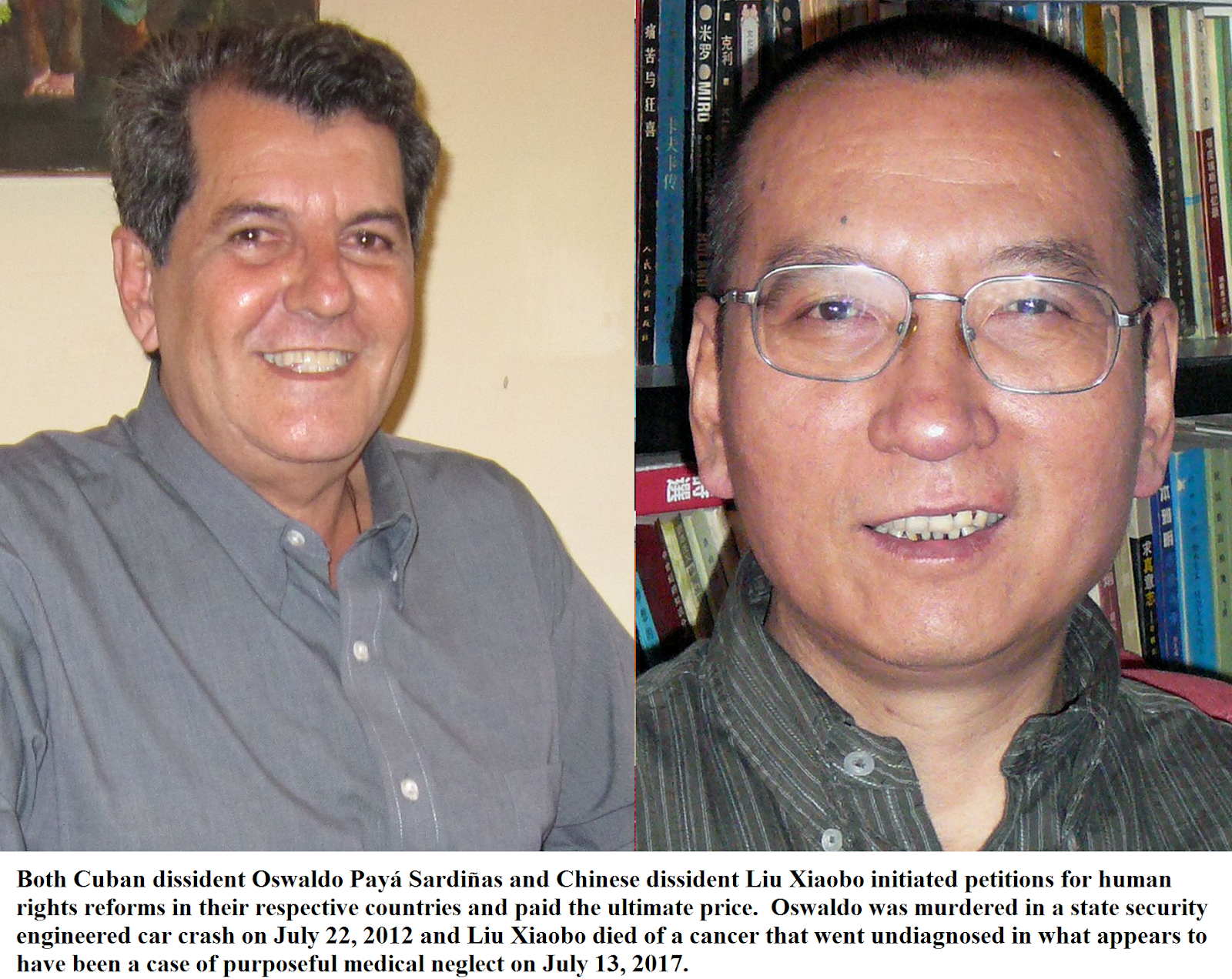
Tragically, Chinese are mourning Chinese Nobel Peace Prize Laureate and human rights defender Liu Xiaobo who died last year on July 13, 2017 at the First Hospital of China Medical University, Shenyang, China after being unjustly imprisoned from December 8, 2008 until his untimely death. It is likely that he died of a cancer made terminal by politically motivated neglect. Today marks the one year of his passing. After eight years in "unofficial detention" his widow Liu Xia was finally allowed to leave China three days ago on July 10, 2018.

Liu Xiaobo  was one of the authors of Charter 08 and signed it along with more than three hundred Chinese citizens. The Charter is a manifesto that was released on December 10, 2008, the 60th anniversary of the adoption of the Universal Declaration of Human Rights. It calls for more freedom of expression, human rights, more democratic elections, the privatization of state enterprises and economic liberalization and would collect over 10,000 signatures.


Charter 08 is reminiscent of the Varela Project that was initially signed by 11,020 Cubans in May of 2002 calling on the Cuban government to respect international human rights norms and engage in the same kind of reforms. Both were inspired by Vaclav Havel and Charter 77. Lamentably one of the authors of the Varela Project, Oswaldo Payá Sardiñas, founding leader of the Christian Liberation Movement and a youth leader of the same movement, Harold Cepero Escalante were both extrajudicially executed six years ago on July 22, 2012 in a crash engineered by the Cuban dictatorship's agents.

The demand for justice remains unfulfilled in all these cases, but we must not despair.

We must bear witness embracing truth and memory in defiance of the attempt to whitewash and forget. Holocaust survivor Elie Wiesel explained the importance of doing this in his 1986 Nobel Lecture on why it is important to remember:  
"To forget the victims means to kill them a second time. So I couldn't prevent the first death. I surely must be capable of saving them from a second death." ... "There may be times when we are powerless to prevent injustice, but there must never be a time when we fail to protest." 
Last year I was present at a candlelight vigil in Washington, DC on Monday, July 17th organized by the Victims of Communism Memorial Foundation to pay my respects for Liu Xiaobo and demonstrate my solidarity with Chinese human rights defenders.

Today at 12 noon I will be in front of the Cuban embassy in a silent protest for 13 minutes for the 37 victims of the July 13, 1994 "13 de Marzo" tugboat massacre and will send this brief essay to the new Liu Xiaobo website, light a candle and say a prayer for these victims of communism, their loved ones, and for justice.

We will continue to remember.

July 13, 2017
Liu Xiaobo, Age: 61

July 22, 2012
Oswaldo Payá Sardiñas, Age: 60
Harold Cepero Escalante, Age: 32

July 13, 1994
Hellen Martínez Enriquez. Age: 5 Months
Xicdy Rodríguez Fernández. Age: 2
Angel René Abreu Ruíz. Age: 3
José Carlos Niclas Anaya. Age: 3
Giselle Borges Alvarez. Age: 4
Caridad Leyva Tacoronte. Age: 5
Juan Mario Gutiérrez García. Age: 10
Yousell Eugenio Pérez Tacoronte. Age: 11
Yasser Perodín Almanza. Age: 11
Eliécer Suárez Plasencia. Age: 12
Mayulis Méndez Tacoronte. Age: 17
Miladys Sanabria Leal. Age: 19
Joel García Suárez. Age: 20
Odalys Muñoz García. Age: 21
Yalta Mila Anaya Carrasco. Age: 22
Luliana Enríquez Carrazana. Age: 22
Jorge Gregorio Balmaseda Castillo. Age: 24
Lissett María Alvarez Guerra. Age: 24
Ernesto Alfonso Loureiro. Age: 25
María Miralis Fernández Rodríguez. Age: 27
Leonardo Notario Góngora. Age: 28
Jorge Arquímedes Levrígido Flores. Age: 28
Pilar Almanza Romero. Age: 31
Rigoberto Feu González. Age: 31
Omar Rodríguez Suárez. Age: 33
Lázaro Enrique Borges Briel. Age: 34
Julia Caridad Ruíz Blanco. Age: 35
Martha Caridad Tacoronte Vega. Age: 35
Eduardo Suárez Esquivel. Age: 38
Martha Mirella Carrasco Sanabria. Age: 45
Augusto Guillermo Guerra Martínez. Age: 45
Rosa María Alcalde Puig. Age: 47
Estrella Suárez Esquivel. Age: 48
Reynaldo Joaquín Marrero Alamo. Age: 48
Amado González Raices. Age: 50
Fidencio Ramel Prieto Hernández. Age: 51
Manuel Cayol. Age: 56


Thursday, July 5, 2018

Justice for the Forgotten: Remembering Oswaldo, Harold and 37 tugboat massacre victims

“In Cuba there are missing and it is known who has disappeared them, the latter are heroes for the government….There are more than 20 murdered children waiting to be claimed and mothers and grandmothers who were not allowed to look for them when they were killed off the coast of Havana” – Oswaldo Payá Sardiñas, El Nuevo Herald, March 18, 2005*


24 years ago on July 13, 1994 in the early morning hours, a few miles off the coast of Havana several families risked all to get to freedom on board the "13 de Marzo" tugboat and paid the ultimate price. Castro's state security agents had learned of their plans, rather than preempt and stop the journey before it started, the repressive apparatus opted to make an example of them in an act of state terror that will never be forgotten by those touched by this crime. 37 men, women and children were killed.

Cuban opposition leader Oswaldo Payá Sardiñas denounced the crime, demanding justice and years after he continued to hold the Castro regime accountable. He also called on Cubans to exercise their freedoms. This desire for freedom was intolerable for the dictatorship.

Six years ago on July 22, 2012 in Eastern Cuba two human rights and pro-democracy leaders who had organized a petition drive 16 years ago that shook the dictatorship to its very core were murdered in a successful effort by Cuban state security to silence and stop those who could not be intimidated by threats of prison, violence or even death. Cuba remains a totalitarian, communist dictatorship where human rights have and continue to be systematically violated, and dissent is not tolerated.

Truth and memory in defiance of the attempt to whitewash and forget. Holocaust survivor Elie Wiesel explained in his 1986 Nobel Lecture why it is important to remember:  "To forget the victims means to kill them a second time. So I couldn't prevent the first death. I surely must be capable of saving them from a second death." ... "There may be times when we are powerless to prevent injustice, but there must never be a time when we fail to protest."

It is our duty to continue the call for justice for the 37 victims of the "13 de marzo" tugboat massacre and for Oswaldo Payá Sardiñas and Harold Cepero Escalante. On Friday, July 13th at 12 noon wherever you are hold a copy of the image at the top of the page and hold a 13 minute moment of silence, take a picture at the end of your demonstration and post it on social media.

The dictatorship killed the dreamers, but the dream lives on.

"You can blow out a candle
But you can't blow out a fire
Once the flames begin to catch
The wind will blow it higher."
Peter Gabriel, Biko


Murdered Cuban dissident Oswaldo Payá Sardiñas's book to be presented at Our Lady of Charity

"This book is a beacon for the future of Cuba, a vision of the precious freedom for which Oswaldo Payá fought all his life, and this will inspire new generations." - David Hoffman of The Washington Post, Pulitzer Prize winner


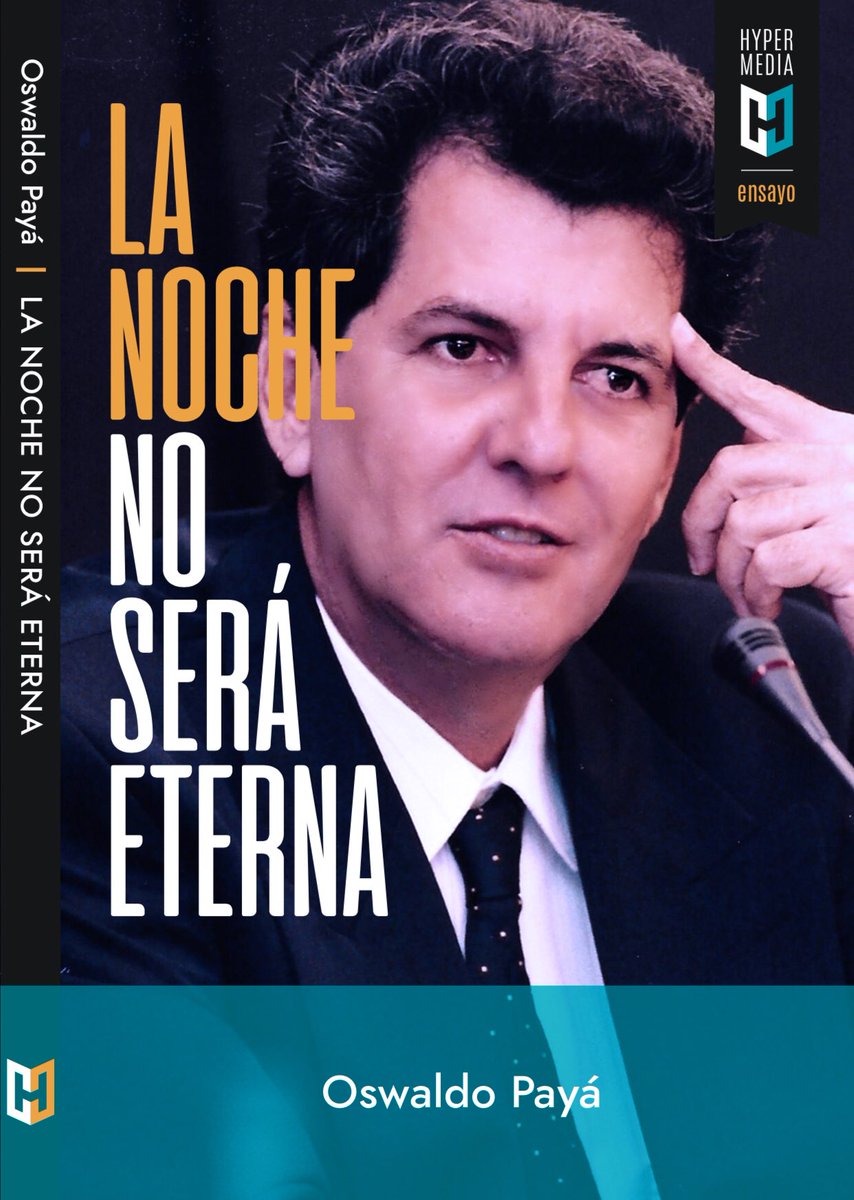
The long awaited book by Oswaldo Payá Sardiñas is available today on Amazon and published by Editorial Hypermedia Inc. 

On July 2, 2018 over social media Rosa María Payá announced that the book titled "The night will not be eternal" Unpublished book my dad wrote for all of us is about to be released. Cuba: The legacy of Oswaldo Payá. At the moment of greatest validity. This is the way, you can't miss it. We're very happy and grateful." 

There will be a formal book presentation on Wednesday, July 25, 2018 at 7:30pm in the Varela room at Our Lady of Charity (La Ermita de la Caridad) in Miami, Florida. This is the the place where the Cuban exile received her father in January of 2003, after he had been awarded the Sakharov Prize in Europe. 14yMedio reported on July 3rd:
The book, subtitled “Dangers and Hopes for Cuba,” has a preface by Paya’s widow, Ofelia Acevedo, and its purpose, as explained by its author, is none other than “to help to discover that we can, indeed, live through the process of liberation and reconciliation and move into the future in peace.”

“In this book my father reflects on how and why we Cubans have come to this point in history and how we can emerge from it,” says Rosa Maria Paya, director of the Cuba Decides movement which promotes holding a plebiscite so that the Cuban people can decide what political system they want for their country.  “A process of liberation is possible,” says the dissident about what her father left in writing before being “assasinated,” in her words.
The Human Rights Foundation (HRF) published a legal report on July 22, 2015 highlighting the inaccuracies and inconsistencies of the official government investigation following Payá’s death in 2012. HRF documented numerous due process violations, including damning witness accounts, a grossly inadequate autopsy examination, and other key pieces of evidence that were overlooked by the Cuban judicial system. HRF’s report concludes that the “evidence, which was deliberately ignored, strongly suggests that the events of July 22, 2012 were not an accident, but instead the result of a car crash directly caused by agents of the state.”

Six long years will have passed this upcoming July 22, 2018 and the silent complicity of many governments in the world is deafening, and further proof of the international decline in human rights standards, but the friends and family of Oswaldo Payá Sardiñas, and Harold Cepero Escalante continue to demand justice for their loved ones murdered on July 22, 2012.