Showing posts with label Havel. Show all posts

Saturday, December 26, 2020

The End of the Soviet Union on December 25, 1991: A Christmas Miracle

Christmas returns to the Kremlin

Twenty nine years ago on December 25, 1991 a regime born in 1917 and formerly named in 1922 came to an end. The Union of Soviet Socialist Republics (USSR) or as it was also known the Soviet Union was formerly brought to an end on Christmas day and replaced by the Commonwealth of Independent States. The last day of the Soviet Union was on Christmas day. Let that sink in for a moment.


Now there are those who claim that the world is a less stable place without the Soviet Union, and Mikhail Gorbachev claims that it could have been reformed. Academic Stephen F. Cohen goes further and quotes approvingly both by Putin and Mikhail Khodorkovsky with the adage: "Anyone who does not regret the breakup of the Soviet Union has no heart. And anyone who thinks it can be reconstructed has no head." Vaclav Havel, a man who had both head and heart understood why this kind of regime was so profoundly inhuman: "As soon as man began considering himself the source of the highest meaning in the world and the measure of everything, the world began to lose its human dimension, and man began to lose control of it."


The optimism expressed by Gorbachev and the nostalgia of Cohen fails to take into account the human cost of the USSR. The Soviet Union took the lives of an estimated 61 million human beings. It was a brutal and evil system that allied with Nazi Germany to start WW2 in 1939, and afterwards spawned other brutal regimes around the globe that claimed over a 100 million lives. Their lives mattered. Vaclav Havel in his 1990 New Years Speech called on his countrymen not to forget:

"The rivers of blood that have flowed in Hungary, Poland, Germany and recently in such a horrific manner in Romania, as well as the sea of blood shed by the nations of the Soviet Union, must not be forgotten. First of all because all human suffering concerns every other human being. But more than this, they must also not be forgotten because it is these great sacrifices that form the tragic background of today's freedom or the gradual emancipation of the nations of the Soviet Bloc, and thus the background of our own newfound freedom."
The numbers of lives lost is but the material accounting and does not take into account the spiritual ruin visited upon billions and its aftermath to the present day. The late Czech president explained it in the very same address:
"The worst thing is that we live in a contaminated moral environment. We fell morally ill because we became used to saying something different from what we thought. We learned not to believe in anything, to ignore one another, to care only about ourselves. Concepts such as love, friendship, compassion, humility or forgiveness lost their depth and dimension, and for many of us they represented only psychological peculiarities, or they resembled gone-astray greetings from ancient times, a little ridiculous in the era of computers and spaceships."

The destruction both material and spiritual generated by the Soviet Union over seventy years will take centuries to repair and transcend. That hard truth may not be cause for celebration but the end of the system that wreaked so much damage is cause for celebration not regret. To do otherwise is to be heartless. The fact that it happened without violence on Christmas day in 1991 is also cause for joy. 

2020 was a year that saw statues torn down across the West, often without cause, but with the end of the Soviet Union many statues of Lenin and Stalin came down, and in Highgate Cemetery in London the monument to Karl Marx has been repeatedly attacked over the years with a 2019 BBC report highlighting a pipe bomb in 1970, with emulsion paint, and with hammers in 2019. In light of the passions aroused is it not time to take down the monument to the man viewed as the author of this anti-human enterprise and place it in a museum alongside statues of slave traders, and Confederate generals?

Tuesday, December 10, 2013

December 10, 2013: Dark Day for Human Rights in Cuba


It was not the first time that a U.S. president had shaken hands with a dictator named Castro. Bill Clinton did it first in 2000 at a U.N. Summit in New York City shaking hands with Fidel Castro. However falling on International Human Rights Day in the midst of a human rights crackdown in Cuba, the symbolism this time around is even more unfortunate.

The attempt by the press to portray this encounter as "in the spirit of reconciliation" while ignoring the ongoing crackdown; Alan Gross, the American citizen held hostage in Cuba; and the demands for justice from the families of murdered human rights defenders Oswaldo Paya and Harold Cepero is a depressing commentary on the quality of press coverage in the 21st century.

Reconciliation not only implies some measure of justice but also of repentance on behalf of the wrong doers and recognition that they have done something wrong. To speak of reconciliation on the same day that human rights defenders are being rounded up and beaten up in Cuba is a travesty.

It is nearly on the same level as those in media trying to portray Nelson Mandela as some sort of pacifist which he was not.

Vaclav Havel, the former president of the Czech Republic and dissident, spoke of the importance of holding fast to moral principle and avoiding even minor compromises on October 12, 2009 at the Forum 2000 conference:
I believe that when the new Laureate of the Nobel Peace Prize postpones receiving the Dalai Lama until after he has accomplished his visit to China, he makes a small compromise, a compromise which actually has some logic to it. However, there arises a question as to whether those large, serious compromises do not have their origin and roots in precisely these tiny and very often more or less logical compromises. 
Unlike many in the world today, Havel defended human rights even when it challenged the powerful whether it be the economic giant of China or the United States and he was a constant ally of dissidents the world over until the final day of his life. Havel considered Nelson Mandela a friend but he would never re-write who the man was to make him more palatable for mass consumption.

The Orwellian character of much of the mainstream media highlighted in today's coverage combined with its silence as activists are rounded up and beaten up in Cuba to avoid their participation in International Human Rights Day is disturbing. Having to learn about what is happening in Cuba via twitter because accredited press agencies in the island refuse to cover dissidents and government repression is an outrage. Some of the reports today from Cuba over twitter:
TR Repressive action in 23 & L against activists & various detained & violent operation by agent

TR State Security assaults Roger Curbelo's home in Puerto Padre, various hurt & detained http://www.goear.com/listen/9e83af1/policia-cubana-irrumpe-casa-miembro-mcl-golpearle-destruri-vivienda-mcl

TR Informs Gloria Llopis from project her home is surrounded by a big police operation Info at +5353224504

TR in Havana a large paramilitary operation at different sites around homes of who are preparing to go out.

TR Jose Diaz Silva & other emergent civil society members in Havana are DISAPPEARED & homes under seige S.O.S!

TR Dozens of guards with interior ministry uniforms reach the town of Velasco, in Holguin, reports Eduardo Cardet

TR Castro regime police arrest Marielis Diaz Torres, Eduardo Diaz Fleitas y Raul Risco Perez in Pinar del Rio

TR I was arrested at 5AM handcuffed & taken in patrol car to Camajuani Police Station. Just released under heavy surveillance

The picture of the international community that is emerging is of one that is at risk of moral bankruptcy. Silence before the brutal beating of activists and the dictator Raul Castro operating in complete impunity. President Obama addressed this hypocrisy, in part, at the services for Nelson Mandela earlier today:
There are too many leaders who claim solidarity with Madiba’s struggle for freedom, but do not tolerate dissent from their own people.  And there are too many of us who stand on the sidelines, comfortable in complacency or cynicism when our voices must be heard.
The death of Martha Frayde Barraqué, a founder of the Cuban Committee for Human Rights on December 4, 2013 , a day prior to Mandela, in relative obscurity despite her powerful moral example is tragic. Rafa Rubio, a Spanish activist summed it up best over twitter: "Sometimes I think if Mandela were born in Cuba he would have died forgotten in jail or in exile."

Saturday, July 27, 2013

Oslo Freedom Forum: Park San Hak - 2013 Havel Prize Acceptance Speech

Fighters for a Free North Korea (FFNK): “Our helium balloons are the recipients of the Václav Havel Prize”


Speech by North Korean defector  Park San Hak upon receiving the 2013 Václav Havel Prize for Creative Dissent at the Oslo Freedom Forum. The regime in North Korea is an ally of the regime in Cuba.

Friday, September 21, 2012

Time to overcome revolutionary icons of violence and hatred

We need to nonviolently confront them and take the offensive.

MLK Jr. poster on sale at Amazon.com

 Thor Halvorssen, the founder of The Human Rights Foundation, has written an open letter to Ted Marlow, the CEO of Urban Outfitters regarding their Che Guevara merchandise. It is an excellent analysis of why it is not only a bad marketing strategy but also immoral.

Aung San Suu Kyi T-Shirt by Cafe Press on Amazon

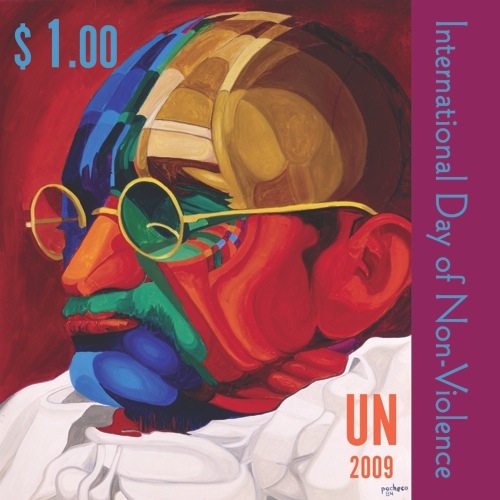
However, it is not only the promotion of a deceased mass killer who never renounced violence that is disturbing but the absence of positive icons such as Mohandas Gandhi, Martin Luther King Jr., Vaclav Havel, Aung San Suu Kyi and many others who made the world a better place using nonviolent means, respecting and defending human rights and dignity. It is troubling that some around the world want to celebrate a man who committed acts of mass violence that did not make things better but fail in honoring those did.

Mohandas Gandhi t-shirt on sale at Amazon
What kind of message is Urban Outfitters sending to the youth market?  Celebrating icons of violence while ignoring those who made contributions to humanity using nonviolent resistance is a disservice to the future.

Symbol of Polish Solidarity Movement
 In addition to boycotting Urban Outfitters which is a necessary but negative action one should also encourage taking positive action and purchasing posters and t-shirts to celebrate and market those heroes who have made the world a better place. Above and below are t-shirts and posters that can be purchased online that do just that. Time to go on the offensive with nonviolence. There are powerful icons of nonviolence that need to be remembered, honored and taught to new generations.

Hopefully, Urban Outfitters will reconsider promoting a hateful symbol and join in marketing icons who made a difference for the better. In the meantime the following are already available online.


Monday, March 8, 2010

Welcome by John Suarez, International Secretary of Directorio on behalf of the Geneva Summit coalition


Madam La Conseillire d'Etat, Isabel Rochat

The Mayor of Geneva, Mr. Remy Pangini

Excellencies

Ladies and Gentlemen,

Good Morning and welcome to the 2nd Geneva Summit for Human Rights, Tolerance and Democracy. My name is John Suarez. I am a human rights activist and the International Secretary of the Cuban Democratic Directorate. The Cuban Democratic Directorate is part of a civic nonviolent resistance movement that defends pro-democracy activists, human rights defenders, and members of independent civil society from the abuses of a 51-year old communist dictatorship. We publish an annual human rights report on Cuba as well as Steps to Freedom - our last two issues are available here - it is an exhaustive accounting of opposition and independent civil society activities inside of Cuba.

On behalf of the co-organizers, an international coalition of more than 25 human rights NGOs I am both honored and humbled to welcome all who have come near and far to join us today here at the Geneva International Conference Center directly across from the United Nations Human Rights Council which is now in session and all those joining via web cast from around the world.

The first Geneva Summit coincided with the Durban Review and the second summit takes place now in tandem with the main annual session of the UN Human Rights Council.

Summit organizers are honored to have human rights heroes Vaclav Havel and Lech Walesa, the former presidents of the Czech Republic and Poland as co-chairs of the Geneva Summit's Honorary Committee. As we gather here and many of us are also watching, listening, and participating in the Human Rights Council session across the way and are witnessing some of the worse systematic human rights abusers exerting undue influence and power over the Council and the session. In some cases silencing victims from speaking and frustrating human rights activists I think back to both of our co-chairs.

In Czechoslovakia in the 1970s, Vaclav Havel was a dissident play write followed by secret police, imprisoned for his beliefs and in Poland Lech Walesa, an electrician working at the Gdansk shipyards before being fired in 1976 for his activities as a shop steward would later be followed and frequently detained for his independent labor activism. All this at a time when the world was convinced that these repressive communist states would go on forever.

Both have said much that is relevant to the challenges that we face today:

Months after the Warsaw Pact invaded and occupied Czechoslovakia crushing the Prague Spring and the idea of Socialism with a human face. Vaclav Havel wrote a letter to the overthrown Czechoslovak Communist Party chairman Alexander Dubcek in August of 1969 in which he stated: "Even a purely moral act that has no hope of any immediate and visible political effect can gradually and indirectly, over time, gain in political significance." That in one sentence describes the evolution of dissident movements in Communist states and their impact in shaking up a seemingly all powerful totalitarian state creating cracks in its edifice and over time tearing it down.

By 1983 Lech Walesa had played an important role in organizing labor strikes that brought the Polish communist government to the negotiating table where for the first time in a communist state an independent labor union - Solidarity - was legally recognized - only to face repression and attempts to destroy it through Martial law, but by 1983 through great repression Martial law was formally lifted but repression continued. This was the year when Walesa won the Nobel Peace Prize. He was not allowed to attend the award ceremony in Oslo but Walesa's wife Danuta was able to go in his place and read his acceptance speech in which he explained what motivated this movement: "We are fighting for the right of the working people to association and for the dignity of human labour. We respect the dignity and the rights of every man and every nation. The path to a brighter future of the world leads through honest reconciliation of the conflicting interests and not through hatred and bloodshed. To follow that path means to enhance the moral power of the all-embracing idea of human solidarity."

Through a combination of great courage, persistence, patience, civic nonviolent resistance, international solidarity, and a little luck both of these men played a crucial role in seeing that repressive totalitarian regimes in their respective countries were brought to an end without democrats engaging in bloodshed against their oppressors and today in both of their countries they and their countrymen are free to travel, express themselves, associate freely, and enjoy all those rights that many in the West have long taken for granted. Looking around the room and seeing human rights defenders from Azerbaijan, Burma, China, Cuba, Iran, North Korea, Sudan, Tibet, Venezuela, Vietnam, and Zimbabwe. Activists that today live in societies where fundamental human rights are systematically denied and abused. They share with Vaclav Havel and Lech Walesa the real knowledge of living in countries that are not free and where exercising your fundamental human rights is an act of defiance and great courage.

One objective of the 2010 Geneva Summit is to give voice to victims of the world’s worst human rights abuses and a second objective is to empower those who suffer repression under closed systems of government. The program over the next two days addresses both these goals whether they will be accomplished is up to all of us. It is a tall order because the global human rights situation is deteriorating.

In Iran, the contested June election sparked an unprecedented wave of state-sponsored violence and repression. Thousands of peaceful protesters were beaten, arrested, tortured, and killed. One of them Neda Agha-Soltan, age 27, was shot and killed on June 20, 2009 during the protests denouncing election fraud. Her fiancé, Caspian Makan, is with us here today, and will address the Summit tomorrow. Neda’s death was captured on video and in those terrible moments reflected the great crime committed by the Iranian government against the people of Iran. Official numbers place the number of killed at 36 during the protests but the opposition places the dead at 72. In 2009 at least 270 people were hanged and in 2010 at least 12 so far. 4,000 have been arrested including journalists and reformist politicians.

In China, according to Amnesty International "...a minimum of 7,000 death sentences were handed down and 1,700 executions took place" in 2009. Chinese Dissident Liu Xiaobo was arrested on June 23, 2009 and charged with “inciting subversion of state power” for co-authoring Charter 08, a declaration calling for political reform, greater human rights, and an end to one-party rule in China that has been signed by hundreds of individuals from all walks of life throughout the country. On December 25, 2009 Liu Xiaobo was sentenced to 11 years in prison and two years' deprivation of political rights. The Beijing High Court rejected his appeal on February 11, 2010.

In North Korea, the Communist regime continues to deny all basic freedoms to its citizens. According to Amnesty International opposition of any kind is not tolerated. According to reports, any person who expresses an opinion contrary to the position of the ruling party faces severe punishment, and so do in many cases their families. Unauthorized assembly or association is regarded as a "collective disturbance", that is punishable. Religious freedom, although guaranteed by the constitution, is in practice sharply curtailed. There are reports of severe repression of people involved in public and private religious activities, through imprisonment, torture and executions. Many Christians are reportedly being held in labour camps.

In Sudan, the regime of Omar al-Bashir continues to kill thousands of innocent people with impunity. On 24 November, three prominent human rights defenders were arrested in Khartoum: Amir Suleiman, Abdel Monim Elgak and Osman Humeida and tortured in custody before being released. Amnesty International considered the three individuals to be prisoners of conscience who were detained solely because of the peaceful exercise of their rights to freedom of expression and association.

In Zimbabwe, elections were followed by a wave of human rights violations that resulted in at least 180 deaths, and at least 9,000 people injured from torture, beatings and other violations perpetrated mainly by government forces. About 28,000 people were displaced from their homes.

In Burma, Nobel Peace Laureate Daw Aung San Suu Kyi who won the last free election held in Burma in 1990 whose results were ignored by the ruling military junta who then imprisoned her unjustly. Last years sham trial by the military junta to extend her imprisonment has caused major damage to the process of national reconciliation and indicates that the upcoming 2010 elections in Burma will be a farce.

In Cuba, the communist regime continues to systematically deny Cubans there human rights, Cuban blogger Yoani Sanchez, mentioned here at the Summit last year was abducted by Cuban State security and beaten to stop her and Claudia Cadelo another blogger from attending a performance art happening celebrating nonviolence. On International Human Rights Day government organized mobs assaulted the Ladies in White as they marched for the release of Cuba's prisoners of conscience. At least 24 Cuban patients died of exposure at Mazorra, a government hospital in January of this year and when Amnesty International prisoner of conscience Orlando Zapata Tamayo initiated a water only hunger strike to demand that prisoners be treated decently in December of 2009 prison officials responded by taking away his water for more than two weeks when he was already extremely weak trying to break his spirit and failed but contributed to his death on February 23rd.

In Venezuela, the government response to those Venezuelan citizens protesting against the Chavez regime shutting down independent media outlets is to denounce those using twitter and text message as terrorists; police firing tear gas at students and a call for government supporters to prepare for battle. In the midst of all this President Hugo Chavez continues to demonize the opposition and welcomes into his ranks a high ranking Cuban official: Commander Ramiro Valdez, "a historic leader of the revolution" to address the energy crisis in Venezuela currently suffering power outages. Valdez is the Vice President of the Council of State and Minister of Communications in the Cuban government. He doesn’t know much about electricity but knows how to set up the repressive apparatus of a totalitarian police state which is what he did in Cuba. Ironically, the man Hugo Chavez does not want to visit Venezuela with much experience in electricity is Lech Walesa who he has barred from entering the country. In addition to being an electrician Lech Walesa knows a thing or two about defending human rights and democracy. A skills set that Mr. Chavez views as a threat. At the same time a Spanish court offers an insight into terrorism in Venezuela but twitter/text messages sent by students are not the object of the inquiry but Mr. Chavez’s ties with terrorist groups ETA and the Colombian FARC and apparent plans to assassinate the Colombian head of state.

Regrettably, the chief international body charged with protecting human rights is failing to live up to its mission to stop these and other abuses. The Geneva-based UN Human Rights Council—as acknowledged in a recent report by 17 of its 47 member states, supported by Amnesty International, Human Rights Watch, and the International Commission of Jurists—falls short in its handling of country situations, in the efficiency of the process involved in highlighting violations, and in its reactivity to crisis situations. Strong politicization of the Council, driven by bloc-based voting patterns, has led to inaction in face of atrocity and abuse. We saw this sad spectacle last week within the Council, first with the secretary general of Iran’s High Council for Human Rights denying the documented and rampant instances of torture, executions, and mass detentions of Iranians followed by the Cuban Foreign Minister’s speech who echoing his Iranian colleague also denied Cuba’s horrible human rights record and to add insult to injury went on to blame the United States for the death of Orlando Zapata Tamayo as well as slander the deceased Cuban prisoner of conscience as a criminal.

Little wonder that the March 1st magazine issue of Newsweek contains an article titled “The Downfall of Human Rights.” The article highlights Freedom House's report "Freedom in the World," released in January, and reveals a global decline in political freedoms and civil liberties for the fourth year in a row, the longest drop in the almost 40 years that the survey has been produced.

In his 1986 Nobel Acceptance speech writer, activist, and holocaust survivor Elie Wiesel issued a challenge not only to activists but to people everywhere challenging us all when he said: "I swore never to be silent whenever and wherever human beings endure suffering and humiliation. We must always take sides. Neutrality helps the oppressor, never the victim. Silence encourages the tormentor, never the tormented.

Amidst all the documented evils of the past year there is hope. The rise of citizen journalists, social networks, twitter, and cell phones able to document these atrocities and show them to the world is a response to Elie Wiesel's call not to remain silent to speak out and denounce repression. We've seen its impact across the world. This meeting has a focus on internet freedom, and it is necessary because the enemies of freedom recognize this technology as a profound enemy to maintaining monopoly control over information which for totalitarians is a pillar of their power.

New opportunities exist, and human rights defenders need to brainstorm and collaborate to improve activism and to offer a counterbalance to the collaboration and coordination of repressive regimes and movements. The international stage can be used to put a spotlight on the world’s worst abusers. We saw it this last week when 30 NGOs from this Summit called on the UN High Commissioner for Human Rights to intervene on behalf of Cuban human rights defender Nestor Rodriguez Lobaina barred by the Cuban dictatorship from attending this meeting. The Cuban ambassador protested loudly when Hillel Neuer of UN Watch raised the matter in an interactive dialogue with the High Commissioner, but Nestor on the other hand was grateful that you spoke up for his human rights.

The Geneva Summit seeks to offer dissidents and human rights activists from around the world a global platform and forum to share their personal struggles, their fight for freedom and equality, and their vision for how to bring change. This past week we saw with action how it can be done and how much it upsets those who would prefer that we remain silent. Let us make sure that the victims of human rights violations receive the solidarity of people of goodwill and that the abusers be given cause to be shamed by their actions and to change there ways.

Monday, January 18, 2010

Martin Luther King Jr. would have turned 81 today

Friday, January 15, 2010


An individual who breaks a law that conscience tells him is unjust, and who willingly accepts the penalty of imprisonment in order to arouse the conscience of the community over its injustice, is in reality expressing the highest respect for the law. Martin Luther King Jr.


"When I despair, I remember that all through history the way of truth and love has always won. There have been tyrants and murderers and for a time they seem invincible, but in the end, they always fall – think of it, always." Mohandas K. Gandhi


On April 4, 1968 Martin Luther King Jr. met his end at the hands of an assassin’s bullet at the age of 39. Today, he would have been celebrating his 81st birthday. Mohandas Karamchand Gandhi another apostle of non-violence met his end on his way to morning prayers at the hands of an assassin’s bullet murdered sixty years ago at the age of 79 on January 30, 1948. Steven Bantu Biko, nonviolent student leader and anti-apartheid activist, was brutally beaten to death by South African police on September 12, 1977 at the age of 30. Benigno Aquino Jr returned to the Philippines on board a commercial jet from exile to carry on his struggle for democracy in the face of the Ferdinand Marcos dictatorship only to meet with an extrajudicial execution by government forces at the airport on August 21, 1983 at age 50.


All of these individuals made choices living out moral and ethical principles in their public lives that despite their deaths continue to have positive consequences in the World. Every day we have choices to make. Shall we act out of despair or hope; hatred or love; selfishness or self-sacrifice. These are choices we make everyday, and every decision is like a rock dropped into a lake with ripples spreading out across the water’s surface. Some rocks are bigger than others and leave a bigger wake, but all have an impact from the smallest to the largest. Vaclav Havel in 1969 in the midst of the Soviet occupation of Czechoslovakia wrote a letter to one of the deposed communist reformers Alexander Dubcek in which he expressed a profound and often overlooked truth that "Even a purely moral act that has no hope of any immediate and visible political effect can gradually and indirectly, over time, gain in political significance." Twenty years later they would meet and embrace as communism ended nonviolently in that country.


Clare Booth Luce said that "no good deed goes unpunished," but many forget that she also said: ’In the final analysis there is no other solution to man’s progress but the day’s honest work, the day’s honest decision, the day’s generous influences, and the day’s good deed." The Baptist Minister born in Atlanta Georgia understood this as did the attorney trained in India, as did the South African student leader and Philippine journalist and political activist. Doing the right thing does not guarantee safety, security, fame or wealth but it does guarantee something infinitely more important: peace of mind. The ability to sleep soundly at night and the growth of one’s soul through the obstacles and real suffering faced.


On April 3, 1968 Reverend King, gave his final speech I’ve been to the Mountaintop. He made biblical references to Moses who had served God’s purposes, but due to his own inadequacies would only be able to see the Promised Land not actually get to it. He spoke of the attempt on his life early in the Civil Rights movement when a demented black woman attacked him with a letter opener plunging it into his chest fractions of an inch from piercing his aorta, which would have led to him bleeding out and dying on the spot. He went on to describe the one letter that he could still remember among many sent to him as a convalesced in a Harlem hospital. They had opened his chest to remove the letter opener lodged so near to his heart. He did not remember what the letter from the President of the United States said, or that of the Governor, or the numerous other famous people who wrote to him, but a little school girl who said that she had read how if he had but sneezed that letter opener would’ve pierced his heart and he would have died. She was glad that he had not sneezed. He shared her sentiment, and went to list all that he would not have experienced if had died that day, but completed his summation of all that had been accomplished saying that he feared nothing because he had been to the mountain top and was a servant of God with references to longevity being something positive but not necessary.


It was because Reverend King believed as a man of God in a universe which is morally transcendent and "that unarmed truth and unconditional love will have the final word in reality. That is why right, temporarily defeated, is stronger than evil triumphant."


The next day he was gone, but you reading this are still here. Will you be the change you want to see in the world? Will you do the good deed even if you know that the consequences will not benefit you personally but to the contrary cause you pain? You should ask yourself that question everyday. It isn’t easy, but no one ever said life was going to be.


Happy Birthday Reverend King.