Showing posts with label tyranny. Show all posts

Wednesday, December 31, 2025

74 Years of Dictatorship in Cuba: 67 Years of the Castros and 7 Years of Batista

 From bad (authoritarian dictatorship) to worse (totalitarian dictatorship)

#TheyAreContinuity #SonContinuidad 
 

Cuba has been under a dictatorship for nearly 74 years. On March 10, 1952, Fulgencio Batista brought an end to Cuban democracy. Carlos Prio, the last democratic president, and his first lady were forced into exile. An increasingly unpopular authoritarian and corrupt regime ruled Cuba for the following seven years. 

The hope for the restoration of democratic governance came to an end when Batista refused to cede power nonviolently through a dialogue process, opening a path for Fidel and Raul Castro to take it by force. Although they had repeatedly pledged to restore the 1940 Constitution, and Cuban democracy they imposed a communist dictatorship.

Cuba's official motto was changed from Homeland and Liberty (Patria y Libertad) to Homeland or Death, We Shall Triumph (¡Patria o Muerte, Venceremos!).

Presidents of Cuba from 1902 to 1952 and dictator Batista

Fulgencio Batista, the authoritarian dictator, fled Cuba early on January 1, 1959, thanks to the conspiracies of the Communist International, The New York Times pro-Castro propaganda, an arms embargo imposed on him by the United States in March 1958, and pressure for him to go from the U.S. Ambassador to Cuba in December 1958.

Since the beginning of their struggle on July 26, 1953, the Castro brothers promised a democratic restoration, but all along planned a Marxist-Leninist takeover. They imposed a totalitarian communist dictatorship, killing tens of thousands of Cubans. The Castro regime systematically denied human rights to all Cubans while exporting their repressive model to Africa and Latin America, creating misery for millions more.

The communist regime re-wrote the history of Cuba, creating myths to justify its tyranny. One of them is the so-called Cuban blockade, and the above documentary seeks to expose the false narrative.

The reality is that between 1902 and 1952, there existed a system that oversaw rising living standards for five decades and had been on the cutting edge of human rights

The Marxist-Leninist dictatorship in Cuba declared war on human rights at home and abroad to the present day.

From 1959 till now, generations of Cubans continue to resist this communist dictatorship.

Hundreds of thousands of Cubans risked everything in July 2021, taking to the streets in nonviolent protests demanding an end to the dictatorship. The Castro regime responded by firing on unarmed protesters, imprisoning over a thousand, and condemning many of them to 20 and 30 year prison sentences for exercising their right to peaceful assembly.

Meanwhile the regime in Havana today continues to punch above its weight sending mercenaries to fight in Ukraine, and personnel to torture Venezuelan dissidents, and guard Nicolas Maduro in what has been termed an occupation force.

At the same time this criminal enterprise, while impoverishing the average Cuban, continues to enrich the “new class” , the kleptocratic nomenklatura with billions in cash reserves.

Remembering this sad past and current reality, we resolve to work even harder to bring democracy back to Cuba, replacing Homeland or Death (¡Patria o Muerte!) with Homeland, Life, and Liberty (Patria, Vida y Libertad). 

Please take two actions: 1) sign this appeal for an end to repression in Cuba and release of all Cuban political prisoners and 2) sign this petition to expel Cuba from the UN Human Rights Council

Both petitions are addressed to members of the international community.

Wishing you all a happy new year in 2026, and through the continuing work and struggle for a free Cuba may freedom be restored that will finally fulfill Cuban exiles goal of "this year in Havana!"

Wednesday, January 1, 2025

73 Years of Dictatorship in Cuba: 66 Years of the Castros and 7 Years of Batista

 From bad (authoritarian dictatorship) to worse (totalitarian dictatorship)

#TheyAreContinuity #SonContinuidad 
 

Cuba has been under a dictatorship for 73 years. On March 10, 1952, Fulgencio Batista brought an end to Cuban democracy. Carlos Prio, the last democratic president, and his first lady were forced into exile. An increasingly unpopular authoritarian and corrupt regime ruled Cuba for the following seven years. 

The hope for the restoration of democratic governance came to an end when Batista refused to cede power nonviolently through a dialogue process, opening a path for Fidel and Raul Castro to take it by force. Although they had repeatedly pledged to restore the 1940 Constitution, and Cuban democracy they imposed a communist dictatorship.

Cuba's official motto was changed from Homeland and Liberty (Patria y Libertad) to Homeland or Death, We Shall Triumph (¡Patria o Muerte, Venceremos!).

Presidents of Cuba from 1902 to 1952 and dictator Batista

Fulgencio Batista, the authoritarian dictator, fled Cuba early on January 1, 1959, thanks to the conspiracies of the Communist International, The New York Times pro-Castro propaganda, an arms embargo imposed on him by the United States in March 1958, and pressure for him to go from the U.S. Ambassador to Cuba in December 1958.

Since the beginning of their struggle on July 26, 1953, the Castro brothers promised a democratic restoration, but all along planned a Marxist-Leninist takeover. They imposed a totalitarian communist dictatorship, killing tens of thousands of Cubans. The Castro regime systematically denied human rights to all Cubans while exporting their repressive model to Africa and Latin America, creating misery for millions more.

The communist regime has re-written the history of Cuba, creating myths to justify its tyranny. One of them is the so-called Cuban blockade, and the above documentary seeks to expose the false narrative.

The reality is that between 1902 and 1952, there existed a system that oversaw rising living standards for five decades and had been on the cutting edge of human rights

The Marxist-Leninist dictatorship in Cuba declared war on human rights at home and abroad to the present day.

From 1959 till now, generations of Cubans have resisted this communist dictatorship.

Hundreds of thousands of Cubans risked everything in July 2021, taking to the streets in nonviolent protests demanding an end to the dictatorship. The Castro regime responded by firing on unarmed protesters, imprisoning over a thousand, and condemning many of them to 20 and 30 year prison sentences for exercising their right to peaceful assembly.

Remembering this sad past, we resolve to work even harder to bring democracy back to Cuba, replacing Homeland or Death (¡Patria o Muerte!) with Homeland, Life, and Liberty (Patria, Vida y Libertad). 

Please take two actions: 1) sign this appeal for an end to repression in Cuba and release of all Cuban political prisoners and 2) sign this petition to expel Cuba from the UN Human Rights Council

Both petitions are addressed to members of the international community.


Wishing you all a happy new year in 2025, and through the continuing work and struggle for a free Cuba may freedom be restored that will finally fulfill Cuban exiles goal of "this year in Havana!"

Sunday, December 31, 2023

72 Years of Dictatorship in Cuba: 65 Years of the Castros and 7 Years of Batista

 From bad (authoritarian dictatorship) to worse (totalitarian dictatorship)

#TheyAreContinuity #SonContinuidad

 Cuba has been under a dictatorship for 72 years. On March 10, 1952, Fulgencio Batista brought an end to Cuban democracy. Carlos Prio, the last democratic president, and his first lady were forced into exile. An increasingly unpopular authoritarian and corrupt regime ruled Cuba for the following seven years. 

The hope for the restoration of democratic governance came to an end when Batista refused to cede power nonviolently through a dialogue process, opening a path for Fidel and Raul Castro to take it by force. Although they had repeatedly pledged to restore the 1940 Constitution, and Cuban democracy they imposed a communist dictatorship.

Cuba's official motto was changed from Homeland and Liberty (Patria y Libertad) to Homeland or Death, We Shall Triumph (¡Patria o Muerte, Venceremos!).

Presidents of Cuba from 1902 to 1952 and dictator Batista

Fulgencio Batista, the authoritarian dictator, fled Cuba early on January 1, 1959, thanks to the conspiracies of the Communist International, The New York Times pro-Castro propaganda, an arms embargo imposed on him by the United States in March 1958, and pressure for him to go from the U.S. Ambassador to Cuba in December 1958.

Since the beginning of their struggle on July 26, 1953, the Castro brothers promised a democratic restoration, but all along planned a Marxist-Leninist takeover. They imposed a totalitarian communist dictatorship, killing tens of thousands of Cubans. The Castro regime systematically denied human rights to all Cubans while exporting their repressive model to Africa and Latin America, creating misery for millions more.

The communist regime has re-written the history of Cuba, creating myths to justify its tyranny. The reality is that between 1902 and 1952, there existed a system that oversaw rising living standards for five decades and had been on the cutting edge of human rights

The Marxist-Leninist dictatorship in Cuba declared war on human rights at home and abroad to the present day.

From 1959 till now, generations of Cubans have resisted this communist regime.

Hundreds of thousands of Cubans risked everything in July 2021, taking to the streets in nonviolent protests demanding an end to the dictatorship. The Castro regime responded by firing on unarmed protesters, imprisoning over a thousand, and condemning many of them to 20 and 30 year prison sentences for exercising their right to peaceful assembly.

Remembering this sad past, we resolve to work even harder to bring democracy back to Cuba, replacing Homeland or Death (¡Patria o Muerte!) with Homeland, Life, and Liberty (Patria, Vida y Libertad). 

Please take two actions: 1) sign this appeal for an end to repression in Cuba and release of all Cuban political prisoners and 2) sign this petition to expel Cuba from the UN Human Rights Council

Both petitions are addressed to members of the international community.

On the streets of Cuba on July 11, 2021

Wishing you all a happy new year in 2024, and through the continuing work and struggle for a free Cuba may freedom be restored that will finally fulfill Cuban exiles goal of "this year in Havana!"

Sunday, January 1, 2023

71 Years of Dictatorship in Cuba: 64 Years of Castro and 7 Years of Batista

 From bad (authoritarian dictatorship) to worse (totalitarian dictatorship)

#TheyAreContinuity

Cuba is suffering under seventy one years of dictatorship. Cuban democracy was ended by Fulgencio Batista on March 10, 1952.  The last democratic president, Carlos Prio, and his first lady went into exile. Over the next seven years, a corrupt and authoritarian dictatorship ruled Cuba, becoming increasingly unpopular.  

The refusal of Batista to nonviolently give up power through a process of dialogue opened the path for Fidel and Raul Castro to violently seize it, and put an end to a half century of democratic governments. 

Cuba's official motto was changed from Homeland and Liberty (Patria y Libertad) to Homeland or Death, We Shall Triumph (¡Patria o Muerte, Venceremos!).

Presidents of Cuba from 1902 to 1952 and dictator Batista

With the support of the Communist International, The New York Times, an arms embargo imposed on Batista in March 1958 by the United States, and pressure from the U.S. Ambassador to Cuba in December 1958, the authoritarian dictator Fulgencio Batista fled Cuba in the early morning hours of January 1, 1959.

Since the beginning of their struggle in 1953, the Castro brothers promised a democratic restoration, but all along planned a Marxist-Leninist takeover. They imposed a totalitarian communist dictatorship, killing tens of thousands of Cubans. The Castro regime systematically denied human rights to all Cubans while exporting their repressive model to Africa and Latin America, creating misery for millions.

The communist regime has re-written the history of Cuba, creating myths to justify its tyranny. The reality is that between 1902 and 1952, there existed a system that oversaw rising living standards for five decades and had been on the cutting edge of human rights. The Marxist-Leninist dictatorship declared war on human rights at home and abroad.

Generations of Cubans resisted this communist dictatorship from 1959 to the present. 

Tens of thousands of Cubans risked everything in July 2021, taking to the streets in peaceful protests demanding an end to the dictatorship. The Castro regime responded by firing on unarmed protesters, imprisoning hundreds, and condemning many of them to 20 and 30 year prison sentences for exercising their right to peaceful assembly.

Today, we remember this tragic history and redouble efforts to achieve a democratic restoration in Cuba. No more Homeland or Death (¡Patria o Muerte!) but Homeland, Life and Liberty (Patria, Vida y Libertad). 

Please take two actions: 1) sign this appeal for an end to repression in Cuba and release of all Cuban political prisoners and 2) sign this petition to expel Cuba from the UN Human Rights Council. Both are addressed to members of the international community.

On the streets of Cuba on July 11, 2021

Wishing you all a happy new year in 2023, and through the continuing work and struggle for a free Cuba may freedom be restored that will finally lead Cuban exiles to say "this year in Havana!"

Tuesday, October 23, 2012

Forum 2000 Commits to Furthering the Legacy of Václav Havel

"We believe that injustice and tyranny must be confronted with courage and perseverance." - Forum 2000 participants

Forum 2000 Declaration
Our Commitment to Furthering the Legacy of Václav Havel

Fresh from travelling around the globe as the new President of Czechoslovakia, Václav Havel came to realize that, although civilization had always faced challenges, those it faced today appeared more complex, more interconnected and more in flux than at any time in the past. He saw that such challenges could not be effectively met by a single individual, group, country, or region, nor could they be dealt with from the perspective of a single ideology, religion, or branch of knowledge. Instead, the search for solutions would require, he believed, a continuous, open-minded dialogue on a broad range of topics involving a wide variety of participants.

Václav Havel searched for a way to make this happen. That is why he, along with Elie Wiesel and Yohei Sasakawa, established Forum 2000 in 1997 providing it with their sponsorship, their ideas, and practical means to operate. Over the past decade and a half, Forum 2000 has made a unique contribution to facilitating a wide ranging global dialogue on many different issues, set in the symbolic environment of Prague.

The past year has been marked by two painful losses: the passing away of Václav Havel, and the death of Oldřich Černý, who from the beginning was Forum 2000’s Executive Director and moving spirit. Their legacy, however, remains and the time has come to restate clearly where Forum 2000 stands and where it is heading.

This year's conference, focusing on Media and Democracy, in itself a fundamentally Havelian topic, offers a perfect opportunity for such reflection.


Our Inspiration
Forum 2000’s founders have left us the indelible legacy of their ideas and approaches, whether it be Václav Havel’s insistence that "telling lies can never save us from further lies," or Elie Wiesel’s profound observation that "indifference is the epitome of evil," or Yohei Sasakawa’s devotion to alleviating disease and human suffering. These are the principles that will continue to guide us as we move forward.

Since 1997, our discussions have also been shaped by the growing number of Forum 2000 participants, prominent personalities from all walks of life, who cherish the experience and often return to participate again, providing us with valuable feedback and inspiration for our further activities.

And the inspiring genius loci of Forum 2000’s primary location: For centuries, Prague has been a crossroads of history. It represents a symbiosis of different cultures, in particular the Czech, German and Jewish cultures, until their relative harmony was destroyed by nationalist clashes and the horrors of Nazism. In both 1938 and 1948, Czechoslovakia paid dearly for the politics of appeasement and yielding to intimidation. Communism, which established a totalitarian state in post-war Czechoslovakia, managed to survive attempts at reform by crushing the Prague Spring in 1968 and went on to last a total of forty years. Democracy has not come easily to this region, and it has had to be struggled for throughout a troublesome transformation. The quest continues.

Our Values
We believe that injustice and tyranny must be confronted with courage and perseverance. The very least we can do is to remember and remind. The late Cuban dissident Oswaldo Payá, as well as Burma’s Aung San Suu Kyi, were regularly invited to Forum 2000 conferences, even though it was certain their authoritarian rulers would not allow them to attend. Forum 2000 also repeatedly drew attention to the plight of freedom loving people in Belarus, Russia and Tibet. Václav Havel was the first head of state to invite His Holiness the Dalai Lama for an official visit, and support to Tibetans has been maintained via Forum 2000 till the present. Through Forum 2000’s Shared Concern Initiative, Václav Havel began a successful campaign to award the 2010 Nobel Peace Prize to Liu Xiaobo, jailed in China for his human rights activities, and urged his and his wife’s release from prison. As symbolic as these actions are, we believe they bolster the power of these powerless and confirm the legitimacy of their uncompromising stances. The struggles of human rights activists are an acute reminder of the need to stand up for democracy and human rights, freedom and liberty, and the principles of citizenship, civility and responsibility, wherever they are under threat.

We believe that vibrant and engaged civil societies form the bedrock on which respect for human rights, functioning democracy, social justice and sustainable economic prosperity are based. These civil societies are equally vital for posing the key questions of public life, and often help find practical solutions.

We believe in genuine and open dialogue. Rather than pretend we have ready-made answers to the problems we face, Forum 2000 seeks to create a space for frank and profound reflection about the values that underlie human behavior and for exploring how they can be applied to real-world situations. It seeks to be a place where commonly accepted orthodoxies can be questioned with audacity, and directly.

We believe that real partnership can exist among those who speak openly and tell the truth. Such a relationship requires tolerance between nations, ethnic groups, cultures, religions and individuals at a basic human level. It requires a willingness to listen and, on occasion, an agreement to disagree. It is only by attempting to place oneself in the shoes of another that entrenched differences can be overcome and solutions to great challenges envisaged.

Our Methods
Our flagship annual Conferences gather dozens of participants of many different ethnic, cultural, religious and professional backgrounds, including prominent politicians, senior academics, religious leaders, but also little known dissidents and young activists. The discussions are open to the public in Prague, and to a global audience via online broadcasting and the publication of contributions and outcomes. In addition, Forum 2000 conducts specific dialogues in other smaller-scale formats. We envisage bringing the dialogue to other locations in the world.

The Shared Concern Initiative is a vehicle for facilitating the joint expression of an opinion shared among groups of distinguished leaders and personalities. Wherever our shared values come under attack, the Shared Concern Initiative can give a voice to that concern, one that can be heard around the world through a number of media outlets. Developments in Venezuela, Tibet and Ukraine are recent additions to the issues the Initiative has addressed since its establishment in 2005.

Forum 2000 provides intangible yet direct support to the evolution of civil society in the Czech Republic and Central Europe. The annual NGO Market in Prague helps civil society actors intensify their cooperation, find partners more easily and operate freely and effectively. Finally, an indispensable part of Forum 2000's mission is outreach to young people through a variety of educational activities.

***
We, participants of the 2012 Annual Forum 2000 Conference, along with members of Forum 2000 governing and advisory bodies, salute the lifelong work of the late President Václav Havel and pledge to uphold his legacy as set out in this declaration.

http://www.forum2000.cz/

Wednesday, October 10, 2012

Honoring Ladies in White Founder Laura Pollán and Cuba's Call to Freedom Remembered

Cuba's Yara Proclamation 144 years later and honoring Laura Pollán one year after her death

Laura Inés Pollán Toledo:  February 13, 1948 – October 14, 2011
144 years ago on October 10, 1868 a Cuban planter and lawyer, Carlos Manuel de Céspedes del Castillo, sounding a bell gathered his slaves together and told them that they were free and if they chose they could join him and his compatriots in the struggle for a new nation. The nearest town to the plantation was called Yara and this cry for freedom became known as the "Grito de Yara" the (Proclamation of Yara). This initial act led to ten years of war with Spain and although ending in a frustrating and temporary peace under continued Spanish rule it did much to forge the Cuban character.

Less than three months ago not far from Yara in the same province of Bayamo, two Cuban patriots Oswaldo Payá Sardiñas and Harold Cepero Escalante, died under suspicious circumstances in what appears to have been an extra-judicial killing disguised as a car accident.

In four days, the one year observance of a tragic anniversary: the untimely death of opposition leader Laura Inés Pollán Toledo through what a Cuban medical doctor described as medical neglect. On October 14, 2011, Laura Pollan, one of the founders of the human rights movement the Ladies in White died after years of suffering physical and psychological assaults against her person. Finally, she would become a victim of the Cuban healthcare system that following the Castroite dictum of inside the revolution everything outside of it nothing - would suffer and die in a matter of days while under the supervision of doctors who were revolutionaries first and doctors second.

Carlos Manuel de Céspedes never got to see Cuban independence nor even the end of the Ten Years war he died in 1874. Unfortunately, as with Jose Marti and Antonio Maceo we are seeing another generation of heroes continuing the drive for Cuban freedom but dying before achieving their goal. It is for this reason that we must remember and honor these men and women who have given their last full measure to free a country subjugated to more than six decades of dictatorship. Seven years of authoritarian tyranny with Fulgencio Batista followed by 53 years of totalitarian tyranny with the Castro brothers. The body count of innocent Cubans has been steadily rising these past six decades with brutal patterns of repression.

Let us remember Laura Pollan the school teacher who became an international human rights icon and sadly today a martyr of the Cuban freedom movement. On October 14 there will be activities inside and outside of Cuba to remember and honor this remarkable and courageous woman.  At the headquarters of the Ladies in White in Havana, Cuba they will open a guestbook throughout the day and invite people to come and pay their respects. No doubt throughout the world wide web there will be different efforts and actions underway to honor this Cuban mother and wife who was taken from us far to soon.


Thankfully her words and writing survive and we can learn from her wisdom and continue the struggle for a free Cuba.

"They can either kill us, put us in jail or release them. We will never stop marching no matter what happens." (2010)

"We are going to continue. We are fighting for freedom and human rights.” (September 24, 2011)

"As long as this government is around there will be prisoners because while they've let some go, they've put others in jail. It is a never-ending story." (2011)

“If we must give our own lives in pursuit of the freedom of our Cuba that it be what God wants.” (September 24, 2011)

"We are not going to stop. If you have imprisoned our sisters thinking that we would give up, they are mistaken. We are very united (...) all the women's movements are very close." (October 2, 2011)

They tried to silence 75 voices, but now there are more than 75 voices shouting to the world the injustices the government has committed. (2004)

“We ask on this Christmas Day for freedom for our political prisoners and for the Cuban people to have a better future.” (2005)

“It's an extremely sad day for us, because Christmas is a family holiday. Since our husbands are not with us, our families cannot be complete.” (2005)

"We fight for the freedom of our husbands, the union of our families. We love our men." (2005)

“We would never have thought this would go on for so long.” (2006)

Human rights basically have been dead in our country for three years. Physically, I am tired. But I am still fighting, as long as I am alive and my husband is jailed, I am going to keep fighting. – Laura Pollan (2006)

“We are calling for freedom for all political prisoners.” (2006)


Tuesday, March 22, 2011

Reflections on tyranny

Authority and power are two different things: power is the force by means of which you can oblige others to obey you. Authority is the right to direct and command, to be listened to or obeyed by others. Authority requests power. Power without authority is tyranny.

- Jacques Maritain, "The Democratic Charter," Man and the State (1951) pg. 126


In 1959 the Castro regime seized power in Cuba at gun point then outlawed all political opposition along with free speech and association.

Over the next 52 years a Stalinist regime led by Fidel Castro built a repressive apparatus that systematically denied and today continues to deny human rights to all Cubans
.

Ten years later in 1969 Muammar al-Gaddafi seized power in Libya at gun point and initiated 42 years of a nightmarish dictatorship.

The world just learned that Fidel Castro supposedly resigned his post as Communist Party Chief five years ago in 2006 because he said so today. The press is reporting this as if it had some importance. The press forgets that
Muammar al-Gaddafi in 1979 resigned all his posts and the Libyan government claims that he holds no formal position today yet he is the de facto head of state.

The important question is not what title different members of the dictatorship have but when will the Castro brothers and their co-conspirators renounce their ways or be driven from power so that Cubans can regain their sovereignty?

Without a doubt the regime in Cuba like that of Libya has demonstrated its power to impose fear on the populace but as it defames, imprisons and attacks dissenters it demonstrates that it has no authority.The dictatorship in Cuba has power but no authority to back it up and by Jacques Maritain's definition it is an example of tyranny.

Tyrants don't respect constitutional titles and procedural niceties which explains why it matters not if Fidel Castro resigned this or that title because as long as he and his brother exercise their tyrannical rule it does not matter as Muammar al-Gaddafi, the de facto leader of Libya, has demonstrated in Libya since 1979.

The following are a series of brief reflections by thinkers stretched out over centuries on the nature of tyranny.


https://blogger.googleusercontent.com/img/b/R29vZ2xl/AVvXsEi89elKJjOd16zgG4FKuovoMKHadWjWtoUayh-wsK3pMNZScmeBnRpt4oYdYuVLjlKY4wMp9rIkBSzSk5NS4-KK0Fbxy3nqqTbmCQx0AMTTxnYtkjEM01ZEFVqRPTfDTM7CMLu3hEAY74-Q/s1600/100606105021965_19_000_apx_470_.jpg

“The tyrant dies and his rule is over, the martyr dies and his rule begins”
- Soren Kierkegaard, The Journals of Søren Kierkegaard (1848)

http://www.binayaksen.net/wp-content/uploads/2010/12/gandhi_spinning_1929.jpg

“The only tyrant I accept in this world is the 'still small voice' within me. And even though I have to face the prospect of being a minority of one, I humbly believe that I have the courage to be in such a hopeless minority.”
- Mohandas Gandhi , Young India March 2, 1922

https://blogger.googleusercontent.com/img/b/R29vZ2xl/AVvXsEghaYt7snt7rCNYDHuFZHepVNrp0X14-ECuNZKIg30JjiB9557j9iD_6uKAQ05FBsR5X6JXjtk0seRpK831AIvM7gj3sgsDr6EYh-Qj4OExYgqXVQt3zX5Oml7dVcX1cUflQUsPhczcVmn9/s1600/ortegaqaddaficastro.jpg

“Under conditions of tyranny it is far easier to act than to think.”
- Hannah Arendt


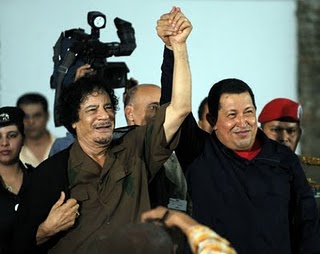
https://blogger.googleusercontent.com/img/b/R29vZ2xl/AVvXsEgVcr5KOIloPA4yR31reC42Mq45gzeACi-38m5kpvM8Ni-pfU3WyVuOgZsGBbeGP32FiNCJprZ5W1CqsKp-vf72EJryz5hhlfMQvPl2YdOF4_o2n0iiRHbhmgjDOdxMceK8ZgCZtXdXWSxJ/s1600/Gadafi+Chavez.jpg

Necessity is the plea for every infringement of human freedom. It is the argument of tyrants; it is the creed of slaves.

- William Pitt, parliamentary speech, Nov. 18, 1783

https://blogger.googleusercontent.com/img/b/R29vZ2xl/AVvXsEjlQ_E_1j8JUc3W8B97FM7oY5l6RlTWw0TKVCRkfPPP0ajOvAL4XO49ZWIKuFJ3C7pPOufepvE5TC0TmwxDU6n4xYrnZ08S-JJcEA_6_x9G0BXHwboEU1V5LE4VJwM5gMCPTC4-yLOAxZ5K/s1600/fidelcastrobignone.jpg

[W]hen a people shall have become incapable of governing themselves and fit for a master, it is of little consequence from what quarter he comes.

- George Washington, letter to the Marquis de Lafayette, Apr. 28, 1788

[castromengistu.jpg]

Half the harm that is done in this world is due to people who want to feel important. They don't mean to do harm-- but the harm does not interest them. Or they do not see it, or they justify it because they are absorbed in the endless struggle to think well of themselves.

- T. S. Eliot , The Cocktail Party, (London: Faber and Faber, 1974), p. 111

[20091003065817!Bundesarchiv_Bild_183-L0619-026,_honckerCastro,_Landkarte_Kubas.jpg]

“When the tyrant has disposed of foreign enemies by conquest or treaty and there is nothing to fear from them, then he is always stirring up some war or other, in order that the people may require a leader.” - Plato

[chavez-ramiro-valdez.jpg]

“Tyrants are seldom free; the cares and the instruments of their tyranny enslave them.”
- George Santayana, Dominations and powers: reflections on liberty, society, and government (1950)