Showing posts with label Regis Iglesias Ramírez. Show all posts

Saturday, May 10, 2025

Project Varela at Twenty Three

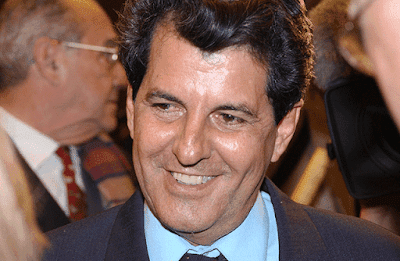
 "The solution to the Cuban problem lies with the Cubans, and that's why we created the Varela Project." - Oswaldo Payá , Havana, February 2012

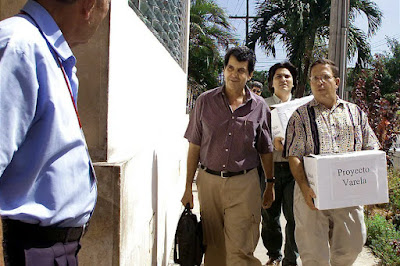
Oswaldo Payá, Regis Iglesias, and Antonio Diaz, turn in petitions

Twenty three years ago today on May 10, 2002, carrying 11,020 signed petitions in support of the Varela Project, the Christian Liberation Movement's Oswaldo Payá Sardiñas, Antonio Diaz Sanchez, and Regis Iglesias Ramirez delivered them to the Cuban National Assembly.

Milan Kundera, the Czech writer, in his 1999 novel The Book of Laughter and Forgetting observed that "the struggle of man against power is the struggle of memory against forgetting." Memory provides context to unfolding events today, and helps to render informed judgements.

This blog entry is an exercise in preserving memory.

The Varela Project, named after the Cuban Catholic Priest Felix Varela, sought to reform the Cuban legal system to bring it in line with international human rights standards. They had followed the letter of the law in organizing the campaign. They specifically asked for the following in the petition.

  • Guarantee the right to free expression and free association that guarantee pluralism, opening Cuban society to political debate and facilitating a more participatory democracy. 
  • Amnesty for all those imprisoned for political reasons.  
  • Right of Cubans to form companies, both individually owned and in cooperatives. 
  • Proposal for a new electoral law that truly guarantees the right to elect and be elected to all Cubans and the holding of free elections

The Christian Liberation Movement was founded by Catholic lay people in Havana in September 1988, and is part of a non-violent dissident movement that traces its origins and influences to the Cuban Committee for Human Rights that was founded in 1976.

President James Carter at the University of Havana.

Former President James Carter visited Cuba in May 2002 and on May 15th gave a speech at the University of Havana, where he advocated for the lifting of economic sanctions on Cuba and "called for the Varela Project petition to be published in the official newspaper so that people could learn about it."

Yet the dictatorship's response to the nonviolent citizen's initiative, and to President Carter's request, was to coerce Cubans into signing another petition declaring the Constitution unchangeable and quickly passed it through the rubber stamp legislature.

The Varela Project was not presented for debate before the National Assembly, which according to then existing law drafted by the Cuban government meant that it should have been deliberated in that legislative body. 

Less than a year after the petitions were turned in, starting on March 18, 2003 the Cuban Spring would end with a massive crackdown on Cuban civil society with many of the Project Varela organizers, imprisoned and summarily sentenced up to 28 years in prison. 

The 75 activists with long prison sentences became known as the "group of the 75."

With the end of the Cuban Spring Antonio Diaz Sanchez was sentenced to 20 years in prison, and Regis Iglesias Ramirez was sentenced to 18 years in prison.

The Castro regime announced, at the time, that the Cuban dissident movement had been destroyed. 

They spoke prematurely. 

First, the remaining activists who were still free continued gathering signatures and would turn in another 14,384 petition signatures on October 5, 2003, and they continued to gather more. 

Secondly, the mothers, wives, sisters and daughters of the activists who had been detained and imprisoned organized themselves into the "Ladies in White." A movement that sought the freedom of their loved ones and organized regular marches through the streets of Cuba, despite regime organized violence visited upon them. This new movement was led by Laura Inés Pollán Toledo, a former school teacher.

Antonio Diaz Sanchez and Regis Iglesias Ramirez were released from prison into forced exile in 2010. 

President Carter made a second trip to Cuba in March 2011, and did not publicly mention Project Varela during that visit, but instead focused efforts on trading Alan Gross for the remaining members of the WASP network jailed in the United States on charges of espionage, and murder conspiracy that killed three Americans and a US resident in 1996, and calling for the lifting of economic sanctions on the Castro regime. President Carter also downplayed the threat of FARC, ETA, and ELN terrorists harbored in Cuba.

Less than two months after the visit, Cuban dissident and former political prisoner, Juan Wilfredo Soto Garcia (age 46) was arrested and beaten to death by Cuban regime police while protesting the dictatorship and died early on Sunday May 8, 2011. Months later on October 15, 2011 Laura Inés Pollán Toledo died under suspicious circumstances at the Calixto Garcia hospital.

Oswaldo Payá Sardiñas was killed on July 22, 2012 together with Harold Cepero, a youth leader of the Christian Liberation Movement, in a car "accident" that all the hallmarks of a state security operation copied after the East German Stasi, who trained intelligence operatives in the Castro regime.

Revisiting and remembering these historic moments is part of the struggle against forgetting, and the conversation that it may arouse will only serve, when backed up with facts, to strengthen memory with truth. Memory, and retentiveness are defenses against the Castro regime's totalitarian rewriting of history. 

Oswaldo Payá Sardiñas in a July 14, 2003 opinion piece in the Los Angeles Times provided context to the aftermath of Project Varela, and the March 18, 2003 crackdown in which 75 Cuban dissidents, many of them organizers of the petition drive were sentenced to prison terms of up to 28 years. 

"Cuba finds itself in a grave crisis. In the last few years, thousands of its citizens have participated in what’s known as the Varela Project, overcoming a culture of fear and calling for a national referendum on civil rights, the peaceful evolution of freedom and reconciliation. But now a cloud of terror hangs over that quest for change."

This analysis remains relevant today. 

In 2023 Antonio Diaz Sanchez, Regis Iglesias Ramirez and other members of the Christian Liberation Movement reflected on the significance of the Varela Project. 

Wednesday, May 10, 2023

Project Varela at Twenty One


Oswaldo Payá, Regis Iglesias, and Antonio Diaz, walk to turn in petitions

Twenty one years ago today on May 10, 2002, carrying 11,020 signed petitions in support of the Varela Project, the Christian Liberation Movement's Oswaldo Payá Sardiñas, Antonio Diaz Sanchez, and Regis Iglesias Ramirez delivered them to the Cuban National Assembly.

Milan Kundera, the Czech writer, in his 1999 novel The Book of Laughter and Forgetting observed that "the struggle of man against power is the struggle of memory against forgetting." Memory provides context to unfolding events today, and helps to render informed judgements.

This blog entry is an exercise in recovering memory.


The Varela Project, named after the Cuban Catholic Priest Felix Varela, sought to reform the Cuban legal system to bring it in line with international human rights standards. They had followed the letter of the law in organizing the campaign. They specifically asked for the following in the petition.

  • Guarantee the right to free expression and free association that guarantee pluralism, opening Cuban society to political debate and facilitating a more participatory democracy. 
  • Amnesty for all those imprisoned for political reasons.  
  • Right of Cubans to form companies, both individually owned and in cooperatives. 
  • Proposal for a new electoral law that truly guarantees the right to elect and be elected to all Cubans and the holding of free elections

The Christian Liberation Movement was founded by Catholic lay people in Havana in September 1988, and is part of a non-violent dissident movement that traces its origins and influences to the Cuban Committee for Human Rights that was founded in 1976.

President James Carter at the University of Havana.

Former President James Carter visited Cuba in May 2002 and on May 15th gave a speech at the University of Havana, where he advocated for the lifting of economic sanctions on Cuba and "called for the Varela Project petition to be published in the official newspaper so that people could learn about it."

Yet the dictatorship's response to the nonviolent citizen's initiative, and to President Carter's request, was to coerce Cubans into signing another petition declaring the Constitution unchangeable and quickly passed it through the rubber stamp legislature.

The Varela Project was not presented for debate before the National Assembly, which according to then existing law drafted by the Castro dictatorship meant that it should have been debated in that legislative body. 

Less than a year after the petitions were turned in, starting on March 18, 2003 the Cuban Spring would end with a massive crackdown on Cuba's civil society with many of the Project Varela organizers, imprisoned and summarily sentenced up to 28 years in prison. 

The 75 activists with long prison sentences became known as the "group of the 75."


With the end of the Cuban Spring Antonio Diaz Sanchez was sentenced to 20 years in prison, and Regis Iglesias Ramirez was sentenced to 18 years in prison.

The Castro regime announced, at the time, that the Cuban dissident movement had been destroyed. 

They spoke prematurely. 

First, the remaining activists who were still free continued gathering signatures and would turn in another 14,384 petition signatures on October 5, 2003, and they continued to gather more. 

Secondly, the mothers, wives, sisters and daughters of the activists who had been detained and imprisoned organized themselves into the "Ladies in White." A movement that sought the freedom of their loved ones and organized regular marches through the streets of Cuba, despite regime organized violence visited upon them. This new movement was led by Laura Inés Pollán Toledo, a former school teacher.

Antonio Diaz Sanchez and Regis Iglesias Ramirez were released from prison into forced exile in 2010. 

President Carter made a second trip to Cuba in March 2011, and did not publicly mention Project Varela during that visit, but instead focused efforts on trading Alan Gross for the remaining members of the WASP network jailed in the United States on charges of espionage, and murder conspiracy that killed three Americans and a US resident in 1996, and calling for the lifting of economic sanctions on the Castro regime. President Carter also downplayed the threat of FARC, ETA, and ELN terrorists harbored in Cuba.

Less than two months after the visit, Cuban dissident and former political prisoner, Juan Wilfredo Soto Garcia (age 46) was arrested and beaten to death by Cuban regime police while protesting the dictatorship and died early on Sunday May 8, 2011. Months later on October 15, 2011 Laura Inés Pollán Toledo died under suspicious circumstances at the Calixto Garcia hospital.

Oswaldo Payá Sardiñas was killed on July 22, 2012 together with Harold Cepero, a youth leader of the Christian Liberation Movement, in a car "accident" that all the hallmarks of a state security operation copied after the East German Stasi, who trained intelligence operatives in the Castro regime.

Revisiting and remembering these historic moments is part of the struggle against forgetting, and the conversation that it may arouse will only serve, when backed up with facts, to strengthen memory with truth. Memory, and retentiveness are defenses against the Castro regime's totalitarian rewriting of history. 

Oswaldo Payá Sardiñas in a July 14, 2003 opinion piece in the Los Angeles Times provided context to the aftermath of Project Varela, and the March 18, 2003 crackdown in which 75 Cuban dissidents, many of them organizers of the petition drive were sentenced to prison terms of up to 28 years. 

"Cuba finds itself in a grave crisis. In the last few years, thousands of its citizens have participated in what’s known as the Varela Project, overcoming a culture of fear and calling for a national referendum on civil rights, the peaceful evolution of freedom and reconciliation. But now a cloud of terror hangs over that quest for change."

This analysis remains relevant today. 


Tuesday, May 10, 2022

Project Varela at Twenty

Oswaldo Payá, Regis Iglesias, and Antonio Diaz, walk to turn in petitions

Twenty years ago today on May 10, 2002, carrying 11,020 signed petitions in support of the Varela Project, the Christian Liberation Movement's Oswaldo Payá Sardiñas, Antonio Diaz Sanchez, and Regis Iglesias Ramirez delivered them to the Cuban National Assembly.

Milan Kundera, the Czech writer, in his 1999 novel The Book of Laughter and Forgetting observed that "the struggle of man against power is the struggle of memory against forgetting." Memory provides context to unfolding events today, and helps to render informed judgements.

This blog entry is an exercise in recovering memory. 

The Varela Project, named after the Cuban Catholic Priest Felix Varela, sought to reform the Cuban legal system to bring it in line with international human rights standards. They had followed the letter of the law in organizing the campaign. They specifically asked for the following in the petition.

  • Guarantee the right to free expression and free association that guarantee pluralism, opening Cuban society to political debate and facilitating a more participatory democracy. 
  • Amnesty for all those imprisoned for political reasons.  
  • Right of Cubans to form companies, both individually owned and in cooperatives. 
  • Proposal for a new electoral law that truly guarantees the right to elect and be elected to all Cubans and the holding of free elections

The Christian Liberation Movement was founded by Catholic lay people in Havana in September 1988, and is part of a non-violent dissident movement that traces its origins and influences to the Cuban Committee for Human Rights that was founded in 1976.

President James Carter at the University of Havana.

Former President James Carter visited Cuba in May 2002 and on May 15th gave a speech at the University of Havana, where he advocated for the lifting of economic sanctions on Cuba and "called for the Varela Project petition to be published in the official newspaper so that people could learn about it."

Yet the dictatorship's response to the nonviolent citizen's initiative, and to President Carter's request, was to coerce Cubans into signing another petition declaring the Constitution unchangeable and quickly passed it through the rubber stamp legislature. 

 The Varela Project was not presented for debate before the National Assembly, which according to then existing law drafted by the Castro dictatorship meant that it should have been debated in that legislative body. 

On May 7, 2022 at the West Dade Regional Library (9445 Coral Way) in Miami, Florida,  the Christian Liberation Movement  hosted a discussion that commemorated the 20th anniversary of the Varela project in Cuba, its legacy and impact.

Project Varela organizers gathered at the West Dade Regional Library on May 7, 2022

Many of the participants on Saturday focused on the immediate aftermath of the first signatures being turned in, and the wave of repression that followed. 

Less than a year after the petitions were turned in, starting on March 18, 2003 the Cuban Spring would end with a massive crackdown on Cuba's civil society with many of the Project Varela organizers, imprisoned and summarily sentenced up to 28 years in prison. 

The 75 activists with long prison sentences became known as the "group of the 75."

With the end of the Cuban Spring Antonio Diaz Sanchez was sentenced to 20 years in prison, and Regis Iglesias Ramirez was sentenced to 18 years in prison.

The Castro regime announced, at the time, that the Cuban dissident movement had been destroyed. 

They spoke prematurely. 

First, the remaining activists who were still free continued gathering signatures and would turn in another 14,384 petition signatures on October 5, 2003, and they continued to gather more. 

Secondly, the mothers, wives, sisters and daughters of the activists who had been detained and imprisoned organized themselves into the "Ladies in White." A movement that sought the freedom of their loved ones and organized regular marches through the streets of Cuba, despite regime organized violence visited upon them. This new movement was led by Laura Inés Pollán Toledo, a former school teacher.

Antonio Diaz Sanchez and Regis Iglesias Ramirez were released from prison into forced exile in 2010. Today marking this anniversary of the Varela Project, the Christian Liberation Movement released the following statement.

"Exactly 20 years ago, with hundreds of political prisoners in jail and a mostly terrified people, 11,020 Cubans peacefully demanded the freedom of political prisoners and free elections, so that Cubans could freely choose their political and economic model. 

The response of the tyranny was repression, exile and even murder. 

Two decades later, political prisoners multiply and terror expands on the island through repression, while the solidarity of many bows to petty interests, providing impunity to the regime, today more tyrannical and more despotic than ever. 

On the 20th anniversary of that civic gesture of the people of Cuba, honoring the memory of Oswaldo Paya and Harold Cepero and all those who have fallen in this struggle, thinking of the thousands of political prisoners who are today in communist dungeons, living with the Cuban people the lack of freedom and rights, we proclaim our will to continue working indefinitely together with the people, until freedom and democracy arrive in Cuba, which by right belongs to all Cubans. 

ALL CUBANS! 

ALL BROTHERS! 

AND NOW FREEDOM.

President Carter made a second trip to Cuba in March 2011, and did not publicly mention Project Varela during that visit, but instead focused efforts on trading Alan Gross for the remaining members of the WASP network jailed in the United States on charges of espionage, and murder conspiracy that killed three Americans and a US resident in 1996, and calling for the lifting of economic sanctions on the Castro regime. President Carter also downplayed the threat of FARC, ETA, and ELN terrorists harbored in Cuba.

Less than two months after the visit, Cuban dissident and former political prisoner, Juan Wilfredo Soto Garcia (age 46) was arrested and beaten to death by Cuban regime police while protesting the dictatorship and died early on Sunday May 8, 2011. Months later on October 15, 2011 Laura Inés Pollán Toledo died under suspicious circumstances at the Calixto Garcia hospital.

Oswaldo Payá Sardiñas was killed on July 22, 2012 together with Harold Cepero, a youth leader of the Christian Liberation Movement, in a car "accident" that all the hallmarks of a state security operation copied after the East German Stasi, who trained intelligence operatives in the Castro regime.

Revisiting and remembering these historic moments is part of the struggle against forgetting, and the conversation that it may arouse will only serve, when backed up with facts, to strengthen memory with truth. Memory, and retentiveness are defenses against the Castro regime's totalitarian rewriting of history. 

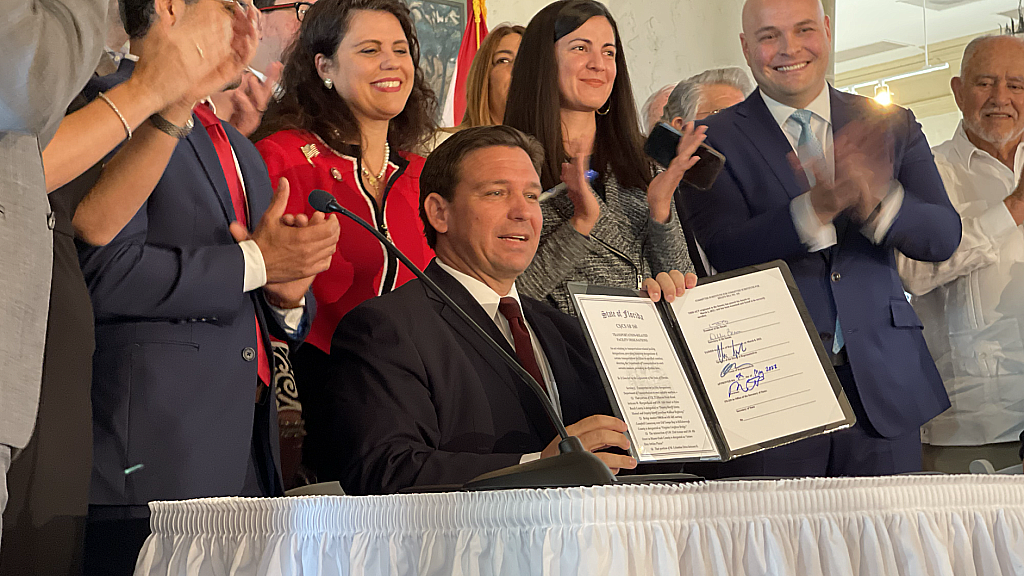
Florida Governor Ron DeSantis signs bill designating Le Jeune Rd Oswaldo Payá Way

On May 9, 2022, the eve of the 20th anniversary of the first Varela Project petitions being turned in to the National Assembly in Cuba, Florida Governor Ron DeSantis signed a bill that designated "a portion of State Road 953, known as Le Jeune Road, between Northwest 11th Street and Northwest 14th Street in Miami-Dade County" as Oswaldo Payá Way. 

This was a concrete act against forgetting and in defense of this important legacy by free Cubans. 

Oswaldo Payá Sardiñas in a July 14, 2003 opinion piece in the Los Angeles Times provided context to the aftermath of Project Varela, and the March 18, 2003 crackdown in which 75 Cuban dissidents, many of them organizers of the petition drive were sentenced to prison terms of up to 28 years. 

"Cuba finds itself in a grave crisis. In the last few years, thousands of its citizens have participated in what’s known as the Varela Project, overcoming a culture of fear and calling for a national referendum on civil rights, the peaceful evolution of freedom and reconciliation. But now a cloud of terror hangs over that quest for change."

This analysis remains relevant today. 

Saturday, May 7, 2022

Project Varela at 20: Christian Liberation Movement invites us today to West Dade Regional Library to remember when thousands of Cubans risked all for a free Cuba.

We do not forget, we do not betray our principles and values, we are consistent, without fanfare, with serene courage, with generosity, without hatred but without fear: Long live the Varela Project !!! - Regis Iglesias Ramirez, May 10, 2021 over Twitter

Oswaldo Payá, Antonio Diaz, and Regis Iglesias walk to turn in petitions

Milan Kundera, the Czech writer, in his 1999 novel The Book of Laughter and Forgetting observed that "the struggle of man against power is the struggle of memory against forgetting." Memory provides context to unfolding events today, and helps to render informed judgements.

Twenty years ago on May 10, 2002, carrying 11,020 signed petitions in support of the Varela Project, the Christian Liberation Movement's Oswaldo Payá Sardiñas, Antonio Diaz Sanchez, and Regis Iglesias Ramirez delivered them to the Cuban National Assembly.

The Varela Project, named after the Cuban Catholic Priest Felix Varela, sought to reform the Cuban legal system to bring it in line with international human rights standards. They had followed the letter of the law in organizing the campaign.

The Christian Liberation Movement was founded by Catholic lay people in Havana in September 1988, and is part of a non-violent dissident movement that traces its origins and influences to the Cuban Committee for Human Rights that was founded in 1976.

Former President James Carter visited Cuba in May 2002 and on May 15th gave a speech at the University of Havana, where he advocated for the lifting of economic sanctions on Cuba and "called for the Varela Project petition to be published in the official newspaper so that people could learn about it."

President James Carter at the University of Havana.

Yet the dictatorship's response to the nonviolent citizen's initiative, and to President Carter's request, was to coerce Cubans into signing another petition declaring the Constitution unchangeable and quickly passed it through the rubber stamp legislature. 

The Varela Project was not presented for debate before the National Assembly, which according to then existing law drafted by the Castro dictatorship meant that it should have been debated in that legislative body. 

Today at 3:00pm at the West Dade Regional Library (9445 Coral Way) in Miami, Florida,  the Christian Liberation Movement is extending an invitation to "the struggle of memory against forgetting" and ask the rest of us to join "in this discussion commemorating the 20th anniversary of the Varela project in Cuba, including its legacy and impact."

Monday, February 28, 2022

Oswaldo Payá Sardiñas born 70 years ago: Honoring Cuba's Consistent Human Rights Defender

"In Cuba we are being prohibited from preparing that future, working now at night for the following morning, because someone has said that the night will not end. But the night will not be eternal, it is ending." - Oswaldo Payá Sardiñas

Our Lady of Charity, 3609 S Miami Ave, Miami FL, 2/28/22 at 8pm  

Oswaldo José Payá Sardiñas was born 70 years ago on February 29, 1952 and was extrajudicially executed in Cuba by Castro's secret police on July 22, 2012 along with Harold Cepero.

A mass will be held in Miami today at Our Lady of Charity (La Ermita de la Caridad) at 8:00pm to pay tribute to the life and legacy of Oswaldo Payá on the seventieth anniversary of his birth. 

This morning at 10:41am Rosa Maria Payá Acevedo Tweeted an invitation to "Join us, this Tuesday 6:30 PM at Cubaocho Museum & Performing Arts Center" and ended it with the hashtag #PayáVive.

Tuesday, March 1, 2022 at 6:30pm at Cubaocho Museum and Performing Arts Center (1465 SW 8th Street)  a short documentary "The Truth About the Murder of Oswaldo Payá" will premier along with a special performance by Cuban artist Eliecer Márquez Duany better known as "El Funky." 

Embedded below is Rosa's tweet from today. 

Twenty years earlier, Oswaldo Payá along with other members of the Christian Liberation Movement in May 2002 turned in thousands of signatures from the Varela Project, a petition that called for human rights to be respected in Cuba, and that the matter be debated before the National Assembly.

Today, one of the men who walked alongside Oswaldo Payá to deliver the petition in 2002, Regis Iglesias Ramírez Tweeted a birthday greetings to the leader of his movement who he affectionately called Bapu.

In December of 2002, thanks to lobbying and pressure from Spain, Oswaldo Payá was able to travel to Strasbourg, France to receive the European Union's Sakharov Prize and address the chamber.


In 2011, seven Norwegian members of parliament nominated Oswaldo Payá for the Nobel Peace Prize. (Václav Havel had also twice nominated Oswaldo Payá ).

Following the untimely deaths of Oswaldo and Harold, the Cuban opposition leader's family was subjected to death threats and heightened surveillance by state security.  


 Ten years later and his legacy lives on in Cuba, in the diaspora, and with his family. In 2019 his book "The Night Will Not Be Eternal: Dangers and Hopes for Cuba," and  a new digital edition was made available in December 2021


On June 21, 2022
David Hoffman's new book on Oswaldo Payá, "Give Me Liberty: The True Story of Oswaldo Payá and his Daring Quest for a Free Cuba" will be available for purchase. It is already available for pre-order.


Today, let us also remember and pray for the soul of this good man, who sacrificed all for the freedom of the Cuban people.

It is also a moment to share with others how others looking from outside the Cuban experience viewed this human rights defender and Cuban patriot. Below are observations made by Norwegian members of parliament in 2011 when they nominated him for the Nobel Peace Prize.


Norwegian members of parliament nominated Oswaldo Payá for Nobel Peace Prize in 2011
 

Norwegian MPs nominate Oswaldo Payá for Nobel Peace Prize

Source: Christian Liberation Movement

A group of 7 Norwegian Members of Parliament has nominated the Cuban Oswaldo Payá for this year’s Nobel Peace Prize. – The Nobel Prize to Cuba’s most important oppositional leader would be an important contribution to peace and democracy for a people who have been denied their fundamental human rights for far too long, the MPs write in their nomination letter.

Through nearly two decades Oswaldo Payá has been the leading figure in a peaceful struggle for basic human rights in Cuba. Oswaldo Payá represents all Cubans who want a peaceful change based on reconciliation and dialogue.

– We believe the Nobel Peace Prize would send a strong signal to the Cuban government that it is time for change, says Dagrun Eriksen, MP, deputy leader of the Christian Democratic Party and one of the signatories.

Oswaldo Payá has built his work on the conviction that all human beings have inviolable rights. He believes that the right to freedom of speech is the basis on which to solve all other problems in society. Only when the people themselves can express their concerns, Cuba will be able to find its own way out of the country’s challenges.

- Oswaldo Payá recognizes that freedom of speech and respect for fundamental human rights is a precondition for a peaceful development, says Jan Tore Sanner, MP, deputy leader of the Conservative Party and one of the other signatories.

Oswaldo Payá has consistently tried to work within the frames of Cuban law, through petitions calling for the respect for basic human rights. When the Varela project succeeded in collecting enough signatures to set of a referendum in 2002, the Cuban regime’s response, however, was to arrest 75 oppositional leaders, in what became known as the Black Spring.

Last spring, Mr Sanner and Mrs Eriksen took the initiative to form a support group for Cuban political prisoners in the Norwegian Parliament, including MPs from all the Norwegian parties. Following the release of more than 40 prisoners into forced exile last summer, 19 of them wrote a letter to the group, proposing that they nominate Oswaldo Payá for this year’s Nobel Peace Prize.

- The support from the former prisoners of conscience shows how Oswaldo Payá has succeeded in gathering different groups of dissidents in dialogue and peaceful resistance, says Dagrun Eriksen.

Jan Tore Sanner was one of the nominators behind last year’s winner Liu Xiabo.

- Oswaldo Payá represents the same peaceful struggle for human rights as Liu Xiabo, says Mr Sanner.

Payá has continued to call for unity and dialogue between all Cubans, in and outside the country. His National Dialogue program and All Cubans Forum, have involved thousands of Cubans in discussions on proposals for a peaceful change towards democracy. Payá is now again calling for a referendum on basic human rights.

- Oswaldo Payá would be a worthy winner of this year’s Nobel Peace Prize, say Dagrun Eriksen and Jan Tore Sanner.


Sunday, December 12, 2021

Nonviolent resistance has a history of success in combating repression in Cuba by Regis Iglesias and John Suarez

Maria J. Stephan and Erica Chenoweth in their 2008 study "Why Civil Resistance Works: The Strategic Logic on Nonviolent Conflict" compared the outcomes of 323 nonviolent and violent resistance campaigns from 1900 to 2006. They found that major nonviolent campaigns achieved success 53 percent of the time, compared with just under half that at 26 percent for violent resistance campaigns."

Oswaldo Payá Sardiñas, Regis Iglesias, and Tony Diaz Sanchez deliver petitions

Grassroots movements in Cuba have fought for liberty for decades, mobilizing Cubans to defend human rights and freedom. The July 11 nationwide protests marked a historic moment, but they did not arise from nowhere.

In November 2020, hundreds of artists mobilized outside of the Ministry of Culture in a 15-day effort to free political prisoner Denis Solís González. They demanded both his release and greater artistic freedoms.

The San Isidro Movement (MSI), an artists collective formed in 2018 to nonviolently defend artistic freedom, challenged regime officials to free their unjustly jailed compatriot. Solís González was charged with contempt for protesting an illegal search of his home by a policeman, whom he had called a coward.

Rather than accede to MSI’s demands, officials repeatedly and violently escalated repression over 15 days, but they were met with nonviolent responses that inspired hundreds of artists and intellectuals to gather outside the Ministry of Culture, bringing officials to the negotiating table for dialogue.

The San Isidro Movement’s exercise in nonviolent power led to the formation of a new movement, 27N, and increased civic resistance. The pattern continued through 2021, reaching millions of Cubans across the island with the movement's art and music — in particular the song, “Patria y Vida.” The rapper Maykel Castillo Perez (Osorbo), co-author of the song and also a member of MSI, is currently in prison and severely ill.

This is not the first time nonviolent tactics have been carried out successfully in Cuba. The Cuban Committee for Human Rights, founded in 1976, systematically documented human-rights violations, information smuggled out of Cuba to international human rights organizations, which led to the installation of a special rapporteur focused on Cuba’s human-rights situation and the Castro regime’s condemnation over a 15-year period beginning in 1991. Havana’s record was carefully scrutinized, and it was held accountable annually until 2006.

The Christian Liberation Movement (MCL), founded in 1988 to work for Cuba’s democratization, is best known for the Varela Project, a petition signed by 11,020 Cubans in May 2002 calling on the regime to guarantee international human-rights norms in law. Fidel Castro changed his constitution to prevent it from being amended that same year.

The regime responded with violence, not so much because of the number of signatures presented to the National Assembly, but because more than 120 Citizens’ Committees had been created throughout the country in the process and imprisoned most of their leaders. Despite this repression, MCL turned in an additional 14,384 signatures in October 2003.

Castro expected the March 2003 crackdown, dubbed the “Black Cuban Spring,” to be the end of the opposition. Instead, it sparked the emergence of a new movement, the Ladies in White, led by the wives, mothers, sisters and daughters of the men jailed. For eight years, these women lobbied, protested and marched for their loved ones’ freedom. They were successful, and the last of the men were released from prison in 2011, a nonviolent victory over the dictatorship. The Ladies in White continue to the present day, demanding human rights be respected in Cuba.

The price of nonviolent defiance has been high: long prison terms, exile, deportations and extrajudicial killings. Tempted by the understanding that Cubans are exerting power through nonviolent action, some voices have emerged advocating a turn to violence in the belief that it would expedite a democratic transition.

Strategic studies have demonstrated that the more brutal the regime, the less effective and successful violent movements are. Counterintuitively, nonviolent movements have been more successful in overthrowing brutal dictators and transitioning to lasting democracies.

The Castro dictatorship, with decades of experience in terrorism, torture and genocide around the world, is an expert in war, as demonstrated in the 1960s when it efficiently and ruthlessly crushed a violent opposition in Cuba with the aid of Soviet advisors to consolidate power.

Nonviolent resistance is better able to mobilize citizens to demand change and obtain global solidarity and sanctions, creating the political, diplomatic and economic isolation of the regime and punishing the individuals and entities that violate Cubans’ rights. 

Regis Iglesias Ramírez is spokesperson for the Movimiento Cristiano Liberación. 

John Suarez is executive director of Centro por una Cuba Libre.

Note: This article was published in The Miami Herald on Tuesday, November 30, 2021.

Monday, May 10, 2021

Project Varela: Christian Liberation Movement recalls when thousands of Cuban citizens demanded change in Cuba.

We do not forget, we do not betray our principles and values, we are consistent, without fanfare, with serene courage, with generosity, without hatred but without fear: Long live the Varela Project !!! - Regis Iglesias Ramirez, May 10, 2021 over Twitter

Oswaldo Payá, Antonio Diaz, and Regis Iglesias turn in petitions to National Assembly on 5/10/02

Milan Kundera, the Czech writer, in his 1999 novel The Book of Laughter and Forgetting observed that "the struggle of man against power is the struggle of memory against forgetting." Memory provides context to unfolding events today, and helps to render informed judgements.

For example, nineteen years ago on May 10, 2002, carrying 11,020 signed petitions in support of the Varela Project, the Christian Liberation Movement's Oswaldo Payá Sardiñas, Antonio Diaz Sanchez, and Regis Iglesias Ramirez walked to the Cuban National Assembly with bulky cardboard boxes labeled Project Varela. The Christian Liberation Movement was founded by Catholic lay people in Havana in September 1988, and is part of a non-violent dissident movement that traces its origins and influences to the Cuban Committee for Human Rights that was founded in 1976. Today Regis Iglesias commemorated the anniversary in a Tweet (the content is translated in the quote at the top of the blog entry.)

The Varela Project, named after the Cuban Catholic Priest Felix Varela, sought to reform the Cuban legal system to bring it in line with international human rights standards. They had followed the letter of the law in organizing the campaign.

Former President James Carter visited Cuba in May 2002 and on May 15th gave a speech at the University of Havana, where he advocated for the lifting of economic sanctions on Cuba and "called for the Varela Project petition to be published in the official newspaper so that people could learn about it."

Yet the dictatorship's response to the nonviolent citizen's initiative, and to President Carter's request, was to coerce Cubans into signing another petition declaring the Constitution unchangeable and quickly passed it through the rubber stamp legislature. The Varela Project was not presented for debate before the National Assembly, which according to then existing law drafted by the Castro dictatorship meant that it should have been debated in that legislative body.

President James Carter at the University of Havana.

Less than a year later beginning on March 18, 2003 the Black Cuban Spring would begin with a massive crackdown on Cuba's civil society with many of the organizers of Project Varela, imprisoned and summarily sentenced up to 28 years in prison. The 75 activists who had been imprisoned with long prison sentences became known as the "group of the 75." During the Black Cuban Spring Antonio Diaz Sanchez was sentenced to 20 years in prison, and Regis Iglesias Ramirez was sentenced to 18 years in prison.

Havana announced, at the time, that the Cuban dissident movement had been destroyed. They spoke prematurely. First, the remaining activists who were still free continued gathering signatures and would turn in another 14,384 petition signatures on October 5, 2003, and they continued to gather more. Furthermore, the wives, sisters and daughters of the activists who had been detained and imprisoned organized themselves into the "Ladies in White." A movement that sought the freedom of their loved ones and organized regular marches through the streets of Cuba, despite regime organized violence visited upon them. This new movement was led by Laura Inés Pollán Toledo, a former school teacher.

Founder of the Ladies in White, Laura Pollán

Antonio Diaz Sanchez and Regis Iglesias Ramirez were released from prison into forced exile in 2010. Today marking this anniversary of the Varela Project, Regis Iglesias's following statement was published by the Christian Liberation Movement.

"Until now the only response to the more than 35,000 citizens who have supported this initiative has been persecution, kidnapping, prison, exile and murder. But until political pluralism and freedom of information are recognized and guaranteed, until economic freedoms are recognized for Cubans, an amnesty is not decreed, a new electoral law is not approved where citizens can be nominated by the people, and elections are not held in the midst of an environment of respect for popular sovereignty, diversity of opinions and we can freely choose the government that represents Cubans, we will not renounce to maintain our civic demand, remembering that the Cuban regime is a gangster regime that does not respect the rights of citizens or the sovereignty of Cubans."

President Carter made a second trip to Cuba in March 2011, and did not publicly mention Project Varela during that visit, but instead focused efforts on trading Alan Gross for the remaining members of the WASP network jailed in the United States on charges of espionage, and murder conspiracy that killed three Americans and a US resident in 1996, and calling for the lifting of economic sanctions on the Castro regime. President Carter also downplayed the threat of FARC, ETA, and ELN terrorists harbored in Cuba.

Less than two months after the visit, Cuban dissident and former political prisoner, Juan Wilfredo Soto Garcia (age 46) was arrested and beaten to death by Cuban regime police while protesting the dictatorship and died early on Sunday May 8, 2011. Months later on October 15, 2011 Laura Inés Pollán Toledo died under suspicious circumstances at the Calixto Garcia hospital.

Oswaldo Payá Sardiñas was killed on July 22, 2012 together with Harold Cepero, a youth leader of the Christian Liberation Movement, in a car "accident" that all the hallmarks of a state security operation copied after the East German Stasi, who trained intelligence operatives in the Castro regime.

Revisiting and remembering these historic moments is part of the struggle against forgetting, and the conversation that it may arouse will only serve, when backed up with facts, to strengthen memory with truth. Memory, and retentiveness are defenses against the Castro regime's totalitarian rewriting of history.