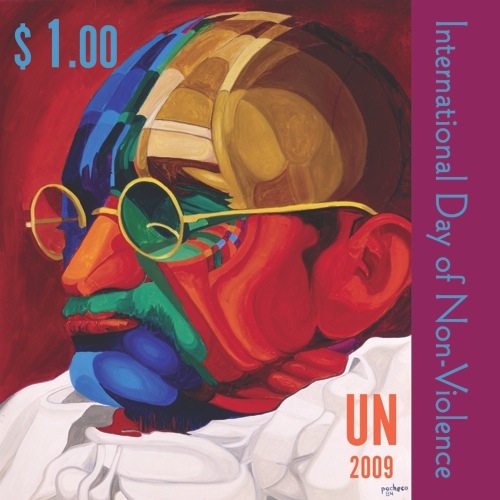
"The first victory we can claim is that our hearts are free of hatred. Hence we say to those who persecute us and who try to dominate us: ‘You are my brother. I do not hate you, but you are not going to dominate me by fear. I do not wish to impose my truth, nor do I wish you to impose yours on me. We are going to seek the truth together’. THIS IS THE LIBERATION WHICH WE ARE PROCLAIMING."
Oswaldo José Payá Sardiñas (2002)
"If you fight with violence, you are fighting with your enemy’s best weapon and you may be a brave but dead hero."- Gene Sharp
Student leader José Antonio Echeverría (center)
Sixty four years ago today in the afternoon, a group of young men took up arms
and charged into the presidential palace in Havana to assassinate the
Cuban dictator, Fulgencio Batista, and were all gunned down. Nearby at
the same time in Radio Reloj not knowing that the assault had failed
student leader José Antonio Echeverría declared the dictator dead only to be himself killed in a skirmish after leaving the radio station. It was described as the day that Cuba lost its future.
Over six decades later both sides in the ongoing struggle
declare José Antonio Echeverría as one of their own. However, his
democratic credentials and history as an elected student leader and practicing catholic would place him at odds with the Castro dictatorship.
Jose Antonio's sister Lucy Echeverría on August 27,
2014 spoke at a panel discussion, "The Urban Insurrection Against Batista: The Life and Times of Jose
Antonio Echeverria" at Florida International University about her brother's leadership at the University of Havana: "My brother held the presidencyoftheFederation of University Students (FEU)four times elected byoverwhelmingly majorities. There the troubles began withCastro.As he neverbecame president, he always keptthatinside."
Not mentioned in the Castro regime's official press is how the Echeverria family rejected the Castro regime's totalitarian turn to dictatorship
and ended up in exile by 1961. According to Lucy,
objects found in the Birthplace Museum of José Antonio Echeverría in
Cárdenas do not belong to her brother. She also explained how a televised tribute by the dictatorship in
Cuba, had imposters play the supposed parents of the martyred leader,
while the real ones were already exiled in the United States.
Nevertheless, the legacy of the "13 de Marzo" action to overthrow
Fulgencio Batista by violent means ended with the deaths of many good
and brave Cuban democrats, José Antonio among them, opening the way for
Fidel Castro and in hindsight can be seen to have been a disastrous
idea.
The exercise of violence always has a destructive effect on human
relationships even when, as sometimes happens, it accomplishes some
short-term goal. The exercise of nonviolence, or Satyagraha, always
brings people closer. This explains why Gandhi, after fifty years of
experimentation in every walk of life, could declare that he “knew of no
single case in which it had failed.” Where it seemed to fail he
concluded that he or the other satyagrahis had in some way failed to
live up to its steep challenge.Taking the long view, he was
able to declare that “There is no such thing as defeat in non-violence.
The end of violence is surest defeat.”
Unfortunately, the "13 de Marzo" also has another and related
significance in Cuban history. Twenty seven years ago this upcoming July 13,
1994 a tugboat named the "13 de Marzo", in honor of that violent
anniversary, carrying Cuban families seeking to flee the Castro
dictatorship, that replaced Fulgencio Batista in 1959, was attacked by
agents of the current dictatorship and 37 were killed among them 10 children.
Fulgencio Batista (Left) Carlos Prio Socarras (Right)
From CubaBrief
Sixty
nine years ago today democracy ended in Cuba when General Fulgencio
Batista carried out a
coup d’état against the democratically elected President of Cuba, Carlos
Prio Socarras. Professor Jaime Suchlicki, of the Cuban Studies
Institute analyzed the conditions and circumstances that led to the 1952 Batista dictatorship.
“ Cuba intended to restore normal
relations with countries toward which the former Cuban Government had
had an attitude of hostility. He mentioned Spain and the Dominican
Republic in particular. He said he thought the United States should
recognize promptly; that it was in our interest that the situation
should develop in an orderly way. I reminded Dr. Campa that our
Government had not been consulted about the coup d'etat and that Cuba could not expect automatic recognition from us.”
On March 24, 1952 in a memorandum by the Secretary of State Dean Acheson to President Harry S. Truman expressed surprise and "
deplore[d] the way in which the Batista coup was brought about and is
apprehensive that this kind of thing may occur in other countries of
Latin America where elections are being held this year."
Secretary of State Dean Acheson and President Harry S. Truman
The U.S. eventually recognized the Batista regime, but the ambivalence remained. On May 20, 1957 Fidel Castro requested that the United State stop sending arms to Batista. The United States complied with an arms embargo imposed on the Batista regime less than a year later.
In January of 1958 the United States was pressuring Batista to restore Constitutional guarantees in exchange for the sale of arms.
On March 14, 1958 the State Department in a telegram to the U.S. Embassy in Cuba requested that the export license for 1,950 M-1 rifles for the Cuban Army awaiting shipment be suspended.
This was done because the State Department felt that the Cuban
government had failed to "create conditions for fair elections."
Manuel Urrutia
On March 17, 1958 Fidel Castro's future candidate for provisional president, Manuel Urrutia, along with a delegation of other supporters in exile of the July 26th movement,
met with officials at the State Department. They lobbied the U.S.
government and argued that arms shipments to Cuba were for hemispheric
defense, and they claimed that Batista using them against Cuban
nationals was in violation of the conditions agreed to between the two
countries. On the same day the Cuban Government presented to
the U.S. Embassy in Havana a formal note protesting the delay in the shipment of M-1
rifles to the Cuban Army, and warned that it would weaken the Cuban government and lead to its possible downfall.
On March 26, 1958 in another telegram
from the State Department to the U.S. Embassy in Havana the view was
expressed how the arms embargo could lead to the fall of Batista's
regime:
“Department has considered possibility its actions could have an adverse
psychological effect GOC and could unintentionally contribute to or
accelerate eventual Batista downfall. On other hand, shipment US combat
arms at this time would probably invite increased resentment against US
and associate it with Batista strong arm methods, especially following
so closely on heels of following developments:
Government publicly desisted from peace efforts.
Government suspended guarantees again.
Batista expressed confidence Government will win elections with his
candidate and insists they will be held despite suspension guarantees
but has made no real effort to satisfy public opinion on their fairness
and effectiveness as possible means achieve fair and acceptable
solution.
Batista announced would increase size arms and informed you he would
again undertake mass population shift Oriente, and otherwise acted in
manner to discourage those who supported or could be brought to support
peaceful settlement by constructive negotiations.
The United States would continue to pressure Batista to hold free elections and leave office for the remainder of 1958. Earl E. T. Smith, the U.S. ambassador to Cuba, on December 17, 1958 delivered a message from the State Department to Fulgencio Batista that the United States viewed "with skepticism
any plan on his part, or any intention on his part, to
remain in Cuba indefinitely."
Ambassador Earl E. T. Smith
The U.S. government had dealt Batista a
mortal blow, and fourteen days later the Cuban dictatorship fell, and the Castro era had started.
"We still think of a powerful man as a born leader and a powerful woman as an anomaly". - Margaret Atwood, author of The Handmaid's Tale
First edition of The Handmaid's Tale
In 2020 focused on the problematic origins of International Women's Day, but today reflect on women who have achieved power around the world by both democratic and other means.
Capitalist Democracies have seen the rise of women leaders around the world: Golda Meir in Israel, Margaret Thatcher in the United Kingdom, Indira Gandhi in India, Angela Merkel in Germany, Vigdís Finnbogadóttir in Iceland, Ellen Johnson Sirleaf in Liberia, Kim Campbell in Canada, Michelle Bachelet in Chile, Erna Solberg in Norway, Simonetta Sommaruga in Switzerland, and the list goes on for a while.
Prime Ministers Indira Gandhi and Margaret Thatcher
Women leaders in communist regimes are few and far between, such as Jiang Qing in China, Elena Ceaușescu in Romania, and Vilma Espín in Cuba became high profile figures because of their respective husbands, and owed whatever power they had to these male leaders. Independent women with popular support and their own power base did not fare well in these regimes.
In the Cuban case strong women, not related or backing the Castro brothers, were subjected to violent repression and exile or death.
Laura Inés Pollán Toledo, a courageous woman spoke truth to power and
protested in the streets of Cuba demanding an amnesty for Cuban
political prisoners. She had been a school teacher,
before her husband was jailed for his independent journalism in 2003
along with more than 75 other civil society members. Laura was greatly admired both inside and outside of the island for founding the Ladies in White movement after the Black Cuban Spring of 2003. She, and the group of women she led, nonviolently challenged the Castro regime
in the streets of Havana initially, and eventually across the
island.
Ladies in White continue in their activism in Cuba a decade after Laura's death
Laura reached out to the wives, mothers, sisters, and daughters
of the 75 prisoners of conscience jailed in March of 2003 along with her
husband and they carried out a sustained nonviolent campaign that after
nine years obtained the freedom of their loved ones. Since she did not disband the Ladies in White when her husband returned home. Laura recognized that the laws had not changed, that prisoners of conscience remained behind bars and that she would continue her human rights activism. This is why the Castro regime did away with her on October 14, 2011.
Lady in WhiteDaisy Cuello Basulto denounced that her 21 year old daughter was arrested, violentlystrippedand forced tourinatein front ofpolice officersin a policestation inCotorro. The 21 year old was arrested along with her momand other family on September27, 2015 while on their wayto attend the Sundaymarch ofthe Ladies in White. In the policestation"she washumiliated," althoughshe refusedto urinate in front of the agents, who constantly jeeredat her,explained her mother in an interview with Radio República. The young womanwas lockedin a cell witha strong smell ofhydrochloric acidand nowsuffers from asore throat."She has a fever and feels verybad," reported her mother.
"They broke my mouthtrying to make meswallowthe leafletsthat membersof my grouphad distributed throughout Havana. Afterwards I spent three daysbrutallybesieged, imprisoned inmyown homewith my two children, with no water, noelectricity, no food, nocigarettes. We heardwhat thehuge speakersnever stopped amplifying, allegoricalsongsto the country,thenecessary punishmentof traitors, andanyone who wanted tocould shoutat me, organized, of course, the slogansthey pleased: Comrade worm, we are going to execute you by firing squad!"
And the violence continues today against women in Cuba, who demonstrate leadership. Cuban dissident Sirley Ávila León, age 56, was gravely wounded in a machete attack on May 24, 2015 by Osmany Carrión who had been "sent by state security thugs" and that she is sure that the aggression "was politically motivated."
Sirley Ávila León in May 2015
The attack was severe enough that she suffered deep cuts to her neck
and knees, lost her left hand and nearly lost her right arm. Sirley had
been a local official who had sought the reopening of a school for Cuban
children, and drew the ire of the dictatorship with her persistent
demands.
Laura, Maria Elena, and Sirley were leaders that in a democratic Cuba would have had leadership positions in government, and at least one could have become president, but Cuba is a communist, male dominated dictatorship.
47 Chinese activists were arrested in January 2021 and now face life sentences for organizing an unofficial primary to choose
opposition candidates for the now-postponed 2020 Legislative Council
election. It attracted approximately 600,000 voters. One of the youngest defendants is a 23-year-old
young woman, Wong Ji-yuet,
she is a first time political hopeful. The
pro-democratic primary nominee won 22,911 votes, and came in third in
the NTW Constituency in Hong Kong. She is a political leader.
Wong Ji-yuet, 23-year-old young woman
In
the Orwellian world that is the Peoples Republic of China in the 21st
century, exercising democratic rights under the National Security Law
imposed last year on Hong Kong is grounds for a maximum sentence of life in prison.
What of women communist leaders? They appear to achieve power through their husbands, and their fortunes rise and fall with their spouse. They also have a poor track record on women's liberation. Considering that Elena Ceausescu is considered one such "leader" as the First Vice Chairwoman of the Council of Ministers. Her husband, Nicolae Ceausescu, presided over policies that were not pro-women.
One of the specific events that Margaret Atwood found during her
research process was “Decree 770” in Romania. This was a law that passed
in 1967 that made abortions and all forms of contraception illegal.
This had nothing to do with religious beliefs. It was an action that the
government believed was necessary for the future of their country. The
government already taxed married couples a 6% income tax if they did not
have children between the ages of 25 and 50, but they realized that
this was not enough to stop people from using contraception.
During the 1950’s, Romanian women were entering the workforce and having
fewer children. By the 1960’s, abortion became a common practice,
because there were very few birth control options available to women to
prevent pregnancy. This began a sharp dip in the country’s birth rate.
The Communist Party wanted the population to increase from 23 million to
30 million in a single year, so they enacted Decree 770. After the
change of law in 1967, and women no longer had access to birth control,
the number of babies born that year skyrocketed to roughly double what
they had been the year before. Thousands of new preschools and nursery
schools had to be built. Orphanages were overflowing with children whose
parents could not afford them. Aside from making abortions illegal and
taking contraception off of store shelves, women’s bodies were
literally policed. Decree 770 forced women to visit the gynecologist
once a month to check for pregnancy, and police officers stood in the
halls to make sure women complied. If a woman was pregnant, the doctors
followed her progress very closely. Wealthy women were able to buy birth
control pills and condoms on the black market, but poor women did not
have that option. There were some cases where women caught the pregnancy
before the doctors did, and some women died while attempting to give
themselves an at-home abortion. The policy continued until the fall of
the Soviet Union in the 1980’s.
Hundreds of thousands of children were subjected to this in Romania, and millions of women were forced to have children.
International Women's Day should be a day to celebrate democracy and markets as instruments for the empowerment of women, and observe closely the dystopian record for women under communist regimes, and resolve to resist the system that inspired Margaret Atwood's The Handmaid's Tale.
Cuba is the North Korea of the Americas, a secretive, totalitarian communist dictatorship with a terrible human rights record. Why would anyone go on vacation in Cuba or North Korea? There are cautionary tales on what happens to tourists traveling to these countries.
Otto Wambier: December 12, 1994 - June 19, 2017
College student Otto Wambier was sentenced to 15 years in prison and hard labor
in March 2016 for allegedly trying to steal a political propaganda poster in
North Korea. One year and three months later he was released to the
United States in a coma acquired in prison allegedly from botulism and
died a day after his return. e.
Joachim
Løvschall was a Danish youth studying Spanish in Havana. On March 28, 1997 Joachim Løvschall ate his last dinner with white wine in a little restaurant called Aladin, located on 21st street in Havana. He went to the Revolutionary Plaza and bought a ticket to the Cuban National Theater. Following the performance he went to the theater's bar, Cafe Cantate, and met up with two Swedish friends. They each drank a couple of beers, but soon left because Joachim did not like the music. At 23:30, they said good bye to each other on the sidewalk in front of Cafe Cantate.
Joachim Løvschall: December 7, 1970 - March 29, 1997
Joachimwas gunned down by a Castro regime soldier in Havana, Cuba on March
29, 1997. The identity of the soldier has never
been revealed to Joachim''s family. No one has been brought to justice.
He was killed after leaving friends from a night out, on his walk back
home
Despite these cautionary stories, tourists continue to go to North Korea and Cuba on holiday, and tragedies continue to happen. William Southworth, a recent university graduate, has written the following report on the plight of Canadian national, Benjamin Tomlin and conditions in Cuba's prisons. This blog first reported on his plight on September 18, 2020. Below is an update.
Injustice and Inhumane Conditions in a Cuban Prison
Something is rotten in the state of Cuba.
Benjamin Tomlin: falsely imprisoned
By William Southworth
There are 300 prisoners at La Condesa, most of them foreigners. Nearly all have been sentenced on blatantly false charges if the men we interviewed are any good indication. Many have been detained chiefly for their value as political prisoners and not for their roles in any potential crimes. They were arrested abruptly and without explanation. Not understanding their predicament, these unfortunate persons were left to rot under terrible conditions without a sentence for months or years. One French prisoner had to wait 3 years and 5 months before he had his prison sentence explained to him.
If the incarcerated are lucky, they may eventually get the formality of a trial. The charges are normally exaggerated and oftentimes pure fiction. The witnesses are being led and if representation is provided, it is normally provided in bad faith by the Cuban state. While it may seem strange for a country whose economy depends on tourism to arbitrarily imprison visiting foreigners, the Cuban regime has a habit of taking political prisoners in order to seize their assets or use them as bargaining chips in foreign negotiations [1]. Regrettably, Cuba has gotten away with these practices by keeping its human rights abuses well out of the international spotlight.
If the Cuban regime does one thing very well, it is to control the flow of information [2]. The regime keeps a tight grasp on its hyperactive mass media to effectively project an image of power and purity both to its citizens and the outside world. Cuban independent journalists are a critically endangered species and are frequently , so an honest headline out of Cuba is a rarity [3]. Surely, Cuba has earned its lowest rank for journalistic freedom in Latin America [4]. As impressive as Cuba’s ability to control the spread of information in Cuba within their borders is, this achievement pales in comparison to their ability to control the spread of information outside its borders.
Consider the example of Benjamin Tomlin.
Benjamin Tomlin is a well-respected Canadian businessman and a former employee of the Canada Development Investment Corporation (CDEV), he was arrested in 2018 during a visit to Cuba. He was charged with allegedly having sex with a 15-year-old girl during a previous visit, but the exact nature of his charges was kept from him for a very long time. Tomlin was arrested without proper explanation and held for months before a trial. While it is impossible to know the real motives behind his arrest, it stands to reason from previous cases that Cuba may have seized Benjamin over his potential value as a well-connected prisoner. The Cuban state has arrested several other prominent Canadian nationals in order to secure their large on-island assets, namely the wealthy Sarkis Yacoubin and the well-connected Cy Tokmakijan, [5].
When he was being arrested, Tomlin asked the attending officers a poignant question:
“I am a criminal?”
The answer was equally pointed.
“No, you’re just unlucky.”
When he did finally get his trial, it was marred by irregularities and gaps in evidence. Luckier than most, Tomlin was represented in good faith by a Cuban Canadian lawyer, Ricardo Alcolado Perez[6]. Even so, none of the witnesses were able to identify Tomlin before the court, not even the girl whom Tomlin had allegedly had intercourse with. According to Tomlin’s later testimony, he had never seen the girl that was brought before the court. Tomlin was also made to sign various agreements in a Spanish without proper translation. Despite the clear lack of evidence, Tomlin was sentenced to ten years at La Condesa.
The conditions there are terrible. The prison is overcrowded, the beds tightly packed. Tomlin estimates the prison is built for 150 but houses at least twice that number. Disease runs rampant, electricity is intermittent, toilets are hard to access and supplies are scarce. Seriously sick prisoners must wait months for treatment. Mr. Tomlin said he had to wait a month before he received treatment for an excruciatingly painful kidney infection. He has also never received medication for chronic pain owning to a spinal injury. His time at La Condesa has debilitated Benjamin. If this is not proof enough of bad conditions, surely the recent death of one Venezuelan prisoner there, a man named Oscar Nuñez, puts it beyond all doubt. According to Tomlin, Nuñez had been asking to see a doctor for some time before he died without treatment. The prison authorities were allegedly aware of Nuñez’s critical condition before his death.
Tomlin supported his horror story of neglect and inhumane conditions with the testimonies of three other prisoners. These prisoners, one Canadian, one Frenchman and one Venezuelan, echoed Benjamin’s account with their own stories of arbitrary arrests and months spent waiting for an explanation and then, at last, sham trials. They were all in prison for long sentences ranging from 8-10 years and were ready to tell their stories despite the potential consequences. Although they had all once been wary of running their mouths about prison conditions, they had lost all hope of a sudden release and all fear of the extended sentences the guards still threaten them with.
The other Canadian prisoner spoke about the crumbling infrastructure with as much detail as the short interview allowed. The Frenchman, Jacques, alleged the prisoners suffered psychological abuse at the hands of the guardsmen. The Venezuelan, Fabio, talked about moldy food and speculated about the nature of the Cuban police state.
Talking about the muddy circumstances surrounding his sudden detention, he hazarded a few words.
“Esto es Cuba.” (This is Cuba.)
Who knows what other injustices these prisoners might have revealed if they only had a few more minutes to speak? When we interviewed the prisoners, the lines were on a 5-minute time limit and always monitored. The prisoners spoke rapidly in quiet, urgent tones to keep a modicum of confidentiality. Our conversations would often be cut out off at random intervals, or when sensitive topics came up. I received calls from restricted numbers soon after these conversations, although I declined to answer them.
But according to Caroline Simpson, Tomlin’s sister, the true state of these Cuban prisons is a secret. Her inquiries about the prison never got straight answers from Cuban officials, who painted a rosy picture of La Condesa. In this fantasy, all the prisoners were well-cared for and had easy access to the supplies in the prison store. If they had any issues, they could easily contact their native embassies for governmental assistance. But as the testimony of the prisoners reveals, the reality at La Condesa and other Cuban prisons is far worse than the official picture [7].
That these prisoners should be willing to testify at all is an act of bravery. The guards had promised punishment should they speak about the poor conditions at La Condesa, threatening the prisoners with extended sentences. But Tomlin said that he and his fellow prisoners had grown tired of keeping their silence and living in fear.
Now that a new president has assumed office, the Cuban question is all the more pressing. Will the United States pursue a policy of détente or renew a blockade with the island? Is a middle course possible and if so, what will it mean for the prisoners in La Condesa?
As the case of Benjamin Tomlin demonstrates, the United States and Canada must remember that they are dealing with a dishonest, totalitarian state. If other nations continue to tolerate boldfaced human rights abuses in Cuba, Tomlin will certainly not be the last foreigner to fall victim to a predatory Cuban police state.
Cited Sources
[1] Whitefield, Mimi. “53 Cuban Political Prisoners Are Free, but Controversy Remains.” Miami Herald, Miami Herald, 14 Jan. 2015, www.miamiherald.com/news/nation-world/world/americas/cuba/article6544485.html.
[2] MacDuff, Carlyle. “Cuba's Official Media and Its Informative Omissions.” Havana Times, 18 July 2020, havanatimes.org/opinion/cubas-official-media-and-its-informative-omissions/.
[3] Oppenheimer, Andres. “A Horrible Time for Journalists - and Not Just in Cuba and Venezuela.” Miami Herald, 27 Oct. 2018, www.miamiherald.com/news/local/news-columns-blogs/andres-oppenheimer/article220668215.html.
[4] N.A. “Cuba : Constant Ordeal for Independent Media: Reporters without Borders.” RSF, Reporters Without Borders, 2020, rsf.org/en/cuba.
[6]The Canadian Press | News. “Freeland Says She Brought up Case of Imprisoned Canadian with Cuban Foreign Minister.” National Observer, 2 Sept. 2019, www.nationalobserver.com/2019/09/02/news/freeland-says-she-brought-case-imprisoned-canadian-cuban-foreign-minister.
[7] Associated Latin Press. “Prensa Latina - Latin American News Agency.” Www.plenglish.com/, 25 June 2020, www.plenglish.com/index.php?o=rn.
“The
solidarity of the shaken can say ‘no’ to the measures of mobilization
that make the state of war permanent. … The solidarity of the shaken
is built up in persecution and uncertainty: that is its front line,
quiet, without fanfare or sensation even there where this aspect of the
ruling Force seeks to seize it.” - Jan Patočka
Wong ji-yuet is on trial and faces a maximum sentence of life in prison
Over the past 71 years
the Chinese Communist Party (CCP) has murdered tens of millions of
Chinese citizens, backed the Khmer Rouge in Cambodia, and the Kim regime
in North Korea. The CCP through its lack of transparency,
silencing of Chinese scientists and journalists, has led to a global
pandemic that has killed hundreds of thousands and crashed the global
economy.
These are the fruits of engaging with a mass murdering totalitarian dictatorship, but too many have not learned the lesson, and seek to return to the old unacceptable status quo.
Press accounts report that "39 men and eight women are charged with 'conspiracy to commit
subversion' in connection with the unofficial primary to choose
opposition candidates for the now-postponed 2020 Legislative Council
election, which attracted some 600,000 voters." These 47 activists face great legal jeopardy in China, but in a free country they would be congratulated for being good citizens.
In early January 2021 mass arrests were carried out and grueling bail hearings are now underway that have left four of the defendants hospitalized due to exhaustion.
In the largest single crackdown yet on the opposition under a China-imposed national security law, 47 pro-democracy campaigners and activists were charged in Hong Kong https://t.co/XB2YAb3utdpic.twitter.com/sNL5gqsaSo
One of the youngest defendants is 23-year-old
Wong Ji-yuet,
she is
a first time political hopeful. The pro-democratic primary nominee won 22,911 votes, and came in third in the NTW Constituency in Hong Kong. Let us speak up for her and the other 46 who are unjustly persecuted.
In the Orwellian world that is the Peoples Republic of China in the 21st century, exercising democratic rights under the National Security Law imposed last year on Hong Kong is grounds for a maximum sentence of life in prison.
On July 1, 2020 the Cuban dictatorship introduced a resolution
at the UN Human Rights Council praising China for passing the
Hong Kong National Security Law, also known as 66 article law. 53 governments backed this
resolution, endorsing the death of a free Hong Kong. Official Chinese media "celebrated" their victory at the human rights body. The Chinese Communist Party in a
secretive legislative process circumvented Hong Kong's sovereignty and
imposed this new law a day earlier on June 30, 2020, the 23rd anniversary of the British handover of Hong Kong.
This action is a breach of the agreement made with the British. Professor Johannes Chan, a legal scholar at the University of Hong Kong in a BBC news report explained that "effectively, they are imposing the People's Republic of China's
criminal system onto the Hong Kong common law system, leaving them with
complete discretion to decide who should fall into which system."
Hong Kong media tycoon Jimmy Lai, in an interview with the BBC put it more succinctly, "It spells the death knell for Hong Kong."
Today 47 citizens of Hong Kong are being subjected to China's communist legal system for exercising their fundamental human rights, that prior to June 30, 2020, had been recognized by the government in Hong Kong and tolerated by Beijing.
It is worthwhile to explore Cuba's role in backing this repressive measure.
Communist China and Cuba are joined by ideology
President Xi, who is also general secretary of the Communist Party of China
Central Committee, exchanged congratulatory messages
with Raul Castro Ruz, first secretary of the Communist Party of Cuba
Central Committee, and Cuban President Miguel Diaz-Canel to celebrate
the 60th anniversary of diplomatic relations between the two communist
dictatorships.
In September 1960 the Cuban government diplomatically recognized the Peoples Republic of China. Between 1960 and 1964 the two regimes would collaborate closely together.
Ernesto "Che" Guevara with a Cuban delegation visited Mainland China and met with
Mao Zedong, Zhou Enlai, and other high ranking Chinese officials in November 1960 to discuss conditions in Cuba and in Latin America, and the
prospects for communist revolution in the Western Hemisphere.
This was at a time that Havana still had normal diplomatic relations
with the United States. Diplomatic relations between Cuba and the United
States were severed on January 3, 1961.
Relations between China and Cuba cooled in 1964 when the Castro regime sided with the Soviet Union in the Sino-Soviet split,
but warmed again in 1989 following the Tiananmen Massacre. The Castro
regime was one of the few governments to support the massacre, and the
Castro regime had distanced itself from the Soviet Union viewing
Perestroika and Glasnost as existential threats to their rule.
The two regimes have been working closely together during the COVID-19 pandemic that originated in Wuhan, China in December 2019. Above is a video presentation given in April 2020 on this relationship.
Little surprise that on July 1, 2020 the Castro
regime took the lead in backing the new security law in Hong Kong that
effectively ends freedom there.
We must do what we can to speak up for our Chinese brothers and sisters imprisoned for non-violently exercising their rights in the defense of human rights and democracy.
Erazim V. Kohák in his book Jan Patočka: philosophy and selected writingsrefers to Patočka’s “solidarity of the shaken” as a community freed
“from the preoccupation with the pursuits of peace and prosperity that
inevitably lead to war and turn it instead to the pursuit of the Good,
the care of the soul” that is “living with a clear conscience, living in
truth, or in far older terms, seeking first the Kingdom of God.” This solidarity of the shaken is not passive resistance but an active nonviolent resistance to injustice. People of goodwill must join together to resist this expanding tide of totalitarianism and authoritarianism, and in doing so preserve freedom.
In 1990 in his book, Disturbing the Peace, the late Czech President, and dissident, Vaclav Havel reflected on the nature of hope, and it is even more relevant in these challenging times.
“Hope,
in this deep and powerful sense, is not the same as joy that things are
going well, or willingness to invest in enterprises that are obviously
headed for early success, but rather an ability to work for something
because it is good, not just because it stands a chance to succeed. The
more unpromising the situation in which we demonstrate hope, the deeper
that hope is. Hope is not the same thing as optimism. It is not the
conviction that something will turn out well, but the certainty that
something makes sense, regardless of how it turns out."
Let us be hopeful, and not despair, continuing to speak out for brethren in China and elsewhere that repression and injustice are operating.