Showing posts with label resistance. Show all posts

Monday, June 16, 2025

The war on the West is undeclared, but is already being fought in Israel and Ukraine

"The era of dictatorships and totalitarian systems has not ended at all. It may have ended in a traditional form as we know it from the 20th century, but new, far more sophisticated ways of controlling society are being born. It requires alertness, carefulness, caution, study and a detached view." - Václav Havel, "Freedom and Its Enemies" November 14, 2009.

On February 20, 2014 Russian troops invaded Ukraine, and seized Crimea. Eight years later, on February 24, 2022, Moscow began a new offensive to seize all of Ukraine, but unlike in Crimea, Russian troops were unable to achieve their new objective due to armed Ukrainian resistance.

The war continues to rage today, and Moscow has brought in troops and soldiers from around the world..

Nearly 20,000 Cubans have joined the Russian army since February 2022, with the complicity of the dictatorship in Havana, to fight for Putin in Ukraine. The Islamic regime in Iran began shipping drones to attack Ukraine in 2022, and first confirmed use of of these Iranian weapons was on September 13, 2022.  North Korean troops engaged in combat, on behalf of Moscow, in Ukraine on November 4, 2024. There are also unverified reports of Chinese troops and weapons being involved in the war backing Moscow in Ukraine.

Equally disturbing are the links between Cuba and Iran, and their decades long hostility against the United States.

In a transmittal letter accompanying the Defense Department’s May 1998 report,The Cuban Threat to U.S. National Security, Secretary of Defense William S. Cohen wrote to the chairman of the Senate Armed Services Committee: ‘‘I remain concerned about Cuba’s potential to develop and produce biological agents, given its bio-technology infrastructure. In its public Executive Summary, the report stated,"Cuba’s current scientific facilities and expertise could support an offensive BW [bioweapons] program in at least the research and development stage.

Cuba’s biotechnology industry is one of the most advanced in emerging countries and would be capable of producing BW agents.’’In the October 2001 issue of the journal Nature Biotechnology, Jose de la Fuente,the former director of research and development at Cuba’s premier Center for Genetic Engineering and Biotechnology, wrote he was ‘‘profoundly disturbed’’ that Cuba was selling to Iran technology that could be used to produce biochemical weapons. He wrote, ‘‘No one believes that Iran is interested in these technologies for the purpose of protecting all the children in the Middle East from hepatitis, or treating their people with cheap streptokinase when they suffer sudden cardiac arrest . . .."

During a May 2001 visit to Tehran, Fidel Castro proclaimed,"Iran and Cuba, in cooperation with each other, can bring America to its knees." 

Ayatollah Ali Khamenei, Iran’s supreme leader, during a speech at the Imam Khomeini Mosque in Tehran in 2015, said Israel "will not see (the end) of these 25 years.”  This was just after the nuclear deal between Iran in which they agreed to cut its uranium stockpile. 

On October 7, 2023, Hamas, an Iranian proxy, invaded Israel killing 1,200, and taking hundreds of hostages. Hezbollah, another Iranian proxy, began firing rockets into Israel.   

China, Russia, Iran, North Korea, and Cuba are creating an alternative world order hostile to Western democracies and the rule of law.  

There are two options. The first is to recognize the challenge, and develop intelligent strategies to counter it within a framework of Western alliances or secondly, ignore it, and pretend there is no threat and surrender to the new configuration of anti-democratic forces. The first is not without risk, but the latter guarantees servitude to tyranny.

However, with the first, there is an alternative to war. Cuban and Venezuelan freedom activists have made the case for it. Nazanin Boniadi, an Iranian-born human rights activist, actress, and 2023 Sydney Peace Laureate, made the same case in an OpEd published in Time today.

For decades, many of us pleaded with world leaders: reject both appeasement and war with the Islamic Republic. There was another path—to strangle the regime and empower the people. Few chose it. Too many asked the question,Do the people of Iran really want change?” as if they did not hear waves of Iranian protestors chant, “Death to the dictator” and “Death to Khamenei” on the streets. Perhaps now—as these cries echo from the rooftops of Tehran, even under the specter of war—they will finally listen.

Ronald Reagan in his 1964 speech "A Time for Choosingmade the case plainly between the options of resistance and appeasement. "There's no argument over the choice between peace and war, but there's only one guaranteed way you can have peace - and you can have it in the next second - surrender," said the future 40th President of the United States. 

Sunday, October 1, 2023

International Day of Non-Violence 2023: Join Cubans' non-violent movement for restoring democracy and human rights to Cuba

 "Use truth as your anvil, nonviolence as your hammer, and anything that does not stand the test when it is brought to the anvil of truth and hammered with nonviolence, reject it." - Mohandas Gandhi
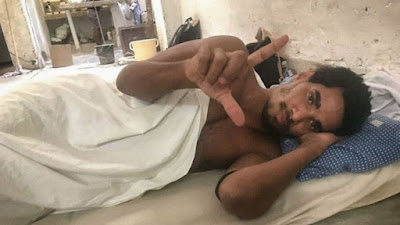
"Era tanto el hambre que nos comimos el miedo." - "The hunger was so much that we ate the fear."

Juan Enrique Pérez Sánchez, father of four and former phone technician, was arrested and badly beaten on July 12, 2021 after participating in the 11J protests in Nueva Paz, Mayabeque. He carried a poster that read "Down with the dictatorship" on one side, and "The hunger was so much that we ate the fear."  Juan Enrique was sentenced to eight years in prison on December 15, 2021. He suffers from asthma and a herniated disc. Reports emerged over social media that Juan Enrique sowed his mouth shut with a wire, as a sign of protest.

Today in Cuba there are thousands of Cubans, like Juan Enrique, jailed for their nonviolent demand for an end to the Castro dictatorship expressed most widely during the July 2021 protests. Over a thousand have been identified that were jailed or disappeared. It is known that some have resorted to going on hunger strike to protest their unjust imprisonment. This is part of the movement's repertoire of nonviolent tactics to resist the dictatorship in Cuba.

The men and women in Cuba who have led protests across the island have maintained their non-violent posture, continue to call for civic resistance as the method to challenge the dictatorship, and are asking for active nonviolent solidarity from people of goodwill living abroad. 

On July 27, 2021 the Christian Liberation Movement tweeted: "For solidarity with the freedom of Cubans. Eleven specific actions to isolate the regime."  This Cuban based movement, with its national coordinator, a former Amnesty prisoner of conscience living in Cuba, said that although statements criticizing the dictatorship are welcome that now is also the time for actions to isolate the Castro regime internationally, and sanction both on the dictatorship collectively, and individual bad actors in the regime are needed. These efforts to raise the cost of repression too are part of strategic nonviolence, and requires international solidarity. Please share and support this campaign with others.

This is a moment in which many that have not been following the resistance movement on the island are advocating to do business with the dictatorship, and the children of the nomenklatura. This will only prolong the life of the dictatorship, and increase the likelihood of violence, and Cuba bottoming out as a failed state.

It is important to revisit recent Cuban history.

The opposition in Cuba violently resisted the Castro dictatorship from 1959 to 1966.  In April of 1961 an expedition covertly supported by the United States was not provided sufficient air cover and support leading to their defeat, and the consolidation of communist rule in the island. Many of the Cubans who had fought alongside Castro, but felt betrayed when he installed a new dictatorship instead of restoring the democratic order, took up arms and went back into the hills. The new regime received counter insurgency forces from its Soviet allies that sent  to battle the Cuban resistance in the Escambray after years of struggle in 1967.

Eusebio Peñalver with machine gun and Joaquin Membibre, with M-1 carbin

Eusebio Peñalver (pictured above) opposed the Batista regime and fought with the rebel army to restore Cuba's constitutional democracy. Mary O'Grady wrote about him in 2013 and quoted the Cuban warrior. 

"But when Castro hijacked the revolution for himself, Peñalver broke ranks rather than 'sell my soul to the same devil that here on earth is Castro and communism.'" He took up arms against Castro's military in the Escambray Mountains, he was captured in October 1960. He spent 28 years in Cuban prisons and was banished from the island upon his release in 1988. "From exile in Los Angeles he wrote about the 'naked brutality' and round-the-clock beating and harassment that he had endured: 'They made the men eat grass, they submerged them in sewage, they beat them hard with bayonets and they hit them with fence posts until their bones rattled.'

Total number of dead in this phase of the resistance remains unknown, but tens of thousands were jailed for decades. On January 28, 1976, within the Cuban prisons, dissidents and former members of the resistance came together to found the Cuban Committee for Human Rights.  This initiative to document human rights abuses in Cuba, and report them to the international community marked  the start of a non-violent resistance to the Castro dictatorship.


Many movements would emerge over the next 47 years. It would be impossible to list them all. However, it would be worthwhile to highlight some that still exist today on the island. The Christian  Liberation Movement was founded in 1988, and in May 2002 with the Varela Project, a citizen initiative that thousands of Cubans signed, and led the Castro regime to change the constitution in an effort to block it, and brought international attention to Cuba's pro-democracy movement, and the democratic aspirations of the Cuban people.

Oswaldo Payá Antonio Diaz, and Regis Iglesias turn in petition

In 1991 the Cuban Youth for Democracy Movement came into existence calling for free thought in Cuban education, and a return to university autonomy.

Cuban Youth for Democracy Movement

 In 1997 the Lawton Foundation was founded by Dr. Oscar Elias Biscet and sought to educate Cubans on human rights and strategic non-violence, explicitly embracing the legacies of Mohandas Gandhi, and Martin Luther King Jr. 

Dr. Oscar Elias Biscet

In 2003 following a major crackdown on the opposition due to the Varela Project initiative and overall growth in the democratic resistance the Ladies in White came into existence and through non-violent actions challenged the Castro regime to free their loved ones and to change the totalitarian penal code that creates prisoners of conscience. In 2011 following his release from eight years in prison, Jose Daniel Ferrer Garcia founded the Patriotic Union of Cuba (UNPACU).  

In 2018, following the announcement that the Cuban dictatorship would further restrict artistic freedoms with Decree 349, a collective of artists formed the San Isidro Movement to campaign against the repressive law

Logo of the San Isidro Movement

What they all have in common is the decision to use nonviolent means and strategies to challenge the Castro dictatorship. However, they are not advocating collaboration or going into business with the oppressors.

Human action is a powerful force that must not to be underestimated, but to maximized it requires knowledge, strategic planning and courage. It also requires an understanding of the real nature of political power.

Professor Gene Sharp, a nonviolent theoretician who passed away on January 28, 2018, in his book, Waging Nonviolent Struggle: 20th Century Practice and 21st Century Potential, recognized that political power is "the totality of influences and pressures available for use to implement, change, or oppose official policies for a society." This means that political power "may be wielded by the institutions of government, or in opposition to the government by dissident groups and organizations."

According to Gene Sharp the sources of political power include "authority, human resources, skills and knowledge, intangible factors, material resources, and sanctions."

If we look at Cuba, the communist dictatorship there uses propaganda claims, both internally and internationally, to assert that the regime has achieved successes in education and health care. These are pillars of legitimacy and authority for the Castro regime. The dictatorship has also trained and staffed a massive intelligence apparatus to monitor and surveil the populace in Cuba trained by the East German Stasi and the Soviet KGB with 64 years of experience.

There is a large military that is heavily embedded in the Cuban economy, including tourism. In the area of skill and knowledge there is a dictatorship with 64 years of experience of imposing itself through violent means on the populace in Cuba, and overseas in places such as Ethiopia, Nicaragua and Venezuela. They have had experience in carrying out mass killings that rise to the level of genocide to assist client regimes. These first generation leaders are dying out, but many remain, including Raul Castro that have this knowledge and expertise in repression and terror.

One must consider the best course of action with the greatest likelihood of success while taking into account conditions on the ground.

Conservative activist Morton Blackwell explained a truth often ignored by activists of all ideological stripes in a talk titled "The Real Nature of Politics," which is required reading and offers three conclusions.

"1. Being right in the sense of being correct is not sufficient to win.  You don't win just because your heart is pure, even if you can prove logically that you are right.
2. The winner in a political contest over time is determined by the number and the effectiveness of the activists and leaders on the respective sides.
3. The number and effectiveness of the activists and leaders on a given side in a political contest is determined by the political technology used by that side."

These conclusions work both in a political struggle within a democratic order, and in confronting a dictatorship that does not play by democratic rules.  

These three ideas need to be present when planning resistance to the dictatorship in Cuba.

Providing more resources and legitimacy to the dictatorship and their networks of supporters, while marginalizing democratic forces is a recipe, already witnessed in Communist China for strengthening and modernizing the dictatorship in Beijing that turned into a greater threat to the rest of the world, and did nothing to advance democracy.

Considering that the Cuban opposition in the island over the past 47 years decided to resist the Castro dictatorship using nonviolent means, that the democratic resistance today as evidenced by the start of the July 11, 2021 uprising did so non-violently, and that concrete calls for help from the island are asking for nonviolent solidarity both inside and outside of Cuba now is the time to step up with the support requested, and not resort to the siren call of embracing the dictatorship providing it with more resources and legitimacy that has failed in the past against this regime.

Today, October 2nd is the international day of nonviolence and the 154th birth anniversary of Mohandas Gandhi. On this day let us remember our nonviolent icons in Cuba and share their message with the world, and continue to carry out concrete actions to restore democracy, the rule of law, and isolation and accountability for those engaged in human rights violations.


"The first victory we can claim is that our hearts are free of hatred. Hence we say to those who persecute us and who try to dominate us: ‘You are my brother. I do not hate you, but you are not going to dominate me by fear. I do not wish to impose my truth, nor do I wish you to impose yours on me. We are going to seek the truth together’." - Oswaldo Payá Sardiñas


“If we must give our own lives in pursuit of the freedom of our Cuba, so be it.” - Laura Pollán

Saturday, October 2, 2021

Join the non-violent movement for democracy and human rights in Cuba

"Use truth as your anvil, nonviolence as your hammer, and anything that does not stand the test when it is brought to the anvil of truth and hammered with nonviolence, reject it." - Mohandas Gandhi

Luis Manuel Otero Alcántara on day six of hunger strike in Cuba

Today in Cuba there are thousands of Cubans jailed for their nonviolent demand for an end to the Castro dictatorship expressed during the mid July 2021 protests. Hundreds have been identified that were jailed or disappeared. It is known that some have resorted to going on hunger strike to protest their unjust imprisonment. Luis Manuel Otero Alcántara is on a hunger strike that he began on September 27, 2021 and is still weak from a bout of COVID-19, and prior hunger strikes. This is part of the movement's repertoire of nonviolent tactics to resist the Castro regime.

Over the past few months some voices emerged in the diaspora calling for: a military response from external powers, the diaspora to arm themselves and invade Cuba or Cubans on the island to rise up violently against the dictatorship. The men and women in Cuba who have led protests on the island have maintained their non-violent posture, continue to call for civic resistance as the method to challenge the dictatorship, and are asking for active nonviolent solidarity from abroad. 

On July 27, 2021 the Christian Liberation Movement tweeted: "For solidarity with the freedom of Cubans. Eleven specific actions to isolate the regime. Christian Liberation Movement."

They said that although statements criticizing the dictatorship are welcome and needed that now is also the time for actions to isolate the Castro regime internationally, and sanction both the dictatorship collectively, and individual bad actors in the regime. These too are part of nonviolence, and requires international solidarity. Please share and support this campaign.

On August 25, 2021 the San Isidro Movement tweeted: "Help Civil Society - Look at the manual for non-violent struggle" and provided a link to their documents on strategic nonviolence, and how people of good will can help.

This is a moment in which many that have not been following the resistance movement on the island may believe that a quick violent action can remove this entrenched dictatorship. The opposition that has taken to the streets in Cuba does not advocate this, but are asking for supporters to be non-violent.

The rest of this essay seeks to provide an overview of the opposition's decision to opt for nonviolence, and how adopting violent resistance plays into the hands of the Castro regime.

The opposition in Cuba violently resisted the Castro dictatorship from 1959 to 1966.  In April of 1961 an expedition covertly supported by the United States was not provided sufficient air cover and support leading to their defeat, and the consolidation of communist rule in the island. Many of the Cubans who had fought alongside Castro, but felt betrayed when he installed a new dictatorship instead of restoring the democratic order, took up arms and went back into the hills. They were defeated by the regime and its Soviet allies that sent counter insurgency forces to battle the Cuban resistance in the Escambray after years of struggle in 1967.

Eusebio Peñalver with machine gun and Joaquin Membibre, with M-1 carbine

Eusebio Peñalver (pictured above) opposed the Batista regime and fought with the rebel army to restore Cuba's constitutional democracy. Mary O'Grady wrote about him in 2013 and quoted the Cuban warrior. 

"But when Castro hijacked the revolution for himself, Peñalver broke ranks rather than 'sell my soul to the same devil that here on earth is Castro and communism.'" He took up arms against Castro's military in the Escambray Mountains, he was captured in October 1960. He spent 28 years in Cuban prisons and was banished from the island upon his release in 1988. "From exile in Los Angeles he wrote about the 'naked brutality' and round-the-clock beating and harassment that he had endured: 'They made the men eat grass, they submerged them in sewage, they beat them hard with bayonets and they hit them with fence posts until their bones rattled.'

Total number of dead in this phase of the resistance remains unknown, but tens of thousands were jailed for decades. On January 28, 1976, within the Cuban prisons, dissidents and former members of the resistance came together to found the Cuban Committee for Human Rights.  This initiative to document human rights abuses in Cuba, and report them to the international community marked  the start of a non-violent resistance to the Castro regime.


Many movements would emerge over the next  45 years. It would be impossible to list them all. However, it would be worthwhile to highlight some that still exist today on the island. The Christian  Liberation Movement was founded in 1988, and in May 2002 with the Varela Project that thousands of Cubans signed onto forced the regime to change the constitution to counter it, and brought international attention to Cuba's democratic opposition. 

Oswaldo Payá Antonio Diaz, and Regis Iglesias turn in petition

In 1991 the Cuban Youth for Democracy Movement came into existence calling for free thought in Cuban education, and a return to university autonomy. In 1997 the Lawton Foundation was founded by Dr. Oscar Elias Biscet and sought to educate Cubans on human rights and strategic non-violence, explicitly embracing the legacies of Mohandas Gandhi, and Martin Luther King Jr. 

Dr. Oscar Elias Biscet

In 2003 following a major crackdown on the opposition due to the Varela Project initiative and overall growth in the democratic resistance the Ladies in White came into existence and through non-violent actions challenged the Castro regime to free their loved ones and to change the totalitarian penal code that creates prisoners of conscience. In 2011 following his release from eight years in prison, Jose Daniel Ferrer Garcia founded the Patriotic Union of Cuba (UNPACU).  

In 2018, following the announcement that the Cuban dictatorship would further restrict artistic freedoms with Decree 349, a collective of artists formed the San Isidro Movement to campaign against the repressive law

What they all have in common is the decision to use nonviolent means and strategies to challenge the Castro dictatorship.

Human action is a powerful force that must not to be underestimated, but to maximized it requires knowledge, strategic planning and courage. It also requires an understanding of the real nature of political power.

Professor Gene Sharp, a nonviolent theoretician who passed away on January 28, 2018, in his book, Waging Nonviolent Struggle: 20th Century Practice and 21st Century Potential, recognized that political power is "the totality of influences and pressures available for use to implement, change, or oppose official policies for a society." This means that political power "may be wielded by the institutions of government, or in opposition to the government by dissident groups and organizations."

According to Gene Sharp the sources of political power include "authority, human resources, skills and knowledge, intangible factors, material resources, and sanctions."

If we look at Cuba, the communist dictatorship there uses propaganda claims, both internally and internationally, to assert that the regime has achieved successes in education and health care. These are pillars of legitimacy and authority for the Castro regime. The dictatorship has also trained and staffed a massive intelligence apparatus to monitor and surveil the populace in Cuba trained by the East German Stasi and the Soviet KGB with 62 years of experience.

There is a large military that is heavily embedded in the Cuban economy, including tourism. In the area of skill and knowledge there is a dictatorship with 62 years of experience of imposing itself through violent means on the populace in Cuba, and overseas in places such as Ethiopia, Nicaragua and Venezuela. They have had experience in carrying out mass killings that rise to the level of genocide to assist client regimes. These first generation leaders are dying out, but many remain, including Raul Castro that have this knowledge and expertise in repression and terror.

One must consider the best course of action with the greatest likelihood of success while taking into account conditions on the ground.

Conservative activist Morton Blackwell explained a truth often ignored by activists of all ideological stripes in a talk titled "The Real Nature of Politics," which is required reading and offers three conclusions.

"1. Being right in the sense of being correct is not sufficient to win.  You don't win just because your heart is pure, even if you can prove logically that you are right.
2. The winner in a political contest over time is determined by the number and the effectiveness of the activists and leaders on the respective sides.
3. The number and effectiveness of the activists and leaders on a given side in a political contest is determined by the political technology used by that side."

These conclusions work both in a political struggle within a democratic order, and in confronting a dictatorship that does not play by democratic rules.  

These three ideas need to be present when planning resistance to the dictatorship in Cuba. 

The decision to confront with a violent strategy a regime with 62 years of expertise in exercising violence as an instrument of control with overseas experience in carrying out mass killings that rise to the level of genocide is a brave but foolish stand with little if any chance for success.

University academics and nonviolent theoreticians Maria J. Stephan and Erica Chenoweth in their 2008 study "Why Civil Resistance Works: The Strategic Logic on Nonviolent Conflict" compared the outcomes of 323 nonviolent and violent resistance campaigns from 1900 to 2006. They found that major nonviolent campaigns achieved success 53 percent of the time, compared with just under half that at 26 percent for violent resistance campaigns.

Even the 26% figure needs to be looked at in the Cuban context.

The above mentioned Stephan, Chenoweth study also suggests “that nonviolent campaigns are more likely than violent campaigns to succeed in the face of brutal repression.” This depends on the nonviolent opposition movement having a strategic vision and maintaining its non-violent posture even under the worse repression. However, according to Stephan and Chenoweth, the more brutal the regime the better the results with nonviolent resistance and the worse the outcomes with violent resistance. 

Long time Castro ally Bashar Hafez al-Assad with Raul Castro

This can be seen in Syria with long time Castro ally Bashar Hafez al-Assad. The uprising against Assad in 2011 was initially nonviolent and despite brutal repression by the Syrian regime the nonviolent opposition registered great victories. However, when elements of the Syrian military defected and the resistance abandoned its nonviolent posture in the belief that violent resistance would achieve change faster. The end result, rather than undermine the Assad regime, changed the entire dynamic of the struggle to a terrain favorable to Bashar Hafez al-Assad. The body count of the opposition skyrocketed, popular mobilization evaporated, Al Qaeda inflitrated the ranks of the opposition leading to international support drying up, and the Syrian dictatorship consolidated its rule.

Considering that the Cuban opposition in the island over the past 45 years decided to resist the Castro dictatorship using nonviolent means, that the democratic resistance today as evidenced by the start of the July 11, 2021 uprising did so non-violently, and that concrete calls for help from the island are asking for nonviolent solidarity both inside and outside of Cuba now is the time to step up with the support requested, and not resort to the siren call of violence that has failed in the past against this regime.

Today, October 2nd is the international day of nonviolence and the 152nd birth anniversary of Mohandas Gandhi. On this day let us remember our nonviolent icons in Cuba and share their message with the world, and continue to carry out concrete actions to restore democracy, the rule of law, and accountability for those engaged in human rights violations.

"The first victory we can claim is that our hearts are free of hatred. Hence we say to those who persecute us and who try to dominate us: ‘You are my brother. I do not hate you, but you are not going to dominate me by fear. I do not wish to impose my truth, nor do I wish you to impose yours on me. We are going to seek the truth together’." - Oswaldo Payá Sardiñas


“If we must give our own lives in pursuit of the freedom of our Cuba, so be it.” - Laura Pollán


Sunday, August 6, 2017

Message to friends in Venezuela on the latest unfolding events

My prayers and thoughts are with the Venezuelan people in their struggle for freedom.

Yesterday at the Torch of Friendship on August 5, 2017
 As an outsider I do not pretend to know the intricacies of what is taking place on the ground in Venezuela but there are patterns and historical trends with regards to conflicts with parallels to what is taking place in your country today that alarm me.

Voices now gaining traction in Venezuela make the argument that violent resistance is now necessary to deal with the new political reality. Century of data and recent example of Syria shows belief that abandoning nonviolence for violence will speed up change is mistaken.

Non-violent expert Gene Sharp offers the following advice to a non-violent movement when military units start to defect or mutiny. Maintain non-violence, do not organize soldiers to use violence against the remaining army. That is suicidal.  Use the mutinous soldiers to persuade the rest of the soldiers also to mutiny - take the army away then the regime will come tumbling down.

Furthermore, among some Venezuelans, there is the mistaken idea that Cubans did not fight against the imposition of communist rule in Cuba. Cuban author and artist Juan Abreu who advocates violent resistance in Venezuela also does not sugarcoat the difficulty nor the fact that Cubans failed to overthrow the Castros despite a formidable armed resistance that lasted six years (1960-66) because the communists are experts in violence, torture and rewriting history.

Dear friends in Venezuela I offer this testimony with humility and ask you to take it into consideration.

Saturday, July 22, 2017

The Nonviolent Legacy of Payá: Demonstrating Love is Stronger than Hate

The cause of human rights is a single cause, just as the people of the world are a single people. The talk today is of globalization, but we must state that unless there is global solidarity, not only human rights but also the right to remain human will be jeopardized. - Oswaldo Payá, December 17, 2002

Oswaldo Payá Sardiñas and Harold Cepero Escalante
Oswaldo Payá Sardiñas was right when he observed that the failure of global solidarity would endanger both human rights and the right to remain human.  At the same time he demonstrated throughout his life the power of nonviolence and prior to his untimely death provided Cubans a road map to peaceful change called "The Peoples Path" whether or not the dictatorship in Cuba wanted it or not.

It is best described in a hopeful vision of the future that Oswaldo outlined in a 1990 Christmas Message from the Christian Liberation Movement:

"The rifles will be buried face down, the words of hatred will vanish in the heart without reaching the lips. We'll go out into the street and all of us will see in the other a brother, let us look to the future with the peace of he that knows that he forgave and he that has been forgiven. Let there be no blood to clean or dead to bury, the shadow of fear and of catastrophe will give way to the reconciliatory light, and Cuba will be reborn in every heart, in a miracle of love made by God and us." 
In 2012 months prior to his untimely death Harold Cepero gave a clear assessment of the risk each individual takes when confronting a brutal dictatorship.
"Christians and non-Christians who have the courage and the freedom to consider the peaceful political option for their lives, know they are exposing themselves to slightly less than absolute solitude, to work exclusion, to persecution, to prison or death."
The nonviolent legacy that Harold and Oswaldo shared revolves around two key ideas
  • We are not against other people, only what they are doing.
  • Means are ends in the making; nothing good can finally result from violence.
On December 17, 2002 in Strasbourg, France receiving the Sakharov Prize from the European Union Oswaldo explained what motivated the choice to embark on a nonviolent struggle:

"We have not chosen the path of peace as a tactic, but because it is inseparable from the goal for which our people are striving. Experience teaches us that violence begets more violence and that when political change is brought about by such means, new forms of oppression and injustice arise."
In nonviolent expert Michael N. Nagler's book, "The Nonviolence Handbook: A Guide for Practical Action"  a passage that reflects both the struggle now taking place in Cuba and in Venezuela is critical to seeing where things stand:
"Conflicts escalate when they are not resolved, and if they are left untended they can rapidly get out of control." From the nonviolence point of view, the intensity of a conflict is not necessarily a question of how many guns or how many people are involved (the same metric would work for a quarrel between lovers as between nations); it is primarily about how far dehumanization has proceeded. If someone no longer listens to you, is calling you names or is labeling you, it’s probably too late for petitions. In terms of knowing how to respond, we can conveniently think of this escalation in three stages that call for distinct sets of responses. Let’s call these three stages Conflict Resolution, Satyagraha (active nonviolent resistance), and—hopefully this is rare, but it helps to know it exists—Ultimate Sacrifice.
Both Cuba and Venezuela offer demonstrations of the consequences of the failure of global solidarity and the power of nonviolence to confront injustice despite great odds. Due to this failure dehumanization has proceeded to the point where many are required to make the ultimate sacrifice within a context of nonviolent resistance.

Both in Cuba and in Venezuela the democratic opposition in its vast majority have chosen to pursue a nonviolent strategy, but their respective starting points are radically different. In Cuba the regime arrived in power through a violent revolution replacing a dictator, while in Venezuela the regime took power through the ballot box. Both sought to install totalitarianism, but in the case of Venezuela the residue of democracy has made it more difficult. Another factor is that in Cuba the opposition to the regime during the first seven years was a violent resistance with guerillas in the Escambray region. Despite their courage they where either exterminated or imprisoned.

"Violent flanks" and the use of the so-called "diversity of tactics" reduces mobilization and decreases the probability of success for a resistance movement. Strategic thinker Gene Sharper put it succinctly when he said "using violence is a stupid decision."

This would explain why both the Castro and Maduro regimes manufacture evidence and constantly accuse nonviolent activists of being violent ignoring all the evidence to the contrary. First and most importantly if the charges are believed it helps to reduce popular mobilization against these regimes which is the greatest threat to their power. Secondly, it raises questions that can impact international solidarity and support. Third, it allows these regimes to infiltrate agents to carry out violent acts that delegitimize the movement placing it on the defensive in damage control mode.

The Christian Liberation Movement and the CubaDecide campaign have advocated for a plebiscite in Cuba to both mobilize and empower Cubans for a democratic change. On Sunday, July 16, 2017 the Venezuelan opposition conducted an unofficial plebiscite where more than seven million Venezuelans defying government threats went out to vote. This is not a magic bullet but it has mobilized millions of Venezuelans, attracted international attention, strengthened the opposition and placed the government in a difficult position. Cubans should be watching closely as events unfold in Venezuela. The People's Path called for by Oswaldo Payá prior to his extrajudicial killing on July 22, 2012 appears to be working in Venezuela. It is still not too late for Cubans to follow this effective and nonviolent path of liberation.


Sunday, March 23, 2014

Imprisoned Opposition Leader Gathers Tens of Thousands of Venezuelans and Calls on Maduro to Resign

"Who Tires Loses"-  Leopoldo López 

Leopoldo's wife, Lilian Tintori reads his letter at Saturday rally

 On March 19, 2014 Leopoldo López called on Venezuelans to take to the streets on Saturday, March 22, 2014 to increase their nonviolent defiance of the Maduro dictatorship and in doing so break it. On Saturday tens upon tens of thousands of Venezuelans went into the street across Venezuela. At an open air rally surrounded by tens of thousands, his wife, Lilian Tintori read a letter Leopoldo had written for that day in which he called on Maduro to resign in order to save the country or be forced out by the Venezuelan people. Video of the event is embedded below along with pictures of the mass protest. Leopoldo López has been unjustly imprisoned since February 18, 2014 the same day that Génesis Carmona was shot in the head by agents of the Maduro government. She died a day later. The torture and killing of students by government forces continues and the number of dead , due to regime repression of nonviolent dissent, stands at 34.


Leopoldo López to Maduro: Resign to save Venezuela 

Lilian Tintori: I will read this letter that is Leopoldo’s message today:

"This letter that I write from my cell in Ramo Verde is addressed to Nicolás Maduro who no one doubts has become the dictator of Venezuela. The serious crisis facing our country today is not the fault of the people, or of those who support the regime, or those of us whom oppose it. The blame Maduro is yours and of the inefficient, corrupt and undemocratic system you lead.

I invite you from the solitude of power, of one who does not have the ability to lead the destinies of the nation and who has only repression and violence remaining, to think: How you would save Venezuela if you would resign:

If you resign we could advance towards a system of justice respectful of human rights and fair to all without exclusions or privileges;

If you resign we would have a chance to bury impunity thus reaping the security, peace and tranquility we Venezuelans so desire;

If you resign the whole country could get to work on building a strong economy, made in Venezuela and for Venezuelans, the source of prosperity and progress for all and thus overcome inequality and poverty in peace and democracy.

The first solution you have in your hands but it should be clear, very clear, that you are not the owner of Venezuela. We are not afraid of you, your tanks, your unjust justice, or your lies. The people remain in the streets because the constitution indicates it. The people have lost so much that they have lost fear.

For Venezuela, for our children, Strength and Faith!
Leopoldo López

#22M Protest in Chacao, Venezuela

Spanish text of the speech as delivered:

 Leopoldo López a Maduro: renuncia para salvar a Venezuela

Lilian Tintori: Voy a leer esta carta que es el mensaje de Leopoldo el día de hoy:

“Esta carta que escribo de mi celda de Ramo Verde va dirigida a Nicolás Maduro quien ya nadie duda se ha convertido en el dictador de Venezuela. La grave crisis por la que hoy atraviesa nuestro país no es culpa del pueblo ni de los quien apoyan al régimen ni de los quien nos oponemos. La culpa, Maduro, es tuya y del sistema ineficiente, corrupto y antidemocrático que diriges.

Te invito a que desde la soledad del poder, de quien no tiene la capacidad de conducir los destinos de la nación y solo le ha quedado la represión y la violencia, a que pienses: cómo salvarías a Venezuela si tú renunciaras:

Si tu renuncias pudríamos avanzar hacia un sistema de justicia respetoso de los derechos humanos y justo para todos sin exclusión ni privilegios;

Si tu renuncias tendríamos la oportunidad de enterrar la impunidad para así cosechar la seguridad, la paz y la tranquilidad que tanto deseamos los venezolanos;

Si tu renuncias el país entero podría ponerse a trabajar en la construcción de una economía fuerte, hecha en Venezuela y para los venezolanos, fuente de prosperidad y progreso para todos y poder así superar la desigualdad y la pobreza en paz y en democracia.

La primera solución la tienes en tus manos pero debe estar claro, muy claro, que no eres el dueño de Venezuela. No te tenemos miedo, ni a ti, ni a tus tanquetas, ni a tu justicia injusta, ni a tus mentiras. El pueblo seguirá en las calles porque así lo indica la constitución. El pueblo ha perdido tanto que a perdido el miedo.

Por Venezuela, por nuestros hijos, ¡Fuerza y fe!”

Leopoldo López

#22M protest in Maracaibo, Venezuela.


Wednesday, March 19, 2014

Leopoldo López Mendoza call to action on #22M

Tonight over the course of a half an hour, imprisoned opposition leader, Leopoldo López Mendoza, denounced the latest actions by the Maduro regime, issued a call to action and asked Venezuelans to remain strong in their resistance and firm in their nonviolence. Below is a copy of this twitter page and tonight's tweets followed by a translation of the text. The big news is the call for a massive demonstration on March 22, 2014.


TR Dictatorship shows it's cowardice. Its days are numbered. Today it kidnapped my brother San Cristobal Mayor

T Dictatorship thinks it saw protests in Tachira, it's mistaken. Nonviolence & firmness, now is when tachirenses will be felt

T Solidarity with , know you aren't going to get tired fighting the dictatorship. You will fight until you win

TR I summon you Saturday to a new stage: show the world, how many of us are willing to fight for Venezuela's liberation

T Call on you to send a message to those who accompany Maduro in power to understand there are not as many bullets as free minds

TR The path is clear: we double the nonviolent force & transform the spontaneity in organization & action to conquer Freedom

T Call on country to keep and raise the pressure to break the dictatorship, for it to know that it is impossible to force a false peace with bullets

TR Strength Venezuela! We are on the right side of history!


Tuesday, March 18, 2014

Venezuela and Leopoldo Lopez one month later: Democratic resistance continues

Unjustly imprisoned since February 18, 2014
Over the past month the student movement and the democratic opposition in Venezuela have demonstrated the power of nonviolent resistance before a regime that is attempting to establish a totalitarian dictatorship. Leopoldo Lopez has described what is taking place as "Maduro's coup against democracy."

Chacao demands freedom for her son Leopoldo Lopez
 The Maduro government has demonstrated its dictatorial tendencies utilizing paramilitary groups known as "colectivos"in collaboration with the Bolivarian National Guard to beat, torture, shoot and kill students in an effort to impose control through terror or at the very least provoke a violent response from the student movement in order to justify its own heightened repression. Maduro and his Castro allies have failed. They have only succeeded in turning greater parts of the Venezuelan population against them.  
10 of the 30 killed since #12F in Venezuela protests
In a non-violent struggle there are moments that highlight the power of nonviolence and are both historic and emblematic. One such moment took place a month ago when Leopoldo Lopez leading a mass demonstration of hundreds of thousands proclaimed his innocence, the illegitimacy of the Maduro regime, and its politicized legal system then turned himself over to the authorities. 
But before that he laid out the case for the ongoing fight for freedom in Venezuela:
Perhaps there was a silence for a time. Leaving unclear the why of this whole fight. This fight is indeed for our youth, this fight is indeed for the students and for those who have been repressed, this fight is indeed for those who have been imprisoned, but this fight brothers and sisters, is for all the people of Venezuela, that is suffering today, is suffering making lines, is suffering scarcity, the youth have no employment, they have no future, because of the wrong model, for a model that is not implemented, but exported from other countries, that has nothing to do with the brave people of Venezuela, and that we together brother and sisters, have to be clear that we have to build an exit to this disaster. That exit brothers and sisters must be nonviolent, it must be within the constitution but it also has to be on the streets. Because we no longer have in Venezuela, we no longer have in Venezuela, a free media to express ourselves. If the media is silenced let the street speak loudly. Let the people speak, and may the streets speak with peace and with democracy.
Leopoldo also explained the reasoning behind turning himself over to a regime whose legal system he views as illegitimate:
I am now about to proceed to go towards the squad where the National Guard is to turn myself in. I am going to do it. I thought about it a lot. I'd like to let you know that these past few days, I had a lot of time to think, analyze, listen to the radio, watch TV or read what I haven’t for a while, speak with my family, and the option I had was to leave the country, but I will never leave, never. The other option, was to stay hidden in secrecy, but that choice could leave doubts among some, including some who are here now that we have something to hide. We have nothing to hide, I have not committed any crimes, I am not a criminal, I do not have to hide, then the other option is to turn my self in, and I ask you, and beg you with my heart, that when I pass by and turn myself in, that you keep calm, we have no other option. I do not want any more violence or confrontation, so I ask for your understanding, for your organization and your discipline.
The imprisoned democratic opposition leader issued a Resistance manifesto that begins with the recognition that: 
"Today no one can say that what there is in Venezuela is a democracy. The authoritarian, repressive, and criminal reaction to the protests have been a blow to freedom that leaves no doubt that we live in a dictatorship. A dictatorship that has been incubating for years, that no one can fail to see and recognize."

Leopoldo began a public dialogue with Pope Francisco in a letter sent to His Holiness a day prior to the Venezuelan democrats imprisonment which stated:
"I have taken the audacity to write these lines because I am convinced, as millions in Venezuela , that your voice , your guidance and your blessing to our people at this time can make a profound impact on the next destination of our country."
Over the course of the past month from his prison cell Leopoldo  has called on Venezuelans to take to the street nonviolently to exercise their civic freedoms in nonviolently protesting the unacceptable practices of the Maduro government.

Tonight despite a heavy military presence and continued violence by the "colectivos" Venezuelans are peacefully in the street exercising their rights.

Demonstration in Venezuela on #18M
