Showing posts with label Oswaldo Paya Sardiñas. Show all posts

Sunday, July 22, 2018

Oswaldo Payá Sardiñas and Harold Cepero Escalante: Remembering two Cuban martyrs

"Six years ago the Castros murdered my father, along with him #HaroldCepero. Today we meet to honor their lives and appreciate the time they were with us . Today their murderers already know that there will be no impunity and that they failed because they could not kill their legacy. #Freedom" - Rosa María Payá, over Twitter on July 22, 2018

 Harold Cepero Escalante and Oswaldo Payá Sardiñas
There are a few moments that are burned into my memory: the moment on January 28, 1986 when the Challenger blew up, the February 24, 1996 shoot down of two Brothers to the Rescue planes by Cuban MiGs, the attack on the Twin Towers on September 11, 2001 and the murders of Oswaldo Payá Sardiñas and Harold Cepero Escalante on July 22, 2012.  


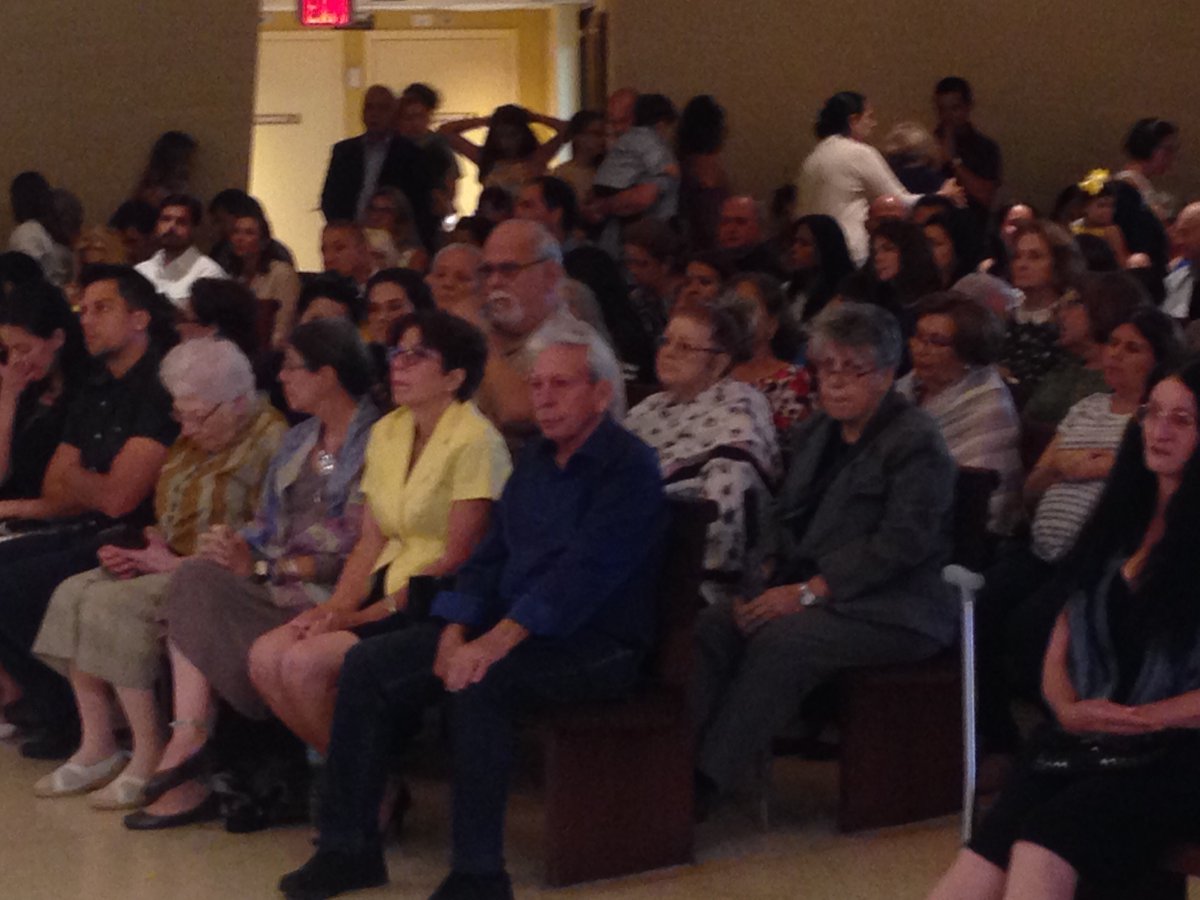
Mass in remembrance of Oswaldo and Harold in Miami
Today, I prayed for them and celebrated their lives. Around the world in Paris, Madrid, Miami, Hialeah and Havana masses were held in Oswaldo and Harold's memory.  Their ideas remain a relevant and powerful challenge to the existing regime in Havana.
 "Those who remove and crush freedom are the real slaves." - Harold Cepero Escalante (January 29, 1980 - July 22, 2012)

"They have told me that they will kill me before this regime ends, but I will not flee." - Oswaldo Payá Sardiñas (February 29, 1952 - July 22, 2012) 
 On Sunday, July 22, 2012 at 1:50pm near Bayamo in eastern Granma province of Cuba the incident provoked by State Security that ended the lives of Oswaldo Payá Sardiñas and Harold Cepero Escalante was underway. The question some may ask is "why did the Castro regime want him dead?" The answer is simple: he exposed their lie while mobilizing tens of thousands of Cubans.

Mass in memory of Oswaldo and Harold in Madrid
Fake Change in Cuba
Oswaldo Payá Sardiñas speaking on behalf of the Christian Liberation Movement in Havana on March 30, 2012 bravely denounced the fraudulent change that was then taking shape and that is being carried out today with the Obama administration's Cuba policy:

Our Movement denounces the regime's attempt to impose a fraudulent change, i.e. change without rights and the inclusion of many interests in this change that sidesteps democracy and the sovereignty of the people of Cuba. The attempt to link the Diaspora in this fraudulent change is to make victims participate in their own oppression. The Diaspora does not have to "assume attitudes and policies in entering the social activity of the island." The Diaspora is a Diaspora because they are Cuban exiles to which the regime denied rights as it denies them to all Cubans. It is not in that part of oppression, without rights, and transparency that the Diaspora has to be inserted, that would be part of a fraudulent change. 

The Payá family
What real change would look like
Oswaldo Payá in the same statement outlined that authentic change was contingent upon a principled path of action not economic determinism:

The gradual approach only makes sense if there are transparent prospects of freedom and rights. We Cubans have a right to our rights. Why not rights? It is time. That is the peaceful change that we promote and claim. Changes that signifies freedom, reconciliation, political pluralism and free elections. Then the Diaspora will cease being a Diaspora, because all Cubans will have rights in their own free and sovereign country. That is why we fight.
The current Constitutional convention in Cuba, presided over by Raul Castro, is part of the fraudulent change that Oswaldo Payá so effectively denounced. Cosmetic changes to curry international favor without changing the totalitarian and dictatorial nature of the regime in Cuba.
 

Wednesday, November 11, 2015

Cuban opposition leaders and former prisoner of conscience taken in violent early morning raid

Home invasion by Castro regime's special brigade early this morning grabs four activists

Yris Pérez Aguilera, Antúnez, Edelvis Granda and Ciro Alexis Casanova taken today
 At 6:48 am today, November 11, 2015 over the twitter account of Jorge Luis García Pérez Antúnez the following troubling news appeared: "At this moment members of the regime's special brigade are breaking down the door of the home of Jorge L Suárez in Camaguey. Four minutes later the objective of the raid was made clear in a second tweet: the assault on the Camaguey activist's home was to arrest Edelvis Granda Pérez, Ciro Alexis Casanova Pérez , Yris Tamara Pérez Aguilera and Jorge Luis García Pérez Antúnez.

There was no more news on the whereabouts of this four activists until approximately 6:49pm when Bertha Antúnez (Jorge Luis's sister) now tweeting over his account reported: "At this moment State Security agents are searching and robbing the home of my brother Antunez in Placetas." She continued in another tweet: "My brother was taken into the house handcuffed behind his back, while the thugs inspect everything." Bertha's last tweet on November 11 at 7:42pm reported: "Almost one hour searching and they're not done, have separated so far to take: CDs, my brother's computer and documents." She also declared that the whereabouts of Yris, Edelvis and Ciro are unknown.

The arrests come one day after Jorge Luis García Pérez Antúnez launched the campaign "No, no and no to the dictatorship" to free two activists arrested and subjected to a summary judgement last week and sentenced to six months in prison throwing leaflets and calling on the Cuban populace to "generate a constant resistance to the Castro dictatorship."

The two activists, Geovanys Izaguirre Hernández and Laudelino Rodríguez Mendoza had not paid fines of 2,000 pesos,  which is ten months salary, for anti-government graffiti that appeared in the Palma Soriano municipality.

Opposition activists protest four activists arrests

Damaris Moya Portieles, pictured above in Geneva in 2014, protesting in Cuba today
Damaris Moya Portieles,  announced at 4:40pm that 16 activists of the Central Opposition Coalition had divided into three groups and would take to the street marching to a local police station to protest the arrest of the four activists. The first group was made up of the following five activists: Mildred Aguero Torres, Lester Castillo Rodriguez, Yuriet Pedroso Gonzalez, Derbis Sardiñas Moya and Damaris Moya Portieles. At 5:09pm over twitter their arrival at the police station was reported by Bertha Antúnez.

Repression is on the upswing in Cuba and this latest episode requires a strong response from the international community and activists in the island to protect the lives and freedom of these activists.

Thursday, May 2, 2013

The passionate intensity of the worse: Cuba and the Universal Periodic Review

"The best lack all conviction, while the worst
Are full of passionate intensity." 

 - William Butler Yeats, The Second Coming

Ladies in White hold wake for Laura Pollán on October 14, 2011
 The government of Cuba has submitted itself to the UN Human Rights Council's universal periodic review (UPR) on two occasions. The first time was during the second UPR session on February 5, 2009 and the second was today at the sixteenth UPR session on May 1, 2013. The Castro regime has managed to turn Marx's quote upside down. The first UPR session was a farce while the second one today was a tragedy. The dictatorship's diplomats provided a false sense of déjà vu by repeating themselves.

The strategies carried out by the Castro regime today were a repeat of 2009. Prior to today the Cuban government had already distorted the review. Hillel Neuer of UN Watch offered the following comparison: "UPR country reviews saw 23 NGO submissions on Germany, 32 on Russia, and, the highest, 48 on Canada. ... For Cuba, however the number soars to an incredible 454. This is fraud committed on a massive scale." Why is there such a huge disparity? UN Watch offers the answer in their report, MASSIVE FRAUD: THE CORRUPTION OF THE 2013 UPR REVIEW OF CUBA, :

Cuba used hundreds of front groups to hijack the United Nations compilation of NGO submissions and turn it into a propaganda sheet for the Castro Communist regime. While critiques of genuine NGOs do appear, they are overwhelmed by an unprecedented a mount of submissions by fraudulent “NGOs” that, if they do exist, are mere puppets of Cuba and its allies abroad.
Although now it was a new Foreign Minister, the previous one purged after recordings had been discovered in which he spoke in non-flattering terms about the Castro brothers, the rhetoric remained the same as did the promises made.

For example, today in his final remarks before the universal periodic the Cuban Foreign Minister said that special rapporteurs would be welcome in Cuba. Back in 2009 the previous Cuban Foreign Minister had made a similar pledge in January that was repeated by the Cuban "justice" minister during the second UPR session formally extending an invitation to the independent expert on torture only to postpone it for the subsequent four years. The Castro regime made a lot of noise about this invitation at the time, got a lot of positive press and never allowed the special rapporteur in. 

Back in 2009, with scores of prisoners of conscience locked behind bars since March of 2003 being human rights defenders, or for their part in the Varela Project and/or having engaged in independent journalism the claims of the Cuban regime were farcical.

Four years later the same dictatorship in Cuba claims to be both a democracy and a regime that will never except a change of regime. It also claimed that “All citizens’ rights to freedoms of opinion, expression, information and press are recognized” but the facts demonstrate otherwise.

However the failure of the international community to take the farce seriously in 2009 and hold the regime accountable has led to four years of tragedy. Cuban human rights defenders Orlando Zapata Tamayo, Juan Wilfredo Soto García, and Wilman Villar Mendoza died while under the custody of the Cuban government. 

Both Orlando Zapata Tamayo and Wilman Villar Mendoza had been recognized by Amnesty International as prisoners of conscience. Even more tragic was the failure of the sixteenth UPR to hold the dictatorship in Cuba accountable for the deaths of these activists or to question the death of a high profile civic leader such as Ladies in White founder Laura Pollán over the past four years.

Funeral of Oswaldo Payá Sardiñas
Only a smattering of countries called for an international investigation into the death of Oswaldo Payá Sardiñas. We are grateful to countries like the Czech Republic, who spoke up for Oswaldo, but unfortunately, they were the exception not the rule. The failure to address the death threats, brutal beatings and deaths in Cuba over the past four years have had and will continue to have dire consequences. 

This indifference will invite the deaths of more nonviolent dissidents in Cuba.


Monday, April 8, 2013

The Wall Street Journal's Mary A O'Grady asks "How Did Oswaldo Payá Really Die?"

Rosa María Payá Acevedo, daughter of Oswaldo Payá
THE AMERICAS

How Did Oswaldo Payá Really Die?

New evidence about the car crash that killed a noted Cuban dissident points to a coverup.

By Mary Anastasia O'Grady / The Wall Street Journal

When someone is killed in a civilized country and police slap around a witness and suppress evidence it is known as a cover-up. In Cuba it's called "reform." Viva Orwell.

Cuba's "ministry of truth" wants the world to believe that the Castro brothers are abandoning the use of state repression to maintain power. The Jay-Z-Beyoncé glam-tour of Old Havana last week was designed to help with the effort. But new details of the events surrounding the July 2012 deaths of prominent pacifist Oswaldo Payá—the winner of the European Parliament's 2002 Sakarov prize—and another dissident, Harold Cepero, suggest the opposite.

The U.S. press has reported on the March testimony of Ángel Carromero, the Spaniard who was driving the car that the two dissidents were riding in just before they died. Mr. Carromero was released from a Cuban prison in December and returned to Spain. He says that a red Lada had been tailing him and that the crash occurred because their car was rammed by another vehicle. He also claims that when he told this to Cuban authorities, they struck him, more than once.

But that's not the half of it. In an interview on Thursday at the Journal's offices, Payá's daughter, Rosa Maria, told me: "I must say that when I talked to Ángel, I didn't learn anything new. He confirmed things we already knew. We had the text message. We already knew that a car hit them from behind intentionally."

What she knew came straight from the mouth of Cuban police Capt. Fulgencio Medina, who took testimony from witnesses and read it aloud at the hospital in the eastern city of Bayamo where the victims were brought from the crash. Payá family friends were there, identified themselves as the family's representatives and reported by telephone back to Havana.

But the family was then denied access to that police report. The family was also denied the right to an independent autopsy, and they were told that all refrigeration chambers at all the hospitals in the area had broken down, so an autopsy had to be done immediately.

Doctors who were friends of the family were not allowed into the Bayamo hospital to inspect the body. The Payá family was denied a request for seats on a flight from Havana to Bayamo. The family has also been denied a copy of the autopsy report.

Putting Mr. Carromero on trial and hushing up the rest seemed like a tidy resolution. But the problem for the regime, says 24-year-old Ms. Payá, is "that in Cuba everyone talks."

The family has many friends in the Bayamo area and a few of those friends managed to get inside the hospital before the military locked it down; other sources who told them things seem to work there. "Our friends in the hospital talked a lot with the police in those first moments."

Ms. Payá says that the government never officially notified her family of the death of her father. But at the hospital Capt. Medina read the witness statements "in front of my friends and other cops and nurses, doctors."

The witnesses told of a red Lada, the same make and color of a suspicious car that Mr. Carromero described. They described seeing the occupants of the red Lada taking the foreigners [Mr. Carromero and Swedish politician Aaron Modig] out of their car almost immediately. The Spaniard was saying "Who are you? Why are you doing this to us?"

The statements did not say if Ms. Payá's father was "dead or alive," Ms. Payá told me. "But the witnesses said Harold [Cepero] was asking for help. I don't know if out loud or with his hands but they said he was touching his chest. So we know he was alive and conscious." Why then, Ms. Payá wants to know, did hospital personnel tell her family's friends that he was "brain dead," when they saw him lying on a gurney in a general area not receiving any form of intensive trauma care?

There is something else interesting about Capt. Medina's report of witness testimony, according to those who heard him read it: There was no mention of the car being smashed against a tree. This jibes with the testimony of the foreigners, who both have said that there was no crash with a tree.
Ms. Payá says that a journalist permitted to observe the trial on closed-circuit television told her that Capt. Medina testified against Mr. Carromero and never mentioned the red Lada or the questions witnesses had heard him ask as he was taken from the car.

This was supposed to be an open and shut case, with the emphasis on the shut. But now that the contradictions have become public knowledge, the regime's story is taking on a distinct odor. This is bad for the ministry of truth. Eight U.S. senators led by Marco Rubio (R., Fla.) and Richard Durbin (D., Ill.) have called for an investigation. Ms. Payá, who will return to Cuba next week, is worried about the safety of her family, and probably for good reason.

http://online.wsj.com/article/SB10001424127887323646604578400880700237570.html?mod=WSJ_Opinion_BelowLEFTSecond

Monday, March 18, 2013

Archbishop Tutu urges international inquiry into Cuban dissidents deaths

Archbishop Desmond Tutu and Oswaldo Payá Sardiñas
 The South African Nobel Peace Laureate, Archbishop Desmond Tutu has added his name to the appeal to the United Nations for an Inquiry into the deaths of Oswaldo Payá Sardiñas and Harold Cepero Escalante. Among the other new signatories are: Irwin Cotler, MP, former Minister of Justice and Attorney General of Canada Stanislav Shushkevich, former president of Supreme Soviet of Belarus, a current opposition leader in Belarus Atamao B T Kane, President, Southpanafrican International Okay Machisa, Zimbabwe Human Rights Association Obinna Egbuka, President, Youth Enhancement Organization The complete updated list is available here.


The spokesperson for the United Nations Secretary General acknowledged receiving the appeal at the UN Briefing on March 14, 2013.[Shown in the video above]

Wednesday, March 13, 2013

Former Cuban prisoner of conscience addresses UN Human Rights Council


Thank you Mr. President

My name is Regis Iglesias, Christian Liberation Movement spokesperson, poet and columnist. To defend human rights in my country, Cuba, I was arbitrarily arrested and sentenced to 18 years in prison in April 2003 along with 74 other activists. I was in solitary confinement for a year and a half, sent to a prison hundreds of kilometers from my family, and I suffered the inhumane conditions of the prisons in Cuba.

Cuba, has been suffering for more than half a century a totalitarian and autocratic regime. The lack of political and civil liberties is critical, even when their own laws on the island leave loopholes for citizens to exercise and demand respect these inalienable rights of every human person.

Popular sovereignty has been hijacked by an oligarchy that refuses to respect the will of the people.

I was jailed for demanding, from these constitutional loopholes, a plebiscite in which the people express their sovereign will and claim their rights. After 7 years of captivity I was deported to Spain directly from prison.

The Cuban regime pursues, threatens, kidnaps, exiles, and uses violence with impunity against nonviolent opponents, kills them.

The military junta that has economic power in the island does not recognize or respect the the right of Cubans to freely enter or leave their own country, they are not walking towards reconciliation and the recognition of all rights for all Cubans. They are laying the groundwork to secure the continuity of its oligarchic project and creating greater social differences in the desolate and increasingly poor population of the island.

The voices of the victims of this repressive system, of those killed, Oswaldo Paya, Harold Cepero, Orlando Zapata, Roberto Ribalta, the voices of the prisoners and the repressed Sonia Garro, Yosvani Melchor, Calixto Martinez, Osvaldo Rodriguez, Gorky Aguila, Yris Pérez and many Cubans over 54 years of dictatorship demands solidarity so that we can begin the urgent process of liberation that brings reconciliation and happiness to all the children of Cuba.
 

Join us on our path to freedom, the path of the Cuban people.

Thank you.


Regis Iglesias spoke at 01:57:50 on item 49. for Ingenieurs du Monde http://webtv.un.org/watch/item:4-general-debate-contd-30th-meeting-22nd-regular-session-human-rights-council/2220338624001/#

Tuesday, March 5, 2013

Carromero talks

"What if the Soviet Union had murdered Sakharov, or Czechoslovakia Havel? That is what seems to have happened in Cuba." - Jackson Diehl, twitter


Ángel Carromero

Ángel Carromero on the crash that killed Cuba’s Oswaldo Payá

The Washington Post, Tuesday, March 5, 3:32 PM

Ángel Carromero, a leader of Spain’s ruling party, was visiting Cuba last July when a car he was driving crashed, killing Cuban dissidents Oswaldo Payá and Harold Cepero. Mr. Carromero was convicted of vehicular homicide; in December, he was released to Spain to serve out his term. This week he agreed to be interviewed by The Washington Post about the crash. Mr. Carromero, 27, holds a law degree and has taken a business course at Fordham University in New York.

What happened that day?

Oswaldo Payá asked me to take him to visit some friends, since he didn’t have the means to travel around the island. There were four of us in the car: Oswaldo and Harold Cepero in the back, [Jens] Aron Modig [of Sweden] in front, and me driving. They were following us from the beginning. In fact, as we left Havana, a tweet from someone close to the Cuban government announced our departure: “Payá is on the road to Varadero.” Oswaldo told me that, unfortunately, this was normal.
But I really became uneasy when we stopped to get gas, because the car following us stopped, waited in full view until we were finished and then continued following. When we passed provincial borders, the shadowing vehicle would change. Eventually it was an old, red Lada.

And then another, newer car appeared and began to harass us, getting very close. Oswaldo and Harold told me it must be from “la Comunista” because it had a blue license plate, which they said is what the government uses. Every so often I looked at it through the rearview mirror and could see both occupants of the car staring at us aggressively. I was afraid, but Oswaldo told me not to stop if they did not signal or force us to do so. I drove carefully, giving them no reason to stop us. The last time I looked in the mirror, I realized that the car had gotten too close — and suddenly I felt a thunderous impact from behind.

I lost control of the car, and also consciousness — or that is what I believe, because from that point my memories are unclear, perhaps from the medications they gave me. When I recovered consciousness, I was being put into a modern van. I don’t know how it had gotten there, but neither

Oswaldo nor Harold nor Aron was inside. I thought it was strange that it was only me, and I figured that the rest of them didn’t need to go to the hospital.

I began to yell at the people driving the van. Who were they? Where were they taking me? What were they doing with us? Then, woozy, I again lost consciousness.

What happened after that?
The next time I awakened, I was on a stretcher, being carried into a hospital room. The first person who talked to me was a uniformed officer of the Ministry of the Interior. I told her a car had hit our vehicle from behind, causing me to lose control.
She took notes and, at the end, gave me my statement to sign. The hospital, which was civilian, had suddenly been militarized. I was surrounded by uniformed soldiers. A nurse told me they would put in an IV line to take blood and sedate me. I remember that they kept taking blood from me and changing the line all the time, which really worried me. I still have the marks from this. I passed the next few weeks half-sedated and without knowing exactly what they were putting in me.

Some text messages were sent from the scene, and there have been reports of others, not yet disclosed. Do you know about them?
They took away my mobile phone when they took me out of the car. I was only able to use Aron’s mobile phone the time we were together in the hospital. I didn’t remember the messages until I arrived in Spain and I read them, asking for help and saying that our car was hit from behind.

How was your statement obtained?
They began to videotape me all the time, and they kept doing so until the last day I was jailed in Cuba. When they questioned me about what happened, I repeated what I told the officer who originally took my statement. They got angry. They warned me that I was their enemy, and that I was very young to lose my life. One of them told me that what I had told them had not happened and that I should be careful, that depending on what I said things could go very well or very badly for me.
Then came a gentleman who identified himself as a government expert and who gave me the official version of what had happened. If I went along with it, nothing would happen to me. At the time I was heavily drugged, and it was hard for me to understand the details of the supposed accident that they were telling me to repeat. They gave me another statement to sign — one that in no way resembled the truth. It mentioned gravel, an embankment, a tree — I did not remember any of these things.
The hit from the back when we left the road didn’t need to be hard, because I remember that there was no curb or incline. The pavement was wide, with no traffic. I especially did not agree with the statement that we were traveling at an excessive speed, because Oswaldo was very cautious. The last speed I saw on the speedometer was approximately 70 kilometers per hour [about 45 miles per hour]. The air bags did not even deploy during the crash, nor did the windows shatter, and both I and the front-seat passenger got out unhurt.

A video of you describing the accident was shown to journalists by Cuban authorities. Under what circumstances was it made?
Once I left the hospital, they took me to a jail in Bayamo. It’s the worst thing I’ve ever lived through. I was held incommunicado, never seeing the light of day. We walked among cockroaches until they put me in the infirmary cell, along with another Cuban prisoner. The conditions were deplorable. A stream of water fell from the roof once a day, the toilet didn’t have a tank, and you could use it only when you had a bucket of water that you could throw afterward into the bowl. The cell was full of insects that woke me up when they fell on my body. Although I remember almost nothing specific from those days, images come to me — and I only wish they were nightmares, and not memories.
The video that the authorities made public was recorded under these conditions. As viewers can see, my face and my left eye are very swollen and I speak like I am drugged. When an officer gave me a notebook in which the official Cuban government account was laid out, I limited myself to reading statements from that notebook. In fact, you can see me reading Cuban expressions I didn’t know, like “transit accident” (in Spain it’s “traffic accident”) , and you can see me direct my gaze to the right corner, which is where the officer stood who held the notes. I hoped that no one would think that the video was freely recorded, or that what I said there corresponded to what really happened.

Who sent you to Cuba? Why did you travel there?
Nobody sent me to Cuba, and I didn’t even tell my boss about my trip. I traveled there during my summer vacation, like so many other supportive people — because I admire the peaceful defenders of liberty and democracy like Oswaldo, who is very well known in Spain.

What do you think about the trial in Bayamo?
The trial in Bayamo was a farce, to make me the scapegoat, but I had to accept the verdict without appeal in order to have the minimal possibility to get out of that hell. However, I decided at the last minute to not declare myself guilty, thinking of Alan Gross [an American contractor sentenced to 15 years in prison for bringing communications equipment into Cuba illegally].
As for the Spanish authorities, I can only thank them for managing to repatriate me. I don’t want to cause any more problems. I want to get my previous life back. I even understand that, even though I am innocent, I have to continue with my liberty restricted due to the bilateral accord between Cuba and Spain. I only hope that this unjust situation will not last for long.
Despite the accusations to which I am daily subjected by the press and by the defenders of the Castro dictatorship, it’s not my intention to go on talking about this traumatic experience. I’ve received death threats in Spain, and I have had to testify before a notary so that at least the truth would be known if something happened to me.

Why are you speaking out now?
The most important thing for me is that the Payá family always has defended my innocence, when they are the most injured by this tragedy. That’s why, when I met Rosa Maria [Payá’s daughter] this week, I could not hide the truth any more. I am not only innocent — I am another victim, who might also be dead now. I know that this decision could result in more brutal media attacks against me from Cuba, but I don’t deserve to be considered guilty of involuntary homicide, and, above all, I could not live, being complicit through my silence.
I don’t know what they gave me in the intravenous line, but I continue to have large memory lapses. What they didn’t manage to make me forget is that Oswaldo is one of the people who most impressed me in my life. He is the true protagonist of this nightmare. He was an exceptional person, and I will never forget him.

The interview has been translated from Spanish.

http://www.washingtonpost.com/opinions/angel-carromero-speaks-out-on-cuba-crash-that-killed-oswaldo-paya/2013/03/05/1080077a-85b6-11e2-98a3-b3db6b9ac586_story_2.html

Tuesday, February 5, 2013

Dr. Óscar Elías Biscet on the death of Oswaldo Payá Sardiñas

Evidence contradicts the Cuban regime's official story


Óscar Elías Biscet on the death of Oswaldo Payá Sardiñas

In the commentary below, Dr. Óscar Elías Biscet González discusses the contradictions between the version presented by Cuban officials and the evidence at hand. Dr. Biscet goes on to speculate that in the attempt to psychologically terrorize Oswaldo Payá Sardiñas regime agents caused his death in what he describes as a felony homicide.


The commentary is part of a news program hosted by Dr. Biscet.

Dr. Óscar Elías Biscet González and the Lawton Foundation for Human Rights today made public the second episode of the program "Revelando Cuba" (Revealing Cuba). They are asking viewers to support the distribution of this program, both within and outside of Cuba by downloading and duplicating the video. 

This episode (in Spanish) can be downloaded for distribution below. 

Episode 2:
http://goo.gl/Rlw6b (PC)
http://goo.gl/PXK71 (Mac)

Sunday, January 20, 2013

Martyred Prophets of Nonviolence: Martin Luther King Jr. and Oswaldo Payá Sardiñas

Martin Luther King Jr. and Oswaldo Payá: Prophets and martyrs for freedom

Two important anniversaries are taking place this week: Martin Luther King Jr. Day on January 21 and the 6 month anniversary of the deaths of Oswaldo Payá Sardiñas and Harold Cepero on July 22, 2012. However Martin and Oswaldo share a lot more in common than the proximity of dates on a calendar. Both Martin Luther King Jr. and Oswaldo Payá Sardiñas were Christians whose nonviolent defense of human rights was informed by their faith. Both of their movements emerged out of their respective local Churches. Martin Luther King Jr. was a reverend at the Dexter Avenue Baptist Church in Montgomery, Alabama and Oswaldo Payá Sardiñas a Catholic layman at the Savior of the World Parrish in El Cerro in Havana. 


Oswaldo Payá Sardiñas was awarded the European Union's Sakharov Prize for Freedom of Thought in 2002  (English translation of speech available here) and was nominated by Vaclav Havel for the Nobel Peace Prize. Martin Luther King Jr. won the Nobel Peace Prize in 1964. 


On January 18, 2012 Santiago A. Cárdenas presented his book Payá: The Goat, The Man, The Prophet about the early years of Oswaldo Payá Sardiñas and the founding of the Christian Liberation Movement at a forum organized by the Institute of Historic Memory. It was this book presentation that generated this reflection on the parallels between Martin Luther King Jr. and Oswaldo Payá Sardiñas. 

Both Martin and Oswaldo were profoundly influenced by the social doctrine of Christianity and rejected both Capitalism and Marxism as ideologies that failed in respecting the dignity of the person. 

Both men founded a movement based in nonviolence and inspired by historic figures. In the case of Martin Luther King Jr., he was greatly influenced by Mohandas Gandhi and Oswaldo Payá was greatly influenced by Lech Walesa. 

 Both men had several moments where they made a national impact with international ramifications but in the end were attacked and marginalized for maintaining their nonviolent posture and failing to follow up on great momentary victories in an aggressive manner. 

Martin Luther King Jr.'s great triumphs were: the 1955-56 Montgomery Bus Boycott, the 1963 March on Washington, the 1963 Birmingham Campaign, and the 1965 march from Selma to Montgomery and are well known. What is now forgotten is his failure to follow up on the success of the Montgomery Bus Boycott; not participating in the 1961 Freedom Riders; the challenge of the 1966 Chicago Freedom Movement campaign, or the 1968 Poor People’s Campaign — cut short by his assassination on April 4, 1968.

Martin Luther King Jr.'s victories and remaining challenges are well known but Oswaldo Payá's with the exception of the Varela Project are relatively unknown and therefore require greater explanation.

Oswaldo Payá Sardiñas's great triumphs were: Founding the Christian Liberation Movement on September 8, 1988, in a country where independent organizations are outlawed by the dictatorship, and had it become a national movement despite all the obstacles it faced. Announcing his intention to run for office in 1992 as an independent candidate to the rubber stamp National Assembly of People's Power exercising his constitutional right run for office. Two days prior to the meeting to accept applications he is publicly arrested at home and publicly paraded through the neighborhood to intimidate his neighbors. Communist party members threaten him that "blood will flow if he presents [his candidacy] at the meeting." Communist party members hold a meeting under guard with only a few of their followers. The inability of the Cuban regime to respect its own laws as established in the Constitution was dramatically exposed.

On October 10, 1995 as one of the organizers of the Cuban Council that sought to unify the opposition around a nonviolent program of national reconciliation and an official request to the Cuban authorities to hold a national dialogue on the future of Cuba on February 24, 1996. The regime's response was a massive crackdown on the days leading up to February 24 and the shoot down of two civilian planes on that day over international airspace.

Despite these challenges Oswaldo Payá Sardiñas carried on and in 1997 collected signatures and presented them to run for a seat in the National Assembly. The Election Commission refused to accept his candidacy.  Oswaldo responded by declaring that the election law did not respect the sovereignty of the people, that it was unconstitutional and demanded that it be scrapped in favor of a democratic election law. The regime's response was to slander Oswaldo Payá in the official media.

On January 22, 1998 the Christian Liberation Movement makes public the Varela Project and begins gathering signatures for a referendum to reform Cuban laws and bring it in line with the respect of fundamental human rights using a clause in Cuban law that citizen's can propose laws via a petition with 10,000 signatures.

In 1999 he drafts the declaration "All United" that seeks to carry out the goals that had already been proposed by the Cuban Council back in 1995 and on this occasion despite repression and harassment he is successful and the democratic opposition is able to hold its first national assembly.

In 2001 this united front "All United" relaunches the Varela Project and on May 10, 2002 members of the coalition led by Oswaldo present it with 11,020 confirmed signatures.  According to the 1992 Cuban Constitution the National Assembly had to publicly discuss the Varela Project and vote for it or against it and the government was obliged by law to encourage a public discussion of the Varela Project in the mass media it controls. Instead the regime ignored its own fundamental laws and launched its own petition drive to make the "socialist" nature of the constitution untouchable. This bill took precedence over the Varela Project in violation of its own rules and was voted on then on July 5, 2002 the National Assembly "indefinitely" suspended its meeting to avoid discussing the Varela Project. This led to an outpouring of international support for Oswaldo and the Varela Project.

On March 18, 2003 the Castro regime carries out a massive crackdown in which 75 Cuban dissidents are arrested to prison sentences of up to 28 years in prison. The majority of these new prisoners of conscience are members of the Christian Liberation Movement and / or involved in the Varela Project. Despite the repression the "All United" coalition continues to gather signatures for the Varela Project. Seven months after the massive crackdown on October 3, 2003 Oswaldo Payá personally delivers another 14,000 signatures for the Varela Project demanding a referendum.

He faces criticism from some quarters of the opposition for first operating within the confines of the current constitutional system, because Cubans did not have an opportunity to accept it in a free and fair vote but under one controlled by the dictatorship. Secondly, that instead of continuing to gather signatures for the Varela Project that he should've mobilized the opposition into taking to the streets and demanding the immediate release of all Cuban prisoners of conscience.

On December 12, 2003 Oswaldo Payá launched a national dialogue that in the end involved over 12,000 Cubans in 3,000 discussion groups in and out of Cuba to obtain a consensus on how to transition from the current system to a democratic one via concrete, nonviolent and legal means while also discussing the challenges that would be faced by a transitional government in governing this led in 2005 to the document: "All Cubans Program" and a pledge to continue the dialogue.

On December 18, 2007 he launched the Heredia Project which demanded that the right of Cubans to enter and exit their homeland be recognized and respected, a right systematically denied them by the Cuban regime.

On July 13, 2011 he announced a petition drive called "The People's Path" that once again generated a broad based coalition of support in the island and set out a path for change. The campaign is still underway.

In the final months before his untimely death on July 22, 2012, Oswaldo Payá, was denouncing the fraudulent change taking place in Cuba as the underlying nature of the regime remained unchanged while cosmetic efforts were made to improve its international image.

Both Martin Luther King Jr. and Oswaldo Payá Sardiñas died, martyred, for their work in the defense of human rights and dignity. Their work is still unfinished. Neither King or Payá achieved their end goal but both were prophets in their own land with local and global perspectives that continue to shake the establishments of their respective countries and remain a hopeful challenge to the civilizational order that it can do better.

Their nonviolent example has transcended their deaths and has left a legacy that continues to impact both their respective countries thus their words and deeds need to be studied: 

World peace through nonviolent means is neither absurd nor unattainable. All other methods have failed. Thus we must begin anew. Nonviolence is a good starting point. Those of us who believe in this method can be voices of reason, sanity, and understanding amid the voices of violence, hatred, and emotion. We can very well set a mood of peace out of which a system of peace can be built. – Martin Luther King, Jr. March 1965

The cause of human rights is a single cause, just as the people of the world are a single people. The talk today is of globalization, but we must state that unless there is global solidarity, not only human rights but also the right to remain human will be jeopardized. - Oswaldo Paya, December 17, 2002

"There are two types of laws: there are just laws and there are unjust laws...What is the difference between the two?...An unjust law is a man-made code that is out of harmony with the moral law...Paul Tillich has said that sin is separation. Isn't segregation an existential expression of man's tragic separation, an expression of his awful estrangement, his terrible sinfulness?" – Martin Luther King, Jr., 1963

Our Movement denounces the regime's attempt to impose a fraudulent change, i.e. change without rights and the inclusion of many interests in this change that sidesteps democracy and the sovereignty of the people of Cuba. The attempt to link the Diaspora in this fraudulent change is to make victims participate in their own oppression.  - Oswaldo Payá, March 30, 2012

"Nonviolence is a powerful and just weapon. It is a weapon unique in history, which cuts without wounding and ennobles the man who wields it. It is a sword that heals." - Martin Luther King Jr. 1964
How close you and "Solidarity" have been to us in these years. Receive our fraternal greetings. I write on behalf of the Christian "Liberation" Movement. We are a Christian and patriotic movement that by peaceful means are working for freedom and democracy in our nation. ... I hope this gets to you and that the Poles might know of our struggle inspired by the Gospel. I cannot conclude without expressing our gratitude to you, the Movement "Solidarity" and all the Polish people that knew how to open the path of freedom for subject peoples. As Catholics we feel that we are in communion with you and that overcomes the difficulties of communication. - Oswaldo Payá, October 1, 1990 

"Since being in India, I am more convinced than ever before that the method of nonviolent resistance is the most potent weapon available to oppressed people in their struggle for justice and human dignity. In a real sense, Mahatma Gandhi embodied in his life certain universal principles that are inherent in the moral structure of the universe, and these principles are as inescapable as the law of gravitation." - Martin Luther King Jr.

We now know that any method or model which purportedly aims to achieve justice, development, and efficiency but takes precedence over the individual or cancels out any of the fundamental rights leads to a form of oppression and to exclusion and is calamitous for the people. - Oswaldo Paya, December 17, 2002

"Today the choice is no longer between violence and nonviolence. It is either nonviolence or nonexistence." - Martin Luther King Jr. 1964
 
We wish to express our solidarity with all those who suffer from any form of oppression and injustice, and with those in the world who have been silenced or marginalized. - Oswaldo Paya, December 17, 2002

Violence as a way of achieving racial justice is both impractical and immoral. I am not unmindful of the fact that violence often brings about momentary results. Nations have frequently won their independence in battle. But in spite of temporary victories, violence never brings permanent peace. It solves no social problem: it merely creates new and more complicated ones. -
Martin Luther King Jr. December 11, 1964 

It's obviously a matter of shame that our land is being used for that purpose, having foreign prisoners brought to Cuba. Even if they are terrorists they deserve respect. Their human rights should be respected. - Oswaldo Paya, December 18, 2002 (on arrival of Taliban prisoners to Guantanamo )

Violence is impractical because it is a descending spiral ending in destruction for all. It is immoral because it seeks to humiliate the opponent rather than win his understanding: it seeks to annihilate rather than convert. Violence is immoral because it thrives on hatred rather than love. It destroys community and makes brotherhood impossible. It leaves society in monologue rather than dialogue. Violence ends up defeating itself. It creates bitterness in the survivors and brutality in the destroyers.  - Martin Luther King Jr. December 11, 1964

There is a real “moral inversion,” in what the foreign media, intellectual circles, ecclesiastical circles, diplomats and politicians are doing against the people of Cuba and against the dissident right now. They judge the persecuted, the poor, those who are silenced, but they do not dare to judge the government. - Oswaldo Paya, October 3, 2011

Every man lives in two realms, the internal and the external. The internal is that realm of spiritual ends expressed in art, literature, morals, and religion. The external is that complex of devices, techniques, mechanisms, and instrumentalities by means of which we live. Our problem today is that we have allowed the internal to become lost in the external. We have allowed the means by which we live to outdistance the ends for which we live. So much of modern life can be summarized in that arresting dictum of the poet Thoreau "Improved means to an unimproved end". - Martin Luther King Jr. December 11, 1964

"We thank all those heroes who on one day were abducted from their homes unjustly imprisoned solely for defending human rights. The people of Cuba and all who love justice must be grateful to those Cubans who have been symbols of dignity and hope shining from the shadows."  - Oswaldo Paya, October 7, 2010

After contemplation, I conclude that this award which I receive on behalf of that movement is a profound recognition that nonviolence is the answer to the crucial political and moral question of our time - the need for man to overcome oppression and violence without resorting to violence and oppression. Civilization and violence are antithetical concepts. - Martin Luther King Jr. December 10, 1964

"It's difficult to say exactly what the offences are but it can be just for being critical of Fidel Castro. More than 20 leaders of our movement [the Christian Liberation Movement] are in prison and many other activists from other movements. The repression against the Varela Project [named after Felix Varela, a nineteenth-century Cuban independence advocate] is because they understood that people had lost their fear so we became a symbol of hope." - Oswaldo Payá, August 4, 2006

I still believe that one day mankind will bow before the altars of God and be crowned triumphant over war and bloodshed, and nonviolent redemptive good will proclaim the rule of the land. "And the lion and the lamb shall lie down together and every man shall sit under his own vine and fig tree and none shall be afraid." I still believe that We Shall overcome! - Martin Luther King Jr., December 10, 1964

"Many Cubans see powerful things in this regime or are concerned that they will be trapped. The solution cannot be a violent one because that will only bring more violence."  - Oswaldo Payá, August 4, 2006

"Longevity has its place. But I'm not concerned about that now. I just want to do God's will. And He's allowed me to go up to the mountain. And I've looked over. And I've seen the promised land. I may not get there with you. But I want you to know tonight, that we, as a people will get to the promised land." - Martin Luther King Jr. April 3, 1968 Memphis, Tennessee

"I have been told that I am going to be killed before the regime is over but I am not going to run away."- Oswaldo Payá, August 4, 2006   
"Truth is not to be found either in traditional capitalism or in Marxism. Each represents a partial truth. Historically, capitalism failed to discern the truth in collective enterprise and Marxism failed to see the truth in individual enterprise." - Martin Luther King Jr., Strength to Love, 1963  
"We don't want savage capitalism; we already have savage communism. Please, no more savage things." - Oswaldo Payá, November 20, 2010 
Hate is just as injurious to the person who hates. Like an unchecked cancer, hate corrodes the personality and eats away its vital unity. Hate destroys a man's sense of values and his objectivity. It causes him to describe the beautiful as ugly and the ugly as beautiful, and to confuse the true with the false and the false with the true. Martin Luther King Jr., Strength to Love, 1963  
The first victory we can claim is that our hearts are free of hatred. Hence we say to those who persecute us and who try to dominate us: ‘You are my brother. I do not hate you, but you are not going to dominate me by fear. I do not wish to impose my truth, nor do I wish you to impose yours on me. We are going to seek the truth together’. - Oswaldo Paya, December 17, 2002 


Sunday, October 14, 2012

Laura Pollán: One year after her untimely death

Laura Inés Pollán Toledo
 Over the twitter account of former prisoner of conscience and independent labor activist Ivan Hernandez Carillo we obtained excerpts of the statement made by Laura Pollán's daughter, Laura Librada honoring the life of her mother who was the founder of the Ladies in White one year after her untimely death:
"The government managed to wrest Laura Pollán from our hands, but it will never succeed removing her from our hearts." ... Laura Pollán emerged to stay, for her courage, intelligence, cunning, perseverance, ability ... and infinite love of country. The government has not been able to erase Laura Pollán and will never be able to, her legacy continues, multiplies and strengthens. Laura Pollán belongs to all Cubans who seek a better Cuba, a world of love and a beautiful peace on earth."
Hard to believe that it has already been a year and at the same time only 365 days ago that Laura Inés Pollán Toledo died on October 14, 2011 at 7:50pm at the age of 63. I still remember getting the terrible news and attending a special prayer service for her at Our Lady of Charity that same night. Dr. Oscar Elias Biscet wrote about what had led to the death of the Ladies in White founder titled: A medical analysis of the painful, tragic and unnecessary death of Laura Pollán. The official cause of death was heart failure, but if there was one thing Laura had plenty of was heart and it never failed. Her courage and persistence led to the release of 75 Cuban prisoners of conscience imprisoned in 2003, including her own husband, Hector Maseda Gutierrez. Unlike the German housewives who took to the streets to protest their Jewish husbands incarceration and shipment to concentration camps in Nazi Germany  and then ended their protests when their husbands were returned to them, these Cuban women continued the struggle for human rights in Cuba.

In the days prior to her sudden illness and death Laura Pollán made a number of prescient statements outlining her commitment to the struggle for human rights in Cuba:

"We are going to continue. We are fighting for freedom and human rights.” (September 24, 2011)

“If we must give our own lives in pursuit of the freedom of our Cuba that it be what God wants.” (September 24, 2011)

"We are not going to stop. If you have imprisoned our sisters thinking that we would give up, they are mistaken. We are very united (...) all the women's movements are very close." (October 2, 2011)
 Five days afterwards she was taken suddenly ill and a week later she was dead, but the group she founded did not falter or disappear. Berta Soler became the spokesperson of the Ladies in White and this movement has continued to demand that the human rights of the Cuban people be respected. The Cuban government ignored the request made by Amnesty International that the rights of Cubans to honor and remember Laura Inés Pollán Toledo be respected as it engaged in acts of repudiation and arrests of women trying to reach the headquarters of the Ladies in White in Havana. Nevertheless, a sizable group of women made it and dressed in white with the image of Laura Inés Pollán Toledo carrying gladiolas marched through 5th Avenue today with chants of freedom. The new spokeswoman for the Ladies in White, Berta Soler spoke very plainly about the circumstances surrounding the death of Laura Pollán and thanks to the real time reporting of Ivan Hernandez Carrillo it is reproduced below:
 "You know very well that the Cuban government had to do with the departure of Laura Pollan, she was strong and we have lost her. Likewise it happened to us with Oswaldo 
Payá. We will continue our peaceful, nonviolent struggle for human rights to be respected, for a new Cuba."
The past year has been a difficult one beginning with the death of  Laura Pollán followed by the death of Wilman Villar Mendoza on January 19, 2012 and the deaths of Oswaldo Payá Sardiñas and Harold Cepero Escalante on July 22, 2012. Today Oswaldo Payá's daughter, Rosa María Payá, tweeted: "Our solidarity and prayers are today with the Ladies in White and the family of Laura Pollán on this first anniversary."

The nonviolent struggle for a democratic change in Cuba has suffered great losses over the past year but the movement continues to grow and increase in its activism because of the fundamental human need to be free and because of the leadership of courageous Cubans such as Laura Inés Pollán Toledo. We remember her struggles, sacrifices, victories and pray for her today while continuing the shared struggle for freedom.