"The first victory we can claim is that our hearts are free of hatred. Hence we say to those who persecute us and who try to dominate us: ‘You are my brother. I do not hate you, but you are not going to dominate me by fear. I do not wish to impose my truth, nor do I wish you to impose yours on me. We are going to seek the truth together’. THIS IS THE LIBERATION WHICH WE ARE PROCLAIMING."
Oswaldo José Payá Sardiñas (2002)
The
history of man is the history of crimes, and history can repeat. So
information is a defense. Through this we can build, we must build, a
defense against repetition. - Simon Wiesenthal
Thirty one years ago a great crime was committed that has still
not been resolved.
In the early morning hours of July 13, 1994 thirty seven
men, women, and children were killed by government agents as they sought to
travel to freedom on board of the “13 de Marzo” tugboat seven miles off the
Cuban coast. Eleven of these Cubans were children ranging in age from Helen
Martínez Enríquez, just five months old to Mayulis Méndez Tacaronte age
seventeen.
International human rights bodies and organizations
investigated the incident. The United Nations Human Rights Commission's special
rapporteur on Cuba made the following observation on October 24, 1995 in his
report on the human rights situation in Cuba to the UN General Assembly:
“Although the Government maintains that the authorities bore
no responsibility for what was considered to have been an accident, the Special
Rapporteur received testimony from some of the survivors indicating that
Government launches from the port of Havana tried to stop the 13 de Marzo with
pressurized water jets and then deliberately rammed it, causing it to sink.
Non-governmental sources informed the Special Rapporteur that the number of
persons who died was not 32, as the Government had stated, but at least 37 and
that the families have for a year now been asking for an investigation to be
initiated.”
The Inter-American Commission on Human Rights in a report
released on October 16, 1996 concluded that what transpired that early morning
“was not an accident but rather a premeditated, intentional act” by agents of
the Cuban government and held the Cuban State responsible for violating the
right to life of all the people who were shipwrecked and perished as a result
of the sinking of the tug "13 de Marzo", which events occurred seven
miles off the Cuban coast on July 13, 1994.
Thirty one years later, the men responsible for this mass murder
remain at large and protected by the Cuban state and the survivors and family
members have faced persecution, harassment, death threats, and arbitrary
detentions for speaking out.
In 2009 one of these family members, Jorge Garcia, agreed to
address Florida International University students at a panel organized by the
Free Cuba Foundation on the fifteenth anniversary of the July 13, 1994 “13 de
Marzo” tugboat massacre. Prior to the event we met and he sat down and he
explained on camera what had transpired before, during and after the events of
July 13, 1994.
Jorge Garcia is a man who has suffered a loss few can
imagine.
In a January 1998 Nightline interview
Jorge described how he
learned the news. “When I asked my daughter, ‘What about Juan Mario?’
‘Papa,
he's lost.’ ‘And Joel?’ ‘Papa, he's lost.’ ‘And Ernesto?’ ‘Papa, he's
lost.’
And then we knew that other members of the family were all lost, 14 in
all.”
His daughter, Maria Victoria Garcia, had survived but she lost her
brother, Joel García Suárez age 24; her husband, Ernesto Alfonso
Loureiro age 25; and her son, Juan Mario Gutiérrez García age 10.
Jorge García was detained and interrogated on several
occasions. His longest detention was for 15 days. His daughter, María Victoria
García, was one of three of his family who survived the massacre but was still in danger: "They tried on several
occasions to kill my daughter, because she was the first to speak out and
contradict the regime’s official narrative.”
Father and daughter had spoken on camera to Nightline from
Havana, Cuba about the July 13, 1994 attack on the “13 de Marzo” tugboat. A year later in 1999 they had to go into exile as political refugees fearing for their lives.
Thirty one years later the remains of the thirty seven victims
have not been recovered and returned to their families. Nor has the state provided any compensation
to the survivors or the families of the dead.
On July 12, 2014 Jorge Garcia took part in a
flotilla organized by the Democracy Movement ( Movimento Democracia ) that got within 12 miles of the coastline of Cuba and five miles from the
spot that today still serves as a watery grave for fourteen family members
including his son and grandson. This is as close as he was able get to pay his
respects to his loved ones.
On Saturday, July 13, 2024 at 6:00pm at Florida International University with members of the Free Cuba Foundation, the Christian Liberation Movement, and other people of good will, I took part in a 13 minute moment of silence to protest 30 years of injustice and pray that a
serious investigation finally be conducted, that the remains of the victims be
returned to their families, and that the individuals responsible for this
atrocity face justice in a fair trial with their rights respected in a court of
law.
Today, July 13 at 6:00pm at the Main Fountain at @FIU we held a 13 minute silent vigil to mark the day 30 years ago when agents of the Cuban dictatorship sank the "13 de Marzo" tugboat killing 37 men, women and children. #Truth#Memory#Cubapic.twitter.com/5K3mFX3zgU
— Human Rights Violations in Cuba (@freecubafndtn) July 14, 2024
We also mourned the passing of Jorge Garcia on June 3, 2024 and that of his daughter, María Victoria García, months earlier on January 2, 2024, without obtaining justice for their murdered family members.
In the meanwhile let us pray for the 37 murdered 31 years ago and the
eleven children who never had a chance to grow up and live full lives in
freedom and that they and their loved ones may one day have justice. May their memory be a blessing.
Helen Martínez Enríquez ( 5 months) Cindy Rodríguez Fernández (age 2) José Carlos Nicole Anaya (3) Angel Rene Abreu Ruiz ( age 3) Yisel Borges Alvarez (4)
Caridad Leyva Tacoronte (age 5) Juan Mario Gutiérrez García (age 10)
Yousell E. Perez Tacoronte (age 11) Yasser Perodin Almanza (age 11) Eliecer Suarez Plasencia ( age 12) Mayulis Mendez Tacoronte (age 17) Miladys Sanabria Cabrera ( age 19 ) Odalys Muñoz García (age 21) Yuliana Enríquez Carrazana (age 22) Yaltamira Anaya Carrasco (age 22) Lissett María Álvarez Guerra (age 24) José Gregorio Balmaceda Castillo (24) Joel García Suárez (age 24) Ernesto Alfonso Loureiro (age 25) María Miralis Fernández Rodríguez (age 27)
'There
are those who think that we should be full of rancor and a thirst for
vengeance but I don't want revenge. I feel sorry for the people who
assassinated my family. I can never be compensated for my loss. I will
never be happy again with my family surrounding me. There will always be
a tinge of sadness but I do want there to be a trial so that this
situation can serve as a lesson and that these people or others like
them in other parts of the world, don't do this kind of thing again. Not
in Cuba. Not anywhere.''
Jorge A. Garcia who had 14 members of his family massacred by agents of the Cuban dictatorship on July 13, 1994 rejected revenge but demanded justice, truth, and memory has reportedly died. Cuban activist Ramon Saul Sanchez shared a statement from his son Jorge Félix García.
"My father Jorge García Más is resting after a painful illness that in recent months stole the peace of all those around him who cared for him. He accompanied me for 60 years in which at his side I learned everything I know and I am what I have become with his help. Today, June 2, 2024, the life of a human being who, full of pain, filled the lives of so many with love, ends. What does not go away is the tireless work of this man in favor of justice, which will remain there forever, as an example of personal sacrifice and at the same time as a perpetual tribute to those who he dedicated the last 30 years of his existence his battle for the victims of the sinking of the "13 de Marzo" Tugboat. The legacy of a man like my father undoubtedly creates commitment, and sets an example to follow for anyone that injustice has taken away what is just. Let us give thanks for what we experienced at his side, for what we learned along the way, for the hug, the helping hand. Jorge García Más (Jomás) is staying with us today, not leaving us."
First time I heard Jorge A. Garcia speak out about the July 13, 1994 massacre was on a television program on the eve of the arrival of Pope John Paul II to Cuba.
In the January 1998 Nightline interview
Jorge described how he
learned the news. “When I asked my daughter, ‘What about Juan Mario?’
‘Papa,
he's lost.’ ‘And Joel?’ ‘Papa, he's lost.’ ‘And Ernesto?’ ‘Papa, he's
lost.’
And then we knew that other members of the family were all lost, 14 in
all.”
His daughter, Maria Victoria Garcia, had survived but she lost her
brother, Joel García Suárez age 24; her husband, Ernesto Alfonso
Loureiro age 25; and her son, Juan Mario Gutiérrez García age 10.
Jorge García was detained and interrogated on several
occasions. His longest detention was for 15 days. His daughter, María Victoria
García, was one of three of his family who survived the massacre but was still in danger: "They tried on several
occasions to kill my daughter, because she was the first to speak out and
contradict the regime’s official narrative.”
Father and daughter had spoken on camera to Nightline from
Havana, Cuba about the July 13, 1994 attack on the “13 de Marzo” tugboat. A year later in 1999 they had to go into exile as political refugees fearing for their lives.
In 2009, Jorge Garcia, agreed to
address Florida International University students at a panel organized by the
Free Cuba Foundation on the fifteenth anniversary of the July 13, 1994 “13 de
Marzo” tugboat massacre. We meet beforehand, and I sat down with him and interviewed him in a series of short videos about the events surrounding this crime.
María Victoria
García passed away in early January 2024.
Jorge had been suffering from a serious illness for some time.
I learned he was desperately ill, and paid him a visit in hospice care on May 12, 2024. We spoke, and he remembered when we swapped t-shirts 15 years earlier at Florida International University. At the time I gave him my Free Cuba t-shirt and he in turn gave me a t-shirt that read "We will never forget" with the name Joel Garcia repeated in the back ground, and image of his murdered son Joel Garcia in the foreground.
Next month on July 13th, G-d-willing, I will be remembering the victims, demanding justice, and wearing the shirt given to me by Jorge A. Garcia, a truth teller who risked all to bear witness, and following his example.
María Victoria Garcia passes away in Miami. She was a survivor of the tugboat "13 de marzo" massacre, which remains an unpunished atrocity.
Three
Cuban families totaling about 70 persons seeking a better life in freedom boarded the Cuban tugboat "13 de Marzo" on July 13, 1994. 17 were members of the Garcia family. The captain of the tug was among those
who wanted to depart. Despite their best efforts, an informant had
already reported them to State Security. The Cuban dictatorship's actions on July 13, 1994, were premeditated. The "13 de Marzo" left the port at 3:00am and almost immediately were being pursued by other tugboats of the Ministry of Transportation.
Seven miles from the Cuban coast linethe “13 de Marzo” tugboat was confronted by the tugboats. Amnesty International in their 1997 investigation
reported that the vessels which attacked the “13 de Marzo” were Polargo
2”, “Polargo 3″ and “Polargo 5″ and identified as belonging to the
Ministry of Transport. According to the IACHR report the attack did not appear
improvised. The Amnesty International report mentions another vessel that "appeared to be directing operations was believed to belong to the
Cuban Coast Guard, which is part of the Ministry of the Interior.”
Despite
the “13 de Marzo” tugboat stopping and passengers attempting to
surrender the other tugboats continued to ram the tug and use high
pressure hoses to blast them overboard. Following this the attackers
began to circle the wreckage with the aim of creating a whirlpool effect to ensure that all would drown. Sergio Perodin, one of the survivors who lost his wife and
young son during the incident, explained how the massacre stopped when a
boat with a Greek flag appeared in the area. "lt looked like the boat
was watching what they were doing, the murder they were committing. So
they stopped and decided to pick us up."
It was then and only then that the
attack was suspended and the survivors were picked up by the Cuban Coast Guard.
María Victoria García, was one of three members of the García family who survived the
massacre. Fourteen members of the García family were murdered, including her 20 year old brother, and María Victoria's ten-year-old son Juan Mario Gutiérrez García.
Juan Mario Gutiérrez García
Her father, Jorge García who survives his daughter also sat down and spoke on camera about what he had learned about the actions of the Cuban government both before and after the massacre. He had been detained and
interrogated
on several occasions by state security. His longest detention was for 15
days.
María Victoria García spoke out but it nearly came at a great cost according to Jorge,
"[t]hey tried on several occasions to kill my daughter,
because she was the first to speak out and contradict the regime’s
official narrative.
The massacre and the aftermath left her physically and psychologically scarred for the rest of her life..
''There
are those who think that we should be full of rancor and a thirst for
vengeance but I don't want revenge. I feel sorry for the people who
assassinated my family. I can never be compensated for my loss. I will
never be happy again with my family surrounding me. There will always be
a tinge of sadness but I do want there to be a trial so that this
situation can serve as a lesson and that these people or others like
them in other parts of the world, don't do this kind of thing again. Not
in Cuba. Not anywhere.''
María Victoria described what happened to Voces de Cuba in an interview
nine years ago, about when she confronted an official saying, "I told
the colonel that it had not been an accident, that they sank us."
The following persons were executed extrajudicially by the Castro regime on July 13, 1994, in the "13 de Marzo" tugboat massacre, and thirty years later justice has still not been provided them and their loved ones.
Helen Martínez Enríquez ( 5 months) Cindy Rodríguez Fernández (age 2) José Carlos Nicole Anaya (3) Angel Rene Abreu Ruiz ( age 3) Yisel Borges Alvarez (4) Caridad Leyva Tacoronte (age 5) Juan Mario Gutiérrez García (age 10) Yousell E. Perez Tacoronte (age 11) Yasser Perodin Almanza (age 11) Eliecer Suarez Plasencia ( age 12) Mayulis Mendez Tacoronte (age 17) Miladys Sanabria Cabrera ( age 19 ) Odalys Muñoz García (age 21) Yuliana Enríquez Carrazana (age 22) Yaltamira Anaya Carrasco (age 22) Lissett María Álvarez Guerra (age 24) José Gregorio Balmaceda Castillo (24) Joel García Suárez (age 24) Ernesto Alfonso Loureiro (age 25) María Miralis Fernández Rodríguez (age 27) Pilar Almanza Romero (age 28) Leonardo Notario Góngora ( age 28) Jorge Arquímides Lebrijio Flores (age 28) Rigoberto Feut Gonzáles (age 31) Omar Rodriguez Suarez (age 33) Lázaro Enrique Borges Briel (age 34) Julia Caridad Ruiz Blanco (age 35) Martha Caridad Tacoronte Vega (age 36) Eduardo Suárez Esquivel ( age 39) Martha M.Carrasco Sanabria (age 45) Augusto Guillermo Guerra Martínez ( age 45) Rosa María Alcalde Puig (age 47) Estrella Suárez Esquivel (age 48) Reynaldo Joaquín Marrero (age 48) Manuel Cayol (age 50) Amado Gonzáles Raices (50) Fidelio Ramel Prieto-Hernández (51)
María Victoria García, survivor of the July 13, 1994 “13 de Marzo” Tugboat massacre, courageously spoke out about what had happened while still in Cuba. She denounced this mass murder carried out by the Cuban dictatorship. María Victoria died on January 4, 2023 at age 58 due to complications arising from heart surgery performed in December.. My prayers go out to her, her father Jorge A. García, and her friends and family. My sincerest condolences on this terrible loss.
Requiescat in pace María Victoria Garcia, and the 37 victims of the July 13, 1994 tugboat massacre.
"The struggle of man against power is the struggle of memory against forgetting." - Milan Kundera.
Three Cuban families totaling about 70 persons looking for a better life away from the regime boarded the Cuban tugboat "13 de Marzo" in the early morning hours of July 13, 1994. The captain of the tug was among those who wanted to depart. Despite their best efforts, an informant had already reported them to State Security..
On July 12, 1994, around 6:00 p.m., Cuban state security knew that the "13 de Marzo" tugboat was going to be taken and had nine hours to prepare their response. What happened on July 13, 1994, was planned ahead of time. They left the port at 3:00am on July 13, 1994 and almost immediately were being pursued by other tugboats, also of the Maritime Services
Enterprise of the Ministry of Transportation.
Seven miles from the Cuban coast line at a location known as "La Poceta" the “13 de Marzo” tugboat was confronted by the tugboats. Amnesty International in their 1997 investigation
reported that the vessels which attacked the “13 de Marzo” were Polargo
2”, “Polargo 3″ and “Polargo 5″ and identified as belonging to the
Ministry of Transport. According to the IACHR report the attack did not appear
improvised:
"Polargo 2," one of the boats belonging to the Cuban
state enterprise, blocked the old tug "13 de Marzo" in the
front, while the other, "Polargo 5," attacked from behind,
splitting the stern. The
two other government boats positioned themselves on either side and
sprayed everyone on deck with pressurized water, using their hoses.
The Amnesty International report mentions another vessel that "appeared to be directing operations was believed to belong to the
Cuban Coast Guard, which is part of the Ministry of the Interior.”
Despite
the “13 de Marzo” tugboat stopping and passengers attempting to
surrender while mothers held up their children begging for mercy the other tugboats
continued to ram the tug and use high pressure hoses to blast them
overboard. Following this the attackers began to circle the wreckage
with the aim of creating a whirlpool effect
to ensure that all
would drown. Sergio Perodin, one of the survivors who lost his wife and
young son during the incident, explained how the massacre stopped in the Nightline program:
"We
saw in the distance a boat with a Greek flag that appeared to be what
stopped them. lt looked like the boat was watching what they were doing,
the murder they were committing. So they stopped and decided to pick us
up."
It was then and only then that the
attack was suspended and the survivors were picked up by the Cuban Coast Guard.
On August 5, 1994 Fidel Castro made a speech
to the official news media justifying the incident and praising the men
on the ships that attacked and sank the "13 de Marzo"tugboat:
"The
workers' behavior was exemplary, there's no denying it, because they
tried to stop them from stealing the boat.
What are we to say to them now, let them steal the boats, their
livelihood? The actions
of the Coast Guard crews were irreproachable, they saved 25 lives.
So, this is what happened and as soon as information became
available, more details were given.
On October 16, 1996, the commission approved a public
report concluding that on July 13, 1994, Cuba violated the right to life
of forty-one people who died when Cuban government boats rammed,
flooded, and sank the 13 de Marzo, a hijacked tugboat loaded with civilians fleeing Cuba. The report also found that Cuba violated the right of personal
integrity of the thirty-one survivors of the sinking, and violated the
rights to transit and justice of all of the seventy-two persons who
attempted to leave Cuba. The report provides shocking survivors' testimony of the Cuban
government's deliberate attempts to sink the boat. Statements by
President Castro and the Interior Ministry regarding responsibility for
the incident provide a disturbing counterpoint to the victims'
experiences. Clearly, the government's effort was to exculpate itself
from responsibility, rather than conduct a serious investigation and
punish those responsible for this incident.
Following the massacre, family members expected their loved ones' bodies to be returned to them. The authorities set up rapid response brigades to prevent anyone from entering their homes. The Cuban government used armed individuals to intimidate survivors and victims' families.
Jorge García who
lost several family members in the July 13, 1994 attack sat down and spoke on camera
about what he had learned about the actions of the Cuban government
both before and after the massacre. He had been detained and
interrogated
on several occasions by state security. His longest detention was for 15
days. His daughter,
María Victoria García, was one of three of his family who survived the
massacre and spoke out but it nearly came at a great cost according to Jorge,
"[t]hey tried on several occasions to kill my daughter,
because she was the first to speak out and contradict the regime’s
official narrative. Jorge and his daughter are now exiled in Miami. During a question and answer session at Florida International University on July 13, 2004 he explained his need for justice:
''There
are those who think that we should be full of rancor and a thirst for
vengeance but I don't want revenge. I feel sorry for the people who
assassinated my family. I can never be compensated for my loss. I will
never be happy again with my family surrounding me. There will always be
a tinge of sadness but I do want there to be a trial so that this
situation can serve as a lesson and that these people or others like
them in other parts of the world, don't do this kind of thing again. Not
in Cuba. Not anywhere.''
"Behind the Christ of Havana, about seven miles from the coast,
"volunteers" of the Communist regime committed one of the most heinous
crimes in the history of our city and of Cuba."
... "Let the silenced bells toll. But let them toll for all the victims of
terror that in reality is only one sole victim: the Cuban people that
without distinctions, suffers the loss of each one of their children."
Helen Martínez Enríquez ( 5 months) Cindy Rodríguez Fernández (age 2) José Carlos Nicole Anaya (3) Angel Rene Abreu Ruiz ( age 3) Yisel Borges Alvarez (4) Caridad Leyva Tacoronte (age 5) Juan Mario Gutiérrez García (age 10) Yousell E. Perez Tacoronte (age 11) Yasser Perodin Almanza (age 11) Eliecer Suarez Plasencia ( age 12) Mayulis Mendez Tacoronte (age 17) Miladys Sanabria Cabrera ( age 19 ) Odalys Muñoz García (age 21) Yuliana Enríquez Carrazana (age 22) Yaltamira Anaya Carrasco (age 22) Lissett María Álvarez Guerra (age 24) José Gregorio Balmaceda Castillo (24) Joel García Suárez (age 24) Ernesto Alfonso Loureiro (age 25) María Miralis Fernández Rodríguez (age 27) Pilar Almanza Romero (age 28) Leonardo Notario Góngora ( age 28) Jorge Arquímides Lebrijio Flores (age 28) Rigoberto Feut Gonzáles (age 31) Omar Rodriguez Suarez (age 33) Lázaro Enrique Borges Briel (age 34) Julia Caridad Ruiz Blanco (age 35) Martha Caridad Tacoronte Vega (age 36) Eduardo Suárez Esquivel ( age 39) Martha M.Carrasco Sanabria (age 45) Augusto Guillermo Guerra Martínez ( age 45) Rosa María Alcalde Puig (age 47) Estrella Suárez Esquivel (age 48) Reynaldo Joaquín Marrero (age 48) Manuel Cayol (age 50) Amado Gonzáles Raices (50) Fidelio Ramel Prieto-Hernández (51)
This is a heinous crime, but the purpose behind it is much more disturbing. Milan Kundera, a Czech-born novelist who grew up under communism and understood its true nature. His observation regarding communist regimes in Eastern Europe is applicable to communist Cuba as well.
"Anyone who thinks that the Communist regimes of Central Europe are exclusively the work of criminals is overlooking a basic truth: The criminal regimes were made not by criminals but by enthusiasts convinced they had discovered the only road to paradise. They defended that road so valiantly that they were forced to execute many people. Later it became clear that there was no paradise, that the enthusiasts were therefore murderers."
Requiescat in pace Milan Kundera.and the 37 victims of the July 13, 1994 tugboat massacre.
"There
may be times when we are powerless to prevent injustice, but there must
never be a time when we fail to protest." - Elie Wiesel, Nobel Lecture 1986
Wednesday,
July 13, 1994 at three in the morning three extended Cuban families set
out for a better life aboard the "13 de Marzo" tugboat from Havana,
Cuba and were massacred by Cuban government agents.
Behind
the Christ of Havana, about seven miles from the coast, "volunteers" of
the Communist regime committed one of the most heinous crimes in the
history of our city and of Cuba. In the morning, a group of seventy
people in all, fled on a tugboat, led by the ship's own crew; none was
kidnapped, or there against their will. They came out of the mouth of
the Bay of Havana. They were pursued by other similar ships. When the
runaway ship and its occupants stopped to surrender, the ships that had
been chasing them started ramming to sink it. Meanwhile, on the deck,
women with children in their arms begging for mercy, but the answer of
their captors was to project high pressure water cannons against them.
Some saw their children fall overboard under the murderous jets of water
amid shrieks of horror. They behaved brutally until their perverse
mission was fulfilled: Sink the fleeing ship and annihilate many of its
occupants.
The
man who denounced the "13 de Marzo" tugboat massacre would himself
become a martyr of the same dictatorship along with Harold Cepero, a youth
leader from the Christian Liberation Movement.
Oswaldo Payá Sardiñas and Harold Cepero Escalante killed 7/22/12
One month from today will mark 25 years since 37 Cubans were killed for wanting to live in freedom. Eleven of them were children, and nine days later we will remember two men killed seven years ago for non-violently advocating for freedom in Cuba. They must not be forgotten, and the demand for justice continued.
“In Cuba there are missing and it is known who has
disappeared them, the latter are heroes for the government….There are
more than 20 murdered children waiting to be claimed and mothers and
grandmothers who were not allowed to look for them when they were killed
off the coast of Havana” – Oswaldo Payá Sardiñas, El Nuevo Herald, March 18, 2005*
24 years ago on July 13, 1994 in the early morning hours, a few miles
off the coast of Havana several families risked all to get to freedom on board the "13 de Marzo" tugboat and paid the ultimate price. Castro's state security agents had learned of their plans,
rather than preempt and stop the journey before it started, the repressive apparatus opted to make an example of them in an act of state terror that will never be forgotten by those touched by this crime. 37 men, women and children were killed.
Cuban opposition leader Oswaldo Payá Sardiñas denounced the crime, demanding justice and years after he continued to hold the Castro regime accountable. He also called on Cubans to exercise their freedoms. This desire for freedom was intolerable for the dictatorship.
Six years ago on July 22, 2012 in Eastern Cuba two human rights and pro-democracy leaders who had organized a petition drive 16 years ago
that shook the dictatorship to its very core were murdered in a
successful effort by Cuban state security to silence and stop those who
could not be intimidated by threats of prison, violence or even death. Cuba remains a totalitarian, communist dictatorship where human rights have and continue to be systematically violated, and dissent is not tolerated.
Truth and memory in defiance of the attempt to whitewash and forget. Holocaust survivor Elie Wiesel explained in his 1986 Nobel Lecture why it is important to remember: "To forget the victims means to kill them a second time. So I couldn't prevent the first death. I surely must be capable of saving them from a second death." ... "There may be times when we are powerless to prevent injustice, but there must never be a time when we fail to protest."
It is our duty to continue the call for justice for the 37 victims of the "13 de marzo" tugboat massacre and for Oswaldo Payá Sardiñas and Harold Cepero Escalante. On Friday, July 13th at 12 noon wherever you are hold a copy of the image at the top of the page and hold a 13 minute moment of silence, take a picture at the end of your demonstration and post it on social media.
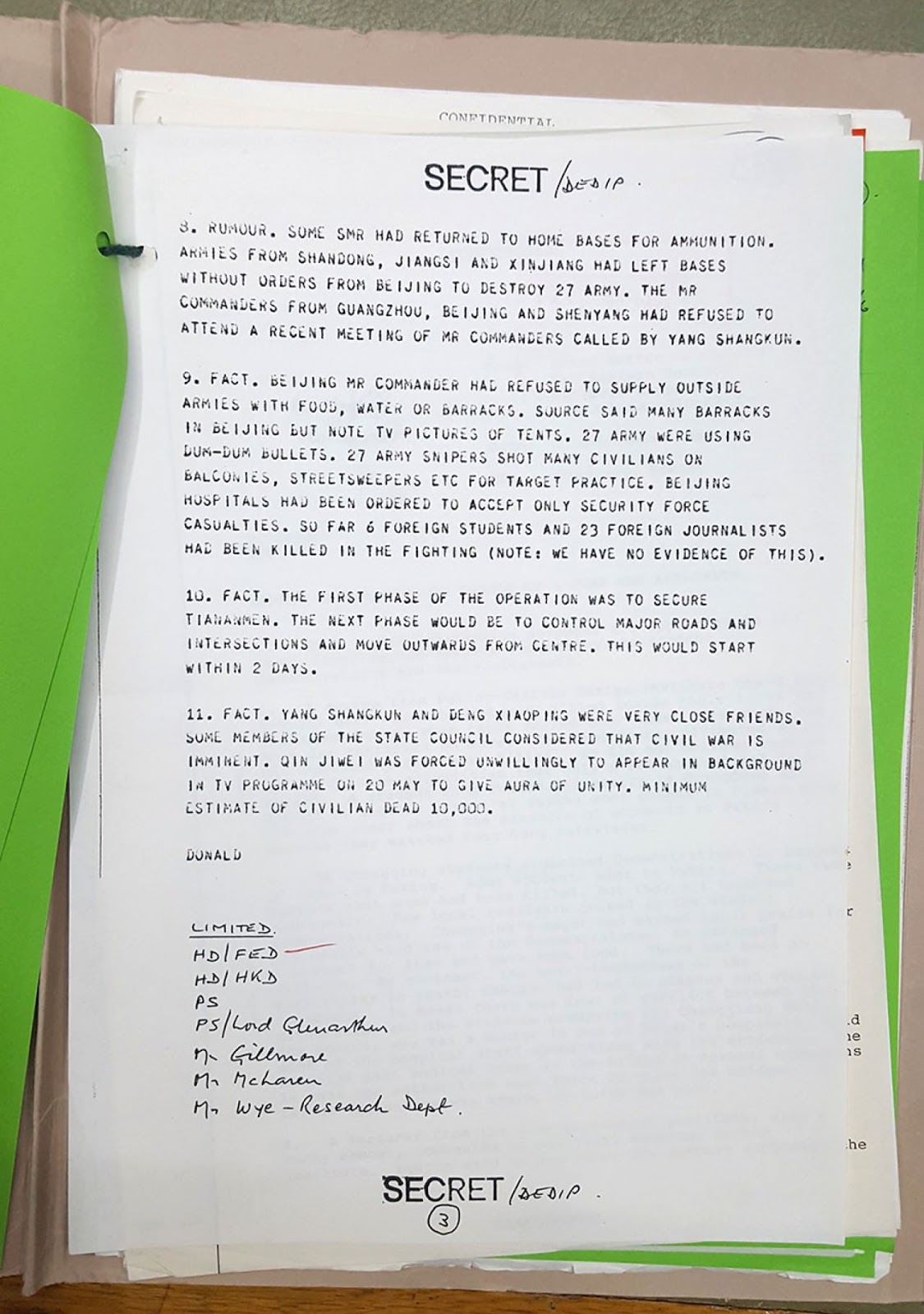
The truth of Beijing's June 1989 massacre declassified
Tiananmen Square in June of 1989
Massacres under communist regimes are seldom accidental but methodically planned out. Two high profile examples from Cuba back up this assertion. First the "13 de Marzo" tugboat sinking on July 13, 1994 that claimed 37 lives had been prepared and deliberately planned out in advance. The Brothers to the Rescue shoot down on February 24, 1996 was planned out weeks in advance and practice runs were carried out by the Castro regime's MiGs. Two weeks prior to the Tiananmen Square massacre then Chinese leader Deng Xiaoping observed: “Two hundred dead could bring 20 years of peace to China.” A recently declassified British diplomatic cable reveals that "at least 10,000 people were killed in the Chinese army's crackdown on
pro-democracy protesters in Beijing's Tiananmen Square in June 1989." This blog has remembered the events of those terrible days over the years and the continuing repression in China today.
Chinese military cracking down in June of 1989 in Beijing
The
document, made public more than 28 years after the event, describes
injured girls being bayoneted, bodies being ground up by armoured
vehicles and human remains being flushed into the sewers. "Minimum
estimate of civilian dead 10,000," the then British ambassador Alan
Donald said in the secret telegram to London seen by AFP at Britain's National Archives.
Crushed remains of a June 1989 victim
Quotes taken from the document itself:
"The
27 Army APCs [armoured personnel carriers] opened fire on the crowd
before running over them. APCs ran over troops and civilians at 65kph
[40 miles per hour].”
"Students understood they were given one hour to leave square, but after five minutes APCs attacked. Students linked arms but were mown down.
APCs then ran over the bodies time and time again to make, quote ‘pie’
unquote, and remains collected by bulldozer. Remains incinerated and
then hosed down drains."
"27 Army troops had used dum-dum bullets and snipers shot many civilians on balconies, street sweepers etc for target practice. "
"27 Army ordered to spare no one. Wounded girl students begged for their lives but were bayoneted.
A three-year-old girl was injured, but her mother was shot as she went to her aid, as were six others.”
"1,000 survivors were told they could escape but were then mown down by specially prepared MG [machine gun] positions."
"Army
ambulances who attempted to give aid were shot up, as was a
Sino-Japanese hospital ambulance. With medical crew dead, wounded
driver attempted to ram attackers but was blown to pieces by anti-tank
weapon."
"27 Army officer shot dead by own troops, apparently
because he faltered. Troops explained they would be shot if they hadn’t
shot the officer. "
"Minimum estimate of civilian dead 10,000."
Despite all of this the United Nations Human Rights office "dangerously handed over to China the names of
four human rights activists slated to attend a Human Rights Council
session" in 2017. Below are copies of the just declassified document.
"To forget the victims means to kill them a second time. So I couldn't prevent the first death. I surely must be capable of
saving them from a second death." - Elie Wiesel, 1986 Nobel Lecture
These are dangerous times for freedom, justice and memory. Institutions are under assault because they have resisted regime narratives and pursued scholarship. Today on the 23rd anniversary of the "13 de marzo" tugboat sinking the most complete report prepared by the Inter-American Commission on Human Rights in 1996 on this crime committed by the Castro regime on July 13, 1994 is apparently missing after having been online for 20 years.
In the early morning hours of July 13, 1994 thirty seven
men, women, and children were killed by Cuban regime agents who attacked them seven miles off the
Cuban coast as these refugees sought to
travel to freedom on board of the “13 de Marzo” tugboat. Eleven of these Cubans were children ranging in age from Helen
Martínez Enríquez, just five months old to Mayulis Méndez Tacaronte age
seventeen.
The 1994 massacre ended in the murder of 37 Cubans. It was a premeditated and well thought out atrocity committed by the Castro regime. In service to justice and memory reproduced below are the names of the 37 victims. Later today at 12 noon wherever you are join in a 13 minute moment of silence.
July 13, 1994 "13 de Marzo" Tugboat Massacre Victims
Tank men face off on June 5, 1989 on Changán Avenue in Beijing, China
27 years ago today on June 5, 1989 in Beijing, following a massive and bloody crackdown after six weeks of protests that began in Tiananmen Square and spread across 400 cities in China, a man would risk all to protest what had taken place. He was wearing a whit t-shirt and black trouses carrying what appears to be a shopping bag and walked out on the north edge of Tiananmen Square, along Chang'an Avenue and faced down a column of Type-59 tanks.
Victims of the Tiananmen Square massacre
The lead tank tried two drive around him, but the man repeatedly ran in front of the tank to prevent its passing. The tank driver turned off his engine and the rest of the column of tanks followed suit. The protester climbed on top of the tank and began to talk with them. Eventually he climbed back down and the tank driver turned the engines on but the protester once again blocked the tank column.
Wider perspective of the Tank Man protest with the full column of tanks
This time two men, dressed in blue, approach the protester and escort him off the main avenue and disappeared into the crowd.
There were two tank men that need to remembered. The protester who had stared down the column of tanks and the tank driver, who unlike many others over the previous 48 hours, refused to run over the non-violent protester. This act of nonviolence is now remembered the world over and the unidentified protester known as the Tank Man an icon, but the tank driver who refused to crush him also needs to be remembered.
Between June 3 and June 5, 1989 other tank drivers ran over protesters
"Hope is definitely not the same thing as optimism. It is not the conviction that something will turn out well, but the certainty that something makes sense, regardless of how it turns out." - Vaclav Havel
Amritsar massacre on April 13, 1919 in which as many as 1,000 people massacred
Yesterday a dialogue on nonviolence began with the question: Why did Jewish nonviolent resistance against Hitler not work? The answer to this question is that it was not tried. There was Jewish resistance but, although morally right, it was violent and looking at the end result, unsuccessful.
However other questions remain and the dialogue continues. For example Maria Al-Masani argues that nonviolence is tried first, and often it works, then if that doesn't work because the "population is brainwashed then step 2." In the course of this conversation on twitter the obvious question arose: "What is step two?" The answer given was as follows: "Step one is non violent resistance for months, step 2 is to fight for your freedom until the death. Ukraine, Step 1 & 2". However the Euromaiden was predominantly a nonviolent phenomenon and the violent elements, if anything, provided cover for Russian objectives that ended in the invasion and occupation of Crimea and Eastern Ukraine.
Fighting for ones freedom until the death fits within a nonviolent context. Mohandas Gandhi described it as follows: "I am prepared to die, but there is no cause for which I am prepared to kill." Non-violent resistance is a method of struggle that like violent resistance in a conflict is not without risk. However, Gandhi's outlook on nonviolence, "[t]o die in the act of killing is, in essence, to die defeated."
There were other efforts that sought to violently resist Great Britain forming alliances with Nazi Germany that failed miserably, but did play a role in the religious hostility that led to a post-independence blood bath in which over a million died.
The past century has demonstrated that violence escalates in a spiral with unforeseen consequences that over the long run are negative while at the same time demonstrating how acts of nonviolence over the long run have positive outcomes.