Showing posts with label Human Rights Day. Show all posts

Thursday, December 13, 2012

Repression in Cuba by the numbers and through a 15 year old's victimization


International Human Rights Day 2012 in Cuba marked an important milestone on the island. More than 300 arbitrary detentions over the course of 48 hours beginning on December 9 and ending 48 hours at midnight on December 10, 2012. Before this latest crackdown, human rights groups had already reported on the massive increase in arrests in Cuba.
 
The Council of Human Rights Rapporteurs in Cuba (CRDHC) released a preliminary report this December 10 on the violation of human rights in Cuba during the last eleven months of 2012 which states, in part: "The CRDHC has observed a dramatic maintenance of the already astronomical levels of political repression throughout 2012. The more than 6000 arbitrary and violent arrests performed by the political police against human rights defenders from January to the present date speak for themselves.." The combined number of arbitrary detentions in 2010 and 2011 will be dwarfed by the number detained in 2012 alone.

Quantitative measurements are of great importance in providing an overall breakdown of what is happening in the island but a qualitative analysis can provide insights into the nature of a system that can be lost in the numbers.
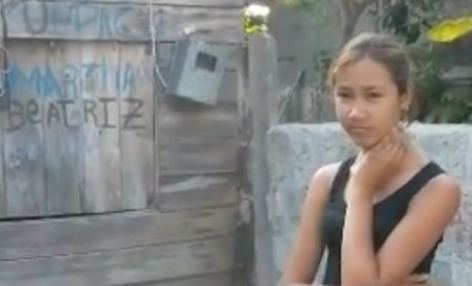
15-year old Martha Beatriz Ferrer Cantillo targeted by Regime
For example, looking at how the Castro regime observed International Human Rights Day on December 10, 2012 in a local school. Officials celebrated the dictator as a human rights champion while at the same time targeting a young girl for refusing to participate and threatening her friends. Jose Daniel Ferrer Garcia described over twitter the campaign government officials are waging against his 15 year old daughter:
Martha Beatriz Ferrer, my daughter of 15 years, was the victim yesterday of deception, harassment and ill-treatment at her College Prep school in Palmarito de Cauto. Cuban communist party leaders in the Mella municipality harassed Martha Beatriz for refusing to participate in a political action for Human Rights Day. In the political act that my daughter refused to participate in they began claiming that Fidel Castro was a champion in the defense of human rights. The actions against my daughter Martha Beatriz at school are increasing. Because of her charisma and courage she greatly concerns the political police. The political police, Cuban communist party and education leaders pressured Martha Beatriz's classmates not to involve themselves with her.

They are pressuring parents of the classmates of my daughter Martha Beatriz. Students from the College Prep school have been threatened with measures in their school record if they visit our home in Palmarito de Cauto. The campaign against Martha Beatriz intensifies so that her friends not attend her 15th birthday.
At the same time numbers do matter. Imagine for a moment on International Human Rights Day in Cuba over 300 hundred activists were detained between December 9th and 10th in order to prevent them from taking part in nonviolent activities to commemorate human rights. Imagine for a moment you are arrested at five o'clock in the morning on December 9th and held for over 24 hours until you are finally released at 8:00pm the following night. This is what Lady in White Sandra Guerra suffered through.

Sayli Navarro

At 11:57am on December 12, 2012, Sayli Navarro began to list the names of activists of the United Antitotalitarian Forum (FANTU) coalition that had been arrested on December 10 over twitter stating: 
On Monday the 10th there were 32 members of the FANTU Coalition who were arrested for hours.

In Placetas José Enrique Pablo Oliva & Jorge Prieto Rodriguez remained in detention from 7:00am until 3:00pm.

In Cabaiguan where: Omar Cabrera Rodriguez-Gallo, Mario Cabrera Carrazco, María Elena Durán Bermúdez and Hipólito Elias Rodríguez Pérez from 8:30am until 1:00 pm.


In Santa Clara, the provincial capital, those arrested were: Jesus Aristides HernandezPerez, Antonio Raul Machado Garcia, Jorge Luis Artiles Montiel, David Bustamante Rodriguez, Evergio Ibarra Valdez, Digna Rodriguez Ibanez, Sandra Rodriguez Gattorno, Lizandra Farray Rodriguez, Haymee Moya Montes de Oca, Ramon Arbolaez Abreu, Yosmel Martinez Corcho, Guillermo Farinas Hernandez, Barbaro Fraga Rodriguez, Ricardo Arrechea Gomez, Jose Rodriguez Lopez, Vladimir Morrera Bacallao, Feliberto Perez del Sol, Yayme Llanes Nunez, Raul Lopez Perez, Marbelis Gonzalez Reyes, Rolando Ferrer Espinosa, Ramon Jimenez Arencibia, Miguel Farinas Key, Robersi Zapata Blanco and Alexander Andrade Gimbarda.

 Meanwhile in Matanzas were detained in the PNR in the town of Cabezas, the activist Julia Silvia Gonzalez Fundora from 1:25 pm until 5:00 pm.
Sayli Navarro also gave her heart felt thanks and called people of good will to join in demanding that the life of imprisoned independent journalist now on hunger strike, Calixto Ramon be saved:
Each time that I have the opportunity to connect to the internet, I take the opportunity to send you ALL my deepest THANKS for following me on Twitter, for the direct messages that reach me and for helping me to disseminate what happens inside the island, through your re-tweets. Blessings and a hug to ALL! As a young Cuban who has been suffering firsthand what it is to have a family member held in a prison, obviously with limited space, I join the cries for the life of Calixto Ramon, on hunger strike. JOIN US!
Like Martha Beatriz Ferrer, Sayli Navarro is the daughter of a former Cuban prisoner of conscience but she's a few years older and has years of activism under her belt. They are terrified that Martha Beatriz will also follow the path of human rights activism and this totalitarian system is doing it all it can to stop her. This is precisely why it is important to tell their story and get the word out on the plight of human rights defenders in Cuba and their children who are also targets of repression.


Monday, December 10, 2012

The Regime Strikes Back: International Human Rights Day in Cuba

Despite massive orchestrated regime repression combined with a propaganda offensive the opposition was able to celebrate international human rights day in Cuba with courageous defiance.
 
On International Human Rights Day the Castro regime engaged in a triple attack. First it shut down cell phones and home telephones of activists and independent journalists so that it was difficult if not impossible for them to communicate. (This tactic was first documented and used successfully on a national scale by the dictatorship during Pope Benedict XVI's visit to Cuba in March of 2012.) By 12 noon today activists such as Orlando Luis Pardo were tweeting that "cell phones of the majority of activists and Cuban civil society leaders including the Ladies in White were blocked."

Secondly the dictatorship organized rapid response brigades led by state security to lay siege to the homes of activists and when the activists took to the streets in nonviolent protest these government agents violently ended the demonstrations and detained the activists. At 9:24am today Cuban blogger Yoani Sanchez tweeted that "independent journalist Carlos Rio Otero was impeded from leaving his home by police patrol."This repression started in the early morning and has continued throughout the day and into the night. Tonight at 9:53pm former prisoner of conscience Angel Moya tweeted that "the home of activist Eduardo Pacheco was under siege in Cardenas Matanzas" and that "repressive forces were wielding knives and shouting no one will go out."As was done yesterday, a large number of activists were arbitrarily detained to prevent them from participating in activities on International Human Rights Day. Bertha Soler, the spokesperson of the Ladies in White was beaten up and arrested yesterday then released only to suffer the same indignity again today.

Thirdly, over the internet the Cuban government and its sympathizers recycled propaganda on the non-achievements of the revolution and attacked the U.S. Embargo while claiming that news of human rights violations in Cuba were lies manufactured by counter-revolutionary elements and the Yankees. A number of the claims made about U.S. sanctions were factually inaccurate.
 
In reality, the human rights situation in Cuba over the past four years has gone from bad to worse. At the same time that sanctions have been loosened. The only bright spot was the product of a sustained international and national campaign for the release of Cuban prisoners of conscience arrested during the 2003 Black Cuban Spring which succeeded in getting all of them out of prison by March of 2011. Nevertheless there are new prisoners of conscience who have replaced them and the international community does not seem to have the same level awareness and commitment that it did back in 2003 generating greater impunity.

Unfortunately, one of the byproducts of this lessened solidarity and increased impunity it is feared may be the suspicious deaths of high profile activists such as Laura Pollan and Oswaldo Paya not to mention human rights defenders such as Orlando Zapata Tamayo, Wilman Villar Mendoza, Juan Wilfredo Soto Garcia, Sergio Díaz Larrastegui and now the life of  Calixto Ramon Martinez hangs in the balance.  

The Castro regime struck back today with its arsenal of repressive tools and agents of influence abroad, but despite the dictatorship's efforts to silence the opposition it failed. Protests and marches went on, signs were posted and leaflets were distributed across the island and a national pots and pans protest was successfully carried out. International Human Rights Day in Cuba demonstrated that nonviolent and creative resistance can overpower the most sophisticated plans of the regime.


Opposition activist and former prisoner of conscience Jose Daniel Ferrer Garcia was able to post an important video tonight (embedded above) outlining the nonviolent nature of the Cuban civic movement's struggle for freedom in Cuba and its objectives.


The Rosa Maria Paya, of the Christian Liberation Movement was able to post an audio on the state of human rights in Cuba that demands justice for her father Oswaldo Paya in addition to freedom for Calixto Ramon Martinez and Josvany Melchor Rodriguez both unjustly imprisoned.

All of this was accomplished despite the increased repression and danger to the lives of these activists.

At the same time people of good will abroad can help reduce the level of impunity in Cuba by pressuring for increased scrutiny on the regime. Please take a few minutes of your time to visit the Free Cuba Foundation and sign three petitions in order to demand justice, freedom and an end to repression.

Amnesty International designed its symbol of a candle surrounded by barbed wire inspired by the proverb: "It is better to light a single candle than to curse the darkness." It is important to remember the power of shining the light of truth into darkness and its great nonviolent power.


International Human Rights Day in Cuba 2012: A look back


 The past year has continued to see a deterioration of human rights in Cuba. It began in January with the terrible news that Wilman Villar Mendoza, another prisoner of conscience, had died while on hunger strike in a Cuban prison demanding that his rights be respected. Unfortunately, Pope Benedict's visit to the island in March coincided with a nationwide crackdown on Cuban dissidents while His Holiness was in Cuba. The aftermath has been even worse. Sergio Díaz Larrastegui, died this past April 19, 2012 at the Julio Trigo Hospital in Arroyo Naranjo in Havana, Cuba. He died in the shadows, under the control of Cuban State Security. Less than three months later, Cuban opposition leader and Catholic Layman Oswaldo José Payá Sardiñas along with Harold Cepero from the same movement died under suspicious circumstances that appear to have been provoked by State Security on July 22, 2012. Family and friends are demanding an international investigation into their deaths.

The United Nations conducted a review of torture in Cuba and found much to criticize.

The number of arbitrary detentions in 2012 have skyrocketed compared to previous years. At the beginning of December the number was already at 6,035 detentions.  In November and December of 2012 there were also large scale crackdowns on human rights defenders.

Violence and threats of violence against nonviolent activists and their families continues in Cuba to the present day. An extreme but not atypical example is that of Damaris Moya Portieles who initiated a hunger strike on June 3, 2012 demanding that her 5-year old daughter, Lazara Contreras Moya, be kept safe. This was because state security agents made graphic rape threats to the mother concerning her five year old daughter. The worse of the perpetrators was Eric Francis Aquino Yera. Berenice Héctor González, a 15-year old young woman, suffered a knife attack on November 4, 2012 for supporting the women's human rights movement, The Ladies in White. News of the attack only emerged a month later because State Security had threatened the mother that her daughter would suffer the consequences if she made the assault public. Lady in White Sonia Garro who has on more than one occasion been badly beaten by State Security and her husband have been locked up since March 2012. Unfortunately, when a UN goodwill ambassador visits Cuba to discuss violence against women the above practices by the dictatorship go unaddressed. Dissidents have been beaten up and arrested for addressing national and international bodies.

Conditions in the prisons continue to be dire and nonviolent human rights defenders are housed with murderers. There are new prisoners of conscience in Cuba. For example on November 28, 2012 Cuban labor union activist Ulises González Moreno was sentenced to two years in prison for a "predilection to social dangerousness."

Unfortunately international media on the island has been slow to report on crackdowns taking place and are frequently scooped by independent Cuban journalists on twitter because the news media know, from past experience, that if they report on the opposition and the repression of the dictatorship they their bureaus will be shut down and their journalists expelled. Even the case of a British citizen held in Cuba because he only had a British passport but because he was born in Cuba, the regime refuses to recognize it made the news in The Daily Telegraph because the man's family spoke out. Not a word of this when reporting on migration reforms in the island.

It is feared that the year in Human Rights in Cuba will end as it began with a human rights defender dying on hunger strike due to the cruelty and mistreatment amounting to torture by Cuban officials in the prison. Calixto Ramon Martinez who reported on the cholera outbreak and was detained on September 16, 2012 after exposing Cuban government culpability in the deterioration of medicines sent to the island by the World Health Organization (WHO) has now been on hunger strike for 30 days protesting his unjust imprisonment. According to Roberto de Jesus Guerra Perez, the independent journalist is being denied water in order to pressure him into ending his hunger strike. This type of practice is believed to have contributed to the death of Wilman Villar Mendoza earlier this year and to the death of Orlando Zapata Tamayo on February 23, 2010.

The arrests with violence of over a 100 activists on the eve of International Human Rights day under the pretext that human rights defenders is a somber harbinger of what will be witnessed on December 10, 2012.

The evidence is self-evident these are not isolated human rights violations but a systematic pattern of repression to violate the human rights of all Cubans and human rights defenders in particular.


Sunday, December 9, 2012

Dozens of Ladies in White and other activists beaten and arrested leaving Santa Rita Church today

We cannot celebrate Human Rights Day here in Cuba. We can't because they repress us and beat us. Right now there's an act of repudiation in front of the Ladies in White headquarters." - Bertha Soler, Lady in White, The Associated Press, December 9, 2011

Bertha Soler arrested today in Havana, Cuba
Update: 7:49pm December 9, 2012: Angel Moya reports over twitter that "More than 100 Ladies in White were violently arrested on the eve of December 10, institutionalized violence against women."

Bertha Soler made the statement at the top of the page one year ago today. She is unavailable for comment today because she along with 44 other Ladies in White was beaten up, dragged, and arrested emerging from Santa Rita Church in Havana, Cuba.

On the eve of International Human Rights Day in Cuba 45 Ladies in White and at least eight activists were arrested and beaten by agents of the Castro regime. The mainstream news based in Havana so far has been silent but Cuban independent journalists and activists are once again scooping the news bureaus via twitter. These journalists have a lot more to lose than being deported from Cuba. For example, Calixto Ramon Martinez Arias is on day 29 of a hunger strike protesting his unjust imprisonment since September 16, 2012. Another Cuban writer, Angel Santiesteban, has been sentenced to five years in prison for thinking differently and having the courage to set it down to paper.

The price paid by Cuban independent journalists often times is not measured in money but beatings and years in prison.

First learned of the crackdown through the Ladies in White official twitter account which stated: "Try to communicate with Lady in White Berta Soler and message says that her phone number does not exist." A short time later another tweet appears:  Arrests, repudiation rallies, the Ladies in White phones interrupted, is happening right now throughout Cuba.

Less than 20 minutes later Yoani Sanchez confirms "arrest of William Cacer Diaz who is in the station of Alamar together with Angel Moya and other activists."Angel Moya is the husband of the leader of the Ladies in White, Bertha Soler and he is also a former prisoner of conscience.

Bertha Soler and Angel Moya
 At 3:45pm Ivan Hernandez Carillo confirms the "detention and arrests of the Ladies in White who walked through 5th Avenue of Havana today and that they have been taken to whereabouts unknown." Ivan Hernandez Carillo is an independent journalist and labor activist who spent many years in prison for his nonviolent activism and journalism. Nevertheless he begins to tweet in increments of 140 characters a report of what took place today in Cuba:

Witnesses to event tell me that at 3rd & 26th, Miramar, Havana were paramilitary women of the regime in civilian dress in three buses. The women, experts in karate, dressed as civilians and part of  the political police, dragged, beat and arrested the Ladies in White. In addition to the 45 Ladies in White arrested, there was news of another eight activists who accompanied them that were also arrested. "The Ladies in White were dragged and beaten through the street" said an eyewitness, who added, "that what the regime did to them was disastrous."

News of the crackdown was confirmed via other twitterers who provided additional details. For example Felix Navarro, a former prisoner of conscience, reported that "[a]lso beaten and arrested was Angel Moya Acosta when he exited the Church of Santa Rita today."

The blogger Sayli Navarro cited Roberto J. Guerra of Hablemos Press as the source and reported that 44 Ladies in White and more than eight activists were detained in Havana and that it took place at 3rd and 26th.

Within the past hour through the twitter account of Roberto Guerra there is news that some of the Ladies in White and opposition activists are being released. The names provided are Yadira Bonbino, Santos Manuel Fernandez, Daniel Millet, Magaly Norvis, and the president of the Ladies in White Bertha Soler .

Ladies in White gathered in Havana, Cuba
International Human Rights Day 2012 requires the scrutiny of the international community along with courageous journalists to report what is going on in Cuba. The pretext for today's violent crackdown reports Diario de Cuba is that according to State Security they were arrested for not respecting the grief of the Cuban people over Chavez's health.

Tuesday, November 1, 2011

The Cuban Resistance and the Occupy Movement: Seeking justice on parallel paths

Divide et impera [Divide and conquer] - Julius Caesar
Injustice anywhere is a threat to justice anywhere - Martin Luther King Jr.

Civic Resistance in Havana in 1994 and Occupy Wall Street in New York City in 2011

Today and tonight the world knows about arrests and demonstrations broken up by the police with reference to the Occupy movement but how many know about what has taken place in Cuba, just 90 miles away from US shores at the same time? New bureaus in Cuba are intimidated by the regime authorities into not fully reporting what is taking place because if they do they face expulsion from the country. The main way to learn what is taking place in Cuba is to follow Cuban activists and bloggers over twitter and that is still limited.

Two activists have been on hunger strike in Cuba since September 28, 2011 protesting the violence and increasing repression against activists by the dictatorship. Their names are Alcides Rivera Rodríguez and Rolando Ferrer Espinosa and they are both in critical condition. Alcides was admitted to the Hospital Arnaldo Milián Castro. At 4:00pm today activists who where at the hospital to support and accompany Alcides Rivera Rodríguez were beaten and arrested by State security units. There whereabouts are unknown. The activists who were assaulted and violently arrested in the hospital are Jorge Luis Pérez “Antúnez”,Yris Pérez Aguilera. Outside the hospital engaged in a sit-in, and also violently arrested were Damaris Moya Portieles, Idania Yánez Contreras, Julio Columbié Batista and Yanisbel Valido.

The reason the activists were present at the hospital is that human rights defenders have been known to die mysteriously from what amounts to purposeful medical neglect as appears to have been the case On October 14, 2011 with Laura Pollan and in 1997 with Sebastian Arcos Bergnes. On February 23, 2010, Amnesty International prisoner of conscience Orlando Zapata Tamayo died after 83 days on a water only hunger strike protesting torture and ill treatment. Prison authorities contributed to his death by denying him water on and off over a period of 18 days in an effort to break him.

The Occupy movement has a twitter account keeping a running count of arrests. As of October 31, 2011 at 10:00pm the number stood at 2,976. Over the course of 2011 until September 23 conservative estimates placed the number of Cubans arrested at Cuba at 2,221. Other estimates place the number of arrests at over 3,000. In Cuba, a number of the arrests are preemptive. State security agents arrest activists that the authorities believe will take part in a nonviolent protest sometime in the future and hold them until after the demonstration has taken place. The population of the United States is approximately 307 million and the population of Cuba is approximately 11.2 million.


Demonstration by Ladies in White violently broken up by state security agents (March 2010)

The comparison between the two is made here because today in a reply to an article in Women's E-News on women marching and protesting in Cuba there was a comment left that sought to down play what was taking place in Cuba drawing comparisons with the Occupy Wall Street movement (OWS). The OWS doesn't need anyone to explain to it how an adversary will attempt to slander and libel a movement, but the Cuban democratic opposition has been the victim of a specially heinous campaign.

When 24-year old Scott Olsen had his skull fractured by a projectile in Oakland, California in the midst of the police breaking up an Occupy Oakland protest on October 25 ,2011 the news was broadcast throughout the country and around the world and widely denounced. But what of Juan Wilfredo Soto Garcia who was beaten up by the political police for speaking out in a public park on May 5, 2011, required hospitalization, then died three days later. The news circled the world but was blacked out in Cuba.


Occupy Wall Street, Miami, FL in 2011

There are similarities between the Occupy movement and the civic movement in Cuba. Both are confronting injustices in their respective societies and both have opted to resist using nonviolent means. Activists in Cuba are holding workshops on nonviolence and discussing the ideas of Mohandas Gandhi and Martin Luther King Jr. One of them is Librado Linares, a former prisoner of conscience and member of the Cuban Reflection Movement. The same is being done within the Occupy movement and also over the internet with brief 140 character long rules for activists. One example are the 8 Rules authored by nonviolent action advocate Cynthia Boaz:
1) Nonviolent action AND speech, no matter what. Zero tolerance for violence.
2) Unity of message across orgs & people. Consistent demands, all should know them.
3) There must be a long-term and coherent strategy, not just tactics & actions.
4) Police should be seen as potential recruits to movement, not enemy.
5) Keep national/international audience in mind when framing. Goal is win people over.
6) Defensive strategies never win. Don't respond to attacks using their language.
7) Claim victory whenever possible. Important for morale.
8) Keep anger in check with solidarity actions & humor.
In both instances what is taking place transcends the ideological divide and is a question of basic rights. In both instances the adversary has sought out the age old strategy to divide and conquer while using fear as a wedge. Not to mention using agent provocateurs to discredit the movement.


End the Fed, New York City , NY in 2008

Nevertheless, while there is life there is hope and activists can learn from past mistakes. How to respond constructively to violent repression and maintain the movement whole in order to achieve desired change. One lesson learned time and again over the years is the need to at least speak out against injustice wherever it is present and when possible take action against it. This requires both solidarity and empathy with people of good will from around the world.


Uprising at the Seawall, Havana, Cuba 1994

Friday, December 11, 2009

Acts of Repudiation from Mariel 1980 through International Human Rights Day 2009: Government Run and Organized Operations

Havana 1980 "Mariel"
Havana 2009 "Human Rights Day"

"Tolerance and human rights require each other." - Simon Wiesenthal

The sad truth is that most evil is done by people who never make up their minds to be either good or evil." - Hannah Arendt


It is understandable at a time when newspapers are in crisis and suffering cutbacks that professionals could get a story wrong, but the coverage of the attacks against the Ladies in White and other dissidents on International Human Rights Day save some notable exceptions swallowed the regime line of "pro-government mobs and government supporters" that in reality does not exist without even a question. The history of the creation and development of "acts of repudiation" has been well documented.

Acts of repudiation were first seen in 1980 during the Mariel crisis when Cubans who simply wanted to leave the country were brutally assaulted and forty lost their lives in lynchings. A refugee at the time of Mariel Mirta Ojito, now a journalist and author, described what she had seen and experienced in an opinion piece for the New York Times:
Mariel marked the first time socialist Cuba turned against itself. Thegovernment staged riots called actos de repudio -- street rallies inwhich neighbors turned against neighbors, harassing and tormenting those who wanted to leave the country. The victims were often pelted with rocks, tomatoes and eggs. Windows were shattered. Doors were knocked down. Some people were killed, dragged through the streets as trophies to intolerance and hate. Sometimes people trapped inside their homes chose to kill themselves rather than face their tormentors.

Both Amnesty International (AI) and the Office of the High Commissioner for the UN Human Rights Commission recognized that the individuals taking part in the acts of repudiation are "organized by
the authorities." AI has defined this form of state sponsored intimidation as follows:
Acts of repudiation [Actos de repudio] these are meetings or demonstrations organized by government officials or mass organizations supporting the government at which the person or persons concerned are
subjected to criticism and abuse, sometimes physical, because of their so-called counter-revolutionary views or activities.
The Cuban government is not static. Repression and the tactics change and evolve over time with one aim maintaining absolute power. When Eastern Europe and the Soviet Union began to transition to democracy in the late 1980s culminating in the peaceful dissolution of the USSR in 1991 the dictatorship in Cuba responded through a number of different initiatives one of them was to further refine "acts of repudiation" with the creation of the Brigadas de Respuesta Rápida "Rapid Response Brigades" to prepare for potential unrest and stepped-up dissident activity under the direction of the MININT (Cuba’s Ministry of the Interior). According to AI the:
Rapid Response Brigades, [Brigadas de Respuesta Rápida] were set up in 1991 to defend the country, the Revolution and socialism in all circumstances, by confronting and liquidating any sign of counter-revolution or crime and were subsequently involved in numerous violent confrontations with dissidents.
These are not spontaneous "pro-government mobs" but individuals transported by the dictatorship and instructed to attack those who dissent from the government line as was seen on International Human Rights Day where the violence was surgically directed against women standing up for their husbands who are Amnesty International prisoners of conscience and demonstrators and observers at a second demonstration. These individuals are not neighbors or supporters of the government who spontaneously appear to counter the demonstration. They are part of a “unified system of vigilance and protection (SUVP)” that comprise members of Committees in Defense of the Revolution (CDRs), mass organizations, and in some cases taken from their workplaces and obligated to participate to keep their jobs and are organized and directed by Cuban State Security. According to Human Rights Watch the Cuban government "employs so-called repudiation meetings (mitines de repudio), or acts of repudiation, to humiliate and intimidate dissidents publicly, sometimes violently." A more detailed description emerges in a 1998 report by Douglas Payne:
Their principle mission is to carry out acts of repudiation, which entail violent mob actions against dissidents or suspected dissidents, their homes, and any public demonstration of dissent. The mobs can involve up to hundreds of people who wield chains, bats and lengths of pipe. They shout slogans and threats, throw rocks and other crude missiles, deface homes with graffiti and otherwise damage property. The mobs are frequently invasive, breaking down doors and windows to carry out physical attacks against the occupants.
The participants in these neo-fascist attacks are probably taking part in this violent propaganda exercise in the Cuban dictatorship's version of Orwell's 2 minutes hate to avoid being on the receiving end of such an action themselves. For example during an act of repudiation on August 24, 2005 against Bertha Antunez the mob stopped the action when Bertha began to play Willy Chirino's "Ya Viene Llegando" and began to dance in the street. These are not regime supporters driven into an ideological frenzy to attack dissidents. They are people, in many cases brought by bus often times from work, and obligated by the government to attack other Cubans. It is the height of cowardice both for the Cuban government and the individuals taking part in the attacks and it is not a sign of regime strength but of fear that they will lose control.

Saturday, December 5, 2009

Human Rights Marathon December 5-10, 2009

"Man's triumph will consist in substituting the struggle for existence by a struggle for mutual service." - Mohandas Gandhi

"Even a purely moral act that has no hope of any immediate and visible political effect can gradually and indirectly, over time, gain in political significance." - Vaclav Havel

Uncommon Sense and Palabra report on the blogburst between December 5th through International Human Rights Day. Uncommon Sense issues a call to action:


[S] hare a demand that the human rights of Cubans be respected, and that Cuba be free. Our message:

"Freedom for Cuban political prisoners!"

LIBREN A LOS PRESOS POLITICOS CUBANOS!

"Long live human rights!"

VIVA LOS DERECHOS HUMANOS!

"Long live a free Cuba!"

VIVA CUBA LIBRE!


Palabra reports on a blog action for Darsi Ferrer, a Catholic human rights activist in Cuba, imprisoned since July 21, 2009 without trial.

Since 2006, Dr. Foster, with his wife and a group of activists have celebrated International Human Rights Day on December 10 carrying out a peaceful demonstration at 11:00 am at the park Villalón, in Calzada, D and E in Vedado. These protests have been broken up by pro-government mobs shouting, shoving protesters and sometimes dragging them through the street.

From his cell at Valle Grande prison Dr. Ferrer has called for all Cubans and foreigners in Cuba to celebrate the day of the Universal Declaration of Human Rights by marching peacefully on December 10, 2009 in the same place he has done and has been brutally assaulted for his defense in his claim worthy of respect for the human person.

The plea is simple: Change in Cuba an end to repression.
For them, for all human rights in Cuba
