Showing posts with label extrajudicial killing. Show all posts

Sunday, July 22, 2018

Oswaldo Payá Sardiñas and Harold Cepero Escalante: Remembering two Cuban martyrs

"Six years ago the Castros murdered my father, along with him #HaroldCepero. Today we meet to honor their lives and appreciate the time they were with us . Today their murderers already know that there will be no impunity and that they failed because they could not kill their legacy. #Freedom" - Rosa María Payá, over Twitter on July 22, 2018

 Harold Cepero Escalante and Oswaldo Payá Sardiñas
There are a few moments that are burned into my memory: the moment on January 28, 1986 when the Challenger blew up, the February 24, 1996 shoot down of two Brothers to the Rescue planes by Cuban MiGs, the attack on the Twin Towers on September 11, 2001 and the murders of Oswaldo Payá Sardiñas and Harold Cepero Escalante on July 22, 2012.  


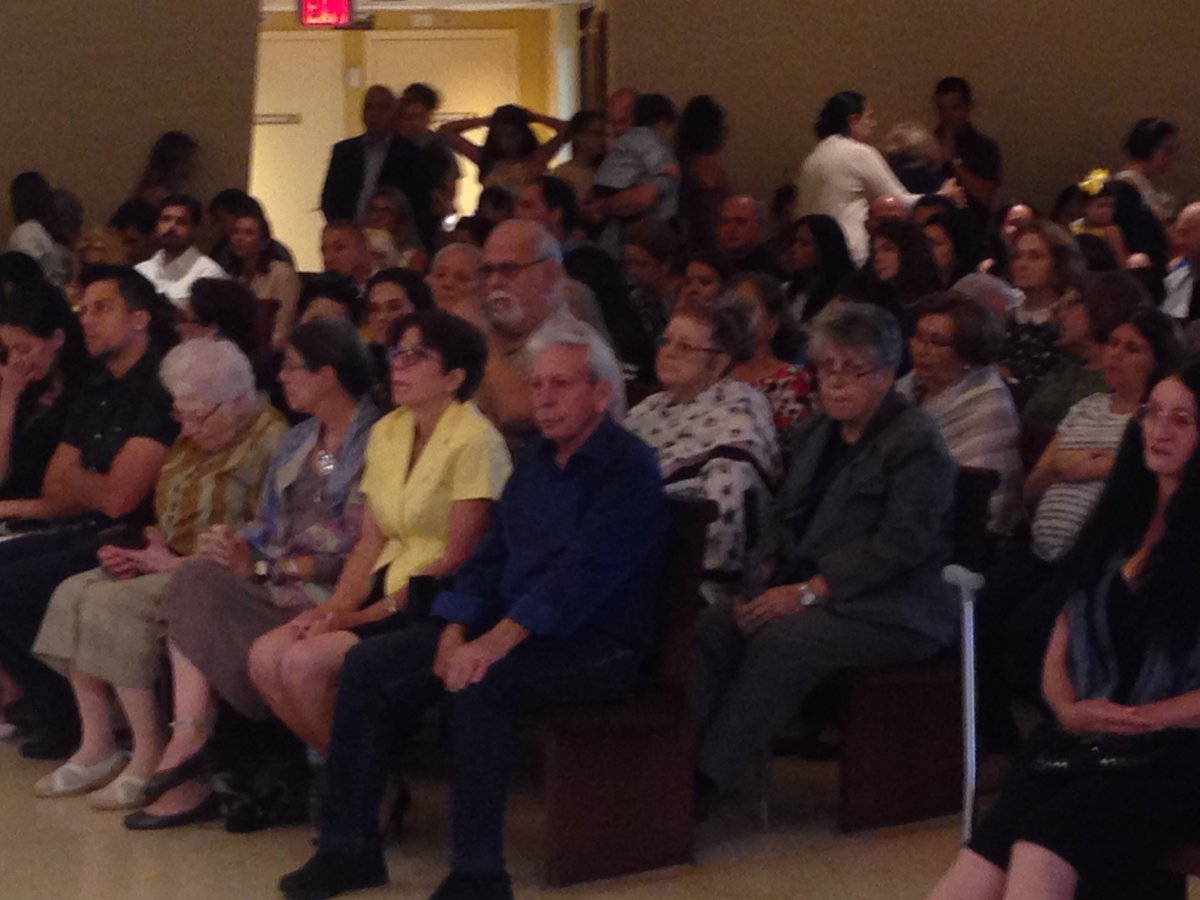
Mass in remembrance of Oswaldo and Harold in Miami
Today, I prayed for them and celebrated their lives. Around the world in Paris, Madrid, Miami, Hialeah and Havana masses were held in Oswaldo and Harold's memory.  Their ideas remain a relevant and powerful challenge to the existing regime in Havana.
 "Those who remove and crush freedom are the real slaves." - Harold Cepero Escalante (January 29, 1980 - July 22, 2012)

"They have told me that they will kill me before this regime ends, but I will not flee." - Oswaldo Payá Sardiñas (February 29, 1952 - July 22, 2012) 
 On Sunday, July 22, 2012 at 1:50pm near Bayamo in eastern Granma province of Cuba the incident provoked by State Security that ended the lives of Oswaldo Payá Sardiñas and Harold Cepero Escalante was underway. The question some may ask is "why did the Castro regime want him dead?" The answer is simple: he exposed their lie while mobilizing tens of thousands of Cubans.

Mass in memory of Oswaldo and Harold in Madrid
Fake Change in Cuba
Oswaldo Payá Sardiñas speaking on behalf of the Christian Liberation Movement in Havana on March 30, 2012 bravely denounced the fraudulent change that was then taking shape and that is being carried out today with the Obama administration's Cuba policy:

Our Movement denounces the regime's attempt to impose a fraudulent change, i.e. change without rights and the inclusion of many interests in this change that sidesteps democracy and the sovereignty of the people of Cuba. The attempt to link the Diaspora in this fraudulent change is to make victims participate in their own oppression. The Diaspora does not have to "assume attitudes and policies in entering the social activity of the island." The Diaspora is a Diaspora because they are Cuban exiles to which the regime denied rights as it denies them to all Cubans. It is not in that part of oppression, without rights, and transparency that the Diaspora has to be inserted, that would be part of a fraudulent change. 

The Payá family
What real change would look like
Oswaldo Payá in the same statement outlined that authentic change was contingent upon a principled path of action not economic determinism:

The gradual approach only makes sense if there are transparent prospects of freedom and rights. We Cubans have a right to our rights. Why not rights? It is time. That is the peaceful change that we promote and claim. Changes that signifies freedom, reconciliation, political pluralism and free elections. Then the Diaspora will cease being a Diaspora, because all Cubans will have rights in their own free and sovereign country. That is why we fight.
The current Constitutional convention in Cuba, presided over by Raul Castro, is part of the fraudulent change that Oswaldo Payá so effectively denounced. Cosmetic changes to curry international favor without changing the totalitarian and dictatorial nature of the regime in Cuba.
 

Tuesday, November 14, 2017

Remembering some of the victims of Cuban communism: Four victims of the 1996 Brothers to the Rescue Shootdown

“There is no greater love than this: that a person would lay down his life for the sake of his friends.” – John 15:13 

Murdered by the Castro regime on February 24, 1996
 Some psychologists argue that as the number of victims increase into the hundreds, and thousands that compassion collapses out of the human fear of being overwhelmed. Soviet dictator Josef Stalin put it more succinctly: "When one man dies it's a tragedy. When thousands die it's statistics." In the case of Cuba the communist regime has killed tens of thousands, and many have become numb in the face of this horror. Therefore on the 100th anniversary of the founding of the first communist regime in Russia, that caused so much harm around the world, will focus on the small corner of Cuba and on an infinitesimal sampling of some of the victims of Cuban communism.

In this fourth entry will focus on an act of state terrorism that could have ended in an armed conflict between the Castro regime and the Clinton Administration. Four men were killed for trying to save lives in the Florida Straits in 1996 in an elaborate conspiracy carried out by Cuban communists involving espionage and Cuban warplanes.

Previous entries in this series where about Cubans trying to change the system nonviolently. The first entry concerned Orlando Zapata Tamayo, a humble bricklayer turned courageous human rights defender who paid the ultimate price in 2010 for speaking truth to power. The second entry focused on Oswaldo Payá Sardiñas, a Catholic lay activist, nonviolence icon, husband, father of three and the founder of a Cuban opposition movement that shook up the Castro regime with a petition drive demanding that human rights be respected and recognized in Cuba. This action and speaking truth to power led to his extrajudicial killing in 2012. The
third entry focused on one of the great crimes of the Castro regime that has been well documented by international human rights organizations and reported on ABC News Nightline that claimed the lives of 37 men, women, and children. They were trying to flee the despotism in Cuba to live in freedom and were extrajudicially executed.

Four men were killed when the two planes they were flying in were shot down on a Saturday afternoon at 3:21 and 3:27 on February 24, 1996 over international airspace while engaged in a search and rescue flight for Cuban rafters. Their planes were destroyed by air-to-air missiles fired by a Cuban MiG-29 aircraft on the orders of Raul and Fidel Castro

Who were they? The four individuals who were killed represented all aspects of the Cuban diaspora: Armando Alejandre Jr, a child who arrived with his parents from Cuba in 1960, Carlos Costa, born in Miami Beach in 1966 and Mario Manuel de la Peña, born in New Jersey in 1971 the children of Cuban exiles. Pablo Morales was born in Cuba in 1966, raised there and was saved by Brothers to the Rescue when he was 26 years old while fleeing the island on a raft. Two were from Havana, one was from New Jersey and the other from Miami Beach.

The oldest of the four, Armando Alejandre Jr. born in Havana, Cuba on April 16, 1950 who was nine years old when Fidel Castro came to power. He arrived in the United States with the rest of his family at the age of 10. He graduated from high school in Miami enlisted in the military, out of gratitude for the United States providing refuge to Cubans fleeing the Castro regime, serving two tours in Vietnam. Following his military service, he attended Florida International University, which is my alma mater, and following graduation went to work in Metro-Dade Transit Agency in Miami. At the time of his death he was 45 years old leaving behind his wife of 20 years, Marlene and an 18-year-old daughter Marlene Victoria. Armando became a U.S. citizen and was a Cuban-American.

Mario Manuel de la Peña, the youngest of the four was born the township of Weehawken, New Jersey on December 28, 1971 when the Castro regime had already been in power 12 years. He was a son of Cuban exiles. Mario received his degree of Associate in Science in Professional Piloting Technology from Miami-Dade Community College at age 21. In 1996, he was completing his senior year at Embry Riddle Aeronautical University. Following the shoot down, Embry Riddle conferred upon Mario the degree of Bachelor of Aeronautics honoris causa. At the time of his death he was just 24 years old and is survived by his parents and brother.

Carlos Costa was born on June 23, 1966, in Miami Beach, FL, to Cuban exiles and attended Monsignor Pace High School. He was a graduate of Embry-Riddle University of Aeronautics, where Carlos obtained a bachelor of science in airway science and was licensed as a commercial, instrument, and private pilot, as well as a flight instructor and multi-engine flight instructor. Carlos worked at Miami International Airport, where he trained employees on aviation rules and enforced Federal Aviation Administration standards. Carlos Costa was 29 years old when the shoot down occurred. Carlos is survived by his parents of Cuban origin, Mirta and Osvaldo Costa, his sister, Mirta Mendez, one niece and two nephews.

Pablo Morales was born in Havana, Cuba, on May 16, 1966 and was the same age as Carlos Costa but with a different life experience. He studied cartography and obtained a degree as a geodesics technician. In August 1992, Pablo fled Cuba on a raft and after three days at sea, was spotted in the ocean by Brothers to the Rescue. This experience motivated him to join the previously mentioned organization. He was a passenger in the aircraft with Carlos Costa when they were shot down. Pablo was survived by his mother Eva Barbas, who passed away in 2013, a sister, and a brother. He was a Cuban citizen at the time of his death with residency in the United States and was just 29 years old.  


15-year-old Gregorio Perez Ricardo in 1991
 How and why Brothers to the Rescue formed
In February of 1991 news accounts of the death by dehydration of 15-year-old Gregorio Perez Ricardo, a rafter fleeing Cuba, as U.S. Coast Guard officials tried to save his life shocked the moral imagination of several pilots. This was not an isolated event. Academics Holly Ackerman and Juan Clark, in the 1995 monograph The Cuban Balseros: Voyage of Uncertainty reported that “as many as 100,000 Cuban rafters may have perished trying to leave Cuba.” Anecdotal evidence documents that some of them were victims of the Cuban border patrol using sand bags and snipers against defenseless rafters. 


It was within this context that on May 13, 1991 Brothers to the Rescue was founded with the aim of searching for rafters in the Florida Straits, getting them water, food, and rescued. In December of 1993 Brothers to the Rescue inaugurated their permanent hangar naming it after Gregorio.

Brothers to the Rescue by November of 1995 was collaborating with the Florida Martin Luther King Institute for Non-violence and took part in the King Day parade in 1996. On February 8, 1996 The Miami Times reported “that this group has come around to the belief that change can be brought about in Cuba in the same way that it was brought about by Dr. King in the United States.” The Miami Times concluded in the editorial “Spreading King’s Message” that “In throwing Dr. King's principle into the volatile mix of Cuban exile politics, Brothers to the Rescue is showing a willingness to be creative.”


Coretta Scott King and Jose Basulto of Brothers to the Rescue
 Why the Castro brothers wanted to destroy Brothers to the Rescue
They risked their lives in the Florida Straits to rescue Cuban rafters and at the same time Brothers to the Rescue challenged the Cuban exile community to abandon both the failed violent resistance and appeasement approaches in order to embrace strategic nonviolence.  This path followed the way of Martin Luther King Jr. with both civil disobedience and a constructive program. What was the end result? Brothers to the Rescue saved more than 4,200 men, women, and children ranging from a five-day old infant to a 79 year old man, and rescued thousands more during the 1994 refugee crisis.
One year after the July 13, 1994 tugboat massacre in which 37 men, women and children were killed Cuban exiles organized a flotilla to travel in a civic non-violent manner to the spot six miles off the Havana coastline where the "13 de Marzo" tugboat had been attacked and sunk to hold a religious service for the victims. The Brothers to the Rescue overflight of Havana, where they dropped bumper stickers in Spanish that read "Comrades No. Brothers" was in response to Cuban gunboats ramming the lead boat of the flotilla.

Brothers to the Rescue also served as a bridge between a nonviolent civic movement inside of Cuba and an exile community seeking a different approach. Cuban dissidents announced on October 10, 1995 the intention to hold a national gathering of the opposition in Cuba on February 24, 1996. The coalition of over a 160 groups named themselves the Cuban Council. Brothers to the Rescue in an open and transparent manner sent $2,000 of privately raised assistance to this coalition on February 13, 1996. In the days leading up to February 24 over a 180 dissidents were imprisoned in a nationwide crackdown. 
Humanitarian supplies provided by Brothers to the Rescue
The events surrounding the February 24, 1996 Brothers to the Rescue shoot down began weeks in advance with the dictatorship planning out the shoot down and using its spy networks to obtain information to carry out this act of state terrorism while blaming the victims in the media coverage. It was a conspiracy to destroy Brothers to the Rescue while at the same time taking attention away from a crack down on a national gathering of the democratic opposition in Cuba. This was taking place in the midst of a profound crisis for the Castro regime following the collapse of the Soviet empire in 1991 and a warming relationship in 1994 between the Clinton administration and the Cuban dictatorship that included secret joint military exercises. However, none of this changed the brutal nature of the Cuban dictatorship in how it dealt with Cubans on the island or the continuing hostility of the Castro regime for the United States.  
Castro brothers planned out the February 24, 1996 shoot down
Two Cuban intelligence agents infiltrated Brothers to the Rescue, providing information to the Castro regime on the group, disinformation to the FBI, and their Cuban spy ring leader, Gerardo Hernandez warned the two infiltrated agents not to fly during a four-day period that included the day of the premeditated attack. Six days before the attack a Cuban pilot saw Cuban MiGs rehearsing the shoot down.  
On February 24, 1996 at 3:21pm and 3:27pm two Brothers to the Rescue planes were shot down by two Cuban MiGs over international airspace killing four. Two more MIG’s chased a third plane to within three minutes of downtown Key West, but that plane made it back and provided critical information on what had occurred.
The Brothers to the Rescue shoot down case in the U.S. courts
U.S. courts found the Cuban government guilty of premeditation in the February 24, 1996 shoot down. Family members of the four men have over the past twenty years pursued and continue to pursue justice. They have had concrete results.
  1. On November 14, 1997 U.S. District Judge James Lawrence King found Cuba guilty in civil court of planning the shoot down before the actual attack, and noted that there had been ample time to issue warnings to the Brothers to the Rescue aircraft if these had been needed. 
  2.  A jury in criminal court presided by U.S. District Judge Joan Lenard on June 10, 2001 found Cuban spy Gerardo Hernandez guilty of conspiracy to commit murder because of his role in providing information to the Cuban government on the flight plans of Brothers to the Rescue. 
  3. On August 21, 2003 a U.S. grand jury indicted the two fighter pilots and their commanding general on murder charges for the 1996 shoot down. Indictments were returned against General Ruben Martinez Puente, who at the time headed the Cuban Air Force, and fighter pilots Lorenzo Alberto Perez-Perez and Francisco Perez-Perez. The defendants were charged with four counts of murder, one count of conspiracy to kill U.S. nationals and two counts of destruction of aircraft. They are still at large.
There has been a lack of political will on behalf of the The White House to pursue justice in the premeditated, extrajudicial murders of these four men. The Obama administration commuted the double life sentence of Gerardo Hernandez, the one man actually imprisoned for conspiracy to commit murder in the Brothers to the Rescue shoot down on December 17, 2014 setting him free and returning him to Cuba. Nevertheless, the families of Armando, Mario, Carlos and Pablo continue their struggle for memory, truth, and justice on behalf of their loved ones. This means “the indictments of the military officials involved, from Raul Castro, Minister of the Armed Forces, down the military chain of command” and documenting what happened.

 
Source for additional information
Official page of Brothers to the Rescue on the shoot down
Official page of the Families of Armando, Carlos, Mario and Pablo


Wednesday, March 29, 2017

20 years without justice for Danish student gunned down in Havana by a soldier

"There may be times when we are powerless to prevent injustice, but there must never be a time when we fail to protest." - Elie Wiesel, Nobel Lecture 1986

Joachim Løvschall: December 7, 1970 - March 29, 1997

 Joachim Løvschall was studying Spanish in Havana in the spring of 1997. He was gunned down by a soldier of the Castro regime in Havana, Cuba twenty years ago today on March 29, 1997. The identity of the soldier has never been revealed to Joachim''s family. No one has been brought to justice. Joachim's family is not satisfied with the official explanation.

The last time they saw Joachim 
 
On March 28, 1997 Joachim Løvschall ate his last dinner with white wine in a little restaurant called Aladin, located on 21st street in Havana. He went to the Revolutionary Plaza and bought a ticket to the Cuban National Theater. Following the performance he went to the theater's bar, Cafe Cantate, and met up with two Swedish friends. They each drank a couple of beers, but soon left because Joachim did not like the music. At 23:30, they said good bye to each other on the sidewalk in front of Cafe Cantate. 


Joachim was never seen alive again. 

The Castro regime's version of what happened

On September 28, 1997 the Danish newspaper Jyllands-Posten published an article by Kim Hundevadt titled "Dangerous Vacation" that outlined what happened to Joachim Løvschall and presented the Castro dictatorship's version of the events leading to this young man's death:

Around 23:30, a person matching Joachim Løvschall's description was in a bar named Segundo Dragon d'Oro. The bar lies in the hopeless part of town, around the Revolutionary Plaza which is dominated by ministry and other official buildings of harsh concrete architecture, and lies empty in at night.
At 2:45am he left the bar, after becoming intoxicated. Around 20 minutes later, he was walking down the Avenue Territorial, behind the Defense Ministry.

Joachim Løvschall walked, according to the Cuban authorities, first on the sidewalk that lies opposite the Ministry. Midway he crossed over to the other sidewalk, considered to be a military area, though it is not blocked off.

The Cubans have explained that Joachim Løvschall was shouted at by two armed guards, who in addition fired warning shots, which he did not react to. Therefore, one guard shot from the hip with an AK-47 rifle. The first shot hit Joachim in the stomach and got him to crumble down. The second shot hit slanting down the left side of the neck.

Joachim Løvschall gunned down in Cuba in 1997

Ten years ago
 
On June 12, 2007 Christian Løvschall, Joachim's father, at a parallel forum at the United Nations Human Rights Council spoke about his son's disappearance and the struggle to find out if Joachim was dead or alive:
"Although the killing took place on the 29th of March, we only came to know about it on the 6th of April - i.e. after 8 days were we had the feeling that the Cuban authorities were unwilling to inform anything about the incident. Only because of good relations with Spanish speaking friends in other Latin American countries did we succeed in getting into contact with the family with whom Joachim stayed and the repeated message from their side was that they could reveal nothing, but that the situation had turned out very bad and that we had to come to Cuba as soon as possible. At the same time all contacts to the responsible authorities turned out negatively... Only after continued pressure from our side on the Cuban embassy in Copenhagen, things suddenly changed and the sad information was given to us by our local police on the evening of the 6th of April. We are, however, 100% convinced that had we not made use of our own contact and had we not continued our pressure on the embassy in Copenhagen, we might have faced a situation where Joachim would have been declared a missing person, a way out the Cuban authorities have been accused of applying in similar cases."
 Ten years later Christian Løvschall outlined what he knew concerning his son's untimely death:
We do feel we were (and still are) left with no answers except to maybe one of the following questions: Where, When, Who, Why Starting out with the where we were told that Joachim was killed by the soldiers outside the Ministry of Interior.
Where
What we do not understand is why no fence or signs did inform that this is a restricted area? I have been on the spot myself, and the place appears exactly like a normal residential area. So you may question whether this in fact was the place of the killing? Contrary to this the authorities keep maintaining that the area was properly sealed off, and the relevant sign posts were in place.
When
As to when Joachim was killed we only have the information received from the police because of the delay informing one might believe that this is another forgery made up to cover the truth.
Who
The who was in our opinion has never been answered by the Cuban authorities. We understand that a private soldier on duty was made responsible for the killing, and also it has been rumored that his officer in charge has been kept responsible. This is of course the easy way out, but why can't we get to know the whole and true story?   
Why
Why did the soldiers have to fire two shots, one to his body and one to his head, to murder him? Was Joachim violent and did he, an unarmed individual, attack the armed soldiers? Or is it simply that the instruction to Cuban soldiers are: first you shoot and then you ask? But again: Who can explain why two shots were needed?
Despite the claims made by the travel industry there have been other travelers to Cuba who have been killed or gone missing under suspicious circumstances.

Tuesday, May 3, 2016

Cuba: 23 year old woman murdered in 2014 under suspicious circumstances

Was an extrajudicial killing by Cuban state security covered up as a crime of passion?

Yunisledy Lopez Rodriguez: Brutally murdered at age 23
Yunisledy Lopez Rodriguez was just 23 years old, the mother of two small children and she lived in Vista Alegre, in the Municipality of Majabiquoa in Las Tunas, Cuba.

Yunisledy had suffered harassment, state security agents had wanted to evict her and her children from their home for her activism in the Civics and Truth movement.

She found out that her then current boyfriend "Ruber" had been given the order to kill Sirley Avila Leon.  Yunisledy immediately informed Sirley Avila Leon of the danger and on May 21,  2014 when Sirley's home was set on fire formally complained to the police. She reported that her partner had told her that he would murder Sirley and that through the above action had attempted to carry it out. The police never made a pronouncement on the matter and did nothing. Afterwards "Ruber" threatened Yunisledy and told her that if she did not want to be killed that she should join him in Camaguey where he had been given the possibility to work as a "cuenta propista"  as a reward for carrying out his murder attempt against Sirley Avila Leon and to give the impression that he was in a prison elsewhere.


She  denounces the new threat to the police and no action taken against him and he went away. After two months approximately September 20-21, 2014 the father of her young son appears at her home and tells her that he'll kill her. But instead rapes her in front of her children and leaves.

Immediately she went to the police and made a complaint because was supposedly a prison escapee, but the police take no action. They tell her not to worry that he is already back in prison. Yunisledy calls Sirley on September 24, 2014 and tells her that they both knew why he was being sent to kill her. Yunisledy asks Sirley to please care for her children because she had no police protection.

On September 26, 2014 while preparing food for her children the individual known as "El Tejon" entered the house and stabbed her 18 times in front of her two children. This was done to give the appearance of a crime of passion.

Cuban human rights defender, Sirley Avila Leon, was the target of a brutal machete attack on May 24, 2015 that she miraculously survived  in order to provide the information about what happened to this young women.

Sunday, March 29, 2015

18 years without justice for Danish student gunned down in Havana by a soldier

"There may be times when we are powerless to prevent injustice, but there must never be a time when we fail to protest." - Elie Wiesel, Nobel Lecture 1986
Joachim Løvschall: 1970 - 1997
Joachim Løvschall was studying Spanish in Havana in the spring of 1997. He was gunned down by a soldier of the Castro regime in Havana, Cuba eighteen years ago today on March 29, 1997. The identity of the soldier has never been revealed to Joachim''s family. No one has been brought to justice. Joachim's family is not satisfied with the explanation offered by the dictatorship.

The last time they saw Joachim 
 
On March 28, 1997 Joachim Løvschall ate his last dinner with white wine in a little restaurant called Aladin, located on 21st street in Havana. He went to the Revolutionary Plaza and bought a ticket to the Cuban National Theater. Following the performance he went to the theater's bar, Cafe Cantate, and met up with two Swedish friends. They each drank a couple of beers, but soon left because Joachim did not like the music. At 23:30, they said good bye to each other on the sidewalk in front of Cafe Cantate. Joachim was never seen alive again. 

The Castro regime's version of what happened

On September 28, 1997 the Danish newspaper Jyllands-Posten published an article by Kim Hundevadt titled "Dangerous Vacation" that outlined what happened to Joachim Løvschall and presented the Castro regime's version of the events leading to this young man's death:
Around 23:30, a person matching Joachim Løvschall's description was in a bar named Segundo Dragon d'Oro. The bar lies in the hopeless part of town, around the Revolutionary Plaza which is dominated by ministry and other official buildings of harsh concrete architecture, and lies empty in at night.

At 2:45am he left the bar, after becoming intoxicated. Around 20 minutes later, he was walking down the Avenue Territorial, behind the Defense Ministry.

Joachim Løvschall walked, according to the Cuban authorities, first on the sidewalk that lies opposite the Ministry. Midway he crossed over to the other sidewalk, considered to be a military area, though it is not blocked off.

The Cubans have explained that Joachim Løvschall was shouted at by two armed guards, who in addition fired warning shots, which he did not react to. Therefore, one guard shot from the hip with an AK-47 rifle. The first shot hit Joachim in the stomach and got him to crumble down. The second shot hit slanting down the left side of the neck.

Ten years later
 
On June 12, 2007 Christian Løvschall, Joachim's father, at a parallel forum at the United Nations Human Rights Council spoke about his son's disappearance and the struggle to find out if Joachim was dead or alive:
"Although the killing took place on the 29th of March, we only came to know about it on the 6th of April - i.e. after 8 days were we had the feeling that the Cuban authorities were unwilling to inform anything about the incident. Only because of good relations with Spanish speaking friends in other Latin American countries did we succeed in getting into contact with the family with whom Joachim stayed and the repeated message from their side was that they could reveal nothing, but that the situation had turned out very bad and that we had to come to Cuba as soon as possible. At the same time all contacts to the responsible authorities turned out negatively... Only after continued pressure from our side on the Cuban embassy in Copenhagen, things suddenly changed and the sad information was given to us by our local police on the evening of the 6th of April. We are, however, 100% convinced that had we not made use of our own contact and had we not continued our pressure on the embassy in Copenhagen, we might have faced a situation where Joachim would have been declared a missing person, a way out the Cuban authorities have been accused of applying in similar cases."
 Ten years later Christian Løvschall outlined what he knew concerning his son's untimely death:
We do feel we were (and still are) left with no answers except to maybe one of the following questions: Where, When, Who, Why Starting out with the where we were told that Joachim was killed by the soldiers outside the Ministry of Interior.
Where
What we do not understand is why no fence or signs did inform that this is a restricted area? I have been on the spot myself, and the place appears exactly like a normal residential area. So you may question whether this in fact was the place of the killing? Contrary to this the authorities keep maintaining that the area was properly sealed off, and the relevant sign posts were in place.
When
As to when Joachim was killed we only have the information received from the police because of the delay informing one might believe that this is another forgery made up to cover the truth.
Who
The who was in our opinion has never been answered by the Cuban authorities. We understand that a private soldier on duty was made responsible for the killing, and also it has been rumored that his officer in charge has been kept responsible. This is of course the easy way out, but why can't we get to know the whole and true story?   

Why
Why did the soldiers have to fire two shots, one to his body and one to his head, to murder him? Was Joachim violent and did he, an unarmed individual, attack the armed soldiers? Or is it simply that the instruction to Cuban soldiers are: first you shoot and then you ask? But again: Who can explain why two shots were needed?
Despite the claims made by the travel industry there have been other travelers to Cuba who have been killed or gone missing under suspicious circumstances. Ignoring that there is no free press in Cuba and that the rule of law is non-existent there should give one pause when reading claims that there is little or no violent crime there.

Saturday, March 29, 2014

March 29, 1997: Day a family's world ended in Cuba

"Whoever destroys a single life is as guilty as though he had destroyed the entire world; and whoever rescues a single life earns as much merit as though he had rescued the entire world." -The Talmud Mishna Sanhedrin 37a
Joachim Løvschall
Imagine for a moment that you go out to dinner, have a little white wine, head on to the theater then join a couple of friends in the theater's cafe for a couple of beers. You take off around 11:30pm because you are not into the music being played at the place and you say goodbye to your friends.

You are never heard from again.

Four days later your two friends go to the police to declare you missing. Three days later they are called to the morgue to identify your body and a day and a half later your family is finally contacted. You have been shot to death by an AK-47 wielding soldier of the Cuban government for walking on the wrong side of the street in Havana.

Sound unlikely? This is the official version given by the Cuban government in 1997 to explain the shooting death of Joachim Løvschall, a Danish student studying Spanish at the University of Havana who was killed on March 29, 1997.

On the 10th anniversary of Joachim's killing his father addressed a parallel forum at the UN Human Rights Council in Geneva, Switzerland and raised the following questions:
We do feel we were (and still are) left with no answers except to maybe one of the following questions: Where, When, Who, Why. Starting out with the where we were told that Joachim was killed by the soldiers outside the Ministry of Interior.

What we do not understand is why no fence or signs did inform that this is a restricted area? I have been on the spot myself, and the place appears exactly like a normal residential area. So you may question whether this in fact was the place of the killing? Contrary to this the authorities keep maintaining that the area was properly sealed off, and the relevant sign posts were in place.

As to when Joachim was killed we only have the information received from the police because of the delay informing one might believe that this is another forgery made up to cover the truth.
 
The who was in our opinion has never been answered by the Cuban authorities. We understand that a private soldier on duty was made responsible for the killing, and also it has been rumored that his officer in charge has been kept responsible. This is of course the easy way out, but why can't we get to know the whole and true story? 
 
Finally the why? Why would somebody kill a fine young man who was serious about his studies and without absolutely and criminal record whatsoever?
 
Why is it that you are left with the terrible feeling that the truth has never been told, and why is it that the authorities are backing out and covering up?
Why did the soldiers have to fire two shots, one to his body and one to his head, to murder him? Was Joachim violent and did he, an unarmed individual, attack the armed soldiers? Or is it simply that the instruction to Cuban soldiers are: first you shoot and then you ask? But again: Who can explain why two shots were needed?
Seventeen years have passed and his family and friends still mourn his loss. The questions remain unanswered and the person or persons responsible remain at large. Unfortunately, others have also died in Cuba or gone missing under suspicious circumstances over the past 17 years.

Friday, March 29, 2013

The Case of Joachim Løvschall: Danish Student Gunned Down by Soldier in Cuba

Joachim Løvschall, a Danish student studying Spanish at the University of Havana gunned down by an AK-47 wielding Cuban guard as he walked home on the evening of March 29,1997. The body remained hidden for days. The shooter was never identified. Ten years after his son's extrajudicial execution, Christian Løvschall spoke at a parallel forum in Geneva Switzerland about what had happened. Below is the statement he made in 2007 at the United Nations.

 Joachim Løvschall


The Case of Joachim

Ladies and Gentlemen.

First of all thank you for giving me the opportunity to address you at this meeting here today, where I shall be talking to you about the terrible loss of our son Joachim on the 29th of March 1997, when you have listened to what I have to say I trust you will realize that 1997 will always stay as an "Annus Horibili" in the mind of our family.

To give you an understanding of our feelings and also of what made Joachim travel to Cuba, I will, as a start tell you something about the background of my boy and family.

 We are a quite international oriented family, my wife being a Norwegian national, the children and myself Danish. Our youngest daughter, however, is adopted from India, and joined us in 1978 when she was 3 years old. For about 8 years, in the eighties, we lived in the Middle East, where the children attended international schools. Before going abroad, my wife was for 12 years employed by a traveling agency, which resulted in numerous tours, also for the children, to destinations all over Europe. Furthermore we have hosted 2 international students - Each for a 1/2 a year period - in 1972 and 1974. In my present job I have for the last 17 years been traveling to more than 70 countries all over the world, having thereby established good contacts and, must I say, good friendships. Fortunately the friendships do not exclude anybody because of racial or political differences. On top of this our oldest daughter and two grandchildren are working and living in Norway.

And why do I want to enlighten you on this? My reason is that I want you to understand that Joachim was very much focused on international human relations and enjoyed making friendships across borders. You should know that he spoke seven different languages, and that the purpose of him going to Cuba was to learn the Spanish language. He did so well that he learned that language.

 In 3 months moving from no knowledge to almost speaking Spanish fluently and, as mentioned, all picked up during the 3 months he lived in Havana.


Although the killing took place on the 29th of March, we only came to know about it on the 6th of April - I.E. after 8 days were we had the feeling that the Cuban authorities were unwilling to inform anything about the incident. Only because of good relations with Spanish speaking friends in other Latin American countries did we succeed in getting into contact with the family with whom Joachim stayed and the repeated message from their side was that they could reveal nothing, but that the situation had turned out very bad and that we had to come to Cuba as soon as possible. At the same time all contacts to the responsible authorities turned out negatively, and worst of all we really felt nobody in Havana dared take contact to the police.


Only after continued pressure from our side on the Cuban embassy in Copenhagen, things suddenly changed and the sad information was given to us by our local police on the evening of the 6th of April.


We are, however, 100% convinced that had we not made use of our own contact and had we not continued our pressure on the embassy in Copenhagen, we might have faced a situation where Joachim would have been declared a missing person, a way out the Cuban authorities have been accused of applying in similar cases.

 So where does that leave us:

 We do feel we were (and still are) left with no answers except to maybe one of the following questions: Where, When, Who, Why


Starting out with the where we were told that Joachim was killed by the soldiers outside the Ministry of Interior.


What we do not understand is why no fence or signs did inform that this is a restricted area? I have been on the spot myself, and the place appears exactly like a normal residential area. So you may question whether this in fact was the place of the killing? Contrary to this the authorities keep maintaining that the area was properly sealed off, and the relevant sign posts were in place.


As to when Joachim was killed we only have the information received from the police because of the delay informing one might believe that this is another forgery made up to cover the truth.


The who was in our opinion has never been answered by the Cuban authorities. We understand that a private soldier on duty was made responsible for the killing, and also it has been rumored that his officer in charge has been kept responsible. This is of course the easy way out, but why can't we get to know the whole and true story? 

 Finally the why? Why would somebody kill a fine young man who was serious about his studies and without absolutely and criminal record whatsoever?

 Why is it that you are left with the terrible feeling that the truth has never been told, and why is it that the authorities are backing out and covering up?

Why did the soldiers have to fire two shots, one to his body and one to his head, to murder him? Was Joachim violent and did he, an unarmed individual, attack the armed soldiers? Or is it simply that the instruction to Cuban soldiers are: first you shoot and then you ask? But again: Who can explain why two shots were needed?

It is very difficult to understand that in a country working hard to attract tourists from abroad - many of whom are European non-Spanish speaking people - At the same time does not warn you about their special security rules and regulations as well as the non presence of signs of warnings around a building like the Ministry of Interior. I mean if, as a host, I allow somebody into my house, is it then not my responsibility to inform this somebody about the house rules and in case of misunderstandings warn them instead of shooting them?


To me such circumstances demonstrates the complete irresponsibility from the Cuban authorities side, and for sure may cause the reason for future incidents.

We lost our 27 years old boy, and whatever is done from the day he passed away, will never bring him back.

I have been raised in the faith that you are judged by your actions, and I do feel that this should apply to everybody - including a government in power, and you can't help being left with the feeling, that in Cuba the government and the authorities are above any law, resulting in disrespect and contempt for human life.

 I did visit Cuba twice, and from my observations I can only add that I do feel sorry for a people living their lives under a regime not respecting fundamental human rights.

All honor to my son, Joachim, he was a good son and we still miss him very much.

Thank you for listening to me.


Tuesday, May 8, 2012

Never Forget: Cuban human rights defender died on May 8, 2011 from beating received by Castro agents

Juan Wilfredo Soto García died on May 8, 2011 from a beating he received 3 days earlier by agents of the Castro regime.  Today begins the first of three dates to be observed over the next seven days of great importance to Cuba.

Juan Wilfredo Soto García beaten to death by Castro agents
 
On Thursday May 5, 2011 at approximately 9am, two national police officers reportedly approached Juan Wilfredo Soto García in Leoncio Vidal Park, asked him for his ID and then asked him to leave the park. After refusing to comply and protesting verbally against the expulsion, he was allegedly cuffed with his hands behind his back then beaten with batons.

Juan Wilfredo Soto García was arrested and detained at a police station, then hospitalized later that day. He was released from the hospital the same afternoon only to return the following day, complaining of severe back pain. Juan Wilfredo was then admitted to the Intensive Care Unit and died in the early hours of Sunday morning, May 8, 2011.He died on Mother's Day.


Juan Wilfredo Soto García's mother speaks about the loss of her son (In Spanish) 

A local source told Amnesty International that, by chance, he met Soto García as he was going to the hospital on May 5th. According to the source, Soto García said "I just got a beating in the park with batons and I’ve got a very sore back. These people killed me." Hospital sources have reportedly stated he died from acute pancreatitis, a condition which can be triggered by abdominal trauma and commonly causes severe back pain. Juan Wilfredo Soto García, 46, belonged to the Central Opposition Coalition (Coalición Central Opositora) and the previously unrecognized opposition organization Foro Antitotalitario Unido, (United Anti-totalitarian Forum) and according to Amnesty International Juan Wilfredo "had previously been imprisoned for 12 years for his political activities."


Prior to his beating and death, Juan Wilfredo Soto García described threats made against his life by Cuban state security agents (In Spanish).

Parallel to the Cuban dissident's death, an effort to deny both his past human rights activism; the circumstances surrounding Juan Wilfredo's extrajudicial killing and the dictatorship's complicity by an extensive propaganda campaign combined with  the blunt intimidation of the family of the victimAmnesty International called for an investigation into his death which over a year later has not been conducted.  The Cuban dictatorship has sought to deny Juan Wilfredo Soto García's status as a former political prisoner and human rights defender in order to portray him as a common criminal. They've done it both before with numerous victims of the regime and after Juan Wilfredo's death with two later regime victims: Ladies in White founder, Laura Pollán who died under mysterious circumstances on October 14, 2011 and  Cuban dissident Wilmar Villar Mendoza who died on hunger strike on January 19, 2012. It is a standard operating procedure of totalitarian regime's like the one operating in Cuba. Not only do they physically kill you but also slander and attempt to marginalize your importance and if possible make you a nonperson.

In addition to Amnesty International, 12 former Cuban prisoners of conscience from the 2003 Black Cuban Spring met on Saturday, June 4, 2011 and petitioned the Cuban regime for an independent investigation into the May 8, 2011 death of Juan Wilfredo Soto García in a document called The Declaration of El Roque. Others continue to badly beaten and denied adequate medical care in Cuba and their lives remain at risk. It is for that reason and the continuing demand of justice for Juan Wilfredo Soto García that we must never forget.