Showing posts with label state terrorism. Show all posts

Thursday, December 31, 2020

Daniel Larison of The American Conservative questions sanctioning terror sponsoring regimes: A critique

The case for the list of state sponsors of terrorism

Air Force Chief of Staff General Charles Gabriel briefs President Ronald Reagan, Secretary of State George Shultz, CIA Directo William Casey, and Chief of Staff Donald Regan during a NSC meeting on the Libya airstrike in the White House on April 15, 1986. ( Ronald Reagan Presidential Library)

Posted in The American Conservative comments section

The first question to ask Daniel Larison, author of the December 30, 2020 essay “Cuba and Washington’s Absurd Overuse of Sanctions” are there any economic sanctions that he could cite that are not “absurd” or “overused”?

Without economic sanctions policy makers are left with two options: ineffectual statements that mean nothing or going to war. Economic sanctions are a non-violent method of pressuring an outlaw regime without having to send in the Marines. 

The list of terror sponsors came into existence on December 29, 1979 during the Carter Administration, and began part of a toughened anti-terrorism strategy during the Reagan Administration. It was a response to worsening terrorism sponsored by foreign states. Key items in Ronald Reagan's arsenal to combat terrorism were economic and political sanctions.

On March 1, 1982 the Cuban dictatorship was placed on the list of state sponsors of terrorism. less than three months after the US State Department confirmed that the Castro regime was using a narcotics ring to funnel both arms and cash to the Colombian M19 terrorist group then battling to overthrow Colombia’s democratic government.

The claim made by Mr. Larison that placing Cuba back on the terror sponsors list would politicize the list is simply wrong. He also doubles down by criticizing the “re-addition of North Korea” on November 20, 2017 by the Trump Administration.

Removing both Cuba and North Korea were political decisions not based on the merits of whether or not they were sponsoring terrorism, and the objective for doing so did not materialize.

Consider the following:

In October 2008, the George W. Bush Administration took North Korea off the list of state sponsors of terrorism in the hope that it would “salvage a fragile nuclear deal.” This approach failed and on May 25, 2009 North Korea conducted a second underground test with an explosion that was the equivalent to U.S. bombs dropped on Hiroshima and Nagasaki in 1945. North Korea had also tested a long-range missile in April of 2009. In 2013, North Korea conducted a third nuclear test claiming to have miniaturized the bomb in order to place it on a long-range missile with ability to reach the U.S. mainland.

On January 6, 2016 North Korea announced that it had detonated a hydrogen bomb. This wasn't supposed to happen. North Korea had been cheating on a deal it had made over 20 years earlier and brazenly announced nearly a decade earlier on October 9, 2006 that it had conducted its first underground nuclear test. Removing it from the list did not improve its behavior, or serve U.S. interests.

Bruce Klingner Senior, Research Fellow for Northeast Asia at the Heritage Foundation, who specializes in Korean and Japanese affairs gives a summary of Pyongyang’s actions and how they fit into the designation of a state terror sponsor.

“The United States placed North Korea on the State Sponsors of Terrorism list in 1988 after North Korean agents blew up a South Korean commercial airliner, killing 115 people. Twenty years later, the Bush administration removed Pyongyang from the list in a failed attempt to improve the atmosphere for progress in the Six-Party Talks nuclear negotiations. But the talks collapsed soon afterward over North Korea’s rejection of verification protocols."

"U.S. law, such as 18 U.S. Code § 2331, defines international terrorism as acts that:"

"involve violent acts or acts dangerous to human life that are a violation of the criminal laws of the United States… appear to be intended to intimidate or coerce a civilian population, to influence the policy of a government by intimidation or coercion, or to affect the conduct of a government by mass destruction, assassination, or kidnapping; and occur primarily outside the territorial jurisdiction of the United States."

"Kim’s regime has checked every box."

"Since being dropped from the terrorism list, Pyongyang has conducted, repeated cyberattacks against government agencies, businesses, banks and media organizations. It has also engaged in: threats of “9/11-type attacks” against U.S. theaters and theatergoers; assassination attempts against North Korean defectors, human rights advocates and South Korean intelligence agents; and numerous shipments of conventional arms bound for terrorist groups Hamas and Hezbollah. Earlier this year, North Korean agents used VX, a deadly nerve agent, to kill Kim Jong-un’s half-brother in a crowded civilian airport."

"Returning North Korea to the terrorist list enables Washington to invoke stronger financial transaction licensing requirements under 31 CFR Part 596 and remove North Korea’s sovereign immunity from civil liability for terrorist acts. Redesignation also requires the U.S. government to oppose loans to North Korea by international financial institutions, such as the World Bank, International Monetary Fund and Asian Development Bank.”

It is amazing that all this is left out of Mr. Larison’s essay. The same holds true for Cuba.

Raul Castro conditioned “re-establishing diplomatic relations and upgrading their so-called interests sections in Havana and Washington into full-blown embassies” on ending Cuba’s “designation as a state terrorism sponsor.” This was not difficult for Havana because the interests sections had been operating as de facto embassies since 1977.

The White House had to ignore a number of bad actions by Havana to achieve its diplomatic goal.

Consider that the Castro regime was caught smuggling Soviet era fighter jets and weaponry to North Korea in July 2013, in violation of international UN sanctions.

In June 2014, a U.S. Hellfire missile used in NATO exercises in Europe ended up in Havana’s possession instead of being sent back to the United States. Although U.S. officials said this was the result of a shipping mishap by Lockheed Martin, the missile’s manufacturer, this was at a time during which Obama staffer Ben Rhodes was already secretly negotiating with Havana.

On Dec. 17, 2014, when President Obama opened what he called “a new chapter” in U.S.-Cuba relations, he commuted the sentence of Cuban spies who planned terrorist acts on U.S. soil and freed Gerardo Hernandez, who was serving a double life sentence for espionage and murder conspiracy, as part of a prisoner exchange. [The murder conspiracy charges were for his role in the killing of three American citizens and a Cuban national with residency in the United States on February 24, 1996. The four were shot down by Cuban fighter jets as they flew small aircraft with Brothers to the Rescue, a group that searched the seas for Cuban refugees in trouble. Hernandez’s spy group had infiltrated Brothers to the Rescue.] Hernandez returned to Cuba and became tasked with spying on Cubans on a national level.

Cuba was removed from the terror sponsor list on April 14, 2015 to re-establish diplomatic relations.

Omitted by Mr. Larison is what happened next.

Relations were officially reestablished in July 2015, and yet, the United States was unable to obtain the return of this weapon, despite repeated requests, until the story went public in January 2016. The Hellfire missile, filled with sensitive technology, was returned in February 2016, after over a year and a half in Havana’s possession.

Beginning in November 2016, on President Obama’s watch, scores of U.S. diplomats began being identified as suffering neurological injuries, and Havana failed in its duty to protect them on their territory, and claimed it was “mass hysteria” and “crickets” at different times. This was the reason for the reduction in personnel.

Mr. Larison fails to mention that on January 2, 2017, Raúl Castro presided over a military parade in which Cuban soldiers chanted: “Obama! Obama! With what fervor we’d like to confront your clumsiness, give you a cleansing with rebels and mortar, and make you a hat out of bullets to the head.”

The New York Times reported on December 29, 2020 that Raul Castro refused "request by Colombia, an American ally, to extradite 10 leaders of the country’s National Liberation Army living in Havana after group claimed responsibility for a bombing of a Bogotá police academy in January 2019 that killed 22 people." 

Gerardo Hernandez conspired to murder Americans and carry out terrorism

Oh yes, and Gerardo Hernandez, who President Obama commuted his double life sentence, the same Mr. Hernandez who planned terrorists acts on U.S. soil and successfully conspired to murder Americans, on December 17, 2020 was promoted to the Castro dictatorship’s Council of State, the 31-member body that governs day-to-day life on the island.

Despite all of this, and a Cuban presence in Venezuela that engages in repression and trains Venezuelan officials in torture techniques, and played an important role in the rise of the Soles drug cartel, Mr Larison has the chutzpah to claim otherwise.

Returning both Cuba and North Korea to the list of terror sponsors is to undue politicization of the list. The Castro regime has a long track record of both terrorism and training and sponsoring terrorists around the world. 

Furthermore, the Trump Administration should declassify the communications and meetings carried out secretly by the Obama Administration from 2010 through 2017 with Havana, and especially the meetings between White House staffer Ben Rhodes and General Raul Castro’s son, Alejandro Castro Espin, a Colonel in the Ministry of the Interior that reportedly began in 2013.

The American people should know what went on and how it has advanced or impeded U.S. interests. The Castro dictatorship and its spy apparatus already does.

Thursday, February 1, 2018

Fact Sheet on February 24, 1996 Brothers to the Rescue Shoot down

“There is no greater love than this: that a person would lay down his life for the sake of his friends.” – John 15:13 


February 24, 1996 shoot down was an act of state terrorism that blew two civilian aircraft out of the sky with air to air missiles while in international airspace after regime planned the act months beforehand with its espionage network in the United States.
 
 FACT 1: By definition: Terrorism is the calculated use of violence (or the threat of violence) against civilians in order to attain goals that are political or religious or ideological in nature; this is done through intimidation or coercion or instilling fear)
http://wordnetweb.princeton.edu/perl/webwn?s=terrorism  


FACT 2: Cuba is responsible for violating the right to life (Article I of the American Declaration of the Rights and Duties of Man) to the detriment of Carlos Costa, Pablo Morales, Mario De La Peña, and Armando Alejandre, who died as a result of the direct actions of its agents on the afternoon of 24 February 1996 while flying through international airspace.

Inter-American Commission on Human Rights September 29, 1999 Report on the Merits http://www.cidh.org/annualrep/99eng/Merits/Cuba11.589.htm

FACT 3: Cuba is responsible for violating the right to a fair trial (Article XVIII of the American Declaration of the Rights and Duties of Man) to the detriment of the relatives of Carlos Costa, Pablo Morales, Mario De La Peña, and Armando Alejandre, in that to date the Cuban authorities have not conducted an exhaustive investigation with a view toward prosecuting and punishing the perpetrators and have not indemnified those same relatives for the damage they suffered as a result of those illicit acts.

Inter-American Commission on Human Rights September 29, 1999 Report on the Merits http://www.cidh.org/annualrep/99eng/Merits/Cuba11.589.htm

FACT 4: In Alejandre v. Republic of Cuba, 996 F.Supp. 1239 (S.D.Fla. 1997), a federal district court awarded the families of three of the four occupants of the “ Brothers to the Rescue” planes shot down by Cuba in 1996 a total of $187.7 million in damages against Cuba.

Lawsuits Against State Supporters of Terrorism: An Overview by Jennifer K. Elsea http://www.law.umaryland.edu/marshall/crsreports/crsdocuments/RS22094_06232005.pdf

FACT 5: WASP spy network was involved. One of the “illegal officers” (Gerardo Hernandez) was convicted of conspiracy to commit first-degree murder based on his role in the February 24, 1996, shoot-down of two unarmed civilian aircraft in international airspace by Cuban Air Force jet fighters, which resulted in the deaths of four people, three of them U.S. citizens.

Department of Justice on Obama Commutations
http://www.justice.gov/pardon/obama-commutations#dec152014

FACT 6: Brothers to the Rescue had spotted and saved thousands of rafters in the Florida Straits and was engaged in such a mission on that day. The one plane that skirted the boundary briefly was the only one to return. The other two were shotdown miles away from Cuba’s boundary having never entered or touched it on that day and the planes had been in contact with the Cuban tower throughout the flight.

ICAO Resolution on February 24 shootdown http://www.icao.int/icao/en/nr/1996/pio199606_e.pdf

FACT 7: On July 26, 1996 the United Nations Security Council: "Noting that the unlawful downing of two civil aircraft on 24 February by the Cuban Air Force violated the principle that States must refrain from using weapons against airborne civil aircraft, the Security Council this afternoon condemned such use as being incompatible with the rules of customary international law "

ICAO Resolution on February 24 shootdown 
http://www.icao.int/icao/en/nr/1996/pio199606_e.pdf

FACT 8: Ana Belen Montes, the US intelligence community's top analyst on Cuban affairs had throughout a sixteen-year career at the Defense Intelligence Agency sent the Cuba intelligence service sensitive and secret information and helped to shape US opinion on Cuba. Investigation against her was triggered by her odd behavior before and after the Brothers to the Rescue shoot down. On September 21 2001 Ana Belen Montes was arrested and subsequently charged with Conspiracy to Commit Espionage for the government of Cuba. Montes eventually pleaded guilty to spying, and in October, 2002, she was sentenced to a 25-year prison term followed by 5 years of probation.

True Believer: Inside the Investigation and Capture of Ana Montes, Cuba's Master Spy http://www.amazon.com/True-Believer-Inside-Investigation-Capture/dp/1591141001

FACT 9: On December 27, 2010 and again in a January 19, 2011 clarification the defense of Cuban spy-master Gerardo Hernandez acknowledged that "there was overwhelming evidence that the 1996 shoot-down of two Brothers to the Rescue planes occurred in international airspace, not Cuban territory."

The Miami Herald: Cuban spymaster now claims Brothers to the Rescue shooting was outside Cuban airspace by Jay Weaver December 27, 2010 http://articles.sun-sentinel.com/2010-12-27/news/fl-cuba-spy-20101227_1_cuban-government-gerardo-hernandez-jose-basulto

FACT 10: On December 17, 2014 President Barack Obama commuted Gerardo Hernandez’s two life sentences and returned him along with two other spies jailed for crimes in the United States to Cuba where they were received with a hero’s welcome in what is an immense propaganda victory for the Castro regime.

Department of Justice on Obama Commutations
http://www.justice.gov/pardon/obama-commutations#dec152014 

Friday, February 24, 2017

The February 24, 1996 Brothers to the Rescue shootdown remembered

Truth, memory, and justice for Carlos, Pablo, Mario, Armando and their loved ones.

 
Twenty one years ago today on a sunny Saturday afternoon over the Florida Straits three civilian planes of Brothers to the Rescue engaged in a search and rescue mission for fleeing refugees. At the same time they were being hunted by two Cuban MiGs and two of the planes were destroyed by air to air missiles on the Castro brothers orders killing four men: Carlos Costa, Pablo Morales, Mario De La Peña and Armando Alejandre Jr.  The third plane was able to escape the fate of the other planes and the survivors bore witness to what had happened.

Later on it was learned that the Cuban dictatorship had planned this attack months in advance, with the aid of Cuban spies operating in South Florida and that this was an act of state terrorism. The families of the four men have waged a steadfast effort to obtain justice for their loved ones.

Source: Inter-American Commission on Human Rights Report Nº 86/99 Case 11.589 Armando Alejandre Jr., Carlos Costa, Mario De La Peña, and Pablo Morales Cuba September 29, 1999

Monday, April 14, 2014

New Boss Same As The Old Boss: Castroism's International Projection 1959 - 2014

Presented at the Institute of Cuban and Cuban American Studies at the University of Miami on April 14, 2014
Fidel Castro lounging with war criminal Mengistu Haile Mariam, in Ethiopia in 1977
The dictatorship in Cuba has been in power for 55 years. Despite being an island just 90 miles south of the United States it has projected itself internationally to undermine democratic and international human rights standards over that time working through international institutions such as the UN Human Rights Council. 

In the 1960s the Castro regime organized meetings in Havana, Cuba gathering guerrillas and terrorists from around the world with a common aim to destabilize governments by means of armed struggle and terrorism was viewed as a legitimate tactic. They were called gatherings of the Tricontinental.


Many focus on the Castro regime’s involvement in Angola in the 1970s backing a Marxist regime in battles against anti-communist guerrillas and the South African regime but fail to mention another important incursion in Africa.  In Ethiopia the Castro regime backed Mengistu Haile Mariam with advice, troops and high level visits by both Fidel and Raul Castro.  War crimes such as a provoked famine and the targeting of ideologically suspect children for mass killings led to downplaying the role of the Castro regime in the whole affair.  

In the 1970s in addition to supporting guerrillas and terrorists the Castro regime also began an unusual relationship with the military dictatorship in Argentina helping to block efforts to condemn it at the United Nations Human Rights Commission for thousands of leftists disappeared by the regime.

Fidel Castro conversing with Argentine military dictator and ally
 Reynaldo Benito Antonio Bignone Ramayón, brutal military dictator of Argentina between 1982 and 1983 (in the picture above with Fidel Castro). On April 20, 2010, the Argentine despot was sentenced to 25 years in prison for the kidnapping, torture, and murder of 56 people in a concentration camp.

In 1979 the Castro regime found success with the ouster of the Somoza regime and the entrance of Daniel Ortega and the Sandinistas into Nicaragua. In the early 1980s Cubans had made inroads into Grenada in the Caribbean.

By the late 1980s with the collapse of their main subsidizer, the Soviet Union, and the Warsaw Pact the Castro regime was temporarily on the defensive. For the first time since 1959 they felt forced to allow the International Red Cross to visit prisons, allowed Human Rights Watch and Amnesty International to enter Cuba in a formal visit as well as the United Nations Human Rights Commission.

The Castro regime had been one of the few voices applauding the 1989 Tiananmen Square Massacre in China congratulating them for "defeating the counterrevolutionary acts.".

These trends would change dramatically by the end of the 1990s with the warming relations with Mainland China throughout the 1990s and the arrival of Hugo Chavez to power in Venezuela in 1999.

For sake of brevity will highlight here some of the outrages perpetrated by the Castro regime within the United Nations Human Rights Council.

On March 28, 2008 the Castro regime’s delegation together with the Organization of Islamic Congress (OIC) successfully passed resolutions undermining international freedom of expression standards at the United Nations Human Rights Council.

The non-invitation invitation of Manfred Nowak, the UN special rapporteur on torture, by the Cuban Ambassador and the Cuban Minister of Justice in January of 2009 to visit Cuba later that same year. Only to be put off without notice again and again through 2009 and 2010 leading to this expert missing opportunities to visit other countries and on June 9, 2010, making the following statement:
“I regret that in spite of its clear invitation, the Government of Cuba has not allowed me to objectively assess the situation of torture and ill-treatment in the country by collecting first-hand evidence from all available sources.”
On February 2, 2009 during the Universal Periodic Review of China the Cuban Ambassador, Juan Antonio Fernandez Palacios encouraged the Chinese regime to repress human rights defenders in China with more firmness.

On May 28, 2009 amidst a human rights crisis in Sri Lanka the Cuban government's diplomats took the lead and successfully blocked efforts to address the wholesale slaughter there.

On August 23, 2011 the Cuban government along with China, Russia and Ecuador voted against investigating gross and systematic human rights violations in Syria.

On February 5, 2012 ALBA Countries reiterated rejection of "foreign interference" in Syria's internal affairs, expressing support for President Bashar al-Assad and confidence that he would resolve the Syrian crisis. ALBA Countries include Cuba, Venezuela, Ecuador, Bolivia, and Nicaragua. Meanwhile in Syria President al-Assad  engaged in massacres throughout the country

On June 1, 2012 at a Special Session on the deteriorating human rights situation in Syria with a special focus on the massacre in El-Houleh the Cuban regime and its allies took a stand against holding the Assad regime accountable for its gross and systematic human rights abuses.

Raul Castro with North Korea's Army Chief, General Kim Kyok-sik
On July 15, 2013: “Panama captured North Korean-flagged ship from Cuba with undeclared military cargo.”  On March 6, 2014 the United Nations released a report indicating that the Castro regime was in violation of international sanctions placed on North Korea and had not cooperated with the investigation.

On March 17, 2014 the UN Human Rights Council “was divided” in its discussion of the atrocities in North Korea between those who want the case to be elevated to the International Criminal Court and those who reject outright the existence of a commission of inquiry and conclusions. The Castro regime vigorously defended the North Korean regime and denounced the inquiry.

On March 21, 2014 at the United Nations Human Rights Council, the Castro dictatorship again applauded the human rights record of the People's Republic of China, and voted to block the effort of human rights defenders to hold a moment of silence for Cao Shunli. She was an activist who had tried to participate in China’s Universal Periodic Review, but was detained at the airport trying to get on a flight to attend the current session  and accused of "picking quarrels and provoking troubles." Within three months in detention and being denied medical care Cao Shunli died on March 14, 2014.

On March 28, 2014 at the United Nations Human Rights Council a resolution for “The promotion and protection of human rights in the context of peaceful protests, tried to safeguard this right” passed but with the narrow defeat of amendments that would have watered it down led by South Africa with the backing of Algeria, Belarus, China, Cuba, Egypt, Ethiopia, Russia, Saudi Arabia and Venezuela. Out of that list of countries the one with the closest relationship with South Africa is Cuba.  

Incidentally in the present crisis in Ukraine it is North Korea, Syria, and Cuba backing the Russian incursion into Crimea.

UN experts in the past justified the presence of outlaw regimes such as Cuba and North Korea in the UN Human Rights Council arguing that it would temper their behavior. Looking at the Cuban dictatorship’s track record and its successful undermining of international human rights standards one hopes that these experts will re-examine their assumptions.

Tuesday, March 26, 2013

Why the government of Cuba belongs on the list of terror sponsors


A trial balloon is being floated by elements in the Obama Administration to remove the dictatorship in Cuba from the list of state sponsors of terrorism. This is a bad idea for a number of reasons. Unfortunately, that does not guarantee that it will not come to pass. For example during the George W. Bush Administration both Libya and North Korea were taken of the list of state sponsors of terrorism. In the case of Libya there was an attempt to normalize relations with Qaddafi and describe him as reformed.

Nevertheless one must make the case, even if it is only to later tell officials, I told you so.

First, the regime in Cuba has over a half century of not only sponsoring terrorism but also engaging in acts of international state terrorism that led to the loss of American lives and property.

Secondly, the official press channels celebrated a terrorist that the Cuban government had trained and prepared in the past to attack targets on the United States mainland as recently as 2010:
Radio Havana Cuba published an article online titled "Political Activist Marilyn Buck Dies at 62" in which it referred to Marilyn Buck as an "activist and former political prisoner". In reality she was an American terrorist who bombed the U.S. Capitol in 1983 to protest the Grenada Invasion, and on October 20, 1981 as part of a group of Weather Underground and Black Liberation Army members assaulted a Brink’s armored car carrying $1.6 million in Nanuet, NY. Buck was a member of the Black Liberation Army. Two police officers and a guard were murdered in the course of the armed robbery. Buck also pleaded guilty to the bombing of the US Capitol in 1988.

The international terrorist Carlos the Jackal claimed to have killed less people then Fidel Castro, a man that he admires.

Finally, the Castro regime has operational relations with other state sponsors of terror such as Iran and Syria. It is important to recall that months prior to the September 11, 2001 terror attacks that Fidel Castro speaking at the University of Tehran on May 10, 2001 said: "Iran and Cuba, in cooperation with each other, can bring America to its knees." ... "The U.S. regime is very weak, and we are witnessing this weakness from close up." Relations between Cuba and Iran have not cooled over the past decade as can be gleaned from Mahmoud Ahmadinejad,'s January 12, 2012 statement in Havana, Cuba, "Our positions, versions, interpretations are alike, very close. We have been good friends, we are and will be, and we will be together forever. Long live Cuba!"

The same is true with regards to Syria. The Cuban government has had close relations with both Assads and backed their bloody crackdowns in the official media and at the United Nations Human Rights Council. 

The Obama Administration has been right to maintain Cuba on the list of terror sponsors in previous years and should do so again this year. Wikileaks revelations have also offered further evidence for keeping the Castro dictatorship on the terror sponsor list because the regime has turned the island into a safe haven for terrorists.

There are troubling signs that the Castro regime is getting a free pass. Despite setting up a policy to refuse visas to gross human rights violators the U.S. State Department has been granting visas to regime thugs such as Adalberto Sánchez Sorit and Reynaldo Perez Iglesia to enter the United States. These men should be detained and tried for crimes against humanity not granted visas.  At the same time Alan Gross, an American citizen, continues to rot in a Cuban prison for having attempted to provide uncensored internet to a local Jewish community.


Sunday, March 25, 2012

Why I voted against a monument to Che Guevara and why you should as well

There is a debate underway in Ireland to erect a monument to Ernesto "Che" Guevara and their is also an online poll for people to vote in favor or against. I voted against and invite you to do so as well. Here is my reasoning as to the "no" vote.

Do you really want your community to be remembered for building a monument to a man who said in Havana on April 16, 1967 that “Hatred as an element of the struggle; a relentless hatred of the enemy, impelling us over and beyond the natural limitations that man is heir to and transforming him into an effective, violent, selective and cold killing machine. Our soldiers must be thus; a people without hatred cannot vanquish a brutal enemy.”

Che Guevara’s call to action in a hemisphere with too many military juntas led to new military juntas in countries that had not known them before in their history: Brazil, Ecuador, Panama, and Uruguay all had their first long term military juntas after the Castro regime began exporting guerillas in 1959 and Guevarist ideology best summed up in Guevara’s Message to the Tricontinental. Other countries such as Chile, who had known a military junta between 1924 and 1931, in reaction to communist threats in 1973 embraced Augusto Pinochet who remained in power for seventeen years. With the exception of Nicaragua, Che Guevara’s prescription for revolution in Latin America led to a generation of military dictatorships and harsh repression. In Nicaragua it led to a Marxist dictatorship and civil war.

According to Irish writer Eilis O'Hanlon the bloody legacy of Che Guevara has also made its mark in Ireland in September of 2009 when a 600 pound bomb was diffused twice as large as the one that claimed 29 lives there a decade earlier.

Ernesto "Che" Guevara meets Mao Ze Dong
 Honoring a mass murderer who advocated a totalitarian system that took 100 million lives in the 20th Century is shameful. However Che Guevara went further advocating the placement of nuclear weapons in Cuba and advocating their use explaining: “What we affirm is that we must proceed along the path of liberation even if this costs millions of atomic victims.” The Argentine communist further claimed that "the people [of Cuba] you see today tell you that even if they should disappear from the face if the earth because an atomic war is unleashed in their names... they will feel completely happy and fulfilled." Guevara was upset that Kruschev had backed down in the Cuban Missile Crisis in 1962 and not launched a nuclear attack on the United States.

This is the individual some want to honor with a monument?

After Che Guevara who will be next: Carlos the Jackal, Josef Stalin or Adolph Hitler? Glorifying men who committed terrorism and mass violence serves only to glorify and encourage more violence and terrorism.

Why not build a monument to Mohandas Gandhi, Martin Luther King Jr. or Leo Tolstoy instead?

Why not honor those who successfully fought injustice using just means?  Or honor the Cuban people the way they have honored the Irish people by building a monument to Cuban hunger strikers who have died defending human dignity and human rights in Cuba such as Pedro Luis Boitel, Roberto López Chávez, Carmelo Cuadra Hernández, Olegario Charlot Pileta, Enrique García Cuevas, Orlando Zapata Tamayo and Wilman Villar Mendoza in January of 2012?

Tuesday, January 17, 2012

Obama State Department designated Castro regime a terror sponsor for sound reasons

"There's no good reason for Cuba to be listed by the US as a state sponsor of terrorism." - Jeffrey Goldberg , on Twitter, January 17, 2012

"Iran and Cuba, in cooperation with each other, can bring America to its knees." ... "The U.S. regime is very weak, and we are witnessing this weakness from close up."
- Fidel Castro, University of Tehran, May 10, 2001 quoted in the Agence France Presse

"Our positions, versions, interpretations are alike, very close. We have been good friends, we are and will be, and we will be together forever. Long live Cuba! - Mahmoud Ahmadinejad, Havana, Cuba, January 12, 2012

Raul Castro and Mahmoud Ahmadinejad

State Department designated Cuba a state sponsor of terrorism in 2011

The Obama State Department has designated the Castro regime a state sponsor of terrorism. The actions of the Cuban government under the Castro brothers both in the past and present provides a pile of evidence that the designation is accurate. Nevertheless Cuba "experts" such as Jeffrey Goldberg of The Atlantic claim otherwise writing in Bloomberg on Monday: Don't lump Cuba with Iran on terror list.

Less than a week after Mahmoud Ahmadinejad's visit to Cuba and just a week and a day after a Venezuelan counsel was expelled from the United States for sitting in on meetings with Cuban and Iranian officials to plot cyber attacks on the America. The evidence says otherwise.

Cuba and Iran think alike

When the leader of Iran states that Cuba and Iran think alike, he speaks the truth. Both regimes have used terrorism both domestically and internationally to advance political objectives. For example, Fidel Castro ordered a premeditated attack on July 13, 1994 that led to the deaths of 37 men, women, and children. Five days later on July 18, 1994 a bomb exploded and destroyed 7-story Jewish-Argentine Mutual Association (AMIA) community centre in Buenos Aires killing 85 men, women and children. This terrorist attack was linked to Iran but the individuals responsible have yet to be prosecuted.

Fidel Castro and Mahmoud Ahmadinejad

The Past: Prior to being on the list of terror sponsors

The Castro brothers hosted and organized beginning in 1966 Tricontinental Conferences where "Cuba and Latin American Marxist Leninist terrorist groups began their collaboration with the Palestine Liberation Organization (PLO), and other radical Arab groups in the training and arming of terrorists."

One of the outcomes of the Conference was that the Cuban government published the "Mini Manual for Revolutionaries" in the official Latin American Solidarity Organization (LASO) publication Tricontinental, written by Brazilian urban terrorist Carlos Marighella, which gives precise instructions in terror tactics, kidnappings, etc. and translated into numerous languages which were distributed worldwide by the Cuban dictatorship. There is a chapter on terrorism. An online copy of the book is displayed on the website of fugitive Assata Shakur who fled to Cuba in 1984 for the murder of a police officer and unlike the average Cuban is able to maintain a web site from Cuba.

Fidel Castro and Mahmoud Ahmadinejad

Why was the Castro regime placed on the list of state sponsors of terrorism

On March 1, 1982 the Cuban dictatorship was placed on the list of state sponsors of terrorism. less than three months after the US State Department confirmed that the Castro regime was using a narcotics ring to funnel both arms and cash to the Colombian M19 terrorist group then battling to overthrow Colombia’s democratic government.

The Present: What does Wikileaks say about Cuban links to terrorism today?

Wikileaks leaked a February 27, 2009 cable published in its entirety in the Spanish socialist publication, El País which states that the US Interests Section in Havana has evidence that Cuba continues to be a safe haven for terrorists.

Why are the "experts" so consistently wrong?

Jeffrey Goldberg and Julia Sweig with Fidel Castro*

Jeffrey Goldberg in his Monday essay cites Julia Sweig as a source to discount that the Castro dictatorship is a sponsor of terrorism and makes a reference to Norway but fails to mention that self-confessed Norwegian terrorist Anders Behring Breivik published a lengthy manifesto where over the course of 1,500 pages repeated three times a quote by Fidel Castro that inspired him.

Elsa Montera Maldonado and Jose Gomez Abad expelled for plotting terrorist attack in New York City in 1962 assisted Julia Sweig in writing her 2002 book on Cuba.*

On page XIV of the acknowledgements of her May 2002 book Inside the Cuban Revolution: Fidel Castro and the Urban Underground Julia Sweig lists a number of people who assisted her in writing the book. Two names stand out: Elsa Montera Maldonado and Jose Gomez Abad who Sweig described as championing the project. This husband and wife team were working as Cuban diplomats at the Cuba Mission in New York City but were in reality State Security agents. Both were expelled for their role in a planned terrorist attack on the Friday after Thanksgiving in 1962 with the objective of detonating 500 kilos of explosives inside Macy’s, Gimbel’s, Bloomingdale’s and Manhattan’s Grand Central Terminal.

No doubt Sweig and Goldberg mean well, but before they return to Cuba to continue their respective academic and journalistic pursuits they should consider reading Paul Hollander's Political Pilgrims: Western Intellectuals in Search of the Good Society. This sociology text analyzes how totalitarian regimes, such as the one in Cuba, are able to disguise the horrors taking place in their systems presenting it in a positive light to visitors.


*New York Times 1962 image and photo of Goldberg and Sweig
taken from Babalu Blog

Thursday, August 18, 2011

U.S. State Department lists Cuba as one of four state sponsors of terrorism in 2011 report

Thanks to the Castro brothers the country of Cuba was designated a state sponsor of terrorism in 1982 and remains there today

Aftermath of 1975 Fraunces Tavern bombing committed by Cuban backed FALN

"If we decide to carry out terrorism, it is a sure thing we would be efficient. But the mere fact that the Cuban revolution has never implemented terrorism does not mean that we renounce it. We would like to issue this warning." - Fidel Castro, Address to the Ministry of the Interior (MININT) 1976


Today the U.S. State Department of the Barack Obama Administration released its Country Reports on Terrorism 2010. On chapter 3 titled State Sponsors of Terrorism it listed four countries: Cuba, Iran, Sudan and Syria. The State Department report also outlines on how a country gets on to this list:
In order to designate a country as a State Sponsor of Terrorism, the Secretary of State must determine that the government of such country has repeatedly provided support for acts of international terrorism. Once a country has been designated, it continues to be a State Sponsor of Terrorism until the designation is rescinded in accordance with statutory criteria.
In the case of Cuba there is a long pattern going back over a half century of sponsoring, training and even carrying out terrorist acts that are well documented. In addition, the Cuban intelligence service has been extremely skillful at recruiting CIA agents to engage in its propaganda exercises and spies to penetrate the Defense Intelligence Agency and the U.S. State Department. Not to mention agents of influence that repeat the regime's talking points to shape public opinion.

One of the most damaging was exposed in September of 2001 when top Defense Intelligence Agency analyst Ana Belen Montes was arrested for espionage. She had been spying for the Cuban dictatorship since 1985 and had prepared a military threat assessment of the Cuban regime in May of 1998 that said Cuba was no longer a threat. Montes first caught the attention of the counterintelligence service in her response to the shoot down. Scott W. Carmichael in his book True Believer described what happened.
First her role in facilitating a meeting with U.S. government representatives with retired U.S. Navy admiral Eugene Carroll on February 23, 1996 to relay recent threats by the regime and that provided Admiral Carroll a lot of television interview time on February 25 to place the Cuban government in a more favorable light and blame the victims of an act of state terrorism. Carmichael describes how they thought this was an "influence operation" - a covert attempt to influence public opinion. This could also be a coincidence except for two other minor but important details.

Ana Belen Montes was the senior intelligence expert on the Cuban military in the United States when the shoot down occurred she was called into the Pentagon to provide intelligence support. She received a personal call at the Pentagon in the midst of a crisis situation and announced that she would have to leave at 8:00pm and she did. Two rules at the Pentagon in the midst of a crisis: no personal calls and during the crisis you are suppose to stay at your post until your superior deems that you are no longer needed. Both these flags led to the investigation that uncovered a high ranking Cuban mole in the heart of the Pentagon.
Some of this may explain the failure of the current report, which cites the Cuban dictatorship's designation of a state sponsor of international terrorism in 1982, to detail the reasons behind that designation nor terrorist actions it has both planned, sponsored and committed since then.

Wikileaks leaked the February 27, 2009 cable below published in its entirety in El País that the US Interests Section in Havana has evidence that Cuba continues to be a safe haven for terrorists.

Here are the facts that led to the 1982 state sponsor of terrorism designation:
On March 1, 1982 the Cuban dictatorship was placed on the list of state sponsors of terrorism. less than three months after the US State Department confirmed that the Castro regime was using a narcotics ring to funnel both arms and cash to the Colombian M19 terrorist group then battling to overthrow Colombia’s democratic government.
The regime in power in Cuba is also linked to numerous international terrorist organizations and of publishing manuals with chapters on how to be an effective terrorist. Finally terrorists that have engaged in terrorism in the United States have been supported, trained and harbored by the Cuban government and still are today. According to Major David E. Smith USMC in his 1995 paper "The Training of Terrorist Organizations":
Although terrorism originated centuries ago, modern international terrorism orchestrated by the Soviet Union arguably began at the Tricontinental Conference conceived by Moscow and conducted in Havana, Cuba during January l966.[13] The purpose of the conference was to devise a "global revolutionary strategy to counter the global strategy of American imperialism."[14] It resulted in the creation of an African, Asian, and Latin American Solidarity Organization based in Havana.
Act of Repudiation carried out in Cuba

It is also ironic that on the day the report was made public, on August 18, 2011 that approximately 47 Cuban women following a literary tea in Havana, Cuba as they took to the streets to march silently were assaulted and beaten by agents of the government. In an effort to terrorize these women and any bystanders from engaging in the exercise of fundamental rights and freedoms recognized around the world. The FBI's counter-terrorism division defines terrorism as “the unlawful use of force and violence against persons or property to intimidate or coerce a government, the civilian population, or any segment thereof, in furtherance of political or social objectives” Under this definition organizing mobs to physically brutalize women with goal of intimidating and coercing them from peacefully demonstrating would constitute terrorism.

Tuesday, July 26, 2011

A Reflection on Terrorism and Evil

"Evil is an anti-life force and if we start going out to kill it, exterminate it we then become contaminated by it because we become killers." - M. Scott Peck , The Open Mind, PBS 1983

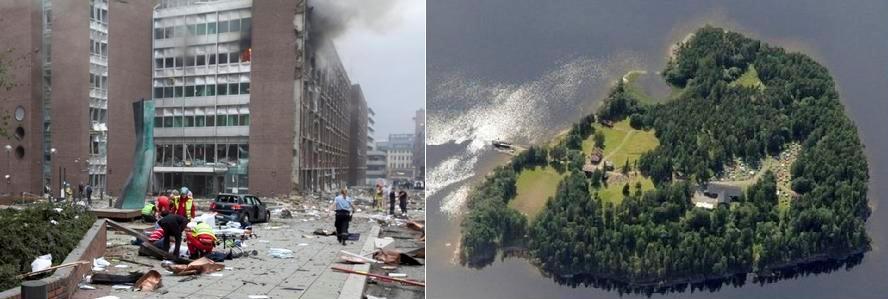
July 22, 2011 Terrorist attacks in Oslo and on Utøya island claim 76 lives with 96 injured.

"Hatred as an element of the struggle; a relentless hatred of the enemy, impelling us over and beyond the natural limitations that man is heir to and transforming him into an effective, violent, selective and cold killing machine. Our soldiers must be thus; a people without hatred cannot vanquish a brutal enemy." - Ernesto "Che" Guevara, Havana, April 16, 1967

On Friday July 22, 2011 Norway suffered two brutal terror attacks that claimed at least 76 lives and injured at least another 96 in downtown Oslo and a nearby island Utøya where Labor Party youth were gathered.

Today in Cuba is a public holiday that is celebrated with parades and speeches. On this day in 1953 a group of armed men organized by Fidel Castro led an assault on the Moncada barracks in Cuba. It was a disaster most of the men were killed and the rest captured. Fidel Castro went on trial and used it to spread his propaganda and later become a national figure in Cuba. During the revolutionary struggle between 1953 through 1959 acts of terrorism and bombing were common in Cuba. Following the Castro regime's consolidation of power state terrorism became a part of the revolutionary government's policy.

The now self-confessed Norwegian terrorist Anders Behring Breivik who claims to be a far-right anti-Islam crusader published a lengthy manifesto in which over the course of 1,500 pages repeats three times the same quote by Fidel Castro who he describes as a "Marxist terrorist and mass-murderer":
“I began the revolution with 82 men. If I had to do it again, I would do it with 10 or 15 individuals with absolute faith. It does not matter how small you are if you have faith and a plan of action.”

The adjectives this terrorist used in describing Castro condemn but the quote is part of what inspired this mass murderer to action. What is troubling is that this Castro quote is presented in popular literature as an inspirational message.

Fidel Castro has also been involved in ordering at least one premeditated attack that on July 13, 1994 led to the deaths of 10 children and 18 youth along with 9 adults in the "13 de Marzo" sinking that totaled 37 dead.

AMIA community centre in Buenos Aires 85 killed in July 18, 1994 bombing

On July 18, 1994 a bomb exploded and destroyed 7-story Jewish-Argentine Mutual Association (AMIA) community centre in Buenos Aires killing 85 men, women and children. This terrorist attack was linked to Iran but the individuals responsible have yet to be prosecuted.

The embrace of hatred to overcome ones own conscience so as to enable a person to engage in gruesome atrocities is an approach described by Che Guevara in the quote above. This self-dehumanization is what makes the sinking of the tugboat, the bombings in Buenos Aires and Oslo combined with the systematic slaughter of children and young people at a youth camp all in service of political agendas possible. Bomb making and terrorism crosses ideological lines. In outlining how to be an effective bomb maker Breivik cites Che Guevara as an authoritative source on the manufacture of explosives:

And according the Marxist terrorist and mass-murderer Che Guevara; half of the people he sent to manufacture explosives blew themselves up (probably due to them using lacking instructions, ignoring precautions and using open flames.


Mark Juergensmeyer an expert on religious terrorism in a July 24, 2011 essay titled "Is Norway’s Suspected Murderer Anders Breivik a Christian Terrorist?" In the essay Juergensmeyer offers an overview of the manifesto made public by the terrorist and reaches the following conclusion:

Is this a religious vision, and am I right in calling Breivik a Christian terrorist? It is true that Breivik—and McVeigh, for that matter—were much more concerned about politics, race, and history than about scripture and religious belief; with Breivik even going so far as to write that “It is enough that you are a Christian-agnostic or a Christian atheist (an atheist who wants to preserve at least the basics of the European Christian cultural legacy (Christian holidays, Christmas and Easter)).”

But much the same can be said about Osama bin Laden, Ayman al-Zawahiri, and many other Islamist activists. Bin Laden was a businessman and engineer, and Zawahiri was a medical doctor; neither were theologians or clergy. Their writings show that they were much more interested in Islamic history than theology or scripture, and imagined themselves as re-creating glorious moments in Islamic history in their own imagined wars. Tellingly, Breivik writes of al Qaeda with admiration, as if he would love to create a Christian version of their religious cadre.

It is not only the Norwegian bomber that has expressed admiration for Osama Bin Laden but also admirers of Che Guevara that have profiled the Al Qaeda leader as a revolutionary leader in the Argentine website Che Guevara.com .

According to Irish writer Eilis O'Hanlon the bloody legacy of Che Guevara is still having an impact around the world for example in September of 2009 in Ireland a 600 pound bomb was diffused twice as large as the one that claimed 29 lives there a decade earlier.

In addition to Bin Laden, Castro and Guevara, the Norwegian terrorist while denying he is a Nazi extensively quotes and mentions Adolph Hitler throughout his 1,500 page rant. There are no links to the manifesto on this page because there is no desire to promote it because it doesn't offer answers as to why. At its root terrorism, whether carried out by individuals or a state, is an evil act. This requires taking a look at the inner workings of a human being.

C.S. Lewis in his 1952 book Mere Christianity made the following observation: “Whenever we find that our religious life is making us feel that we are good - above all, that we are better than someone else - I think we may be sure that we are being acted on, not by God, but by the devil. ...“For Pride is spiritual cancer: it eats up the very possibility of love, or contentment, or even common sense.” One could add that it would also apply to those who have replaced a religious life with a secular/ideological substitute.

Swiss psychiatrist Carl Jung observed in the video below that "the only real danger that exists is man himself, he is the great danger....We are the origin of all coming evil."

Another and related perspective on the nature of evil is offered by the late American psychiatrist Morgan Scott Peck who wrote People of the Lie: The hope for healing human evil and in the 1983 video is interviewed about the book on PBS in the program The Open Mind. During the interview he states that "Evil is an anti-life force and if we start going out to kill it, exterminate it we then become contaminated by it because we become killers."

Watch the full episode. See more The Open Mind.

On the entry for Evil on Wikipedia there is a decent summary of M. Scott Peck's views on evil reproduced below:
Peck characterizes evil as a malignant type of self-righteousness which results in a projection of evil onto selected specific innocent victims (often children or other people in relatively powerless positions). Peck considers those he calls evil to be attempting to escape and hide from their own conscience (through self deception) and views this as being quite distinct from the apparent absence of conscience evident in sociopaths.

According to Peck, an evil person[8][9]:

  • Is consistently self-deceiving, with the intent of avoiding guilt and maintaining a self-image of perfection
  • Deceives others as a consequence of their own self-deception
  • Projects his or her evils and sins onto very specific targets, scapegoating others while appearing normal with everyone else ("their insensitivity toward him was selective") [10]
  • Commonly hates with the pretense of love, for the purposes of self-deception as much as deception of others
  • Abuses political (emotional) power ("the imposition of one's will upon others by overt or covert coercion") [11]
  • Maintains a high level of respectability and lies incessantly in order to do so
  • Is consistent in his or her sins. Evil persons are characterized not so much by the magnitude of their sins, but by their consistency (of destructiveness)
  • Is unable to think from the viewpoint of their victim
  • Has a covert intolerance to criticism and other forms of narcissistic injury

He also considers certain institutions may be evil, as his discussion of the My Lai Massacre and its attempted cover up illustrate. By this definition, acts of criminal and state terrorism would also be considered evil.

In the end the man that called others terrorists and mass-murderers apparently as a critique became one himself and as M. Scott Peck would say crossed the line and slid into evil. There is a way to fight evil and that is to be able to spot it in yourself and struggle against it to be a better person and externally use nonviolence to combat it. Mohandas Gandhi issues a challenge when he says that "Nonviolence does not signify that man must not fight against the enemy, and by enemy is meant the evil which men do, not the human beings themselves." Norwegians demonstrated how to fight this enemy with their silent Rose March and rejection of hatred.